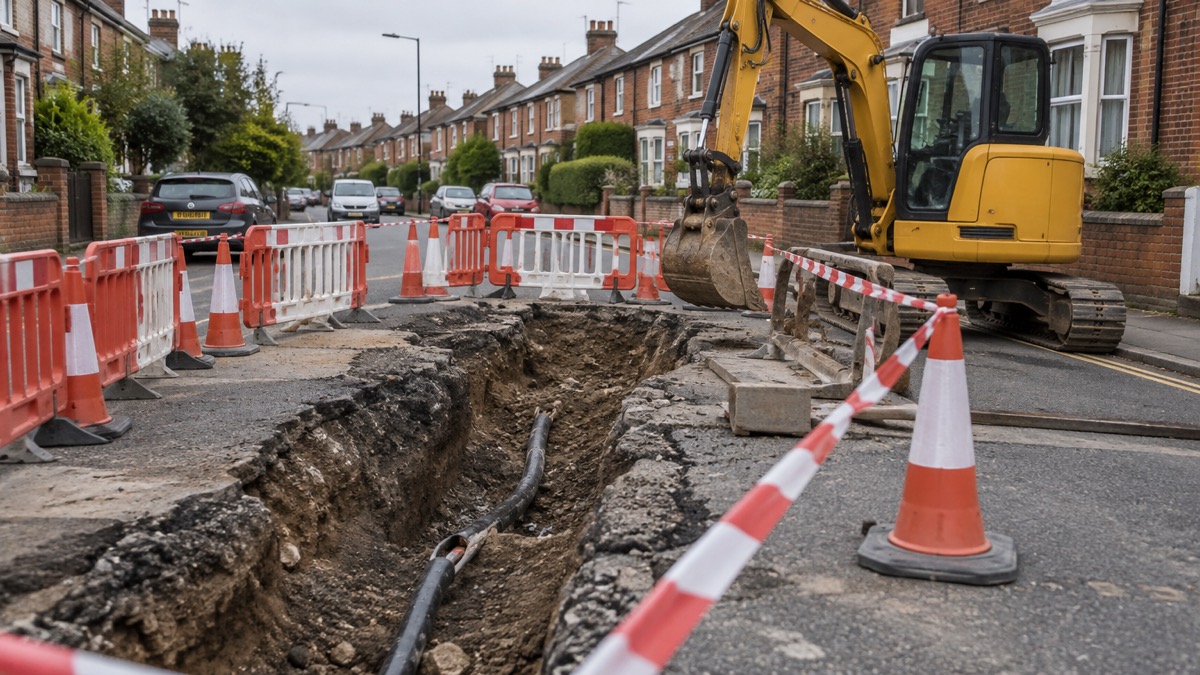
Most power cuts in the UK happen for a small number of reasons: severe weather damaging the network, faults on cables and equipment, third-party damage such as digging, and planned maintenance work. Power cuts can have a number of causes including severe weather, which can lead to damaged infrastructure, or system faults1. The reassuring part is that most power cuts do not last very long2, and in most cases your supply comes back because the problem has been repaired, either permanently or by temporarily rerouting the electricity while further work is carried out3.
Knowing what has caused your cut changes what you do next. A one-minute blip caused by a tree branch touching an overhead cable needs no action at all4. A storm that has brought lines down means staying indoors, keeping well away from anything damaged, and reporting what you have seen. A planned interruption means you will have had notice and can prepare around it. This page explains each cause, how to tell them apart, and where to report what you find.
What brings the power down: the main causes at a glance
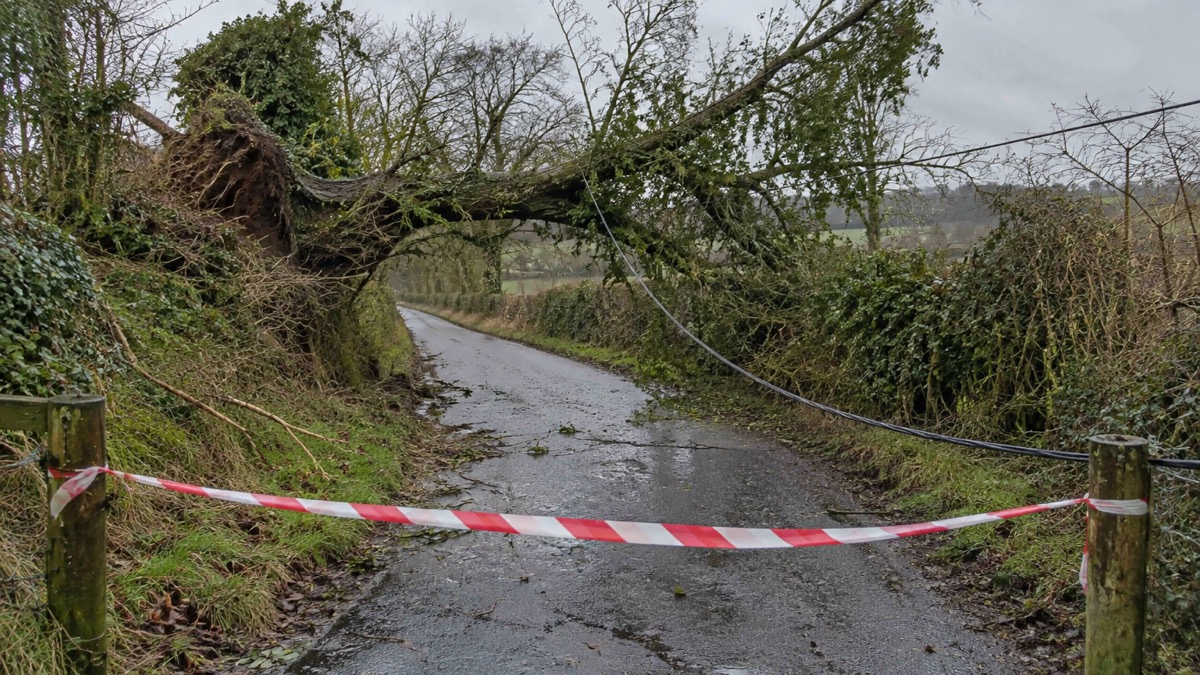
Power cuts fall into a handful of broad groups, and each behaves differently. Weather is the most visible: storms bring down trees, and trees bring down cables. Equipment fails: underground cables develop faults, and substations can suffer weather damage or equipment failure. Third parties cause damage, most often by digging into buried cables. And some cuts are deliberate: planned interruptions for maintenance and network upgrades, which you are told about in advance.
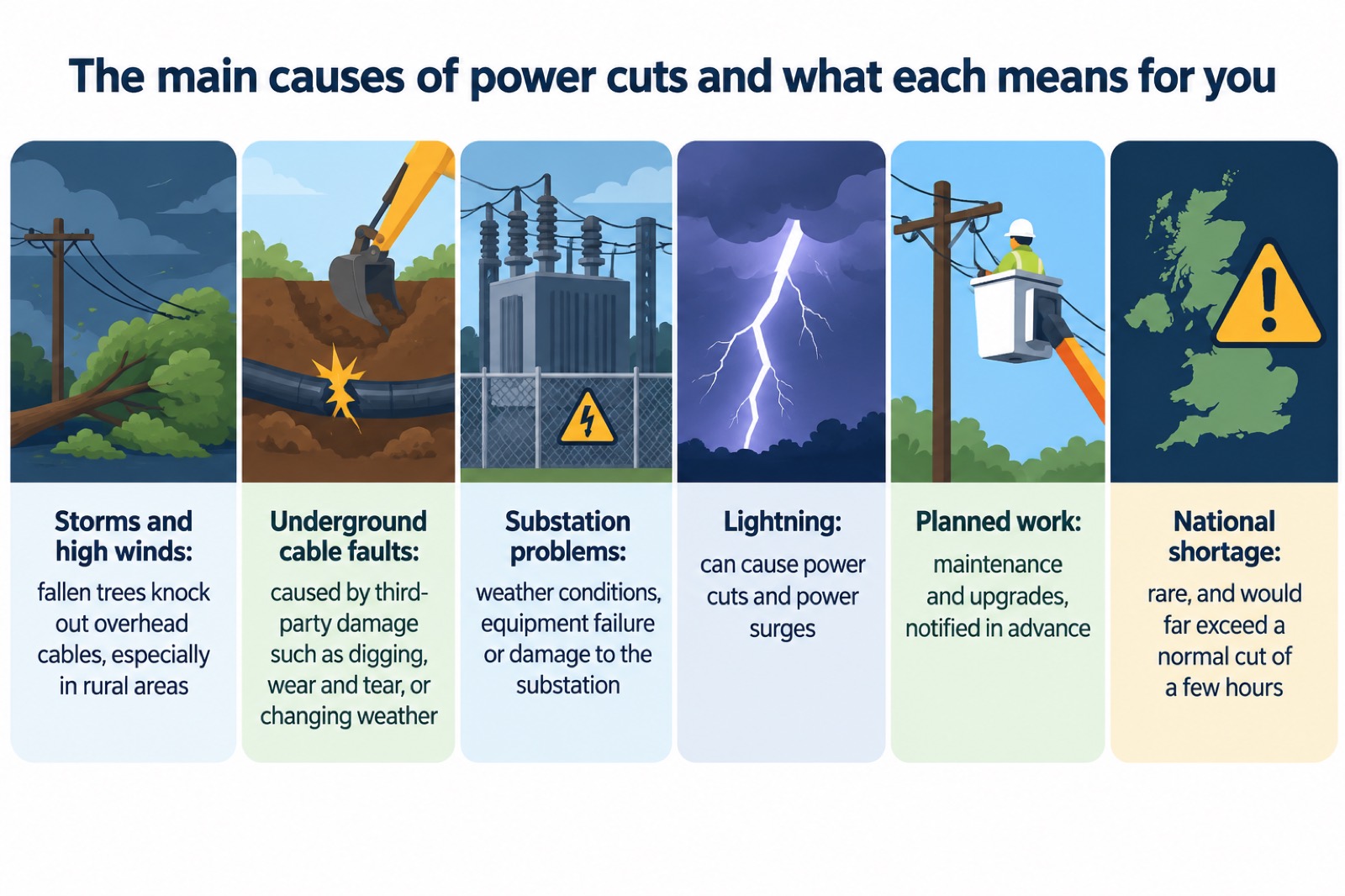
The duration usually follows the cause. A branch brushing a cable may cut your power for around 1 minute before it comes back on4. A typical fault repair or reroute restores supply within hours. Widespread storm damage and rare national events are different: these could potentially last several days with regional or, although unlikely, national impacts1. For more on how long you might be off, see How Long Until the Electricity Comes Back?.
Storms and fallen trees: how weather brings lines down
Strong winds and storms often result in tree damage and trees being brought down, and a falling tree can be the catalyst for loss of power when it lands on power lines12. This is the classic British power cut: a named storm, an amber or yellow warning, and thousands of homes off while crews work through the night. In many cases this is caused by trees coming down in high winds and taking out power cables, and rural areas are especially exposed because overhead lines travel long distances through countryside7.
Storms do more than cut power. They can lead to disruption to power, internet and phone networks, fallen trees and flooded infrastructure, and can cause issues with travel including planes, cars and trains13. In Scotland, the same storms can disrupt power, internet services, transport networks and mobile phone networks14. That matters for your preparations: if a storm has cut your electricity, it may also have cut your mobile signal or broadband, so a battery radio and a charged power bank are worth having before the wind arrives.
The pattern repeats every winter. Strong winds and rain can bring down branches and trees onto power lines, or damage the lines themselves15. Storm damage can include trees blown down across electricity lines, broken poles, damaged transformers and blown fuses, all of which can take time to repair safely16. Storms can also lead to disruption to power, internet and phone networks, fallen trees and flooded infrastructure, and can cause issues with travel including planes, cars and trains17.
If a storm is forecast, charge mobile phones, power banks and any back-up batteries for medical equipment in case there is a power cut13. Our Storms and the Electricity Network page covers storm preparation in detail.
Thunderstorms: lightning, power surges and what to unplug
Thunderstorms are a different weather risk. They can occur at any time of the year and are most common during the summer months18, and they often pass quickly with minimal impacts. But when they bite, lightning can cause power cuts and disrupt other utilities and services19. Thunderstorms bring the risk of impacts to road, rail and air transport, as well as to properties and utilities, from short-lived torrential rain, hail and lightning strikes20.
The household risk is the surge. Lightning can cause power surges, so the Met Office advises unplugging any non-essential appliances if you are not already using a surge protector18. In Scotland, the same advice is given plainly: unplug all unnecessary electrical items as lightning can cause power surges14. Your TV and computer are the usual casualties, because they can be damaged if there is a surge when the power goes back on1.
There are personal safety rules too, and they come from the Met Office:
- Avoid using the landline during a thunderstorm unless it is an emergency, as telephone lines can conduct electricity18
- Do not use taps and sinks, as metal pipes can conduct electricity14
- If outside, avoid water and find a low-lying open place a safe distance from trees, poles or metal objects18
- Avoid activities such as golf, rod fishing or boating on a lake18
- Be aware of metal objects that can conduct or attract lightning, including golf clubs, fishing rods, umbrellas, motorbikes, bicycles, wheelchairs, mobility scooters, pushchairs, wire fencing and rails18
One more point worth knowing: rainfall from thunderstorms can differ greatly from one place to another over very short distances, which is why one street floods and the next stays dry, and why the resulting power cuts are often patchy and localised18. After the storm passes, avoid downed power lines or broken cables18.
Cables cut while digging: the hidden cause
Not every fault is visible from your window. Repeat power cuts, where the supply goes off and on again in the same area, are most often caused by a fault on an underground cable3. That damage may be the result of third-party damage such as digging, general wear and tear, or changing weather conditions3. In other words, someone putting in a fence post, laying a drive or excavating on a building site can put a spade through a buried high-voltage cable, and the fault can also simply develop as the cable ages.
This is why the Health and Safety Executive requires that cables, plugs, sockets and fittings must be robust enough and adequately protected for the working environment, and that machinery has an accessible switch or isolator to cut off the power quickly in an emergency21. If you are having work done at home, that is the standard your contractor should be working to. If you are digging yourself, remember that electricity cables may be buried on your property, and check before you cut.
A related and harmless phenomenon is the momentary blip. Tree branches touching overhead cables can cause a power cut where the power goes off for around 1 minute and comes back on4. If your clocks are flashing but nothing is damaged, that is the likely explanation, and no action is needed. But if the power keeps going off and on, report it: in most cases power cuts stop because the problem has been repaired, either through a permanent repair or by temporarily rerouting the electricity supply while further work is carried out3. A recurring fault needs a proper repair, and your network operator will not know about it unless you tell them. Report it online or by calling 105.
Substations: what they do and why they can fail
Substations are the grey boxes and fenced compounds you pass without noticing. A substation converts high-voltage electricity into lower-voltage electricity to make it safe for everyday use, and it helps manage and distribute electricity efficiently to different areas9. Electricity North West alone has over 20,000 substations across the North West9. Without them, the power that travels efficiently over long distances at high voltage would arrive at your home far too powerful to use.
Power cuts can occur due to various reasons at a substation, including weather conditions, equipment failure or damage to the substation9. Substations are regularly inspected and maintained by trained professionals, with schedules that vary depending on the type and location of the substation, and they are equipped with secure fencing, warning signs and surveillance systems9. So substation failures are not common, but when one fails, it can take a whole neighbourhood off at once rather than a single street.
Two practical points follow. First, substations are restricted areas for safety reasons, and only authorised personnel are allowed to enter9. Second, power cannot be turned off at a substation on request, because a continuous supply of electricity must be provided to customers9. If you come across an issue at a substation, such as damage, graffiti, vandalism, flooding, litter or fly tipping, report it with as much detail as possible, including the substation name or number, which can be found on the gate or door9. Electricity North West asks customers to report issues online or by calling 0800 195 4141, 24 hours a day, 7 days a week, and aims to resolve reported issues within 4 to 6 weeks depending on the nature of the issue9. For more on this, see Reporting a Damaged or Open Substation.
Planned maintenance: cuts you know about in advance
Not every interruption is a surprise. Network operators carry out planned power cuts involving routine maintenance, a bit like a car MOT, as well as replacing or installing new equipment, moving cables, repairing network faults, tree cutting, upgrading the network, and connecting new properties4. These are announced in advance, usually by letter, text or email, with the dates and times you can expect to be off.
Planned interruptions are the easiest cuts to live through, because you can arrange your day around them. You will know when the power is going, roughly how long for, and why. Our Planned Interruptions page explains what to do with fridges, freezers, heating and alarms when you have warning.
One thing worth understanding is why planned work seems to be on the increase. The same network that was built for the demand of decades ago is now being upgraded and connected to new properties4, and storms keep demonstrating what weather does to overhead lines7. More maintenance and upgrading means more planned interruptions, and more storm damage means more unplanned ones. Neither means the network is failing; both mean it is being worked on. The trade-off is a few hours of notice-given inconvenience now against fewer unexpected faults later.
Rare but serious: national shortages and long outages
The causes above are local or regional. A National Power Outage is in a different category. There could be several causes of an NPO, the main one being severe weather that knocks out parts of the power grid11. It would far exceed the normal period of a few hours that you would normally experience in a power cut11. Government guidance is blunt about the scale: longer, wider outages could potentially last several days with regional or, although unlikely, national impacts8.
This is why the official preparedness advice is built around days rather than hours. Keep at least 3 days' worth of bottled water, at 3 litres per person per day, and non-perishable food that does not need cooking8. Power cuts can have a significant impact during winter, particularly for people who rely on electrical medical equipment or refrigerated medicines22. If a national shortage ever led to controlled disconnections, they would be run on a rota: see Rota Disconnections and A Nationwide Blackout.
One point on expectations: you will not be paid compensation for blackouts caused by a national power shortage, damage to electrical equipment or appliances, or a low supply after a power cut23. Compensation for ordinary unplanned cuts works differently, and Ofgem sets out the rules23.
How to report a power cut: 105 in England, Scotland and Wales
When your power goes off, report it. The electricity network operators have introduced 105, an easy-to-remember number that puts you through to the local people who can help during a power cut6. You can report a power cut online at powercut105.com or by calling 105, a free service in Scotland, England and Wales24. Calling 105 lets you report the problem and get updates on when your power will be restored25.
The simplest route for most households is to visit your local network operator's website to report the cut and track updates; if you cannot report online, call 105 for free1. You can also use the Powercut 105 website to find your supplier and report the cut22. If your supply is cut off because of a faulty energy meter, contact your energy supplier instead, as the meter is their responsibility rather than the network's26.
If your landline will not work during a power cut, your landline provider might offer you a free solution, such as a back-up battery unit for a minimum of one hour, that would enable you to call the emergency services during a power cut if you needed to1. It is worth asking your provider about this before you need it, especially if you have no mobile coverage at home. Our How to Report a Loss of Electricity page walks through the whole process.
Northern Ireland: reporting to NIE Networks
Northern Ireland has its own network operator and its own number. The number to report a power cut is 03457 643643 in Northern Ireland, rather than 1055. The NIE Networks customer helpline, 03457 643 643, is the contact for reporting a power cut or a damaged power line27. If your power is off and you want to report it or get more information, contact the helpline28.
You can also get information about electricity supply, including an updated list of areas affected by power cuts, on the NIE Networks website27. That list is worth checking during storms, when damage such as trees blown down across electricity lines can take time to repair safely. Report anything that looks dangerous to NIE Networks on 03457 64364327. Our Northern Ireland page covers the arrangements there in full.
Where to keep away: broken lines and damaged equipment
This is the single most important safety rule on this page. If you see power lines that have been brought down or damaged, keep as far away as possible13. Report what you have seen, either to 105 in England, Scotland and Wales or to NIE Networks on 03457 643643 in Northern Ireland27. If there is a serious immediate risk, or someone requires medical help, call 999, a line available 24 hours a day9.
Fallen trees deserve particular care. A tree that has come down in a storm may be lying across a live line, or may have brought poles and wires down with it27. Treat any storm debris near power equipment as live until the network operator says otherwise. Our Fallen Overhead Lines page covers this in detail, including what to do if a vehicle touches a line.
There is a household version of the same rule. Electrical Safety First advises keeping items such as clothes, paper and cleaning materials away from the service head, the cutout fuse, the electricity meter and consumer units, particularly if these are under the stairs and form an escape route from upper floors29. A fire in the cupboard under the stairs, where your meter and fuse board often sit, blocks the route down. And if you use candles during a cut, keep them well away from anything that could catch fire24.
Getting ready for the next one
People cope better with power cuts when they have prepared for them in advance30. The essentials that could help you cope are candles and matches or lighters, torches and batteries, and a mobile phone power pack30. Northern Ireland's official advice adds the same items: keep a supply of candles, along with torches and spare batteries27.
The core of household readiness is short:
- Torches and spare batteries, plus candles and matches or lighters as a back-up30
- A charged power bank for your mobile phone30
- At least 3 days' worth of bottled water, at 3 litres per person per day, and non-perishable food that does not need cooking8
- A battery back-up for any essential medical equipment, and charged power banks before a storm4
If you rely on electrical medical equipment or refrigerated medicines, plan ahead for winter, as power cuts can have a significant impact on you22. Power cuts will affect equipment such as stairlifts, bath hoists and adjustable beds, so make sure any essential medical equipment has a battery backup4. You may also be able to join your network operator's Priority Services Register for extra help during outages: see The Priority Services Register.
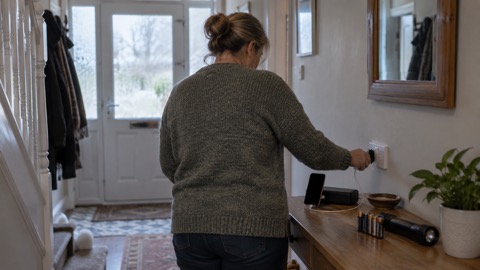
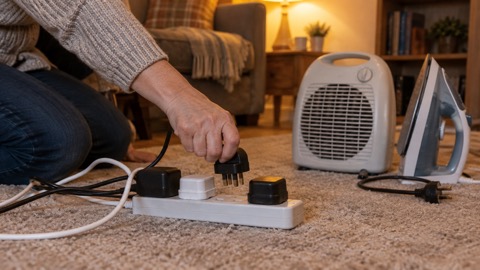
When the power actually goes off, the immediate steps are simple. Switch off appliances: turn off items such as irons, ovens, electric fires and fryers, as they could pose a hazard if the power comes back on when you are not there6. Unplug your TV and PC, as they can be damaged if there is a surge when the power goes back on1. Switching off appliances and equipment also helps prevent damage when the power returns3. Our What to Do When the Electricity Goes Off page takes you through it step by step, and the Power Cut Kit Checklist lists everything worth having in one place.
Sources (30)
- Power cuts: what to do, Prepare Campaign, 2026-10-21
- Generators and power cuts, Wiltshire and Swindon Prepared, 2026-10-25
- Repeat power cuts, SSEN, 2026-10-25
- Planned power cuts, SSEN, 2026-10-25
- Be informed about hazards: power cuts, Be Ready Campaign, 2026-10-21
- Power cuts: what to do in a power cut, Met Office, 2026-10-25
- Failure of national electricity, Wiltshire and Swindon Prepared, 2026-10-25
- Be ready for emergencies, Be Ready Campaign, 2026-10-21
- Electricity substations, Electricity North West, 2026-10-25
- Community resilience, Met Office, 2026-10-25
- What is a National Power Outage, Wiltshire and Swindon Prepared, 2026-10-25
- Severe weather advice, Met Office, 2026-10-25
- Be informed about hazards: storms, Prepare Campaign, 2026-10-19
- Storms and wind, Ready Scotland, 2026-03-24
- Strong winds weather warning information and advice, nidirect, 2026-10-24
- Storm Boelo update, Sunday 25 October, NIE Networks, 2026-10-25
- Food safety in the kitchen: flooding, Food Standards Scotland, 2026-10-25
- Stay safe in thunder and lightning, Met Office, 2026-10-25
- Community resilience leaflet, Met Office, 2024
- Stay safe in a thunderstorm, Met Office, 2026-10-25
- Electricity at work: introduction, Health and Safety Executive, 2026
- Be prepared for winter emergencies, NHS Norfolk and Suffolk, 2026-10-01
- Check if you can get payment for a power cut, Ofgem, 2026
- Power cuts, Scottish Fire and Rescue Service, 2026-10-25
- Cold, snow and ice, Ready Scotland, 2026-03-25
- Plan for a power cut, Ofgem, 2026
- Strong winds and heavy rain warning information and advice, nidirect, 2026-01-27
- Thunderstorms weather warning advice and information, nidirect, 2026-08-30
- Fire prevention tips, Electrical Safety First, 2026-10-25
- Further snow and ice forecast following Storm Goretti, Met Office, 2026-01-09
 Power Cut Kit Checklist
 What to Keep Charged
 Household Emergency Plan
 Reporting a Power Cut
 What to Do in a Power Cut
 Getting Ready for a Power Cut
 Fridge and Freezer Food
 Keeping Warm Without Electricity
 Central Heating Without Power
 Cold Homes and Health
 Carbon Monoxide Risks
 Staying Safe in the Dark
 Smoke and Carbon Monoxide Alarms
 How Long Until Power Returns
 When the Power Comes Back