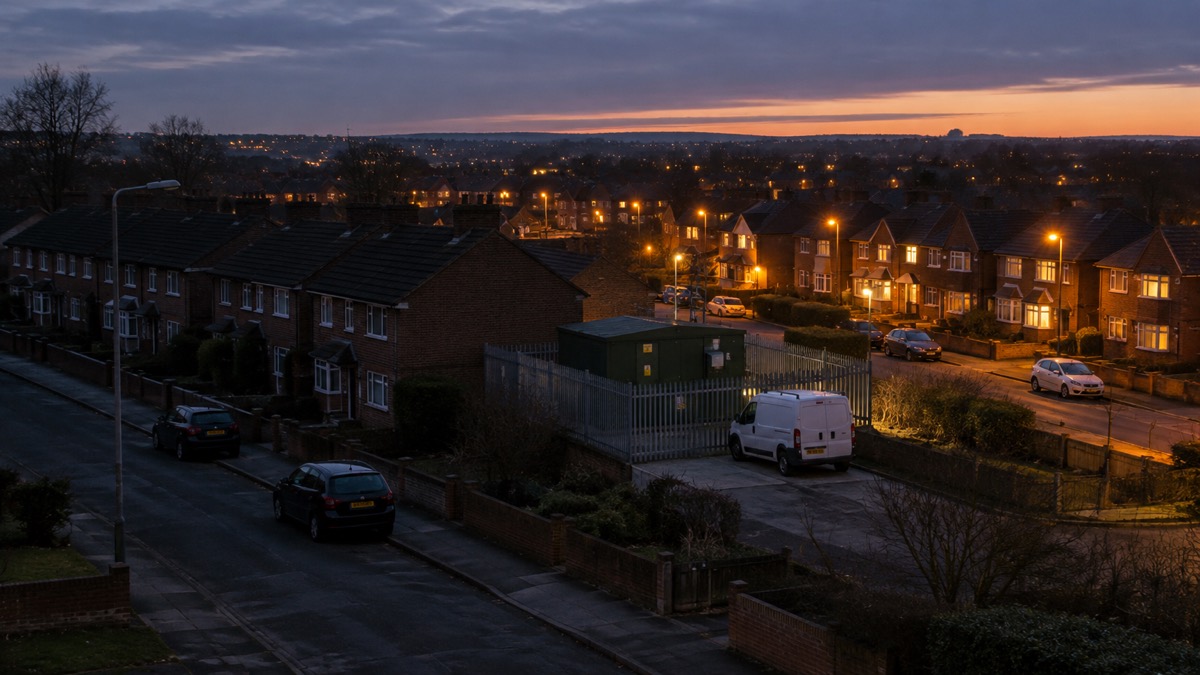
If Britain ever faces a national shortage of electricity, the last resort is a rota disconnection: a planned, scheduled power cut that switches off each area in turn so the demand on the grid never exceeds what can be generated. Under the Electricity Supply Emergency Code, every area of Great Britain is assigned a load block letter, and in an emergency those blocks are timetabled to be without power for around three hours, once or twice a day1. The Code exists so that power is shared fairly across all customers during a national energy emergency, rather than some areas being cut off for much longer than others1.
Rota disconnections are very rare, and none are currently planned. Network operators state that no emergency power cuts are currently planned and that these measures would only be used in emergencies3, and one operator's published guidance says emergency power cuts are unlikely this winter2. They would only be used after all other options, such as turning down industrial demand and voltage reduction, have failed to restore stability to the power system1. But the mechanism exists, it is rehearsed, and knowing how it works takes an hour of preparation at most: find your block letter, know what notice you would get, and have the same kit you would want for any power cut.
A last resort, and none are currently planned
Rota disconnections happen when there is too much demand for electricity and not enough electricity being generated, and switching some customers off is the only way left to protect the grid7. Before any power is cut, the Electricity System Operator will first ask for more power to be generated and ask large businesses to reduce how much power they are using7. Only when those measures are exhausted does the rota begin. The government can direct the system operator to implement rota disconnections for up to 90% of demand at one day's notice under the Electricity Supply Emergency Code8.
The prospect has been raised publicly only as a worst case. One network operator describes planned emergency power cuts as "an unlikely scenario and a worst case scenario, taken as a last resort when all other measures to balance electricity supply and demand have been exhausted"4. The context that brought the Code back into public discussion was the European energy crisis that followed the war in Ukraine: although Britain is less reliant on Russian gas than other countries, it normally imports gas and electricity from Europe during the coldest months, and a very cold period with significantly reduced gas supplies from Europe would create the greater potential for emergency disconnections4.
If a rota ever becomes necessary, you do not need to do anything to be disconnected or reconnected: the power will be turned off and back on automatically by your local network operator, which is legally required to implement the cuts when instructed by the Electricity System Operator3. The risk is greatest in winter, when it is cold and dark in the early evening, more people are at home and using the most energy3. For the wider picture of how supply and demand are balanced day to day, see How Britain's Electricity Network Is Run, and for the rarer and more serious case of the whole grid going down, see A Nationwide Blackout: How Britain Would Respond.
How a rota cut works: about three hours, once or twice a day
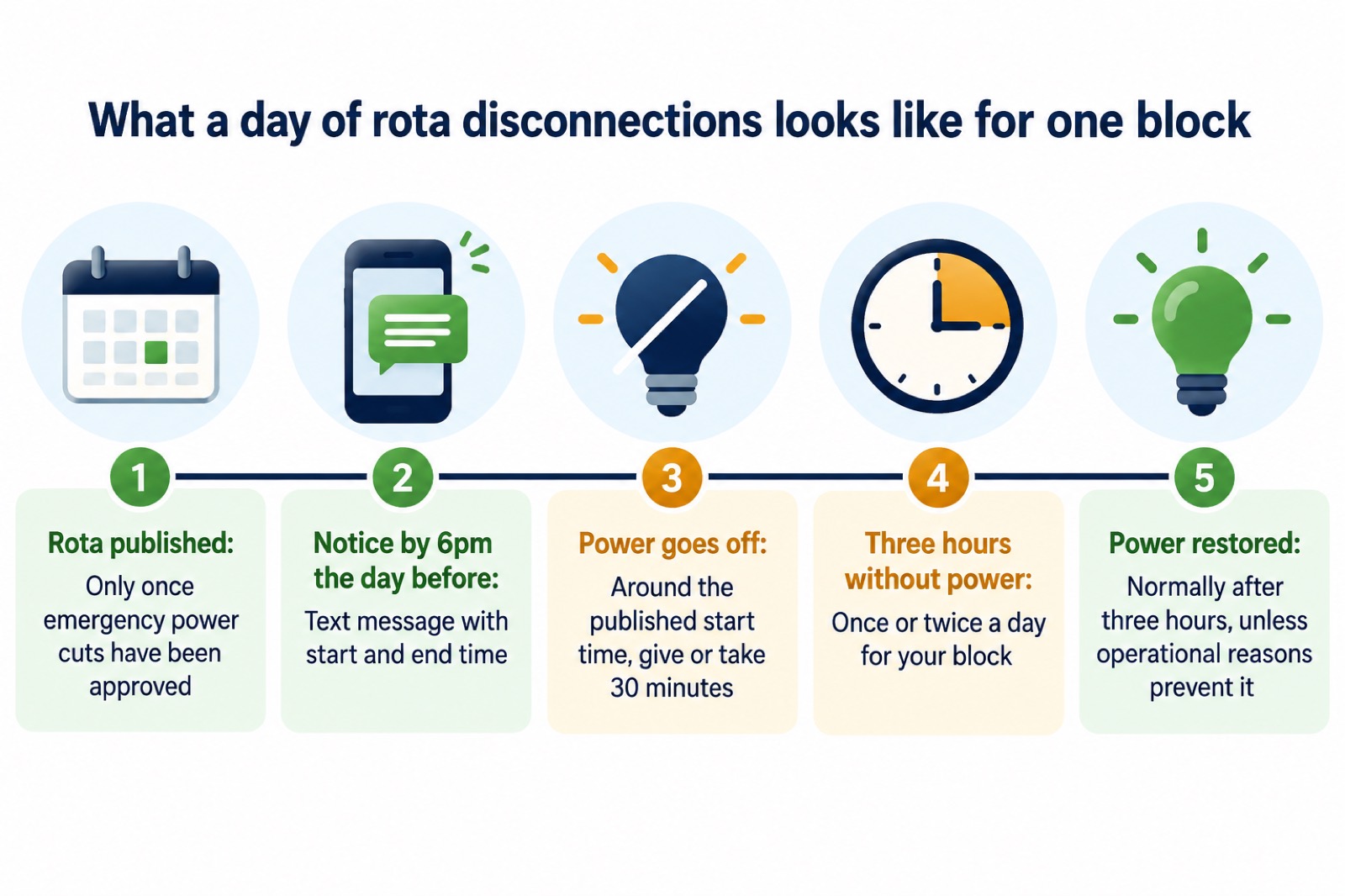
The electricity system in Great Britain is sectioned into blocks that can be temporarily switched on and off, typically for three-hour periods2. In an emergency, different block letters are timetabled to be without power for around three hours once or twice a day2, which means customers lose power for around three hours per day during the emergency, on an area-by-area basis1. The cuts are shared across the country rather than switching everyone off at once, which is the whole point of the rota: it spreads a shortage instead of concentrating it7.
Two practical details are worth knowing. First, the timing is approximate: your power might be switched off or reconnected around 30 minutes before or after the published time, depending on national electricity use at that moment4. Second, the same area is not cut day after day. Normally, customers who have been subject to a rota cut will not suffer a second one for several days3.
The scale is large by design. Emergency power cuts mean switching power off to at least 5% of UK households at once2, more than one million homes in Great Britain3. In the North West alone, a planned emergency power cut would affect at least 100,000 properties at once, spread across the region, with around 10,000 properties in a particular area affected at the same time3. That scale is what makes a rota different from an ordinary fault, and it shapes everything else on this page: how much notice you get, what help is available, and why a generator is not the answer.
Find your rota block with your postcode
Every property in Great Britain sits in a load block, identified by a letter. You can find your block letter by entering your postcode at powercut105.com; it should also be printed in the top half of your electricity bill3. Some energy suppliers include it on bills5, and if you cannot find it, contact your local network operator by calling 1052. It is worth doing this now, before any emergency, because the rota would only be published once emergency power cuts have been approved to take place1, and looking up your letter during a live shortage is one job too many.
The block letter is the key to the whole system. When a rota is activated, each letter is timetabled against specific hours of the day, so two neighbouring streets with different letters can be off at different times. Our dedicated page on Finding Your Block Letter for an Emergency Rota goes through the lookup in detail, including what to do if you have recently moved or your bill does not show it.
Keep the letter somewhere that does not need electricity: written in your household plan, on the fridge, or stored on your phone alongside the power cut helpline number, 1059. The Met Office advises storing key information such as the power cut helpline number on your phone in case power and mobile networks are affected9.
Notice: up to 48 hours, but sometimes none at all
How much warning you get depends on how the shortage develops. It is likely that network operators and the public would be given a number of days' notice, although this could be implemented sooner if needed3. The Electricity System Operator plans to hold a press conference and use social media to let people know a few days before emergency power cuts are needed3. Once a rota is running, one operator states it will notify customers by text message by 6pm the day before, stating the start and end time of the interruption, with the information also available on powercut105.com, its website and its PowerTrack app4.
The practical consequence is that your preparation cannot depend on a text arriving. The same kit that gets a household through a storm outage, a torch, a charged power bank, food that does not need heating, is what gets you through a rota block, and it needs to be in the house before any shortage is announced. Follow your local network operator on social media so you can find local updates1, and check What to Do When the Electricity Goes Off for the moment the lights go down.
The Priority Services Register does not exempt you
This is the point most people get wrong. Residential customers, including those on the Priority Services Register, and businesses without backup generation, would be part of a planned power cut rota unless listed as protected by the government1. Households and businesses cannot opt out or be specially treated for emergency planned power cuts3. Being on the register does not keep your power on during a rota.
What the register does give you is advance warning and contact. Network operators aim to give Priority Services Register customers, wherever possible, advanced notice of scheduled power cuts10, and the register is designed to keep the most vulnerable customers up to date in a power cut and provide additional support if needed11. During a rota, that support is information and contact rather than exemption, but for a household relying on medical equipment or with someone who would struggle alone in the dark, that contact matters. You can join through your energy supplier10, and our page on The Priority Services Register: Who Can Join and What It Gives explains who qualifies and how to sign up. If someone in your house depends on electricity for their health, also read Relying on Medical Equipment That Needs Electricity and the associated checklist.
Only a very limited number of sites are protected from emergency power cuts: typically locations deemed to be critical national infrastructure, such as air traffic control centres and major hospital facilities with accident and emergency departments. Domestic properties are not eligible4. Being on the Priority Services Register does not change this: residential customers, including those on the register, would be part of a planned power cut rota unless their site is listed as 'protected' by the government3. Our page on Which Sites Are Protected From Emergency Disconnection? covers this in more detail.
What to get ready before your block goes off
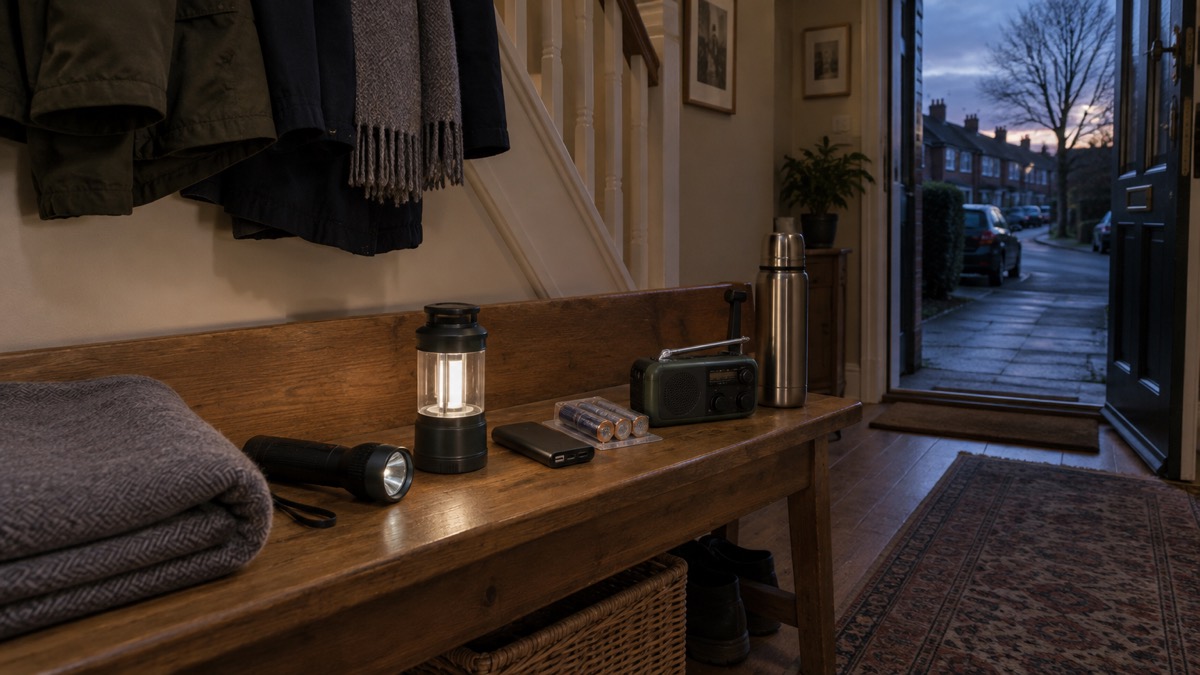
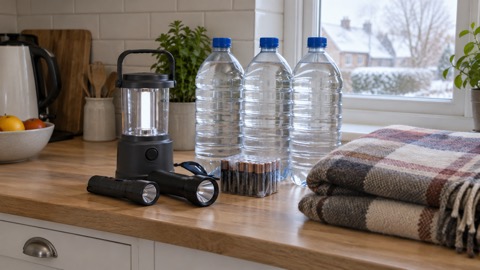
The preparation for a rota cut is the preparation for any power cut, done in advance. The Met Office's advice is blunt: people cope better with power cuts when they have prepared for them in advance, and it is easy to do12. Gather the basics now and the rota becomes an inconvenience rather than a crisis.
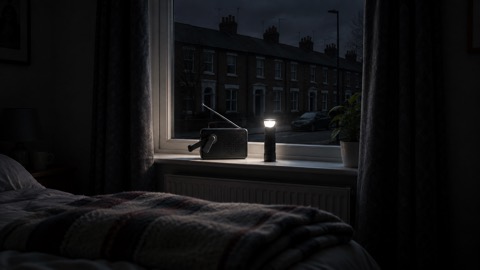
- Light: torches and batteries, battery candles, and a mobile phone power pack13. During the cut, use battery-operated lights or torches as your light source, and the Scottish Fire and Rescue Service advises you do not use candles as a light source when moving from room to room14.
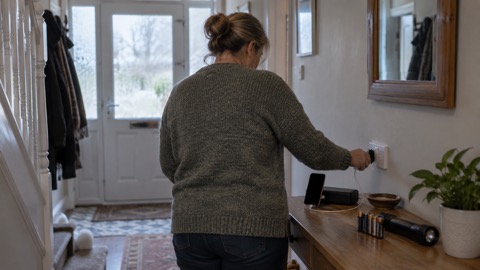
- Power: keep mobile phones, laptops, tablets and power banks fully charged, and keep a supply of new batteries in torches and radios15. Charge mobile phones and power banks in case there is a power cut16.
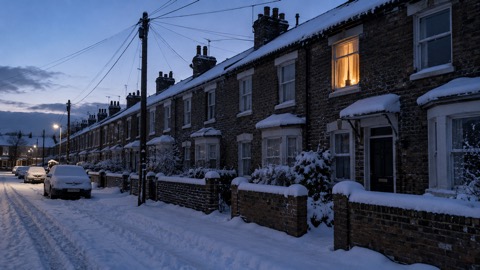
- Warmth: have warm clothes, blankets and food which does not need heating accessible1. See Keeping Warm Without Electricity.
- Information: know where your household fuses and trip switches are, so you can check whether the problem is with your electrics only15, and keep a non-mains powered landline telephone and important numbers to hand15.
- Before the block starts: switch off all electrical appliances that should not be left unattended, ready for when the power comes back on13. Leave one light on so you know when the supply returns17.
- Documents: keep important documents safe and handy18.
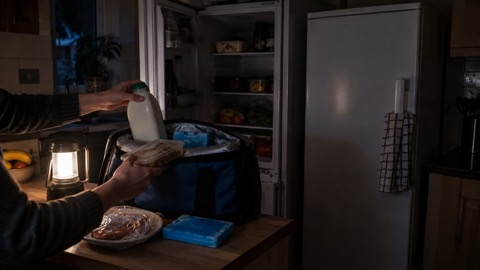
Food in the fridge and freezer is a common worry. A rota block is around three hours, which is short, but if blocks repeat across a day or the shortage runs for days, the usual rules about fridge and freezer doors apply: keep the doors closed, and check our guidance on Fridge and Freezer Food When the Electricity Is Off and What Food to Throw Away After an Outage. Power cuts are common during adverse weather events, and electrical items such as fridges, freezers and ovens may break down if they have come into contact with water, so if a shortage coincides with flooding, treat wet appliances with care19.
For the full list, see the Power Cut Kit Checklist and What to Keep Charged, and work through the Household Emergency Plan Checklist for Outages so the whole household knows what happens.
Where a generator cannot help during a rota cut
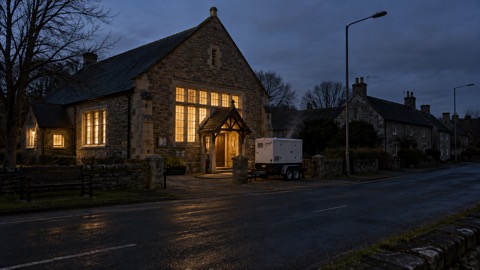
It is natural to think a generator solves this, and for an ordinary fault it sometimes can: generators are used by power companies where there is a failure of equipment that cannot be repaired immediately20. A rota cut is different. In an emergency power cut, because more than one million homes, at least 5% of households in Great Britain, will be without power at once, it will not be possible to connect generators to keep everyone supplied2. The network operator cannot bring in mobile generation to bridge a rota block, because the disconnection is deliberate and system-wide rather than a broken piece of network.
For an ordinary household, the expense of installing a generator may not be worth the cost for short power cuts, and having torches and lanterns is a suitable alternative for the few hours you may be without power20. Most power cuts do not last very long20, and a rota block is around three hours by design2. If you are considering backup power anyway, read Backup Power at Home: A Household Guide for what the options actually involve, and never run a generator indoors: follow the fire and rescue service and the maker's instructions on siting and ventilation, and see Carbon Monoxide Risks When the Heating Is Off.
Phones, streetlights and shops during a cut
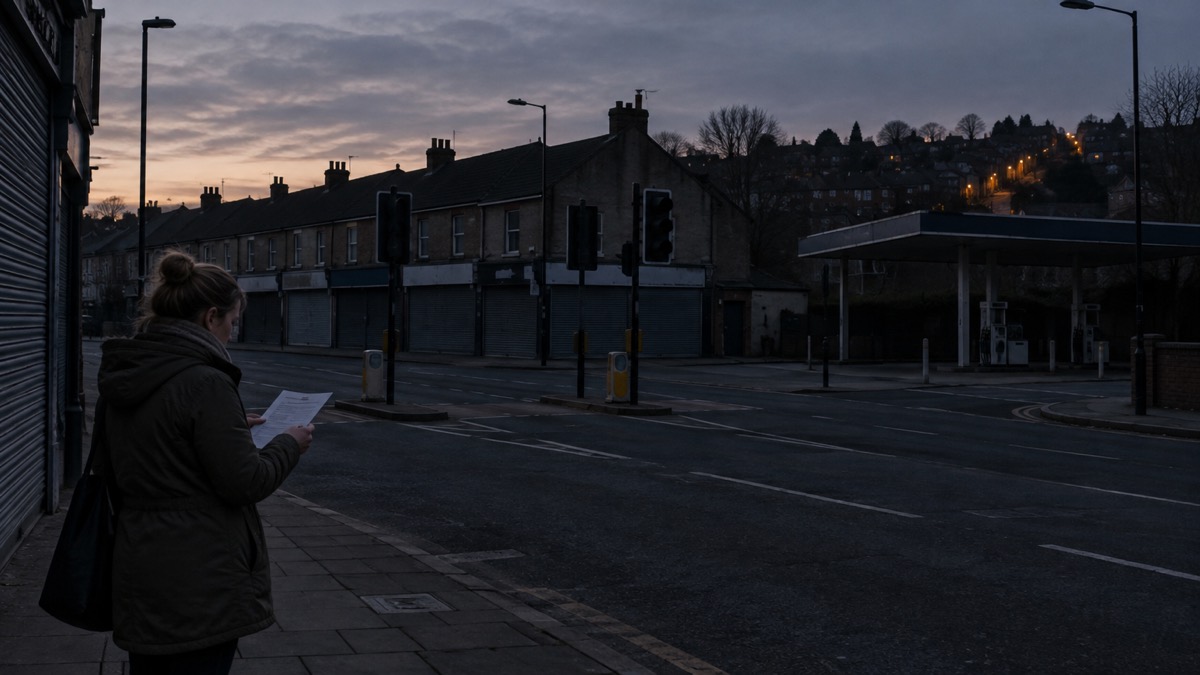
A rota cut takes out more than your house. It affects streetlights, traffic lights, shops, petrol stations and public buildings3. A power outage may disrupt communications, water and transportation, close retail businesses, grocery stores, petrol stations, cash machines, banks and other services, and cause food spoilage and water contamination21. Plan on the basis that the area around you is in the same block, not just your street.
That has practical consequences for the three hours. Travel carefully after dark, because streetlights and traffic lights will be off in your block's area. Do not assume you can top up food or fuel during the cut; shop before your block's published time. Keep some cash accessible in case card machines are down, and keep phones charged so you can reach people. If a storm meant power and mobile phone networks were affected, consider a separate battery charger, and store key information such as the power cut helpline number, 105, on your phone9.
For what to do hour by hour once the power is off, see What to Do When the Electricity Goes Off and Staying Safe in the Dark: Fire, Shock and Falls. When the supply returns, follow When the Supply Returns: What to Check and Switch Back On.
Rota cuts in Northern Ireland
Northern Ireland's electricity is run separately from Great Britain's system, by Northern Ireland Electricity22, and the reporting arrangements differ. The 105 power cut service covers Great Britain; in Northern Ireland you call the NIE Networks Customer Helpline on 03457 643 6436. Should a power cut happen, you can contact the customer helpline24, and the same number is used to report a power cut or a damaged power line17.
The principle of the rota, sharing a shortage fairly rather than cutting one area for longer, is the same everywhere, but the block letter lookup at powercut105.com is a Great Britain service, so households in Northern Ireland should get their equivalent information from NIE Networks directly. Our page on Northern Ireland: NIE Networks, Reporting and Help covers the arrangements in full, including what help is available during long outages.
Reporting a rota cut, and what happens if power does not return
Power will normally be restored after the three hours, unless operational reasons prevent it3. If your power is not restored within an hour of the expected time, check your local network operator's website for more information and report your power cut2. Call 105, the free number that connects you to your local distribution network operator to report a power cut25, or report it online at powercut105.com14. In Northern Ireland, call 03457 643 6436. Our page on How to Report a Loss of Electricity: Ring 105 walks through the process, and How Long Until the Electricity Comes Back? explains what drives restoration times.
One further point on money: under Ofgem rules, compensation is not available for an emergency power cut of this nature3. The standard compensation scheme, which pays £100 for homes where fewer than 5,000 properties are affected for more than 12 hours, or more than 5,000 properties affected for more than 24 hours, and up to a maximum of £400 where 5,000 or more properties are affected, applies to ordinary unplanned cuts, not to rota disconnections carried out under instruction26. The amounts are reviewed and updated each year based on inflation26. You can check what you might be owed for an ordinary cut on Check if You Can Get Payment for a Power Cut and Ofgem's guidance26.
Sources (26)
- Electricity Supply Emergency Code and emergency power cuts, Energy Networks Association
- Emergency power cuts FAQ, Northern Powergrid
- Emergency power cuts advice, Electricity North West
- Electricity Supply Emergency Code, Scottish and Southern Electricity Networks
- Power cuts advice, Prepare Campaign
- Power cuts advice, Be Ready Campaign
- What are electricity rota loads, Wiltshire and Swindon Prepared
- Electricity Supply Emergency Code document, National Energy System Operator
- 10 things to do now to prepare for winter, Met Office
- Join your supplier's Priority Services Register, Ofgem
- Power shortages parental letter, NHS North West Children's ODND Hub
- Yellow wind warning advice, Met Office
- Stay safe in lightning, Met Office
- Power cuts guidance, Scottish Fire and Rescue Service
- Strong winds weather warning advice, nidirect
- Storms and wind, Ready Scotland
- Strong winds and heavy rain warning advice, nidirect
- What to do in a power cut, Met Office
- Food safety in the kitchen and flooding, Food Standards Scotland
- Generators, Wiltshire and Swindon Prepared
- What is a national power outage, Wiltshire and Swindon Prepared
- How the power system works in the UK, Wiltshire and Swindon Prepared
- Ice weather warning advice, nidirect
- Energy, power supply and utilities, nidirect
- Energy outages, National Energy System Operator
- Check if you can get payment for a power cut, Ofgem
 Power Cut Kit Checklist
 What to Keep Charged
 Household Emergency Plan
 Reporting a Power Cut
 What to Do in a Power Cut
 Getting Ready for a Power Cut
 Fridge and Freezer Food
 Keeping Warm Without Electricity
 Central Heating Without Power
 Cold Homes and Health
 Carbon Monoxide Risks
 Staying Safe in the Dark
 Smoke and Carbon Monoxide Alarms
 How Long Until Power Returns
 When the Power Comes Back