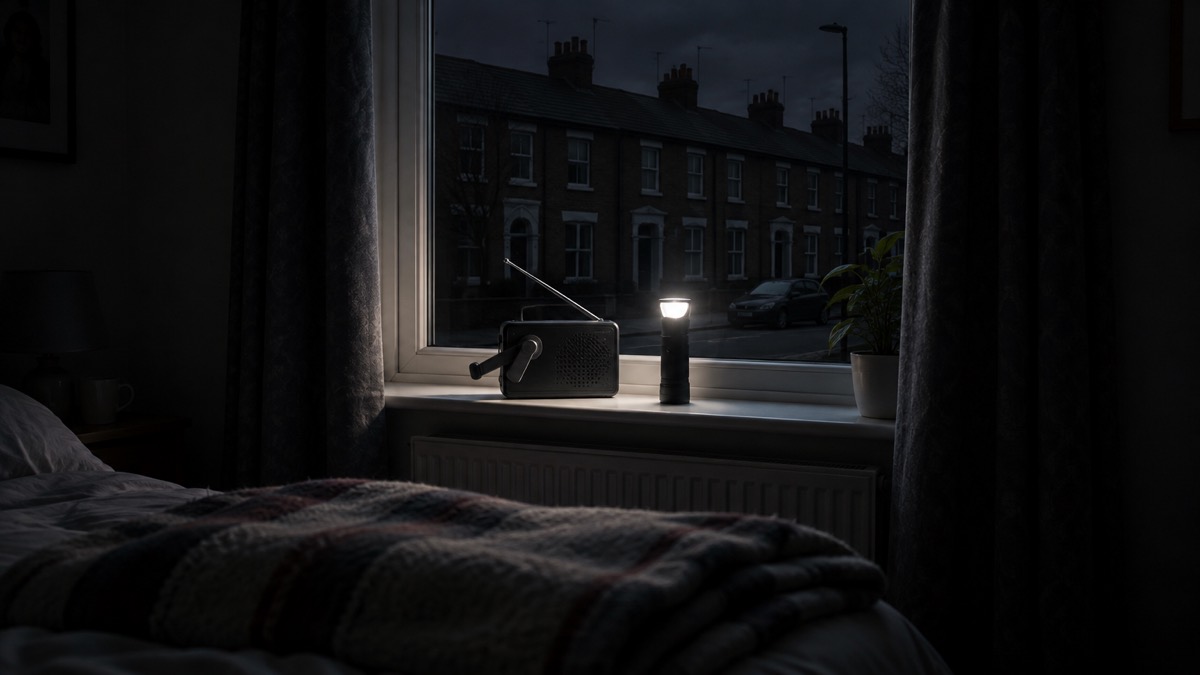
When the electricity goes off, the first thing to do is find out whether it is only your home or the whole street. The Met Office advises that if your power goes off unexpectedly, you check whether your neighbours still have electricity: if they have power, your trip switch may have activated, and the fault is inside your home rather than on the network1. If neighbours are off too, report the cut by ringing 105, free of charge, from anywhere in Scotland, England and Wales, and you will be put through to your local network operator for updates on when power will be restored2.
Then settle in safely. Switch off appliances that should not be left unattended, leave one light switched on so you know the moment power returns, keep fridge and freezer doors closed, and check on anyone elderly, vulnerable or relying on electrical medical equipment2. Most power cuts do not last very long, so a calm first hour usually sees you through3.
First minutes: is it just your house?
Before you report anything, work out whether the fault is yours alone. The Met Office's snow safety advice is to check whether your neighbours are safe and whether they have a power cut too: if they have power, your trip switch may have activated8. A tripped switch or blown fuse means the problem is inside your home's wiring or one of your appliances, and ringing 105 will not fix it. Our guide to how to check whether it is just your trip switches walks through that check step by step.
If the whole street is dark, it is the network, and reporting it matters even if you assume someone else already has. In Northern Ireland the arrangement is different: nidirect directs people to NIE Networks for information about electricity supply, including an updated list of areas affected by power cuts9. Our page on Northern Ireland: NIE Networks, reporting and help covers that in full.
While you are checking, look in on people around you. nidirect's storm advice is to check on elderly or vulnerable family, neighbours and friends to make sure they are okay9, and the Met Office's winter tips add checking on neighbours to the same list of actions when the power goes out10. A knock on the door costs nothing and matters most to someone who cannot easily ask for help. Our checking on neighbours and relatives checklist gives you a short list of what to ask.
Ring 105 to report it and get updates
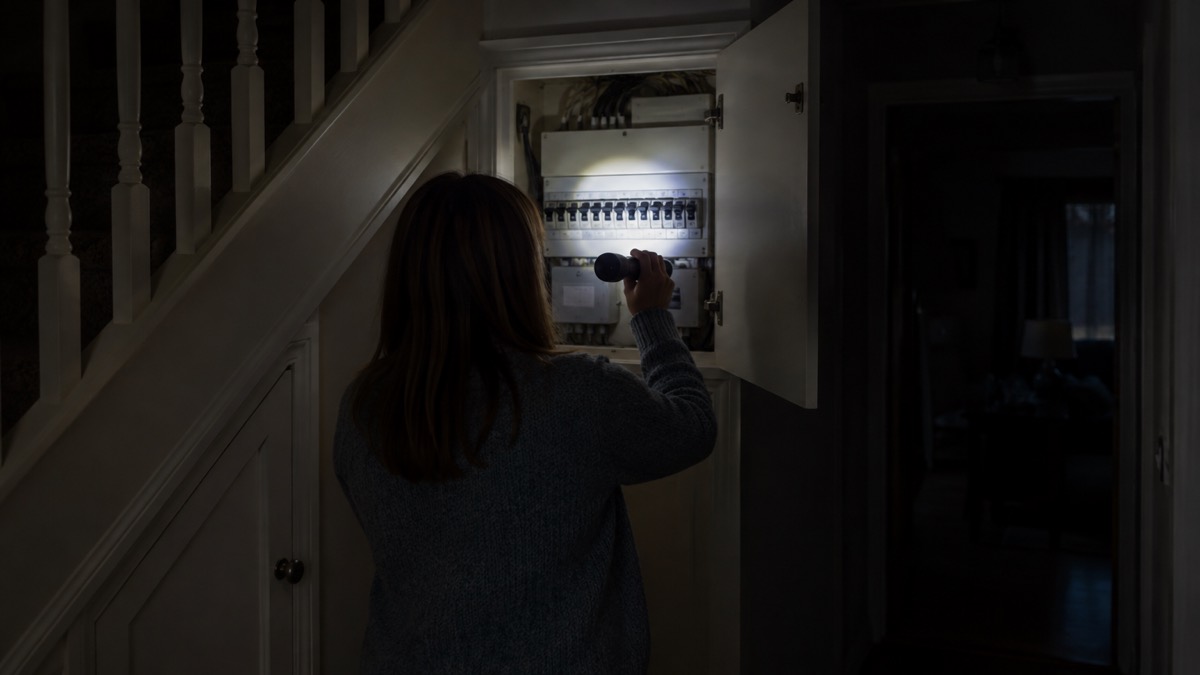
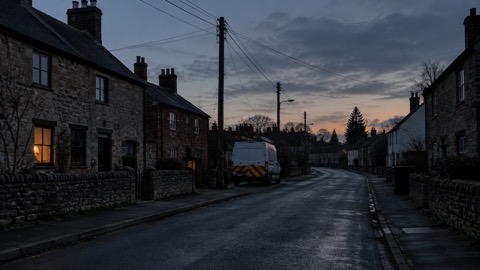
105 is the single free number for power cuts in Scotland, England and Wales. Call it to report the problem and get updates on when your power will be restored11. The Met Office describes it as the Power Cut 105 service, free of charge12, and Electricity North West notes it is available with help and advice 24/713. You can also report a cut online: Scottish Fire and Rescue Service points to reporting at powercut105.com, a free service in Scotland, England and Wales14. Norfolk and Suffolk NHS guidance likewise directs people to the Powercut 105 website to find their supplier and report a cut15.
The number puts you through to your local electricity network operator, the company that owns the wires in your area, rather than the firm you pay your bills to16. That distinction matters: if your supply is cut off because of a faulty energy meter, Ofgem says to contact your energy supplier instead, because the meter belongs to them17.
If you spot damaged or dangerous electrical equipment, including during or after a power cut, Surrey County Council advises reporting the problem, but calling 999 in an emergency7. Our page on how to report a loss of electricity covers the details, and emergency numbers to keep at home lists what to write down before you need it.
One light on, everything else off
Once you know it is a network cut, go round the house and switch things off. nidirect's advice is to leave one light on18, so that the room lights up the moment the supply returns, even if that is at three in the morning. Scottish Fire and Rescue Service puts it as turning off all electrical equipment except a light or a radio14.
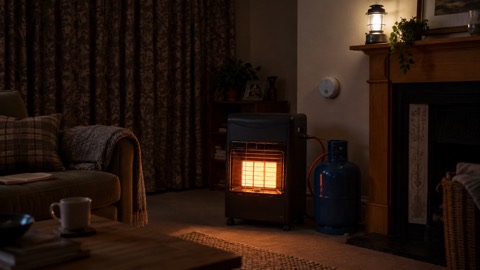
The reason is what happens when the power comes back. Horsted Keynes Parish Council advises switching off all electrical appliances that are not designed to run unattended, such as cookers, grills, chip pans, hair straighteners and electric fires, so they do not come on without you realising once the power is back19. North Yorkshire Fire and Rescue Service makes the same point about cookers and microwaves: you never know when the power may be switched back on20.
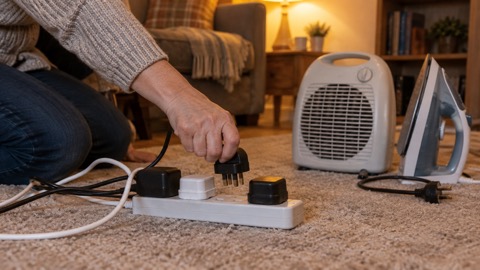
Some items should be unplugged as well as switched off. The government's Prepare campaign advises turning off items such as irons, ovens, electric fires and fryers, and unplugging your TV and PC, because they can be damaged if there is a surge when power goes back on2. Our page on whether you should unplug appliances when the lights go out explains which items matter most, and when the supply returns covers switching everything back on safely.
| What to do | Why | Who says so |
|---|---|---|
| Leave one light switched on | You will know the moment power is restored21 | nidirect |
| Turn off cookers, grills, irons, hair straighteners, electric fires | They could come back on unattended when supply returns19 | Parish council guidance |
| Unplug TV and PC | They can be damaged by a surge when power returns2 | Prepare campaign |
| Keep a light or radio on, everything else off | Signals restoration14 | Scottish Fire and Rescue Service |
Keep the fridge and freezer shut
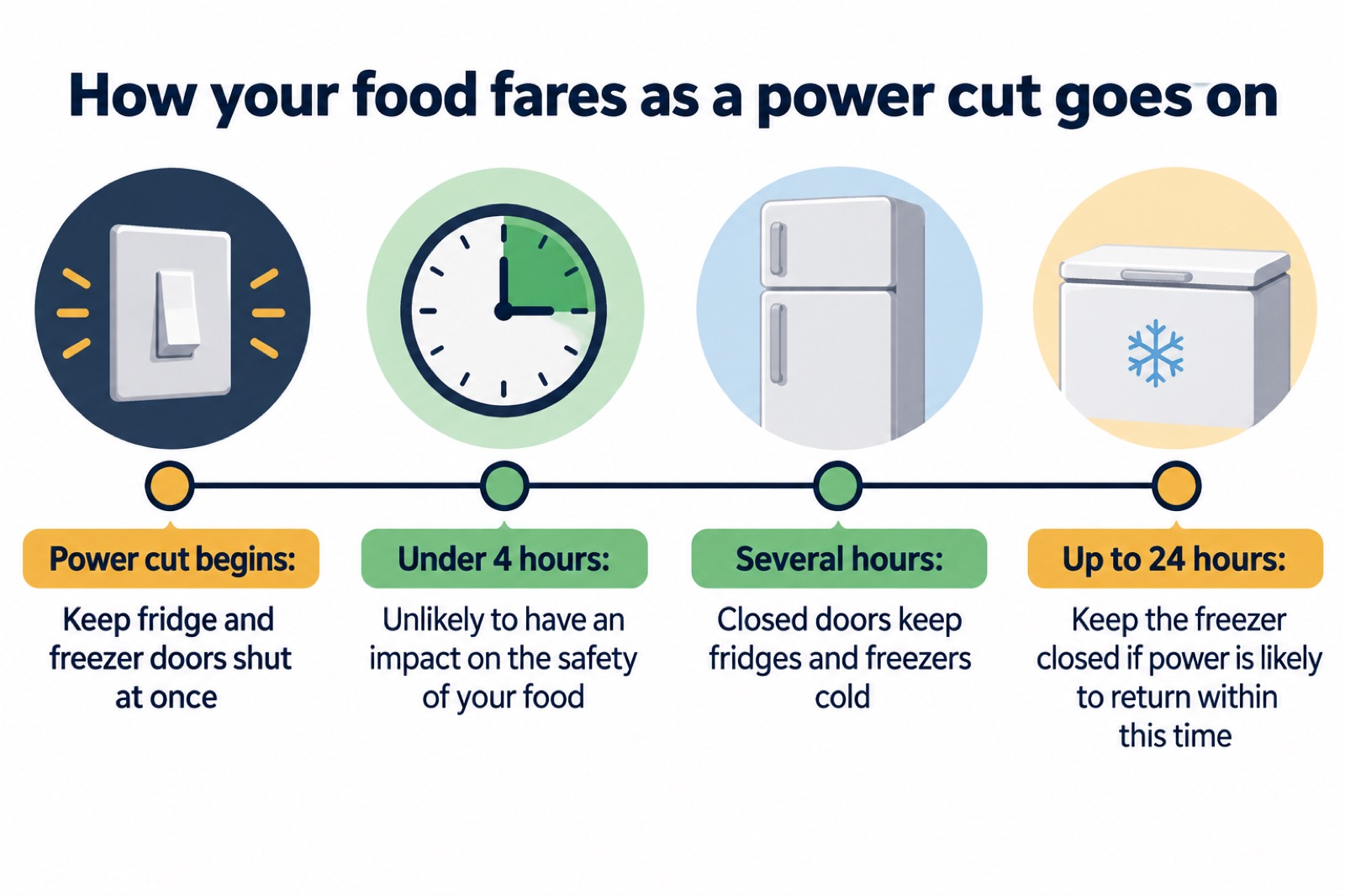
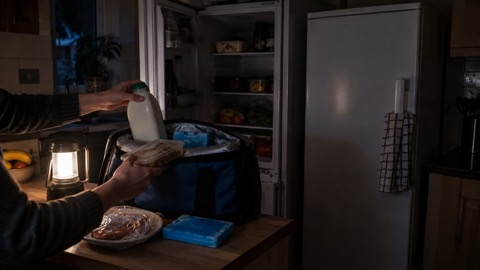
A closed freezer is a cold freezer. Food Standards Scotland advises keeping fridge and freezer doors closed as much as possible during a power cut5, and the Met Office adds that a blanket over the outside helps: fridges and freezers kept closed will stay cold for many hours1. The government's beready campaign makes the same point, that closed doors ensure they stay cold for several hours6.
How long you have matters for what you do next. Food Standards Scotland states that if your electricity is off for less than four hours, it is unlikely to have an impact on the safety of your food5. Devon and Somerset Fire and Rescue Service, writing about after a fire, applies a similar rule: keep the freezer closed if electricity is likely to be restored in under 24 hours and the equipment is not affected by water, heat or smoke22. Our page on fridge and freezer food when the electricity is off goes through the timings, and what food to throw away after an outage covers the aftermath.
Find a torch, not a candle
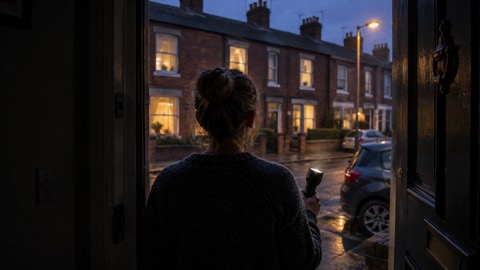
In the first minutes of a power cut at night, reach for a torch. The Met Office lists the essentials that could help you cope as battery candles, torches and batteries, and a mobile phone power pack23. Torchlight is safe to carry, safe to leave on a table, and safe around children and curtains.
If you do keep candles, treat them with respect. Scottish Fire and Rescue Service's power cut guidance is blunt: never leave a lit candle alone14. nidirect and the Met Office both suggest keeping a supply of candles as part of preparing for a power cut18, so candles have a place in the kit, but as a back-up to torches rather than the first thing you light. Our emergency lighting guide compares torches, lanterns and candles, and staying safe in the dark covers fire, shock and fall risks in a dark house.
Your phone battery is your lifeline
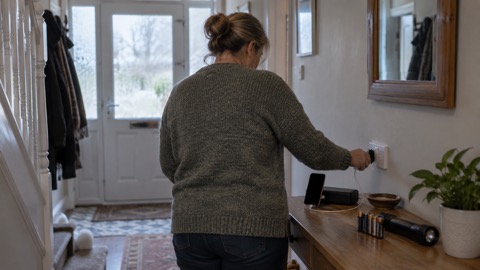
Keep your mobile phone charged so you can make calls in case of an emergency, the Met Office advises1. Carmarthenshire Council puts the same point more fully: keep mobile phones, laptops or tablets fully charged, so you have use of battery power for a short time at least if there is a power cut25. Anglesey Council's winter-ready advice adds that having your mobile charged means you can call for support if needed26.
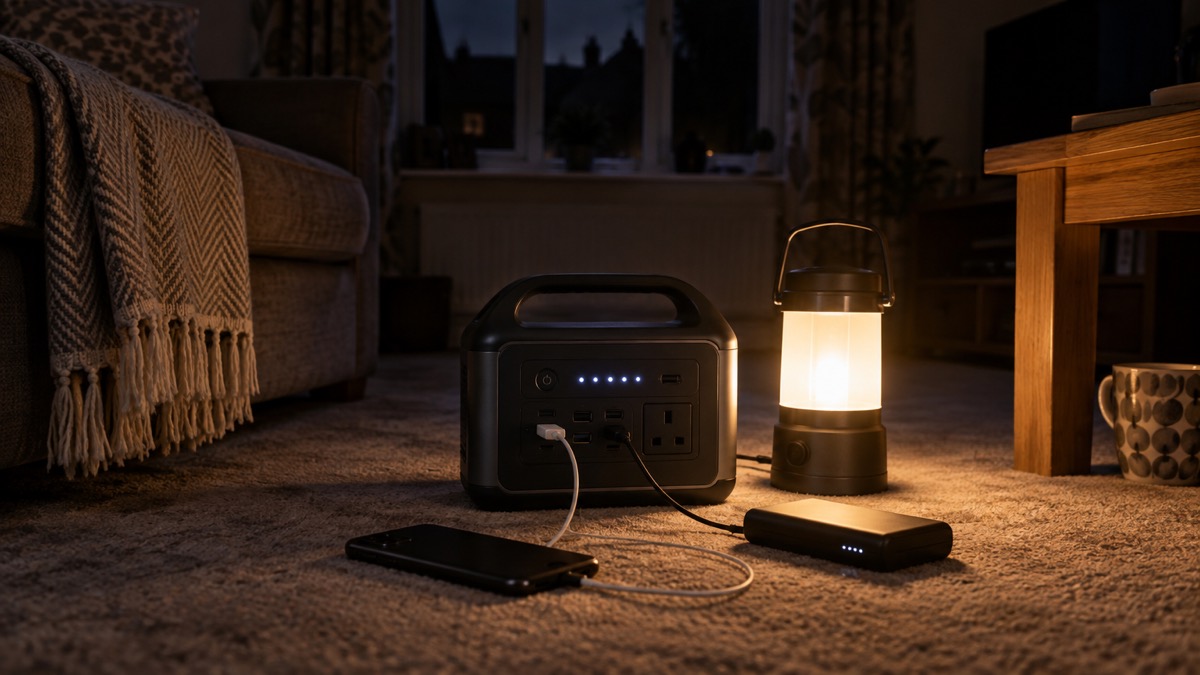
The reason battery matters more than you might think is that the network often outlasts your phone. Wiltshire and Swindon Prepared notes that the mobile phone network may still be operating during a power cut even though your phone runs out of battery27. Battery power packs are a reliable source of power to draw on when the electricity goes off, letting you charge your phone and still use it at the same time27. Our what to keep charged checklist and the backup power guide set out the options.
Once the power is off, conserve what you have. Wiltshire and Swindon Prepared advises that if using a phone, you keep conversations brief and short, ensuring battery is conserved28. The Met Office's winter preparation advice suggests a separate battery charger, and storing key information such as the power cut helpline number, 105, on your phone24. Before a storm, the Prepare campaign says to charge mobile phones, power banks and any back-up batteries for medical equipment in case there is a power cut29.
Medical equipment and refrigerated medicines
If anyone in the household uses medical equipment that needs electricity, plan for power cuts before they happen. The government's Prepare campaign advises making a plan with your care provider or clinical care team now about what will happen in a power cut: the plan should set out what action you or someone you care for needs to take, and who to contact2. Horsted Keynes Parish Council advises making sure any essential medical equipment has a battery back-up, so you can keep using it even if the power is out, and regularly charging any medical equipment you rely on19.
Refrigerated medicines are a separate concern. NHS guidance from United Lincolnshire Hospitals says that in the event of a power cut or fridge breakdown, you should contact your local pharmacy or the manufacturer of your medication for further information on what to do30. Do not guess: some medicines must be kept cold and some must not, and only the pharmacy or maker can tell you which. Our pages on relying on medical equipment that needs electricity, the checklist for households using medical equipment and how to keep medicine cold cover this in depth.
If you or someone you care for needs additional support during a power cut, sign up to your energy supplier's Priority Services Register to let them know2. The Met Office also recommends signing up for the register in case of power cuts1. Our page on the Priority Services Register explains who can join and what it gives you.
What to keep ready before any of this happens
The government's beready campaign sets the baseline for stores: keep at least 3 days' worth of bottled water, 3 litres per person per day, and non-perishable food that does not need cooking6. The Prepare campaign gives the same figures2. Work out your own household's total from those two figures: three days multiplied by three litres per person per day.
Beyond water and food, the kit is small and cheap. The Met Office's essentials for coping with a power cut are battery candles, torches and batteries, and a mobile phone power pack23. nidirect's storm preparation advice adds a supply of candles18, and for households with a baby, pre-prepared formula baby milk if used, plus a flask of hot water to heat bottles and baby food18. Our full power cut kit checklist lists everything, and getting your home ready for a loss of supply covers the preparation around it.
- Bottled water: at least 3 days' worth, 3 litres per person per day6
- Non-perishable food that does not need cooking6
- Torches, batteries and battery candles23
- A mobile phone power pack23
- Candles as a back-up, never left burning alone18
- For households with a baby: pre-prepared formula milk and a flask of hot water18
Stay well clear of fallen power lines
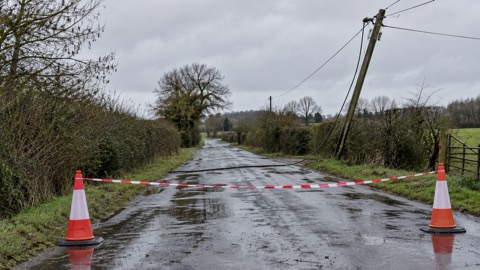
Damaged power lines are the one hazard in a power cut that can kill at a distance. The beready campaign warns to keep away from hazards such as power lines, because electricity at high voltages can jump gaps with no warning6. You do not need to touch a fallen line for it to hurt you.
Report what you see. The National Energy System Operator says that if you want to report a power cut or damage to power lines or substations, you can call 10531. Surrey County Council's advice is to report damaged or dangerous electrical equipment through the Power Cut website, but call 999 in an emergency7. Our page on fallen overhead lines covers what to do, including what to do if your vehicle touches an overhead line and reporting a damaged or open substation.
If you have no working landline and a life-threatening emergency, attempt to call 999 or 112 using a mobile. The Prepare campaign explains that you might receive overlapping signal from a nearby area that is unaffected, because emergency calls automatically roam onto all available networks2.
Emergency power cuts: the three-hour rota
Emergency power cuts are a different event from an ordinary outage. Wiltshire and Swindon Prepared explains that if there is a need for power cuts because of an energy shortage, power cuts would be shared across the country, which helps reduce how much power Britain needs without switching everyone off at once32. Electricity North West describes the scale: emergency power cuts mean switching power off to at least 5% of UK households at once, more than one million homes in Great Britain13.
If a shortage is likely to last a few days, an emergency power cut rota will be published. Wiltshire and Swindon Prepared advises entering your postcode to see when you will have a power cut the next day and a timetable of risk for days after, and to keep checking the rota every evening32. Our pages on rota disconnections and finding your block letter explain how the rota works.
Notice is likely but not guaranteed. Electricity North West says it is likely that it and the public would be given a number of days' notice, although this could be implemented sooner, and network operators may receive as little as 30 minutes' notice of an instruction13. The Electricity System Operator plans to hold a press conference and use social media to let people know a few days before, with national and local news and official social media channels carrying the message; there will be no calls, texts or emails to every customer in advance13. Households and businesses cannot opt out or be specially treated for emergency planned power cuts13, and no emergency power cuts are currently planned: these measures would only be used in emergencies13.
During a rota cut, expect the world around you to change too. Electricity North West lists what is affected: streetlights, traffic lights, shops, petrol stations and public buildings, with mobile telephone transmitters and broadband connections not protected and possibly interrupted13. Even if your block is not confirmed for disconnection, short duration effects of under three minutes, such as dimming of lights or low power, are possible13. If you do experience problems, only contact the network if you continue to have issues more than an hour after the emergency power cut13.
Compensation does not apply to these cuts. Ofgem is clear that you will not be paid for blackouts caused by a national power shortage, damage to electrical equipment or appliances, or a low supply after a power cut17.
If you are considering a generator for rota cuts, plan it beforehand. Wiltshire and Swindon Prepared asks the practical questions: how will you deploy it? It will need to be secure with good airflow3. Never run a generator indoors or in an enclosed space, and see our backup power guide for the options.
Why power cuts happen, and how long most last
Power cuts can have a number of causes, including severe weather, which can lead to damaged infrastructure, or system faults, the Prepare campaign explains2. The National Energy System Operator adds that while national power cuts are rare, local outages can still happen31. Storms are the common trigger: the Met Office's storm advice is to charge phones and power banks in case there is a power cut, and to find your emergency plan and make sure it is up to date12. Our pages on why the electricity goes off and storms and the electricity network cover the causes in detail.
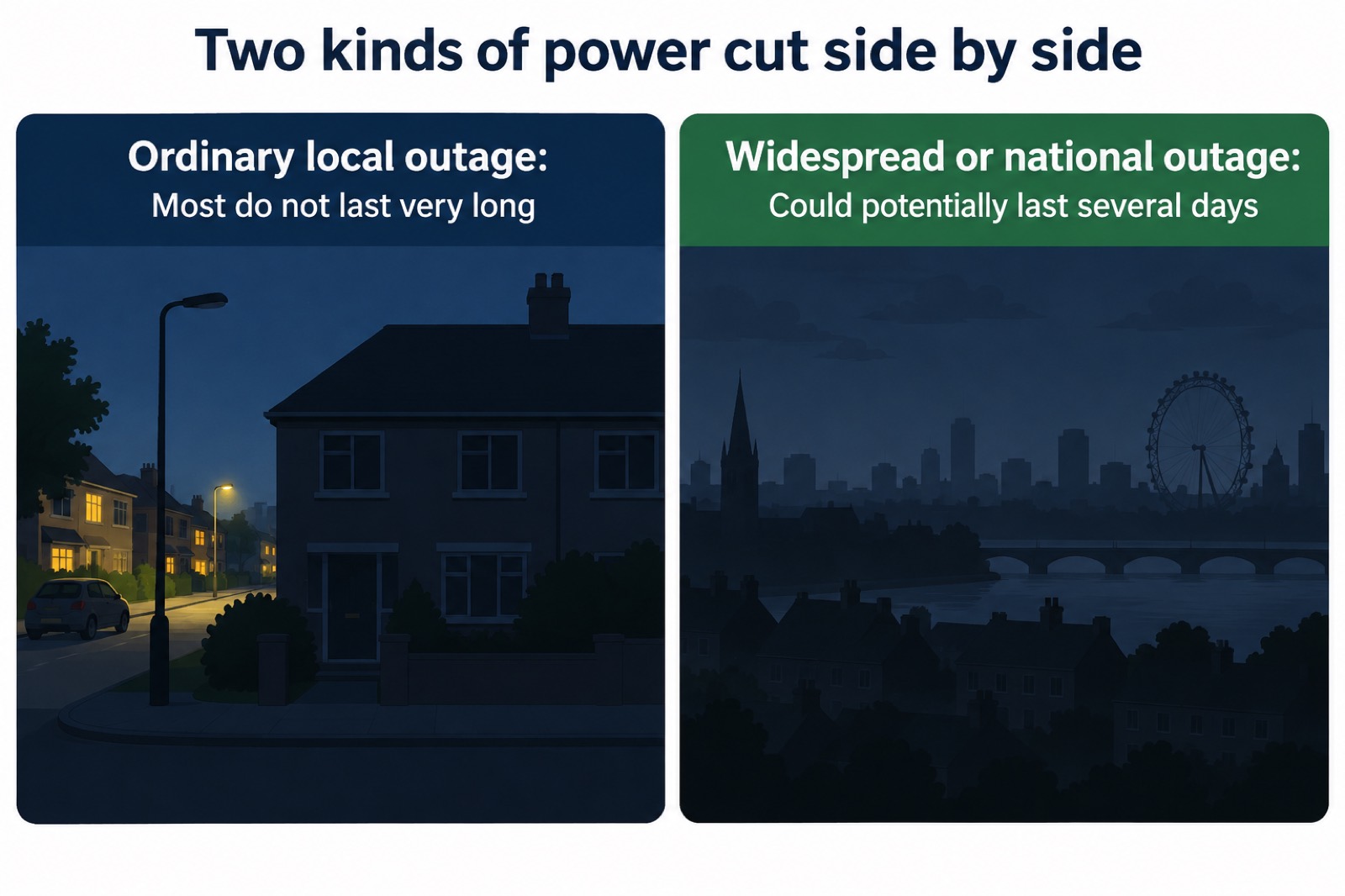
How long a cut lasts depends on what caused it. Wiltshire and Swindon Prepared notes that most power cuts do not last very long3. But the beready campaign warns that more widespread and longer outages could potentially last several days, with regional or, although unlikely, national impacts6. That is why the 3 days' worth of water and the charged power bank are worth having even though most cuts end within hours. Our page on how long until the electricity comes back explains what drives restoration times.
Questions people ask
Do I report a power cut differently in Northern Ireland?
Yes. The 105 service covers Scotland, England and Wales14. In Northern Ireland, nidirect directs people to NIE Networks for information about electricity supply, including an updated list of areas affected by power cuts9. Our Northern Ireland page gives the details.
My lights dimmed but did not go off. Is that a power cut?
Not necessarily. During emergency rota disconnections, even if your block is not confirmed for disconnection, you may experience short duration effects of under three minutes, such as dimming of lights or low power13. Contact your network operator only if you still have these issues more than an hour after the emergency power cut13.
Does the Priority Services Register help in a rota cut?
Registered customers cannot be spared from emergency planned power cuts: households and businesses cannot opt out or be specially treated13. What the register does give is extra help. Ofgem says that for both planned and unplanned power cuts, network operators must offer customers on the Priority Services Register extra help, for example battery packs so they can still charge phones or medical equipment, though what each company offers will be different17. See extra help from network operators during long outages.
Should I turn off utilities if flooding comes with the power cut?
If flooding affects your home, nidirect advises turning off gas, electricity and water supplies if it is safe to do so33. If you do not have non-return valves fitted, plug water inlet pipes with towels or cloths and turn off any equipment that uses water, like washing machines and dishwashers33.
Sources (33)
- What to do in a power cut, Met Office, 2026-10-25
- Power cuts: be prepared, Prepare campaign, 2026-10-21
- Generators, Wiltshire and Swindon Prepared, 2026-10-25
- 12 tips to prepare for a power cut | National Grid, National Grid
- Power cuts and food safety, Food Standards Scotland, 2026-10-25
- Power cuts, beready campaign, 2026-10-21
- Power, gas and water: what if they fail, Surrey County Council, 2025-12-29
- Stay safe in snow, Met Office, 2026-10-25
- Strong winds weather warning information and advice, nidirect, 2026-10-24
- Weather ready tips for snow and ice, Met Office, 2025-11-19
- Cold, snow and ice, Readiness campaign Scotland, 2026-03-25
- Storms and wind, Readiness campaign Scotland, 2026-03-24
- Emergency power cuts, Electricity North West, 2026-10-25
- Power cuts, Scottish Fire and Rescue Service, 2026-10-25
- Be prepared for winter emergencies, NHS Norfolk and Suffolk, 2026-10-01
- Extreme weather summer guide, London Fire Brigade, 2024-05
- Check if you can get payment for a power cut, Ofgem, 2026
- Strong winds and heavy rain warning information and advice, nidirect, 2026-01-27
- 12 tips to prepare for a power cut, Horsted Keynes Parish Council, 2026
- Staying safe in the snow, North Yorkshire Fire and Rescue Service, 2023-03-09
- What to do in a Power Cut - SP Energy Networks, SP Energy Networks
- After an incident: fire, Devon and Somerset Fire and Rescue Service, 2026
- Stay safe in lightning, Met Office, 2026-10-25
- 10 things you should do now to prepare for winter, Met Office, 2026-10-25
- Get prepared, Carmarthenshire County Council, 2026-10-25
- Winter ready, Isle of Anglesey County Council, 2026-10-25
- How to prepare for the loss of electricity, Wiltshire and Swindon Prepared, 2026-10-25
- Prepare yourself, Wiltshire and Swindon Prepared, 2026-10-25
- Storms, Prepare campaign, 2026-10-19
- Storing medicines at home, United Lincolnshire Hospitals NHS Trust, 2026
- Energy outages, National Energy System Operator, 2026
- What are electricity rota loads, Wiltshire and Swindon Prepared, 2026-10-25
- What to do if a flood happens, nidirect, 2025-10-24
 Power Cut Kit Checklist
 What to Keep Charged
 Household Emergency Plan
 Reporting a Power Cut
 Getting Ready for a Power Cut
 Fridge and Freezer Food
 Keeping Warm Without Electricity
 Central Heating Without Power
 Cold Homes and Health
 Carbon Monoxide Risks
 Staying Safe in the Dark
 Smoke and Carbon Monoxide Alarms
 How Long Until Power Returns
 When the Power Comes Back
 Fallen Overhead Lines