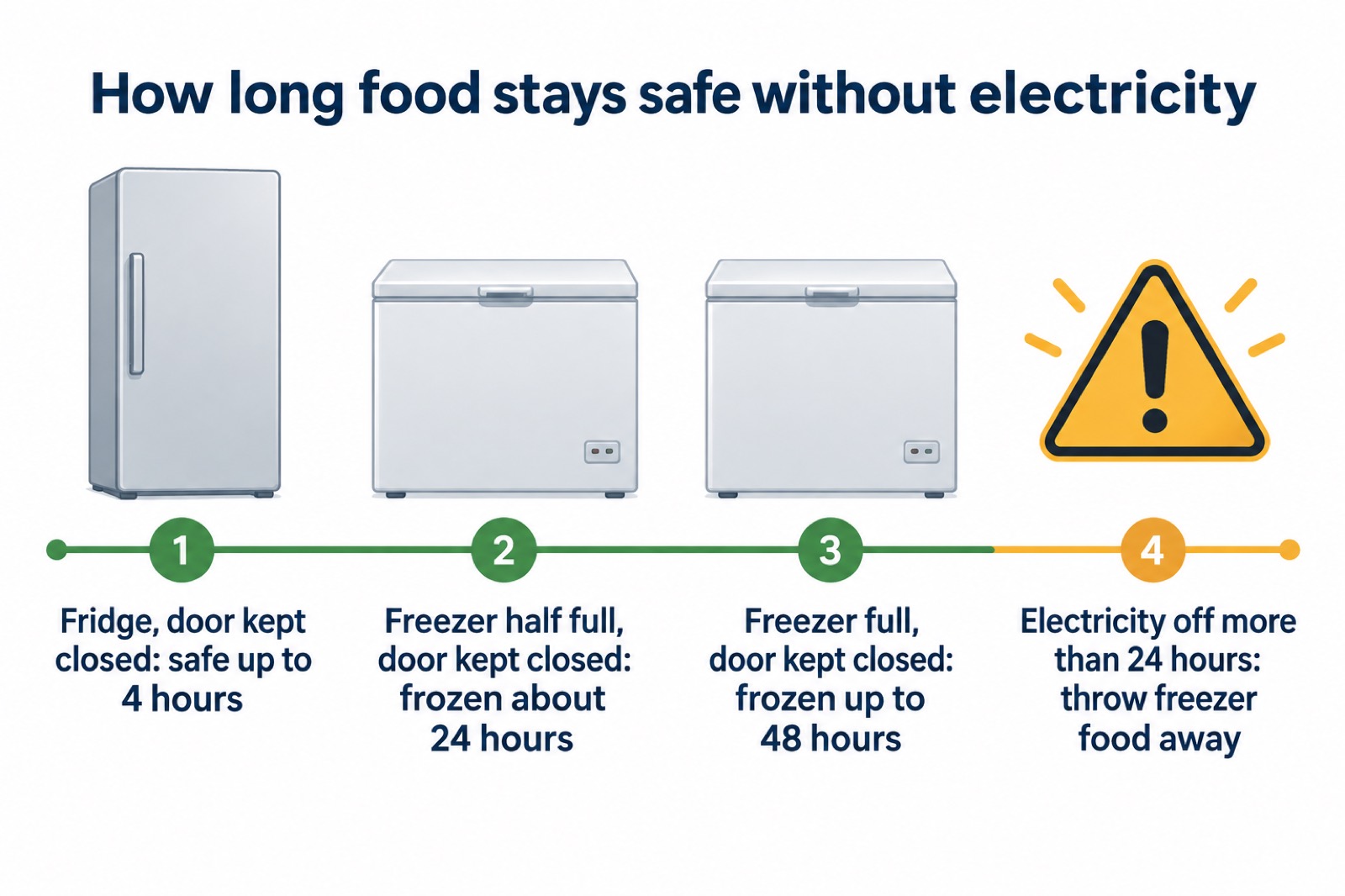
The power is back, and most of the time that is the end of the matter. But the moments after the supply returns are worth a few minutes of care. Food in your fridge will only have stayed safe for up to four hours with the door kept shut, and food in a freezer should stay frozen up to 48 hours if it is full or about 24 hours if it is half full1. Anything that was switched off before or during the cut because it should not be left unattended, such as cookers, grills, chip pans, hair straighteners and electric fires, should only go back on when you are there, so it does not come on without you realising2.
If the supply has come back but something is still wrong, a fault with your meter, a tripped switch in your consumer unit, or damage to the network itself, there are clear routes to help. Call 105 to reach your local electricity network operator, or contact your supplier's 24-hour helpline if you think the problem is with your meter3. This page walks through the checks in the order most households need them: food first, then appliances, then the meter and the wiring, and finally who to call if something is still not right.
Check the fridge and freezer first
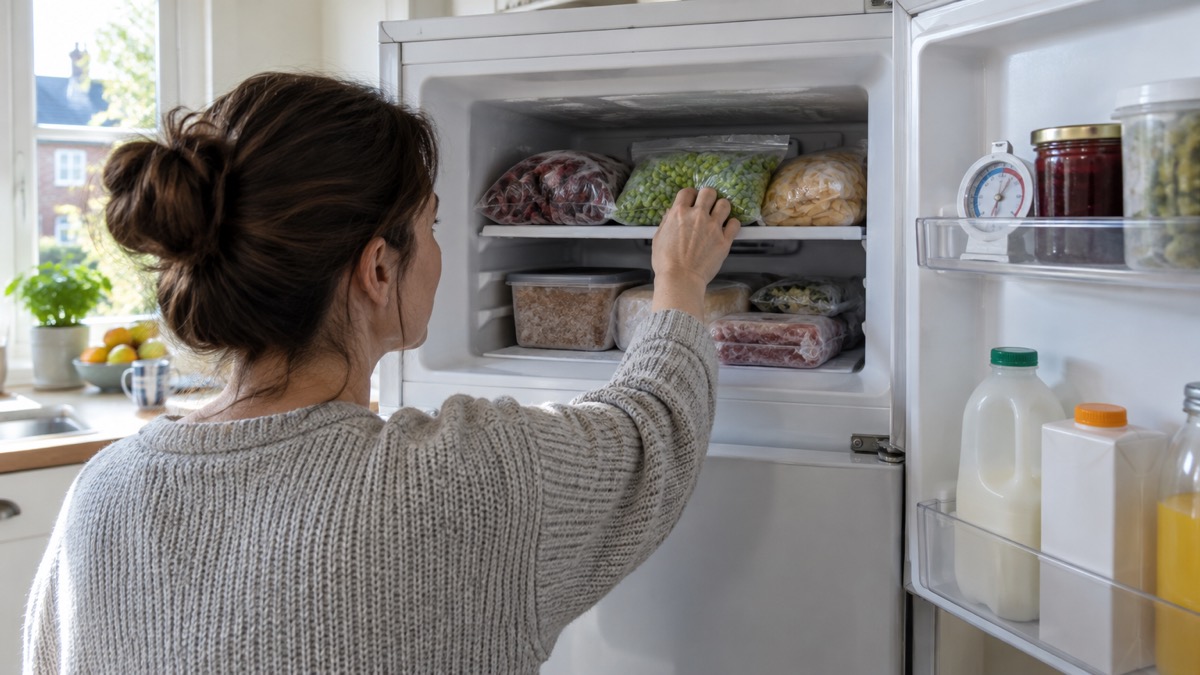
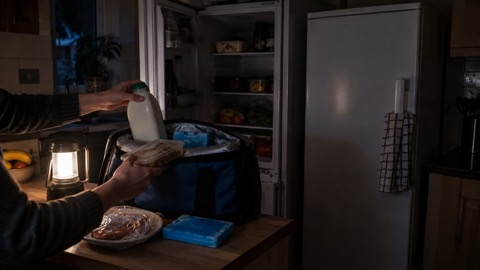
Food safety is the first thing to settle, because it is the one thing you cannot put right later. The general rule during any cut is to keep fridge and freezer doors closed as much as possible1, and to leave the fridge and freezer switched on with the door shut to keep a low temperature7. The Met Office also suggests keeping a blanket over the closed fridge or freezer, as it will stay cold for many hours3.
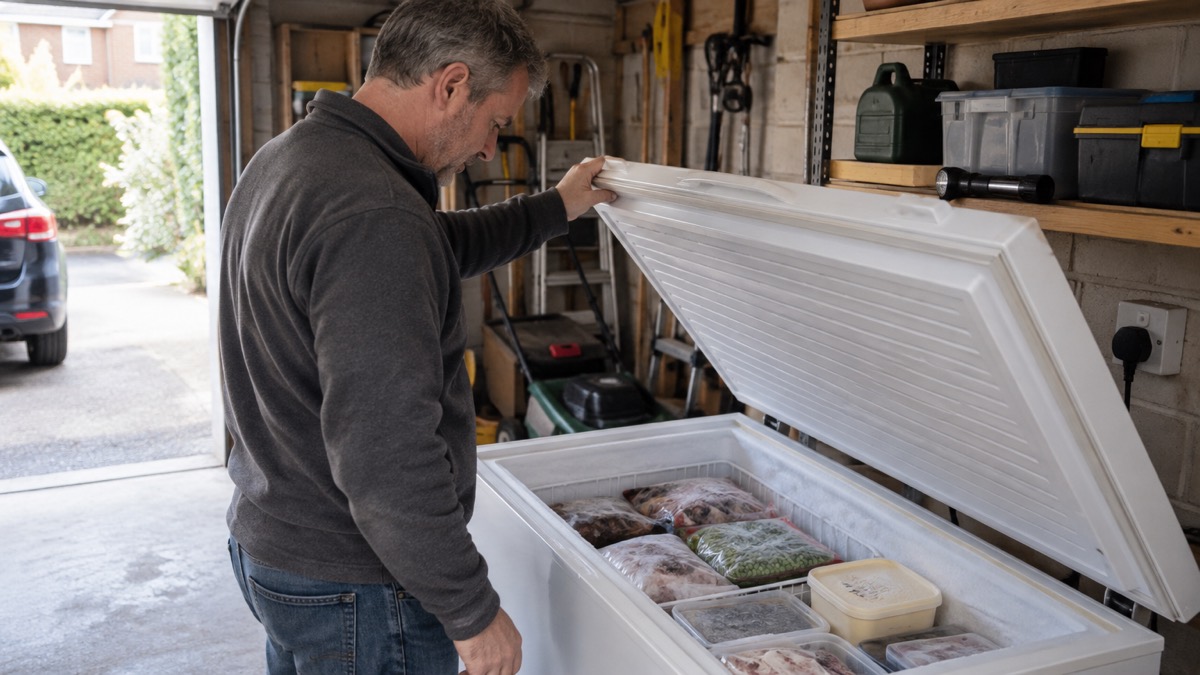
How long the cold lasts depends on which appliance it is and how full it is. Food Standards Scotland gives the figures most households need: a fridge will keep food safe for up to four hours during a power outage, provided you keep the door closed as much as possible1. A freezer holds its temperature far longer, up to 48 hours if it is full, or about 24 hours if it is half full1. A full freezer has more thermal mass in the frozen food itself, which is why the difference is so large.
The cut-off for freezer food is firm. GOV.UK advises throwing away food from a freezer if the electricity has been off for more than 24 hours5. If the outage was shorter than that, and the freezer itself was not affected by water, heat or smoke, Devon and Somerset Fire and Rescue Service advises keeping the freezer closed if electricity is likely to be restored in under 24 hours9. If your cut was caused by a flood rather than a network fault, the same fire service guidance applies, but you should also treat any appliance that has been wet with caution before switching it back on.
If the cut was long enough that food has defrosted, use it up in a sensible order rather than throwing everything out at once. Food Standards Scotland advises using foods in this order: chilled fridge foods first, then defrosted frozen food that doesn't need cooking, then room-temperature perishable food such as bread, and finally room-temperature tinned, bottled and dried food1. This keeps food safe and reduces waste. Our page on what food to throw away after an outage goes into the detail, and fridge and freezer food when the electricity is off covers the during-the-cut side.
Switch appliances back on one at a time
The reason for switching things back on gradually is the same reason you switched them off. The supply can return at any moment, without warning, and an iron, oven, electric fire or fryer left switched on can pose a hazard if the power comes back when you are not there3. Horsted Keynes Parish Council gives the same advice with a longer list: switch off anything not designed to run unattended, such as cookers, grills, chip pans, hair straighteners and electric fires, so they don't come on without you realising once the power is back8. Waiting until the power is fully restored before switching appliances back on also helps prevent faults or damage3.
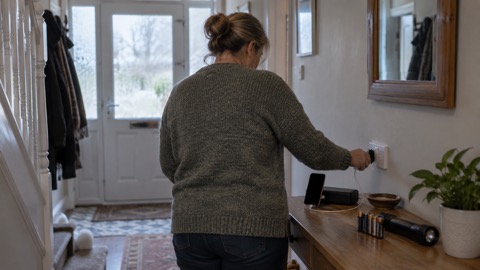
When the supply returns, reverse that process deliberately:
- Check that nothing that could be a hazard, such as an iron, cooker or electric fire, was left switched on while the power was off3.
- When power is restored, turn your appliances back on one at a time6.
- Reset clocks, timers and programmed appliances, which will have lost their settings during the cut.
- If you had a radio teleswitch (RTS) or dynamically teleswitched (DTS) meter replaced with a smart meter, and appliances on timers now behave oddly, contact your supplier for advice4.
The one-at-a-time approach also protects your wiring. Bringing every appliance in the house back at the same moment puts a sudden demand on the circuit, and if anything in the house has a fault, you want to find out which item it is rather than see the whole board trip. If the board does trip when you plug something back in, that item is the suspect: unplug it and try again before assuming the fault is elsewhere. Our page on how to check whether it is just your trip switches covers that diagnosis.
Signs an appliance has been damaged
Most appliances come through a power cut without harm, but a small number are damaged by the interruption itself, by a surge when the supply returns, or by whatever caused the cut in the first place, such as water or a lightning strike. The Health and Safety Executive (HSE) advises users of electrical equipment, including portable appliances, to check the equipment each time they use it, and to remove it from use immediately if the plug or connector is damaged, if the cable has been repaired with tape, is not secure, or internal wires are visible, or if there are burn marks or stains suggesting overheating10.
The Northern Ireland Fire and Rescue Service gives the household version of the same check: look over all appliances, plugs, sockets and leads for damage such as scorch marks or exposed wiring, and replace anything damaged2. Always use the correct fuse, buy approved chargers, and switch off appliances at night or when leaving the home unless they are designed to be left on, such as fridges and freezers2. Do not charge devices on flammable surfaces such as bedding2.
What you are looking and listening for after a cut:
- Buzzing or crackling sounds from an appliance, plug or socket
- Scorch marks, staining or discolouration around a plug or socket10
- A plug or connector that is damaged, or a cable with visible internal wires10
- An appliance that trips the electrics the moment it is switched on
- Heat from an appliance that is switched on but not doing its job
- A battery in any device that is swelling or hot to the touch
On that last point, London Fire Brigade advises that if you notice a swelling battery you should turn off the device11. Batteries and chargers are covered in more depth in our staying safe in the dark page.
Your RCD: what it does and how to test it
An RCD, or residual current device, is a sensitive device that quickly turns the electricity off when danger arises, to reduce the risk of death or serious injury13. North Wales Fire and Rescue Service describes it in exactly those terms, and notes that RCD protection is particularly important when using electrical equipment outdoors13. After a power cut, your RCD is worth a moment of attention for two reasons: it may have tripped during the cut, and it is the part of your wiring most likely to tell you that something in the house has a fault.
To check whether your consumer unit has an RCD, look for the 'Test' or 'T' button14. Electrical Safety First explains that pressing it will switch off the power to the areas of the home it protects14. That is what the button is for: it simulates a fault, and the RCD should respond by cutting the supply. If pressing the test button does nothing, the RCD is not protecting you.
If you don't have an RCD in your consumer unit, or the one you have isn't working, Electrical Safety First advises using plug-in RCDs for all the sockets in your home14. A plug-in RCD sits between the socket and the appliance's plug and gives the same kind of protection for that one socket. If your RCD has tripped during the cut and will not reset once the supply is back, that points to a fault somewhere in the house, and the one-at-a-time switching approach in the previous section is how you find it. If you cannot isolate the cause, use a qualified electrician rather than resetting repeatedly.
Smart and prepayment meters once the supply is back
Once the power returns, your meter should return to normal with it, but there are cases where it doesn't. Citizens Advice advises that if you think your loss of supply has been caused by a problem with your energy meter, you should contact your supplier's 24-hour helpline straight away4. If you prepay for your energy, you should contact your supplier as soon as possible, because you might be left with no energy4.
For prepayment customers, the protections are specific. Ofgem's consumer guidance sets out that prepayment meter faults must be repaired or the meter replaced within 3 hours on a working day and 4 hours on a non-working day, or £30 compensation is payable15. If you have been disconnected over debt, your supplier should reconnect you within 24 hours if you pay the debt in full, agree a repayment plan or agree to a prepayment meter, or pay £30 compensation15. Ofgem also warns that if you forget or cannot afford to top up, there is a risk you will lose access to heat and power, called self-disconnection15. Smart prepayment customers can top up remotely, via online supplier accounts, by app or by phone, without visiting a shop15.
Two further points on meters:
- Faults and batteries. If you think your smart meter has a fault or needs a new battery, ask your supplier to fix it or replace the battery, and don't try to do it yourself4. Your supplier should take all reasonable steps to resolve the problem, either by fixing the meter or replacing it, and if they can't, they should tell you why. If you aren't satisfied with the reason, you can complain to the Energy Ombudsman4.
- Meter readings. Take a meter reading as soon as you can and keep a record of it, to make sure you are billed correctly16. This matters most if your supplier has changed, for example because your old supplier went out of business, in which case the new supplier will give you information on how to get new key cards and tokens if you prepay16.
If you had an RTS or DTS meter replaced with a smart meter, you might find problems with appliances on timers; contact your supplier for advice4. Our page on whether a smart meter can help or cut you off covers the background.
Don't run the washing machine overnight to catch up
After a cut, it is tempting to put the washing machine, dishwasher or tumble dryer on overnight to catch up on everything you missed. Fire and rescue services are clear that you should not. Devon and Somerset Fire and Rescue Service says never leave appliances such as dishwashers, washing machines or tumble dryers running when you're out of the house, or asleep17. North Wales Fire and Rescue Service gives the same advice: don't leave washing machines, tumble dryers or dishwashers running overnight or when you are out17.
The reason is simple: if one of these appliances goes wrong, it can start a fire, and a fire that starts while you are asleep or out is far more dangerous than one that starts while you are in the room. Devon and Somerset Fire and Rescue Service's advice on reducing fire risk at home spells it out: never leave an appliance such as a washing machine, tumble dryer or dishwasher running when you are out, or asleep18. Run them during the day instead, when you are at home and awake, and if you have a backlog of washing or dishes after a cut, spread it over the following days rather than trying to clear it all in one unattended session.
Where appliances should stand, and the extension lead limit
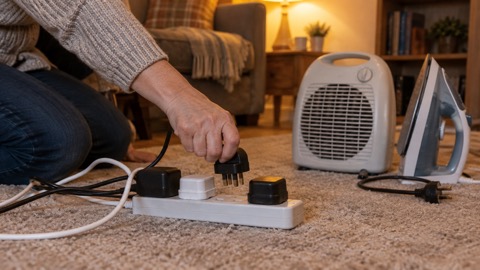
Two placement points matter once the supply is back. First, fridges and freezers should be left switched on and plugged in, as they are designed to run unattended20. Second, when you are plugging things back in, resist the urge to run large appliances through extension leads. Devon and Somerset Fire and Rescue Service says never use powerful appliances such as dishwashers, washing machines or tumble dryers on a multi-plug extension lead17.
Extension leads and adapters have a limit on how many amps they can take, so be careful not to overload them, to reduce the risk of fire13. North Yorkshire Fire and Rescue Service makes the same point: an extension lead or adaptor will have a limit to how many amps it can take, so make sure you check you're not overloading it21. Devon and Somerset Fire and Rescue Service's advice for carers adds that only one extension lead should be used per socket, and be careful not to overload it with many high wattage items22. Humberside Fire and Rescue Service warns that connecting more than one extension lead together can overload the socket and cause an electrical fault23, and North Wales Fire and Rescue Service's high-rise living advice keeps to one plug per socket for the same reason24.
| Do | Don't |
|---|---|
| Plug large appliances directly into a wall socket17 | Run dishwashers, washing machines or tumble dryers on a multi-plug extension lead17 |
| Use one extension lead per socket22 | Connect extension leads together23 |
| Check the amp limit marked on the lead21 | Fill one lead with many high wattage items22 |
| Leave fridges and freezers plugged in and on20 | Leave anything else running overnight or when out13 |
Register your white goods in case of a recall
A power cut is a good prompt for a job most households never get round to: registering the white goods. London Fire Brigade says it plainly: register your white goods, as it could save your life if a product is recalled for safety reasons25. North Yorkshire Fire and Rescue Service advises always registering your white goods appliances so you can be told about appliance faults and safety recalls26.
The service to use is Register My Appliance. Devon and Somerset Fire and Rescue Service says you can use the Register My Appliance service to register appliances and get a notification if a product gets recalled17, and its advice on reducing fire risk at home repeats the point18. Devon and Somerset's advice for carers gives the same route22. Registration means the maker can contact you if a fault is found in your model, which matters because a recalled appliance left in use is a fire risk you would never otherwise hear about. It takes only a few minutes per appliance, and the details you need are on the appliance's rating plate or in its paperwork.
Who to call if something is still wrong
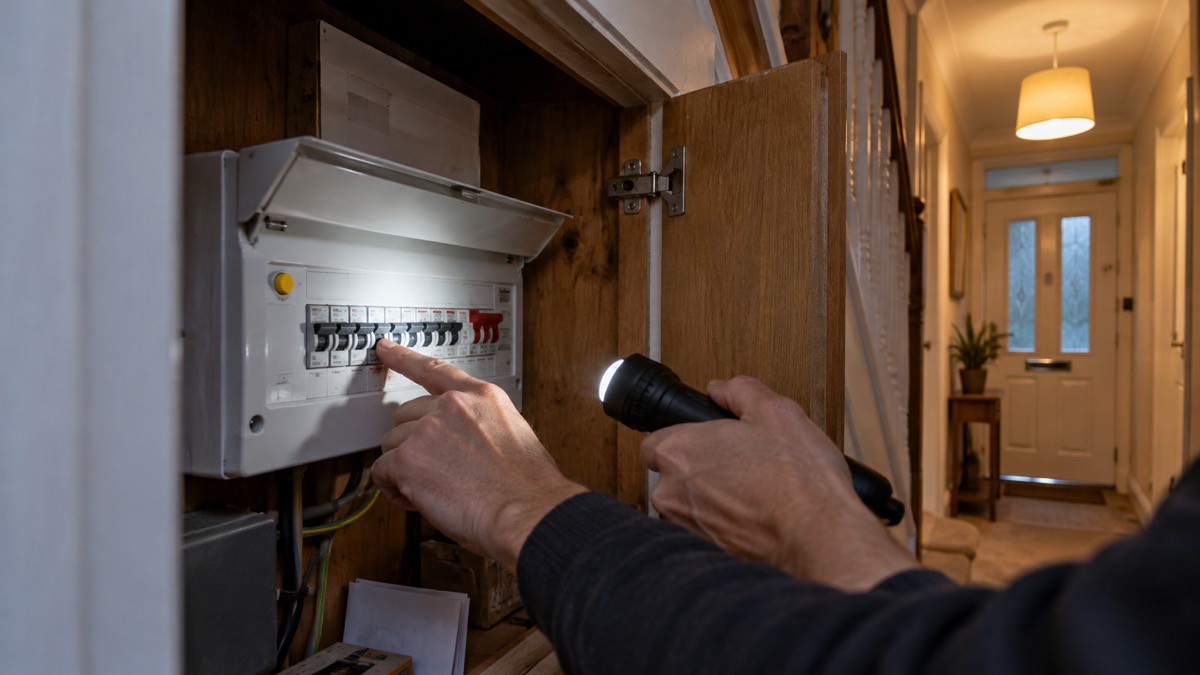
If the power has come back but part of your home has not, work through the possibilities in order. If the fault is with your wiring or an appliance, the one-at-a-time switching test in the earlier section will usually find it, and a qualified electrician or the appliance's maker is the next stop. If you think the problem is with your meter, contact your supplier's 24-hour helpline straight away4. If the supply itself is unreliable, or you spot damaged or dangerous electrical equipment, report it by calling 105 or via the Power Cut website, to be directed to the operator for your area12.
105 is the electricity network operators' easy-to-remember number that puts you through to the local people who can help during a power cut3. It is free to call and works anywhere in Great Britain. If you are unhappy with how your supplier has handled a meter problem, Citizens Advice advises complaining to your supplier first, telling them they must take all reasonable steps to get a smart meter working, and then, if you are still not satisfied, complaining to the Energy Ombudsman4. Citizens Advice itself is the place to go for consumer help with energy problems, and its guidance on smart meter problems covers the complaints route4.
For households that need extra help, the Priority Services Register gives priority treatment during outages to people who meet its criteria, including those with a medical dependency on electricity, those aged 75 or over with no other support, and households with children aged 2 or under15. If you rely on medical equipment that needs electricity, our checklist for households using medical equipment and the page on relying on medical equipment that needs electricity set out what to do when the supply returns.
Sources (26)
- Power cuts: food safety in the kitchen, Food Standards Scotland, 2026-10-25
- Home fire safety, Northern Ireland Fire and Rescue Service, 2026-10-14
- What to do in a power cut, Met Office, 2026-10-25
- Problems with your smart meter, Citizens Advice, 2026-10-26
- What to do after a flood, GOV.UK, 2026-10-25
- 4692 - National Grid - Homeowner preparing for a power cut - Easy Read v2, National Grid Electricity Distribution
- Strong winds weather warning information and advice, nidirect, 2026-10-24
- 12 tips to prepare for a power cut, Horsted Keynes Parish Council, 2026
- After an incident: fire, Devon and Somerset Fire and Rescue Service, 2026
- Electricity and electrical equipment hazards, Health and Safety Executive, 2026
- Batteries and chargers, London Fire Brigade, 2026-10-25
- Power, gas and water: what if they fail, Surrey County Council, 2025-12-29
- Looking after the electrics, North Wales Fire and Rescue Service, 2026-10-25
- RCDs explained, Electrical Safety First, 2026-10-26
- England and Wales energy domestic consumer advice, Ofgem, 2024-11
- What happens if your energy supplier goes out of business, Ofgem, 2026
- Home fire safety checklist, Devon and Somerset Fire and Rescue Service, 2026
- Top ways to reduce your risk of having a fire at home, Devon and Somerset Fire and Rescue Service, 2026
- Checklists and escape plans, South Wales Fire and Rescue Service, 2026-07-29
- Bedtime checks, London Fire Brigade, 2026-10-25
- Electrical safety, North Yorkshire Fire and Rescue Service, 2026-09-14
- Fire safety for carers, Devon and Somerset Fire and Rescue Service, 2026
- Celebrate safely, Humberside Fire and Rescue Service, 2026-10-26
- High-rise living, North Wales Fire and Rescue Service, 2026-10-25
- Electrical items, London Fire Brigade, 2026-10-25
- Kitchen safety, North Yorkshire Fire and Rescue Service, 2026-03-23
 Power Cut Kit Checklist
 What to Keep Charged
 Household Emergency Plan
 Reporting a Power Cut
 What to Do in a Power Cut
 Getting Ready for a Power Cut
 Fridge and Freezer Food
 Keeping Warm Without Electricity
 Central Heating Without Power
 Cold Homes and Health
 Carbon Monoxide Risks
 Staying Safe in the Dark
 Smoke and Carbon Monoxide Alarms
 How Long Until Power Returns
 Fallen Overhead Lines