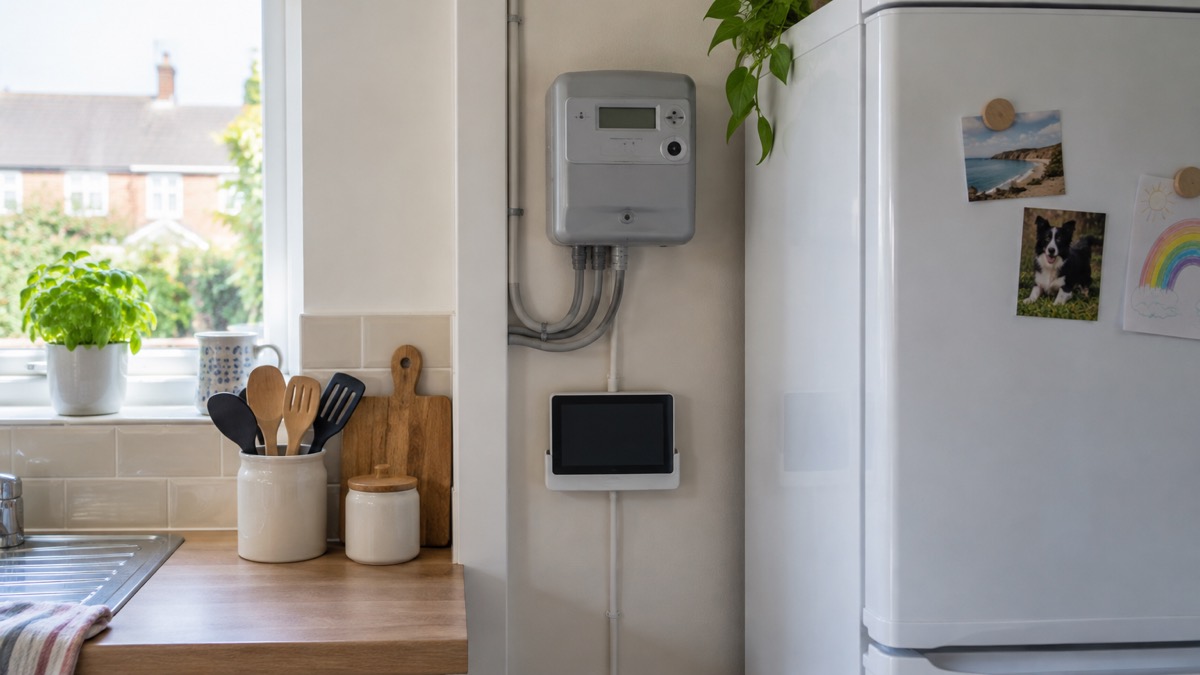
A smart meter does help during a power cut, but not in the way most people expect. It will not keep your lights on, and its in-home display goes blank along with everything else. What it does is let your electricity network operator know automatically that your power has gone off, without you having to contact them, so they can get the right help to you more quickly1. If you have a smart meter, you may not need to report the outage at all.
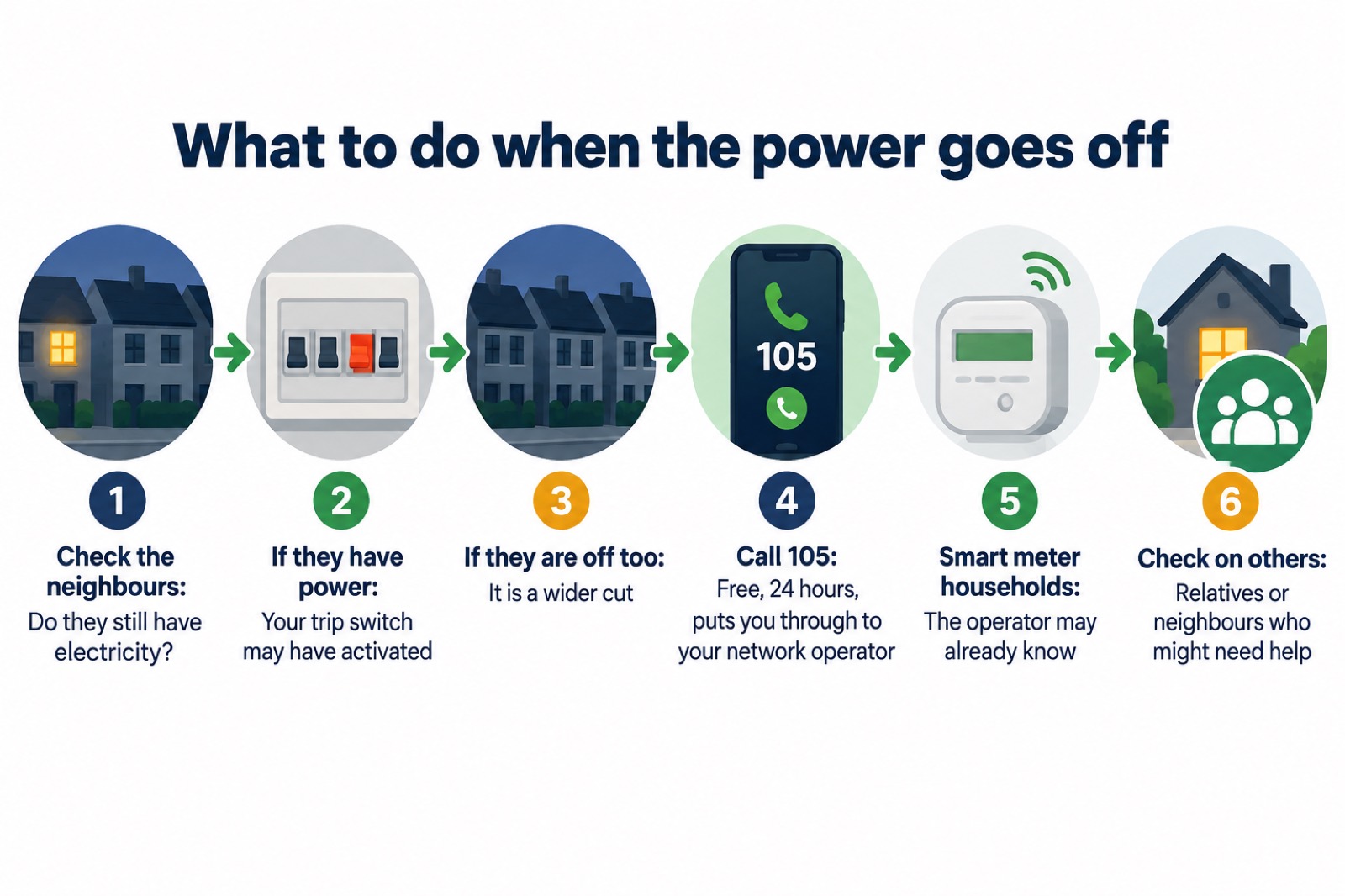
If you do need to report a cut, or you want updates on when power will return, call 105. It is free of charge, available 24 hours a day, and puts you through to your local electricity network operator, who can give you help and advice2. The service covers Scotland, England and Wales3. You can also report a cut directly through your network operator's website4.
The other half of the question is whether a smart meter can be used to cut you off. It can: if you have a smart meter, your supplier could potentially disconnect your supply remotely without needing access to your meter5. That is not a reason to fear the meter, but it is a reason to deal with any payment or account problem early. This page sets out what a smart meter does in an outage, what it cannot do, and how to get help either way.
How a smart meter helps the network respond to a power cut
The main benefit of a smart meter in an outage is invisible to the household. Because the meter communicates with the network, the operator automatically knows when your power has gone off without you having to contact them1. That means a street or a cluster of homes can be identified as out even before anyone picks up a phone, and engineers can be sent to the right place.
The same connection is used to tell when supply has been restored. During Storm Gerrit, SSEN Distribution reported that smart meter data could provide a useful indicator if someone's supply had been reconnected7. For a household, that translates into fewer calls and faster confirmation that the problem is being dealt with.
There is a wider point about information. The Welsh Government's resilience statement notes that understanding how to receive information during a power cut can help reduce disruption when incidents occur8. A smart meter is one channel by which the network knows about your situation; a phone and a radio are the channels by which you know about theirs. Neither replaces the other.
Smart meters also help in ordinary, non-emergency ways that matter when the power is on. They give you real time information on your energy use, allowing you to better manage your usage, so you can save money and reduce emissions1. They can help detect unusual usage patterns and voltage anomalies9. And they can end estimated billing, give greater control over personal energy use, and make payment for pay as you go energy much more convenient6.
Report a power cut: call 105
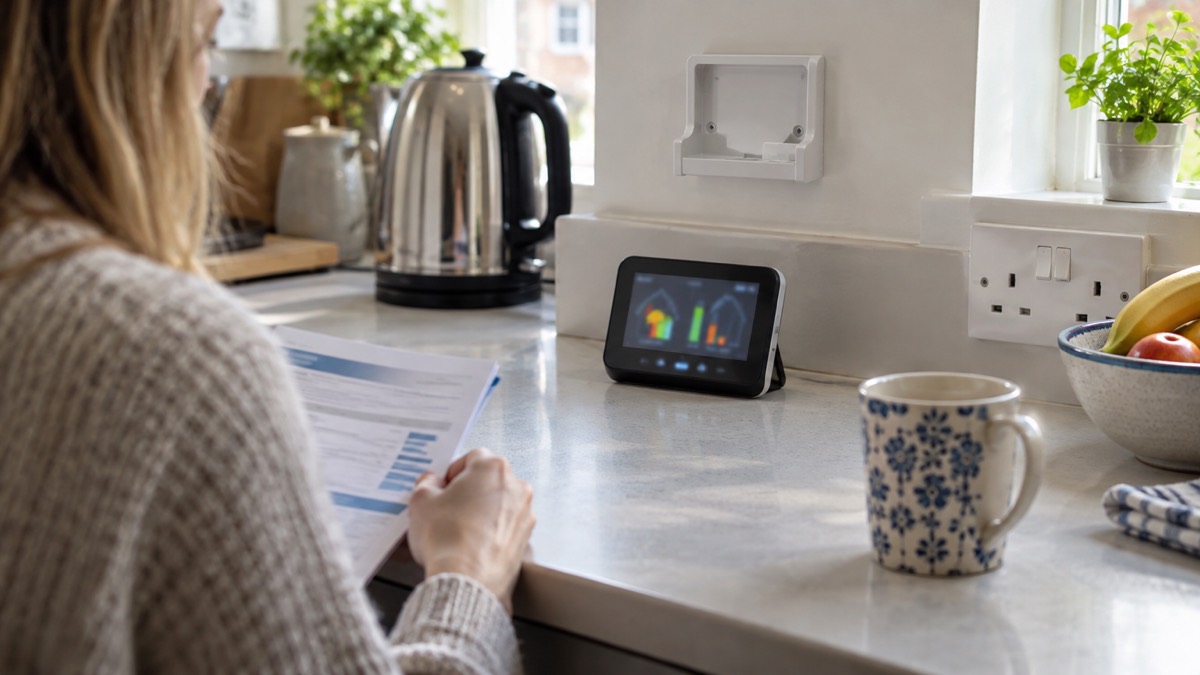
If your power goes off and you want to report it, or you simply want updates, the number to know is 105. It is free of charge and available with help and advice 24 hours a day2. You will be put through to your local electricity network operator, who can give you help and advice10. The service covers Scotland, England and Wales3.
You can also report a cut online. Ofgem advises that if your electricity or gas supply is cut off because of an unplanned power cut, you can report it directly to your local network operator using their website, or call 105 for free4. Scottish guidance points to the same online route3.
Before you call, it is worth a quick check of whether the problem is yours alone. If your power goes off unexpectedly, check to see if your neighbours still have electricity11. If they have power, your trip switch may have activated12. If they are off too, it is a wider cut, and 105 is the right call.
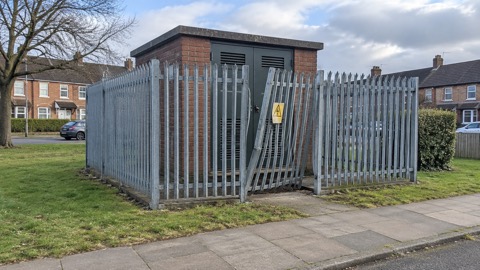
If you spot damage to electricity power lines or substations, call 105 as well14. Do not approach damaged equipment. For more on what to do in that situation, see Fallen Overhead Lines: Keep Away and Ring 105.
What a smart meter tracks, and why it matters in an outage
A smart meter records how much energy you are using, and the in-home display shows it to you in real time. Network operators describe smart meters as helping you track how much energy you're using daily, weekly and monthly, helping you manage household budgets, and as able to help the network respond more quickly if you have a power cut15. The display can help you understand your energy use and estimated costs16.
That daily, weekly and monthly record has a practical use when the power returns. If you have been without electricity for a stretch, the meter's history shows what your normal consumption looks like, which helps you spot anything that is drawing more than it should after a restart. The meter will have accurately measured the consumption of your electrical appliances even at low voltages, because the energy is used at a lower rate over a longer period9.
If you want a simple household habit, take regular photographs of your meter so that you know how much energy you are using per week or month17. It costs nothing and gives you a record that does not depend on the display working.
| What the meter does | When it helps | What it cannot do |
|---|---|---|
| Sends readings automatically16 | Everyday billing, no manual reads | Send anything while the power is off |
| Shows real time use on the display1 | Managing daily and weekly spend | Display anything in a cut |
| Flags unusual usage and voltage anomalies9 | Spotting a fault early | Diagnose a network fault |
| Tells the operator your power is off1 | Faster response in an outage | Restore your supply |
What a smart meter cannot do when the power is off
The single most important limit is power. A smart meter and its in-home display need mains electricity to work, so in a cut the display goes blank and the meter cannot show you anything. The meter may still communicate with the network on its own connection, which is why the operator can see your outage, but that is not something you can use from the kitchen.
The second limit is that the meter cannot protect your appliances. Planned interruptions guidance advises householders to disconnect smart equipment before the power goes off and comes back on, such as boiler controls, TVs and similar items18. That is because the surge when supply returns can damage sensitive electronics. For more, see When the Supply Returns: What to Check and Switch Back On.
The third limit concerns anything that depends on a phone line or a mobile signal. Digital and cordless phones may not work during a power cut, so have one you can plug in directly to stay in contact with others19. A smart meter does not change that.
If you rely on personal alarms, telecare devices or connected health equipment such as diabetes sensors, speak to your device provider or manufacturer to understand how they will function during a power cut20. Some equipment may stop working during a power cut, for example ventilators, oxygen concentrators, electric wheelchairs, hoists, communication devices and feeding pumps21. The Priority Services Register is the route to extra help for households in that position.
Can a smart meter cut off your supply?
Yes, potentially. If you have a smart energy meter in your home, your supplier could potentially disconnect your supply remotely without needing access to your meter5. That is a factual statement about capability, not a prediction. It matters because it removes the old physical barrier of needing to reach the meter, so any account problem is better sorted out early.
If you have been told your supply will be disconnected, Citizens Advice has guidance on what to do5. If your supply is cut off because of a faulty energy meter, contact your energy supplier instead of the network operator4. And if your supplier goes out of business, Ofgem explains what happens to your supply and your account22.
A power cut is a different matter entirely. It is a failure of the network, not a disconnection of your account, and it is reported through 105 or your operator's website4. If you are owed compensation after an outage, the network operator may pay you through your energy supplier, and the money will be added to your energy account or prepayment meter if you have one4.
The Radio Teleswitch switch-off: a dated risk for older meters
Some households have an older meter that receives switching signals by radio, known as a Radio Teleswitch Service or RTS meter. The service ends on 30 June 20266. The switch-off affects households with an RTS meter, and could mean that their heating and hot water supply stops functioning as normal6. The switch-off will affect energy customers who have an RTS meter in their home23.
The reason given is that the equipment producing the radio signal can no longer be adequately maintained6. If you are not sure whether you have one, contact your supplier. If you had a radio teleswitch or dynamically teleswitched meter replaced with a smart meter, you might find some problems with appliances on timers, and you should contact your supplier for advice13.
| Meter type | What happens at the switch-off | What to do |
|---|---|---|
| RTS meter | Heating and hot water may stop working as normal6 | Contact your supplier to arrange a replacement |
| RTS or DTS replaced with a smart meter | Appliances on timers may misbehave13 | Contact your supplier for advice |
| Standard smart meter | No RTS dependency | Nothing extra |
Checking whether a cut is local, and getting help
The first check is the neighbours. If your power goes off unexpectedly, check to see if your neighbours still have electricity11. If they have power, your trip switch may have activated12. If they are off too, it is a wider cut. For a step by step guide, see How to Check Whether It Is Just Your Trip Switches.
While you are out, check on others. Community emergency planning guidance advises checking up on relatives or neighbours who might need help during a power cut24. The Priority Services Register gives extra help to households that need it, including during long outages25. You can read more about what operators offer in Extra Help From Network Operators During Long Outages.
If your electricity is cut off during a storm, follow the advice on staying safe in a power cut26. Keep a phone you can plug in directly, because digital and cordless phones may not work19. And if you have a smart meter, remember that the network may already know about your outage, so you can save the call for updates or for a fault you think is yours alone.
Sources (26)
- What are the benefits of having a smart meter, UK Power Networks, 2026-10-25
- Electrical items, London Fire Brigade, 2026-10-25
- Power cuts, Scottish Fire and Rescue Service, 2026-10-25
- Check if you can get payment for a power cut, Ofgem, 2026
- If you've been told your energy supply will be disconnected, Citizens Advice, 2026-10-26
- Radio Teleswitch Service switch-off, National Energy Action, 2026-07-29
- SSEN restores power to communities following Storm Gerrit, SSEN Distribution, 2023-12-30
- Statement on resilience and emergency preparedness, Welsh Government, 2026-10-13
- Managing voltage changes in your property, Electricity North West, 2026-10-26
- Extreme weather summer guide, London Fire Brigade, 2024-05
- What to do in a power cut, Met Office, 2026-10-25
- Stay safe in lightning, Met Office, 2026-10-25
- If you're having problems with your smart meter, Citizens Advice, 2026-10-26
- Winter preparedness, NHS Lanarkshire, 2023-11-23
- Extra support our customers can get, National Grid, 2026
- Your home energy checklist, National Energy Action, 2026-10-09
- Preparing for winter, National Energy Action, 2025-10-14
- Your planned power cut explained, SSEN Distribution, 2026
- Being prepared, National Grid, 2026
- Be informed about hazards: power cuts, UK Government, 2026-10-21
- Disabled people and carers, Ready Scotland, 2026-10-25
- What happens if your energy supplier goes out of business, Ofgem, 2026
- The Radio Teleswitch Service switch-off: what you need to know, Wiltshire and Swindon Prepared, 2026-10-25
- Community emergency planning guide: prepare, Ready Scotland, 2026-03
- About the Priority Services Register, UK Power Networks, 2026-10-25
- Support during a storm, British Red Cross, 2026-10-25
 Power Cut Kit Checklist
 What to Keep Charged
 Household Emergency Plan
 Food to Throw Away After a Cut
 Keeping One Room Warm
 Heating a Room With a Gas Hob
 Hot Water Bottles and Children
 Unplugging Appliances in a Cut
 Checking Your Trip Switches
 Vehicle Touches Overhead Line
 Reporting a Damaged Substation
 Protected Sites
 Heatwaves and Power Cuts
 Keeping Medicine Cold
 Registering a Relative for Help