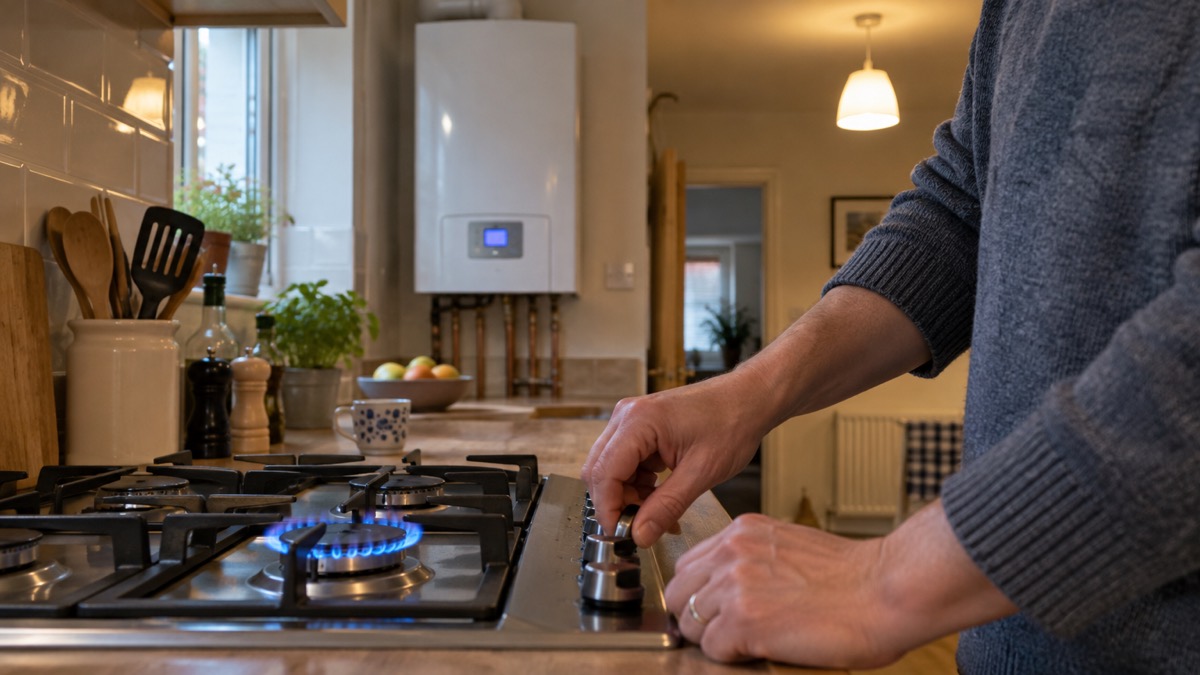
If your energy supplier goes out of business because of financial problems, your gas and electricity stay on. Ofgem, the energy regulator, states plainly that "you will still have electricity and gas supplied to your home or business and your energy supply will not be cut off"1. The company running your account changes; the pipe and the cable into your home do not.
What happens next is mostly automatic. Ofgem moves your account to a new supplier through a process called Supplier of Last Resort, or puts the failed company into Special Administration, and your supply remains uninterrupted either way2. You do not need to switch, and you usually do not need to cancel your Direct Debit1.
Your job in the first few days is small but worth doing properly: take a meter reading and keep a record of it, keep your old bills, and wait for the new supplier to contact you1. The sections below set out what to do straight away, how the transfer works, what happens to money you are owed or owe, and why bottled gas, LPG and heating oil sit outside this protection.
What to do straight away: read the meter and keep your paperwork
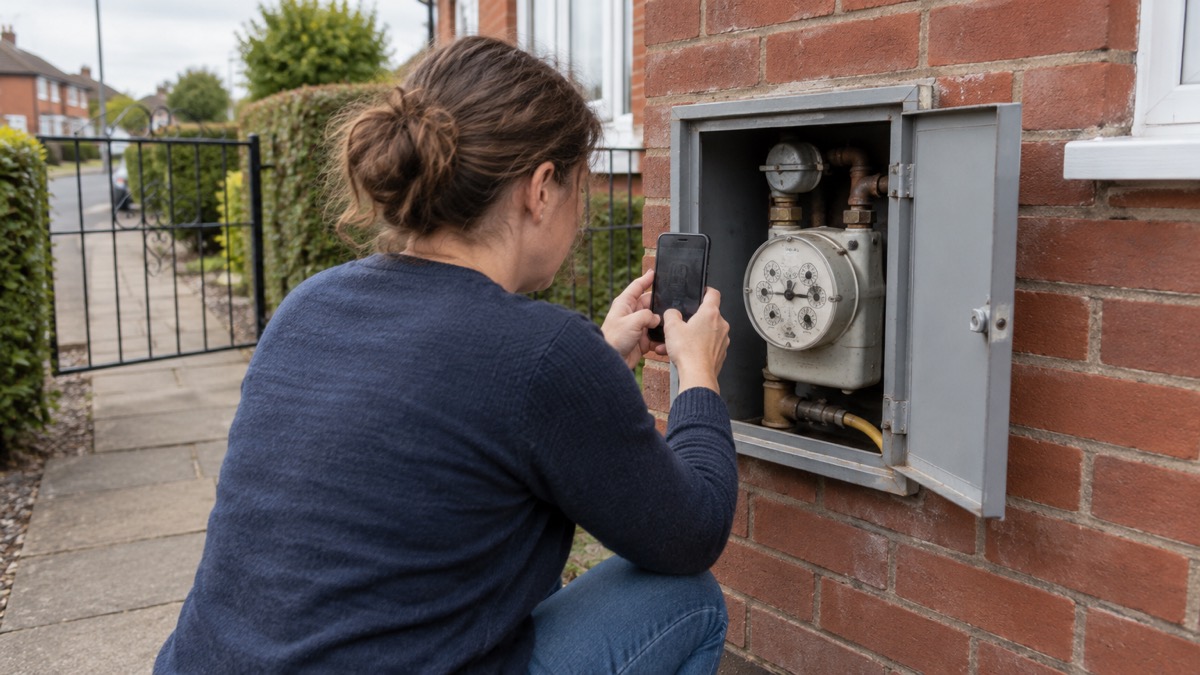
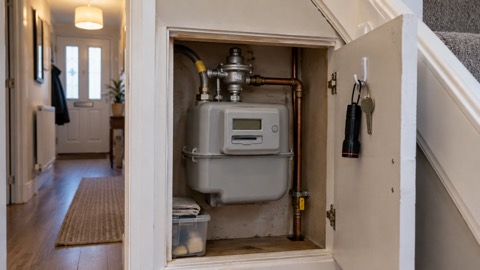
The single most useful thing you can do when you hear your supplier has failed is to read your meters and write the figures down. Ofgem advises that you "take a meter reading as soon as you can" and "keep a record of it to make sure you are billed correctly by the new supplier"1. A photograph of the reading is a simple way to keep that record2.
Keep your old bills too, and download any you hold in an app, because once a supplier has stopped trading you may not be able to access your account details online1. Note your account balance while you still can2. If you pay by Direct Debit, your bank statement shows what has left your account, which is a useful cross-check against the final bill.
A few other practical points:
- Keep topping up a prepayment meter. Your meter keeps working, and if you forget or cannot afford to top up you risk losing heat and power, which is called self-disconnection2.
- If your supply has already stopped because of a faulty meter, contact your supplier, who has to send someone to repair or replace it4.
- If you are not sure who your supplier is, Ofgem can tell you3.
- Give monthly readings in normal times. Providing your supplier with a monthly meter reading helps ensure you receive an accurate bill and avoid fuel debt6.
If your gas or electricity has gone off for a reason other than the supplier failing, that is a different problem with a different phone number. Our guide to what to do when the mains supply to your home goes off walks through it, and which network operator covers your home tells you who to ring.
How Ofgem moves you to a new supplier
When a supplier fails, Ofgem's first choice is the Supplier of Last Resort process: your account is transferred to a new supplier, who takes over the customers. If that process cannot be used, Ofgem might apply for an Energy Supply Administration Order, meaning an administrator is chosen to run the failed supplier's company1. Either way, your supply continues without interruption2.
Once a new supplier is chosen, they contact you to tell you what has happened and that your old supplier is no longer your provider. They explain how they will manage your account and Direct Debit payments, tell you about any credit or debit balance, and explain how you will get a refund on any money owed to you1. You are automatically transferred onto a tariff with the new supplier, and you do not need to switch to another supplier1.
If you were already in the process of switching when the old supplier failed, you will still move to the supplier you chose1. That switch carries on as planned.
The transfer is not always instant. Your information may take a while to move over, so the new supplier might not be able to help straight away with a problem4. If something goes wrong in that gap, contact the new supplier to report it and get their details from their website4.
Credit balances and debts after a supplier fails
Money you have paid in advance is protected. Ofgem states that if your supplier goes out of business, your credit balance is still protected by the rules it sets; your details are given to your new supplier, who will contact you about a refund1. You do not need to chase the failed company for it.
Debt works differently. If you owe money, the new supplier may take the debt on and let you pay it back through your account. If they do not make that arrangement, you may have to continue paying it back to your old supplier or to their administrator, who is running the company on their behalf1. That is why keeping your final bill matters: it shows what you owed and to whom.
| Your position | What happens | Who contacts you |
|---|---|---|
| You are in credit | Balance protected; refund arranged | New supplier1 |
| You owe money and the new supplier takes it on | Repaid through your new account | New supplier1 |
| You owe money and no arrangement is made | Continue paying the old supplier or its administrator | Old supplier or administrator1 |
If you are in debt with your bills, or unable to pay your next bill, contact your supplier. They will help you work out an affordable plan and can tell you about discounts, grants and schemes7. If you cannot afford an increase in your Direct Debit, contact your energy supplier and ask them to review the payment level8. Suppliers are required by Ofgem to ensure Direct Debit payments are reasonable and to communicate any changes clearly2.
Prepayment meters, smart meters and switching
If you have a prepayment meter, the supplier failing does not stop the meter working, but it does not remove the risk of self-disconnection if you cannot top up2. If your gas or electricity has already stopped, your supplier has to send someone to repair or replace the meter4. Our guide to prepayment meters and losing supply covers emergency credit and restarting in more detail.
Smart meters behave differently from one another. Your meter may work in smart mode again if you change tariffs or suppliers1. It is also worth knowing that if you have a smart energy meter, your supplier could potentially disconnect your supply remotely without needing access to your meter4. That is a reason to keep talking to your supplier if you are behind, rather than letting a dispute run.
On switching, the advice is to wait for the transfer to complete. You do not need to switch to another supplier, and you are moved automatically onto a tariff with the new one1. If you later decide to switch, check whether your current tariff has an exit fee and how any outstanding debt could affect the switch3.
Bottled gas, LPG and heating oil: deliveries are not protected the same way
The supplier of last resort safety net covers mains gas and electricity. If you heat with bulk LPG, cylinders or heating oil, a supplier going out of business is a commercial matter between you and your contract, and you should plan for deliveries to be disrupted.
For bulk LPG, check your contract before changing supplier. You can switch during or at the end of your contract, although an early termination fee may apply, and you should compare prices and contract terms before agreeing to a new supply3. If you lock your tank, make sure your supplier has a key or code for access, or they may not be able to fill it when you are out3.
Cylinder users have a separate safety point. If you are in doubt about an old regulator, contact your LPG supplier9. Where the instructions have been lost or give no such information, the regulator should be replaced not more than 10 years after manufacture9.
If you store heating oil, keep the tank secure and bunded. All stored fuels or oils within a 50 m radius of a private water supply source should be adequately bunded to prevent leaks contaminating the supply11. Our guides to LPG homes and oil boiler breakdowns cover running out and resetting in winter.
Where to get help if you are struggling
Help exists, and asking for it early is the practical move. Contact your supplier if you are in debt or cannot pay your next bill; they will help you work out an affordable plan and can tell you about discounts, grants and schemes7. If your situation is urgent, contact your supplier12.
Sign up to the Priority Services Register with each of your utility providers if you have young or vulnerable people in your household, so you receive relevant support if supply is disrupted9. If you are eligible and your gas, electricity or water supply is cut off, your suppliers will know you need extra support13. The register can give you advance notice of power cuts14. Eligibility includes people who depend on medical equipment, are chronically sick or disabled15. Our guide to extra support from networks and suppliers explains how to join.
| Who to contact | When | What they can do |
|---|---|---|
| Your supplier | Debt, payment problems, meter faults | Affordable payment plan, discounts and grants7 |
| Your supplier | You need extra support | Priority Services Register, advance notice of power cuts13 |
| Ofgem | You do not know who your supplier is | Tells you who your provider is3 |
| Network operator or 105 | Power cut | Report it and check restoration times16 |
If your power is off rather than your supplier failed, report it to your local network operator using their website or by calling 105; if the supply is cut off because of a faulty energy meter, contact your energy supplier instead16. Ofgem sets rules about how electricity companies respond to power cuts and how quickly power should be restored, and if these are not met you could be due compensation17. Our guide to compensation when mains supply is interrupted sets out how that works.
For households in Northern Ireland, the utility regulator's own guidance on energy, power supply and utilities is the place to check arrangements, which differ from England, Scotland and Wales18.
Sources (18)
- What happens if your energy supplier goes out of business, Ofgem, 2026
- Energy domestic consumer advice, Ofgem, November 2024
- Your home energy checklist, National Energy Action, 9 October 2026
- If you've been told your energy supply will be disconnected, Citizens Advice, 26 October 2026
- Check if you can get payment for a power cut, Ofgem, 2026
- Keeping warm in winter, Derbyshire County Council, 29 October 2026
- Disability energy support, Scope, 25 October 2026
- Heat your home: managing rising costs, Argyll and Bute Council, 20 November 2024
- Useful information for you and your community, Argyll and Bute Council, 2026
- Portable heaters, Cheshire Fire and Rescue Service, 26 May 2026
- Protecting your private water supply, Drinking Water Inspectorate, 28 October 2026
- Water poverty, National Energy Action, 16 October 2026
- Keeping warm, healthy and safe in cold weather, Greater London Authority, 25 October 2026
- Priority Services Register, Derbyshire County Council, 29 October 2026
- Risks, Surrey County Council, 28 October 2026
- Help with power cuts, Ofgem, 2026
- How to find out if there's a power cut, Which?, 4 June 2026
- Energy, power supply and utilities, nidirect, 23 October 2025
 Checks Before Calling Engineer
 Boiler Checks When Moving In
 Power Cut Kit Checklist
 Stop a Condensate Pipe Freezing
 Repressurising a Combi Boiler
 Hot Water but No Radiators
 Resetting a Boiler Lockout
 Programmer Reset After Power Cut
 Boiler Leaking Water
 Boiler Overheating
 How to Bleed a Radiator
 Boiler On When Away in Winter
 Missed Reconnection Visit
 Prepayment Credit but No Gas
 Low Supply Pressure