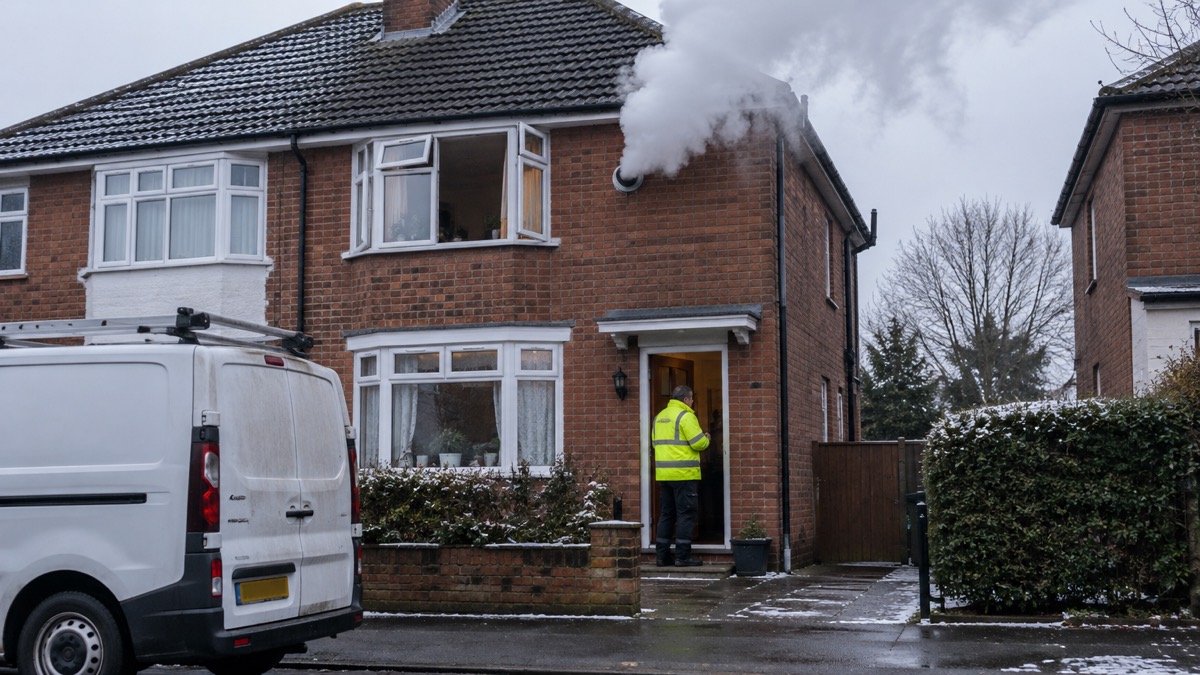
A boiler that overheats should switch itself off. That is the safety design working, not a fault in itself: the boiler cuts the burner before heat or pressure can do damage. Your job is to find out why it tripped, check the simple things you are allowed to check, and restart it once, following the maker's instructions.
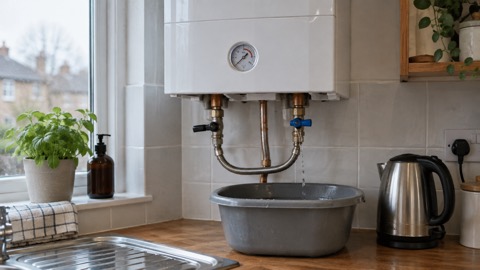
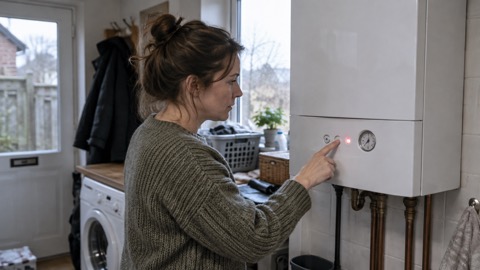
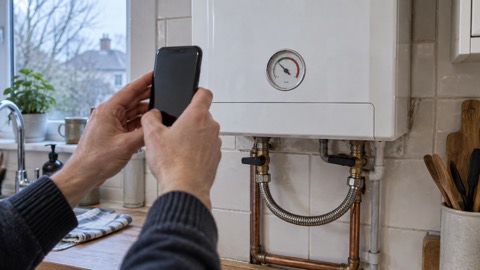
Start with the pressure gauge. Boilers can lose system pressure as they age, and low pressure is a common reason a boiler will not run1. If the gauge reads low, top it up as your manual describes. Then find the reset button, which is usually somewhere on the front panel, and follow the boiler manual for how to reset your specific system2. If the boiler shuts off again, or you see a yellow flame, soot, unusual smells or leaks, turn it off and call a Gas Safe registered engineer3.
Do not keep pressing reset. A boiler that trips repeatedly is telling you something needs attention, and only a qualified, registered engineer should open it up or service it4. The sections below take you through each step in the order you need it.
Why an overheating boiler shuts itself down
A boiler that overheats is being protected by its own controls. When the water inside gets too hot or the system cannot circulate properly, the boiler stops firing rather than letting heat build up. That is why the first thing you notice is often a boiler that has gone quiet, or a reset light showing, rather than steam or noise.
The same principle applies across the heating appliances in a home. Fire and rescue services advise checking appliances for faulty wiring or overheating as part of routine kitchen fire safety5. Overloaded sockets, where too many electrical appliances are plugged into one socket, can also lead to overheating6. A boiler is a fuel-burning appliance rather than a plug-in one, but the logic is the same: heat that cannot escape is a warning sign, and the correct response is to stop the appliance and find out why.
If your home is flooded, the electricity to the property should be isolated immediately, which would turn off the boiler7. In that situation the boiler is the least of your concerns, but it shows how quickly heating systems are designed to be shut down when something is wrong.
Check the simple things before you reset
Before you reach for the reset button, run through the checks an engineer would ask you about. Most of them you can do safely without opening anything.
- Pressure gauge: check the central heating system water pressure where applicable, and top it up if too low, because boilers can lose system pressure as they age1.
- Service history: check whether your central heating boiler has been serviced8. An annual service is the single best way to catch problems before they cause a shutdown9.
- Pump and pilot light: check the pump is running inside the boiler by feeling the side of the boiler, and check the pilot light is on, relighting it using the boiler manual if needed10.
- Fault signs: look for a yellow flame, leaks, unusual smells, soot or staining around the boiler, or a boiler that keeps turning itself on and off3.
If any of the fault signs are present, stop. Turn the boiler off and call a Gas Safe registered engineer3. Do not attempt to relight or reset a boiler that is showing these signs, and never attempt to install or service appliances yourself4.
Finding the reset button and restarting safely
The reset button should be located somewhere on the front panel of the boiler2. The exact position varies between models, so check the boiler manual for how to reset your specific system2. If the manual has been lost, find the model name on the boiler and get the manual from the maker before you start pressing buttons.
Once you have found it, the sequence is straightforward:
- Confirm the pressure is at the level your manual specifies, and top up if it is low1.
- Check the boiler has been serviced and there are no fault signs such as a yellow flame, leaks or unusual smells8.
- Press reset once, following the maker's instructions for your model2.
- If the boiler fires and runs normally, note what happened and keep an eye on it.
- If it shuts off again, stop and call a Gas Safe registered engineer3.
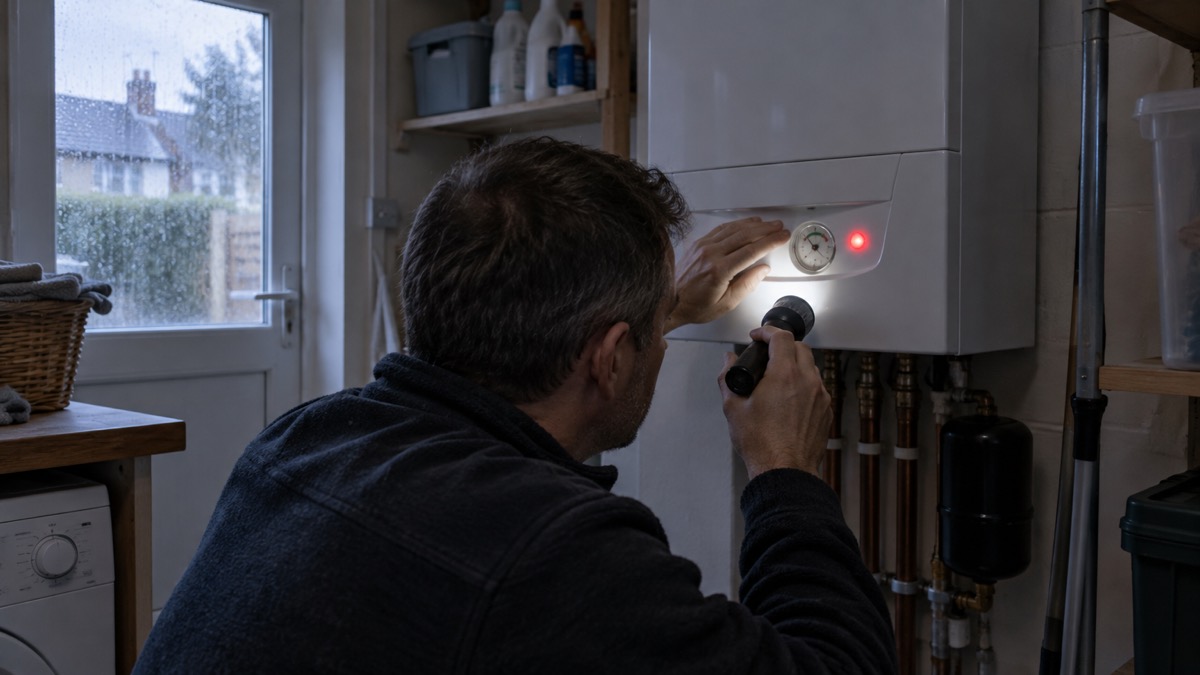
The instruction to follow the maker's instructions is not a formality. Fire and rescue services give the same advice for every appliance in the home that can overheat, from portable heaters to heated wheat bags: always follow the manufacturer's operating and maintenance instructions11. A boiler is no different, and the manual is the only place that tells you what the fault lights on your model mean.
"Your boiler's reset button should be located somewhere on the front panel. Check your boiler manual for instructions on how to reset your specific system."
When to stop resetting and call an engineer
One reset after checking the pressure is reasonable. Resetting more than once is not. If the boiler shuts off again after a single reset, the underlying cause has not gone away, and repeated resets can mask a fault that needs fixing.
Call a Gas Safe registered engineer if you notice any of the following3:
- strange noises from the boiler
- leaks
- a yellow flame, when it should always be blue
- unusual smells
- the boiler turning itself on and off
- low pressure that will not stay up
- no hot water
- soot or staining around the boiler
Turn the boiler off first, then call3. You can find a registered engineer at gassaferegister.co.uk13. Never attempt to install or service appliances yourself; use a reputable, registered engineer to install and service your boiler, cooker, heating system and appliances4.
If you rent your home, the responsibility for repairs sits with your landlord, and there is separate guidance on broken boilers in rented homes. If your boiler has locked out and you are unsure whether to reset again, the page on how many times it is safe to reset a boiler lockout goes through it in more detail.
Keeping it from happening again
The most effective thing you can do is have the boiler serviced annually9. Regular servicing catches the wear and pressure loss that lead to overheating shutdowns before they happen, and it is the advice fire and rescue services and NHS winter health guidance give for heating appliances generally14.
Beyond servicing, a few habits reduce the load on the system:
- Watch the pressure. Check the gauge occasionally, not just when something goes wrong, and top up when it drops1.
- Do not overload sockets near the boiler or anywhere else in the home, as plugging too many appliances into one socket can lead to overheating6.
- Keep vents and flues clear. A fuel-burning appliance needs airflow, and blocked ventilation is a carbon monoxide risk as well as an efficiency one16.
- Know the warning signs and act on them early: a yellow flame, soot or staining, or unusual smells all mean call an engineer3.
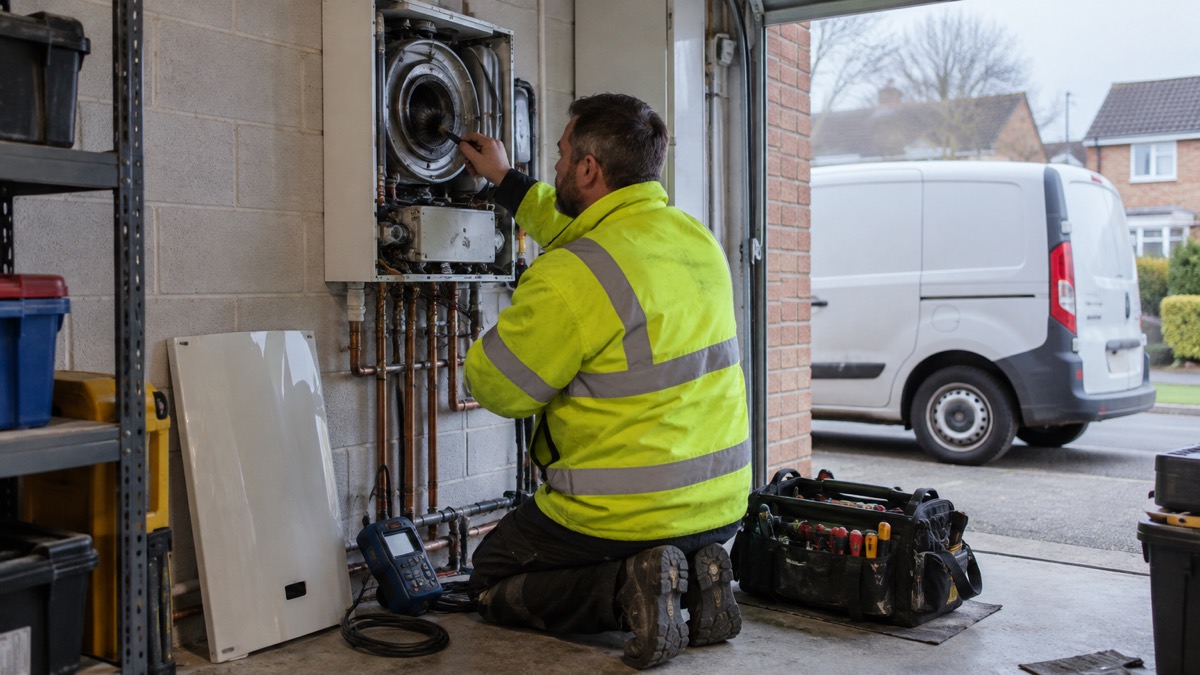
Carbon monoxide is the reason servicing matters beyond convenience. The NHS advises that boilers, heaters and cookers are serviced regularly by a qualified and registered engineer16. If you suspect carbon monoxide, the fire and rescue service TASK advice is to turn off or extinguish all fuel-burning appliances if safe to do so, open doors and windows and go outside, seek medical assistance if unwell, and keep appliances off until checked by a qualified engineer17.
Where to get help
For a boiler fault, the route is a Gas Safe registered engineer. You can find one at gassaferegister.co.uk13. If extra work is needed on your boiler, oven or fire, a Gas Safe registered engineer is required13. NHS winter health guidance repeats the same advice: contact a Gas Safe registered engineer to make sure heating and cooking appliances are working properly15.
If you are worried about carbon monoxide symptoms, or they are worsening, seek medical advice by contacting NHS 111; in an emergency, or if you think someone has heatstroke or another severe reaction, dial 99918. The page on unsafe appliances explains what happens if an engineer condemns an appliance, and finding a Gas Safe registered engineer covers how to check an engineer's card.
For the wider picture on heating failures, from frozen condensate pipes to lost gas supply, start with Gas and Heating Failures: A Household Guide. If your boiler is leaking water, there is a separate guide on what to do if your boiler is leaking water, and if the pressure will not stay up, see boiler pressure.
Sources (18)
- Boiler appliance guide, Gas Safe Register, 2026
- No central heating: what to do, British Gas, 2026
- Safe and well booklet, Cheshire Fire and Rescue Service, 2026
- Carbon monoxide poisoning, NHS, 2026
- Stay safe in the kitchen this autumn, North Yorkshire Fire and Rescue Service, 2025
- Sockets, Greater Manchester Fire and Rescue Service, 2026
- Flooding, CIPHE, 2026
- How do I protect against frozen pipes?, WaterSafe, 2026
- Home fire safety: heaters and electric blankets, Lincolnshire County Council, 2026
- Water pressure, Yorkshire Water, 2026
- Portable heaters, Mid and West Wales Fire and Rescue Service, 2026
- Heaters, Devon and Somerset Fire and Rescue Service, 2026
- Emergency engineer visit, Cadent Gas, 2026
- Cold weather advice, West Midlands Ambulance Service, 2026
- Stay well this winter, Cheshire and Merseyside NHS, 2026
- Carbon monoxide, Devon and Somerset Fire and Rescue Service, 2026
- Home fire safety, Northern Ireland Fire and Rescue Service, 2026
- Coping with hot weather in London, Greater London Authority, 2026
 Checks Before Calling Engineer
 Boiler Checks When Moving In
 Power Cut Kit Checklist
 Stop a Condensate Pipe Freezing
 Repressurising a Combi Boiler
 Hot Water but No Radiators
 Resetting a Boiler Lockout
 Programmer Reset After Power Cut
 Boiler Leaking Water
 How to Bleed a Radiator
 Boiler On When Away in Winter
 Missed Reconnection Visit
 Prepayment Credit but No Gas
 Low Supply Pressure
 Checking a Network Engineer's ID