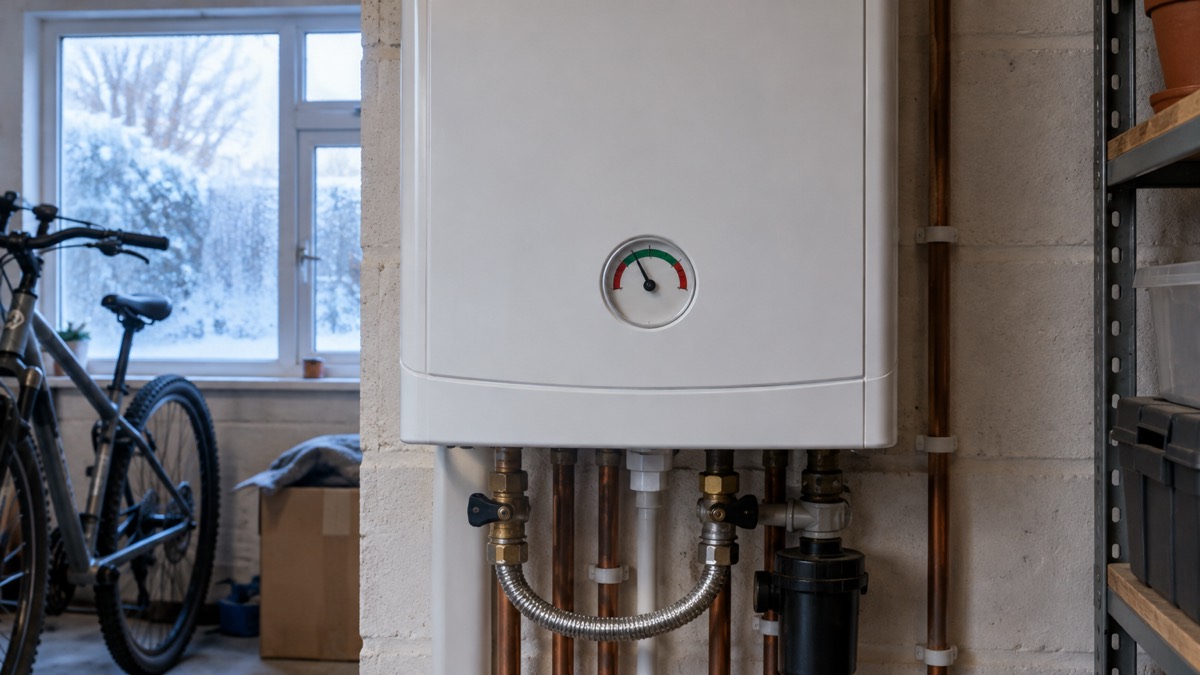
With the heating off, your boiler pressure should sit between 1 and 1.5 bar on the gauge1. When the heating is running the reading will rise a little, and that is normal; it is the cold reading you check and act on. If the needle has slipped into the red at the bottom of the dial, the system has lost water and needs topping up, which most households can do themselves in a few minutes using the filling loop or filling key2.
Low boiler pressure will not harm you physically, but it can harm the heating system, reduce efficiency, make the boiler louder and reduce your hot water1. High pressure is the more serious direction: unless you have accidentally overfilled the system yourself, it can be a sign of a more serious issue, and left too long it could cause serious damage to the boiler and central heating system1. This page explains how to read the gauge, why pressure falls and rises, how to top up safely, and when to stop and call a Gas Safe registered engineer.
What the gauge should read: 1 to 1.5 bar with the heating off
The number to remember is 1 to 1.5 bar, checked when the heating system is cool2. British Gas gives the same figure for filling a combi boiler: wait for the gauge to reach 1 to 1.5 bar, then close the valve1. Vaillant's guidance agrees, saying the typical level to aim for is around 1 to 1.5 bar5. The British Red Cross puts it slightly more broadly, advising that on most boilers the pressure gauge should be between one and two bars6, and British Gas notes the normal range is usually between 1 and 2 bar3. The tighter 1 to 1.5 bar figure is the one to aim for when you top up; anything between 1 and 2 bar is within the normal working range.
The reading changes with temperature, which is why the cold reading is the one that matters. Water expands as it heats, so the gauge climbs while the heating runs and falls back as the system cools. A boiler that reads 1.2 bar cold might read noticeably higher with the radiators hot, and that movement is the system behaving as designed. What you are checking for is the resting level: if the needle sits below 1 bar when everything has been off for a while, the system has lost water and needs topping up.
Worcester Bosch, whose support article covers this directly, states that when the heating system is cool, the pressure should be between 1 and 1.5 bar on the pressure gauge2. If pressure is below 0.5 bar, down in the red section, water has been lost from the system and must be replaced2. Some makers give their own thresholds: the Navien NCB700 manual, for example, instructs owners to fill the system if the boiler water pressure drops below 0.4 bar7. Your own boiler's manual will state its exact figures, and it is worth checking before you top up.
Reading the gauge: green zone, red zone and digital displays
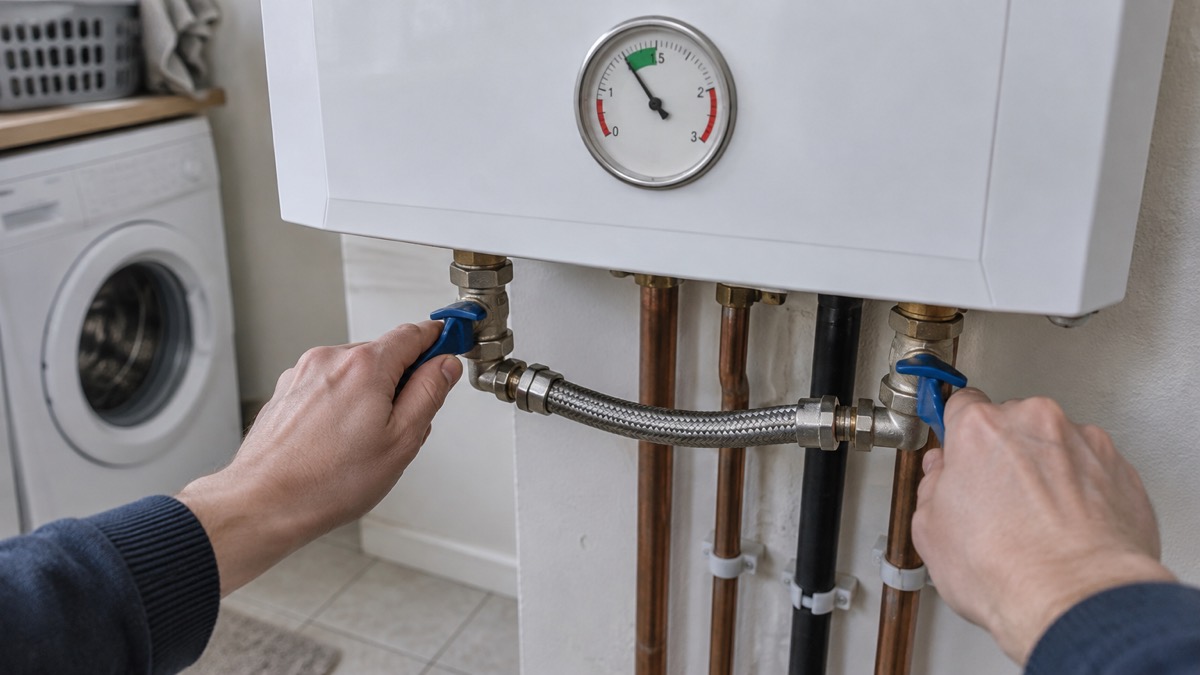
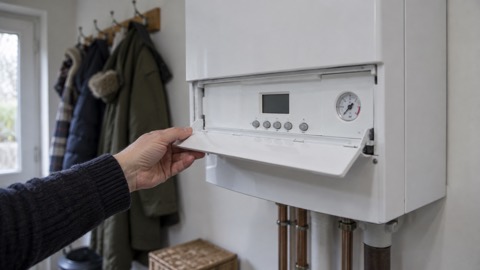
Most boilers show the pressure on the front of the unit, either on a physical dial or a digital display. Glow-worm, for instance, says most of its models display the pressure on the front of the boiler interface, on either a physical or digital gauge8. A physical dial is usually marked with a green zone for the normal range and red zones at each end: the lower red section means pressure is too low, and the upper red section means it is too high, at about 2.75 bar or more on Worcester Bosch's dial2. A digital display shows the number in bar instead, and the same ranges apply.
To take a reading properly, wait until the heating has been off long enough for the system to cool, then look at the gauge at eye level. Note where the needle sits relative to the green zone. If it is in or near the lower red zone, the system needs water. If it is in the upper red zone, at around 2.75 bar or more, the pressure is too high and you should stop and read the section on high pressure below before doing anything2. If your boiler shows a fault code or flashing light alongside an abnormal pressure reading, the maker's manual will tell you what the code means, and our page on boiler fault codes, flashing lights and lockouts explains the common ones.
One thing the gauge cannot tell you is the state of your mains water supply. Low pressure at the tap is a different matter from low boiler pressure: the boiler gauge measures the sealed heating circuit, not the water coming into your home. If your problem is weak flow from the taps rather than the heating, that is covered in who to call about low supply pressure.
Why boiler pressure drops
Pressure falls for a reason: water has left the sealed system somewhere. The common causes are small water leaks in the pipework or radiators, and bleeding radiators, which releases air and lowers the pressure as it escapes5. Boilers can also lose system pressure simply as they age, which is why the Gas Safe Register's boiler guide lists checking the central heating system water pressure as part of routine ownership9. Worcester Bosch notes that if pressure is below 0.5 bar, water has been lost from the system and must be replaced2.
Bleeding radiators is the most everyday cause. As air is released from the central heating system, it lowers the pressure, so British Gas advises checking the pressure gauge after bleeding a radiator1. The Gas Safe Register adds a useful warning sign: radiators that are colder at the top than the bottom need bleeding, but if this is needed regularly it is likely hiding a wider issue, and a Gas Safe registered engineer should check the system9. Our guide to how to bleed a radiator covers the process step by step.
The pattern of the drop tells you a lot. A gradual fall over months, needing a top-up a couple of times a year, is normal1. A faster fall, or pressure that drops as soon as you close the filling valve, points to something specific: Vaillant says this strongly suggests a significant leak or a fault with the pressure relief valve5. In that case stop topping up and get an engineer out, because you are simply pouring water into a system that is losing it. Persistent low pressure with no obvious leak is one of the fault signs the fire and rescue service lists as a reason to turn the boiler off and call a Gas Safe engineer10.
Low pressure will not harm you, but it can harm the heating system
It is worth being clear about what is at stake. Low boiler pressure will not harm you physically, so there is no immediate safety emergency in a low reading1. The main danger is to the system itself: British Gas warns that low pressure can harm the heating system, reduce efficiency, make the boiler louder and reduce hot water1. Many boilers will also shut down on a low-pressure lockout rather than run dry, which is why a sudden loss of heating in cold weather is often traced back to the gauge.
That makes the pressure check one of the first things to do when a boiler stops working. Glow-worm's troubleshooting guidance for no hot water tells owners to check the fuse box for a tripped switch, check the pilot light and relight it per the manual, check the water pressure is 1 to 1.5 bar and adjust using the filling loop, and check the thermostat setting in case it is set too low for the boiler to come on8. Yorkshire Water's advice for no hot water similarly starts with the power supply and notes the pressure gauge should be at one bar11. Working through those checks in order often solves the problem without a call-out; our checks to make before calling a boiler engineer page lists them all in one place.
Low pressure also has a cost if it is ignored for long. A boiler running with too little water works harder, runs louder and delivers less hot water1. Topping up takes minutes and costs nothing but a little water, so there is no reason to live with a needle in the lower red zone. The exception is when the system will not hold the pressure you put in: that is a repair job, not a topping-up job.
Topping up: the filling loop or the filling key
How you add water depends on your boiler. Most modern combis and system boilers use an external filling loop, described by Vaillant as a silver connection between the mains and the primary central heating circuit, with a handle valve at one end and an isolation valve at the other5. Not all boilers are compatible with a filling loop, however; this is particularly true of older combi boiler models, some of which use a filling key instead5. Your boiler manual will say which yours has and show where it is.
For a boiler with a filling loop, the process is straightforward:
- Switch the heating off and let the system cool, so you are reading the cold pressure2.
- Find the filling loop, usually a braided silver hose below or beside the boiler with a valve at each end5.
- Open both valves slowly. For system and conventional boilers, British Gas describes opening the valve in the pipework near the red expansion vessel and pressure gauge a little, and watching the gauge rise1.
- Watch the gauge as it climbs, and stop when it reads between 1 and 1.5 bar1.
- Close both valves firmly, but do not over-tighten5.
- Switch the heating back on and check the gauge again once the system is warm.
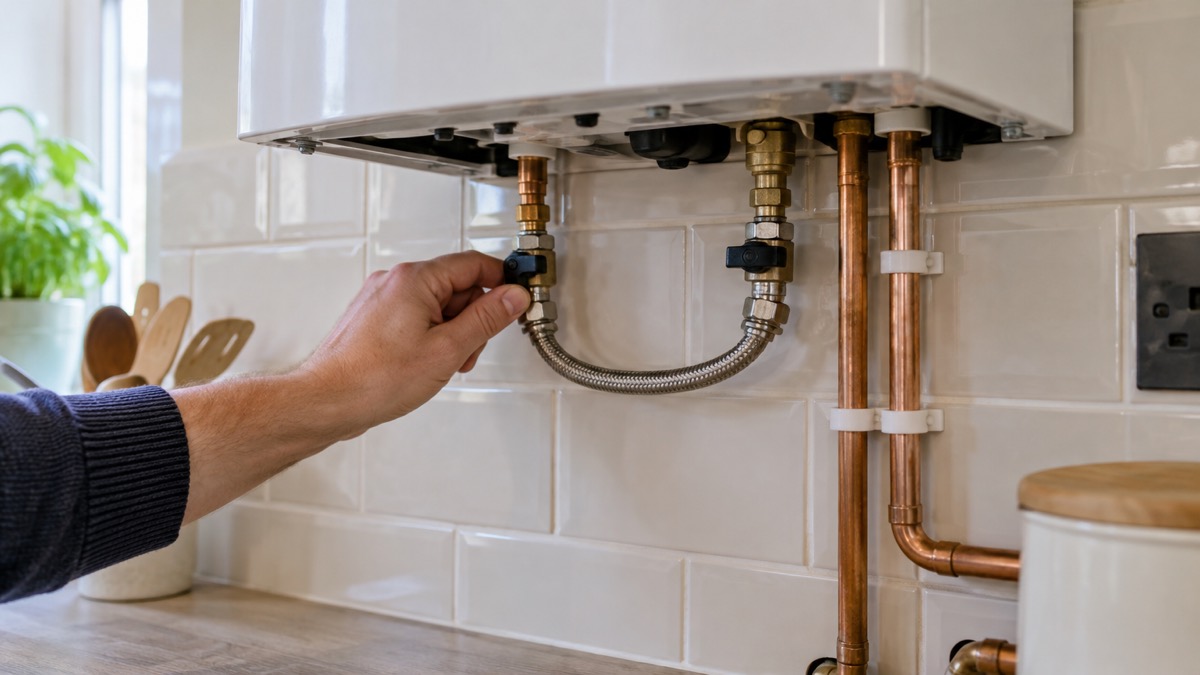
For a boiler with a filling key rather than a filling loop, the procedure begins the same way: turn off the boiler, insert the filling key into the keyhole and unlock it5, then follow the manufacturer's own instructions for your model to complete the fill. If you are unsure where the filling key or the keyhole is, consult a heating engineer rather than guessing, as you can do a lot of damage if you are not sure what you are doing.
Two problems crop up with filling loops. The first is leaking: Vaillant says it can be quite common for the filling loop to leak, and advises ensuring it is securely attached at both ends5. The second is overfilling: if you get carried away and the gauge climbs well past 1.5 bar, see the next section. If you would like the full walkthrough with more detail, our page on how to repressurise a combi boiler goes through it.
Why pressure rises too high and what to do
Pressure that climbs too high has two common origins. The first is simple overfilling: you left the filling loop open too long, or the pressure valves under the boiler have become loose accidentally, which British Gas says can cause pressure to become too high1. The second is a system fault, and this is the one to take seriously: unless you have accidentally overfilled the system yourself, high pressure could be a sign of a more serious issue, and left too long it could cause serious damage to the boiler and central heating system1.
What you do depends on which it is. If the gauge shows high pressure as a result of overfilling, Worcester Bosch says you will need to bleed a radiator until the pressure gauge returns to between 1 and 1.5 bar2. Open a radiator bleed valve a little at a time and watch the gauge fall as water escapes, closing the valve once you are back in the normal range. Do this with the heating off and the system cool so you can read the resting pressure accurately.
If you did not overfill it, do not attempt DIY pressure release. British Gas says that while it may seem straightforward, especially if you find DIY guides online, it is not something they recommend1. The maker's own advice is to turn the boiler off and call a Gas Safe registered engineer. There is also a diagnostic clue worth knowing: Worcester Bosch notes that if pressure rises by more than 1 bar when the heating is up to temperature, the expansion vessel may require repressurising, which will require a service engineer2. A steady climb of that size whenever the heating runs is not overfilling; it is a component that needs attention.
The pressure relief valve and its outside discharge pipe
Every boiler has a pressure relief valve fitted as standard3. Its job is simple: when boiler pressure gets too high, the valve opens to relieve the pressure and closes again once it is back down to a safe level3. Inside, a resistant spring sits above the valve; as pressure builds, the spring is forced to move, hot water and steam escape via the discharge pipe, and when the pressure has dropped the spring pushes down to close the valve again3. You will find the valve on the top or the side of your boiler, connected to the hot water pipework, though depending on your heating system setup it could be elsewhere, such as the airing cupboard or the loft; your boiler's manual will show where3.
The discharge pipe runs outside, and that is where you may first notice a problem. Water coming out from your boiler could mean the pressure relief valve is not working as it should3. A brief discharge when pressure spikes is the valve doing its job; steady dripping or a valve that never fully closes means it needs an engineer's attention. Blockages are the other fault: British Gas notes dirt and debris can clog up the valve3. Our page on why the copper pipe outside your boiler is dripping goes into this in detail.
Installation details matter if you are having work done, because a badly routed discharge pipe can freeze or block. The Navien NCB700 manual, for example, specifies that the discharge pipe must not be longer than 2 m, with no more than 2 elbows, and must not allow condensation to build up or freezing to occur, and that the valve should be no more than 1 m from the boiler7. The same manual says the valve should be checked annually by turning the knob manually so the medium is discharged, cleaning the seal seat, and that the valve can be installed in any position except upside down7. These are the installer's and service engineer's tasks, not yours, but they are worth knowing when you have a service booked: an engineer who never touches the relief valve is skipping a check the maker requires.
Where you must not open or adjust the boiler yourself
The line between household maintenance and engineer work is clear. Topping up water through the filling loop, reading the gauge and bleeding a radiator are yours. Anything inside the casing is not. You should not open up your boiler to see if the pressure relief valve is working properly, as you could end up damaging it3. Devon and Somerset Fire and Rescue Service's carbon monoxide advice is blunter still about fuel-burning appliances: never attempt to install or service appliances yourself, and use a reputable, registered engineer to install and service your boiler, cooker, heating system and appliances12.
This is not caution for its own sake. A gas boiler that is wrongly adjusted can produce carbon monoxide, which is why the fire and rescue service lists the warning signs to act on: turn the boiler off and call a Gas Safe engineer for strange noises, leaks, a yellow flame (it should always be blue), unusual smells, the boiler turning itself on and off, low pressure or no hot water, or soot and staining around the boiler10. Low pressure on its own is safe; low pressure alongside any of those other signs is a reason to stop using the boiler and get it inspected.
The same principle applies to improvised fixes. The fire and rescue service's advice on fuel-burning appliances is never attempt to install or service appliances yourself12, and the same spirit runs through the makers' guidance: if the fix is not in your manual's owner section, it is not a job for the household. When in doubt, the question to ask is whether the work involves gas, the boiler's internals or its flue; if it does, it is engineer work.
When to call a Gas Safe registered engineer
Some situations need an engineer, not a top-up. Call one if: the pressure drops as soon as you close the filling valve, suggesting a significant leak or a pressure relief valve fault5; the pressure runs high and you did not overfill1; the pressure rises by more than 1 bar when the heating is up to temperature, pointing to the expansion vessel2; water is coming out of the boiler or steadily dripping from the discharge pipe3; or the radiators need bleeding regularly, which the Gas Safe Register says likely hides a wider issue9. Any of the fire service's warning signs, from a yellow flame to soot staining, means turning the boiler off first10.
Finding an engineer is straightforward. Always use a Gas Safe registered engineer for any work on gas appliances such as a boiler, cooker or gas fire13, and check their Gas Safe Register ID card when they arrive14. You can find one at gassaferegister.co.uk or by calling the free helpline on 0800 408 55004. Northern Gas Networks gives the same route for a boiler fault unrelated to a power cut: contact a Gas Safe registered engineer via the Gas Safe Register website or 0800 408 550013, and Cadent likewise directs customers to the Register's find-an-engineer service15. Our page on finding a Gas Safe registered engineer and checking their card walks through it.
| Situation | Who deals with it |
|---|---|
| Topping up via the filling loop or key | You, following the manual5 |
| Bleeding a radiator to bring overfilled pressure down | You2 |
| Pressure drops as soon as you close the valve | Gas Safe registered engineer5 |
| High pressure you did not cause | Gas Safe registered engineer, boiler off1 |
| Water leaking from the boiler or discharge pipe | Gas Safe registered engineer3 |
| Any work inside the boiler casing, on gas or the flue | Gas Safe registered engineer only10 |
Prevention is cheaper than breakdowns. Gas boilers and appliances should be serviced once a year by a Gas Safe registered engineer10. If you rent, the landlord is responsible for keeping the boiler safe and working; see broken boilers in rented homes. If you smell gas at any point, that is not an engineer job but an emergency: go outside and call the National Gas Emergency Service, as covered in when to ring and what happens.
Checking pressure in a cold snap
Cold weather is when pressure problems surface, because that is when the boiler works hardest and when a lockout hurts most. Before and during a cold snap, check the gauge reads between 1 and 1.5 bar with the heating off and top up if needed1. If the boiler will not come on at all, work through the simple checks first: the fuse box for a tripped switch, the pilot light, the pressure at 1 to 1.5 bar, and the thermostat, which Glow-worm notes might be set too low and need increasing8.
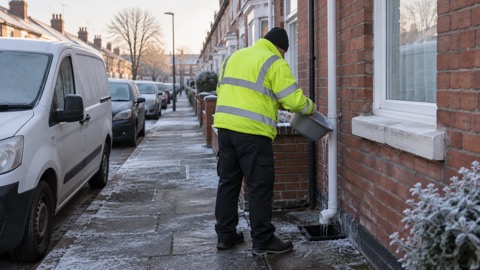
Cold weather brings its own pipe risks alongside pressure. A dripping pressure relief discharge pipe in a hard frost is doubly worth fixing, since the discharge pipe usually runs from the boiler through to an outside wall and terminates outside, where it is exposed to the cold. The Gas Safe Register adds that when it gets very cold the external condensate pipe can freeze and the boiler will cut out, which can be prevented by asking a Gas Safe engineer to insulate it9; if it does freeze, SGN's advice for an external pipe is to pour hot, but not boiling, water on it, and you might need a few kettles or jugs to defrost the pipe16. Our pages on frozen condensate pipes and boiler breakdowns in cold weather cover both in full.
If you go away in winter, the Royal Voluntary Service's winter preparation guide is worth following: get your gas boiler and appliances serviced by a Gas Safe registered engineer, found at GasSafeRegister.co.uk or on 0800 408 5500, and check external pipework is insulated14. Scottish Water also advises that for a boiler without built-in frost protection you can set the room thermostat to a low setting and the programmer to On or 24h, so it fires up the boiler if needed17. Whether that is the right choice for your home is covered in should you leave the boiler on when away in winter?.
Sources (17)
- Boiler pressure guide, British Gas, 2026
- How often should I need to top up the pressure in the heating system, Worcester Bosch, 2026
- What is a pressure relief valve, British Gas, 2026
- Carbon monoxide: home fire safety, Manchester Fire and Rescue Service, 2026
- How to repressurise a boiler, Vaillant, 2026
- Snow and winter: prepare for emergencies, British Red Cross, 2026
- NCB700 Combi installation and operation manual, Navien, 2024
- Glow-worm boilers guide, British Gas, 2026
- Boiler and appliance guide, Gas Safe Register, 2026
- Safe and well booklet, Cheshire Fire and Rescue Service, 2026
- No water or low water pressure?, Yorkshire Water
- Carbon monoxide | Devon and Somerset Fire and Rescue Service, Devon and Somerset Fire and Rescue Service
- Boiler not working, Northern Gas Networks, 2026
- Preparing your home for winter, Royal Voluntary Service, 2026
- Help and advice: support, Cadent, 2026
- My boiler isn't working, SGN, 2026
- Protect your pipes, Scottish Water, 2026
 Checks Before Calling Engineer
 Boiler Checks When Moving In
 Power Cut Kit Checklist
 National Gas Emergency Service
 When the Mains Supply Goes Off
 Getting Supply Back After Outage
 Compensation for Supply Cuts
 Planned Pipe Works
 Help During a Long Outage
 Prepayment Meters
 LPG Homes in Winter
 Oil Boiler Breakdowns
 Boiler Breakdown in Cold Weather
 Boiler Fault Codes
 Frozen Condensate Pipes