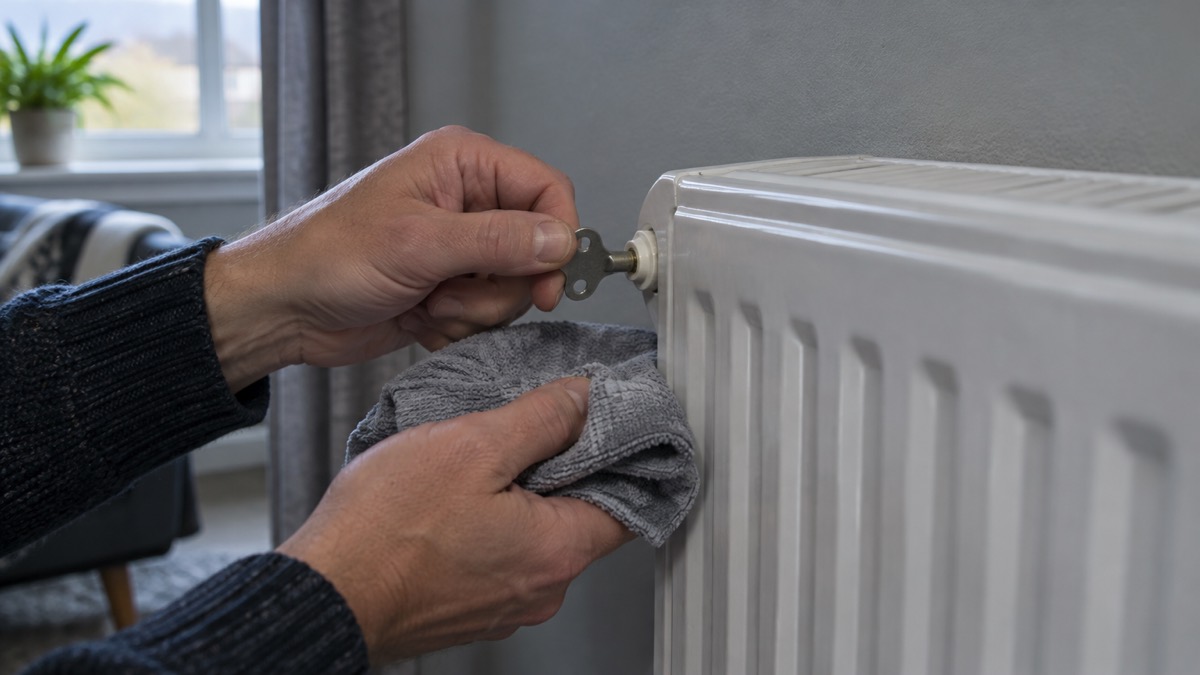
If a radiator is cold at the top and warm at the bottom, trapped air is usually the cause, and bleeding it is a job most households can do themselves. Worcester Bosch says you can normally tell your radiators need bleeding because they will be colder at the top than at the bottom1. Gas Safe Register gives the same test and adds a caution: if you need to bleed them regularly, it is likely hiding a wider issue and a Gas Safe registered engineer should check the system2.
The job itself needs very little: a radiator key and a cloth. Southern Water's advice is to use a radiator key, gently open the valve at the top of the radiator, and twist the valve shut when a drop of water comes out3. Baxi says most radiators need a radiator key, though some modern ones can be bled with a screwdriver4.
Two things catch people out. First, bleeding lets water out of the system, so boiler pressure can drop afterwards and may need topping up5. Second, if your pressure is too high because the system was overfilled, bleeding a radiator is also the way to bring it back down7. This page covers both, plus the safety points that matter before you start.
A radiator cold at the top and warm at the bottom needs bleeding
The pattern is the giveaway. Air rises to the top of a radiator and stays there, so the top stays cold while the bottom, full of water, heats up. Ideal Heating's advice is to check your radiators by carefully touching them while they are on, to see if they are cold in places, particularly near the top, which means they need bleeding10. Baxi puts it simply: those which are cold at the top need bleeding4. Alpha Innovation calls it a common issue you can easily fix by bleeding your radiator9.
The reverse pattern means something different. Baxi says if your radiators are hot at the top but cold at the bottom, or you need to bleed your radiators more often, the signs point to sludge in the central heating system8. That is not a job for a radiator key. Gas Safe Register's warning covers the same ground from the safety side: regular bleeding is likely hiding a wider issue, and a Gas Safe registered engineer should check the system2. If you are unsure whether your problem is air or something else, our page on cold radiators sets out the other causes, including valves and balancing.
It is worth knowing when in the year to look. Liquid Gas UK lists bleeding radiators among the steps that improve energy efficiency, alongside reducing draughts around doors and windows, improving insulation where possible and using heating controls effectively11. Nottinghamshire County Council's winter advice is to get heating, radiators and boilers serviced to reduce the risk of a breakdown in cold weather12. A service in autumn, before the heating goes on in earnest, is the moment to find out that a radiator is full of air rather than in the middle of a cold snap.
What you need: a radiator key and a cloth
The kit is small. Baxi says bleeding can be done with only a radiator key, an old towel or rag, or a bucket to catch any water that comes out of the radiator8. Alpha Innovation's guidance for bringing down high pressure names a bleed key, or radiator key, fitted to the top of the radiator13. Southern Water notes you can get radiator keys from DIY stores3.
| Item | What it does | Notes |
|---|---|---|
| Radiator key | Opens the bleed valve at the top of the radiator | Most radiators need one; some modern radiators can be bled with a screwdriver4 |
| Cloth, old towel or rag | Catches drips from the valve | Baxi lists a towel, rag or bucket8 |
| Bucket | Catches more water where pressure is being released | Ideal Heating suggests a bucket when reducing system pressure10 |
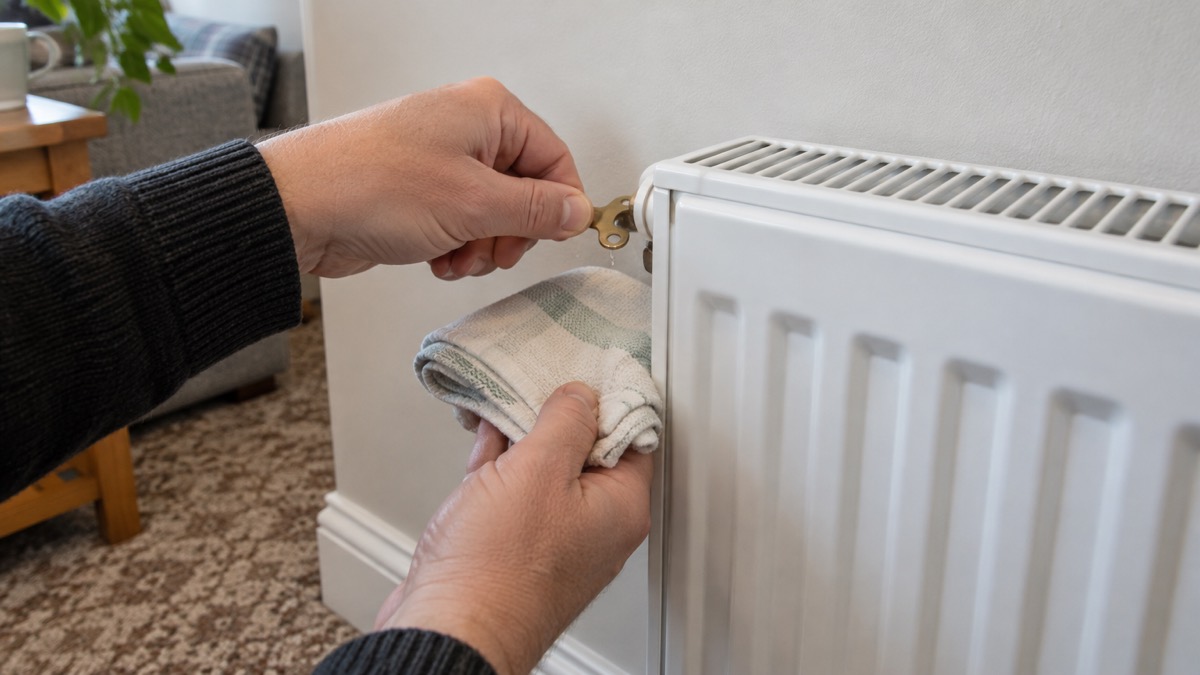
Before you start, switch the heating off. Baxi's instruction is to make sure your central heating system is switched off before you start, and that you will need the radiators to be cool enough to handle4. Alpha Innovation is blunt about why: radiator water can be extremely hot, so this step is crucial for safety9. Alpha Innovation's high-pressure guidance puts a number on the wait: let the system cool for four to six hours before starting the process13.
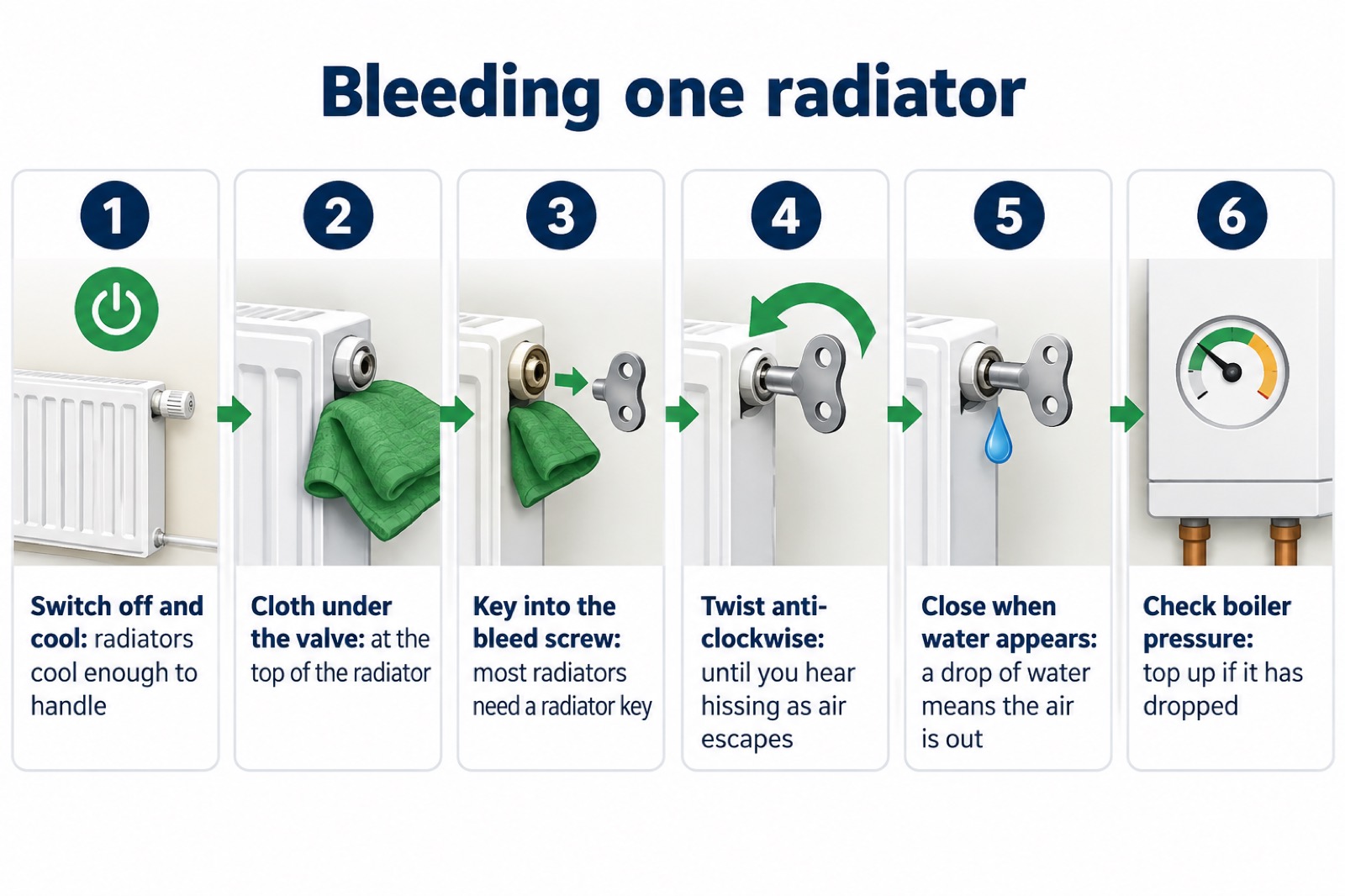
How to bleed a radiator, step by step
The sequence is the same whichever radiator you have. Worcester Bosch's instruction is to insert your radiator key into the bleed screw in the bleed valve, which will be at the top of your radiator, with a cloth or rag ready to catch drips6. Southern Water's version: gently open the valve at the top of the radiator, and when a drop of water comes out, twist the valve shut3.
- Switch the heating off and let the system cool, so the radiators are cool enough to handle4.
- Find the bleed valve at the top of the radiator and put a cloth underneath6.
- Insert the radiator key into the bleed screw6.
- Twist the key anti-clockwise until you hear a hissing sound as air escapes14.
- Close the bleed valve when water starts leaking from the valve14.
- Check the boiler pressure and top up if it has dropped5.
Grant UK's instructions for an aluminium radiator on a sealed system follow exactly this pattern: insert the radiator key into the bleed valve, place a cloth underneath to capture any water, twist anti-clockwise until you hear a hissing sound as the air escapes, and close the bleed valve when water starts leaking from the valve15. If you are unsure what type of system you have, or how to bleed your radiators correctly, Grant UK says to speak to your heating engineer15.
Bleeding to bring down high boiler pressure
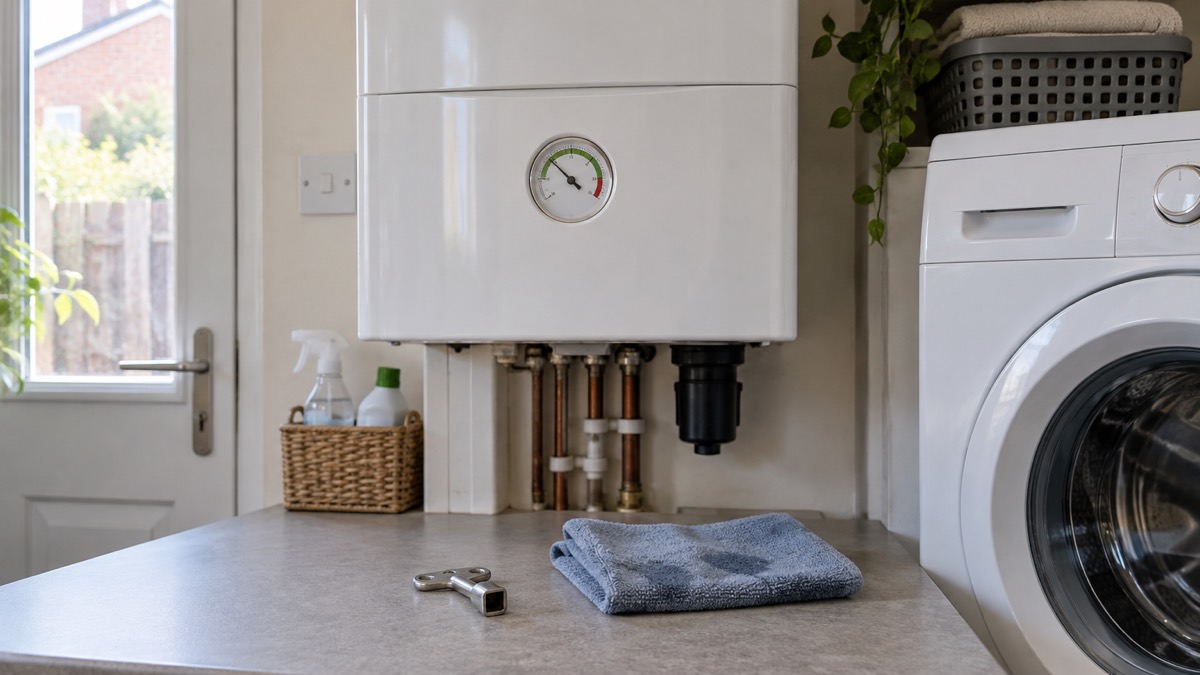
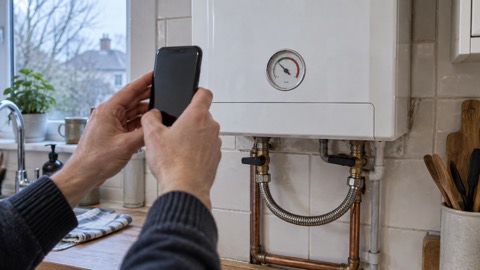
Bleeding is not only for cold radiators. If the gauge reads high because the system was overfilled, letting water out through a radiator is the remedy. Worcester Bosch says if the pressure gauge indicates high pressure as a result of over filling, you will need to bleed a radiator until the pressure gauge returns between 1 and 1.5 bar7. Baxi says you may need to bleed your radiators to reduce the pressure in the system16, and Ideal Heating says if you have too much pressure you can reduce it by bleeding the radiators with a bucket to reduce the amount of water in the system10. Alpha Innovation's guidance is that in an over pressurised system it can be beneficial to bleed your radiators, as this will help to release some of the pressure13.
This is the one bleeding job where a second pair of eyes helps. Alpha Innovation recommends asking a second person to stand near the pressure gauge while you bleed, so you release the right amount of pressure13. If you are working alone, the same guidance says to release pressure slowly, tightening the valve at intervals to check the gauge, and repeat until it is fixed13.
The opposite problem is just as common. Bleeding removes water as well as air, so pressure can fall afterwards. British Gas says bleeding your radiators can lead to a loss of boiler pressure, so it is important to re-pressurise your boiler afterwards5. Worcester Bosch gives the same advice: after you have finished bleeding all the radiators, make sure you top up the pressure on your boiler, because boiler pressure can be lost when bleeding radiators6. Baxi's version is to try bleeding the radiators, then topping up the pressure on the boiler18. Vaillant notes that low boiler pressure can be caused by water leaks or excessively bleeding radiators, and can force the boiler to shut down19. Our guide to boiler pressure explains what the gauge should read and how to top up, and there is a step-by-step walkthrough on how to repressurise a combi boiler.
When to bleed radiators, and when to call someone
Bleed when the test says so: radiators colder at the top than the bottom1. Do it before winter rather than during a cold snap, as part of the same round of jobs as reducing draughts and checking heating controls11, and alongside an annual service12. If a radiator is cold at the bottom instead, or you are bleeding the same radiators again and again, stop and get the system checked: Gas Safe Register says regular bleeding is likely hiding a wider issue and a Gas Safe registered engineer should check the system2, and Baxi links frequent bleeding and cold bottoms to sludge8.
Watch for other warning signs while you are at it. WaterSafe lists rusty or dripping radiators as a tell-tale problem to watch out for at home20. A dripping valve after bleeding is worth getting looked at rather than left.
If the boiler has locked out or is showing a fault code after you have bled the radiators and topped up the pressure, the next step is diagnosis, not more bleeding. Our page on boiler fault codes explains what the common codes mean, and boiler breakdowns in cold weather sets out what to do when the heating will not come on at all. If you need an engineer, our guide to finding a Gas Safe registered engineer explains how to check their card. For the wider picture, start from Gas and Heating Failures: A Household Guide.
Sources (20)
- How to bleed a radiator, Worcester Bosch, 2026-10-29
- Boiler and appliance guide, Gas Safe Register, 2026-10-29
- Prepare your home for winter, Southern Water, 2026-10-28
- How to fix high boiler pressure, Baxi, 2026-10-29
- How to repressurise your boiler, British Gas, 2026-10-29
- How to bleed a radiator, Worcester Bosch, 2026-10-29
- How often should I need to top up the pressure in the heating system, Worcester Bosch, 2026-10-29
- Why are my radiators cold, Baxi, 2026-10-29
- What do I do if my radiators are cold, Alpha Innovation, 2025-05-19
- Boiler FAQs, Ideal Heating, 2026
- Get ahead for winter 2026, Liquid Gas UK, 2026
- Top tips for keeping warm, Nottinghamshire County Council, 2023
- Dealing with boiler pressure, Alpha Innovation, 2025-11-06
- How to bleed an aluminium radiator on an open vented system, Grant UK, 2026-10-29
- How to bleed an aluminium radiator on a sealed system, Grant UK, 2026-10-29
- What should my boiler pressure be set at, Baxi, 2026-10-29
- LCB700 Blue Flame Combi internal boiler, Navien, 2026
- Why is my boiler pressure low, Baxi, 2026-10-29
- How to repressurise a boiler, Vaillant, 2026
- New homeowners saving water and leaks, WaterSafe, 2026-10-29
 Checks Before Calling Engineer
 Boiler Checks When Moving In
 Power Cut Kit Checklist
 Stop a Condensate Pipe Freezing
 Repressurising a Combi Boiler
 Hot Water but No Radiators
 Resetting a Boiler Lockout
 Programmer Reset After Power Cut
 Boiler Leaking Water
 Boiler Overheating
 Boiler On When Away in Winter
 Missed Reconnection Visit
 Prepayment Credit but No Gas
 Low Supply Pressure
 Checking a Network Engineer's ID