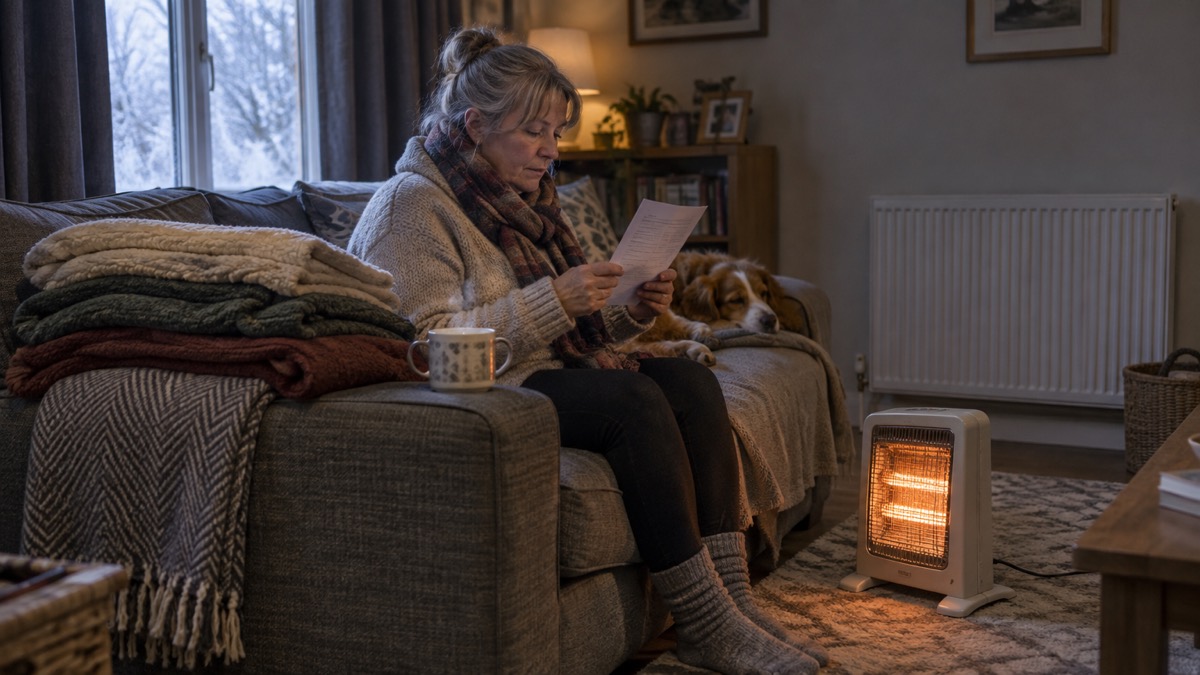
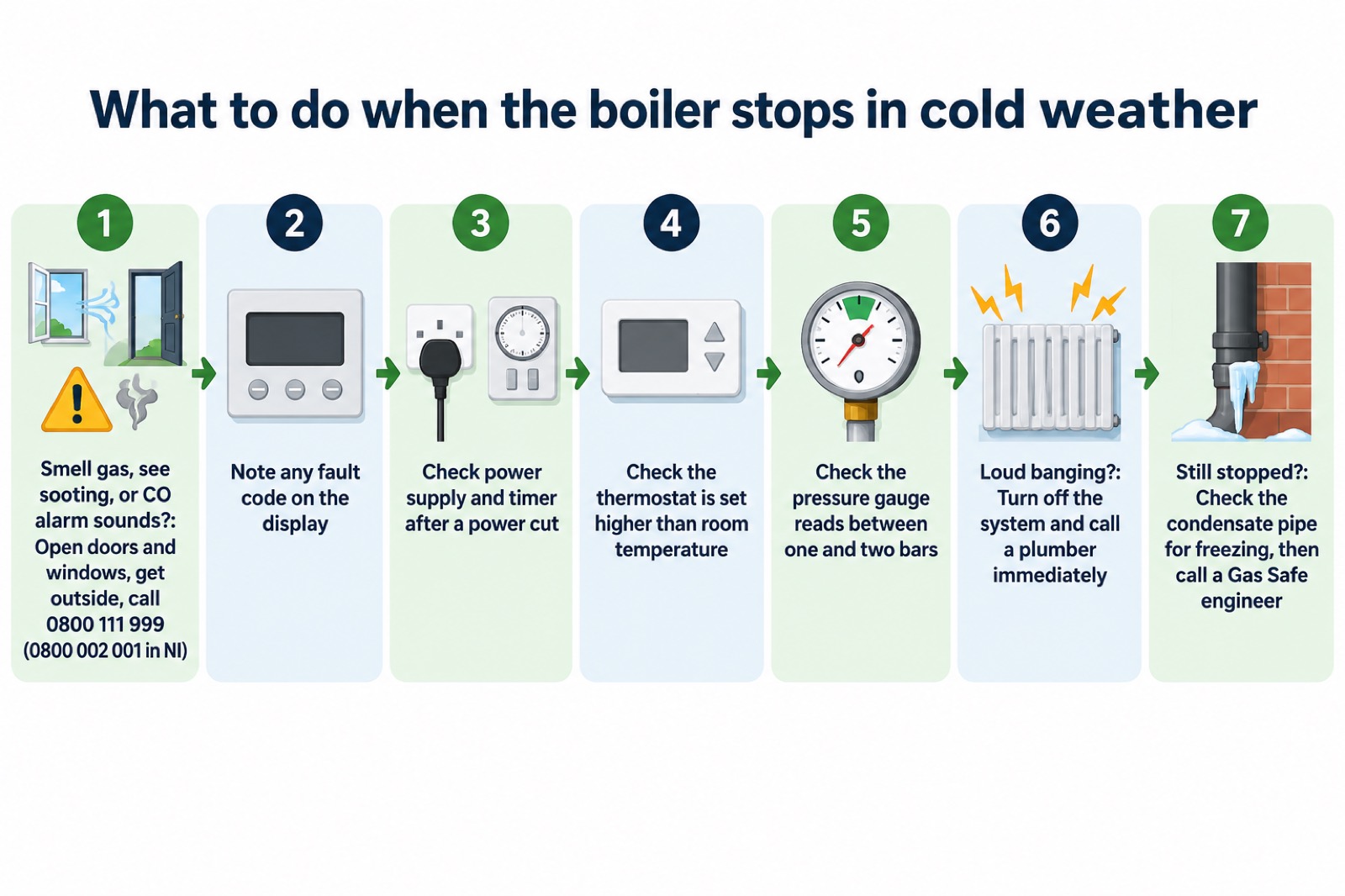
When a gas boiler stops working in cold weather, the cause is usually one of a small number of things, and several of them are checks you can safely make yourself before you pay for an engineer. Work through them in order: check for gas and carbon monoxide danger first, then the simple controls, then the pressure gauge, then the condensate pipe.
If you can smell gas, call the National Gas Emergency helpline on 0800 111 9991. In Northern Ireland the number is different: call the NI Gas Emergency Service on 0800 002 0012. These lines are free and staffed around the clock, and the emergency service would far rather attend a false alarm than a real leak.
For everything else, this page sets out the checks in the order worth making them, what you must never do yourself, how to find and verify a Gas Safe registered engineer, and how to keep at least one room warm while you wait for the repair.
Smell gas or see sooting: stop and call
Before any troubleshooting, rule out danger. Gas and carbon monoxide emergencies are not repair jobs, and the numbers to call are different from the number for a broken boiler.
If you smell gas, open doors and windows, leave the area, and call the National Gas Emergency Line on 0800 111 999. The same number applies if you suspect a gas leak7. In Northern Ireland, call the NI Gas Emergency Service on 0800 002 0012.
Carbon monoxide is the other emergency. You cannot see it or smell it, but the signs of trouble include a yellow or orange flame on a gas appliance, sooting or staining around it, and a carbon monoxide alarm sounding. Cadent's carbon monoxide leaflet, published through Bedfordshire Fire and Rescue Service, tells you what to do if you suspect it: "open all doors and windows, move outside into fresh air, call the Gas Emergency Service on 0800 111 999"8. Manchester Fire and Rescue Service adds the follow-up step: get a Gas Safe registered engineer to inspect your gas appliances and flues to see if there is a dangerous problem, and you can find one through the free helpline on 0800 408 55009.
| Where you are | Number to call | For what |
|---|---|---|
| Great Britain | 0800 111 999 | Smell of gas, suspected leak, suspected carbon monoxide7 |
| Northern Ireland | 0800 002 001 | Smell of gas2 |
| Anywhere in the UK | 0800 408 5500 | Gas Safe Register free helpline, for finding and checking engineers3 |
Do not use electrical switches, including light switches, if you can smell gas, and do not smoke or use naked flames. Our page on unsafe appliances covers the warning signs in more detail, and the National Gas Emergency Service page explains what happens when you ring.
First checks when the boiler stops in the cold
Once you are sure there is no gas or carbon monoxide emergency, work through the simple checks. Most of them take a few minutes and cost nothing.
- Check the boiler display. Note any fault code or flashing light before you touch anything. Codes such as a flashing F and 0 on an Ideal Heating boiler mean "No Water Flow Thermistor", which points to a specific fault an engineer will want to know about10. Our page on boiler fault codes explains what the common ones mean.
- Check the power supply. If the electricity has been off, the boiler's timer and thermostat may have reset themselves. See the section below on settings after a power cut.
- Check the thermostat. Ideal Heating's own support guidance for a boiler where the central heating is not working but hot water is: "Turn your thermostat to its maximum position and check if a C appears on the boiler display. If the boiler fires and the radiators come on, the room thermostat was not set higher than the room temperature"10. It is an easy mistake in mild spells that turn cold.
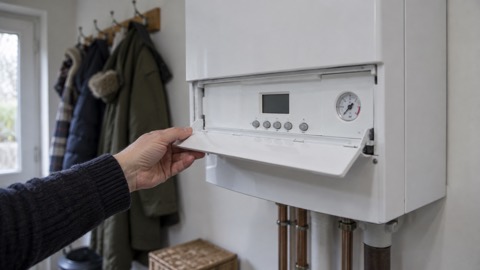
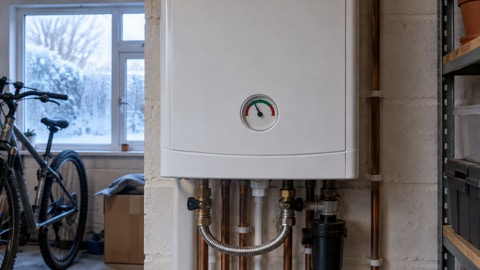
- Check the pressure gauge. Most gauges should read between one and two bars; the Red Cross advises checking your boiler pressure regularly, and low pressure is a common reason a boiler refuses to fire4.
- Listen. Llangattock Community Council's adverse weather guidance carries a warning worth taking seriously: "If the heating system fails or makes a loud banging noise, this could indicate that a pipe is freezing. Turn off the system and call a plumber immediately"11.
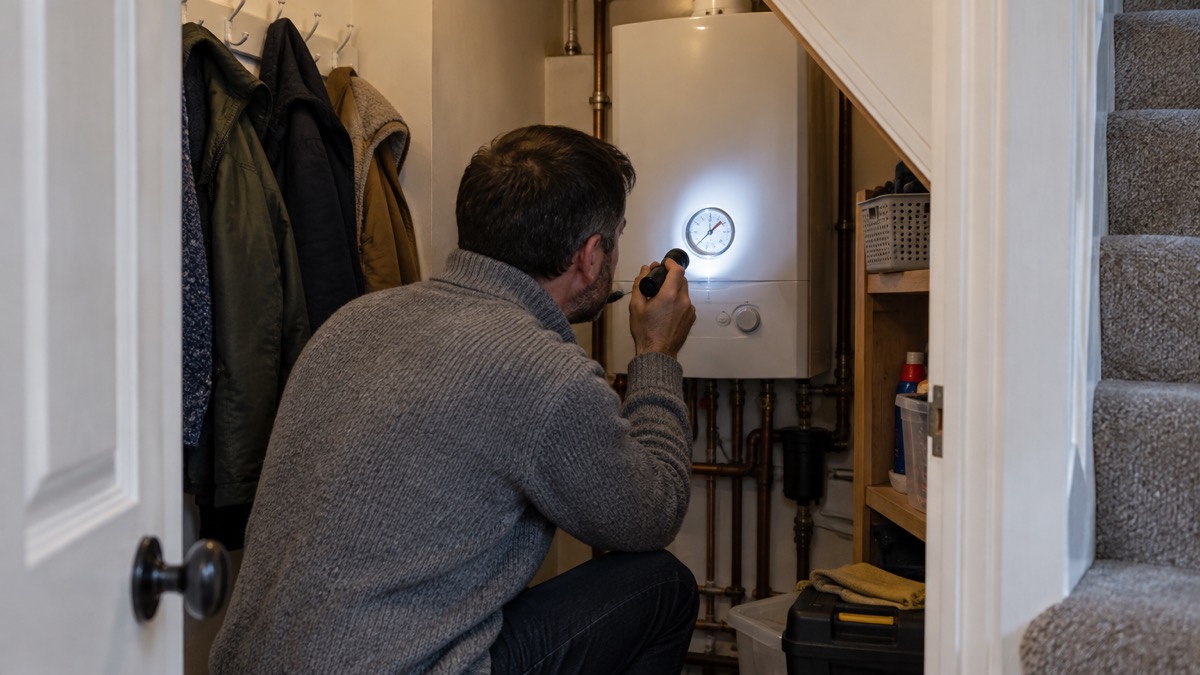
If none of these finds the cause, the next suspect in freezing weather is the condensate pipe, covered next. Before calling an engineer, it is worth running through our fuller breakdown checks checklist.
Frozen condensate pipe: the most common cold-weather cause
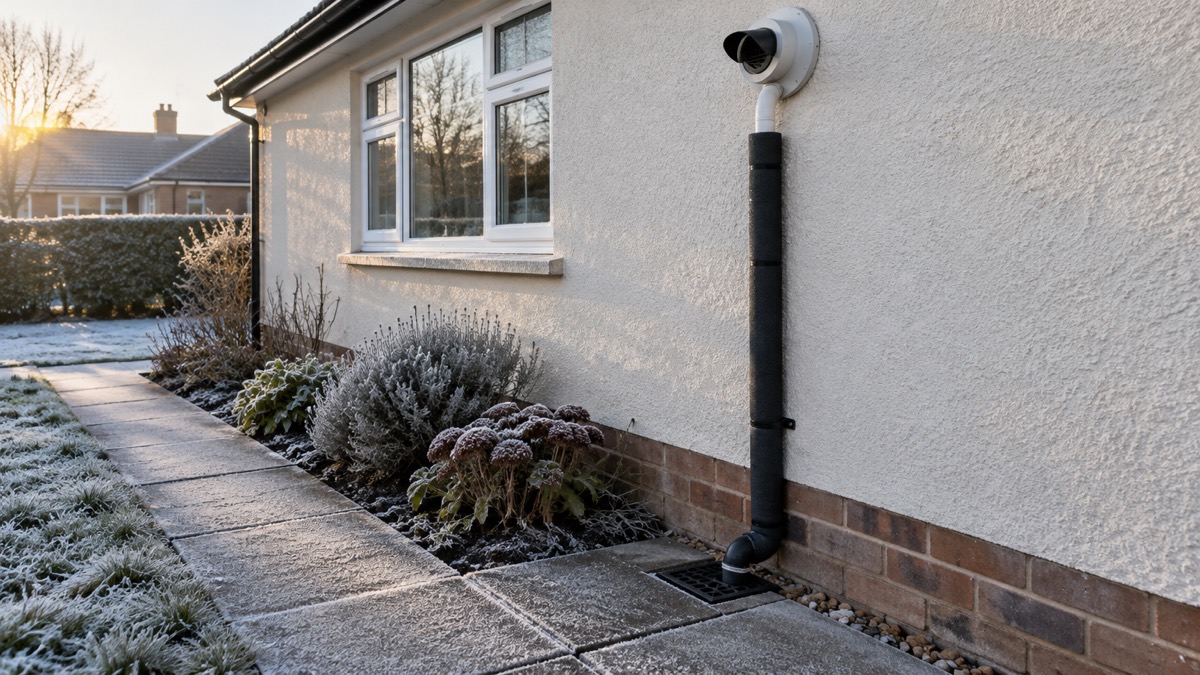
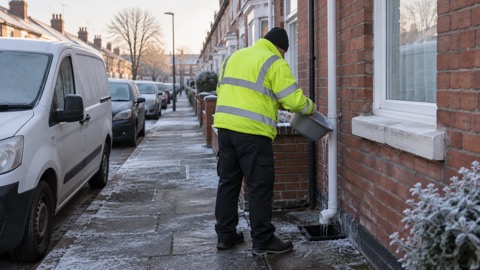
Modern condensing boilers produce a small amount of acidic waste water, which leaves the boiler through a condensate pipe, usually plastic, often running outside to a drain. In a hard frost, that pipe can freeze, and when it does the boiler shuts itself down.
The Gas Safe Register's own boiler guide is direct about it: "When it gets very cold your boiler's external condensate pipe can freeze and your boiler will cut out"5. This is the most common cold-weather cause of an otherwise healthy boiler stopping, and it tends to arrive with the first sustained freeze of the winter, when engineers are at their busiest.
The prevention is simple and cheap: ask a Gas Safe engineer to insulate, or lag, the condensate pipe5. Derbyshire County Council's keep warm in winter guidance makes the same point for condensing boilers generally: check that the external pipe is insulated13. If you are having the boiler serviced before winter, ask the engineer to lag the pipe at the same time.
If the pipe has already frozen, the thaw has to be done safely. The Humber Local Resilience Forum's winter guidance is blunt on the one thing you must not do: "Never use a heat gun or naked flame"14. A naked flame near a pipe that runs past the boiler's flue or near combustible material is a fire risk, and a heat gun can melt the plastic pipe. Warm water poured gently along the pipe is the usual safe method, and our page on frozen condensate pipes walks through it step by step, with the signs that tell you this is your problem. If you are not confident, this is a job for an engineer, and it is a quick one for them.
Boiler pressure: what the gauge should read
Low pressure is the other very common reason a boiler will not run, and it is something you can check without opening anything.
The Red Cross's winter guidance advises: "Regularly check your boiler pressure. On most boilers your pressure gauge should be between one and two bars"4. A reading well below that, particularly when the system is cold, means the boiler may refuse to fire, and a reading that keeps falling between checks means water is escaping from the system somewhere, which needs an engineer's attention.
Repressurising a combi boiler is a job many householders do themselves, using the filling loop, and our page on boiler pressure explains what the gauge should read and how to bring low pressure back up safely, with a step-by-step guide to repressurising a combi boiler. If the pressure is high rather than low, or if it swings wildly, stop and call an engineer; that points to a fault inside the boiler. If you notice water or damp around the boiler itself, see our page on a boiler leaking water.
Timer and thermostat settings after a power cut
A power cut, or even a brief flicker, can reset a boiler's programmer and thermostat to their defaults or wipe their settings entirely. The boiler may be perfectly healthy and simply not know it is supposed to be on.
Wigan Council's power cut guidance lists the checks for afterwards: reset the clocks on any electric timing devices, check in with someone to let them know you are okay, and check the timer on your thermostat is correct12. Public Health Wales adds what to do during the cut itself: turn off big appliances, especially cookers and electric fires, until the power is back on, and keep fridge and freezer doors closed15. Northern Ireland Direct's storm advice carries one rule that matters whatever the weather: never touch damaged electricity equipment16.
So if your boiler stopped during or just after a power cut, before assuming a breakdown:
- Check whether the programmer display is flashing or showing the wrong time, and reset it12
- Check the room thermostat is set higher than the current room temperature10
- Check the boiler's own power switch is back on
- Check the timer on your thermostat is correct12
Our page on why your programmer reset after a power cut covers this in detail, and the wider power cuts guide explains what to have ready.
No hot water from a combi boiler
Most UK homes with gas heating have a combination boiler. The Gas Safe Register describes what that means in practice: combi boilers "provide on-demand hot water", with no hot water cylinder needed, hot water supplied at mains pressure, and a more compact unit5. That on-demand design is exactly why a combi failure takes out your hot water at the same time as your heating.
The same Gas Safe guidance notes the design's limits: if incorrectly designed, on-demand hot water can mean problems supplying more than one tap at a time, reduced water flow when filling a bath, and hot-water performance affected by low mains water pressure or flow5. So before assuming a breakdown, check whether the cold tap runs normally. If the cold mains is slow or off, the combi's hot water will be too, and the problem is with the water supply, not the boiler.
If the central heating is not working but hot water is, the thermostat check described above is the first thing to try10. Our page on no hot water goes through the checks for combi and cylinder systems side by side, and hot water but no radiators covers that specific combination.
Never try to fix a broken boiler yourself
There is a clear line between the checks above, which involve controls and gauges on the outside of the boiler, and anything that involves opening the casing or working on gas.
Devon and Somerset Fire and Rescue Service's carbon monoxide guidance states the rule plainly: "Never attempt to install or service appliances yourself"17. North Yorkshire Fire and Rescue Service says the same for heating appliances: never install, repair or service appliances yourself, and make sure anyone who does is a competent tradesperson18. The Gas Safe Register adds that you should only ever use a qualified and competent Gas Safe registered engineer to service your boiler5.
This is not caution for its own sake. Gas appliances worked on by unregistered people are a recognised cause of carbon monoxide poisoning, and the Health and Safety Executive's advice is to have heating and cooking appliances checked by a Gas Safe registered engineer to help protect you from exposure to high levels of carbon monoxide19. The Sussex Resilience Forum's emergency preparation guidance repeats the same instruction6.
The line in practice:
- Safe for most householders: checking the display, the thermostat, the timer, the pressure gauge, and resetting the boiler once10
- Not safe, ever: opening the boiler's casing, working on any gas pipe or connection, or dismantling any part of the flue17
If your boiler is in a rented home, repairs are your landlord's responsibility, and our page on broken boilers in rented homes sets out what they must do and how quickly.
Finding and checking a Gas Safe registered engineer
When the checks are exhausted, the next step is an engineer, and in the UK that means one on the Gas Safe Register, the official list of engineers legally allowed to work on gas appliances.
Finding one is straightforward. Cadent's carbon monoxide leaflet advises: "Visit gassaferegister.co.uk to find an engineer near you"8. The Health and Safety Executive's gas FAQs give the alternative: consumers can call the freefone helpline on 0800 408 55003. Surrey County Council and Cheshire Fire and Rescue Service both list the same free helpline number20. You can also check an engineer's registration and identity when they arrive, which our page on finding a Gas Safe registered engineer and checking their card explains, along with how to check the card covers the specific work you need.
In a cold snap, engineers are busy. The Gas Safe Register's own advice is to get your gas boiler serviced ahead of the winter period, because unplanned breakdowns could leave you without heating when you need it most, and it is a busy period for engineers5. Booking a repair early in the day, and being flexible about when someone can come, gets you seen sooner.
If you are older, disabled, or medically dependent on your heating, tell your gas network and supplier and ask to join the Priority Services Register; our page on extra support from networks and suppliers explains what it offers and how to sign up.
Keeping one room warm until the repair
A winter boiler repair is not always same-day, so plan for keeping warm in the meantime rather than hoping.
The UK government's cold weather advice is to keep your home warm by heating the rooms you spend the most time in, such as the living room or bedroom, to at least 18°C6. Concentrating on one room works in your favour: a single well-insulated room with the door closed holds heat far better than a whole house, so a portable heater has less work to do to keep it at that temperature.
If you use a portable heater while the boiler is out, follow the fire and rescue services' advice. North Yorkshire Fire and Rescue Service advises checking that a heater that has been stored or unused for several years is not subject to a product recall or repair before you bring it back into service18. Cheshire Fire and Rescue Service's portable heater guidance covers safe use, including checking for leaks on portable gas heaters using soapy water on the connections, where bubbles indicate a leak; if a leak is found, move the heater and cylinder outside and do not use them until repaired22. Derbyshire County Council's guidance is to install a battery-operated carbon monoxide detector and smoke alarms and test them every week, especially if using portable heaters, open fires or stoves13.
Other measures that cost nothing:
- Close doors on the room you are heating and draught-proof what you can6
- Keep blankets and thick jumpers available, as Wigan Council's power cut advice recommends12
- Close curtains at dusk and keep them closed until the room warms in the morning
- Check on vulnerable neighbours, and ask someone to check on you12
Our heating and cooking without mains power or gas guide covers the options in full, including what to use and what to avoid in a prolonged outage.
Servicing before winter to prevent a breakdown
Most winter breakdowns are preventable, and prevention is cheaper and more comfortable than an emergency call-out in a freeze.
The Gas Safe Register advises getting your gas boiler serviced annually, or in line with the manufacturer's guidelines, and only ever using a qualified and competent Gas Safe registered engineer to do it5. It also advises getting the service done ahead of the winter period, because breakdowns then leave you without heating when you need it most, and engineers are busiest exactly then5. The Met Office's winter preparation advice says the same: if you have a heating boiler, consider getting it serviced before the cold weather arrives23.
The Red Cross adds that a plumber can carry out a service and give you advice on how to get your heating working efficiently4. Derbyshire County Council's keep warm guidance gives a useful test you can do yourself: get your boiler serviced and make sure radiators are hot from top to bottom, and if you have a condensing boiler, check that the external pipe is insulated13. Radiators cold at the top need bleeding, and our page on how to bleed a radiator shows how; radiators cold at the bottom point to sludge, covered on our cold radiators page.
Suffolk's winter safety advice adds one more habit: check that your heating is serviced and cooking appliances are working correctly before the cold sets in24. Our page on boiler servicing explains what an engineer actually checks, and appliance safety checks covers who qualifies for free checks.
Faulty appliances and recalls
Boilers and their associated appliances are occasionally recalled for safety faults, and a stored or little-used heater brought out during a breakdown is exactly the appliance worth checking. North Yorkshire Fire and Rescue Service's advice is to check that your heater is not subject to a product recall or repair before using it18.
Recalls do happen. In February 2024, the Office for Product Safety and Standards published a recall notice covering 30 boiler models in the Ideal Heating Logic 2 Combi and System range, produced before 8 January 2024, following three fire incidents and one report of a customer extinguishing flames25. If a recall notice names an appliance in your home, stop using it and follow the notice's instructions.
The practical steps are simple: check gov.uk's product safety alerts, reports and recalls pages for your boiler model and any portable heater before relying on it in an emergency, and ask your servicing engineer to confirm your appliances are not affected. If you own an Ideal Logic 2, our Ideal Logic Combi2 page covers the range's fault codes and cold-weather behaviour.
Frequently asked questions
How do I reset a boiler that has locked out? Many modern boilers shut themselves down when they detect a fault, and a single reset is sometimes all that is needed. Ideal Heating's own support guidance for its error code F6 is simply to reset the boiler10. Note any code on the display first, then reset once. If the boiler locks out again, stop pressing reset and call a Gas Safe registered engineer; repeated lockouts mean a fault a reset will not cure. Our page on how many times it is safe to reset a boiler lockout covers this in detail.
Should the flame in my boiler be yellow or orange? A yellow or orange flame on a gas appliance is a warning sign of incomplete combustion, which can produce carbon monoxide. Turn the appliance off, open doors and windows, move outside into fresh air and call the Gas Emergency Service on 0800 111 9998. Then get a Gas Safe registered engineer to inspect the appliance and flues before you use it again9.
How can I tell if my boiler or heating is leaking water? For portable gas heaters, Cheshire Fire and Rescue Service advises checking for leaks using soapy water on the connections, where bubbles indicate a leak; if you find one, move the heater and cylinder outside and do not use them until repaired22. For a boiler, a gurgling noise from the boiler or pipes can be a symptom worth mentioning to an engineer3.
Does my landlord have to provide a carbon monoxide alarm? The requirements differ across the UK and change over time, so check the current rules with your local council or letting agent for the property and appliance in question. Whatever the rules require, the safety step that matters in any home with gas appliances is to have them inspected by a Gas Safe registered engineer, who can identify a dangerous problem with appliances or flues3.
Have any boilers been recalled recently? Yes. The Ideal Heating Logic 2 Combi and System range recall of February 2024 covered 30 models produced before 8 January 2024, following three fire incidents and one report of a customer extinguishing flames25. Check gov.uk product safety alerts before relying on a stored heater, as the fire and rescue service advises18.
When should an old boiler be replaced rather than repaired? There is no fixed age, but repeated breakdowns and a boiler that fails its annual service are signs it is reaching the end of its life. Ideal Heating notes that any boiler installed after 1996 must be fitted with a safety mechanism that shuts it down if there are any major faults26, so a boiler that keeps locking out is doing its job by stopping. Ask a Gas Safe registered engineer at the annual service whether repair or replacement is the better course5.
What should I do with my boiler when I go away in summer? Ideal Heating's advice for holidays is to lower the temperature on your thermostat so there will not be as much demand on the system26. If your boiler has a holiday mode, use it. In winter, do not switch the heating off entirely when away, because freezing becomes the risk; our page on leaving the boiler on when away in winter covers the settings to use.
Sources (26)
- Flooding: useful links and numbers, Cornwall Council, 2026-10-29
- Emergency planning advice, Belfast City Council, 2026-10-29
- Gas safety FAQs for consumers, Health and Safety Executive
- Prepare for emergencies: snow and winter, British Red Cross, 2026-10-25
- Boiler and appliance guide, Gas Safe Register, 2026-10-29
- Cold weather, snow and ice, Prepare Campaign, 2026-10-02
- Information about specific safety concerns, Northumberland County Council, 2026-05-21
- Carbon monoxide leaflet, Cadent via Bedfordshire Fire and Rescue Service, 2026
- Carbon monoxide safety, Manchester Fire and Rescue Service, 2026-10-29
- Boiler support FAQs, Ideal Heating, 2026
- Adverse weather events, Llangattock Community Council, 2026-10-25
- Power cuts, Wigan Council, 2026-10-29
- Keep warm in winter, Derbyshire County Council, 2026-10-29
- Winter readiness leaflet, Humber Local Resilience Forum, 2024-08
- Weather and health, Public Health Wales, 2026-07-16
- Strong winds weather warning information and advice, NI Direct, 2026-10-24
- Carbon monoxide, Devon and Somerset Fire and Rescue Service, 2026
- Heating your home, North Yorkshire Fire and Rescue Service, 2026-03-09
- Preparing for an emergency: be ready, stay safe, act now, Sussex Resilience Forum, 2025-10
- Fire safety at home, Surrey County Council, 2026-10-15
- Stay safe at home: carbon monoxide, Cheshire Fire and Rescue Service, 2026-05-20
- Portable heaters, Cheshire Fire and Rescue Service, 2026-05-26
- 10 things you should do now to prepare for winter, Met Office, 2026-10-25
- Seasonal winter safety advice, Suffolk County Council, 2026-10-29
- Product recall: Ideal Heating Logic 2 Combi and System boiler range, Office for Product Safety and Standards, 2024-02-22
- Boiler holiday advice FAQs, Ideal Heating, 2026
 Checks Before Calling Engineer
 Boiler Checks When Moving In
 Power Cut Kit Checklist
 National Gas Emergency Service
 When the Mains Supply Goes Off
 Getting Supply Back After Outage
 Compensation for Supply Cuts
 Planned Pipe Works
 Help During a Long Outage
 Prepayment Meters
 LPG Homes in Winter
 Oil Boiler Breakdowns
 Boiler Fault Codes
 Boiler Pressure Gauge
 Frozen Condensate Pipes