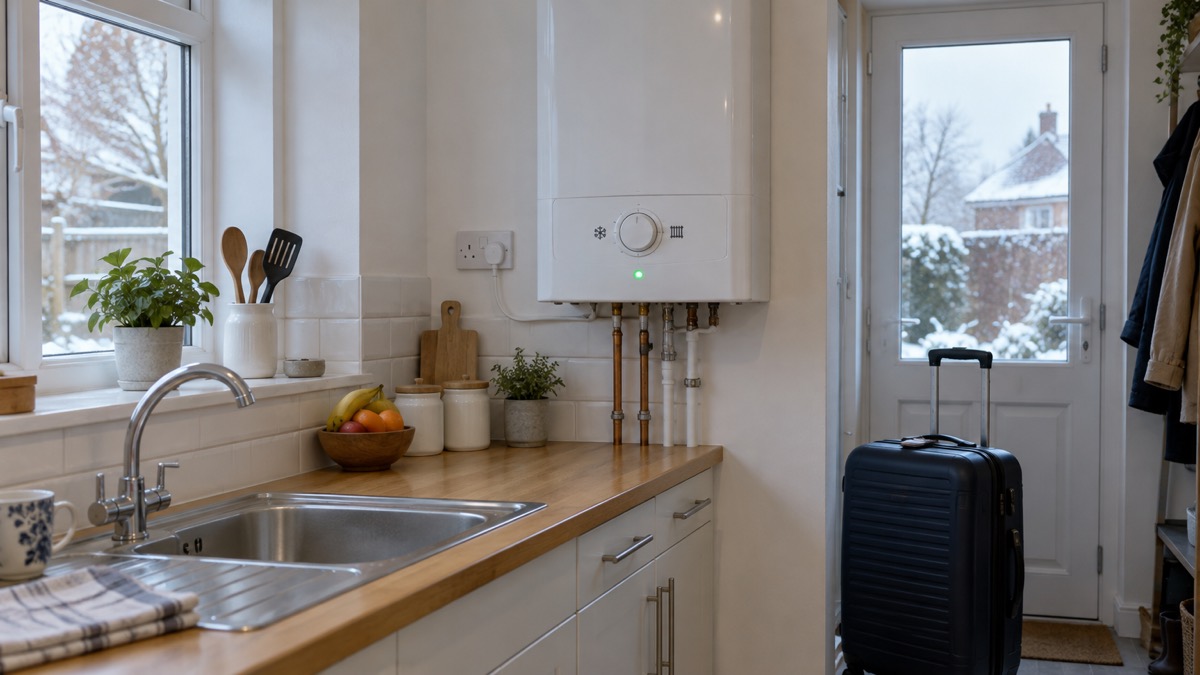
Yes. If you are going away in winter, leave the heating on low or on a frost setting, and leave the boiler powered so its frost protection can work. Scottish Water says most modern boilers have frost protection built in, which fires up the central heating if needed even when the heating is turned off, but the boiler must be powered on for it to work1. WaterSafe, the water industry's plumbing advice scheme, goes further: keep your heating on at least 14 degrees Celsius overnight and when you are away from home, to prevent pipes freezing2.
The reason is simple. Cold weather causes frozen or burst pipes3, and a burst pipe while you are away can do serious damage before anyone notices. Leaving the heating on low, or scheduling it to come on for an hour or two each day, protects the pipes from freezing4. The cost of a little gas over a week is small next to the cost and disruption of a flood.
Before you go, do three things: have the boiler serviced, set the heating to a low background temperature or its frost setting, and ask a neighbour or relative to check the house while you are away5. The sections below explain how to set each part, what can go wrong, and what to do if you come home to a cold house.
Keep the boiler running while you are away in winter
The advice from water companies, councils and fire services across the UK is consistent: do not switch the heating off completely when the house is empty in winter. United Utilities says to keep the heating on low or on a frost setting when you are away6. NI Water says to leave the heating on low when you are away, and to leave a key with a neighbour, friend or family member who can check the house regularly7. Cornwall Council's fire and rescue service says that if you are away from your house overnight or for any long period, leave the heating system on a low setting to prevent pipes freezing8.
The same message comes from Lancaster City Council's civil contingency guidance, which says that if you are planning to leave your house for a number of days, ensure your central heating still runs through to prevent pipes freezing and cracking9. Southern Water suggests leaving your heating on low or scheduling it to come on for an hour or two each day4.
There is a second part to this: the boiler itself must stay powered. Frost protection only works if the boiler has electricity, so do not switch the boiler off at the wall or isolate it at the fuse spur before you go1. The same principle applies to other appliances designed to stay on: fire and rescue services say to switch off electrical appliances when not in use, unless they are designed to stay on10. A boiler with frost protection is designed to stay on.
| Situation | What to do | Who advises it |
|---|---|---|
| Away overnight or longer in winter | Leave the heating on low or on a frost setting | United Utilities6 |
| Away for a while | Leave heating on low, or schedule an hour or two each day | Southern Water4 |
| Any trip away | Leave the heating on low or on a frost setting | United Utilities6 |
| Longer trip | Leave a key with a neighbour, friend or family member | NI Water7 |
Why pipes freeze when the heating is off
Pipes freeze when the water inside them drops below freezing and expands. Ready Scotland lists frozen or burst pipes among the effects of cold, snow and ice3. The risk is highest in unheated parts of the house, in pipes that run along external walls, and in any home left empty during a cold snap.
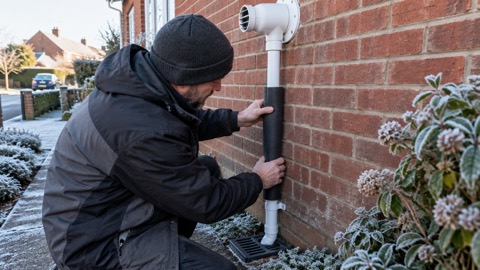
The most common boiler-specific problem is the condensate pipe. SGN, a gas network operator, explains that in cold weather the water inside the condensate pipe can freeze, and this will stop your boiler from working11. Condensate pipes are commonly found in properties with a combi boiler, as well as other modern boilers, and in winter the condensation in the pipe can freeze and burst the pipe, and cause pipes inside your home to do the same2. If your boiler has stopped working in the cold, the chances are you have frozen boiler condensate pipes12.
Older heating arrangements have their own risks. The Scottish Fire and Rescue Service warns that in cold weather the pipes that feed water in and out of stoves and back boilers in open fires can freeze, and this is more likely if you have been away for a few days and the fire or stove has not been used13.
The practical answer is to keep the house above freezing and to keep water moving. Insulating pipes helps14, and checking that pipes are adequately lagged is part of protecting the property14. But insulation alone will not save a house that is left completely cold for a week in a hard frost. The background heat is what does the work.
Setting the boiler before you leave
Set the heating before you pack, not on the way out of the door. The first step is servicing: Nottinghamshire County Council advises getting heating, radiators and boilers serviced15. Southern Water says to service your boiler regularly so it keeps running smoothly in colder weather4. A boiler that has been checked is less likely to fail while the house is empty.
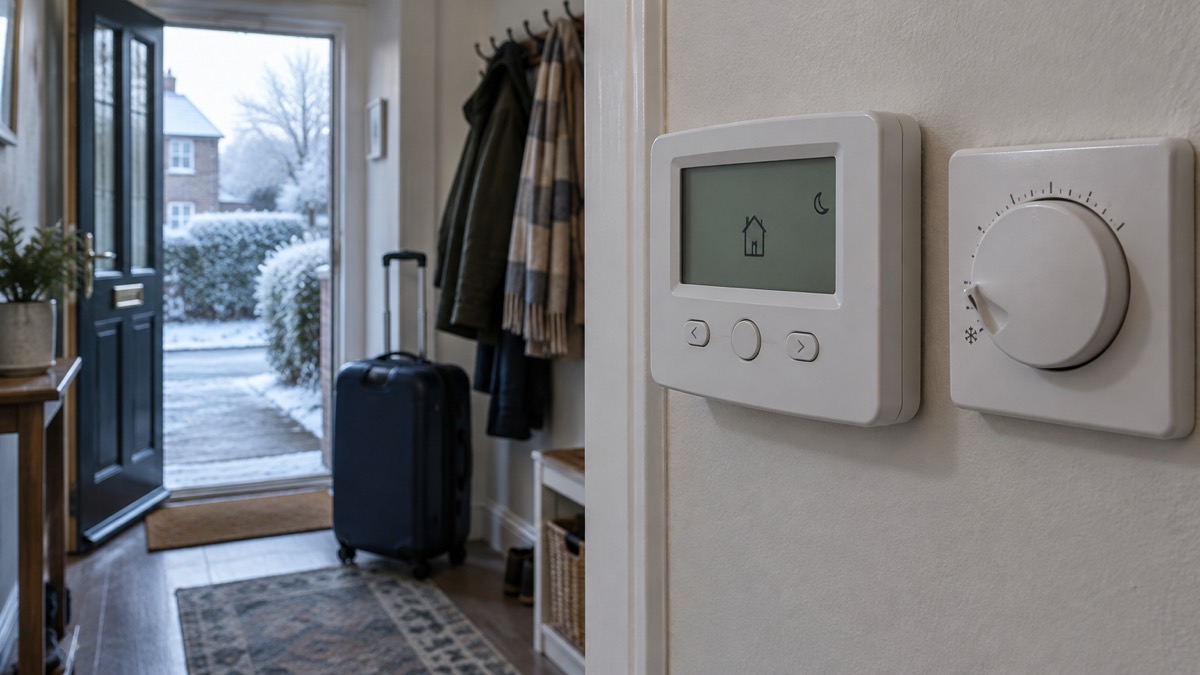
Then set the controls. If your boiler has built-in frost protection, it will fire up the central heating if needed even when the heating is turned off, provided the boiler is powered on1. If it does not, Scottish Water advises setting the room thermostat to 10C and the programmer to 'On' or '24h', so it fires up the boiler if needed1. WaterSafe's figure of at least 14 degrees Celsius overnight and when away is a safe background setting for the house itself2.
For a longer trip, consider the water. United Utilities says that if you are planning to be away for longer periods, turning the water off at the stop tap may be a good precaution, but check with a qualified heating engineer whether it affects your heating system depending on your boiler6. Do not simply turn the water off and assume all is well: some systems need the water on to run safely.
Finally, deal with the other gas appliances. Mid and West Wales Fire and Rescue Service says to turn off all gas appliances that do not need to be on while you are away16. That means the hob, the fire and anything else that is not part of the heating system. The boiler stays on; the rest goes off.
A short checklist before you leave:
- Boiler serviced and working15
- Heating set to low, frost setting, or 14 degrees Celsius2
- Boiler left powered on at the wall1
- Gas appliances not needed switched off16
- Key left with a neighbour, friend or family member7
- Pipes lagged, especially in cold spots14
What can go wrong if the boiler is switched off
If the heating is off and the house gets cold, the first thing to go is often the condensate pipe. When it freezes, your boiler will switch off and display an error message, so you will not have any central heating or hot water, and you run the risk of a large water bill if the pipe bursts or leaks2. That is the mild version. The serious version is a burst pipe inside the house, which can flood rooms and ceilings before anyone notices.
If you come home to a cold house, do not attack the pipe with a flame. SGN advises checking whether the condensate pipe has frozen if your boiler stops working in cold weather, and watching a video on how to safely thaw the pipe17. If the pipe remains frozen or the boiler will not fire, call a Gas Safe Registered engineer or your gas supplier12. For more detail, see our guide to frozen condensate pipes and how to stop a condensate pipe freezing.
If a pipe has burst, turn the water off at the stop tap and call a plumber. North Wales Fire and Rescue Service advises asking a friend or relative to check on your home while you are away, to make sure pipes have not burst or frozen5. That single step catches most problems early.
If your boiler has failed while you were away, our guide to boiler breakdowns in cold weather sets out the checks to make before calling an engineer, and finding a Gas Safe Registered engineer explains how to check their card. If the problem is a frozen condensate pipe, the condensate pipe page covers the signs and the safe thaw.
Short trips, long trips and what the maker advises
The length of the trip changes the answer slightly. For a night or a weekend, leaving the heating on low or on a frost setting is enough6. For a week or more, add the neighbour check and consider the stop tap6. For a longer absence, leave the heating on low or on a frost setting rather than switching it off altogether6.
What the maker advises matters most for your own boiler. The general guidance from water companies and councils is consistent, but the frost protection settings are specific to the model, and the manufacturer's manual is the authority on them. If you cannot find the manual, ask a Gas Safe Registered engineer to set the controls before you go. Our page on boiler servicing explains what an engineer checks, and combi or system boiler explains how the two types behave in an outage.
If you are away and the heating fails, the gas and heating failures section covers what to do next, including what to do when the mains supply goes off and help from networks during a long outage.
Sources (17)
- Protect your pipes, Scottish Water, 2026
- Winter advice, WaterSafe, 2026
- Cold, snow and ice, Ready Scotland, 2026
- Prepare your home for winter, Southern Water, 2026
- Ice and burst pipes, North Wales Fire and Rescue Service, 2026
- Prepare for winter, United Utilities, 2026
- Winter proof your home, NI Water, 2026
- Snow and ice in Cornwall, Cornwall Council, 2025
- Be prepared, Lancaster City Council, 2026
- Christmas safety - Seasonal Safety - Keeping You Safe - North Wales Fire And Rescue Service, North Wales Fire And Rescue Service
- My boiler isn't working, SGN, 2026
- Winter safety, Wessex Water, 2026
- Heating and gas, Scottish Fire and Rescue Service, 2024
- Keep warm in winter, Derbyshire County Council, 2026
- Keeping warm in winter, Nottinghamshire County Council, 2026
- While you are away, Mid and West Wales Fire and Rescue Service, 2026
- Be winter ready, SGN, 2026
 Checks Before Calling Engineer
 Boiler Checks When Moving In
 Power Cut Kit Checklist
 Stop a Condensate Pipe Freezing
 Repressurising a Combi Boiler
 Hot Water but No Radiators
 Resetting a Boiler Lockout
 Programmer Reset After Power Cut
 Boiler Leaking Water
 Boiler Overheating
 How to Bleed a Radiator
 Missed Reconnection Visit
 Prepayment Credit but No Gas
 Low Supply Pressure
 Checking a Network Engineer's ID