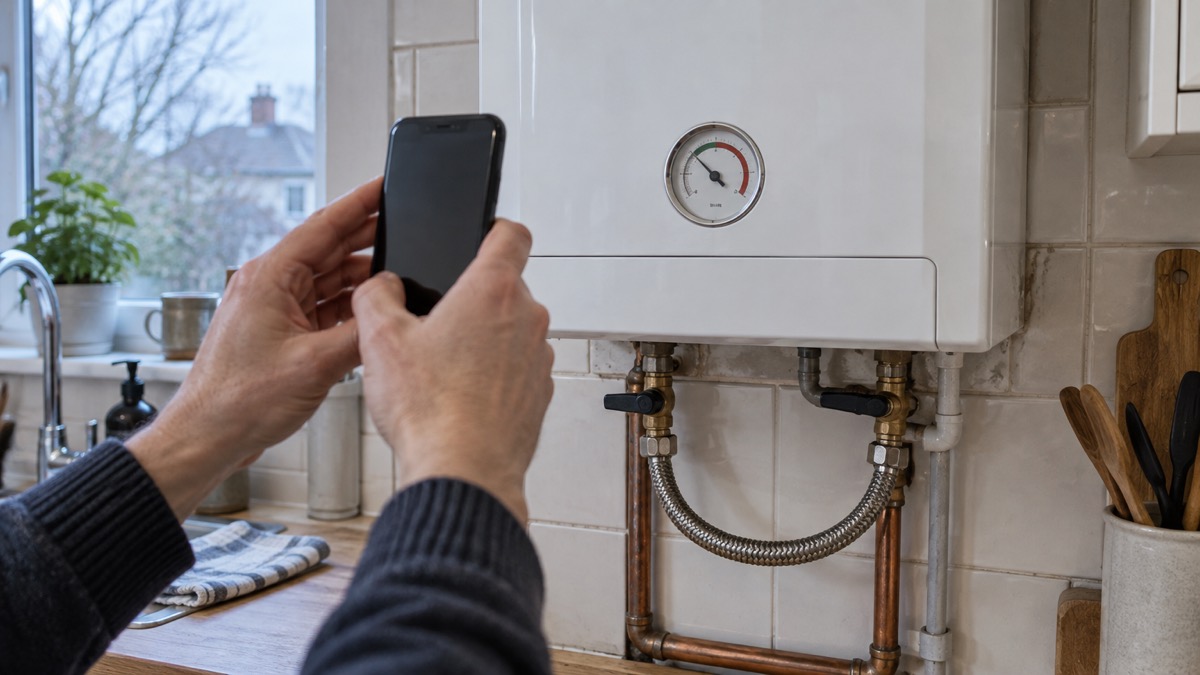
If you can smell gas, think there may be a leak, or suspect carbon monoxide, ring the National Gas Emergency Service on 0800 111 999 straight away. The line is free to call1. Do not wait to work out whose fault it is.
If the pressure has simply dropped and there is no smell, it is usually a supply or appliance question rather than an emergency. Issues with your gas meter or bill are for your gas supplier3.
This page sets out who to ring and when, how to tell a gas supply problem from low boiler pressure, the carbon monoxide signs that mean you should leave the house, and where to get help if you are vulnerable or have no heating.
Call 0800 111 999 if you smell gas or suspect carbon monoxide
The National Gas Emergency Service is the number to ring for a gas emergency, a smell of gas, low gas pressure or suspected carbon monoxide8. It is free to call2. Call it immediately if you smell gas or suspect carbon monoxide9.
When you ring, the adviser will talk you through what to do. That includes turning off your gas supply at the meter4. It is worth adding the number to your phone now, before you need it4.
If you are a tenant and smell gas or suspect a carbon monoxide leak, the same number applies: call the national gas emergency helpline on 0800 111 99911. If you think an appliance is spilling carbon monoxide, call the National Gas Emergency Service on 0800 111 99912.
The service also covers the period after a flood. If you can smell gas, have poor pressure or have no gas after a flood, contact the free national gas emergency line on 0800 111 999. They will advise whether they will attend or redirect you to your supplier or a Gas Safe registered engineer13.
For the full picture of what happens when you ring, including what the engineer does when they arrive, see The National Gas Emergency Service: When to Ring and What Happens.
Low pressure with no smell: check your meter and appliances first
A drop in pressure with no smell is not usually a reason to ring the emergency line. Work through the simple checks first, because the cause is often at your end of the pipe.
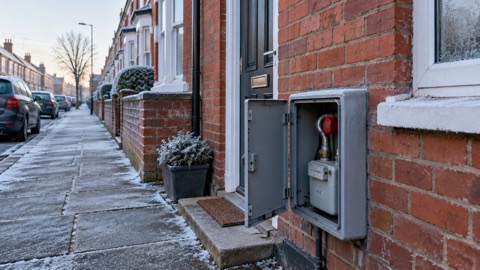
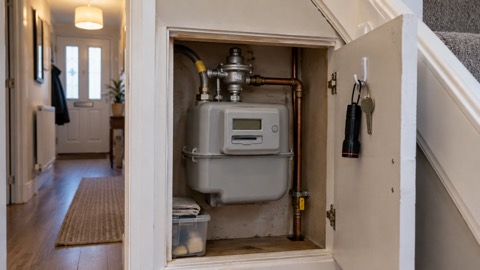
- Check the meter. Know where it is and how to turn the gas off there. Guidance on locating your meter and turning off the gas is available from Cadent4.
- Check your boiler's pressure gauge. Boilers can lose system pressure as they age. Check the central heating system water pressure where applicable, look at the pressure gauge and top it up if it is too low14.
- Check other appliances. If one hob ring is weak but the boiler and other appliances work, the problem is more likely to be that appliance than the supply.
- Check for a supply interruption. Your network operator publishes supply updates, so look there before assuming a fault in your home3.
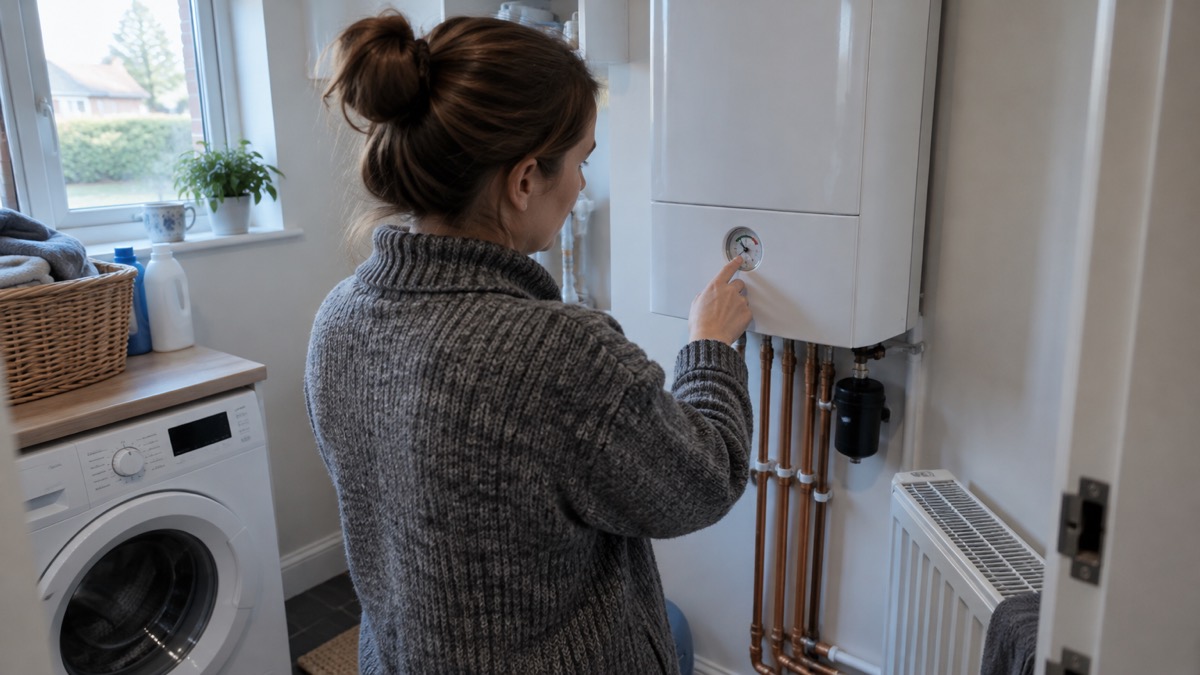
It helps to know which pressure you are looking at. Boiler pressure is the water pressure inside your central heating system, shown on the gauge, and it can fall as a boiler ages14. Gas pressure is the pressure of the gas arriving from the network. A low gauge is a heating system question; weak gas at every appliance is a supply question. For the gauge itself, see Boiler Pressure: What the Gauge Should Read and Fixing Low or High Pressure.
If the checks point to the supply, or you have no gas at all, contact the National Gas Emergency Service on 0800 111 999. They will advise whether they will attend or redirect you to your supplier or a Gas Safe registered engineer13.
Supplier or gas network: who deals with low pressure
Two different organisations sit behind your gas supply, and knowing which one to contact saves time.
Distribution Network Operators deal with the supply of gas and electricity, so you need to contact them directly about gas supply issues7. One of their engineers will be dispatched to investigate if there is a problem on the gas network15.
Your energy supplier is the company you pay. They handle your account, your meter and any compensation claim. If your gas supply is interrupted, contact your energy supplier and give them the details of the incident2.
| Problem | Who to contact | What happens |
|---|---|---|
| Smell of gas, suspected leak or carbon monoxide | National Gas Emergency Service, 0800 111 9991 | Adviser talks you through turning off the gas at the meter4 |
| Poor pressure or no gas, no smell | National Gas Emergency Service first, who may redirect you13 | Engineer dispatched if there is a network problem3 |
| Account, meter or compensation question | Your energy supplier3 | Supplier records the incident details3 |
| Which network covers your home | Your network operator's supply updates3 | Published information on current interruptions |
If you are not sure which network covers you, see Which Network Operator Covers Your Home. For what happens once the supply is restored, see Getting Your Supply Back On After an Outage.
Carbon monoxide signs that mean you should leave and call for help
Carbon monoxide is the danger that turns a pressure query into an emergency. The fire and rescue services are consistent about what to do.
If your carbon monoxide alarm is beeping, immediately get out of the building and call the relevant helpline for the fuel type, then call a registered engineer to check all fuel-burning appliances16. If the alarm sounds, get out and call the Gas Emergency Helpline on 0800 111 9995.
If someone is showing signs of poisoning or has collapsed, get them outside, call 999 and ask for an ambulance6. For a carbon monoxide emergency where occupants are at risk, call 999 and ask for an ambulance and the Fire and Rescue Service, and get out and stay out17.
If you experience symptoms or your alarm sounds, switch off any pump or generator, open doors and windows, get fresh air immediately, leave the house, call the emergency services and seek medical advice if you feel unwell18. If you or your family experience symptoms and believe you may have been exposed, seek urgent medical advice from your GP or an A&E department12.
Fit a carbon monoxide alarm and follow the maker's instructions. Do not fit it at low level: carbon monoxide is slightly lighter than air, so low-level fitting is not recommended21. Alarms are a basic safety item in any home with a fuel-burning appliance22. For more on alarms and detection, see Appliance Safety Checks: How Often and Who Gets Them Free and Home Emergencies: Fire, Carbon Monoxide, Gas Leaks and Burst Pipes.
Getting help if you are vulnerable or have no heating
A cold home with no gas is uncomfortable for most people and risky for some. Act early rather than waiting for the pressure to recover on its own.
Ask your energy supplier about the Priority Services Register. It is a free register for households that need extra help, and being on it means you can be contacted about interruptions and given priority support7. Tell your supplier about anyone in the home who depends on a supply for medical equipment or heating.
Cold weather brings its own risks. People on a low income, and people living in high-rise apartment blocks, are among those at greater risk from cold weather23. If you are not well, call your GP or NHS 111. Dial 999 if it is an emergency25. If you or someone else has signs of hypothermia, phone 999 or go to A&E26. If a person is unresponsive and not breathing normally, phone 99927.
For wider help during a long interruption, see Help From Networks During a Long Outage and Extra Support From Networks and Suppliers for Vulnerable Households. If you have no heating at all, Heating and Cooking Without Mains Power or Gas: A Household Guide sets out what to do safely.
Sources (27)
- Winter safety, SGN, 2026
- Gas supply updates, SGN, 2026
- What happens once your engineers have made the situation safe, Northern Gas Networks, 2026
- Locating your meter and turning off the gas, Cadent, 2026
- Carbon monoxide, Greater Manchester Fire and Rescue Service, 2026
- Carbon monoxide: the silent killer, Wiltshire and Swindon Prepared, 2026
- Help from your energy supplier, Buckinghamshire Council, 2026
- Winter Gas Safety | Wales & West Utilities, Wales & West Utilities
- Power cuts, SGN, 2026
- Preparing for an emergency: be ready, stay safe, act now, Sussex Resilience Forum, 2025
- Tenants, Devon and Somerset Fire and Rescue Service, 2026
- Gas FAQs, Health and Safety Executive, 2026
- Flood advice, Cadent, 2026
- Boiler and appliance guide, Gas Safe Register, 2026
- Loss of gas supply | SGN Your gas. Our network., SGN
- Carbon monoxide, Devon and Somerset Fire and Rescue Service, 2026
- Home fire safety, Northern Ireland Fire and Rescue Service, 2026
- Carbon monoxide safety, Tandridge District Council, 2026
- Diogelwch carbon monocsid, Mid and West Wales Fire and Rescue Service, 2026
- Smoke alarms and CO detectors, Warwickshire County Council, 2026
- Carbon monoxide alarms, Health and Safety Executive for Northern Ireland, 2026
- Gas safety and carbon monoxide, nidirect, 2026
- Supporting vulnerable people before and during cold weather for adult social care managers, GOV.UK, 2025
- Supporting vulnerable people: guidance for care professionals, GOV.UK, 2025
- Weather and health, Public Health Wales, 2026
- Hypothermia (low body temperature), NHS inform, 2026
- Drowning first aid, NHS inform, 2026
 Checks Before Calling Engineer
 Boiler Checks When Moving In
 Power Cut Kit Checklist
 Stop a Condensate Pipe Freezing
 Repressurising a Combi Boiler
 Hot Water but No Radiators
 Resetting a Boiler Lockout
 Programmer Reset After Power Cut
 Boiler Leaking Water
 Boiler Overheating
 How to Bleed a Radiator
 Boiler On When Away in Winter
 Missed Reconnection Visit
 Prepayment Credit but No Gas
 Checking a Network Engineer's ID