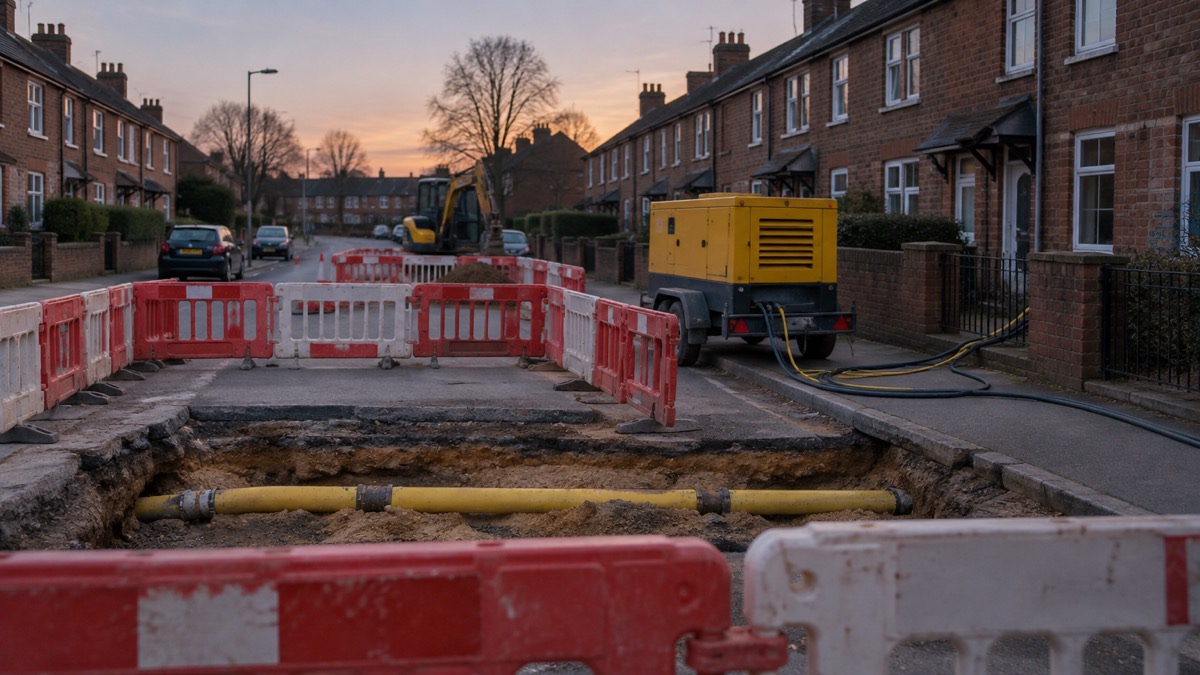
If your gas or electricity supply is interrupted, you may be owed money without having to fill in a form. For unplanned gas cuts, Ofgem's published guidance says you can claim £70 extra for every additional 24 hours your gas supply is off, with the amount increasing depending on how long the supply is off1. For power cuts, the payments are set by the Guaranteed Standards of Performance, which specify minimum levels of service expected of network companies; if a network fails to meet them, the affected customer may be entitled to a payment to compensate for the inconvenience caused by loss of supply2.
The money usually arrives as a credit. Power cut payments may be made through your energy supplier, with the money added to your energy account or prepayment meter if you have one, or paid directly by cheque, cash or bank transfer1. You do not normally have to chase it, but if a payment has not arrived after a few months, Ofgem advises you to contact your network operator directly1. If that gets you nowhere, there is a formal complaints route that ends with the Energy Ombudsman, whose decisions are binding on the energy company4.
This page sets out the amounts as published, who qualifies, how and when the money arrives, and what to do if it does not. It sits alongside our wider guidance on gas and heating failures, what to do when the supply goes off and getting reconnected afterwards.
Gas off for more than 24 hours: what you can claim
For an unplanned interruption to your gas supply, Ofgem's guidance for households states you can claim £70 extra for every additional 24 hours your gas supply is off, and that the amount increases depending on how long your gas supply is off1. Ofgem's planning advice repeats the same figure3. A separate Ofgem consumer advice document gives the standard as "at least £60 for every 24 hours you are without gas" for unplanned interruptions, with more claimable beyond 24 hours4.
The clock matters. Research into customers' experiences of Storm Arwen found that people affected by longer outages tended to be critical of the daily amounts and the overall cap, and one person mentioned just missing the 24 hour cut-off to qualify for an extra day of compensation5. In other words, the payments are counted in full days from the start of the interruption, and an outage that ends an hour short of the next 24 hour mark does not earn the next payment. Keep your own note of exactly when the supply went off and came back.
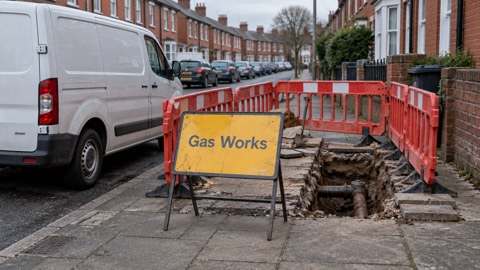
Planned interruptions are treated differently, and more generously in one respect: for planned gas cuts you can get £502. There are also payments for poor notice. Your network operator owes you £20 if it did not give you five days' notice of planned gas works, and at least £40 if it did not give seven days' notice of a planned interruption4. Our page on planned pipe works explains what notice to expect before engineers arrive.
| Situation | Payment | Notes |
|---|---|---|
| Unplanned gas cut | £70 extra for every additional 24 hours, increasing with length1 | Ofgem household guidance, 2026 |
| Unplanned gas cut (floor) | At least £60 for every 24 hours without gas4 | Ofgem consumer advice document |
| Planned gas cut | £502 | Ofgem guidance |
| No five days' notice of planned works | £204 | From the network operator |
| No seven days' notice of planned interruption | At least £404 | From the network operator |
How the payment arrives, and how long it takes
You should not have to apply. Power cut payments may be paid automatically if the network has your bank details, or through a cheque, cash or bank transfer, and the network may also pay you through your energy supplier, in which case the money is added to your energy account or prepayment meter if you have one2. The same principle of automatic payment applies across the guaranteed standards: the payment is owed when the standard is missed, not when you ask for it.
If the payment has not arrived, Ofgem's advice is consistent across its pages: if you did not receive a payment automatically and it has been a few months, contact your network operator directly1. Our page on which network operator covers your home helps you find who that is. Note that it is the network operator, not your energy supplier, that owes outage payments, because the network owns the pipes and wires that failed.
There are deadlines on your side too. Compensation claims must be made within three months for unplanned supply cuts and one month for planned supply cuts4. If you are on a prepayment meter and running short while you wait, your supplier provides an emergency credit facility you can access automatically via your meter, and suppliers are required in certain situations to offer additional credit, including Emergency credit, Friendly-hours credit and Additional Support Credit4. Our page on prepayment meters covers this in detail.
Be aware that a long gas outage is not measured in days of paperwork but in the physical work of restoring supply. The Health and Safety Executive notes that isolating and then restoring gas supplies for large numbers of domestic consumers is a complex process that could take weeks or months to achieve6. Local resilience guidance similarly warns that services could be lost for a few hours, days or weeks depending on the severity of the incident7. The compensation clock runs on that same timescale, which is why the standards pay per full day rather than as a single lump sum.
Power cut payments: the amounts side by side
Power cut compensation depends on the weather the network has declared and how many properties are affected. Ofgem's guidance states you can get £100 for homes or £195 for businesses if fewer than 5,000 properties are affected for more than 12 hours, or more than 5,000 properties are affected for more than 24 hours2. You will get an extra £45 for every additional 12-hour period without electricity1. Ofgem gives a worked example: if the power cut lasts more than 12 hours and is interrupted for 36 hours, you could get 2 additional £45 payments, adding up to £903.
The Ofgem consumer advice document sets out the same structure with the standard's own figures: £95 as a domestic customer if you are without power for 12 hours or more in normal weather, plus £40 for each additional 12 hours, up to a total of £3604. In severe weather, the payment is £85 as a domestic customer if the power was off for 24 hours (storm category 1) or 48 hours (storm category 2), plus £40 for each additional 6 hours, up to a total of £2,0004. For storm category 2 specifically, Ofgem's planning guidance gives £90 for the first 48 hours and an extra £45 for every 6 hours after3.
There is also a payment for repeated interruptions: you could get an extra £100 if your power has gone off more than 4 times between 1 April and 31 March the following year, with each power cut lasting at least 3 hours1.
| Power cut situation | Domestic entitlement | Source |
|---|---|---|
| Normal weather, off 12 hours or more | A standard payment, plus an additional payment per further 12 hours, up to a set cap4 | Ofgem consumer advice |
| Fewer than 5,000 properties off more than 12 hours | A higher standard payment, plus a larger additional payment per 12-hour period2 | Ofgem household guidance |
| Severe weather, off 24 hours (storm category 1) or 48 hours (storm category 2) | A standard payment, plus an additional payment per further 6 hours, up to a higher cap4 | Ofgem consumer advice |
| Storm category 2 | A standard payment for the first 48 hours, plus an additional payment per further 6 hours3 | Ofgem planning guidance |
| More than 4 cuts of at least 3 hours in a year | An extra payment1 | Ofgem household guidance |
Severe weather: the thresholds change
Storms are where most households meet these rules, and where the most frustration has been recorded. Research into Storm Arwen found that the threshold for compensation to begin is a power loss for 24 hours in the case of a less severe storm but 48 hours for a severe storm5. That 48 hour threshold in a storm category 2 event is a long time to wait in a cold house in winter, and it is the reason the Priority Services Register (covered below) matters so much.
Networks can and do go beyond the statutory minimums after major storms. Ofgem's final report on the networks' response to Storm Arwen records that NPG, SSEN and ENWL agreed to alternative action to ensure that customers who were off supply for long periods received additional compensation and benefits8. SPEN had already paid an additional £150 to all customers who were off supply for more than 48 hours8. After any named storm, check your network operator's announcements for additional payments before assuming the statutory figure is all there is.
The guaranteed standards are not the only compensation scheme in the UK, and it helps to know which one applies to you. For water, Ofwat notes that all companies are required under licence conditions to pay compensation to customers where essential household water supplies are interrupted as a result of restrictions authorised by emergency drought orders, although this measure is not part of the guaranteed standards scheme laid down by government9. In Wales, the cold weather resilience plan provides for emergency assistance payments of up to £120 through the Discretionary Assistance Fund, subject to meeting certain eligibility criteria10. If a storm has hit several utilities at once, pursue each separately.
What the Guaranteed Standards of Performance promise
The Guaranteed Standards of Performance (GSoPs) specify minimum levels of service expected of distribution network operators. If a network operator fails to meet these, the affected customer may be entitled to a payment to compensate for the inconvenience caused by loss of supply11. They are not a goodwill scheme: the payments are owed when the standard is missed, and the amounts are published so you can check them yourself.
The rules cover England, Scotland and Wales2. Northern Ireland has its own arrangements under the Utility Regulator: its consumer guidance says that if your gas supply is interrupted, you should contact your supplier, and energy suppliers are required to resolve all complaints within three months12. Households in Northern Ireland should follow their supplier's complaints process rather than the Great Britain route described later on this page.
The standards are reviewed after major events. Ofgem committed to completing a review of the GSoP for severe weather by 31 July 2022 following Storm Arwen8, and the figures published since then, including the storm category payments above, reflect that process. If you are reading this some years later, check Ofgem's current pages for the amounts in force, because the standards are periodically revised.
The Priority Services Register: heating and cooking within hours
The Priority Services Register is a free service that can give extra help if your electricity, gas or water stops working13. For households on the register, the networks' promise goes well beyond a payment. Southern Gas Networks states that if there is a supply interruption and you are a listed Priority Services Register customer, it will provide temporary heating and cooking appliances within four hours to make sure you stay warm and can have a hot meal14. The Guaranteed Standards of Performance go further still: for Priority Services Register customers, the network must provide alternative heating and cooking facilities within 4 hours of a gas supply interruption15. Hold your network to the four-hour promise.
Registration also brings other protections. Your suppliers will know you need extra support if your gas, electricity or water supply is cut off16, and priority fault repairs are among the help available17. Eligibility is set by the gas, electricity and water suppliers themselves, so you register with each18. You may qualify if you are recovering from an injury19, if you temporarily need extra support20, or if you are disabled, chronically sick or of pensionable age15. Registration is free and you can sign up through your supplier or network operator; our page on extra support from networks and suppliers walks through it.
If you are not on the register and a long outage is biting, the practical fallback is the same as for any household: local resilience guidance advises having sufficient heating fuel and emergency heating equipment, plus sufficient fuel for it, in case electricity is cut off21. Keep some basic backup heating ready before winter.
Reinstatement of your home after gas works
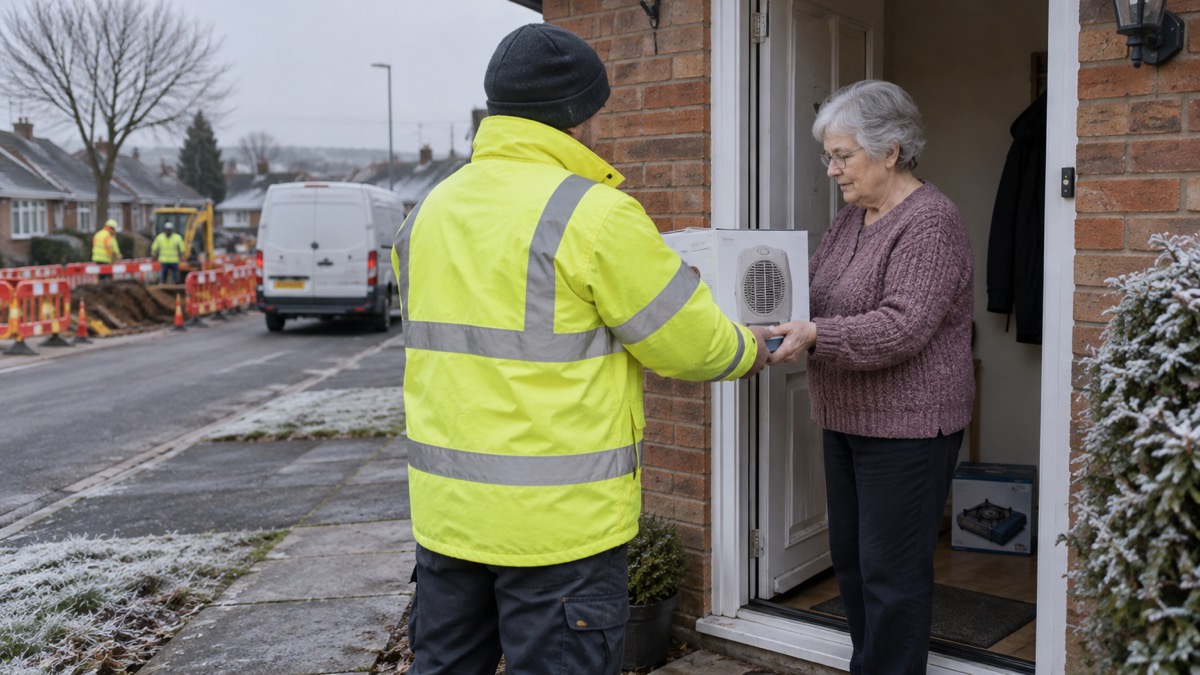
When the network has to dig up or enter your property, the standards cover putting it right. Under the Guaranteed Standards of Performance for reinstatement of a customer's premises, the network must reinstate private grounds within 5 working days of starting the work22. If the deadline is missed, the same complaints route applies as for outage payments.
Do not try to speed things up yourself. The Health and Safety Executive warns that under previous arrangements, members of the public could become increasingly frustrated with delays in reinstatement and attempt uncoordinated reinstatement on an individual basis or through the use of unqualified persons without the necessary competence to carry out the work6. Gas reinstatement is safety-critical work: only a registered engineer should touch it. Our page on finding a Gas Safe registered engineer explains how to check one.
If your supply was disconnected after a fire, the rules are clear about sequence. The fire and rescue service or British Gas will turn off or disconnect your supply, and it is important that either British Gas or an approved installer inspects and rectifies any problems in the system before any attempt is made to reconnect or turn on the supply23. Never reconnect a gas system that has been through a fire without that inspection.
If the compensation does not arrive
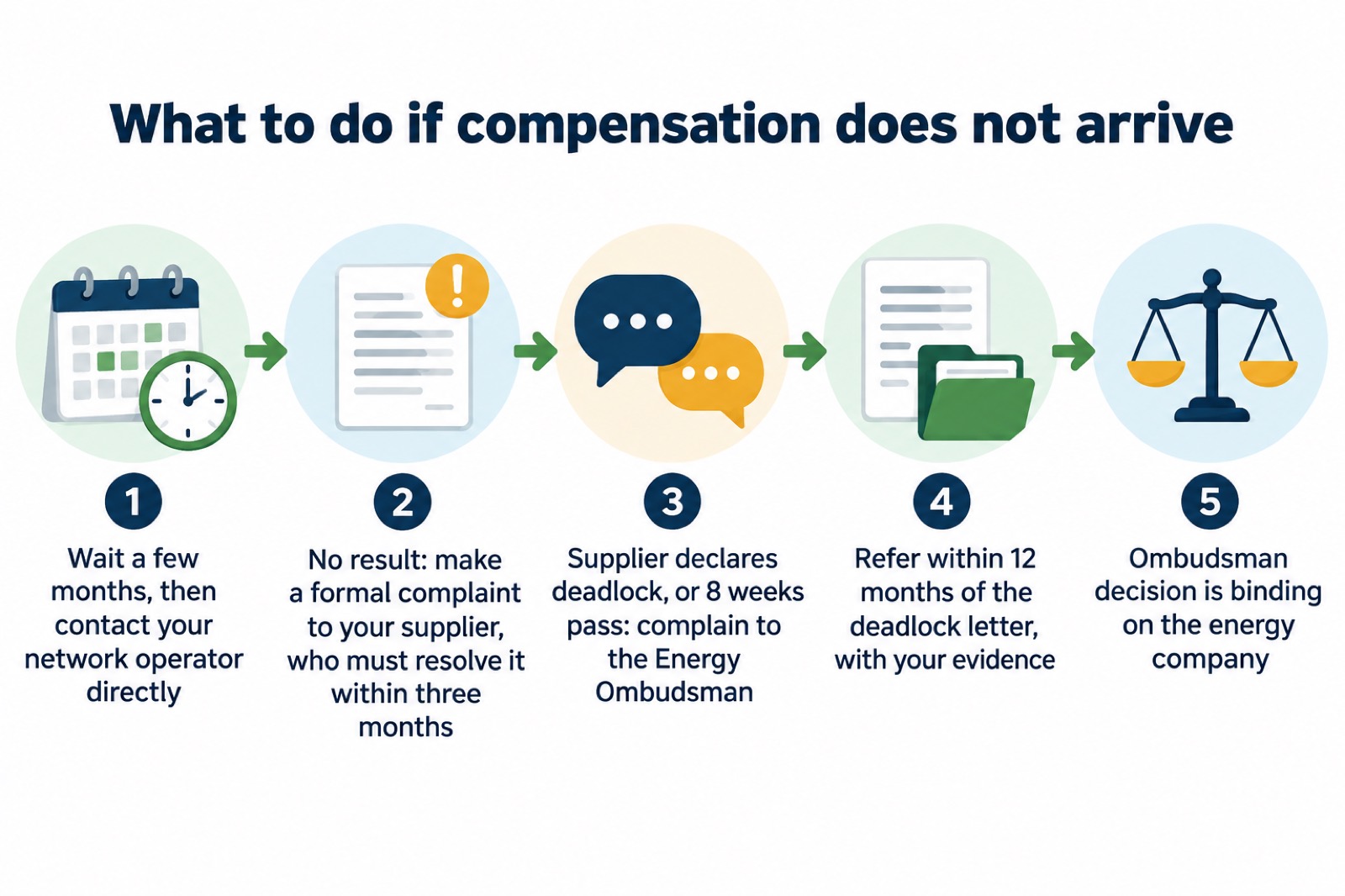
Work through the chain in order. First, if you did not receive a payment automatically and it has been a few months, contact your network operator directly1. If you cannot tell network from supplier, remember that outage payments come from the network that owns the pipes or wires, while billing complaints go to your supplier. If you are unable to pay your bill while the dispute drags on, contact your supplier and let them know25.
Second, make a formal complaint. Energy suppliers are required to resolve all complaints within three months12. Keep a good record of what you have done and when, as evidence: dates of outages, photographs, receipts, and a log of every call and letter. That record is what any later escalation will rest on.
Third, escalate to the Energy Ombudsman. Complain to the Energy Ombudsman if a supplier exhausts all options to resolve the matter, which is called deadlock, or if the complaint reaches 8 weeks old, whichever is earlier4. If they do not resolve the complaint within 8 weeks you can escalate your complaint to the Energy Ombudsman service26. You can refer a case to the Energy Ombudsman within 12 months of a deadlock letter4. To make a complaint, follow the instructions at the Energy Ombudsman's website, and call 0330 440 1624 if you have reached deadlock4.
The Energy Ombudsman can make a company correct a problem, apologise, and explain what happened, and can also make a company pay compensation; its decisions are binding on the energy company4. That binding force is what makes the escalation worth the paperwork.
If your energy supplier goes bust
A supplier failure does not end your entitlements, and it does not interrupt your supply. If your energy supplier goes out of business, your supply will remain uninterrupted; the failed supplier will be put into Special Administration or your account transferred to a new supplier, known as the Supplier of Last Resort4. You should contact your new supplier if you don't hear from them within two weeks4.
Take your evidence with you. A compensation claim that was in flight when the old supplier failed becomes a matter for the new one, and your dated record of the outage and your complaints is what allows the new supplier, or the Energy Ombudsman, to pick it up. Our page on what happens if your supplier stops trading covers the process in full.
Why long outages can happen, and what that means for the money
The guaranteed standards assume outages measured in hours and days, but national risk planning contemplates longer events. The National Risk Register's reasonable worst-case scenario for a conventional attack on gas infrastructure describes domestic gas customers in the directly impacted region losing their gas supply, with restoration taking several months for domestic customers, and priority of gas supply being given to domestic users because they take longer to reconnect following disconnection for safety reasons27. A cyber attack on gas infrastructure could mean recovery takes longer than expected, depending on the sophistication of the attack and damage to the system28, and in a prolonged electricity supply shortfall after such an attack, rolling power cuts lasting 3 hours at a time may be required to balance supply and demand29.
None of this changes what you should do: the standards still apply, the Priority Services Register still matters most, and the practical preparation is the same. But it explains why the per-day structure of gas compensation exists, and why households that rely on gas for heating should treat the register, and some basic backup heating, as more than a formality.
Sources (29)
- Check if you can get a payment for a power cut, Ofgem, 2026
- Help with a power cut, Ofgem, 2026
- Plan for a power cut, Ofgem, 2026
- England and Wales domestic consumer advice, Ofgem, November 2024
- Customer experiences of Storm Arwen, Ofgem, June 2022
- Gas supply emergencies, Health and Safety Executive, 2026
- Loss of gas and water, Essex Prepared, October 2026
- Final report on the review into the networks' response to Storm Arwen, Ofgem, June 2022
- Drought information for households, Ofwat, October 2026
- Cold weather resilience plan for Wales, Welsh Government, February 2022
- Interim report on the review into the networks' response to Storm Arwen, Ofgem, February 2022
- Consumer guide, Utility Regulator for Northern Ireland, 2020
- Guidance on staying safe at home, Oxford Health NHS Foundation Trust, September 2026
- Utility companies and priority services, Dorset Prepared, February 2024
- Consultation on the Priority Services Register review, Ofgem, June 2014
- Keeping warm, healthy and safe in cold weather, Greater London Authority, October 2026
- Help from your energy supplier, Buckinghamshire Council, October 2026
- Prepare yourself, Greater Manchester Combined Authority, October 2026
- Priority Services Register, Derbyshire County Council, October 2026
- Priority Services Register Scotland, Scottish Borders Council, October 2026
- Extreme weather advice, Flintshire County Council, October 2026
- Guaranteed standards | SGN Your gas. Our network., SGN
- Power supplies after a fire, Cheshire Fire and Rescue Service, June 2023
- Emergency planning advice, Basingstoke and Deane Borough Council, October 2026
- Keeping warm in winter, Derbyshire County Council, October 2026
- Heat your home: managing rising costs, Argyll and Bute Council, November 2024
- 2023 National Risk Register, Cabinet Office, 2023
- National Risk Register annex, City of York Council, 2023
- National Risk Register 2025, Cabinet Office, 2025
 Checks Before Calling Engineer
 Boiler Checks When Moving In
 Power Cut Kit Checklist
 National Gas Emergency Service
 When the Mains Supply Goes Off
 Getting Supply Back After Outage
 Planned Pipe Works
 Help During a Long Outage
 Prepayment Meters
 LPG Homes in Winter
 Oil Boiler Breakdowns
 Boiler Breakdown in Cold Weather
 Boiler Fault Codes
 Boiler Pressure Gauge
 Frozen Condensate Pipes