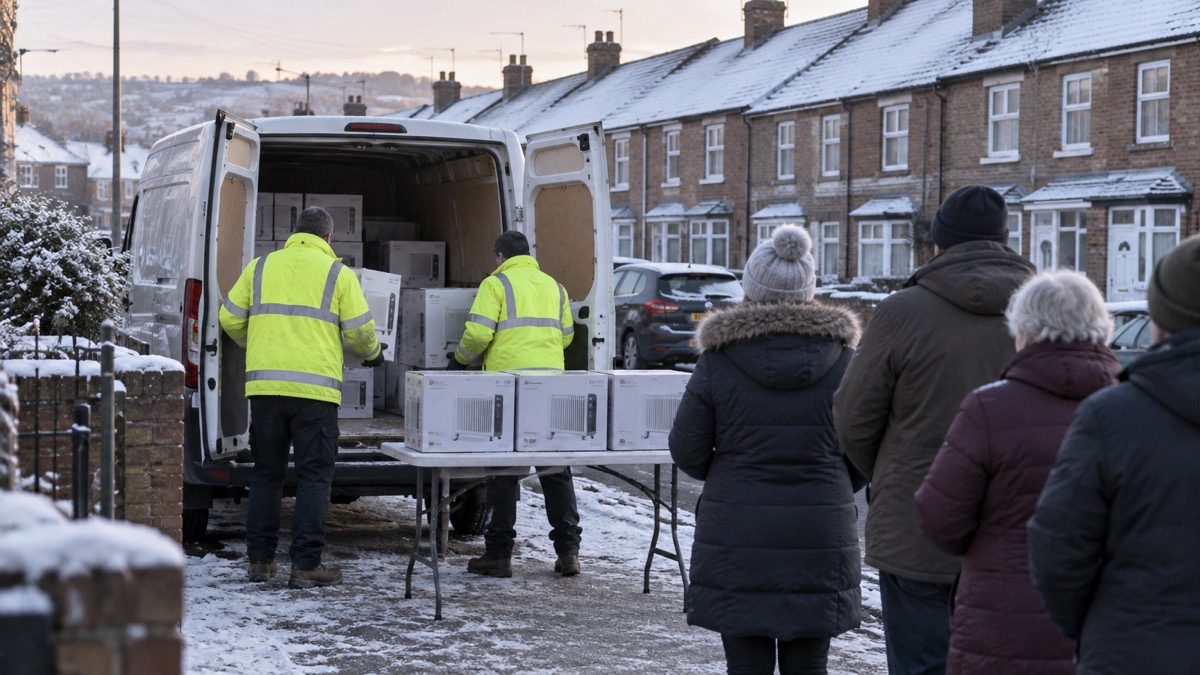
If your gas supply goes off, the single most important number is the National Gas Emergency Service on 0800 111 999. It is free, it is available 24 hours a day, 365 days a year, and it is the same number whether you smell gas, suspect a leak, or simply find your supply has stopped1. An engineer will be sent out to keep you and your property safe, and if you smell gas, Manchester Fire and Rescue Service says an engineer will be with you within the hour, seven days a week, 24 hours a day3.
For most households a gas outage is short and the engineer fixes it on the spot. But when a fault, a flood or a major incident cuts supply to a whole street or town for a long period, the network operator steps in with more than repairs: heaters, cooking facilities, welfare visits and priority help for the households that need it most. Ofgem's consumer advice confirms that additional payments and provisions are available for households off gas supply, including alternative heating and cooking facilities4. This page explains what that help is, who gets it first, and how to ask for it.
If your gas goes off: call 0800 111 999
Every gas network in Great Britain and Northern Ireland routes emergencies to the National Gas Emergency Service on 0800 111 999. Councils, fire and rescue services and readiness campaigns across the UK list the same number for gas emergencies, including for gas problems after flooding and if you smell gas or suspect a leak1. The West Mercia risk register adds that you should also call it to report a carbon monoxide emergency, or if a pipeline is struck, even if no gas leak has occurred13.
Call it even if you are not sure. Manchester Fire and Rescue Service puts it plainly: "just call the 0800 number 0800 111 999 and someone will come and do a check for safety"3. The call is free from landlines and mobiles, and the service runs around the clock, every day of the year13.
While you wait, follow the standard gas safety steps. Warwickshire County Council advises that if you suspect a gas leak you should open windows, avoid using electrical switches, and contact the emergency gas helpline immediately14. The West Mercia risk register gives the fuller list: do not smoke or light matches, do not turn electrical switches on or off, open doors and windows, and turn off the meter at the control handle unless the meter is in the cellar13. If you feel unwell, the Northern Ireland Fire and Rescue Service advises calling 999 for an ambulance, or going to your GP or A&E15.
If you are not sure how to turn off your gas, electricity or water at the meter, Natural Resources Wales advises contacting your supplier to find out before an emergency happens, not during one16.
What the network engineer does when they arrive
Your gas network operator is the company that owns the pipes carrying gas to your home. Ofgem's advice is clear about the division of responsibility: the network operator is responsible for the pipes carrying energy to your home, fixing supply problems and attending reports of gas leaks, but not for problems inside your home, such as a faulty boiler4. So the engineer who arrives after your call is there to make the network safe and restore supply, not to repair your cooker or boiler.
What the engineer does depends on the scale of the problem. For a single property it is usually a check for safety and a repair or reconnection. For a wider incident, Welsh Government resilience guidance explains that operators may follow emergency procedures to balance and maintain pressure by stopping supply to large industrial users first, with critical sites protected and other disconnections evenly distributed17. That is why, in a serious shortage, some streets lose supply while others keep it: the network is shedding load in a controlled way to keep the system stable.
Networks keep engineers on standby for exactly this. A National Energy System Operator report on an incident on 20 March 2025 records that the National Grid Electricity Transmission standby engineer had arrived at site by 23:5018. The same readiness applies on the gas side: the emergency service is staffed 24 hours a day, 365 days a year2.
If you are worried about who is at your door, ask for identification and check it before letting anyone in. You can read more in our guide to checking a network engineer is genuine.
Priority customers are visited first
When supply is off for a long period, networks do not help households in a random order. Households on the Priority Services Register are identified to electricity, gas and water companies as needing extra support, including during an interruption to supply5, and Surrey County Council confirms that registered customers receive priority help in an emergency19. Northern Gas Networks states it directly: "If your gas supply is interrupted, we'll get in touch with you"7.
The register is free. Oxford Health NHS Foundation Trust describes it as "a free service that can give extra help if your electricity, gas or water stops working"20. What that help looks like varies: Dorset Prepared lists examples including priority assistance and tailored support if there is a power or gas outage21, and Dorset Council's wider wellbeing guidance includes access to bottled water during a water supply interruption alongside that outage support22. London's cold weather guidance adds that if you are eligible and your gas, electricity or water supply is cut off, your suppliers will know you need extra support23. Dorset Prepared also notes that registered users will be messaged when there is an interruption to supply in their area21.
Who is eligible is set out in more detail on our extra support page, but in broad terms it covers older people, disabled people, households with young children, and people with medical conditions that make an outage more than an inconvenience. If that describes anyone in your home, join the register with your gas network and your electricity and water suppliers now, before anything goes wrong. You can find your network on our page about which network operator covers your home.
Never turn the gas back on yourself
This is the rule that matters most once supply has been off. Lincolnshire County Council states it without qualification: "If you turn the gas off, a professional must turn it back on. Do not attempt to do this yourself"6. Surrey County Council's emergency planning guidance agrees: if you turned off gas, it must be turned on again by a professional for safety reasons24.
The reason is that when gas returns to a system that was switched off, appliances left with taps open or pilot lights out can fill a room with gas. A qualified engineer relights and checks each appliance in a controlled sequence. The same rule applies after a fire: Cheshire Fire and Rescue Service says do not attempt to reconnect or turn on the supply yourself25, and the Mid and West Wales Fire and Rescue Service "After the Fire" booklet is blunter still: "Gas and electricity might be disconnected and UNDER NO CIRCUMSTANCES should you attempt to reconnect or turn these on yourself"26.
While you wait for reconnection, keep the home safe in other ways. Official domestic gas safety advice is to never block ventilation27, and to have all gas appliances serviced annually by a Gas Safe registered engineer, never attempt DIY on a gas installation, fit a carbon monoxide alarm in any room with a gas appliance, and know how to turn your gas supply off in an emergency15. Our guide to getting your supply back on after an outage covers the reconnection visit itself.
Electric heaters and cooking while you wait
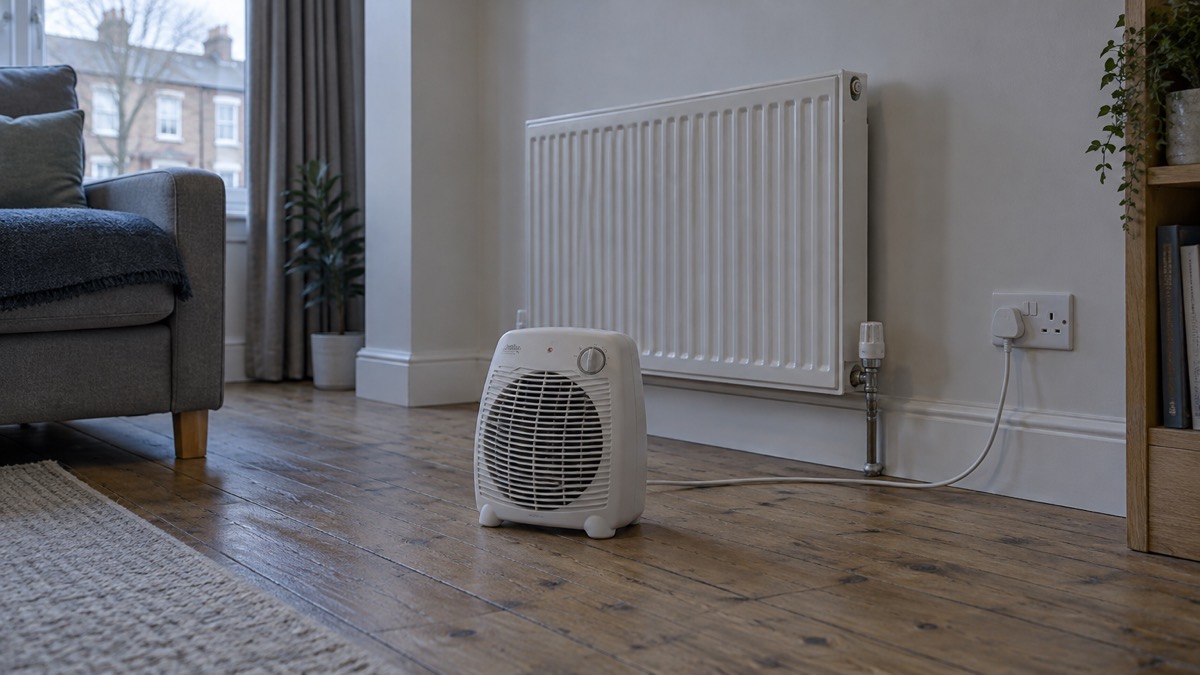
If the outage will last, the practical question is how to stay warm and cook. Buckinghamshire Council advises preparing before trouble arrives: if your property is powered mainly by gas, ensure you have alternative electrical products such as electric heaters to keep you warm, and microwaves or other electrical appliances that let you still cook if your gas oven or hob are not working28.
The key point is that a gas outage usually leaves your electricity on. That is what makes electric heaters, microwaves, kettles and slow cookers the natural standbys: they run off the mains while the gas pipes are being repaired. If both supplies are affected at once, the picture changes and you need a different plan, which our heating and cooking without mains power or gas guide covers.
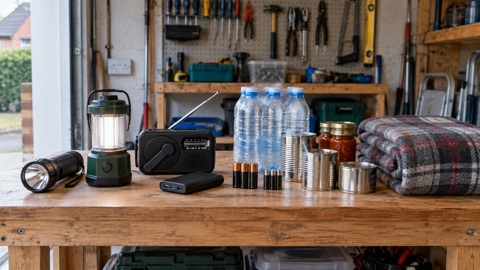
What to have ready, from the official guidance:
- An electric heater or heaters sufficient for the room you would live in during an outage28
- A microwave or other electrical cooking appliance as a backup to a gas oven or hob28
- Warm clothing and blankets, since heating a single room is easier than heating a home2
- A torch, in case the outage coincides with a power cut29
For households on prepayment meters, there is a further safety net. Ofgem's advice notes that if you are running out of gas and electricity, your supplier provides an emergency credit facility you can access automatically via your meter, and suppliers are required in certain situations to offer additional credit, including Emergency credit, Friendly-hours credit and Additional Support Credit4. Our prepayment meters page explains how to use it.
Using electric heaters safely
Electric heaters are the main substitute warmth in a gas outage, and they need respect. Wiltshire and Swindon Prepared's advice is simple and worth following exactly: when using plug-in electric heaters, think about where you put them so they are away from anything that can catch fire2.
That means:
- Keep heaters clear of curtains, bedding, sofas, laundry and anything else that can burn2
- Do not use them to dry clothes draped over or near them15
If the outage follows a storm, remember the parallel electrical safety rule from nidirect: never touch damaged electricity equipment30. And if you use gas cylinders for anything, such as a camping stove brought indoors for a brew, Cheshire Fire and Rescue Service's camping safety advice applies: always turn off the gas supply before changing the cylinder31. Never bring a barbecue or camping stove inside for heating or cooking: that is a carbon monoxide risk, covered below.
How long until the gas comes back?
There is no single answer, because it depends on what caused the outage. What the official guidance does promise is responsiveness and communication. The National Gas Emergency Service is available 24 hours a day, 365 days a year and will send out an engineer to keep you and your property safe2. If you smell gas, an engineer will be with you within the hour, seven days a week, 24/73.
For a long outage, Buckinghamshire Council advises that if the gas is lost for a long period, National Grid will send you details about the incident28. That is the network's formal communication to affected households, and it is one reason to be on the Priority Services Register: registered households are messaged when there is an interruption to supply in their area21, and Northern Gas Networks commits to getting in touch with registered customers if their gas supply is interrupted7.
One scenario with a known shape is a national supply shortfall. The 2025 National Risk Register states that in a prolonged electricity supply shortfall after a gas supply loss in Great Britain, rolling power cuts lasting up to 3 hours may be required to balance supply and demand32. That figure is about electricity rationing after a gas infrastructure failure, not about how long the gas itself stays off, but it tells you what a worst case looks like: hours of managed interruption rather than an open-ended blackout. Our power cuts guide covers what to do in those circumstances.
Why gas supplies are cut
Most gas outages are local: a burst pipe, a struck main, water getting into the network after flooding, or a fault at the meter. Our page on hitting a buried pipe while digging covers the struck-main case, including the rule that you must call the emergency number even if no gas leak has occurred13.
Some causes are larger. The National Risk Register 2025 assesses risks to gas infrastructure, including a cyber attack scenario in which, after gas supply loss in Great Britain, rolling power cuts lasting 3 hours at a time may be required to balance supply and demand32. Welsh Government resilience guidance describes the operational response: following an incident on the gas network, operators may follow emergency procedures to balance and maintain pressure by stopping supply to large industrial users, with critical sites protected and other disconnections evenly distributed17. Households are protected as far as the physics allows, and industry is cut first.
Flooding is another recognised cause. Nottinghamshire County Council's after-a-flood guidance directs households with gas concerns to the Gas Emergency Services on 0800 111 99912, and Buckinghamshire Council's gas supply issues advice exists precisely because floods and storms can interrupt supply for extended periods28. If you want to understand the wider picture, our gas and heating failures guide brings the causes together.
Flats and buildings with large service pipes
Households in flats face a specific restriction on turning gas off. Northern Gas Networks asks:
"Please do not attempt to turn off your supply at the meter if either of the following scenarios apply to you: You live in a block of flats or occupy a multi storey building. Your service pipe, the pipe that extends from your meter and connects it to the gas main in the street, is 3" in diameter or more."7
The reason is that a meter in a flat often controls or connects into a shared arrangement, and turning it off incorrectly can affect other homes or leave the system in an unsafe state. Instead, Northern Gas Networks says: "Contact us immediately to arrange for an engineer to safely turn off your gas supply"7.
So the rule splits in two:
| Your situation | What to do |
|---|---|
| House or bungalow with a normal service pipe | If you smell gas and it is safe to do so, shut off the supply at the meter control valve, open doors and windows and go outside15 |
| Flat, multi storey building, or service pipe 3 inches or more | Do not touch the meter. Call 0800 111 999 and an engineer will turn the supply off safely7 |
The Northern Ireland Fire and Rescue Service gives the standard procedure for those who can reach their meter safely: shut off the gas supply at the meter control valve, open all doors and windows for ventilation, and go outside into fresh air15. Note the West Mercia caveat: do not go into a cellar to reach the meter if gas may be present, as gas can collect there13.
Staying Safe & Warm: help for households in difficult circumstances
Beyond the formal network provisions, the official guidance is consistent that neighbours and community are part of the plan. Wiltshire and Swindon Prepared's gas outage advice says: "Don't be afraid to talk to your neighbours, they may not have any issues and may be able to help you", sharing resources, warm food or heaters2. The government's Prepare Campaign advice goes further: check in on neighbours, particularly anyone who might live alone or might need extra support, and make sure they know what is happening and have the help they need33. It also advises planning with your neighbours or community about who could assist you during an outage, for example identifying someone who could drive you to get help in an emergency33.
For households that need more than neighbourly help, the support structure is:
- The Priority Services Register: free extra help from gas, electricity and water companies during an interruption, including being contacted directly5
- Network provisions: alternative heating and cooking facilities, and additional payments, for households off gas supply4
- Supplier emergency credit: automatic and additional credit for prepayment meter customers running out of gas and electricity4
- The Fuel Bank Foundation: emergency financial support through a network of partners, identifying people who cannot afford to pre-pay for their fuel or energy4
Warwickshire County Council also advises having a household plan in place that everyone knows, for evacuating the premises safely and contacting emergency services in the event of a gas leak, suspected carbon monoxide exposure, or any other gas-related emergency14. Our community resilience guide and extra help page set out how to build that local and personal support before you need it.
Carbon monoxide: the check to make before and after
Any page about gas being off and on again must cover carbon monoxide, because the return of supply is when risk rises. The Health and Safety Executive for Northern Ireland gives the TASK checklist to follow if you suspect carbon monoxide is present:
"If you suspect carbon monoxide is present remember follow the 'TASK' checklist:" turn off or extinguish the heating source or appliance if safe to do so; ventilate your home by opening windows and doors and stay outside in the fresh air; seek medical help if you feel unwell; keep all heating sources and appliances off until serviced, or chimney and flues cleaned, by a qualified professional34.
Prevention is the same list run backwards: fit a carbon monoxide alarm in any room with a gas appliance, have appliances serviced annually by a Gas Safe registered engineer, never block ventilation, and never attempt DIY on a gas installation15. If an outage has left appliances unlit or disturbed, keep them off until they have been checked. Our appliance safety checks page explains who gets free checks and how often they are due.
Locking cooker valves and other safety fittings
For households where someone might turn the cooker on and leave it on, fire and rescue services recommend a simple fitting. Manchester Fire and Rescue Service explains: "A locking cooker valve is a safety device that can be fitted to existing gas cooker pipework. When the valve is locked, the gas supply to the cooker is stopped"35. A carer can easily control, with a key, when gas can and cannot be used safely once the valve is fitted35.
Devon and Somerset Fire and Rescue Service adds a practical detail: the valve is installed with a key to lock it, so that only the gas hob is isolated rather than the whole gas supply to the house36. North Wales Fire and Rescue Service's dementia fire safety guidance describes the trade-off honestly: you can have a special gas tap fitted that friends and family can turn off when they leave your home, but this does mean you will not be able to cook unless someone is with you37. The same guidance advises considering an isolation valve to a gas cooker so that the cooker cannot be turned on and left on if the person is at home alone37.
SGN, the network for southern England and Scotland, has run a locking cooker valve programme since a pilot project began in 2015, and reports that since 2021 it has helped one million households maintain a safe and warm home, with 2.3 million services accessed through its extra-help programme.
Gas Safety Week and keeping your knowledge current
Gas Safety Week is the annual focal point for this advice. SGN lists Gas Safety Week 2026 as a key date for its partners, running 14 to 20 September 2026. Use it as a yearly prompt to check the basics: appliances serviced, alarms tested, everyone in the household knowing the emergency number and how, and whether, to turn the gas off.
A yearly check worth making:
- Are all gas appliances serviced by a Gas Safe registered engineer?15
- Is there a working carbon monoxide alarm in every room with a gas appliance?15
- Does everyone know to call 0800 111 999, and when?1
- Is anyone in the household on the Priority Services Register?5
- Do you know whether your home is one where you should not turn off the meter yourself?7
If you want to go further, our getting started guide and emergency kit checklist cover the wider household preparations, and our home emergencies page covers gas leaks, carbon monoxide and burst pipes together.
Sources (37)
- Utilities failure: what to do, London Borough of Richmond upon Thames
- What you might need in a gas outage, Wiltshire and Swindon Prepared
- Stay fire safe, Manchester Fire and Rescue Service
- England and Wales energy domestic consumer advice, Ofgem, November 2024
- Priority Services Register, North Devon Council
- Get help and advice in an emergency, Lincolnshire County Council
- Priority Services Register, Northern Gas Networks
- Emergency plan, Ready Scotland
- Contact in an emergency, The Highland Council
- Information about specific safety concerns, Northumberland County Council
- Emergency planning, Basingstoke and Deane Borough Council
- After a flood: further support, Nottinghamshire County Council
- West Mercia Risk Register V4, West Mercia Authorities, January 2025
- Safe home heating, Warwickshire County Council
- Home fire safety, Northern Ireland Fire and Rescue Service
- Preparing for a flood, Natural Resources Wales
- Resilience and risks in Wales, Welsh Government
- Incident report, 20 March 2025, National Energy System Operator, 20 March 2025
- Priority Services Register, Surrey County Council
- Guidance at home, Oxford Health NHS Foundation Trust, 15 September 2026
- Protect yourself and your family, Dorset Prepared
- Wellbeing and safety, Surrey County Council
- Keeping warm, healthy and safe in cold weather, Greater London Authority
- Homes prepared, Surrey County Council
- Power supplies after a fire, Cheshire Fire and Rescue Service, 22 June 2023
- After the Fire booklet 2019, Mid and West Wales Fire and Rescue Service, 11 March 2013
- Domestic gas FAQs, Health and Safety Executive, 14 October 2026
- Gas supply issues, Buckinghamshire Council
- Power cuts - Be Ready, beready.campaign.gov.uk
- Strong winds weather warning: information and advice, nidirect, 24 October 2026
- Camping safety, Cheshire Fire and Rescue Service, 26 July 2025
- National Risk Register 2025, Cabinet Office, 2025
- Phone and broadband outages, Prepare Campaign, 12 October 2026
- Carbon monoxide, Health and Safety Executive for Northern Ireland
- Cooking fire safety devices, Manchester Fire and Rescue Service
- Equipment for carers, Devon and Somerset Fire and Rescue Service
- Dementia fire safety, North Wales Fire and Rescue Service
 Checks Before Calling Engineer
 Boiler Checks When Moving In
 Power Cut Kit Checklist
 National Gas Emergency Service
 When the Mains Supply Goes Off
 Getting Supply Back After Outage
 Compensation for Supply Cuts
 Planned Pipe Works
 Prepayment Meters
 LPG Homes in Winter
 Oil Boiler Breakdowns
 Boiler Breakdown in Cold Weather
 Boiler Fault Codes
 Boiler Pressure Gauge
 Frozen Condensate Pipes