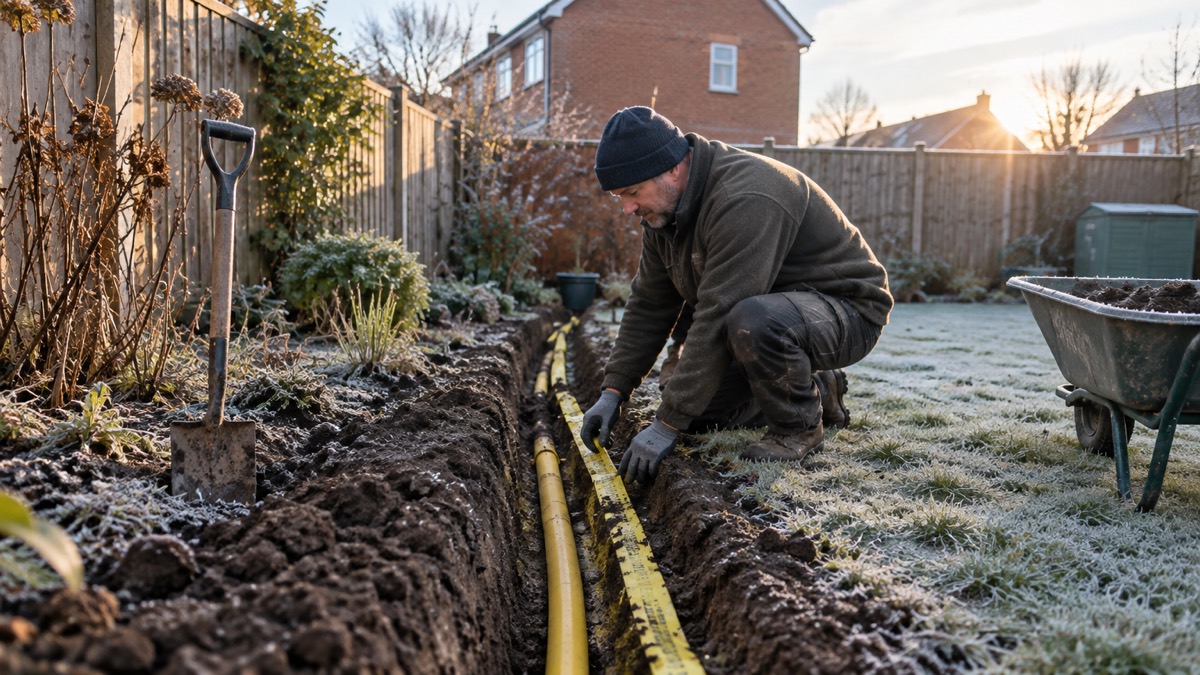
If you have just hit a gas pipe while digging in your garden, on a driveway or on a building site, act now and do not try to fix anything yourself. Get everyone away from the area, ask anyone in nearby buildings to leave, and call the National Gas Emergency Service on 0800 111 999 immediately1. Extinguish all naked flames and other ignition sources within 15 metres1. Do not operate any electrical switches, do not try to seal the leak or fill the hole, do not operate any valves, and do not use a mobile phone near the suspected source1.
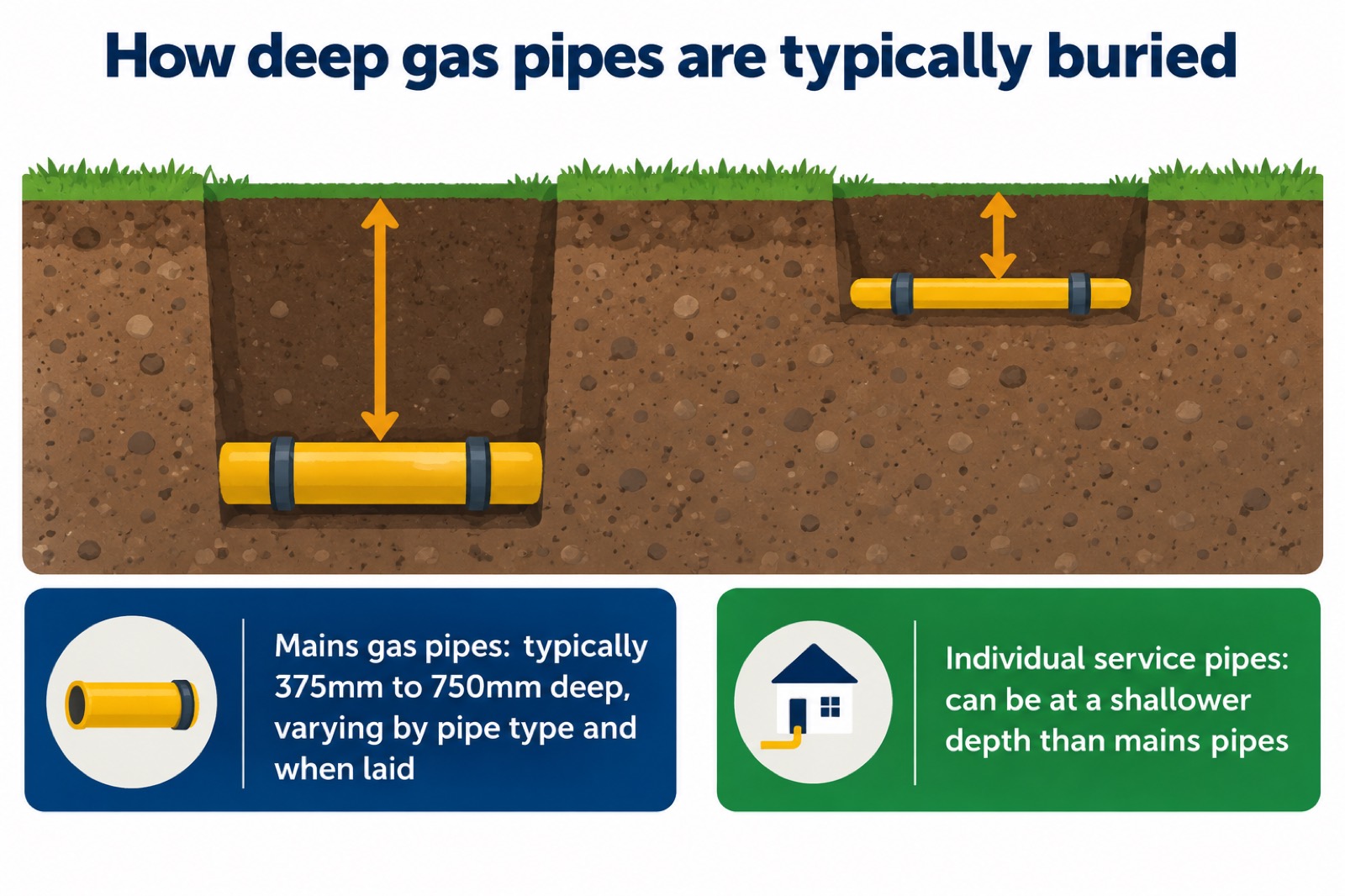
Hitting a gas main while digging can cause a gas leak, a fire, or an explosion1. Mains gas pipes are typically buried between 375mm and 750mm deep, though this varies depending on the type of pipe and when it was laid, and individual service pipes to properties can be at a shallower depth1. That means ordinary garden digging, fence posts, patio foundations and tree planting can all reach a pipe. The emergency line exists for exactly this situation: you should use 0800 111 999 to report a gas or carbon monoxide emergency, or if a gas pipeline is struck, even if there is no obvious leak2.
The best protection is to check what is below before you start. In Wales and the South West of England, Wales & West Utilities offers a free online mapping service through LineSearch (LSBUD) that gives scaled plans of its gas distribution network, and a Plant Protection team you should call at least 10 working days before starting work1. This page covers what to do in the minutes after a strike, what never to touch, how to check in advance, who pays for repairs, and the law that applies to contractors and employers. For gas leaks inside the home, see home emergencies.
If you hit a gas pipe: get everyone away and call 0800 111 999
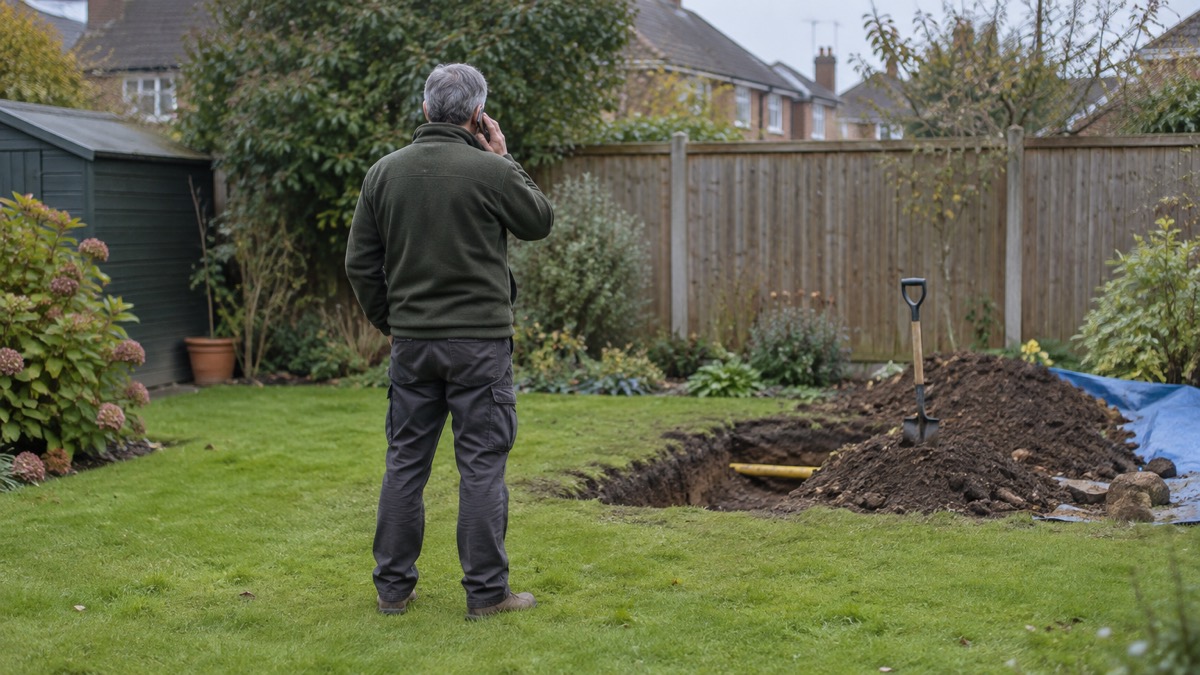
The first minutes after a pipe strike matter more than anything else on this page. Wales & West Utilities, the gas network for Wales and the South West of England, gives this advice for anyone who hits a gas pipe while digging: get everyone away from the area, ask anyone in nearby buildings to leave, call 0800 111 999 immediately, and help engineers, police or fire services if asked1. Do not wait to see whether gas is escaping. The National Gas Emergency Service is there for exactly this situation: if you or your builders have hit a gas pipe, call it 24 hours a day on 0800 111 999 immediately2.
The 0800 111 999 number is the single National Gas Emergency Service line used across Great Britain. Council and emergency guidance across the country repeats the same number: "Gas leaks 0800 111 999"3; "just call the 0800 number 0800 111 999 and someone will come and do a check for safety"4; "the emergency gas helpline (0800 111 999)"5; and "Gas emergencies: 0800 111 999"6. The Health and Safety Executive, the national regulator for gas safety, tells householders to "Call National Grid's Gas Emergency Freephone number: 0800 111 999" if they suspect a leak7. The same guidance extends to pipe strikes: to report a gas or carbon monoxide emergency, or if a pipeline is struck, even if no gas leak has occurred, call 0800 111 999, a line available 24 hours a day8. The advice from every official body is the same: call it immediately rather than trying to judge the seriousness yourself.
When you call, be ready to say where you are, what you were doing, what you struck, and whether you can smell gas or hear it escaping. Then follow the steps below in order.
- Stop work and step away from the hole. Do not lean over it to look inside1.
- Get everyone away from the area, and ask anyone in nearby buildings to leave1.
- Extinguish all naked flames and other ignition sources within 15 metres1.
- Call 0800 111 999 from a safe distance, away from the suspected source of the leak1.
- Help engineers, police or fire services if asked1.
If the strike has also damaged water pipes or electrics, treat those as separate hazards. The Met Office advises that if water has leaked near your electrics, you should not touch them and should switch them off at the fuse box9. If cables have been blown down or are still hanging, nidirect, the Northern Ireland government information service, warns to be careful not to touch any electrical or telephone cables in that condition10. A dig that hits one service can easily hit another, so assume the ground around the strike is unsafe until the emergency services or network engineers say otherwise.
When gas is escaping: put out flames within 15 metres
Gas escaping from a damaged pipe needs only one thing to turn into a fire or an explosion: a source of ignition. That is why Wales & West Utilities gives a specific distance in its safety advice: extinguish all naked flames and other ignition sources within 15 metres of the strike1. That includes cigarettes, garden torches, bonfires, petrol-driven tools and anything else with a flame or a spark. Fifteen metres is a minimum, not a target: if you can put out or move an ignition source that is further away, do that too.
The reason for the distance is that escaping gas does not stay where the hole is. Fire and rescue guidance on liquefied petroleum gas explains the principle: "The gas is heavier than air, so that it collects near the floor or ground. It can be ignited at a considerable distance" from the source of the leak, and if ignited in a room there may be a fire and an explosion11. Escaping gas can also travel underground, which is one reason Wales & West Utilities tells you not to fill the hole: gas can travel underground into buildings1. So a flame tens of metres from the strike, or a spark inside a neighbouring property, can still be the ignition source.
The fire and rescue services give consistent advice on what to do when gas is escaping. Devon and Somerset Fire and Rescue Service tells tenants: "Do put out naked flames. Do keep people away from the area affected - immediately get outside in fresh air. Do open doors and windows on your way out"12. Wiltshire and Swindon Prepared gives the same core actions for a gas leak: open all your windows and doors, and do not smoke or use naked flames13. Richmond Council's utilities failure guidance adds turning the gas off at the meter, unless the meter is located in the cellar or basement, and avoiding the use of any naked flames or electrical switches14. Buckinghamshire Council's advice for gas supply issues is to open doors and windows and avoid using naked flames15.
For a buried pipe strike in the open, the priority order is slightly different from a leak indoors: get people clear of the area first, deal with ignition sources second, and let the emergency service handle the rest. Edinburgh Council's guidance for a release of gas in the wider environment captures the shelter principle: go indoors unless you are asked to leave by the emergency services, close all doors, windows and vents, put out all naked flames such as pilot lights, switch off gas supplies, and stay indoors until you know more16. If the strike is in your garden and the emergency service tells you to go inside rather than evacuate, that is why: indoors with everything closed is safer than standing near the hole.
"Extinguish all naked flames and other ignition sources within 15 metres."
What not to touch after a pipe strike
Almost every instinct people have after hitting a pipe is the wrong one. The urge is to cover the hole, pack soil around the pipe, find a valve and shut it off, or switch on a light to see better. Wales & West Utilities rules all of this out: do not operate any electrical switches; do not try to seal the leak or fill the hole; do not operate any valves; do not use a mobile phone near the suspected source1. Each of these can create a spark, and filling the hole can drive escaping gas underground into buildings1.
The electrical switch rule deserves emphasis because it catches people out. It is not just the light switch in a shed. It means anything that makes or breaks an electrical circuit: power tools, a digger's electrics, a doorbell, a garage door opener. Official gas leak guidance from Richmond Council includes avoiding the use of any naked flames or electrical switches14, and Buckinghamshire Council's advice for anyone smelling gas is to avoid using naked flames15. A spark inside a cloud of gas is the mechanism that turns a leak into a fire or an explosion, and Wales & West Utilities warns that hitting a gas main while digging can cause exactly that1.
The valve rule is there for a different reason. Network valves are operated by trained network engineers, not by the public or by contractors, and operating the wrong valve can affect supplies to other properties or make the situation at the strike worse. Leave every valve alone and let the emergency service control the network1.
The same caution applies to anything else the dig may have exposed or damaged:
- Do not touch electrical or telephone cables that have been damaged, blown down or are hanging10
- If water has leaked near electrics, do not touch them; switch them off at the fuse box9
- Do not use a naked flame to inspect anything, and do not smoke13
- Do not use a mobile phone near the suspected source of the leak1
One more point for householders: if the damaged pipe turns out to be your own pipework rather than the network's, any repair work on gas pipework is a job for a registered engineer. Argyll and Bute Council's gas safety guidance states that only a Gas Safe registered engineer should carry out the work, and anyone else is breaking the law17. See finding a Gas Safe registered engineer for how to check.
Why a damaged gas main is dangerous
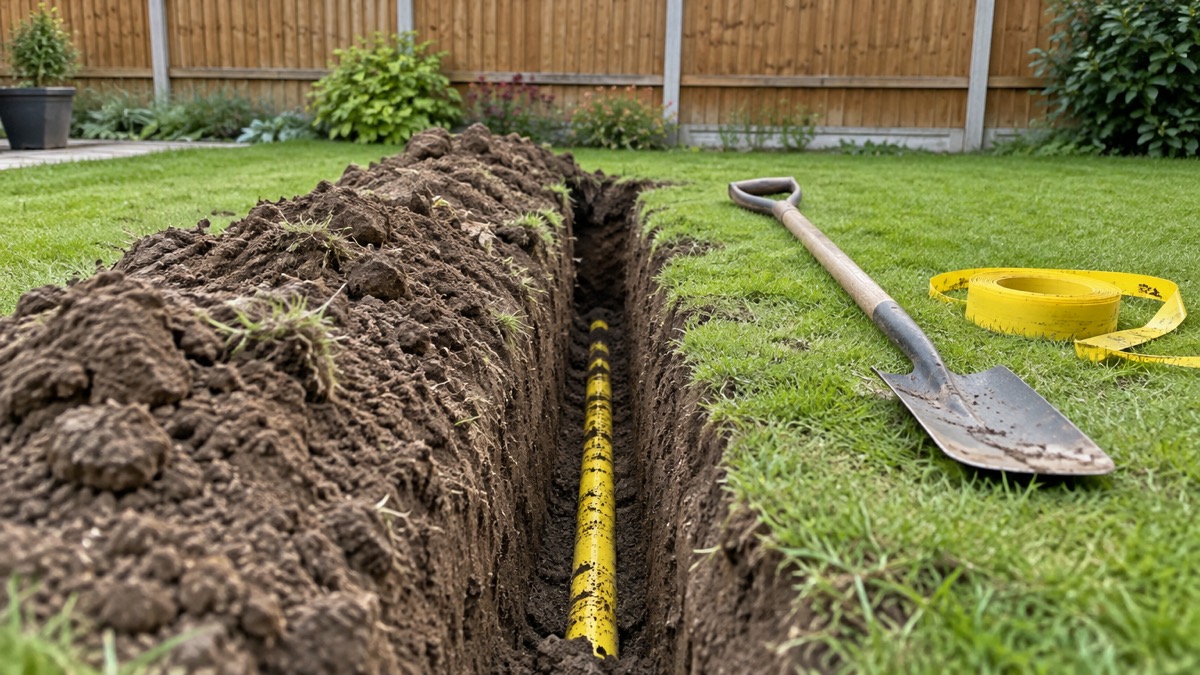
It is worth understanding why the response to a pipe strike is so urgent, because the consequences run from a nuisance leak to a fatal explosion. Wales & West Utilities states it directly: hit a gas main and you could cause a gas leak, a fire, or an explosion1. Warwickshire County Council's home heating safety advice adds that handling gas appliances, pipelines, or fittings without proper training and expertise can lead to serious hazards5. A buried main under pressure, cut open by an excavator bucket, is the most severe version of that hazard.
This is not a theoretical risk that only affects major industrial sites. The Surrey Community Risk Register for 2026 carries a specific entry, R060, for an accidental fire or explosion at an onshore major accident hazard pipeline, rated as a medium risk, with Surrey Fire and Rescue Service as lead agency under Health and Safety Executive legislation18. Local resilience forums plan for pipeline incidents precisely because they happen, and because a fire or explosion at a pipeline can affect whole streets rather than one property.
The depth figures explain why ordinary work reaches pipes. Mains gas pipes are typically buried between 375mm and 750mm deep, though this varies depending on the type of pipe and when it was laid, and individual service pipes to properties can be shallower1. A service pipe feeding one house can sit above the depth of a mains pipe, which means the shallowest, and therefore most vulnerable, pipe is often the one running into your own home. A hole for a fence post, a shallow trench for a cable, or the edge of a patio excavation can all reach that depth.
The other reason a damaged main is dangerous is the way gas behaves once it is out of the pipe. As the fire and rescue guidance on heavier-than-air gas explains, it collects near the ground and can be ignited at a considerable distance from the source of the leak11. Escaping gas can also travel underground, entering buildings through foundations, ducts and drains, which is why filling the hole is forbidden1. A house tens of metres from the strike can end up with gas accumulating inside it. This is also why the emergency service asks people in nearby buildings to leave, and why you should ask them to do so yourself if you strike a pipe1.
Always know what's below before you start digging
Every piece of advice on this page after a strike has an equivalent before the strike, and it is much simpler: find out what is under the ground before you put a tool into it. Wales & West Utilities, whose network covers Wales and the South West of England, provides two routes for this, and both are aimed at anyone planning excavation, from a householder digging a pond to a contractor laying a driveway1.
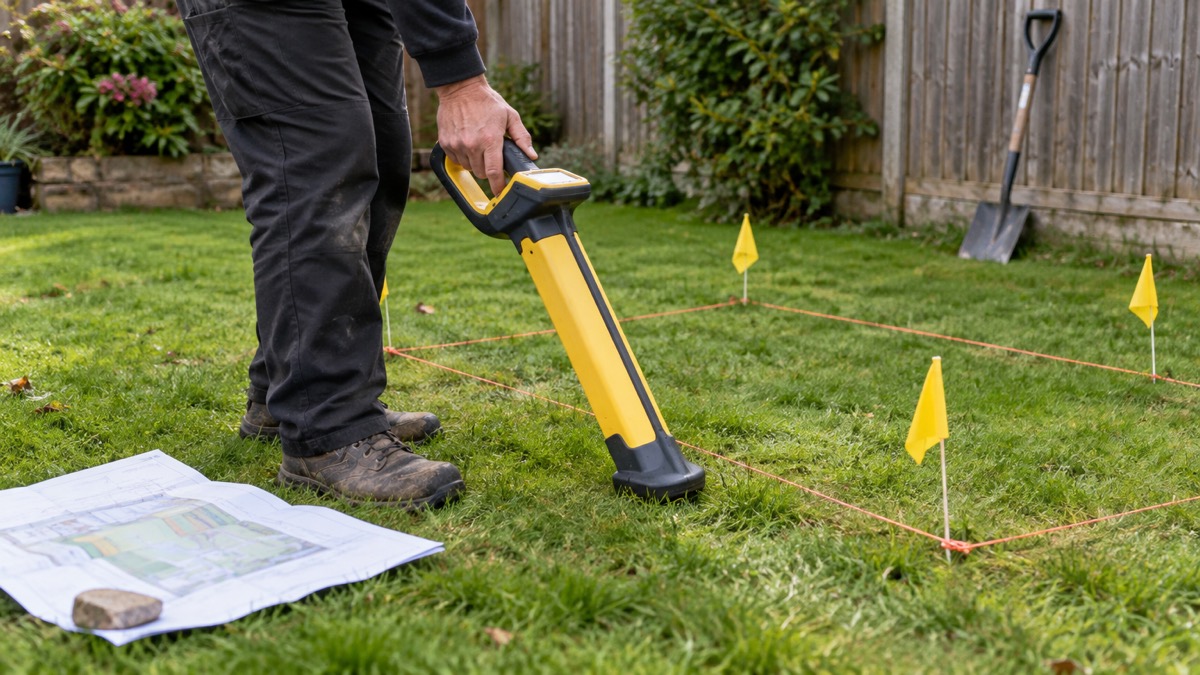
The first route is the online mapping service. Use the free online mapping service via LineSearch (LSBUD) to get scaled plans of the gas distribution network covering Wales and the South West of England1. The service is free to register and free to use1. You do not pay for the plans, and you do not need to be a professional to use them.
The second route is the Plant Protection team. Call the team on 029 2027 8912 if you are unsure, and in any case at least 10 working days before starting work1. The team can also be reached by email at dig@wwutilities.co.uk1, and handles general enquiries Monday to Friday, 8am to 6pm1.
There are two important limits on what the plans tell you, and both change what you do on site. First, the plans show approximate locations only, and individual service pipes to properties are not shown1. The pipe most likely to be at risk from your digging, the one running into your house, is precisely the one the plans will not mark. Second, because locations are approximate, Wales & West Utilities advises using cable- and pipe-locating devices on site to verify positions1. For a householder, that may mean hiring a locator or employing someone who has one; for a contractor it is standard practice.
What to do before any dig in Wales or the South West:
- Register with LineSearch (LSBUD), which is free to register and free to use1
- Download scaled plans of the gas distribution network for your site1
- Print the plans in colour, no older than 28 days, and keep them on site1
- Call the Plant Protection team on 029 2027 8912 at least 10 working days before starting work1
- Use cable- and pipe-locating devices on site to verify positions, because plans show approximate locations only and service pipes are not shown1
If you are elsewhere in Great Britain, the same principle applies through your own network operator. To find who covers your area, see which network operator covers your home. For work the network itself plans on your street, your gas network operator must give you 7 working days' notice if they plan to do maintenance work, and if they do not give that notice you may get £40 extra in compensation19; see planned pipe works for what to expect.
Registering your dig with Wales & West Utilities at least 10 working days ahead
The 10 working day figure is not an administrative nicety; it is the notice the network needs to respond properly. Wales & West Utilities states that you should call its Plant Protection team on 029 2027 8912 at least 10 working days before starting work1. The team can also be contacted at dig@wwutilities.co.uk1, and handles general enquiries Monday to Friday, 8am to 6pm1. Ten working days means working days, not calendar days, so a dig planned for a Monday needs the call made roughly two weeks and a weekend beforehand.
What registering does is put your dig in front of the people who know where the apparatus is. The Plant Protection team can advise on the plans, tell you where network apparatus is likely to be, and, where the work justifies it, discuss how the network protects its pipes during your work. If you are unsure whether there are pipes where you plan to dig, the same number, 029 2027 8912, is the one to call1. For a householder planning anything deeper than a flowerbed, that call is worth making before any plant arrives, because the alternative after a strike is repair costs charged to the party responsible1.
Keep the paperwork with the work. The plans you obtain through LineSearch (LSBUD) should be printed in colour, be no older than 28 days, and be kept on site1. If you are employing a contractor to do the digging, ask to see the plans before they start, and ask whether they have registered the dig. The 28 day rule matters because network records change: a plan printed months ago may not show apparatus that has been laid or diverted since.
Note the contrast between the two notice periods in this area, because they are easily confused. You, as the person digging, must give the network at least 10 working days' notice of your work1. The network, when it plans maintenance work affecting your supply, must give you 7 working days' notice, and if it does not, you may get £40 extra19. Both rules exist to prevent surprises: yours prevents a strike, theirs prevents an unexpected interruption to your heating and cooking. For what a planned interruption means for your household, see what to do when the mains supply to your home goes off.
Who pays for repairs if you damage a pipe
The short answer is: the party responsible for the damage. Wales & West Utilities states that all repair costs for damage to its pipelines are chargeable to the party responsible, and that those costs can be significant1. It also states that apparatus may be diverted at the contractor's expense1. So if your excavator operator cuts a main, the repair bill comes to whoever is judged responsible, and if your project requires a pipe to be moved, that diversion is paid for by the contractor, not by the network or by other bill payers.
For householders, this makes the before-you-dig steps a financial matter as well as a safety one. A garden landscaping project that strikes a service pipe can end with a repair bill, and possibly the cost of digging up and replacing ground, on top of the project itself. The mapping service that shows you where pipelines run before you dig, LineSearch (LSBUD), is free to register and free to use1.
If you are a homeowner, it is worth knowing where your responsibility for pipework begins and ends. Official guidance on burst pipes draws the line inside the home: if you own your home, you are responsible for insulating and protecting all inside pipework, and in rented accommodation, landlords are responsible20. A strike on a network pipe in the street or in your garden is a different matter again, and the network's position is that repair costs for damage to its pipelines are chargeable to the party responsible1. If you employ someone to dig, agree in writing before work starts who carries the risk and the cost of underground damage, because "the contractor did it" will not necessarily protect you from a bill.
The same principle of responsibility applies to other buried services. Northumberland County Council's guidance on domestic oil leaks advises arranging for an engineer to repair or replace your tank or pipework, with accredited companies available under the UK Spill Contractors accreditation scheme21. If a dig damages an oil pipe and oil escapes, the clean-up costs and the environmental consequences follow the same logic of responsibility as a gas pipe strike. For oil-fired homes, see oil boiler breakdowns.
The law for contractors and employers
For professional contractors and employers, checking before excavating near the gas network is not just good practice; it is a legal duty. Wales & West Utilities states that failing to check before excavating near the gas network can breach the Health and Safety at Work Act 1974 and the Pipeline Safety Regulations 19961. Employers also have obligations under the CDM Regulations 2015, the Construction (Design and Management) Regulations that govern how construction work is planned and managed1.
The consequences are set out plainly: professional contractors risk prosecution under the Health and Safety at Work Act 1974, unlimited fines, and potential invalidation of public liability insurance1. The insurance point deserves attention from clients as well as contractors. If a contractor's public liability insurance is invalidated because they failed to check before digging, the cost of a damaged main may land closer to home than the client expected. Asking a contractor for evidence of a LineSearch search and a registered dig is a reasonable thing to do before letting them break ground.
Employers have further duties around gas beyond the excavation itself. Argyll and Bute Council's gas safety guidance states that most employers have a duty to ensure that any gas appliance and associated pipework or flue installed in a place of work are maintained in a safe condition17. The same guidance states that only a Gas Safe registered engineer should carry out gas work, and that anyone else carrying it out is breaking the law17. So an employer whose premises are affected by a strike, or who needs repairs afterwards, must use registered engineers for the gas work. See finding a Gas Safe registered engineer and appliance safety checks.
| Who | Duty | If breached |
|---|---|---|
| Contractors excavating near the gas network | Check what is below before excavating, under the Health and Safety at Work Act 1974 and the Pipeline Safety Regulations 19961 | Prosecution, unlimited fines, potential invalidation of public liability insurance1 |
| Employers | Obligations under the CDM Regulations 20151; duty to keep gas appliances, pipework and flues in a place of work maintained in a safe condition17 | Enforcement by the Health and Safety Executive |
| Anyone carrying out gas work | Use a Gas Safe registered engineer; anyone else is breaking the law17 | Breaking the law17 |
Where to get help
The numbers and contacts in one place:
- Gas emergency, including a struck pipeline: 0800 111 999, free, 24 hours2. See the National Gas Emergency Service for what happens when you ring.
- Wales & West Utilities Plant Protection (Wales and the South West): 029 2027 8912, or dig@wwutilities.co.uk, Monday to Friday, 8am to 6pm; call at least 10 working days before starting work1.
- LineSearch (LSBUD): free to register and free to use, giving scaled plans of the gas distribution network covering Wales and the South West of England1.
- Elsewhere in Great Britain: find your network operator on which network operator covers your home.
If a strike interrupts your supply, you may be entitled to compensation: for unplanned gas cuts, you can claim £70 extra for every additional 24 hours your gas supply is off, with the amount increasing depending on how long the supply is off22. See compensation when mains supply is interrupted and getting your supply back on after an outage. For wider preparation, see gas and heating failures: a household guide.
Sources (22)
- Dial Before You Dig, Wales & West Utilities, 2026
- Energy Outages, National Energy System Operator, 2026
- Emergency Information, Basingstoke and Deane Borough Council, 2026
- Stay Fire Safe, Manchester Fire and Rescue Service, 2026
- Safe Home Heating, Warwickshire County Council, 2026
- Emergency Plan, Ready Scotland, 2026
- Gas Safety: Frequently Asked Questions for Owner/Occupiers, Health and Safety Executive, 2026
- Winter Advice Leaflet, Humber Local Resilience Forum, 2024
- Frozen or Burst Pipes, Met Office, 2026
- Strong Winds and Heavy Rain Warning, nidirect, 2026
- Heating and Gas, Scottish Fire and Rescue Service, 2024
- Tenants, Devon and Somerset Fire and Rescue Service, 2026
- What You Might Need in a Gas Outage, Wiltshire and Swindon Prepared, 2026
- Utilities Failure, Richmond Council, 2026
- Gas Supply Issues, Buckinghamshire Council, 2026
- Release of Gas, Toxic Chemical or Radiation, City of Edinburgh Council, 2026
- Gas Safety, Argyll and Bute Council, 2026
- Community Risk Register 2026, Surrey Local Resilience Forum, 2026
- Help for Consumers During a Power Cut, Ofgem, 2026
- Steps to Reduce the Risk of Burst Pipes, nidirect, 2025
- Domestic Oil Pollution, Northumberland County Council, 2026
- Check If You Can Get a Payment for a Power Cut, Ofgem, 2026
 Checks Before Calling Engineer
 Boiler Checks When Moving In
 Power Cut Kit Checklist
 National Gas Emergency Service
 When the Mains Supply Goes Off
 Getting Supply Back After Outage
 Compensation for Supply Cuts
 Planned Pipe Works
 Help During a Long Outage
 Prepayment Meters
 LPG Homes in Winter
 Oil Boiler Breakdowns
 Boiler Breakdown in Cold Weather
 Boiler Fault Codes
 Boiler Pressure Gauge