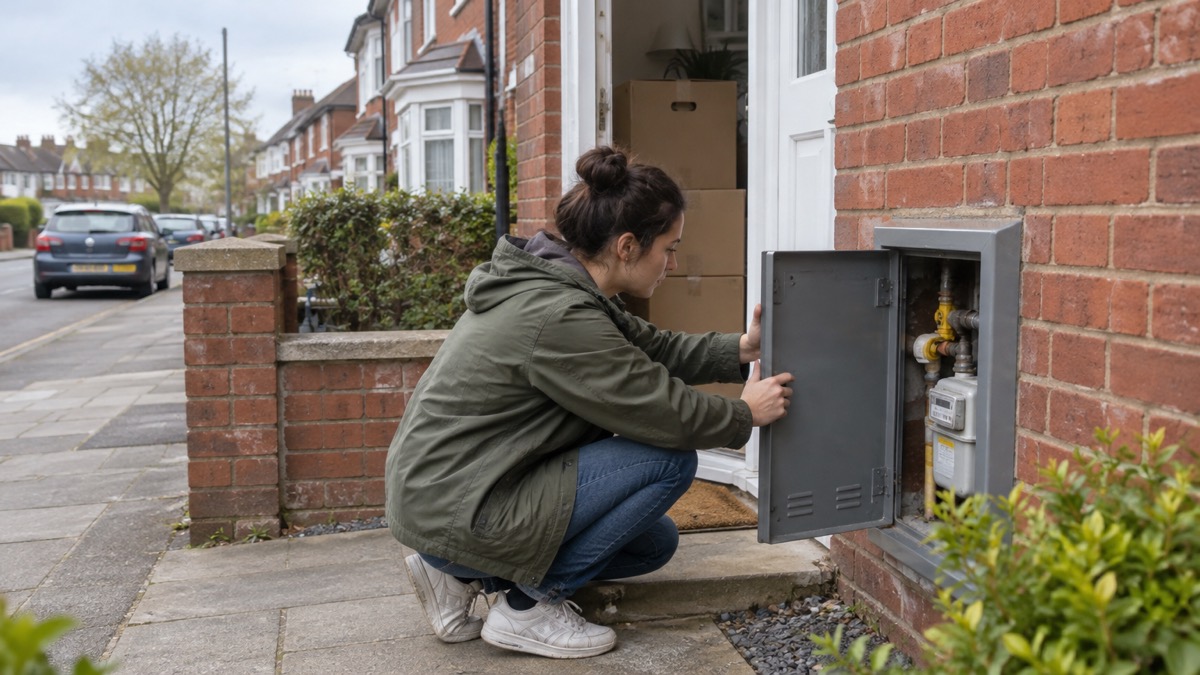
Moving into a home with a gas boiler, cooker or fire means one job comes before the unpacking: a gas safety check by an engineer on the Gas Safe Register. The Health and Safety Executive says gas appliances and flues should be checked for safety at least once every 12 months, and that all checks must be done by a Gas Safe registered engineer1. A check covers the boiler, gas cooker, heaters and any other gas-fired appliance in the home2.
If you rent, the check is your landlord's job, not yours. Landlords must have gas appliances and flues safety checked every 12 months, keep the record for two years, give existing tenants a copy within 28 days of the check, and give new tenants a copy before they move in3. Ask for that record on the day you collect the keys.
Whether you own or rent, spend your first evening finding the gas meter control valve, the mains electricity switch and the water stopcock, and learning how to turn each one off4. Then fit a carbon monoxide alarm near your gas appliances5. The rest of this page sets out the full checklist and explains why each item matters.
Your move-in checklist for gas and boiler safety
Work through this list in the first days after you get the keys. Each item is short; the sections below explain the reasoning and the exceptions.
Get a gas safety check before you move in, by a Gas Safe registered engineer
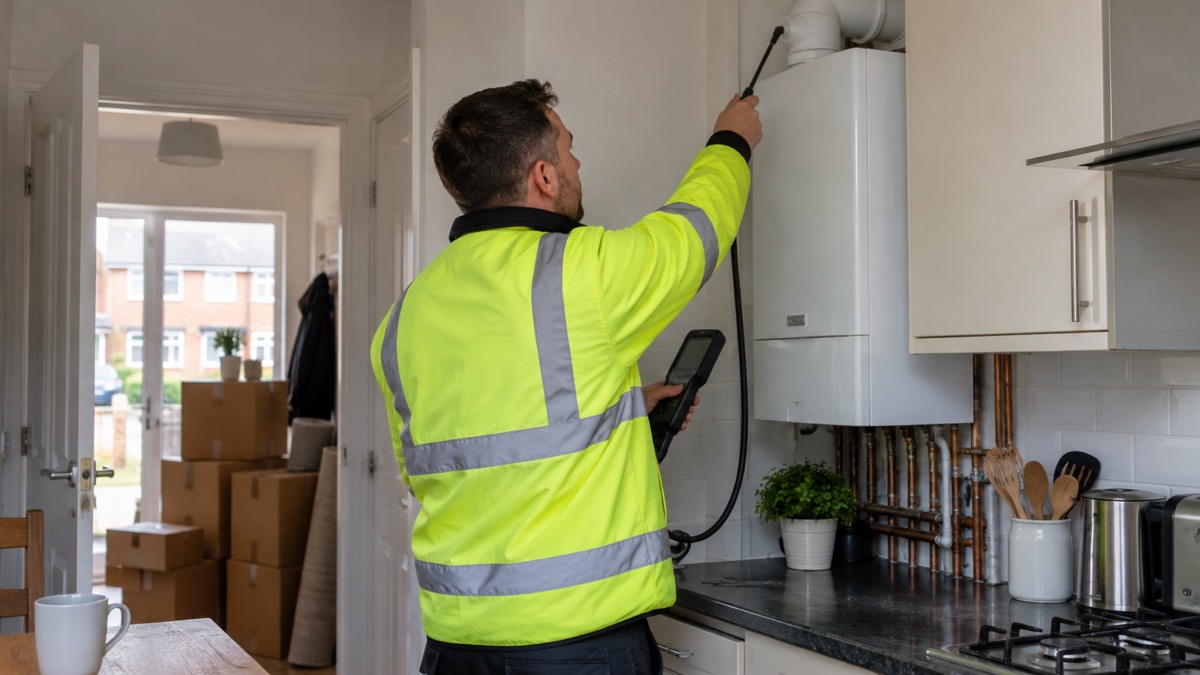
The check itself is straightforward. The engineer inspects and services your gas appliances, making sure they are operating safely and efficiently2. It is not a formality: it is the moment any pre-existing fault in the property is found, before you have settled in and started relying on the boiler through winter.
Who does it is not negotiable. The Health and Safety Executive states that all checks must be done by a Gas Safe registered engineer1. That rules out a helpful neighbour, a general handyman, and a retired gas fitter whose registration has lapsed. When the engineer arrives, check their Gas Safe ID card, which should display their photo and details of their gas registration2. You can also check that the engineer or the business is on the Gas Safe Register website1, and the register's own guidance points people to gassaferegister.co.uk to find an engineer near them10.
If you have any doubts about the safety of your gas appliances, contact your local Gas Safe registered engineer and request a full gas safety check11. That applies even if a check was done recently: a new noise, a smell or a change in the flame is reason enough.
For owner occupiers, arrange an annual gas safety check conducted by a Gas Safe registered engineer9. For more on what an engineer looks at and how often, see Boiler Servicing: How Often and What an Engineer Checks and Appliance Safety Checks: How Often and Who Gets Them Free.
Find the emergency control valve and learn the quarter turn
The gas meter control valve is the one thing in the house you should be able to find in the dark. Emergency planning guidance for households lists the gas isolation valve alongside the electricity isolation switch, the water stopcock and the heating oil supply as the utility shut-off points to locate in advance6. Scottish Borders Council's household advice is the same: find your gas main valve if you have gas, your mains power switch and your mains water valve, and learn how to turn them off4.
In a suspected gas leak, the Health and Safety Executive's advice is to shut off the gas supply at the meter control valve, if you know where it is12. The words "if you know where it is" are the point of this section. In an emergency you will not have time to search.
There is one important exception. Guidance for Richmond residents on utility failures lists turning the gas off at the meter among the things not to do if the meter is located in a cellar or basement13, because escaping gas can collect in a low space. If your meter is below ground level, learn the alternative arrangements for your property during the safety check rather than guessing.
If you use cylinders rather than mains gas, the same principle applies: make sure the gas pipe connection is secure, and if you suspect a leak, turn off the main cylinder valve15. For the full sequence in a leak, see The National Gas Emergency Service: When to Ring and What Happens and Home Emergencies: Fire, Carbon Monoxide, Gas Leaks and Burst Pipes.
Annual boiler service: about 45 minutes to an hour, and it keeps the warranty valid
A boiler service is a small appointment with a large job. Fire and rescue services advise having your boiler serviced annually by a Gas Safe registered engineer5, and the same guidance says to have it serviced yearly to keep it safe and efficient9. The Health and Safety Executive frames annual maintenance by a Gas Safe registered engineer as good practice, alongside any repairs that follow3.
How long it takes depends on who is visiting and what they are checking. Fire and rescue services give a range of times for their own home safety visits, which gives a fair sense of how long an engineer will be in your home:
| Visit type | Typical duration | Source |
|---|---|---|
| Free home fire safety check (Cornwall) | 30 to 60 minutes | 16 |
| Home fire safety visit (Devon and Somerset) | around 45 minutes | 17 |
| Home fire safety check (Surrey) | about 15 minutes | 18 |
| In-person home fire safety check (Northern Ireland) | up to 40 minutes | 19 |
| Home safety visit (South Wales) | about 30 minutes | 20 |
The lesson for a boiler service is to allow an hour and be present for it. Ask the engineer to show you what they have checked, and ask them to write the date of the next service on the record.
The service record is also your warranty evidence. Manufacturers normally expect annual servicing by a Gas Safe registered engineer, so a folder of consecutive records is what you produce if a part fails early. Keep the installation date, every service record and the boiler manual together. If you rent, the landlord must have any gas appliance they own regularly maintained by a Gas Safe registered engineer and must give you a copy of the gas safety record after the annual check21.
Tenants: your landlord must arrange the yearly check
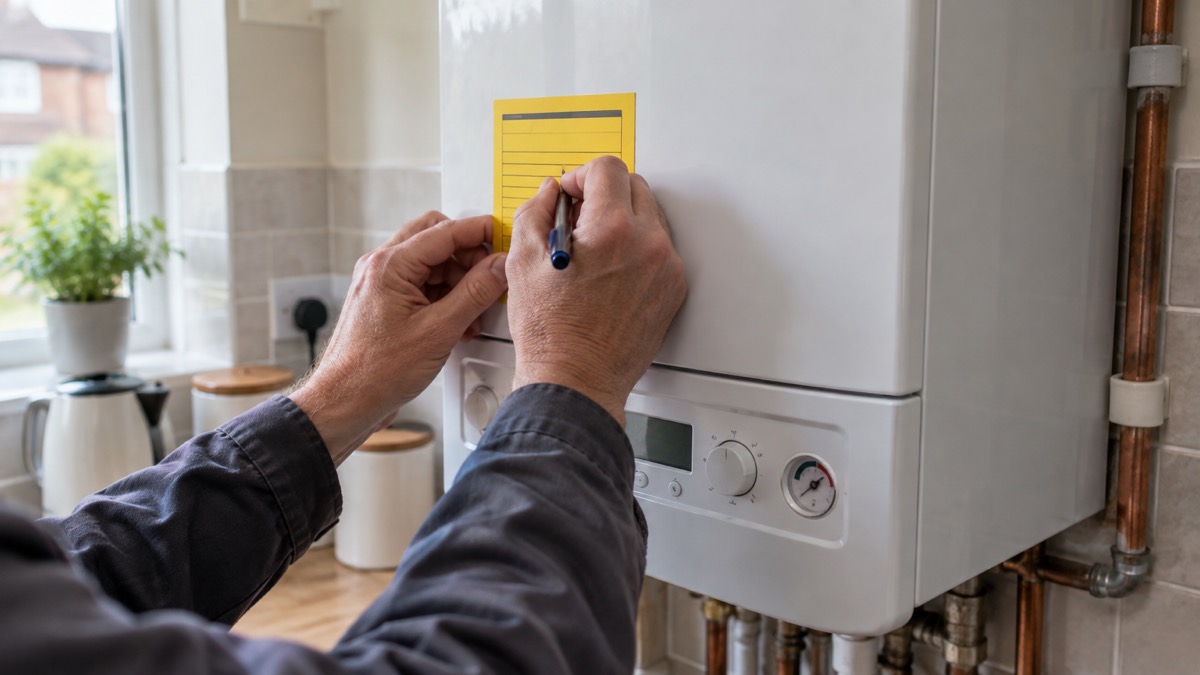
If you rent, the annual gas safety check is the landlord's responsibility, and the paperwork should reach you before you move in. The Health and Safety Executive's landlord guidance is specific: keep a record of the safety check for two years, issue a copy to each existing tenant within 28 days of the check being completed, and issue a copy to any new tenant before they move in3. Argyll and Bute Council states the same rule: a gas safety record must be provided to the tenant within 28 days of completing the check, or to any new tenant before they move in22.
Anyone who is a tenant should have an annual gas safety check for any fixed appliances, and it must be done by the landlord23. That includes the boiler, the gas cooker and the gas fire24. If your landlord fails to provide it, report them to your local authority25.
Before a property is re-let, the landlord must ensure all appliances and flues are safe with an up-to-date gas safety check record, give a copy to tenants before they move in, arrange another check if tampering or vandalism is suspected, and inspect and test the installation pipework for soundness3. If you are moving into a sublet property, the original landlord remains responsible for gas safety checks and cannot transfer that duty to the tenant who is sub-letting3.
For what to do when something goes wrong later, see Broken Boilers in Rented Homes: What Your Landlord Must Do and Unsafe Appliances: Warning Signs and Being Cut Off.
Carbon monoxide: the check that protects the household
A gas safety check is also your best protection against carbon monoxide, the colourless gas that faulty appliances can produce. The NHS in Northern Ireland advises being aware of the dangers and identifying any appliances in your house that could potentially leak carbon monoxide27. Fire and rescue services go further and advise fitting a carbon monoxide alarm near gas appliances5.
Learn the warning signs and act on them. London Fire Brigade lists yellow instead of blue flames, flames that are not fully formed, black sooty marks on the front covers of gas fires, sooty or yellow-brown stains on or around boilers, stoves or fires, pilot lights that frequently blow out, increased condensation on windows, and an unfamiliar or burning smell when gas or oil appliances are on8. Any of these means stop using the appliance and arrange a check.
If you rent, the law in England has required relevant landlords to provide a carbon monoxide alarm in any room used as living accommodation containing a fixed combustion appliance, excluding gas cookers, since 1 October 202221. Test the alarm on the day you move in, and test it regularly afterwards. For more, see Home Emergencies: Fire, Carbon Monoxide, Gas Leaks and Burst Pipes and Carbon Monoxide Poisoning.
Where to get help and free checks
Not every household needs to pay for everything on this list. Fire and rescue services across the UK offer free home fire safety checks, which include advice on escape plans and can flag heating risks. A Home Fire Safety Check can help you and others with your escape plan28. The visits vary in length and format by service, as the table above shows, and some are done by phone or online.
If you are on the Priority Services Register, ask your energy supplier what else is available. The register exists for households that need extra help with their energy supply, so it is worth a call if that includes you.
For gas safety specifically, the Gas Safe Register is the starting point: visit gassaferegister.co.uk to find an engineer near you10, and check the business on the register's website before booking1. If you have any doubts about the safety of your gas appliances, contact your local Gas Safe registered engineer and request a full gas safety check11.
For the wider picture on heating failures, start with Gas and Heating Failures: A Household Guide, and for help for households that need extra support, see Extra Support From Networks and Suppliers for Vulnerable Households and Extra Help in an Emergency: Older, Disabled and Medically Dependent Households.
Sources (28)
- Gas safety checks: who can do them, Health and Safety Executive, 2026
- Safe home heating, Warwickshire County Council, 2026
- Gas safety FAQs, Health and Safety Executive, 2026
- Prepared personal resilience, Scottish Borders Council, 2026
- Fire prevention, Fire Kills, 2026
- Emergency home emergency plan, Royal Borough of Windsor and Maidenhead, 2026
- Emergency kits and grab bags, Central Bedfordshire Council
- Carbon monoxide safety, London Fire Brigade, 2026
- Safe and well booklet, Cheshire Fire and Rescue Service, 2026
- Carbon monoxide leaflet, Bedfordshire Fire and Rescue Service, 2026
- Gas safety and carbon monoxide, nidirect, 2025
- Gas safety for owner occupiers, Health and Safety Executive, 2026
- Utilities failure, Richmond upon Thames Council, 2026
- Recovering from an emergency, Essex Prepared, 2026
- Camping and caravanning safety, Devon and Somerset Fire and Rescue Service, 2026
- Free home fire safety check, Cornwall Council, 2026
- Home safety visits, Devon and Somerset Fire and Rescue Service, 2026
- Fire and rescue services, Surrey County Council, 2026
- Home fire safety check, Northern Ireland Fire and Rescue Service, 2026
- Request a home safety visit, South Wales Fire and Rescue Service, 2026
- Gas safety for students, Health and Safety Executive, 2026
- Gas safety, Argyll and Bute Council, 2026
- Heating your home, North Yorkshire Fire and Rescue Service, 2026
- Gas safety for tenants, Greater London Authority, 2026
- Stay fire safe, Greater Manchester Fire and Rescue Service, 2026
- Tenants, Devon and Somerset Fire and Rescue Service, 2026
- Carbon monoxide poisoning, nidirect, 2024
- Reduce fire risks for older people, Northern Ireland Fire and Rescue Service, 2021
 Checks Before Calling Engineer
 Power Cut Kit Checklist
 What to Keep Charged