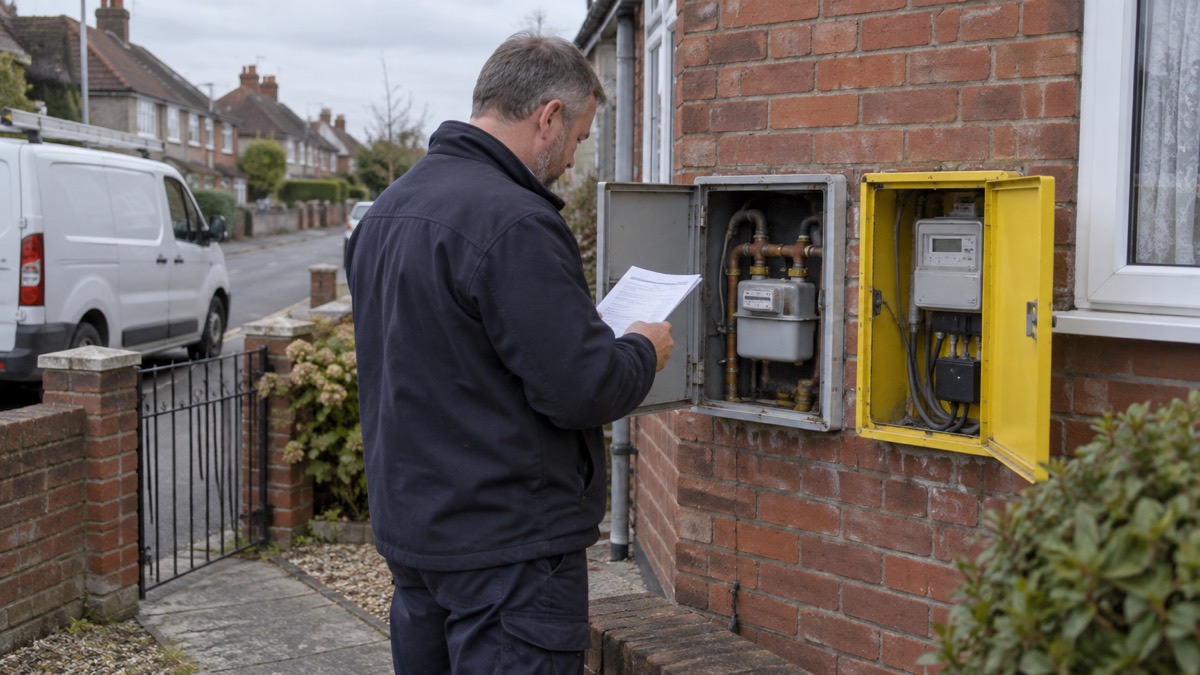
Every home in Britain gets its gas through pipes and its electricity through cables owned not by the company on your energy bill, but by a network operator. Your gas network operator is responsible for the pipes carrying gas to your home, fixing supply problems and attending reports of gas leaks, though not for problems inside your home such as a faulty boiler1. In a gas emergency, wherever you are in Great Britain, the number to ring is the National Gas Emergency Service on 0800 111 999, which is answered 24 hours a day, Monday to Sunday2.
Knowing which network covers you before anything goes wrong means you are not hunting for a number in the dark. This page sets out how to identify your gas and electricity network operators, the contact routes each one publishes, what they must do for you when works are planned, and where the extra support is if your household needs it.
Network operator or energy supplier: who does what
The distinction trips up a lot of households, and it matters because ringing the wrong company costs you time in an emergency. Your energy supplier is the company you pay your bill to, and it provides services such as meter readings8. Your gas or electricity network operator is responsible for the wires and pipes which carry energy to your home; it fixes power cuts and attends reports of gas leaks, but it does not deal with problems inside your home, such as a faulty boiler1.
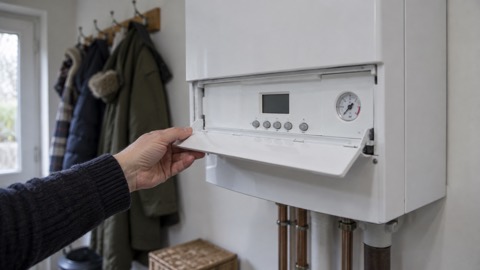
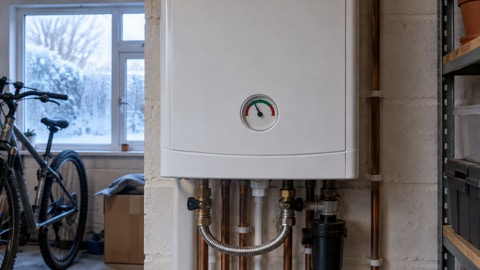
Distribution network operators deal with the supply of gas and electricity, so you need to contact them directly about power cuts or gas supply issues8. If your boiler has locked out, your radiators are cold or your pilot light has gone, that is a job for a heating engineer, not the network. If the gas supply to your whole street has gone off, or you can smell gas, that is the network's job. Our page on boiler breakdowns in cold weather covers the problems that belong on your own side of the meter, and what to do when the mains supply goes off covers the network's side.
| Problem | Who to contact |
|---|---|
| Smell of gas, or a gas escape | National Gas Emergency Service, 0800 111 9992 |
| Power cut or electricity supply failure | Your electricity network operator, via 1054 |
| Gas supply off to the whole street | Your gas network operator8 |
| Faulty boiler, cold radiators, no hot water | A heating engineer, not the network1 |
| Billing, meter readings, tariff | Your energy supplier8 |
One point worth fixing in your mind now: you never choose your network operator, and changing supplier does not change it. The networks are regional monopolies whose areas are fixed by geography, which is why the question "who is my gas network operator" has a single answer for your address, whoever sends your bills.
Finding which network covers your address
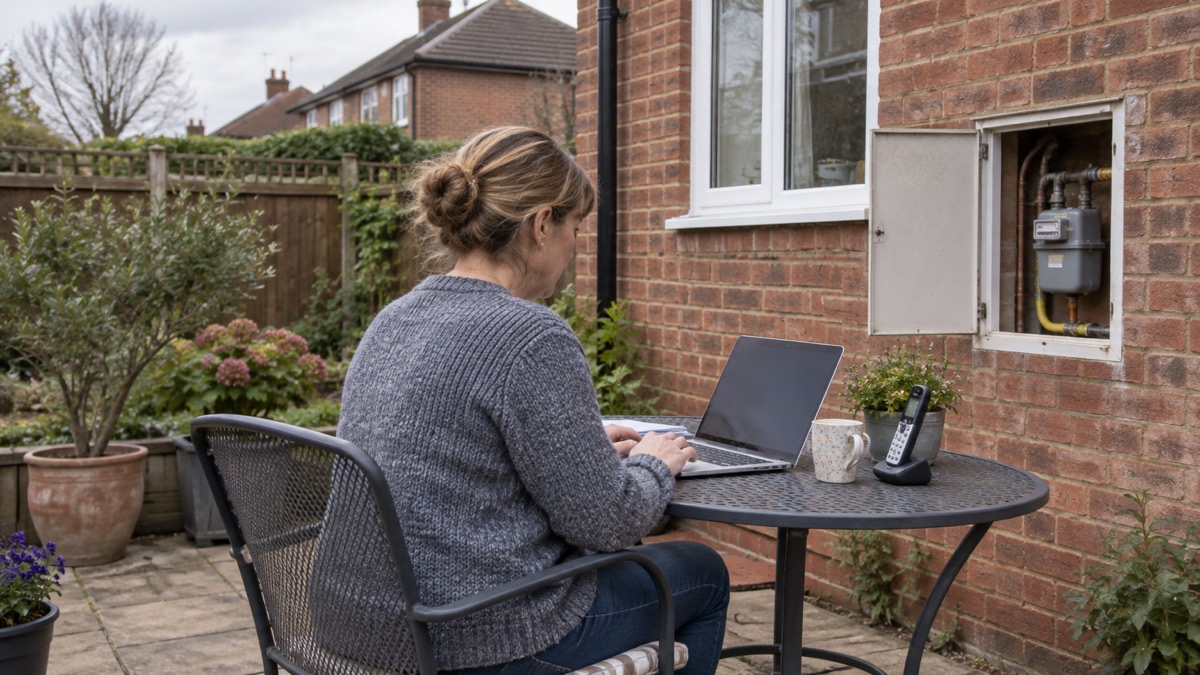
If you do not know which network serves your home, there are two quick routes. For electricity, simply dial 105: it will put you through to your local electricity network operator, the company that manages the cables, wires and substations that bring electricity into homes and businesses in your area4. You do not need to know the operator's name to use it, which makes 105 the single most useful number on this page for power cuts.
For gas, official fire safety guidance directs households to the find my gas distribution network tool at findmygdn.co.uk, or to contact your energy provider or Gas Distribution Network to find out whether your household could benefit from extra support9. Natural Resources Wales gives the same route for households who do not know how to turn off their gas, electricity and water: contact your supplier, using the Energy Networks Association's find my network operator page. If you are still unsure, ring the number you have and ask: the emergency and switchboard lines listed on this page can tell you which network an address belongs to and point you to the right one.
The gas networks covering Great Britain are Cadent, SGN, Northern Gas Networks and Wales & West Utilities, and each holds a fixed region. Northern Gas Networks, for example, is the operator for the notified major accident hazard pipelines in its area of northern England10. In Northern Ireland the arrangements are different, with separate distribution companies, and are covered below.
Northern Gas Networks: one switchboard number
Households in the North East, northern Cumbria and most of Yorkshire are served by Northern Gas Networks. The company publishes two numbers, and using the right one gets you through faster. For gas emergencies, ring 0800 111 999, which is answered 24 hours a day, Monday to Sunday2. For everything else, the switchboard is 0800 040 77665.
The switchboard menu routes your call to the team you need, so it is worth knowing which team that is before you ring:
- Emergencies and gas escapes: use the 24 hour emergency service number, 0800 111 999, not the switchboard11
- Customer care and general enquiries: Northern Gas Networks lists a freephone customer care line on 0800 040 7766 (option 4)5
- Connections and new supply enquiries: Northern Gas Networks' connections team can be reached on 0800 040 7766 (option 2)5
- If you are unsure: Northern Gas Networks says to call the team on 0800 040 7766 if you are unsure whether a situation applies to you5
Northern Gas Networks publishes the same pair of numbers: emergency 0800 111 999, phone, 24 hours a day Monday to Sunday, and switchboard 0800 040 77665. If you are unsure which option to choose from the recorded menu, stay on the line and ask the switchboard to direct you; the menus are revised from time to time and the operator who answers can route your call.
"Phone : 0800 111 999"
Wales & West Utilities and work near gas pipes
Households in Wales and the south west of England are served by Wales & West Utilities. For gas emergencies, or if you smell gas in your home or business, Devon and Somerset Fire and Rescue Service advise calling Wales and West Utilities on 0800 111 99911. That is the same National Gas Emergency Service number used across Great Britain, and it is answered around the clock.
The other time households in this region need their gas network is before digging. Whether you are laying a driveway, putting in fence posts or landscaping, buried gas pipes can run closer to the surface than people expect, and striking one is dangerous and disruptive. Contact the network's plant protection team before you dig, through the company's published contact routes, and ask for information on the location of its pipes in the area of your work. Our page on hitting a buried pipe while digging covers what to do if it is too late for that.
The same rule applies across all the networks, not just Wales & West: register your planned work with the network well before you start, so it has time to respond with pipe locations. Allow generous time, because the network needs working days, not calendar days, to process enquiries and mark up its records. If in doubt about how much notice to give, ask when you submit the enquiry and keep the confirmation.
Northern Ireland: different networks, different numbers
Northern Ireland has its own gas arrangements and its own emergency number. For a gas emergency, phone 0800 002 0013. The NI Gas Emergency Service is available 24 hours12, and the Health and Safety Executive for Northern Ireland gives the same instruction: for gas, contact the NI Gas Emergency Service, 24 hours13.
For non-emergency enquiries, including checking whether gas is available in your area and new connections, the Utility Regulator's consumer guide names the distribution companies and their contact routes14:
| Company | Contact for gas availability in its area |
|---|---|
| Phoenix Natural Gas Ltd | Phone 03454 55 55 55, or www.phoenixnaturalgas.com14 |
| firmus energy (Distribution) Ltd | Phone 0800 032 4567, or www.firmusenergy.co.uk14 |
| SGN Natural Gas (Distribution) | Phone 0800 912 1700, or www.sgn.co.uk14 |
If you are moving home or building in Northern Ireland and want to know whether mains gas reaches the property, these are the companies to ask, rather than an energy supplier. The same guide is the place to check the current position for your area, as networks expand over time.
Northern Powergrid: electricity support around the clock
Although this site's gas and heating section is organised around fuel failures, many gas heating systems stop working the moment the electricity goes off, so your electricity network matters too. Households in the North East, Yorkshire and northern Lincolnshire are served by Northern Powergrid, whose emergency line is 0800 3756 75, a 24 hour emergency service for supply failures only6. As with gas, you can also reach your electricity network without knowing its name by dialling 1054.
Support during a supply failure goes beyond restoring the cables. Official consumer guidance for England and Wales states that additional payments and provisions are available for households off gas supply, including, for example, alternative heating and cooking facilities1. Households that may need that kind of help should be on their network's Priority Services Register before an outage, not during one; registration is covered below.
If a power cut has knocked out your heating, our pages on why your programmer reset after a power cut and boiler breakdowns in cold weather take you through the checks to make before calling anyone, and the power cuts guide covers the wider picture.
Planned works: notice, interruptions and compensation
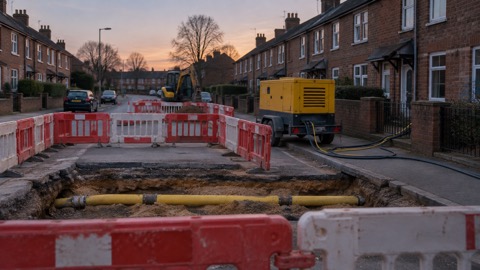
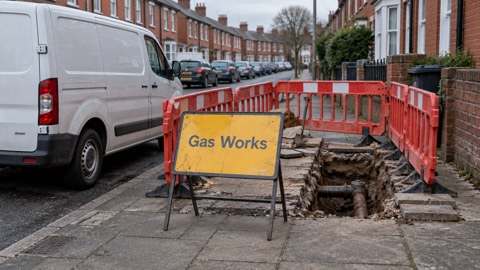
Networks replace and upgrade gas mains continually, and at some point that work will reach your street. Northern Gas Networks, for example, announced an essential gas mains upgrade on Welham Road, Norton, beginning on 21 October 2026, the kind of scheme that temporarily interrupts supply to affected homes. Your rights during that work are fixed.
Your gas network operator must give you 7 working days' notice if it plans to do maintenance work7. If it does not give you notice, you may get £40 extra7. Separate consumer guidance for England and Wales sets out the standard payments for planned gas supply interruptions: £20 if the network operator did not give five days' notice of planned gas works, and at least £40 if it did not give seven days' notice1. The documents set the thresholds differently, so if you received no notice at all, quote both figures when you claim.
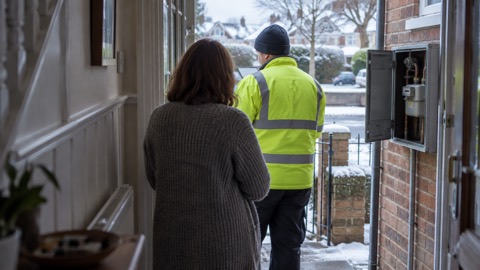
When planned works interrupt your supply, the network should tell you when the gas will go off and when it will return, and it will need access to relight appliances afterwards. Our page on planned pipe works explains what to expect on the day, and getting your supply back on after an outage and compensation when mains supply is interrupted cover the stages that follow.
Gas work in your home: who is allowed to do it
Network operators fix the pipes in the street, but any work on gas installations and appliances inside your home must be done by someone registered with the Gas Safe Register15. The Health and Safety Executive is plain on this: gas work undertaken in homes and certain commercial premises must be done by a Gas Safe registered engineer16, and anyone employed to work on gas appliances in domestic premises must be a Gas Safe registered engineer who is competent in that area of gas work17.
Competence is specific, not general. The competencies are marked on the back of the engineer's Gas Safe Register ID card17, and the HSE advises that you check the engineer is competent to work in that specific area of gas, either from the back of the card or by checking the engineer or business on the Gas Safe Register website18. Fire and rescue services repeat the message: make sure anyone who works on your gas appliances is registered with the Gas Safe Register19.
To find an engineer near you, visit gassaferegister.co.uk20. Our page on finding a Gas Safe registered engineer and checking their card walks through the checks step by step, and boiler servicing covers how often appliances should be looked at. Northern Ireland's official advice is the same on the habit that prevents most problems: regularly get your appliances serviced21.
The Priority Services Register: extra help before you need it
The Priority Services Register is a service that helps gas, water and electricity companies identify customers who may need extra support in an emergency22. Both your energy supplier, the company that provides your electricity and gas, and your network operator, the company responsible for the pipes and wires that carry electricity and gas, keep a Priority Services Register23. Energy suppliers give priority help in an emergency to households on their register24.
Registration is free and it is the single most useful thing a household that needs extra support can do in advance. Points to know:
- Register with both. If you have a different supplier for your gas and electricity, you will need to contact them separately23, and if you have a different supplier for your gas and energy you need to contact them both25.
- Ask your network too. It is worth contacting your energy provider or Gas Distribution Network to find out if your household could benefit9.
- What it can bring. Beyond priority help in an emergency24, guidance for England and Wales describes additional payments and provisions for households off gas supply, including alternative heating and cooking facilities1.
If you are not sure whether your household qualifies, ring your supplier or network and ask: the networks would rather have you on the register and never need it than the reverse. Our page on extra support from networks and suppliers sets out what each register can provide in a long outage.
In an emergency: the numbers that matter
When something is going wrong now, the hierarchy of calls is simple. If there is an immediate risk to life, ring 99926. If you smell gas or suspect a gas escape, do not go looking for your network's name: ring the National Gas Emergency Service on 0800 111 9992, or in Northern Ireland 0800 002 0013. For a gas leak, gov.uk flood help guidance directs you to contact National Gas27. For a power cut, ring 1054.
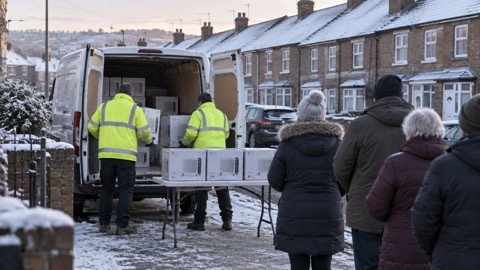
The Gas Emergency Line publishes further safety information at www.nationalgrid.com/uk/gastransmission/safety-and-emergencies/emergencies-and-safety-advice24. While you wait for the network to arrive, follow the emergency service's instructions on ventilating and evacuating, which our page on the National Gas Emergency Service covers in full, along with what happens after you ring. If the outage runs on, help from networks during a long outage explains the provisions you can ask for, and the wider gas and heating failures guide gathers every stage from first phone call to relight.
Sources (27)
- England and Wales domestic energy consumer advice, Ofgem, 2023-11
- Utilities advice, West Yorkshire Police
- Energy, power supply and utilities, nidirect, 2025-10-23
- Emergency advice for residents, Warwickshire County Council, 2026-10-29
- Community emergency plan template, North Yorkshire Local Resilience Forum, 2025-02
- Winter readiness leaflet, Humber Local Resilience Forum, 2024-08
- Plan for a power cut, Ofgem, 2026
- Help from your energy supplier, Buckinghamshire Council, 2026-10-29
- Stay fire safe, Greater Manchester Fire and Rescue Service, 2026-10-29
- Emergency planning and business resilience, Northumberland County Council, 2026-07-10
- Safety in severe weather conditions, Devon and Somerset Fire and Rescue Service, 2026
- Strong winds and heavy rain warning, nidirect, 2026-01-27
- Carbon monoxide, Health and Safety Executive for Northern Ireland, 2026
- Consumer guide, Utility Regulator for Northern Ireland, 2020
- Carbon monoxide safety at home, Devon and Somerset Fire and Rescue Service, 2026
- Carbon monoxide in construction, Health and Safety Executive, 2026
- Gas safety: frequently asked questions for homeowners, Health and Safety Executive, 2026
- Landlord gas safety checks, Health and Safety Executive, 2026
- Stay warm safely this winter, Greater Manchester Fire and Rescue Service, 2026-10-29
- Carbon monoxide leaflet, Bedfordshire Fire and Rescue Service, 2026-01
- Gas safety and carbon monoxide, nidirect, 2025-11-24
- Households encouraged to take small simple steps to stay prepared, GOV.UK, 2026-10-22
- Join your supplier's Priority Services Register, Ofgem, 2026
- Digital easy read fire safety booklet, London Fire Brigade, 2026
- Priority Services Register, Derbyshire County Council, 2026-10-29
- Home emergency plan, Isle of Anglesey County Council, 2020
- Help during a flood, GOV.UK, 2026-10-25
 Checks Before Calling Engineer
 Boiler Checks When Moving In
 Power Cut Kit Checklist
 National Gas Emergency Service
 When the Mains Supply Goes Off
 Getting Supply Back After Outage
 Compensation for Supply Cuts
 Planned Pipe Works
 Help During a Long Outage
 Prepayment Meters
 LPG Homes in Winter
 Oil Boiler Breakdowns
 Boiler Breakdown in Cold Weather
 Boiler Fault Codes
 Boiler Pressure Gauge