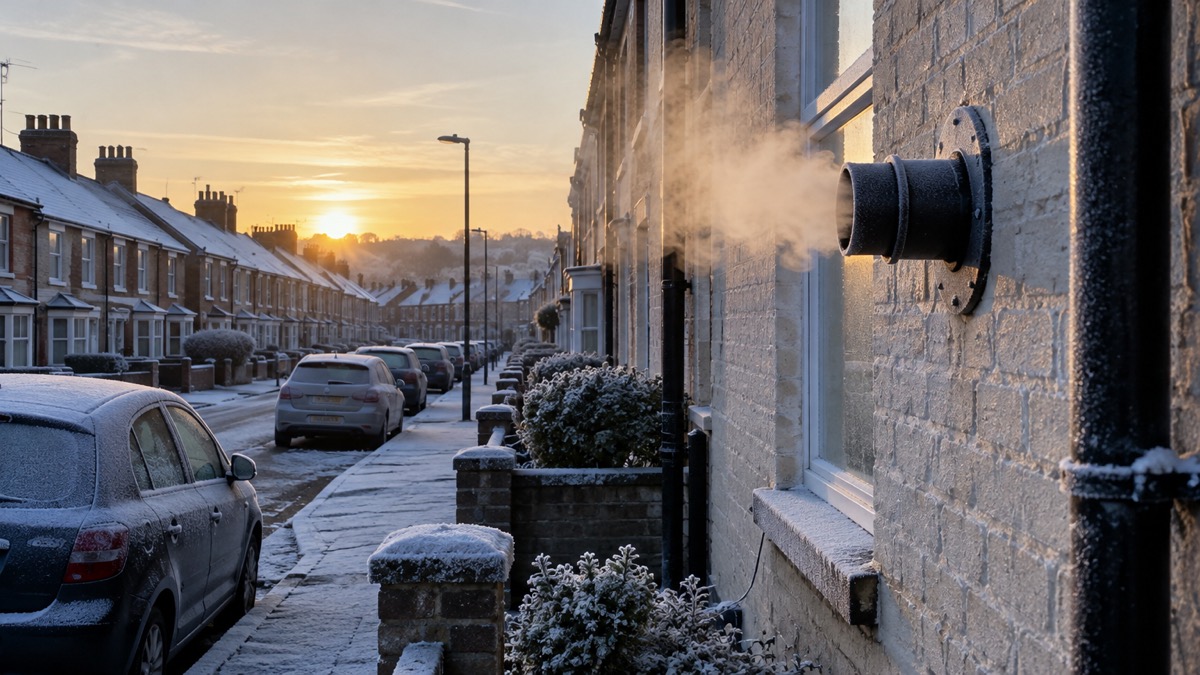
The Ideal Logic Combi2 is a gas combination boiler: it provides both central heating and instantaneous domestic hot water, with no cylinder in the loft1. It is no longer sold new. If you own one, or are buying a home with one, the first thing to do is check whether it falls under the 2024 recall, because that decides everything else.
In February 2024 the Office for Product Safety and Standards published a recall of the Ideal Heating Logic 2 Combi and System boiler range over fire risk. It covers 30 boiler models produced before 8 January 2024, and followed three fire incidents and one report of a customer extinguishing flames2. Separately, in August 2022 Ideal Heating issued a safety notice requiring a thermostat upgrade on boilers made from August 2022 to 7 January 2024, covering ten ranges across the Logic, iMini, Independent and Keston lines, to prevent a potential boiler overheat3. If you own one of these boilers, check the model and production date against the notice before anything else, and do not open or tamper with any of the sealed components: the maker states that under no circumstances should they be used incorrectly or tampered with2.
If your boiler is not affected, most breakdowns come down to three things: a frozen condensate pipe, low water pressure, or a fault that needs a Gas Safe Registered engineer. The maker's own manual gives the household clear limits: top up to 1 to 1.5 bar, never run the boiler below 0.3 bar, and do not use it at all if a fault is known or suspected until a Gas Safe Registered engineer has corrected it1.
Check whether your Logic 2 is affected by the recall
The recall is the first thing to settle, because a fire risk outranks any fault code. The Office for Product Safety and Standards notice covers the Ideal Heating Logic 2 Combi and System boiler range, 30 models produced before 8 January 2024, and was issued after three fire incidents and one report of a customer extinguishing flames2. The earlier thermostat notice, from August 2022, covers ten boiler ranges across the Logic, iMini, Independent and Keston lines, for boilers made from August 2022 to 7 January 2024, and requires a thermostat upgrade to prevent a potential boiler overheat3. If your boiler falls under either notice, arrange the work through a Gas Safe Registered engineer: the maker states it is the law that installation and any work on the appliance is carried out by a Gas Safe Registered engineer2.
To check, find the boiler's model and serial details, which are on the appliance itself, and compare them with the recall notice. If your boiler is in scope, follow the remedy the notice sets out rather than using the boiler in the meantime. If it is not in scope but was made in the thermostat notice period, the upgrade still applies.
What the Logic Combi2 is and who it suits
The Logic Combi2 is a combination boiler providing both central heating and instantaneous domestic hot water1. That shape of boiler suits a household that wants hot water on demand without a hot water cylinder, and it is the reason a breakdown takes away both heating and hot water at once. It is not a boiler that keeps a tank of hot water in reserve.
The maker's controls set the working range. Central heating runs between 30°C and a maximum of 80°C, and the maker suggests setting the central heating knob to 72°C or less for high efficiency operation1. Domestic hot water is limited by the boiler controls to a maximum of 65°C, with a minimum of 40°C1. The boiler is factory set with preheat turned off, to give standard hot water delivery and reduce gas usage; where preheat is used, a timed intelligent function learns the household's hot water usage pattern over 24 hours1.
| Specification | Ideal Heating figure |
|---|---|
| Boiler type | Combination boiler, central heating and instantaneous hot water1 |
| Central heating temperature | 30°C minimum, 80°C maximum; 72°C or less for high efficiency1 |
| Hot water temperature | 40°C minimum, 65°C maximum1 |
| Correct system pressure | 1 to 1.5 bar1 |
| Pressure at which it stops | Below 0.3 bar1 |
| Electricity supply | 230 V ~ 50 Hz, 3A fusing, must be earthed1 |
| Clearances | 165 mm above, 100 mm below, 2.5 mm sides, 450 mm front1 |
| Servicing | At least annually by a Gas Safe Registered engineer1 |
Fault codes and what to do for each one
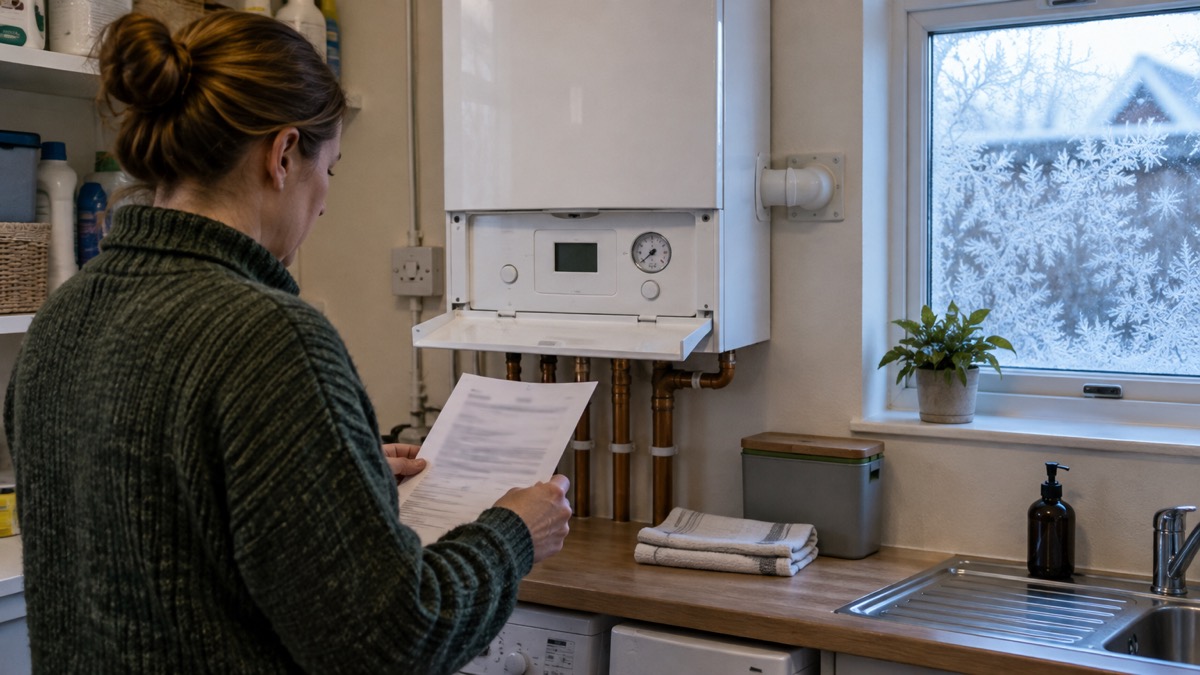
The Logic Combi2 shows a fault code when it locks out. Some codes clear with a restart; others are the maker's signal to stop and call an engineer. The manual is explicit that if a fault is known or suspected, the boiler must not be used until the fault has been corrected by a Gas Safe Registered engineer1. If the boiler fails to light after five attempts, the fault code will be displayed1.
| Code | Meaning | What the maker says to do |
|---|---|---|
| F 01 | Low water pressure | Check pressure is between 1 and 1.5 bar and re-pressurise1 |
| F 02 | Flame loss | Check other gas appliances work and the gas supply is on at the meter, and that a prepayment meter has credit1 |
| F 03 | Fan fault | Restart the appliance1 |
| F 04 / L 04 | Flow thermistor | Restart the appliance1 |
| F 05 / L 05 | Return thermistor | Restart the appliance1 |
| F 06 | Outside sensor failure | Restart the appliance1 |
| F 07 | Low mains voltage | Contact a qualified electrician or your electricity provider1 |
| F 09 / L 09 | Unconfigured PCB | Contact Ideal or a Gas Safe Registered engineer1 |
| F 0C | Hot water thermistor fault | Contact Ideal or a Gas Safe Registered engineer if the boiler fails to operate1 |
| F0U | Flow and return differential over 50°C | Contact Ideal or a Gas Safe Registered engineer if the boiler fails to operate1 |
| L 01 | Flow temperature overheat or no water flow | Check system water pressure is between 1 and 1.5 bar1 |
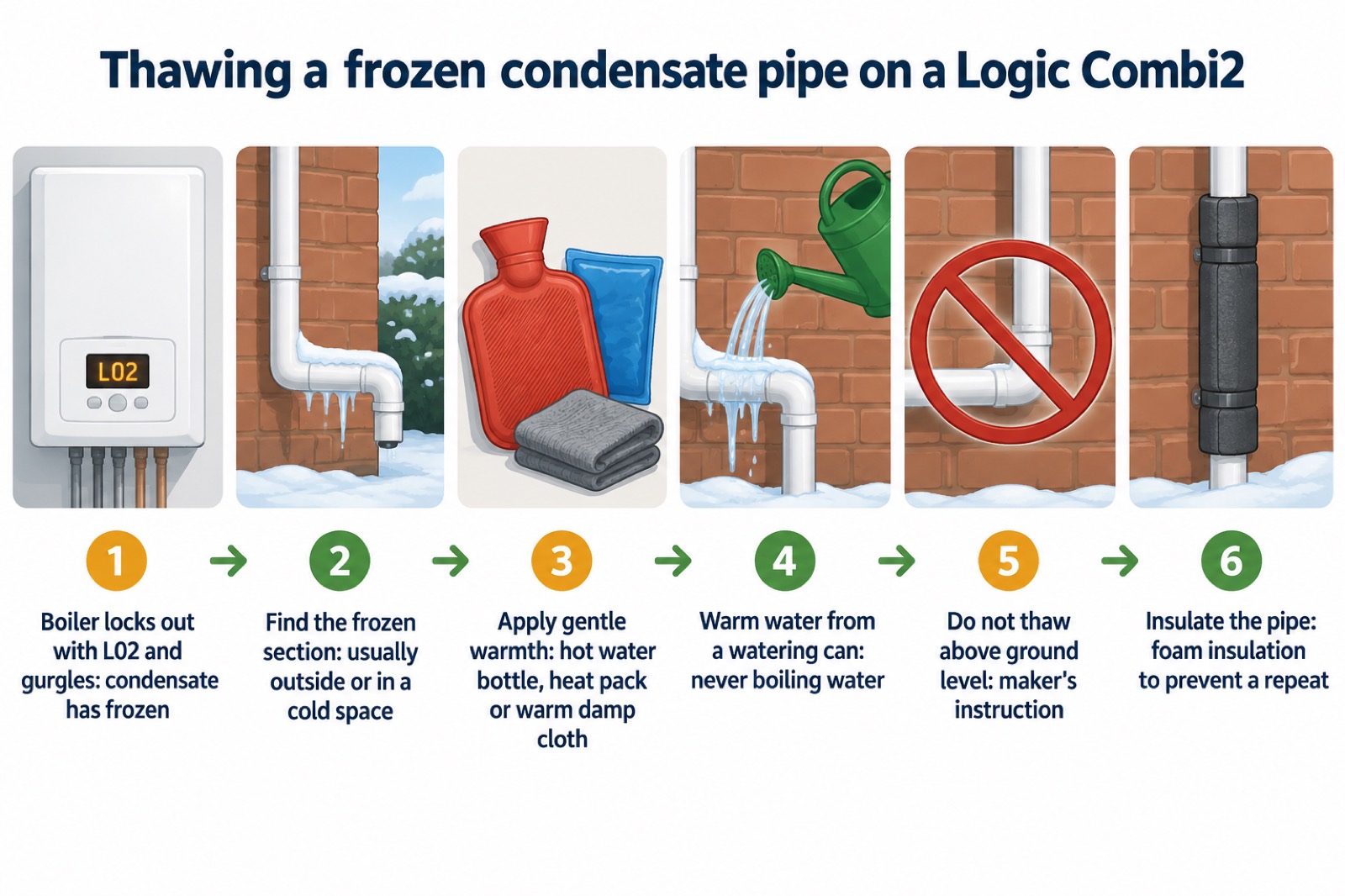
| L 02 | Ignition lockout | Check the condensate pipe for blockages and check other gas appliances are working1 |
| L0 | Blocked flue or condensate | Check the condensate pipe for blockages and check other gas appliances are working1 |
| L0C | Five boiler resets in 15 minutes | Turn the electrical supply to the boiler off and on1 |
| U | Diverter valve in mid-position for service | Rotate all knobs fully clockwise, turn boiler power off and on, then press restart1 |
The L0C code is worth understanding: it means the boiler has been reset five times in 15 minutes. Repeated resetting is not a fix, and the boiler lockout reset guidance explains how many attempts are reasonable before you stop.
L02 and a gurgling noise usually mean a frozen condensate pipe
A combi boiler produces condensate, and the pipe that carries it away is the part most likely to freeze in a cold snap. Northern Gas Networks describes the symptom plainly: a frozen condensate pipe can stop your boiler from working, leaving you without heating or hot water, and you might also hear a gurgling noise from the boiler or the condensate pipe outside5. Ideal Heating's manual matches this: the condensate builds up to a point where it makes a gurgling noise prior to locking out, showing an L02 fault code1.
Condensate pipes are commonly found in properties with a combi boiler, as well as other modern boilers, and in winter the condensation in the pipe can freeze and burst the pipe, and cause pipes inside your home to do the same6. WaterSafe suggests identifying a frozen pipe by checking for slow or no water flow, gurgling noises from your central heating, or frost on pipes in cold areas such as lofts, cellars, garages or external walls7.
If the heating system fails or makes a loud banging noise, that could indicate a pipe is freezing: turn off the system and call a plumber immediately8. The frozen condensate pipes page covers the wider picture, and how to stop a condensate pipe freezing covers prevention.
Thawing a frozen condensate pipe safely
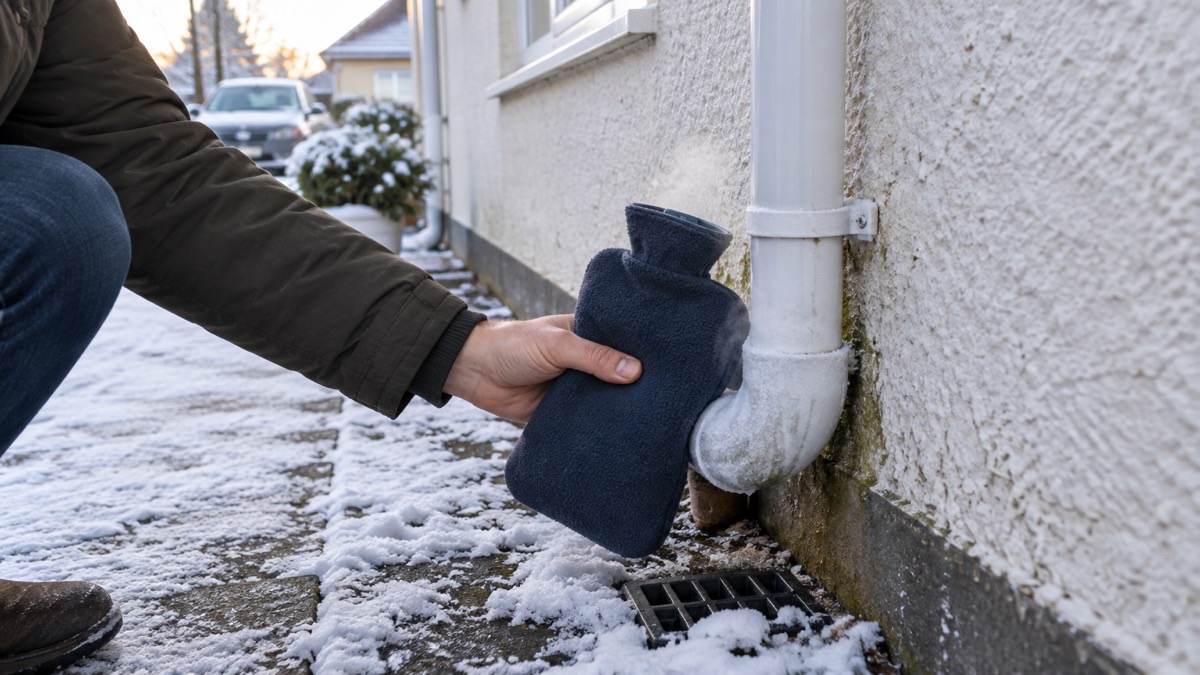
Ideal Heating gives a specific method for its own boiler, and it is deliberately gentle. Apply a hot water bottle, microwaveable heat pack or a warm damp cloth to the frozen blockage area; warm water can be poured on from a watering can; do not use boiling water; and do not attempt to thaw pipework above ground level1. The last two points matter: boiling water can crack the pipe, and thawing above ground level risks water running into places it should not.
"Apply a hot water bottle, microwaveable heat pack or a warm damp cloth to the frozen blockage area."
SGN advises checking whether the boiler's condensate pipe has frozen if the boiler stops working in cold weather, and watching a video on how to safely thaw the pipe9. Once thawed, insulate the pipe with foam insulation so it is less likely to freeze again6.
Keeping the boiler and pipes from freezing in cold weather
The boiler has frost protection, but it is narrower than most households assume. Ideal Heating states that if the water in the boiler falls below 5°C, the frost protection will activate and run the boiler to avoid freezing1. The system frost protection operates if the ambient temperature is below 5°C until it reaches 19°C, but only if the boiler is set in winter mode, with no cross through the radiator symbol1. The maker warns that the process does not guarantee that all other parts of the system will be protected1.
That is why the surrounding pipework needs its own protection. Official guidance is consistent: check that pipes are adequately lagged10, insulate pipes11, and get heating, radiators and boilers serviced10. The Met Office winter checklist simply says boiler serviced12. Water companies add detail: lag exposed pipes in cold locations such as the garage, loft or outdoors with lagging or pipe insulation to prevent freezing and bursting13, and insulating pipes helps prevent them freezing and bursting, with lagging material available at DIY stores14.
- Lag the pipes in the loft, garage and any outdoor run13
- Service the boiler before winter12
- Leave heating on low when the house is empty for short periods15
- Know the stop tap and check it works16
- Fix dripping taps, which freeze more readily16
For cold spells, Ideal Heating's own advice is to set the central heating temperature knob to maximum, place the heating on continuous and turn the room thermostat down overnight or when unoccupied, then return to normal after the cold spell1. Yorkshire Water's advice is similar in spirit: leave the heating on constantly at a low temperature so pipes do not freeze, and if severe weather is forecast, set the heating to your usual level day and night15. The away in winter page covers the longer absence case.
Low pressure: topping up to 1 to 1.5 bar
Pressure is the one boiler reading a household can check and act on. Ideal Heating says to check that system water pressure is between 1 and 1.5 bar on the system pressure gauge, and when topping up, wait for the pressure gauge to reach 1 to 1.5 bar1. The F 01 code means low water pressure, and the maker's instruction is to check the pressure and re-pressurise1.
There is a hard floor. The manual states in capitals that the boiler will not operate if the pressure has reduced to less than 0.3 bar1. It also notes that if the pressure falls below the original installation pressure of 1 to 2 bar over a period of time and continues to fall, there is likely a leak that needs attention1. Topping up repeatedly without finding out why is not a fix.
The boiler pressure page and the step by step how to repressurise a combi boiler guide take you through the filling loop. If the pressure will not hold, treat it as a leak and call an engineer.
When to stop using the boiler and call a Gas Safe engineer
Some faults are for a restart. Others are a stop signal. Cheshire Fire and Rescue Service lists the signs that mean turn the boiler off and call a Gas Safe engineer: strange noises, leaks, a yellow flame (it should always be blue), unusual smells, the boiler turning itself on and off, low pressure or no hot water, or soot or staining around the boiler17. Age UK's guidance for gas fires and cookers is the same: if you notice these signs, turn off the appliance immediately and have it checked by a Gas Safe registered engineer18.
If your boiler is not working and it is unrelated to a power cut, you need to contact a Gas Safe registered engineer, via the Gas Safe Register website or on 0800 408 55005. WW Utilities gives the same route for any gas boiler or appliance issue: a Gas Safe Registered engineer or your gas supplier19. The finding a Gas Safe registered engineer page explains how to check an engineer's card.
Carbon monoxide is the reason these rules are firm. Official winter guidance says to fit an audible carbon monoxide alarm and smoke alarms20, and Warwickshire Fire and Rescue Service explains that CO alarms are specifically designed to detect carbon monoxide, while smoke alarms are designed to detect smoke and fire21. Ideal Heating's manual adds that if you suspect a fault with the alarm, first change the batteries, and if the fault does not clear, speak to your landlord or replace the device with one complying to BS EN 50291-1:20101. The NHS also advises having a carbon monoxide alarm fitted22.
Servicing, spare parts and warranty visits
Ideal Heating states that servicing should be carried out at least annually by a Gas Safe Registered Engineer1. The law backs the engineer requirement: installation and any work on the appliance must be carried out by a Gas Safe Registered engineer in accordance with the current Gas Safety (Installation and Use) Regulations1. The boiler servicing page explains what an engineer checks.
On parts, the maker is specific: use only spare parts that conform to the safety and performance specification, and do not use reconditioned or copy parts that have not been clearly authorised by Ideal Heating1. On warranty visits, the manual warns that if the problem is found to be other than with the appliance, Ideal reserves the right to levy a charge for the visit, or for any pre-arranged visit where access is not gained by the engineer1. In other words, check the simple things first: the checks before calling a boiler engineer list is the place to start.
Around the boiler itself, the manual sets clear house rules. The compartment must not be used for storage purposes1. The appliance must not be operated without the casing correctly fitted and forming an adequate seal1. For cleaning, dust with a dry cloth, wipe stubborn marks with a damp cloth and finish with a dry cloth, and do not use abrasive cleaning materials1. The boiler can be used by children aged 8 and above and by people with reduced capabilities, provided they have supervision or instruction and understand the hazards, and children must not play with it1.
If you are replacing the boiler, the manual says not to dispose of the unit with the usual domestic refuse: take packaging and product to a corresponding recycle centre, do not burn the product, and remove and dispose of batteries according to local statutory requirements1. For the wider picture on breakdowns in cold weather, see boiler breakdowns in cold weather and the gas and heating failures section.
Sources (22)
- Logic Combi2 User Guide, Ideal Heating, 2023-10
- Product recall: Ideal Heating Logic 2 Combi and System boiler range, GOV.UK, 2024-02-22
- Thermostat upgrade kit instructions, Ideal Heating, 2022-08
- Staying Safe & Warm | Northern Gas Networks, Northern Gas Networks
- Boiler not working, Northern Gas Networks, 2026-10-26
- Winter advice, WaterSafe, 2026-10-28
- What should I do if a pipe freezes?, WaterSafe, 2026-10-29
- Adverse weather events: snow, Llangattock Community Council, 2023-10-12
- Be winter ready, SGN, 2026
- Keeping warm in winter, Derbyshire County Council, 2026-10-29
- Winter preparedness, Essex Prepared, 2026-10-29
- WeatherReady winter checklist, Met Office, 2026
- Winterproof your home, SES Water, 2026-10-28
- Protecting your pipes, Hafren Dyfrdwy, 2026
- Get winter ready, Yorkshire Water, 2026-10-28
- Help for leaks, pressure and pipes, Portsmouth Water, 2026-10-15
- Safe and well booklet, Cheshire Fire and Rescue Service, 2026-04
- Neighbourhood pipeline toolkit, Age UK, 2025
- Winter safety, WW Utilities, 2026-10-28
- Stay well this winter, Norfolk County Council, 2026-10-29
- Smoke alarms and CO detectors, Warwickshire County Council, 2026-10-29
- Keeping warm and well in winter, Liverpool University Hospitals NHS Foundation Trust, 2026-10-28
 Navien NCB300
 Navien NCB500
 Navien NCB700
 Ideal Logic+ Heat2 H
 Ideal Logic Max Combi2