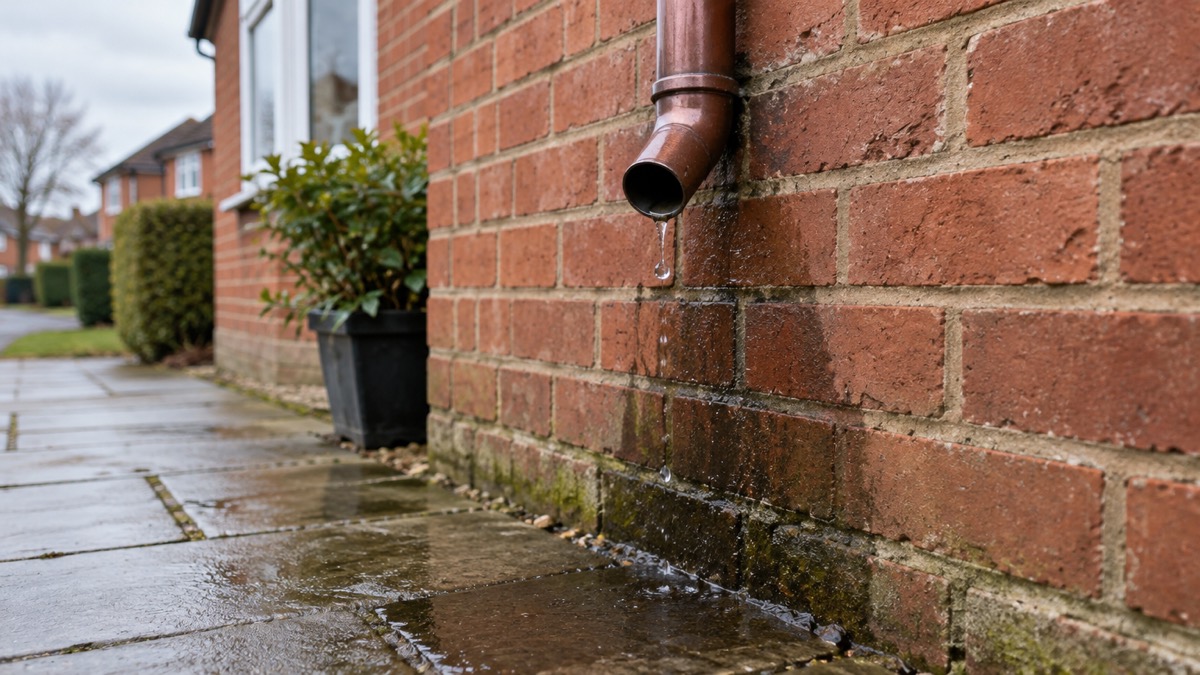
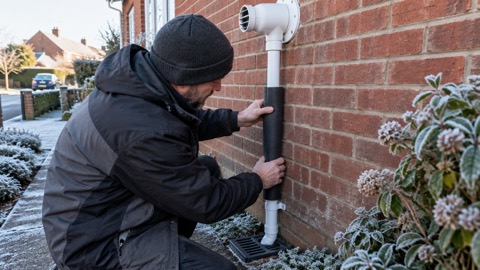
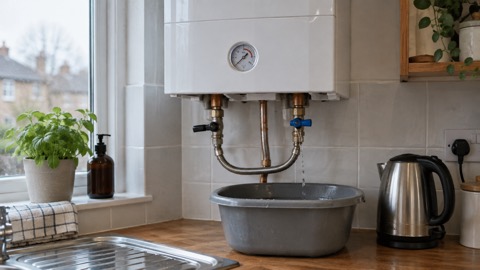
A copper pipe dripping outside your boiler is almost always the outlet for the boiler's pressure relief valve, a safety device that lets water out when the pressure inside the central heating system gets too high. The pipe usually runs from the boiler through to an outside wall and ends outside1. Water coming out of it means the valve has opened, or is passing when it should be shut.
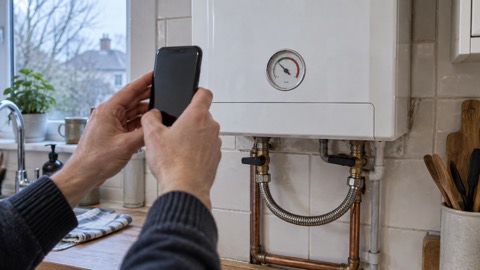
What to do now is simple. Look at the pressure gauge on the boiler: on most boilers it should read between one and two bars2. If it is high, the system has too much water in it and needs attention. If it is normal and the pipe still drips, the valve itself is the likely problem. Either way, leave the boiler casing shut and call a Gas Safe registered engineer, who is the only person who should work on the appliance or its safety parts3.
Do not cap, plug or block the pipe. It exists to protect the boiler and your home, and stopping it up removes that protection. A drip is a nuisance; a boiler with no way to release excess pressure is a bigger problem.
What the dripping pipe actually is
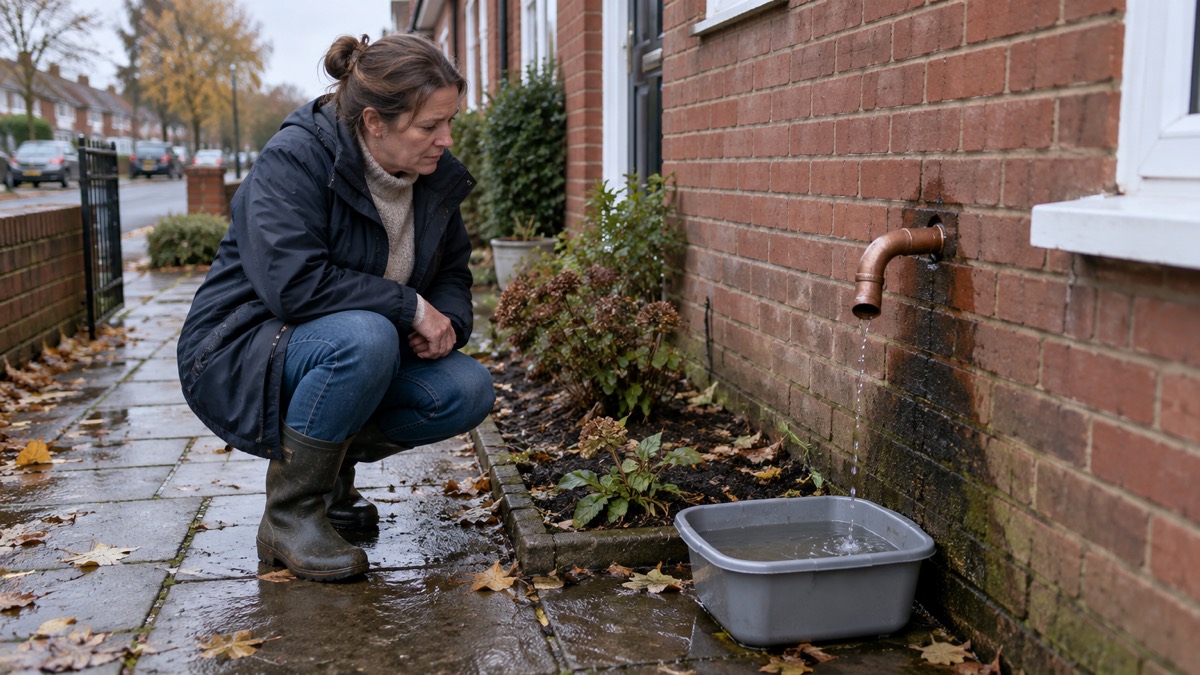
The pipe you see outside is the visible end of a safety system inside the boiler. The pressure relief valve sits within the casing and opens when the water pressure in the central heating circuit rises beyond what the system is designed to hold, releasing water through the discharge pipe to bring the pressure back down. The pipe usually goes from the boiler through to an outside wall and terminates outside1, which is why the first sign of trouble is often a damp patch on the path or wall rather than anything visible indoors.
That arrangement is deliberate. Water released under pressure needs somewhere safe to go, and outside is that place. It also means the drip is telling you something: either the pressure really was too high, or the valve has begun to let water past when it should be closed.
Two things follow from this. First, the pipe is not a drain or an overflow in the ordinary sense, and it is not meant to run constantly. Second, because the valve is inside the casing, you cannot inspect or adjust it yourself. The Gas Safe Register's guidance is that boilers should be checked and their system pressure looked at, and that boilers can lose system pressure as they age3. That check is done with the casing in place and by someone competent to open it.
What to do now: read the gauge, keep the casing shut
Work through these steps in order. None of them involves opening the boiler.
- Check the pressure gauge. On most boilers it should read between one and two bars2. Note where the needle sits before you touch anything.
- Leave the casing alone. The valve is inside it, and the casing protects you from gas and electrical components. Work inside is for a Gas Safe registered engineer3.
- Do not cap or block the pipe. It is the outlet for a safety device, and blocking it defeats the purpose.
- If water is escaping indoors rather than outside, turn off the water supply at the stop tap, open all taps to drain the system quickly, and switch off the boiler5.
- If the drip continues, the gauge reads high, or you are unsure, contact a Gas Safe registered engineer, found through the Gas Safe Register website or on 0800 408 55006.
If the gauge is low rather than high, that is a different problem with a different fix, covered in Boiler Pressure: What the Gauge Should Read and Fixing Low or High Pressure. If the boiler has stopped altogether, the checks in Checks to Make Before Calling a Boiler Engineer will help you describe the fault accurately when you ring.
Common causes: pressure set too high, or a valve that will not seat
There are two broad explanations for a discharge pipe that keeps dripping, and they call for different responses.
The system pressure is genuinely too high. Central heating systems are filled through a filling loop, and it is easy to leave a little too much water in. When the boiler heats up, water expands and the pressure climbs further, and the relief valve does its job. If the gauge reads above its normal range, this is the likely story. Repressurising is covered step by step in How to Repressurise a Combi Boiler, but the principle is to bring the gauge back into its normal band rather than to keep adding water.
The valve is passing. If the gauge sits in its normal range and water still trickles out, the valve may not be seating cleanly, or dirt in the system may be holding it slightly open. This is a job for a Gas Safe registered engineer, not a household repair6.
Water pressure problems elsewhere in the home can add confusion. Supply pressure varies with work on the mains, bursts, peak usage times, shared supply pipes, older or smaller pipes, long pipework and your home's location8. If your taps have been spluttering after an interruption, that is usually air in the pipes settling down rather than a boiler fault9. And if you hear banging from the pipework, excessively high water pressure can stress the plumbing, and a pressure-reducing valve is the usual remedy10.
| What you notice | Likely explanation | What to do |
|---|---|---|
| Gauge above its normal range, pipe drips when heating is on | Too much water in the system | Let it cool, check the gauge, book an engineer if it persists2 |
| Gauge normal, steady drip | Valve not seating, or dirt in the valve | Call a Gas Safe registered engineer6 |
| Drip plus water indoors | Leak or burst | Stop tap off, taps open, boiler off, call an engineer5 |
| Taps splutter after a supply interruption | Air in the pipes | Run the tap slowly and let it settle9 |
When to call a Gas Safe registered engineer
Call an engineer whenever the drip continues after the gauge has been checked, whenever you cannot account for the water, and whenever anything about the boiler feels wrong. Northern Gas Networks puts it plainly: if your boiler is not working and it is unrelated to a power cut, you need to contact a Gas Safe registered engineer through the Gas Safe Register website or on 0800 408 55006. The same number is the free helpline to call when you need an appliance inspected for a dangerous problem11.
Get your gas boiler and appliances serviced by a Gas Safe registered engineer, checking their Gas Safe Register ID card; you can find one at GasSafeRegister.co.uk or call 0800 408 55004. If you rent your home, the landlord carries responsibilities for repairs, set out in Broken Boilers in Rented Homes: What Your Landlord Must Do.
"Get in touch with a Gas Safe registered engineer before turning on the gas supply."
That advice matters here because water and gas appliances do not mix. If your home has been flooded, the engineer will make sure the installation pipework is not filled with water, and if it is, the water must be removed before appliances are re-checked, confirmed as safe and used as normal12. The same applies after any event that has put water where it should not be.
To check that the person at your door is who they say they are, see Finding a Gas Safe Registered Engineer and Checking Their Card.
Where the discharge pipe must run and end
The discharge pipe usually goes from the boiler through to an outside wall and terminates outside1. That route is not decorative: it takes water released under pressure away from the boiler, away from electrical parts and away from the fabric of the building, and it puts it somewhere it can drain or evaporate without causing damage.
A few practical consequences follow.
- Keep the outlet clear. The end of the pipe should be able to discharge freely. Do not bury it, box it in or point it somewhere water will collect against the wall.
- Watch the wall and path. A stain or damp patch below the outlet is often the first sign of a passing valve, long before anything shows indoors.
- Do not extend or reroute it yourself. Any change to where the pipe runs or ends is work on the boiler's safety arrangement and belongs with a Gas Safe registered engineer4.
- Insulate exposed pipework. Insulation for water pipes helps prevent them freezing in cold weather13.
If you are unsure whether the pipe outside your home is the boiler discharge or something else, the checks in Boiler and Appliance Checks When You Move Into a Home will help you identify what you are looking at.
Winter: a drip, a freeze and a burst pipe
A dripping pipe is more than an annoyance in cold weather. Dripping water increases the risk of pipes freezing, so have drips or leaks repaired as soon as you discover them14. Fix dripping taps too: a small trickle of water can freeze and completely block the pipe15.
Never use a naked flame to thaw pipework. For a frozen condensate pipe, the advice is to pour hot, but not boiling, water over the external pipe, and you may need a few kettles or jugs16. A hot water bottle or heat wrap held around the affected pipe is an alternative17. If the blockage has not cleared, or the boiler still is not working, contact a Gas Safe registered engineer16. The full method is in Frozen Condensate Pipes: Signs and How to Thaw One Safely.
If a pipe bursts, turn off the water supply coming into your property at the stop tap and switch off your boiler5. Soak up or block off escaping water with thick towels18. Then call a Gas Safe registered engineer before turning the gas supply back on12.
Sources (19)
- The heating system is constantly losing pressure, what should I do?, Worcester Bosch, 2026-10-29
- Snow and winter, British Red Cross, 2026-10-25
- Boiler appliance guide, Gas Safe Register, 2026-10-29
- Safe home heating, Warwickshire County Council, 2026-10-29
- What should I do if a pipe bursts?, WaterSafe, 2026-10-29
- My boiler isn't working, Northern Gas Networks, 2026-10-26
- Carbon monoxide, Greater Manchester Fire and Rescue Service, 2026-10-29
- Water pressure management, Bristol Water, 2026
- Incident support, Affinity Water, 2026-10-28
- I can hear a banging noise coming from my pipework, what could it be?, WaterSafe, 2026-10-29
- Carbon monoxide, Cheshire Fire and Rescue Service, 2026-05-20
- Gas safety flood risk, Gas Safe Register, 2026-10-29
- Top tips for keeping warm and well this winter, GOV.UK, 2026-04-28
- Protect your pipes, Scottish Water, 2026-10-29
- Winter proof your home, NI Water, 2026-10-28
- My boiler isn't working, SGN, 2026-10-29
- Winter safety, Wessex Water, 2026-10-28
- Thaw, Dwr Cymru Welsh Water, 2026-10-28
- Cold, snow and ice, Ready Scotland, 2026-03-25
 Checks Before Calling Engineer
 Boiler Checks When Moving In
 Power Cut Kit Checklist
 Stop a Condensate Pipe Freezing
 Repressurising a Combi Boiler
 Hot Water but No Radiators
 Resetting a Boiler Lockout
 Programmer Reset After Power Cut
 Boiler Leaking Water
 Boiler Overheating
 How to Bleed a Radiator
 Boiler On When Away in Winter
 Missed Reconnection Visit
 Prepayment Credit but No Gas
 Low Supply Pressure