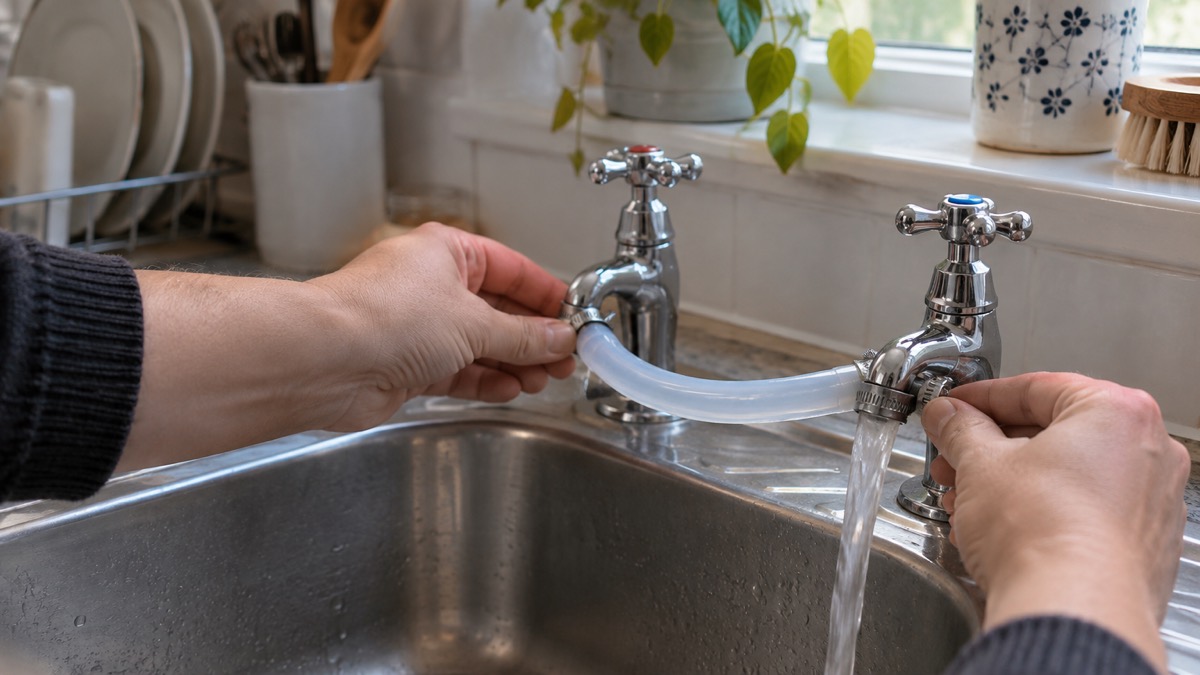
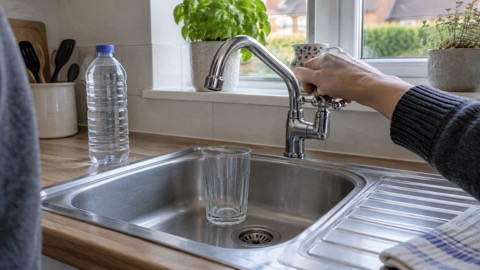
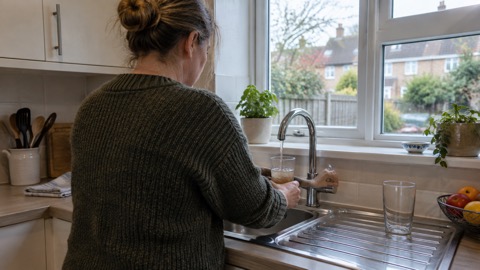
When your water comes back on and the taps splutter, run slowly or stay dry, the usual cause is an air lock: a pocket of air trapped in the pipework after the network was emptied. Scottish Water says this is normally caused by an airlock in the system, which can occur when a pocket of air collects in a water pipe after an interruption1. The first thing to try is simple. Turn on your taps and let them run for a few minutes to release the air, and your supply should return to normal2.
If that does not do it, work the internal stop tap. With the cold tap nearest the stop tap running, turn the stop tap off and on several times to free the air or any blockage3. Then check the flow: with all other taps and appliances off, the first tap in the home, usually the kitchen tap, should fill a 4.5 litre container in 30 seconds4.
If one tap works and others do not, the problem is likely inside your home rather than on the network, and a plumber should investigate5. Low pressure that lingers after a burst main has its own causes, and there are things you can check before you call anyone.
Run your taps for a few minutes to release the air
Air gets into household pipework when the mains is emptied for a repair or a burst, and it sits in the highest points and the bends until water pushes it out. Southern Water says that after its network has been emptied, air locks can occur either in its pipes or in customers', and that running taps for a short while can help bring water through8. Bristol Water suggests letting the tap run for a few minutes to test whether the pipes have cleared9.
A stronger flow shifts more air. Southern Water's low pressure guidance suggests turning on all your taps for a minute, which creates a strong flow that helps push air bubbles out of your pipes, then running everything for a few minutes until water flows normally10. When you close them, work back from the tap furthest from the stop tap, waiting about two minutes at each toilet10.
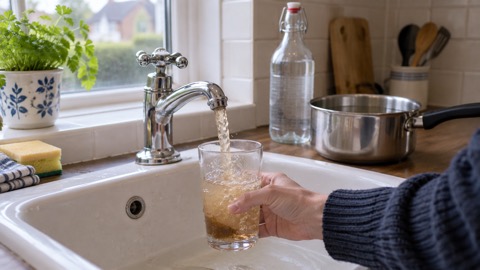
If the water is cloudy rather than absent, Yorkshire Water advises running your cold tap for 5 minutes, and if that does not clear it, running the tap again while turning the internal stop tap on and off several times to release air from the pipes11. Cloudy water is usually just air in the water, and the Drinking Water Inspectorate lists a partially shut external or internal stop tap among the plumbing causes of white or cloudy water12.
Check your stop taps are fully open
A stop tap that is only part open restricts flow and can make an air lock harder to shift. South Staffs Water advises turning on the cold tap nearest the inside stop tap and carefully turning the valve anti-clockwise to open and clockwise to close a few times, which should free any airlocks or blockages3. Cambridge Water gives the same instruction for low pressure: turn the stop tap anti-clockwise to turn on and clockwise to turn off a few times13. South West Water suggests turning the internal stop tap on and off 3 times to release any air while the cold kitchen tap is open14.
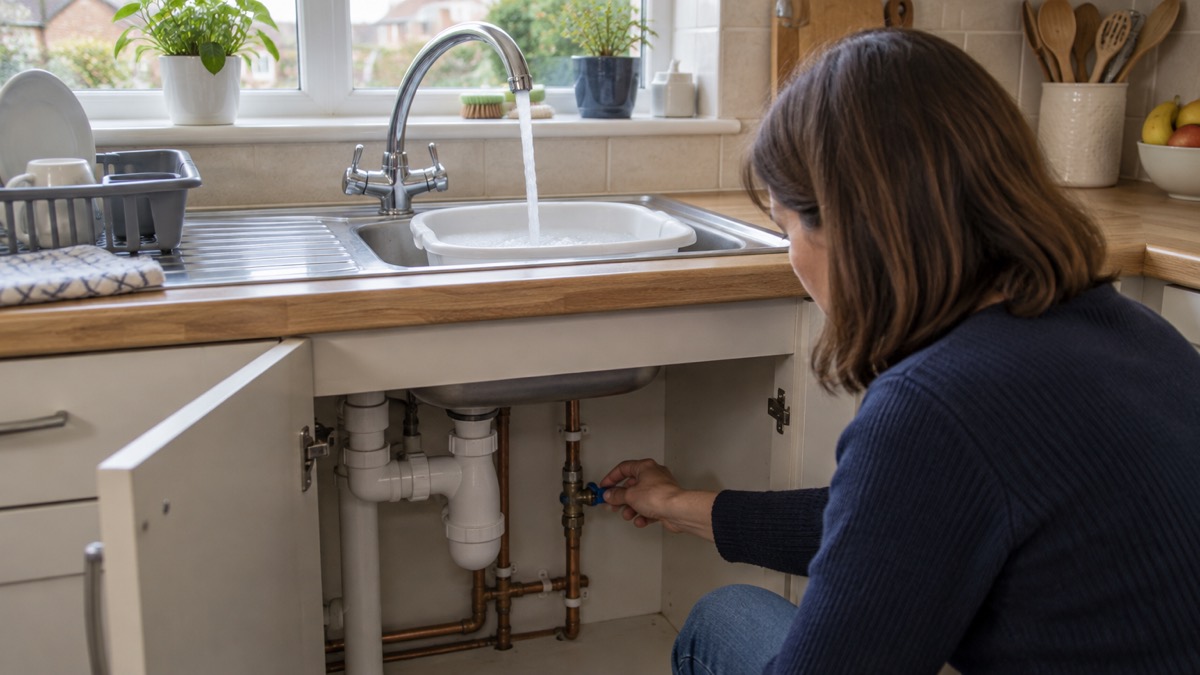
Northumbrian Water adds a useful habit: with the cold water kitchen tap on, check the stop tap is fully open by turning it off clockwise then back on anti-clockwise a few times, and when fully open turn it clockwise half a turn to avoid it sticking or locking in place15.
If you cannot find your inside stop valve, it is usually under the kitchen sink, in the airing cupboard or under the floorboards by the front door, and you turn it anti-clockwise to open it16. Wiltshire and Swindon Prepared says that if you cannot find it or it is broken, there are other ways to turn your water off17. Knowing where it is before the next interruption saves time; our guide to usable supplies already in your pipes, cistern and cylinder explains what is already in the system.
| Check | What to do | Why it matters |
|---|---|---|
| Internal stop tap | Turn on the cold tap nearest the stop tap, then turn the valve anti-clockwise to open and clockwise to close a few times8 | Frees airlocks or blockages |
| Fully open position | Turn clockwise half a turn once fully open15 | Stops it sticking or locking |
| External stop tap | Check it is not partially shut12 | A partly shut tap restricts flow |
| Taps furthest away | Close last, about two minutes apart at each toilet10 | Pushes air out before you shut it in |
Flow test: a 4.5 litre container in 30 seconds
Once the spluttering stops, measure whether the supply is genuinely back. WaterSafe says that if you have a suitable single service pipe, the first tap in the home, usually the kitchen tap, should fill a 4.5 litre (one gallon) bucket in 30 seconds, with all other taps and appliances turned off4. Northumbrian Water gives the same benchmark18.
There are other ways to express the same test. For households without a meter, Severn Trent says that if your water is flowing properly it should fill a litre container in about 7 seconds, and if it takes much longer there may be a problem with your water pressure19. Bristol Water uses the same 7 second figure for a litre jug or bottle from the cold kitchen tap5. In a typical two storey house, it should take about a minute to fill a 10 litre bucket from your kitchen tap6.
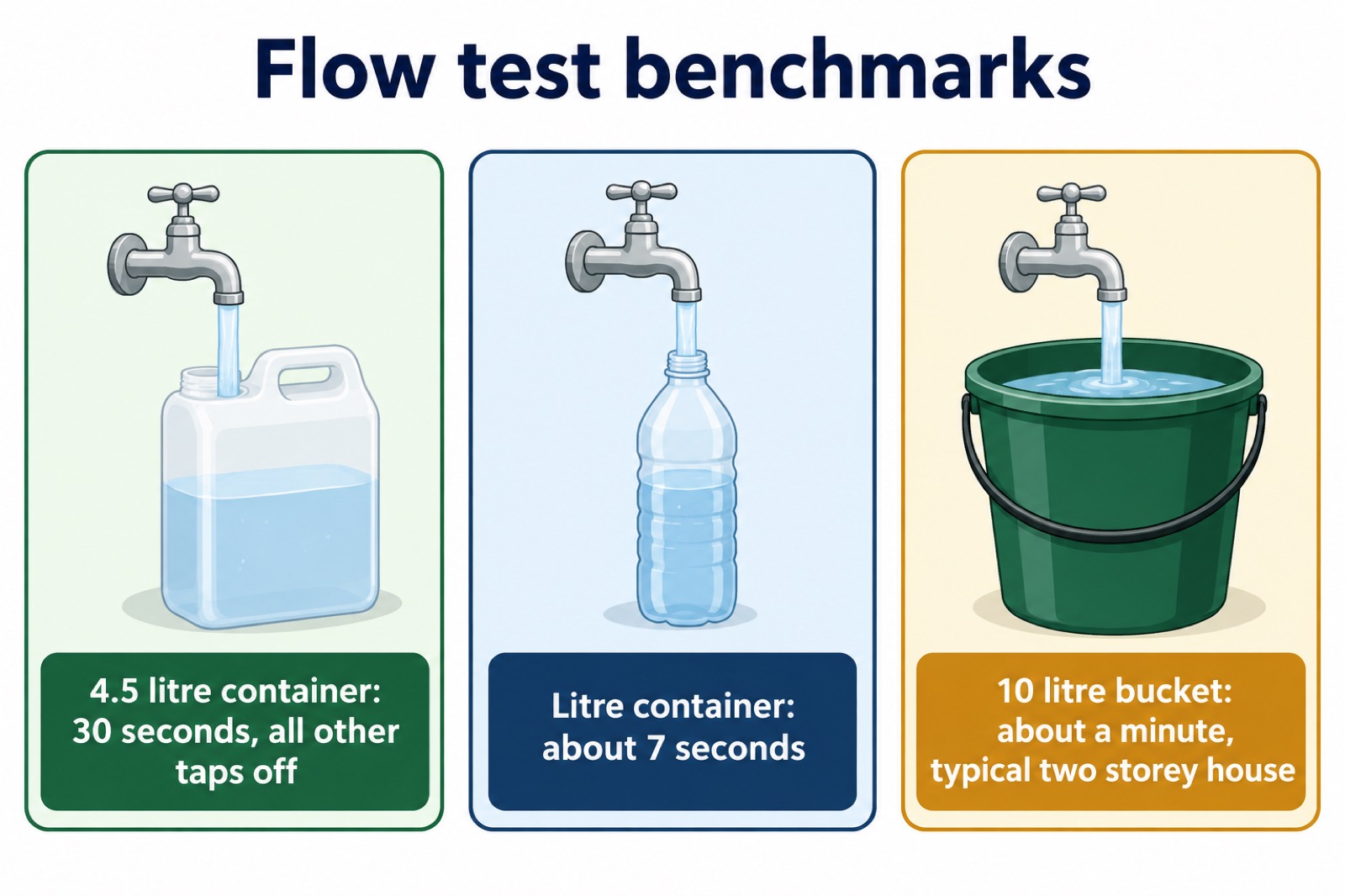
Run the test with everything else off: no washing machine, no dishwasher, no garden tap. If the flow is well short of the benchmark, note the time and the container size, because your water company will ask. Our page on what to do about low pressure covers the next steps if the figure stays poor.
One tap works but others don't: when it is a plumbing fault
If the cold kitchen tap runs well but other taps do not, the network is probably fine and the problem is in your own pipework. Bristol Water says that if this tap works fine but others don't, it's likely an internal plumbing issue, and you will need a plumber to investigate further5. Scottish Water notes that plumbing issues within the home may also cause airlocks1.
Before you call anyone, check the simple things. A partially shut internal or external stop tap can cause cloudy or reduced flow12. An aerator fitted to the tap, or cold pipes warmed by heating or hot water pipes, can also affect how water looks and flows12. If the problem is confined to one outlet, start there.
When you need a plumber, the Drinking Water Inspectorate recommends employing a qualified plumber, for example one accredited through the WaterSafe scheme, and notifying your water company when arranging replacement of lead pipework20. The same advice applies to planning replacement of pipework to a premises21. Ask for the accreditation before work starts.
Why pressure stays low after a burst main
A burst main, repairs or scheduled maintenance in your area can all reduce pressure, and Affinity Water says routine work on its mains network or a burst water main can temporarily reduce pressure, but this should return to normal22. The Consumer Council for Water lists a burst on the water main, repairs or scheduled maintenance in your area among the causes of low pressure23.
Geography and demand matter too. Wiltshire and Swindon Prepared explains that a local burst pipe can drop pressure in local pipework, with insufficient pressure on higher ground, and that demand may outstrip supply in dense population areas24. That is why pressure can be lower at busy times of day, and why a neighbour slightly uphill may notice it more than you do.
Pressure is measured in bars, with one bar forcing water to a height of 10 metres6. Affinity Water states that the minimum pressure it is legally required to supply to your boundary stop tap is 7 metres head (0.7 bar), for customers not on a joint supply7. There is no upper limit for water pressure22. If you are not on a joint supply, your neighbours should have the same water pressure as you, provided your houses are of very similar height and the same distance from the water main22. If theirs is fine and yours is not, the difference is on your side of the boundary.
To get texts about work in your area, log into your online account and add or update your mobile number in your profile15. Scottish Water customers can sign up to text alerts to stay up to date with service issues25. Our guide to how your water company contacts you in an incident explains the other channels.
If the supply is off for longer, and where to get help
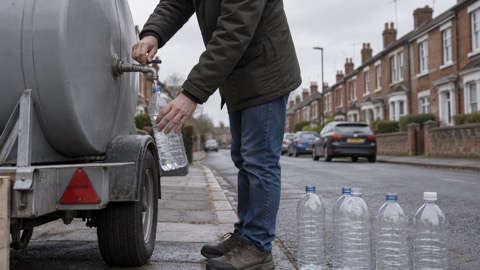
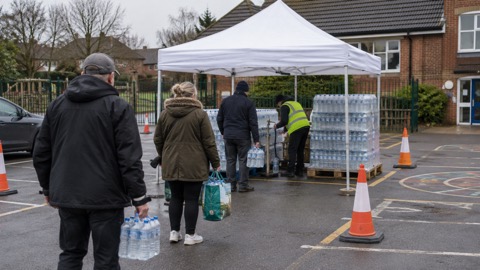
A burst water main can lead to a loss of supply26, and if the interruption runs long you need water before the taps recover. Keep bottled water at home as a buffer, and use your water company's alternative supplies if they are offered. Our guides to bottled supplies, tankers and bowsers and where bottled water stations are set up explain what to expect, and how much drinking water to store per person helps you plan.
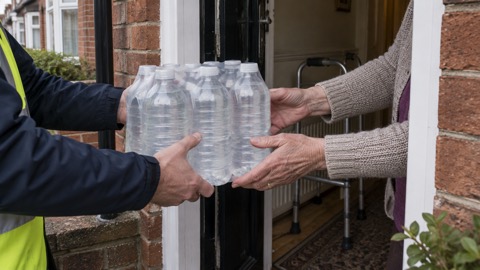
If you are vulnerable, ask your company about bottled water delivery; our page on getting bottled water delivered if you are vulnerable sets out how. For households with medical needs, see home dialysis and medical needs during an interruption.
After any interruption, run the cold tap nearest your stopcock, usually under your kitchen sink, for a while to see if it clears discoloured water, and contact your provider if problems continue27.
For a wider view of preparing for an interruption, see our supply interruption checklist and what to do when your supply comes back on.
Sources (27)
- Unplanned interruption factsheet, Scottish Water, 2024
- What to expect when your water returns, Southern Water, 2026
- No water FAQs, South Staffs Water, 2026
- What should my water pressure be?, WaterSafe, 2026
- Water pressure management, Bristol Water, 2026
- Supply and pressure, Severn Trent, 2026
- Our responsibilities for water pressure, Affinity Water, 2026
- What happens when there's an incident, Southern Water, 2026
- Flushing, Bristol Water, 2026
- I have low water pressure, Southern Water, 2026
- My water is milky or cloudy, Yorkshire Water, 2026
- White or cloudy water, Drinking Water Inspectorate, 2026
- Pressure, Cambridge Water, 2026
- Drinking water FAQs, South West Water, 2026
- Water pressure, Northumbrian Water, 2026
- Utilities failure, Richmond Council, 2026
- Know your water supply, Wiltshire and Swindon Prepared, 2026
- What is the minimum water pressure a supplier must supply?, WaterSafe, 2026
- How to check for a leak, Severn Trent, 2026
- Lead in drinking water, Drinking Water Inspectorate, 2026
- Lead in private water supplies, Drinking Water Inspectorate, 2026
- Low pressure, Affinity Water, 2026
- Low water pressure, Consumer Council for Water, 2026
- Failure of water infrastructure or loss of drinking water, Wiltshire and Swindon Prepared, 2026
- How to stay safe during a drought, NHS Inform, 2026
- https://www.southernwater.co.uk/loss-of-supply-crawley/, Southern Water
- Water supply interruptions or outages, UK Government, 2026
 Supply Interruption Checklist
 Boil Notice Checklist
 Drinking Supply Checklist
 Boil Water Notice Advice
 When Supply Is Restored
 Check for an Outage
 Report No Water or Burst Pipe
 Bottled Water Stations
 Bottled Water Delivery Help
 Flushing the Toilet in an Outage
 Washing Without Running Water
 Combi Boiler When Water Is Off
 Water Company Incident Alerts
 Checking a Water Company Caller
 Brown or Discoloured Tap Water