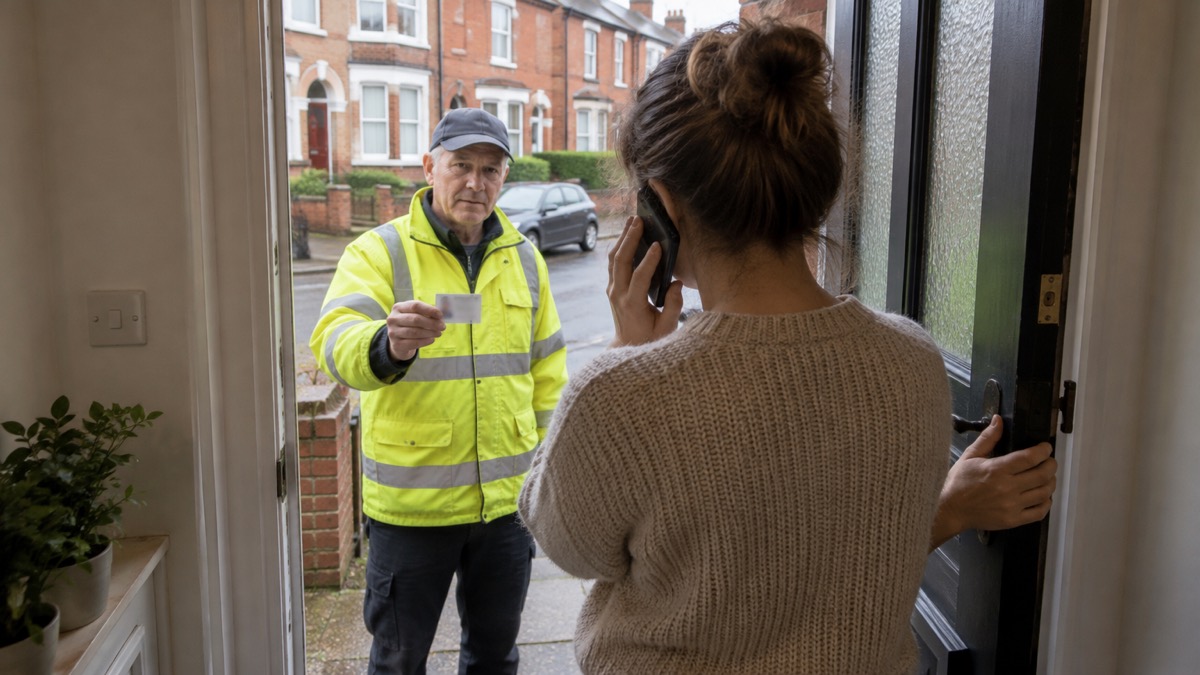
If someone knocks at your door and says they are from the water company, you do not have to take their word for it. The Consumer Council for Water's advice is simple: if you want to double check their identity, ask them to wait outside and phone your water company using the number on your water bill or from the contact details on their website1. Do that before you let anyone in, whatever they are wearing or carrying.
The first thing to know is who your supplier actually is. You can find out by entering your postcode on the Water UK website, and it is worth knowing before anything goes wrong, because that is the company you would need to contact2. Your local water company's website also lets you search on your postcode to see notifications of what is going on in your area, which is often quicker than a phone call4.
A genuine visit or call usually has a reason you can recognise: a pressure test, a water quality concern, a leak, or an interruption to supply. Knowing what those look like, and what the company owes you when the water goes off, helps you tell a real visit from a bogus one.
Find your water company by postcode before you trust any caller
The single most useful thing you can do is establish, in advance, which company supplies your home. It is good to know who supplies your water and which company you would need to contact in the event of something going wrong, and you can add your postcode and find this out online3. The Drinking Water Inspectorate points to the Water UK website for the same purpose2, and South East Water's own guidance says you can check your water supplier by simply entering your postcode8.
That matters at the door because a caller who cannot tell you the right company name, or who names a company that does not supply your postcode, has given themselves away. It also matters because some households are supplied by an independent utility company rather than one of the large regional firms. You can find out who supplies the utility at your door by entering your postcode on the linked website9.
Once you know the name, keep the number handy. The Consumer Council for Water's instruction is to ask the caller to wait outside while you ring that number, rather than a number the caller gives you1. A genuine engineer will not object to waiting a minute or two.
Why a genuine water company might contact or visit you
Water companies do have legitimate reasons to get in touch, and knowing them helps you judge whether a visit or call makes sense.
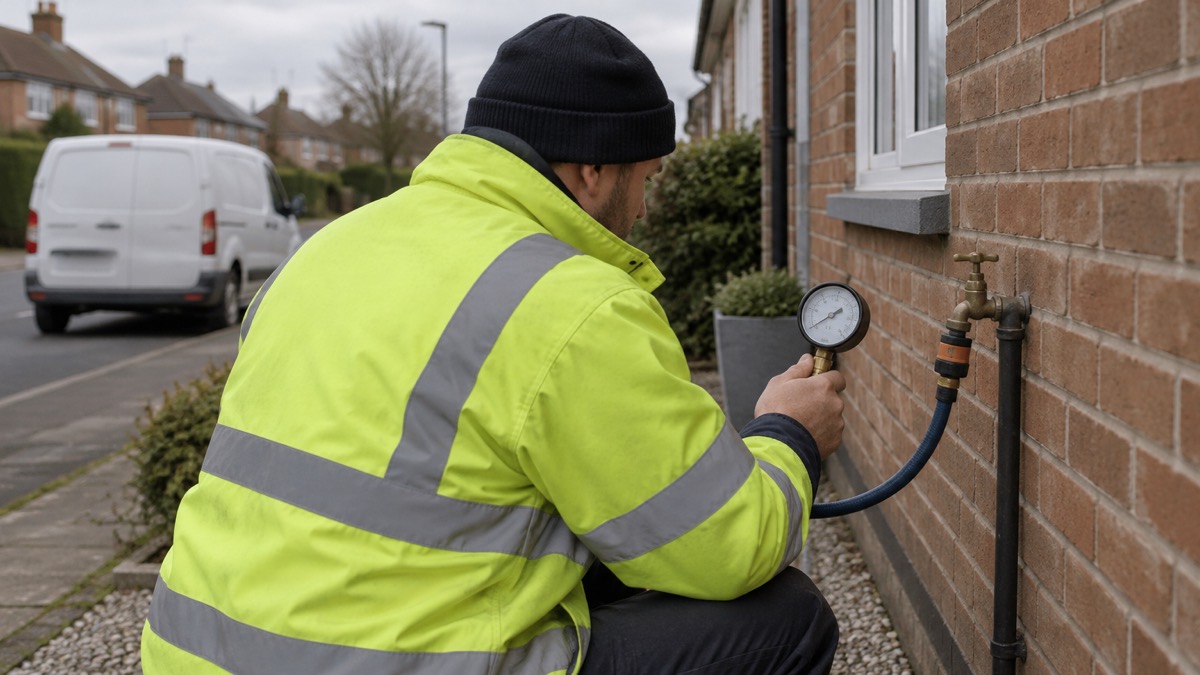
- Pressure problems. Your water company can visit your property to test the pressure of your water to see if there is a problem10. If you have reported low pressure, a visit to test it is exactly what you would expect.
- Water quality concerns. If you notice a particularly bad or strong smell or taste which means you cannot drink the water, or you notice a smell or taste for the first time, you should contact your water company immediately11. A company following up on that report is behaving normally.
- Lead pipes. If you suspect that your home has lead pipes you can ask your water company to test the water at your kitchen tap, and if they find lead they should provide written advice on what to do12.
- General advice. If you are experiencing a problem with your water quality or are not sure if the fault is within your home or business, it is always worth contacting your water company first for advice13.
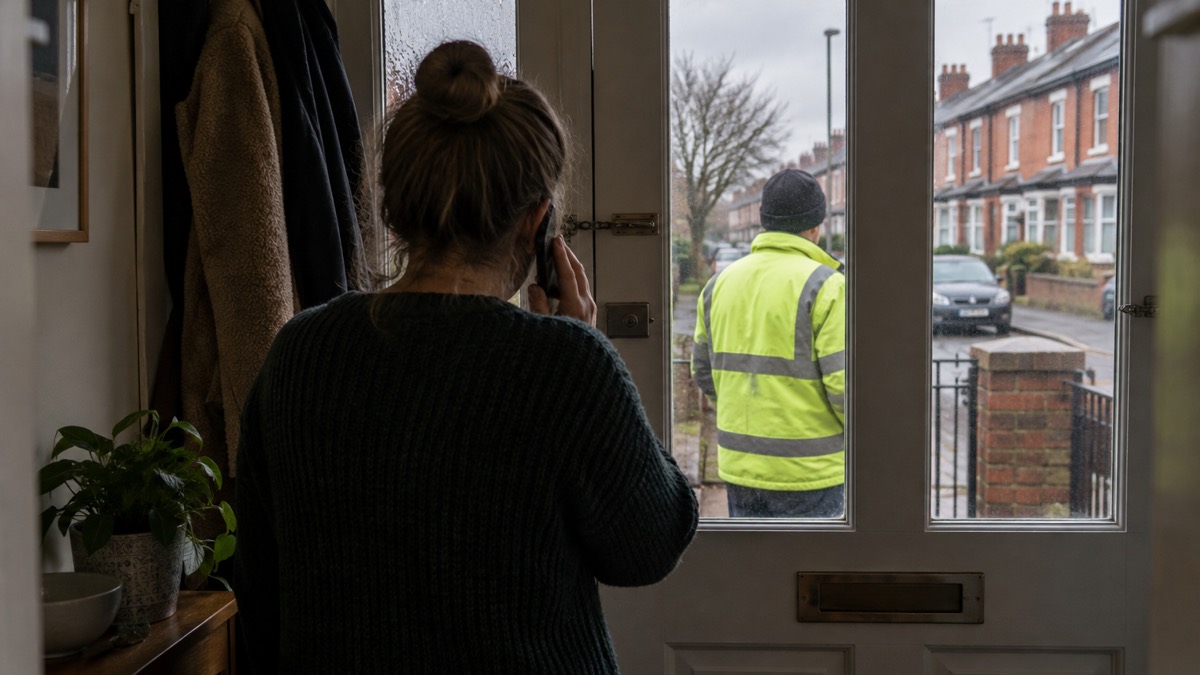
Some companies publish detail on how and why they contact customers. Thames Water, for example, has a dedicated page that details how and why the company contacts customers14. If you are unsure whether a call or visit is real, that page, or the equivalent on your own supplier's site, is the place to look.
Extra Care and Priority Services registers for vulnerable households
If anyone in your household needs extra support during an interruption, the register is the thing to join, and it is also the reason a genuine company may already know things about your household that a stranger would not.
The route is straightforward. Find out who your water supplier is and give them a ring; they will happily add you to the Priority Service Register for vulnerable people4. Your water company will have an Extra Care register, which you can sign up to if you are eligible5. If you are a vulnerable customer in need of extra support you can register with your water company as a priority customer15.
| Register | Who it is for | How to join |
|---|---|---|
| Priority Services Register | Vulnerable customers in need of extra support15 | Ring your water supplier and ask4 |
| Extra Care register | Customers who are eligible under the company's criteria5 | Sign up with your water company5 |
The registers do practical things. Help can include sending someone to check your meter regularly16, and other utilities such as water companies and gas and electricity suppliers may also offer extra assistance, so customers should contact them to register17. If you provide care for someone, ask anyone you provide care for if they are registered, and if you believe you are registered but have not received support, contact your water company as soon as possible18.
For more on the support available to older, disabled and medically dependent households, see Extra Help in an Emergency.
What a genuine company provides when your water is off for more than 12 hours
When an interruption drags on, the help a company provides follows a pattern you can recognise, and that pattern is a useful test of whether a caller's story adds up.
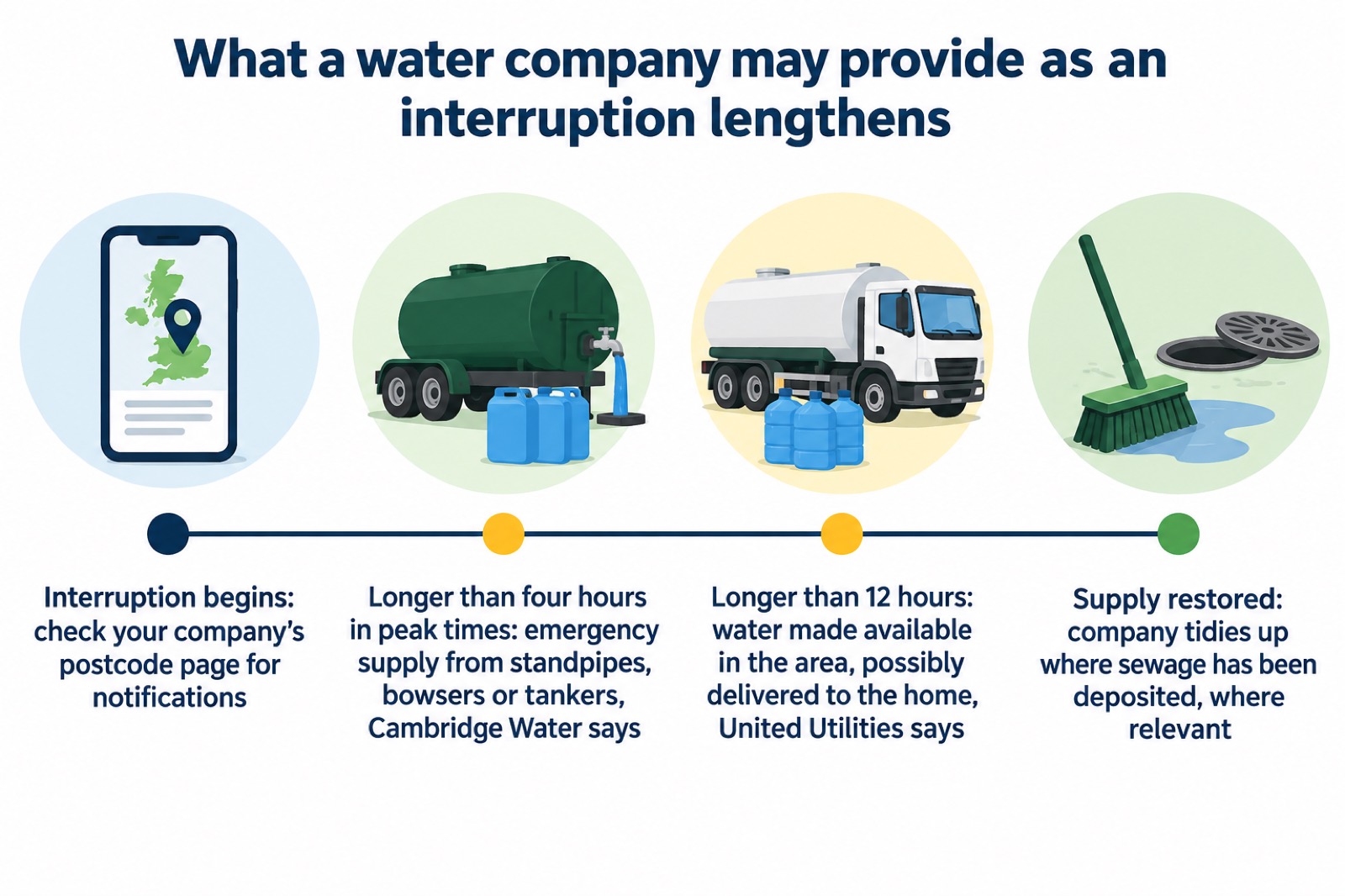
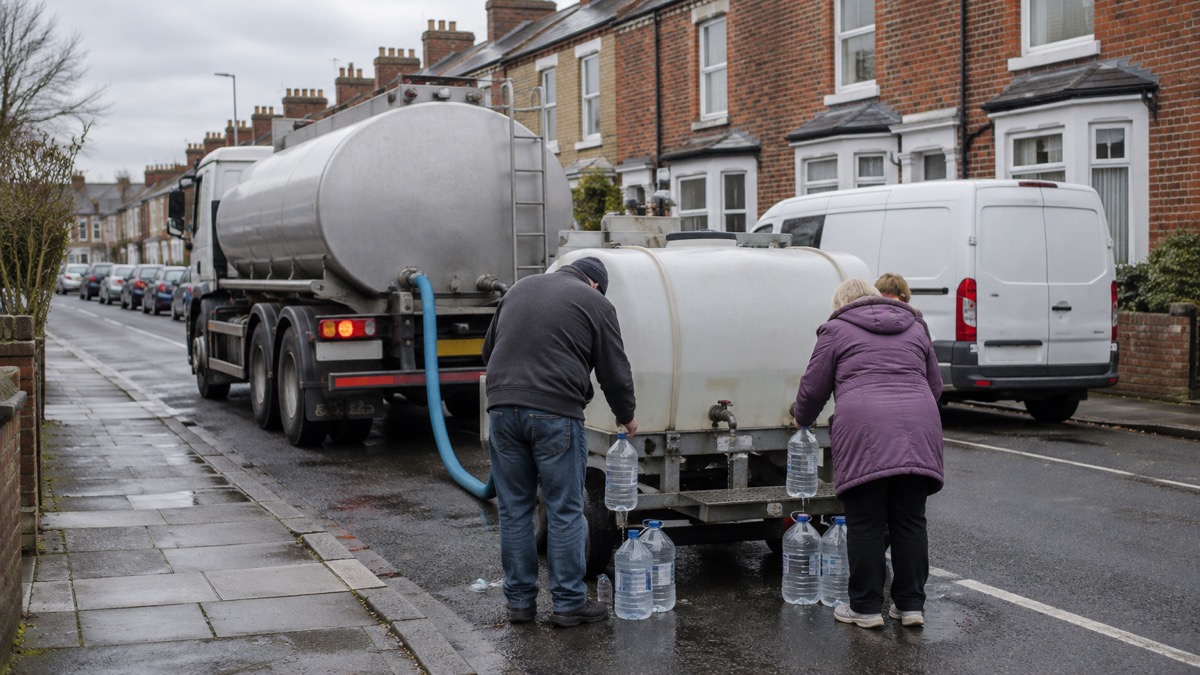
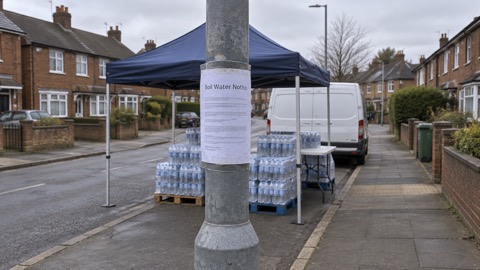
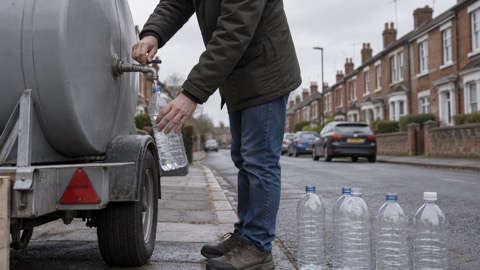
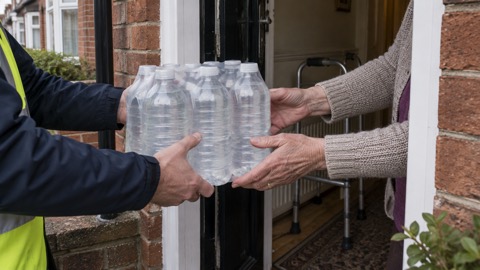
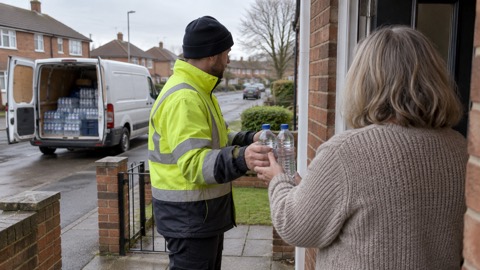
United Utilities states that if your water is likely to be off for more than 12 hours, it will try to make water available in your area using other means, which may include delivering bottled water to the home6. Cambridge Water says that if an interruption is likely to be longer than four hours in peak times, it always tries to provide an emergency supply from standpipes, water bowsers or tankers19. The two figures differ because they are different companies describing their own standards, not a single national rule.
Water companies maintain plans for water supply incidents and regularly exercise and test those plans, and those plans cover alternative water supplies and the prioritisation of vulnerable customers21. In Wales, the same expectation applies: water companies maintain plans for water supply incidents and regularly exercise and test those plans21.
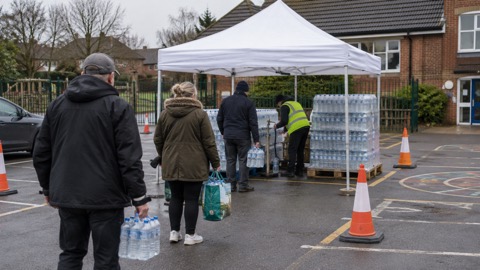
If you want to know where bottled water stations are set up, or how to get bottled water delivered if you are vulnerable, those are covered in Where Are Bottled Water Stations Set Up? and How to Get Bottled Water Delivered If You Are Vulnerable.
When the bowsers do not come
It is worth knowing that an emergency supply is not guaranteed, because a caller offering to "sort out" water for you during an outage is playing on a real anxiety.
Water companies may not always be able to provide an emergency supply of water in bowsers or in bottles, for example if they have their own ongoing emergency such as a burst main22. The provision of alternative supplies by a water company, where no agreement is in place, should be limited to short term unplanned emergencies23.
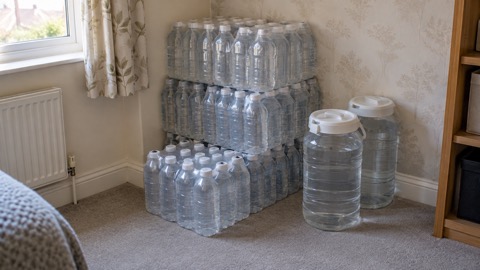
The practical answer is to hold some water at home yourself. Our guide to how much drinking water to store per person and the supply interruption checklist set out what to keep ready so that a delayed bowser is an inconvenience rather than a crisis.
Compensation when your water supply fails
Compensation is one area where a caller might make promises, so it helps to know what the actual position is.
All companies are required under licence conditions to pay compensation to customers where essential household water supplies are interrupted as a result of restrictions authorised by emergency drought orders24. Individual companies also publish their own guaranteed service standards. Cambridge Water, for example, states that under its guaranteed service standards, if it fails to restore the supply within 24 hours, it will automatically pay £2019. That is one company's scheme, not a national figure, so check your own supplier's terms.
Your water company is the first place to go for information if an interruption happens18. For the wider picture of how companies respond to a major incident, see How Water Companies Respond to a Major Incident.
Water quality, lead pipes and who to ring
Several of the questions people ask after a doorstep visit or a worrying glass of water are really questions about who is responsible for what.
Free test results. Water companies test water daily in your area and will give you the results free of charge on request2. Companies will normally take a sample in response to a complaint from a consumer depending on the nature of it, and water company sampling techniques are accredited and independently verified2.
Lead supply pipes. Replace lead pipework, and employ a qualified plumber to carry out any plumbing work, for example one who is accredited through the WaterSafe scheme, notifying your water company when arranging replacement12. Where a risk of lead exists, water companies treat the water with orthophosphate to reduce the problem significantly12.
Leaks on your supply pipe. Arrange for an engineer to repair or replace your tank or pipework25. If you are not sure whether the fault is yours or the company's, contact your water company first for advice13.
Blue or green water. Get in touch with your builder or contact an accredited plumber to investigate and fix the cause26.
Hosepipe bans. Water companies may choose to enforce Temporary Usage Bans, or hosepipe bans, to help conserve water27. Stay up to date on local hosepipe bans or legal limits enforced by your water company27. Restrictions change: South East Water announced the removal of previously permitted exemptions in Sussex on Friday 2 October 2026, except those required for health, safety or welfare purposes8, and Thames Water confirmed its temporary use ban remained in place on 12 October 20268.
Sewer flooding. Contact your water company if you experience flooding from sewers or water mains7. If you are thinking of pumping flood water into public sewers, check with your water company first7. Water companies are responsible for the removal and treatment of waste water, and will assist where possible to reduce the amount of water escaping from the system and tidy up areas where sewage has been deposited once the flooding has subsided20.
Sources (27)
- Water and sewerage incidents at home, Consumer Council for Water, 2026-07-03
- Water testing, Drinking Water Inspectorate, 2025-12-09
- Know your water supply, Wiltshire and Swindon Prepared, 2026-10-25
- Failure of water infrastructure or loss of drinking water, Wiltshire and Swindon Prepared, 2026-10-25
- Power, gas and water: what if they fail, Surrey County Council, 2025-12-29
- Help with your water supply, United Utilities, 2026-10-28
- Help during a flood, GOV.UK, 2026-10-25
- Temporary use bans, South East Water, 2026-10-29
- Independent utility companies: what are they, Wiltshire and Swindon Prepared, 2026-10-25
- Low water pressure, Consumer Council for Water, 2026-10-28
- TCP or medicinal taste and odour, Drinking Water Inspectorate, 2026
- Lead in drinking water, Drinking Water Inspectorate, 2026-05-01
- Should I contact a plumber or my water company, WaterSafe, 2026-10-29
- Get extra help, Thames Water, 2026-10-28
- Loss of essential services, Lancashire Prepared, 2026-10-29
- Priority Services Register, Derbyshire County Council, 2026-10-29
- Priority Services Register, Scottish and Southern Electricity Networks, 2026-10-26
- Water supply interruptions or outages, Prepare campaign, 2026-10-12
- Emergency guide, Cambridge Water, 2026-10-28
- Flooding advice, Mid and West Wales Fire and Rescue Service, 2026-10-29
- Resilience risks in Wales, Welsh Government, 2026-09-07
- Managing insufficiency of private water supplies, Drinking Water Inspectorate, 2025-12-15
- Managing insufficiency of private water supplies, Drinking Water Inspectorate, 2025-12-15
- Drought, Ofwat, 2026-10-29
- Domestic oil, Northumberland County Council, 2026-10-28
- My water looks unusual, Severn Trent Water, 2026
- Droughts, Prepare campaign, 2026-10-19
 Supply Interruption Checklist
 Boil Notice Checklist
 Drinking Supply Checklist
 Boil Water Notice Advice
 When Supply Is Restored
 Check for an Outage
 Report No Water or Burst Pipe
 Bottled Water Stations
 Bottled Water Delivery Help
 Flushing the Toilet in an Outage
 Washing Without Running Water
 Combi Boiler When Water Is Off
 Water Company Incident Alerts
 Brown or Discoloured Tap Water
 Cloudy or Milky Tap Water