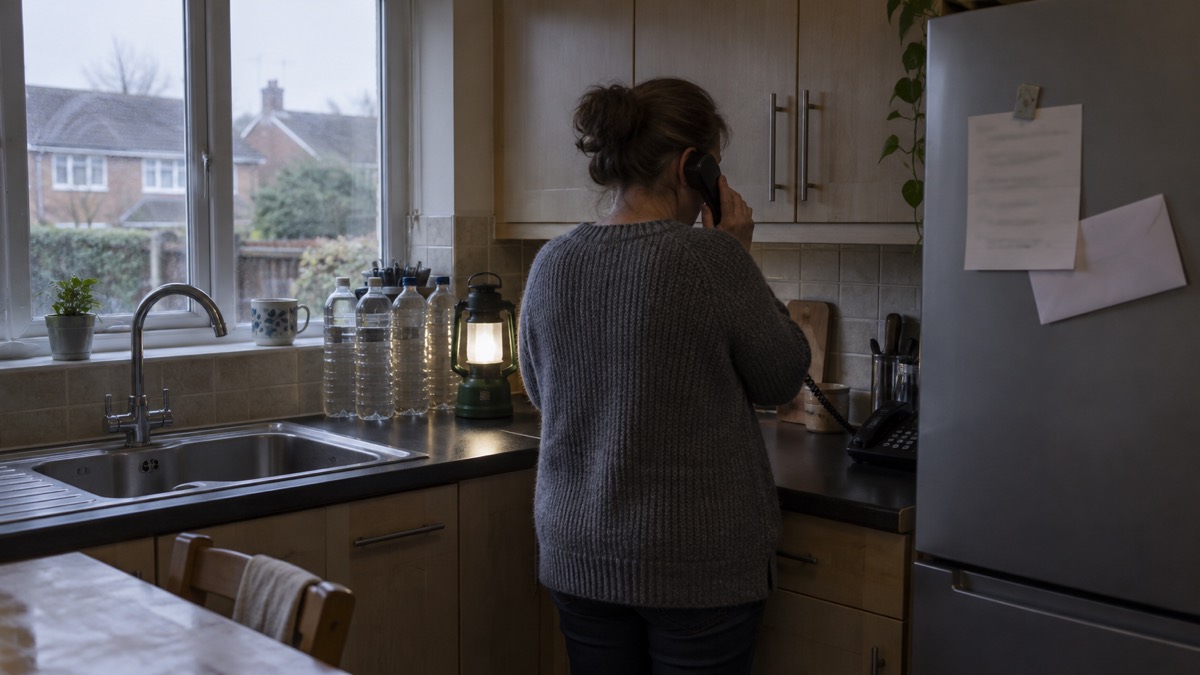
When your water stops, the first question is usually whether it is just you or the whole street, and the second is how you will be told what is happening. Your water company is the source of information if this happens, and it will use several channels at once: its website, text messages to the mobile number it holds for you, and sometimes local press and community networks1.
So the practical steps are simple. Find out which company supplies your postcode now, before anything goes wrong, and keep its contact details somewhere you can reach without power or internet3. If anyone in the household would struggle without water, join the company's Extra Care register so it knows to look after you5. And do not wait for a message to arrive: check the company's website by postcode, because that is where service updates are posted6.
Find your water company by postcode before anything goes wrong
It sounds trivial until the taps run dry and you are searching on a phone with one bar of signal. Knowing who supplies your water, and which company you would need to contact if something went wrong, is the first piece of household admin for any interruption3. If you are unsure who your supplier is, you can find out by entering your postcode on the Water UK website7. Your bill also carries the contact details4.
Once you know the company, do two things. Save its incident or emergency page as a bookmark, and note its phone number somewhere physical, such as on the fridge or in your emergency kit. Surrey County Council's advice for water failure is to telephone the number on your water bill or check your water company's website5. That is the route the company itself expects you to use.
Checking the company's own website is also how you find out whether an interruption is planned or an emergency. Take a look at your local water company's website and search on your postcode to see if there is anything going on in your area6. Companies publish service updates there, and during an incident they will tell you to check the website regarding service in your area and to see if you can pick up alternative sources of water1.
| What you need | Where to find it |
|---|---|
| Which company supplies you | Water UK website by postcode, or your bill7 |
| Contact number | On your water bill4 |
| Live service status | Your company's website, searched by postcode6 |
| Alternative supply points | Your company's website during an incident1 |
If you rent, or have recently moved, check this now rather than assuming the previous occupant's company is yours. Water supply is tied to the property, and the company named on an old bill may not be the one that answers when you ring.
Join the Extra Care register so your company knows you need help
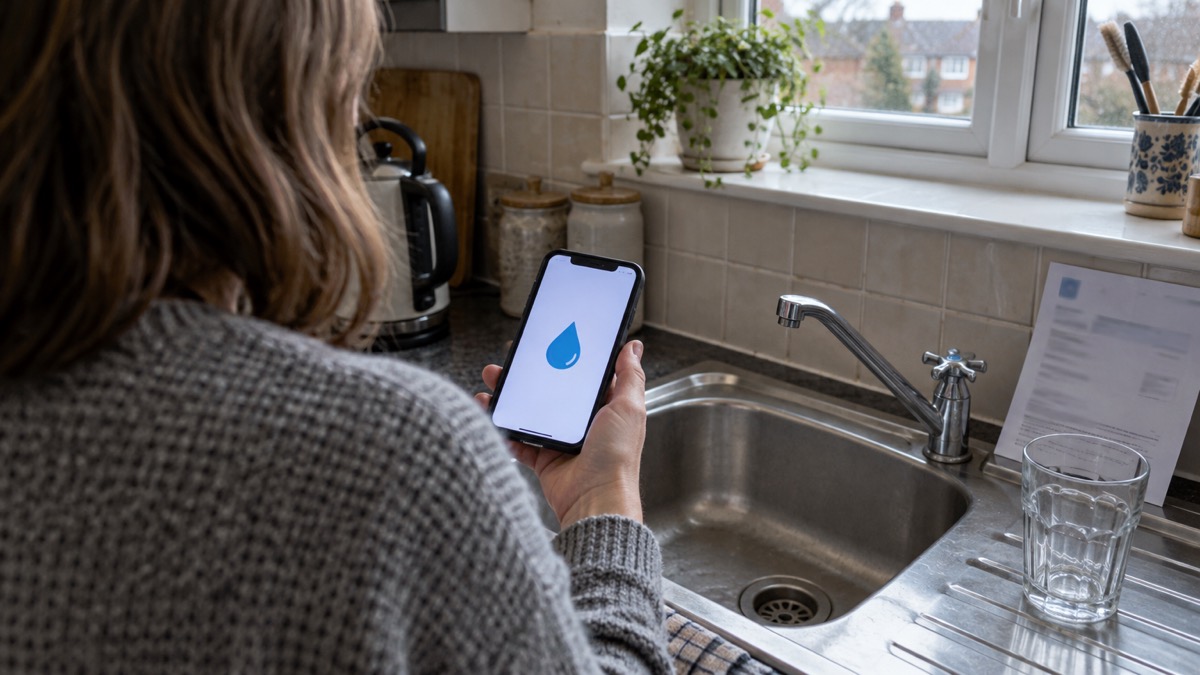
Water companies keep a register of customers who need extra help during an interruption. Your water company will have an Extra Care register, which you can sign up to if you are eligible5. Eligibility usually turns on age, disability, a medical condition or caring responsibilities, but the register is only useful if you are on it before the incident, not during it.
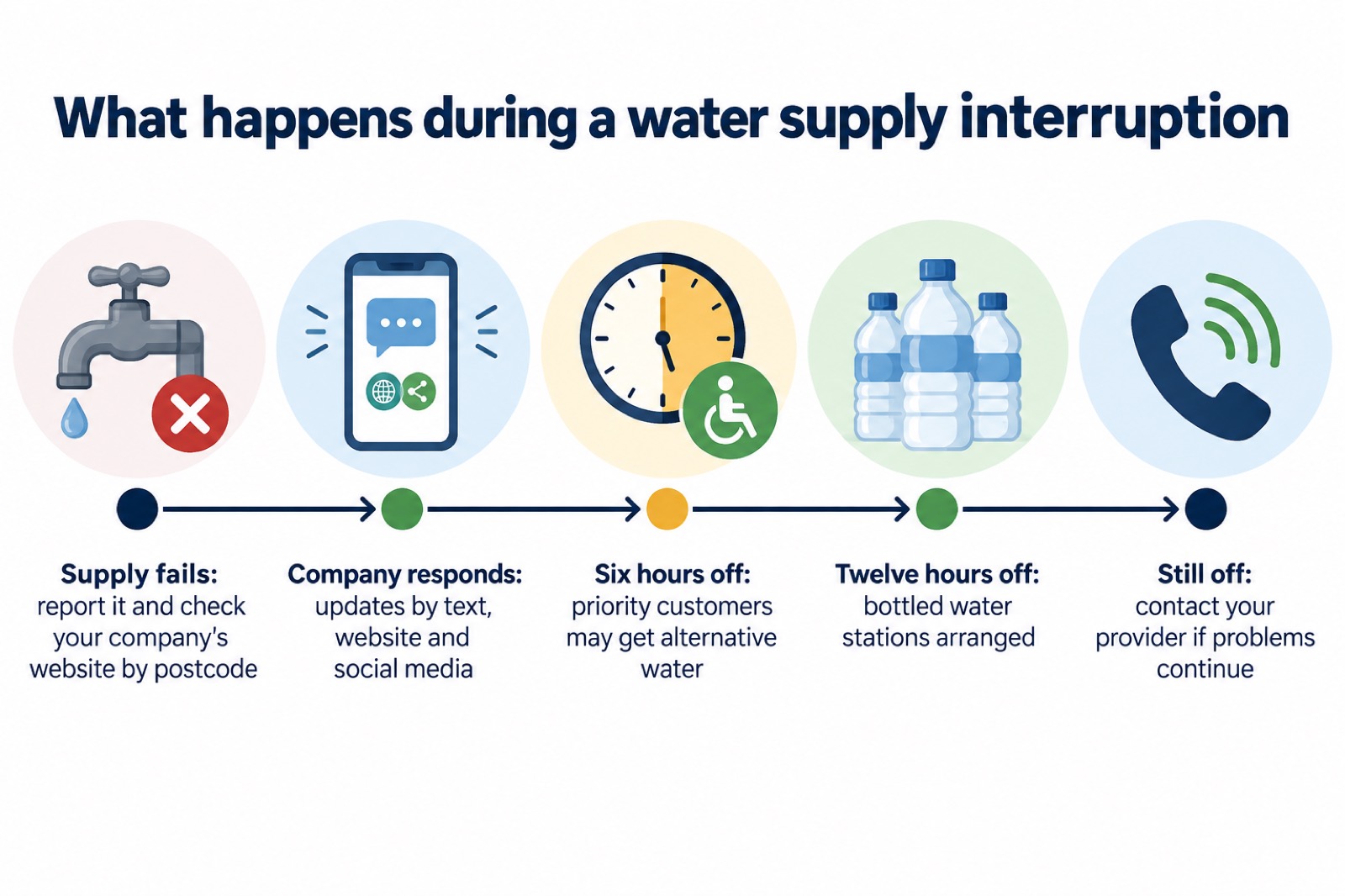
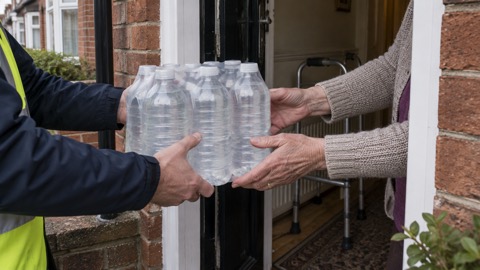
What you get varies by company, but the principle is consistent. Northumbrian Water, for example, says that if your water supply is going to be off for more than six hours, it will do its best to make water available to you in other ways, and it delivers bottled water directly to the home for customers with limited mobility or who rely on water for medical reasons9. That is a meaningful difference from queueing at a bottled water station.
- Register once, share widely: with your permission, details can be shared with other trusted partners including your water and energy suppliers, so you only need to register once10.
- Ask on behalf of others: ask anyone you provide care for if they are registered, and if you believe you are registered but have not received support, contact your water company as soon as possible1.
- Register with other utilities too: contact your water company and your gas and electricity suppliers to register for their extra assistance services as well11.
- Businesses have their own route: companies such as Electricity North West run a separate business Extra Care register10.
For households with medical dependence on water, such as home dialysis, the register is not a nice-to-have. It is how the company knows to prioritise a delivery or an alternative supply to your address. Our guide to extra help in an emergency covers the wider picture for older, disabled and medically dependent households.
Do not rely on social media alone for updates
Companies push incident information out through several channels at once. Cambridge Water, for example, sends incident updates by text message, adds them to the website homepage, shares them on Facebook and Twitter, and sometimes works with local press and community networks2. That spread is deliberate: no single channel reaches everyone.
The practical rule is to treat social media as a supplement, not the source. The Scottish Government's ready service warns that some information online and on social media may not be true, so only share information from reliable sources12. During an incident, rumour travels faster than a repair crew.
There is also a reporting point. Surrey County Council asks people not to use its social media channels to report road emergencies, because those channels are only monitored during working hours13. Water companies differ, but the principle holds: use the phone number or the website for anything urgent, and keep social media for updates.
"do not rely on your mobile phone as your only source of communication"
Make sure your company holds an up-to-date mobile number. South Staffs Water says it is important to have up-to-date contact details, especially a mobile number, so the company can contact you during incidents15. If you change your number, tell your supplier.
After 12 hours without water: alternative supplies and bottled water deliveries
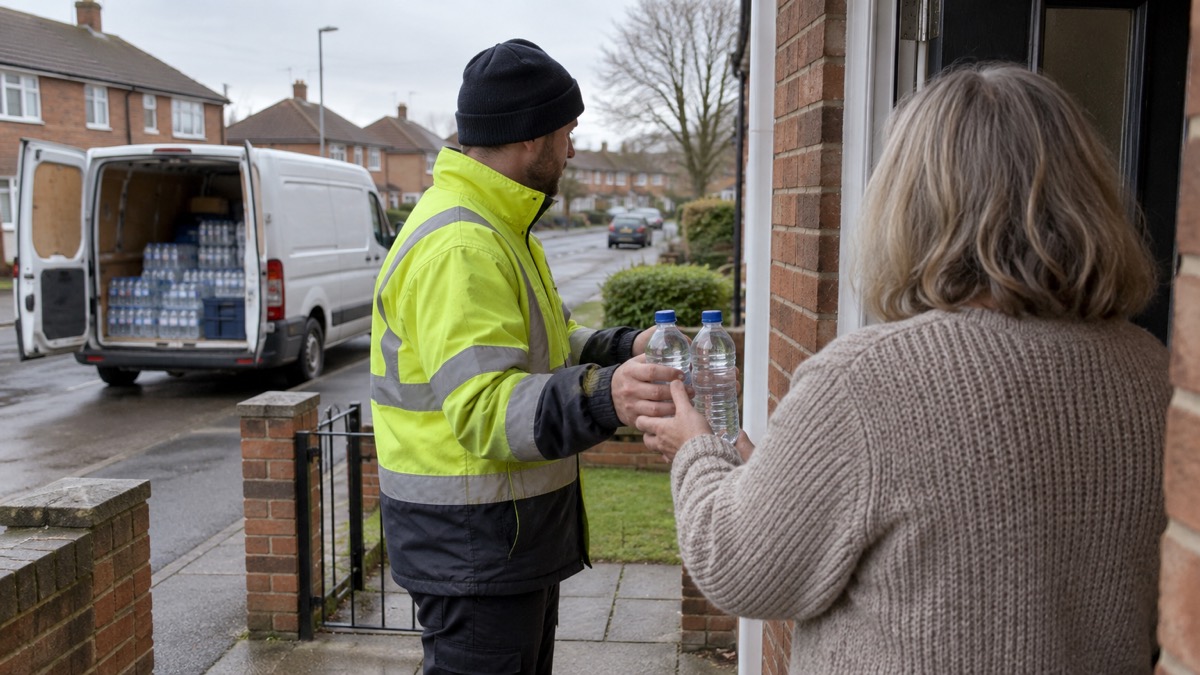
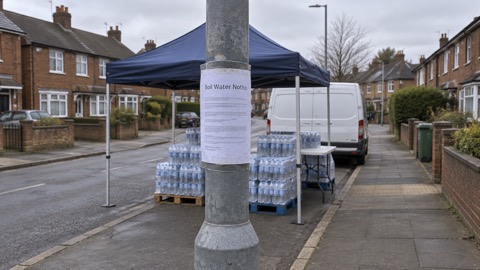
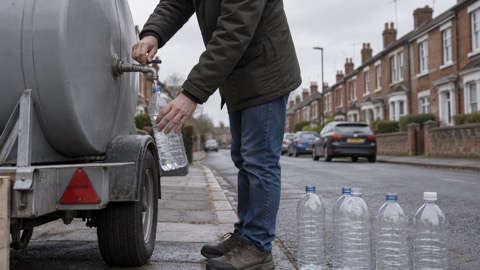
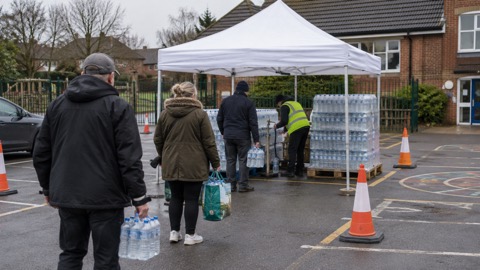
The 12 hour mark is the one to remember. Thames Water says that if your supply is not returned within 12 hours, it will arrange for an alternative, including bottled water stations8. Those stations are set up locally to the incident in an accessible area, so the location depends on where the problem is, not on where you would prefer to drive.
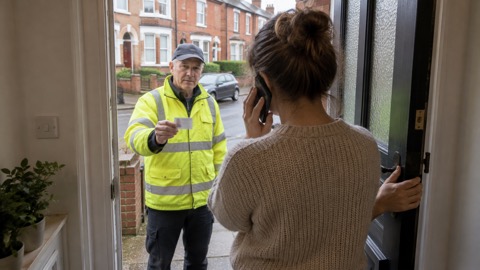
Some companies go further for priority customers. Southern Water asks customers to contact it if they have not received a delivery after 12 hours of losing their water supply16. Deliveries are made by companies supporting the incident response, not necessarily direct employees of the water company, and all carry ID16. If someone knocks claiming to be delivering water, that is worth knowing: check identification before accepting anything or letting anyone in. Our page on how to check a water company caller is genuine sets out what to look for.
If you continue to have problems with your water supply after an outage, contact your water provider1. That includes low pressure, discoloured water or a supply that comes back and then fails again. Our guides to bottled supplies, tankers and bowsers and to where bottled water stations are set up go into more detail on what to expect at a station and how to use it.
Reporting flooding from sewers or mains, and who is responsible
Flooding that comes from the water network is not the council's problem to fix. Water mains are the responsibility of the water company18. If you experience flooding from sewers or water mains, you should contact your water company19. Suffolk County Council is blunt about this: it is not responsible for a burst water main, and you should contact the company who supplies your water20.
Water companies are also responsible for the removal and treatment of waste water, meaning sewage21. They will assist where possible to reduce the amount of water escaping from the system and will tidy up areas where sewage has been deposited, once the flooding has subsided21. That clean-up commitment is worth knowing when you are deciding who to ring.
| Problem | Who to contact |
|---|---|
| Burst water main | Your water company22 |
| Blocked sewer or overflowing sewer | Your water company22 |
| Flooding from sewers or mains | Your water company19 |
| Pumping flood water into public sewers | Check with your water company first18 |
| Gas leak | National Gas18 |
Know who to contact if flooding happens, before it happens24. Our flooding guide covers the wider household response, and how to report no water or a burst pipe walks through the call itself.
Hosepipe bans and temporary use bans
A hosepipe ban is a formal restriction, not a request. Water companies may choose to enforce Temporary Usage Bans, or hosepipe bans, to help conserve water25. If a hosepipe ban is in place where you live, you cannot use a hosepipe connected to your mains water supply for things like watering your garden, filling a paddling pool or washing your car25.
The wording used by Westminster City Council is slightly broader: if your water company has declared a Temporary Usage Ban or hosepipe ban, you should avoid filling a paddling pool, washing your car and watering your garden26. Either way, the effect on a household is the same.
Bans are declared company by company, so a ban in one area does not mean a ban next door. Check your own supplier's website rather than relying on national news. Our heatwaves and drought guide covers what to do in a dry spell beyond the ban itself.
Compensation when your supply is interrupted
Compensation is not automatic for every interruption, and the rules are set by the company's licence conditions and by Ofwat. Your water company is the source of information if this happens1. Ofwat provides information on what communication you should expect to receive from your water company in the case of an interruption to water supply27.
One clear statutory position: all companies are required under licence conditions to pay compensation to customers where essential household water supplies are interrupted as a result of restrictions authorised by emergency drought orders28. That is a specific circumstance, not a general promise for every burst main.
Where companies publish their own thresholds, they vary. Northumbrian Water says it may pay compensation if water has been interrupted for more than 12 hours or if your home has been flooded from one of its sewers16. Bristol Water says it pays £50 automatically if supply is not restored within 12 hours of being notified, plus £50 for each further 12-hour period the supply remains unrestored16. Check your own supplier's published terms rather than assuming a figure.
The practical steps are:
- Note when your supply went off and when it came back.
- Check your company's website for its published compensation position.
- Contact the company directly if you believe you are owed something.
Our guide to who checks drinking supplies explains the roles of Ofwat, the Drinking Water Inspectorate and the other regulators.
Water tests, sampling and changes in taste or smell
If your tap water changes, ring your company. After a flood, contact your water company if you notice a change in the colour, taste or smell of tap water29. In Wales the same advice applies: contact your water company if the tap water has become discoloured or tastes strange30.
On sampling, companies will normally take a sample in response to a complaint from a consumer, depending on the nature of it7. So a complaint is the route to a test. Be specific about what has changed and when.
Taste and smell complaints are taken seriously. In Scotland, if you notice a strong musty or earthy taste or smell you should contact Scottish Water31. The Drinking Water Inspectorate advises that if you notice a particularly bad or strong smell or taste which means you cannot drink the water, or you notice a smell or taste for the first time, you should contact your water company immediately32.
"If you notice a particularly bad or strong smell or taste which means you cannot drink the water, or you notice a smell or taste for the first time you should contact your water company immediately"
On lead, water companies treat water with orthophosphate where a risk of lead exists, to reduce the problem significantly, and they are legally required to replace their communication pipe if it is made of lead and is at risk of contributing to lead in the drinking water supply33. Our guides to why your tap water tastes or smells different and to brown or discoloured tap water cover the common causes.
Sources (33)
- Water supply interruptions or outages, Prepare campaign, 2026-10-12
- Emergency guide, Cambridge Water, 2026-10-28
- Know your water supply, Wiltshire and Swindon Prepared, 2026-10-25
- Check drinking water quality, GOV.UK, 2026-10-29
- Power, gas and water: what if they fail, Surrey County Council, 2025-12-29
- Failure of water infrastructure or loss of drinking water, Wiltshire and Swindon Prepared, 2026-10-25
- Water testing, Drinking Water Inspectorate, 2025-12-09
- What happens during an incident, Thames Water, 2026-10-28
- Priority services, Northumbrian Water, 2026-10-28
- Our Extra Care register, Electricity North West, 2026-10-25
- Priority services, SSEN, 2026-10-25
- Find and share information in an emergency, Ready Scotland, 2026-03-24
- Road emergencies, Surrey County Council, 2026-09-08
- Community flood plan, Natural Resources Wales, 2026-10-29
- Emergency guide, South Staffs Water, 2026-10-28
- What happens when there's an incident, Southern Water, 2026-10-28
- Managing insufficiency of private water supplies, Drinking Water Inspectorate, 2025-12-15
- Help during a flood, GOV.UK, 2026-10-25
- Responsibilities for flooding, Derbyshire County Council, 2026-10-29
- Report a flood in Suffolk, Suffolk County Council, 2026-10-29
- Flooding advice, Mid and West Wales Fire and Rescue Service, 2026-10-29
- Report flooding or a burst water main, GOV.UK, 2026-10-29
- Before, during and after a flood, SEPA, 2026-10-29
- Responsibilities for flooding, SEPA, 2026-10-29
- Droughts, Prepare campaign, 2026-10-19
- Advice and support: drought, Westminster City Council, 2026-08-06
- Water supply interruptions or outages, Be Ready campaign, 2026-10-12
- Drought, Ofwat, 2026-10-29
- After a flood, GOV.UK, 2026-10-25
- Cyngor ar lifogydd, Mid and West Wales Fire and Rescue Service, 2026-10-29
- Taste and smell, Drinking Water Quality Regulator for Scotland, 2026-10-28
- TCP or medicinal taste and odour, Drinking Water Inspectorate, 2026
- Lead in drinking water, Drinking Water Inspectorate, 2026-05-01
 Supply Interruption Checklist
 Boil Notice Checklist
 Drinking Supply Checklist
 Boil Water Notice Advice
 When Supply Is Restored
 Check for an Outage
 Report No Water or Burst Pipe
 Bottled Water Stations
 Bottled Water Delivery Help
 Flushing the Toilet in an Outage
 Washing Without Running Water
 Combi Boiler When Water Is Off
 Checking a Water Company Caller
 Brown or Discoloured Tap Water
 Cloudy or Milky Tap Water