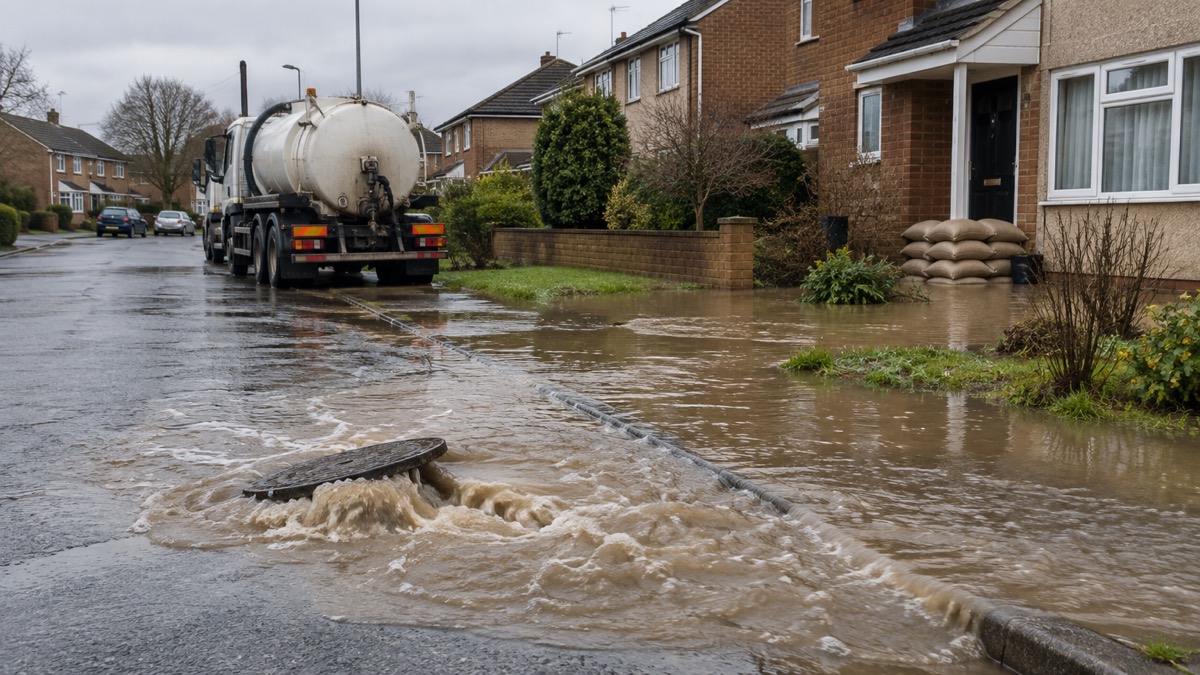
If sewage from a public sewer gets into your home, you are entitled to a payment from your water company under the Guaranteed Standards Scheme (GSS). For internal flooding, the payment is an amount equivalent to your annual sewerage charge, with a minimum of £300 and a maximum of £2,000 for each incident1. If sewage floods your garden or land rather than your building, the payment is half your annual sewerage charge, with a minimum of £150 and a maximum of £1,0001. Some company documents set lower caps, so check your own company's figures, but the three-month claim deadline for external flooding applies whichever figure is used1.
The scheme is run by the water and sewerage companies in England and Wales and overseen by Ofwat. The payment is automatic for internal flooding in most cases, but for external flooding you must claim it yourself, within three months of the incident2. If sewer water has flooded your home, report any losses or damage to your insurance provider and keep receipts of emergency expenses, and contact your landlord if you rent2. This page sets out what you can claim, how to claim it, when the company does not have to pay, and where the rules differ across the UK.
Sewer flooding inside your home: a payment equal to your annual sewerage charge
When wastewater from one of the company's sewers enters your building, the company has failed a guaranteed standard and must pay you. The payment is an amount equivalent to your annual sewerage charge for the current year, subject to a minimum and a maximum. The consumer body CCW, which advises water customers, states that the payment is capped and that it covers domestic outbuildings as well as the main building1. Southern Water, for example, tells customers internally flooded by a failure of its drainage system that they may claim an amount equivalent to their annual wastewater charge, within a minimum and maximum set by the scheme3.
Not every document agrees on the figures. Southern Water's household code of practice, approved by Ofwat in November 2022, describes an automatic payment or credit equal to the annual wastewater charge subject to a minimum of £150 and a maximum of £1,000 for each event2. An Ofwat and CCW report on sewer flooding published in November 2024 similarly describes an automatic payment equal to the customer's annual sewerage charge up to a maximum of £1,0005.
The payment is made for each incident, and it rises if flooding keeps happening. If another incident happens within 12 months of the last one ending, the minimum payment increases by a set amount each time, and the maximum increases by a larger set amount each time1. That escalation matters for households on streets with a recurring drainage problem: it is the scheme's way of putting a rising cost on the company until the underlying fault is fixed.
| Internal sewer flooding | Amount |
|---|---|
| Basis of payment | Your annual sewerage charge1 |
| Minimum (first incident) | £3001 |
| Maximum (first incident) | £2,0001 |
| Minimum rise per repeat incident within 12 months | +£1001 |
| Maximum rise per repeat incident within 12 months | +£5001 |
| Covers | Your building and domestic outbuildings1 |
External flooding: you must claim within three months
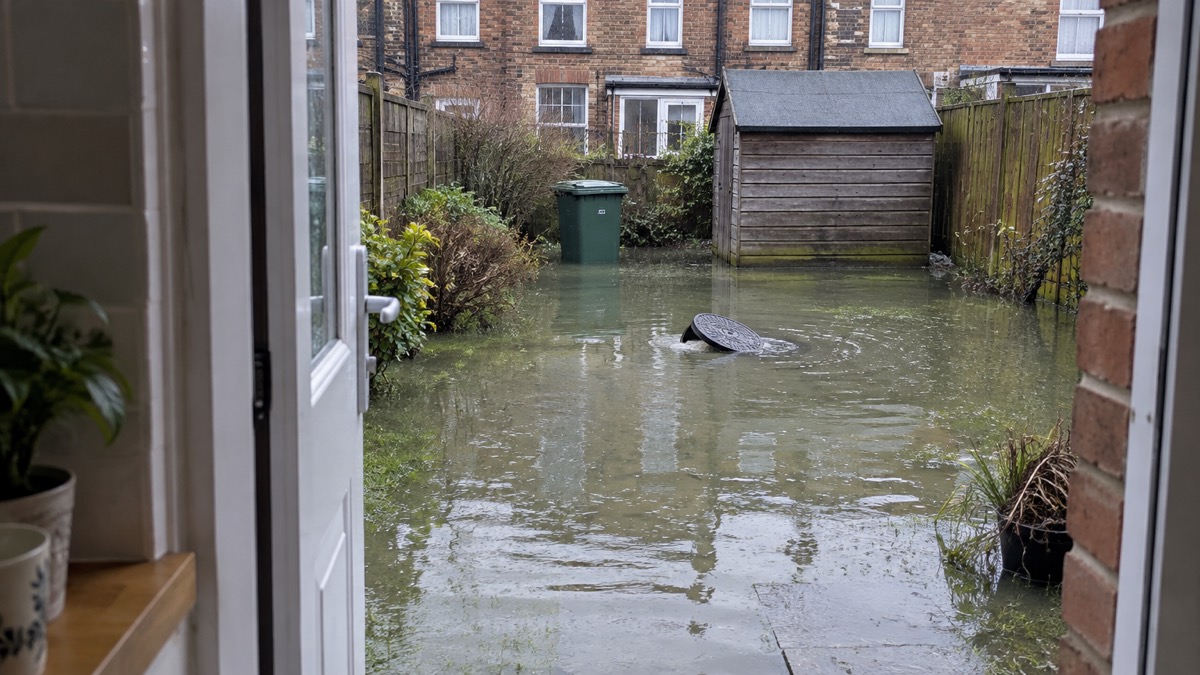
If sewage enters your land or property but not your building, the payment is smaller and, crucially, it is not automatic. The customer must claim the payment from the company within three months of the incident5. CCW states the same deadline plainly: "Claims must be made within three months of the incident"1. Southern Water tells customers to apply within three months, starting with its External Flooding claim form or by getting in touch3.
The amount is 50% of your annual sewerage charge, with a minimum of £150 and a maximum of £1,0001. As with internal flooding, the figures vary between documents: Southern Water's code of practice describes a payment or credit equivalent to half of your wastewater charges with a £75 minimum and a £500 maximum2, and the Ofwat and CCW report describes a payment equal to 50% of the annual sewerage charge up to a maximum of £5005. Give both figures and ask your company to confirm which applies. Repeat incidents within 12 months raise the external payment too: the minimum goes up by £50 each time and the maximum by £250 each time1.
The three-month rule also has a second edge. For internal flooding, where the payment is normally automatic, the company can avoid paying if it was not practical for it to identify that you were affected and you have not made a claim within three months of the effluent entering your building5. In practice that means: never assume the company knows, and never assume the payment will arrive on its own. Report the flooding, in writing, as soon as it happens, and keep a copy.
How to claim a sewer flooding payment
The first step is the same whatever the cause looks like: contact your water company. Gov.uk tells households with an overflowing sewer to contact the water company6; Nottinghamshire County Council's easy-read flooding guidance says the same7; and Natural Resources Wales asks customers to call their local water company for sewer flooding or if a toilet or sink is backing up during floods8.
- Report the flooding immediately. Call your water company as soon as sewage enters your property. Southern Water states it will try to be with you within two hours for internal flooding, longer in bad weather, with the most severe cases prioritised3.
- Ask about clean-up. For external flooding, Southern Water states clean-up starts straight away in daylight or the next day if dark, aiming to finish within 48 hours, free of charge3.
- Claim the payment. For external flooding, complete the company's claim form or contact it directly, within three months of the incident3.
- Record everything. Photograph the flooding, the damage and the dates. Report losses or damage to your insurance provider and keep receipts of emergency expenses. If you rent, contact your landlord as well3.
- Follow up in writing. If the payment does not arrive, use the company's complaints procedure. Disputes can be determined by Ofwat2.
In Northern Ireland the arrangements are separate. NI Direct advises that for compensation claims about water or sewerage you should ask NI Water for a claim form on 0845 744 00884. Belfast City Council also points households affected by flooding to the Flooding Incident Line, and notes you do not need to know the cause of the flooding to report it9.
For the wider picture of who is responsible for what, see who manages flood risk and sewer flooding: causes and who is responsible. For the insurance side, see making an insurance claim after a flood.
When a water company does not have to pay
The scheme has clear exceptions, and they are the most common reason a claim is refused. CCW lists them: the incident was caused by abnormal conditions that could not have been foreseen by the company or prevented by the exercise of all due care (in England), exceptional weather (in Wales), industrial action by the company's employees, your own actions, or a defect, inadequacy or blockage in your own drains or sewers1. Southern Water's code of practice says the same in plainer words: "These payments won't apply if flooding is caused by exceptional weather, industrial action, your own actions or any defect, inadequacy or blockage in your drains or private sewers"2.
The Ofwat and CCW sewer flooding report groups the exceptions the same way: exceptional weather conditions, industrial action by the company's employees, the actions of the customer, and a defect, inadequacy or blockage in the customer's drains or sewers5. Two of these deserve attention:
- Exceptional weather. A heavy storm that overwhelms the drainage system may count as exceptional, and the company can then refuse the payment. If it does, ask it to state in writing which exception it is relying on and why the conditions were exceptional rather than ordinary winter weather.
- Your own drains. The boundary matters. The company pays for failures of its own sewers and lateral drains; it does not pay for blockages in the private drains serving only your property. If you are unsure where the boundary lies, see sewer flooding: causes and who is responsible.
There is also a procedural exception: if it was not practical for the company to identify that you were affected, and you have not claimed within three months, the payment can be lost1. That is why the deadline in the previous section is worth treating as firm.
A guaranteed standards payment is not compensation
It is worth being clear about what the payment is for. The Guaranteed Standards Scheme pays a fixed amount, or a credit on your account, when a company fails to meet a service standard1. It is not a damages payment calculated from what you actually lost. Your ruined carpets, ruined furniture, hotel costs and time off work are insurance matters: report losses to your insurer, keep receipts of emergency expenses, and if you rent, contact your landlord3. Our pages on home insurance in a flood risk area and making an insurance claim after a flood cover that process.
Two cautions from official guidance are worth carrying into any claim. First, the insurance company may only offer to clean and repair something, not replace it10. Second, fences damaged by flooding or storms are not included as standard in most policies11. Neither affects your GSS payment, which is owed regardless of your insurance position, but both affect what you can realistically recover overall.
The distinction is stated most clearly in Northern Ireland's separate arrangements, where a householder affected by flooding could receive £1,000 under the Scheme of emergency financial assistance, and the payment is expressly "to make a home fit to live in as quickly as possible. It is not compensation"4. The same logic sits behind the GSS: the payment is a service-standard penalty and a contribution, not a full remedy.
Some companies pay more than the minimum
The statutory figures are a floor, not a ceiling. Ofwat's review of the 2018 freeze and thaw found that some companies, such as South East Water and Thames Water, proactively went above statutory minimum payments to customers to reflect the level of disruption experienced, and paid out quickly12. Companies reported paying around £7 million in compensation in connection with that incident12.
The same review found wide variation between companies in the levels of compensation paid, and that several companies had limited information about which of their customers were impacted, reflecting poor customer and network data12. Poorer performing companies underestimated the impact of the severe weather and were reacting to incidents rather than proactively managing them12. For you as a customer, that variation means two things: check what your own company's code of practice promises, and do not assume a first refusal is final.
The 2024 Ofwat and CCW sewer flooding report adds a recommendation that bears directly on repeat flooding: "Companies should put time limits in place for resolving sewer flooding incidents, so that no customer is left experiencing this for years or even decades"5. If your street floods repeatedly, quote that recommendation in your complaint. Investment is also being directed at the problem: water companies invested £132 million to reduce the risk of sewer flooding to properties between 1 April 2019 and 31 March 202013.
England and Wales: where the rules differ
The Guaranteed Standards Scheme applies to the water and sewerage companies of England and Wales, and the underlying detail differs slightly between the two countries. The exception for weather is worded differently: in England it covers abnormal conditions that could not have been foreseen by the company or prevented by the exercise of all due care, while in Wales it refers to exceptional weather1. The practical effect is similar, but the wording a company must rely on when refusing a claim differs, and it is worth knowing which applies to you.
Scotland and Northern Ireland sit outside the scheme. In Northern Ireland, water and sewerage are run by NI Water, and compensation claims are made by asking NI Water for a claim form on 0845 744 00884. Belfast City Council also signposts a £1,000 immediate payment under the Scheme of emergency financial assistance for private homeowners affected by flooding11, and NI Direct notes that if your home was affected by flooding you might be eligible for exclusion from rates4. In Scotland, flood risk information and warnings come from the Scottish Environment Protection Agency, and sewer flooding should still be reported to Scottish Water as your water and sewerage provider.
Across England, Wales and Scotland, responsibility for flood risk information is divided: the Environment Agency for England, Natural Resources Wales for Wales, and the Scottish Environment Protection Agency for Scotland, with NI Direct covering Northern Ireland14. Natural Resources Wales, like the other agencies, constantly monitors rainfall, river levels and sea conditions to forecast the possibility of flooding15. For warnings and signing up, see flood alerts, warnings and severe flood warnings and how to sign up for free flood warnings.
Other guaranteed standards payments from your water company
Sewer flooding is one standard among many. The Guaranteed Standards Scheme covers making appointments, keeping appointments, account queries and payment arrangement requests, low water pressure, notice of supply interruption, supply restoration, complaints, and sewer flooding inside and outside your property1. If your company fails to keep to any of these standards, it must make you a fixed payment or credit on your water services account1.
As of 1 October 2025, additional standards have been introduced as part of the GSS review: core priority services, domestic customers in debt, meter readings, meter installation, and water quality notices1. If you are without water for a prolonged period, the same principle applies, though Ofwat has been concerned that the current compensation arrangements for customers without water are not reflective of the impact on customers of being without water for a prolonged period12.
One further point on timing: if the company fails to make a GSS payment within a specified period, unless it is one you were required to claim and did not, you are entitled to an extra payment. CCW's advice is to contact your water company if you feel this applies to you1. Southern Water found this out in practice: it was late giving compensation to customers in the Isle of Wight after the 2018 freeze and thaw, and has since paid those customers the late payment penalty required under the GSS12.
Low awareness means many payments go unclaimed
The weakest link in the whole scheme is that customers often do not know it exists. In Ofwat's 2018 review, only 4% of surveyed Severn Trent Water customers were aware of compensation being offered by the company, and of the affected customers CCWater surveyed, over 60% had not received compensation12. The pattern repeats elsewhere: a review of customer experiences after Storm Arwen found low awareness of the possibility to claim additional compensation for expenses incurred, which meant only a minority had done so, and that only a minority became aware of their entitlement through communication from their distributor, with others finding out through word of mouth, social media, or only when their cheque arrived16.
The lesson for your household is simple: do not wait to be told. Report the flooding and claim within three months of the incident12. If you have been flooded before and never claimed, it is worth asking the company whether a claim is still open to you, though the three-month deadline will usually have passed.
Alongside any payment, take the practical steps that reduce the chance of a repeat: sign up for flood warnings, as the government's personal flood plan advises17, and consider the measures in making a household flood plan and non-return valves and toilet bungs, which stop sewage backing up into your home in the first place.
Sources (17)
- What standards are guaranteed by water and sewerage companies?, CCW, 2026-09-22
- Southern Water household code of practice, Ofwat, 2022-11
- My property is flooded, Southern Water, 2026-10-28
- What to do if a flood happens, NI Direct, 2025-10-24
- Customer experiences of sewer flooding update report, Ofwat and CCW, 2024-11
- Help during a flood, GOV.UK, 2026-10-25
- Flooding during a flood: easy read, Nottinghamshire County Council, 2025-11-02
- What to do in a flood, Natural Resources Wales, 2026-10-29
- Flooding advice, Belfast City Council, 2026-10-29
- Preparing your home for flooding, Cotswold District Council, 2020
- Emergency planning: flooding, Belfast City Council, 2026-10-29
- Thaw report, Ofwat, 2018-06-19
- Flood and coastal erosion risk management report 2019 to 2020, GOV.UK, 2019-04-01
- Community resilience, Met Office, 2026-10-25
- Flood warnings guide, Met Office, 2026-10-29
- Customer experiences of Storm Arwen, Ofgem, 2022-06-09
- Personal flood plan, GOV.UK, 2023-11-15
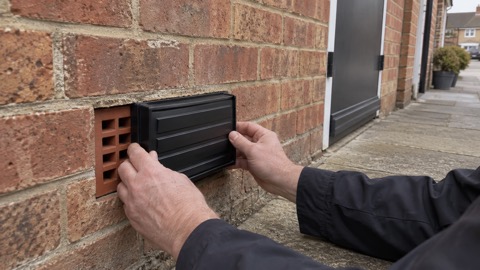 Property Flood Resilience Grants
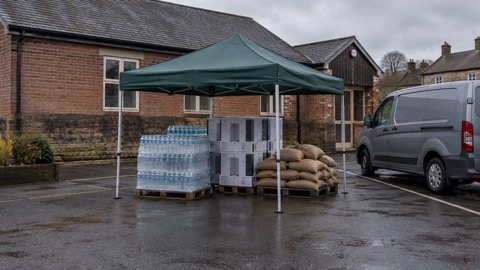 Recovery Grants If Not Insured