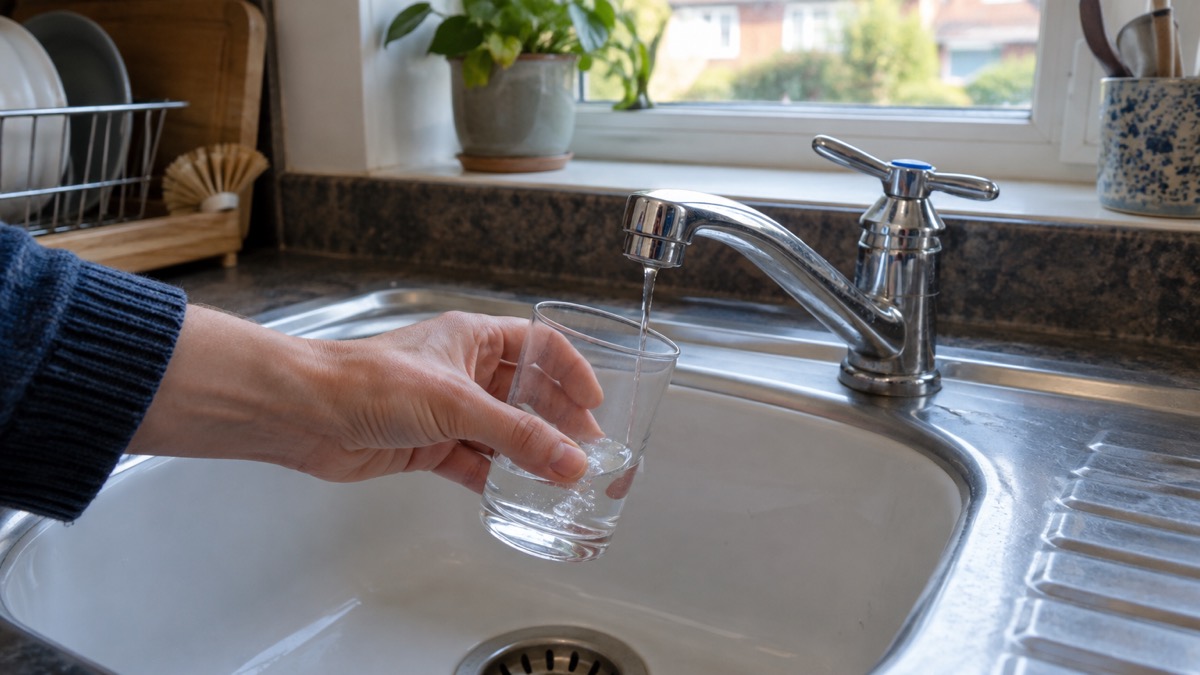
Low water pressure usually comes from outside your home: a burst main, repair work or scheduled maintenance in your area. The first thing to do is simple. Ask a neighbour whether their pressure has also dropped. If it has, the problem is likely in your water company's network, and you should check your supplier's website for known issues and report it. If your neighbours' water is flowing fine, the cause is more likely to be inside your own plumbing1.
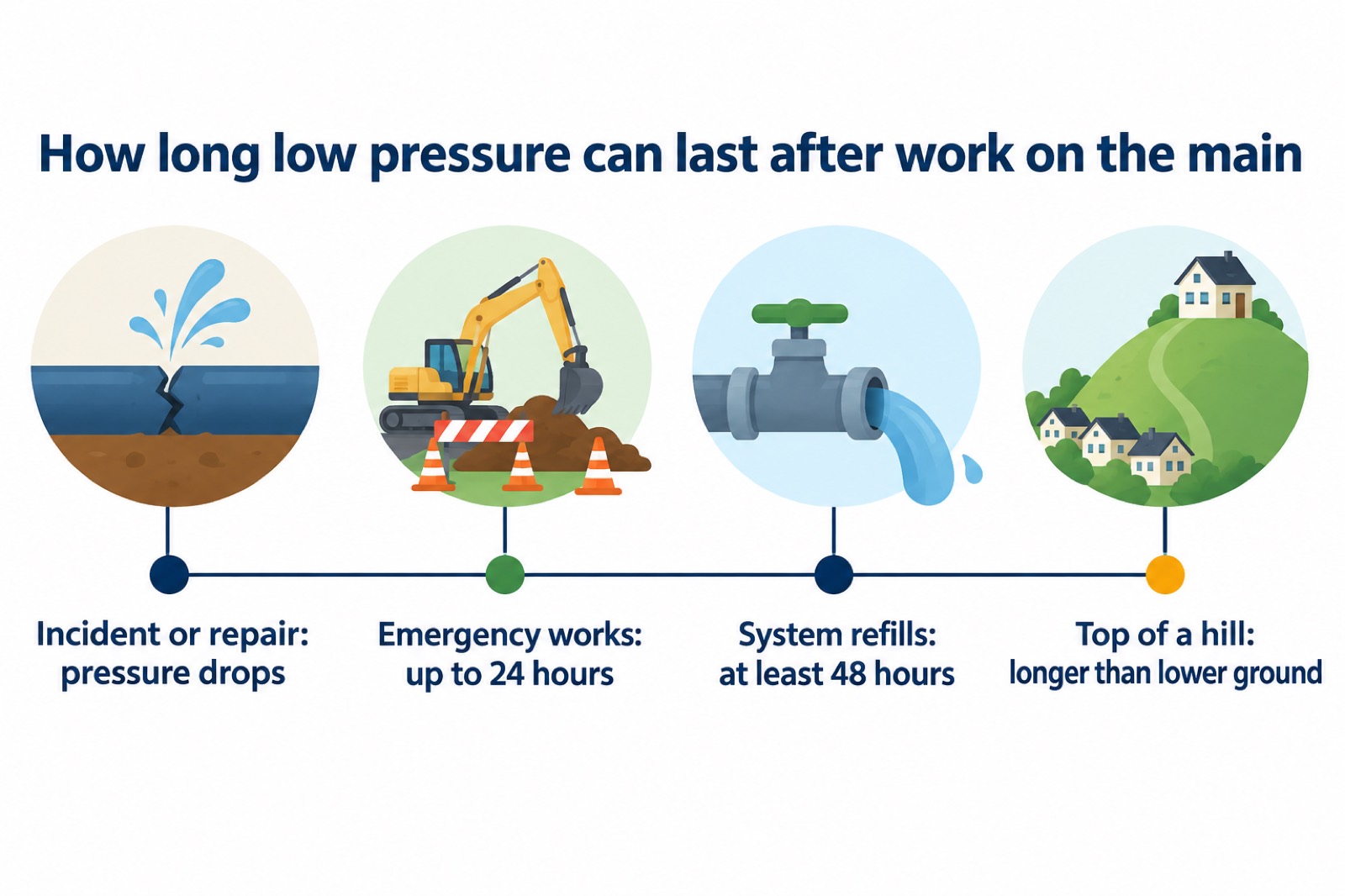
Your water company must supply a minimum pressure of 0.7 bar, or seven metres of static head, in the communication pipe, usually measured at the outside stop valve3. Most companies aim higher, at around 10 metres head (about 1 bar) at the boundary5. After work on the main, pressure can take at least 48 hours to return to normal while the system refills6. Customers at the top of a hill often wait longer than those at the bottom6.
If the pressure stays low, keep a record of when it happens over about two weeks and report it to your supplier, so they can investigate and, if needed, arrange a pressure test visit7.
Check your neighbours first
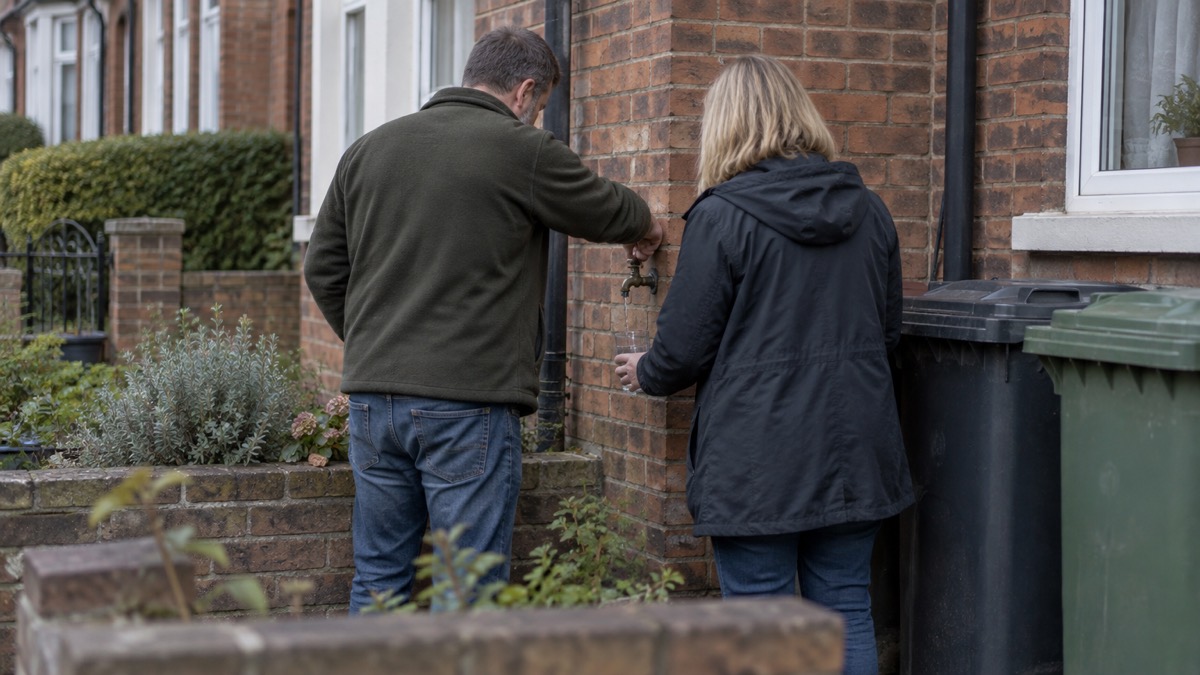
Before you assume the worst, do the one check that settles most cases. Speak to a neighbour and ask whether their water pressure has also been affected. If it has, it is likely there is a problem or repair going on in your area that is affecting the supply2. The Consumer Council for Water gives the same advice: if a neighbour also has no water or low pressure, it is likely to be an issue with your water company's network4.
If your neighbours' water is flowing fine, the low pressure is more likely to be caused by an internal plumbing problem1. One common and easily missed cause: neighbours doing plumbing work may have turned off the outside stop tap, which can affect supply nearby1.
Once you know it is a network issue, check your supplier's website for known issues in your area before you ring9. Many companies publish live maps or incident updates. South Staffs Water, for example, asks customers to use its live map to check for incidents, then report the problem so the company can investigate and advise on next steps10.
If you have no water at all, very low pressure, or concerns about water quality, contact your local water company straight away11. For a wider picture of how interruptions are handled, see How to Check If There Is an Outage in Your Area and How to Report No Water or a Burst Pipe.
Common causes: bursts, repairs and frozen pipes
Low pressure has a short list of usual suspects. The Consumer Council for Water names a burst on the water main, repairs, or scheduled maintenance in your area7. Dwr Cymru puts emergency repair work near your home first, such as a main supply pipe that has burst, but adds that it could also be a problem with the pipes in your home12. NI Water lists work the company may be doing, problems within your home plumbing, and a burst pipe or leak in the area13.
Affinity Water explains that routine work on its water mains network or a burst water main can temporarily reduce pressure, but this should return to normal14. Pipes themselves can also burst and leak because of age and wear, poor installation and maintenance, clogs and blockages, excessively high water pressure, and ground movement15.
Cold weather adds another cause. Pipes can freeze during cold weather, causing a drop in water pressure2. Ready Scotland lists frozen or burst pipes among the effects of cold, snow and ice16. Prevention is straightforward: insulate pipes before winter17, and check that pipes are adequately lagged to protect your property18.
| Cause | Where it shows up | What to do |
|---|---|---|
| Burst main or repair work | Whole street or area | Check supplier's site, report it7 |
| Scheduled maintenance | Planned area works | Expect temporary drop, allow time14 |
| Frozen pipes | Cold snap, exposed pipes | Check for frost, lag pipes2 |
| Internal plumbing | Your home only | Check stop taps and valves1 |
How long pressure takes to come back
After an incident, patience is part of the fix. Dwr Cymru says any low water pressure will return to normal once the system has been refilled, which could take at least 48 hours6. The same guidance says pressure might take several hours to fully return and depends on where you live, with customers at the top of a hill likely to take longer than those at the bottom6. Thames Water similarly says pressure might take several hours to fully return and depends on where you live19.
Some events are quicker. Affinity Water says emergency works may affect the pressure to your property for up to 24 hours, until the water supply has returned to normal14. During pipe cleaning, South East Water says you may experience some changes to your water pressure, but this will normally return to normal within a few hours of the cleaning process20.
When the supply comes back, air in the pipes can make taps splutter. Bristol Water advises running your tap for a few minutes to release the air, and your supply should return to normal21. If you need a fuller account of what to do when water returns, see What to Do When Your Supply Comes Back On and How to Clear an Air Lock After the Supply Returns.
The minimum pressure your water company must supply
There is a legal floor, and it helps to know it when you ring. Severn Trent states it is legally obliged to provide 0.7 bar of water pressure, or seven metres of static head22. The Consumer Council for Water says the company must ensure the water pressure is at least seven metres head (0.7 bar) in the communication pipe, usually measured at the outside stop valve4. WaterSafe says suppliers are committed to a guaranteed standard of service to provide a minimum of seven metres static head (0.7 bar)3.
Most companies aim higher. WaterSafe says most water companies will aim to provide at least 10 metres head (approximately 14 psi or 1.0 bar) at the end of their communication pipes3. Northumbrian Water says it must provide a minimum of 10 metres head (1 bar) at the property boundary8. Bristol Water supplies at a minimum of seven metres head (around 0.7 bar or 10 psi)21.
The documents do not all agree, and it is worth saying so. Affinity Water says it is legally required to supply a minimum of seven metres head (0.7 bar) to your boundary stop tap23. WaterSafe, however, states that water suppliers' statutory service standard level of mains water pressure is 10 metres head (or one bar)24. If your supplier quotes a figure, ask where it is measured: at the boundary stop tap, the outside stop valve, or the communication pipe.
WaterSafe also notes that companies are required to supply water at a pressure that will allow water to reach the top storey of most homes3. Another way of putting the 0.7 bar figure is enough pressure to fill a cold water storage cistern in the roof space of a two storey house3.
Keep a record and report it
If low pressure keeps coming back, a record is what turns a complaint into an investigation. The Consumer Council for Water recommends that you record the times of incidents of low (or high) pressure over a period, for example two weeks, and report these to your company7. Note the time, what you were doing, and whether neighbours were affected.
Then report it. If the simple checks do not identify the problem, Wessex Water says to contact them and they will arrange a visit to test the water pressure2. If you still have a water supply, even if the pressure is lower than usual, the company says this is likely due to temporary measures and does not normally require a visit from teams2. Ask what the visit will measure and where.
If you are on a private supply such as a well, borehole or spring, the advice is different. Natural Resources Wales says to regularly monitor the water levels in your well or borehole or check spring flows, take water at a steady rate and at as low a rate as possible, and use water efficiently25. For more, see Private Supplies: Wells, Boreholes and Springs.
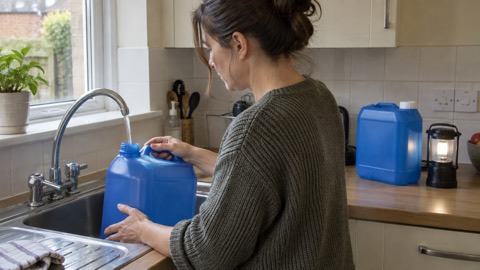
If you lose supply altogether, follow advice from the water company, keep bottled water available, check your supplier's website for information and updates, follow the instructions of the emergency services and your local authority, and make yourself known to your local authority if you are vulnerable or have additional needs for water26. Our Supply Interruption Checklist sets out what to have ready.
Low pressure or low flow? And what about high pressure?
Not every weak tap is low pressure. Affinity Water explains that it is possible to have high water pressure but a low water flow, and the flow of your water depends on your private supply pipe27. So a tap that trickles while a pressure gauge reads fine may point to a pipe or fitting problem rather than the mains.
Demand matters too. WaterSafe notes that in the morning when people are taking a bath or shower, or watering their garden on a hot evening, there is a bigger demand for water, which can cause low pressure24. A shower that goes to a dribble when someone else flushes the toilet or turns on a tap is a recognised sign of low pressure7. Check and fix leaking toilets, which waste water and worsen the effect28.
High pressure is not automatically good. Northumbrian Water advises that if your pressure is too high, you can use your internal stop tap or isolation valves to lower it to suit you8. High pressure is also listed among the things that can cause pipes to burst and leak, alongside age, poor installation and ground movement15.
Knowing your valves helps in both directions. Your outside stop valve is normally located under a cover on the path or the road, often in the same area as your water meter29. Your inside stop valve is normally located just after the water pipe enters the house, often under the kitchen sink30. For a burst or leak, see Home Emergencies: Fire, Carbon Monoxide, Gas Leaks and Burst Pipes.
Where to get help
Start with your water company. WaterSafe says you should contact your local water company straight away if you have no water, very low pressure or concerns about the quality of your water11. If you are in Wales, Dwr Cymru publishes after-incident advice in both English and Welsh6. In Northern Ireland, NI Water's low pressure page sets out the causes and what to do13.
If you are vulnerable or have additional needs, make yourself known to your local authority so support can reach you during a loss of supply26. For more on this, see Extra Help in an Emergency: Older, Disabled and Medically Dependent Households and How to Get Bottled Water Delivered If You Are Vulnerable.
On compensation, the Consumer Council for Water sets out the Guaranteed Standards Scheme. In England, it lists payments where a company fails the pressure standard twice for more than one hour within a 28-day period, and says you may be automatically entitled to a payment if you also experience ongoing low pressure32. Severn Trent describes the same trigger: if pressure falls below seven metres static head (0.7 bar) in the communication pipe on two occasions, each lasting more than one hour, within a 28-day period, the company must automatically make a Guaranteed Standards Scheme payment33. The documents give different figures in places, so check your supplier's scheme. This page does not give money advice; ask your water company or the Consumer Council for Water.
For the wider picture, see Water in an Emergency: A Household Guide, Who Checks Drinking Supplies: DWI, Ofwat, CCW and DWQR and How Long Until My Supply Is Restored?.
Sources (33)
- Water pressure, Yorkshire Water, 2026
- Water pressure, Wessex Water, 2026
- What is the minimum water pressure that a water supplier must supply?, WaterSafe, 2026
- Interruptions to water supply, Consumer Council for Water, 2026
- Water pressure, Northumbrian Water, 2026
- After an incident, Dwr Cymru Welsh Water, 2026
- Low water pressure, Consumer Council for Water, 2026
- Water pressure, Northumbrian Water, 2026
- Water quality, Severn Trent, 2026
- Pressure, South Staffs Water, 2026
- Emergency plumbers, WaterSafe, 2026
- Water quality, Hafren Dyfrdwy, 2026
- I have no water or low pressure, NI Water, 2026
- Our responsibilities, Affinity Water, 2026
- Dealing with burst pipes, Wessex Water, 2026
- Cold, snow and ice, Ready Scotland, 2026
- Winter preparedness, Essex Prepared, 2026
- Keeping warm in winter, Derbyshire County Council, 2026
- After an incident happens, Thames Water, 2026
- Protecting your water quality | South East Water, South East Water
- Water pressure management, Bristol Water, 2026
- Guide to our water pressure policy | Customer Information Hub | Help and Contact | Severn Trent Water, Severn Trent Water
- Your responsibilities, Affinity Water, 2026
- What should my water pressure be?, WaterSafe, 2026
- Drought planning and management, Natural Resources Wales, 2026
- Loss of essential services, Lancashire Prepared, 2026
- Low pressure, Affinity Water, 2026
- Hot weather, Ready Scotland, 2026
- How to find and use your outside stop valve, Thames Water, 2026
- Know your water supply, Wiltshire and Swindon Prepared, 2026
- After an incident (Welsh), Dwr Cymru Welsh Water, 2026
- What standards are guaranteed by water and sewerage companies?, Consumer Council for Water, 2026
- Your water supply, Severn Trent, 2026
 Supply Interruption Checklist
 Boil Notice Checklist
 Drinking Supply Checklist
 Boil Water Notice Advice
 When Supply Is Restored
 Check for an Outage
 Report No Water or Burst Pipe
 Bottled Water Stations
 Bottled Water Delivery Help
 Flushing the Toilet in an Outage
 Washing Without Running Water
 Combi Boiler When Water Is Off
 Water Company Incident Alerts
 Checking a Water Company Caller
 Brown or Discoloured Tap Water