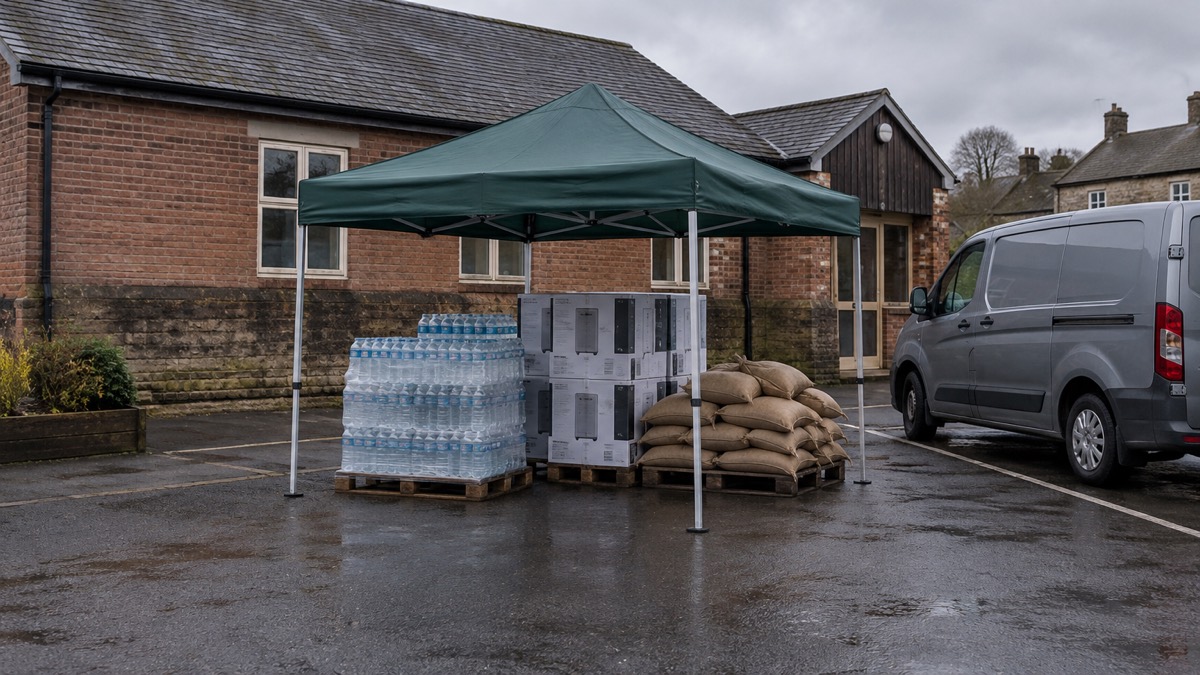
If your home has flooded and you have no insurance, help exists, but you have to know where to look and you have to ask. Charities fill the gap: the National Flood Forum advises households on recovery, insurance and reinstatement whether or not you are insured1, and the British Red Cross provides practical and emotional support in the days after an incident2.
The scale of the problem is worth understanding before you plan. The average cost to a home of being flooded is £20,000 to £30,0003, and Lancashire County Council puts the average cost of recovery after a flood at £20,0004. A grant of a few hundred pounds will not rebuild a house. What grants and charity support can do is bridge the first weeks, help you avoid the worst mistakes with builders, and pay for adaptations that cut the cost of the next flood.
Council recovery grants: around £500 per household
After a severe flood, the government can decide that the event triggers the Flood Recovery Framework. When that happens, district councils may administer household and business recovery grants on behalf of the government9. In past schemes under this framework, reports have given a figure of £500 per household for flood recovery, with separate grants reported for affected businesses. The documents describing these schemes disagree on the exact figures, so treat these amounts as reported rather than guaranteed, and check what your own council has announced.
These grants are not automatic and they are not permanent. They appear only after ministers judge a flood event severe enough to trigger the framework, and each council then runs its own application process. Nottinghamshire's guidance is blunt about how you find out: you may be able to get flood grants or support schemes, and these are likely to be advertised by your district council10. So in the days after a flood, check your district or county council's website, its social media accounts and its flood pages, and call its customer service team if nothing appears. Flooding at properties can be reported to the council directly: in Nottinghamshire, for example, you can report online or phone the Customer Service Centre on 0300 500 80 8011.
Report the flooding to your council even if no grant has been announced yet. Councils use these reports to build a picture of the event, and in Suffolk's Storm Babet resilience grant scheme, properties needed to have reported their damage via the council's Highways Reporting Tool before the council invited owners to apply6. The same principle applies everywhere: a documented report of internal flooding is often the entry ticket to whatever help follows.
What the council can also do, regardless of grants, is practical. Local councils can help with the collection, retention and disposal of damaged household contents, and with arrangements to clean up your home and garden12. Some councils, such as Oxford City Council, offer a Household Bulky Waste Collection service for disposing of contaminated or flood-damaged property13. These services cost you nothing to ask about and can clear a flooded house of ruined furniture and carpets far faster than bin collections will.
Who can claim, and who loses out
Every grant scheme sets its own eligibility rules, and the rules are usually tied to a specific named event and specific dates. Suffolk's Property Flood Resilience Grant scheme after Storm Babet was open only to properties damaged internally by flood waters between 19 and 25 October 2023, that subsequently required drying out or repairs to the fabric of the building6. Lincolnshire's scheme was for properties affected by the January 2025 floods14. If your flood falls outside the dates, or the water never reached inside your home, you will generally not qualify, however badly your garden or garage fared.
The other common exclusion is for work your insurance already covers. Suffolk's scheme states that the grant can only be used for resilience measures that are in addition to any reinstatement that is covered by insurance claims6. The logic is that the grant pays for betterment, making the home more resilient, not for putting back what insurance should put back. For uninsured households this matters less, but you should still expect the council to ask about your insurance position.
There are also traps within the schemes themselves. In Suffolk, up to £800 of the grant can be used to contribute towards survey costs, but where a survey is undertaken and the owner does not proceed with any recommended measures, no grant to cover survey costs can be claimed6. Grants are paid retrospectively: the council pays the property owner only once it receives proof of completed installation and invoicing for approved measures, and owners source their own surveyor15. That means you must fund the work first and reclaim afterwards, which is a real constraint if the flood has emptied your savings.
In Northern Ireland the equivalent help works differently. The Homeowner Flood Protection Grant is for homeowners whose home has been flooded before or is in a flooding area, and it can give owners some financial help to install physical barriers and equipment, like door barriers, air brick covers, non-return drainage outlets and waterproofing walls16. Depending on the size and type of your property, a homeowner might pay between £350 and £750 of the overall costs themselves16. Belfast City Council describes the scheme as designed to help residents in known flood prone areas17. So in Northern Ireland the grant is preventive rather than post-flood, and you can apply before the next flood rather than after it.
Grants take months: plan for the gap
Do not build your recovery around a grant arriving quickly. Suffolk's Storm Babet scheme opened with applications running into early 2025, more than a year after the storm of October 2023, with properties reported in 2023 judged eligible and then contacted by post or email15. The grants themselves are paid only after work is completed and invoiced15. From flood to payment, a household can wait many months.
The repair work itself takes months too. Surrey County Council's guidance on getting back into your home notes that many flooded houses will take six months or even longer to repair7. Carmarthenshire Council publishes a Flood Recovery Toolkit containing the resources you need as a basic introduction for recovering from a flood, plus a Flood Recovery Booklet with advice on the initial steps and things to consider through the recovery process18. Use material like this to plan a recovery that assumes no grant money for a long time.
While you wait, protect yourself on the work itself. Nottinghamshire's advice for homeowners affected by flooding, written with uninsured properties in mind, is to seek several quotes for repair work from reputable businesses and request references where possible to check the quality of work19. Belfast City Council's flooding advice goes further: check identification, references and previous work, get three quotes, remember that a low quote is not always the best choice, and do not pay for the work before it is done17. The Met Office adds that most repair work after flooding will need to be undertaken by professionals, and advises taking specialist advice before starting repairs20. If you are uninsured, there is no insurer appointing those professionals for you, so the checking job is entirely yours. Our page on avoiding rogue traders after a flood covers this in detail.
A practical way to bridge the gap is to keep your own records from day one. Contact your insurer as soon as possible if you have one, try not to move damaged items as the insurer may need to inspect them, and take photos or video of damaged property8. Even without insurance, that photographic record supports grant applications, council reports and any future claims.
Property flood resilience grants: up to £5,000 for adaptations
The larger sum available to most households is the property flood resilience (PFR) grant. These grants help households install measures that reduce future flood damage, and if your home has been affected by flooding, you may be eligible14. In Suffolk, eligible property owners, domestic and commercial, can apply for up to £5,000 including VAT to help make their property more resilient to future flooding6. Argyll and Bute Council, running a PFR project in Scotland, describes the benefits as improved flood resilience against river and surface water flooding, reduced impacts and recovery time, increased self-sufficiency during a flood, and peace of mind21.
What the money buys is practical work on the building. PFR includes practical changes to your home to help reduce the impact of future flooding, including flood doors, air brick covers, sump pumps and non-return valves14. Argyll and Bute describes the approach as identifying products appropriate for the type of flooding, the property and the needs of owners, including barriers on windows and doors, non-return valves, automatically closing airbricks and pump systems for groundwater flood risks21. Our guides to door flood barriers, airbrick covers, non-return valves and sump pumps explain each measure and how to choose.
If you are insured, check one thing before applying for a grant: speak to your insurer to see if they can repair your property under the Build Back Better scheme, which includes PFR measures. If they can, there may be no need for you to apply for a grant6. Build Back Better gives homeowners the opportunity to install flood resilience measures up to the value of £10,000 when repairing their properties after a flood, over and above the cost of like-for-like reinstatement7, and the Met Office notes that some insurers will now pay claims which include an amount for resilient repair up to £10,00022. For an uninsured household this route is closed, which is exactly why the council grant matters more.
Two further grants exist for specific situations. In Scotland, councils deliver a private water supply grant scheme offering up to £800 to eligible persons improving their existing private water supply23, and Argyll and Bute describes these as non means tested grants of up to £800 per property to assist with the cost of improving your supply24. If a flood has contaminated your private supply, ask your council's environmental health team. In England, on the coast, the coastal erosion assistance grant is £6,000 per property to support the prompt and safe demolition of homes at greatest risk of loss from erosion, with local authorities applying to help with the initial transitional costs associated with loss of a residential property25.
Community groups have their own route. In Northumberland, community flood groups can apply for grants to buy property level protection for buildings of importance such as community centres and places of worship, and volunteers are trained as flood wardens3. If a flood has hit your whole street, a community group can protect shared buildings that no household grant covers.
If you are not insured: the National Flood Forum
The National Flood Forum is the charity to know about. It is a voluntary organisation, funded in part by the government, that advises individuals and communities on flood resilience and insurance26. Its helpline provides general support before, during and after a flood on issues including insurance, home re-instatement and home resilience1. That support is not conditional on you having a policy: the Forum exists partly for the households that insurers will not help.
You can contact the National Flood Forum by calling 01299 403 0558. The Forum also publishes a directory of flood products, Blue Pages, at bluepages.org.uk, listing kite-marked flood resilience products26. Councils including Derbyshire direct residents to it: view its directory of kite-marked flood resilience products, Blue Pages26, and Suffolk Fire and Rescue Service notes that where it is appropriate to use purpose-made flood protection products, information is published on the National Flood Forum's Blue Pages27.
If insurance has been the barrier all along, two things are worth knowing for the future. Flood Re is an insurance scheme set up by government and insurers that helps homeowners in need of insurance in flood risk areas28. And if you are insured and flooded, Build Back Better can add up to £10,000 of resilience measures to a repair claim7. Neither helps with the flood you have just had if you were uninsured, but both change what is possible before the next one. Our page on home insurance in a flood risk area and Flood Re explains how it works.
British Red Cross support after a flood
The British Red Cross offers a support service designed to meet the needs of people who have suffered damage to their home following a fire, flood or similar incident2. The volunteers can provide emotional support and care for those affected while the emergency services manage the incident2. In Warwickshire, this runs as the fire and emergency support service, in partnership with the British Red Cross, run by trained volunteers who offer practical and emotional support, with voluntary donations to the British Red Cross covering the cost29.
What this means in practice is help in the first hours and days, when the fire service or other responders are still dealing with the incident and you are standing outside your home with nothing. Support of this kind is usually arranged through the fire and rescue service at the scene, so if it is offered, take it, and if you need ongoing support, ask the fire service or the Red Cross what is available in your area. For the longer emotional toll of recovery, our page on mental health after a flood lists where to get support.
The Red Cross is not the route for utility failures. For a power cut, report the problem to your electricity distributor and get updates on when your power will be restored30; the national number for power cuts is 1058. In Scotland, Floodline is open 24 hours a day, 7 days a week30.
Storm damage: who to call and what to report
After a storm or flood, the first calls matter. Devon's flood recovery information sets out the order plainly: if you are currently flooding and there is risk to life, safety or property you should call 99931. Report the flooding to your insurance provider, and also contact your local council to report the flooding and get any help they can offer31. Report power outages to National Grid31. For rented properties, contact the property owner as well as your own insurer for your possessions11.
Cornwall Council's storm damage support page gives a fuller set of numbers, which are useful as a model of what your own council will publish32:
| What has happened | Who to call |
|---|---|
| Police, fire service or medical emergency | 999 |
| Non-emergency police matters | 101 |
| Urgent but not life-threatening health advice | NHS 111 |
| Someone in trouble on the coast | 999, ask for the Coastguard |
| Flooding or drainage issues on public roads | 0300 1234 222 |
| Urgent or hazardous highway issues | 0300 1234 222 |
| Waste collections and street cleaning | 0300 1234 141 |
| Safeguarding adults and children | 0300 1231 116 |
Those specific numbers are Cornwall's. Your council will have its own equivalents on its website, but the pattern is the same everywhere: 999 for danger to life, 101 for police non-emergencies, 111 for health advice, and the council for roads, drainage and waste.
Reporting the flood itself creates the record you will need. In Nottinghamshire, the Flood Risk Team takes an online form to report details of property flooding with photographs, or you can email flood.team@nottscc.gov.uk or phone 0300 500 80 8010. In Northern Ireland, for compensation claims about water or sewerage, ask NI Water for a claim form on 0845 744 008812. For fallen trees and blocked roads, you can report a fallen tree or blocked road through the link published with storm weather warnings, and the Flooding Incident Line in Northern Ireland takes reports of flooding problems on roads, burst water mains and blocked drains33. Our page on who to report flooding to covers the full picture.
Two smaller practical points are worth knowing. If your bin or sack is damaged or missing after a storm, you can order a replacement from the council32. And if you laid sandbags that the floodwater never reached, they can be stored for future use, but discard floodwater-exposed sandbags as they may be contaminated, disposing of them in the landfill containers at your nearest waste recycling centre13. Our page on how to dispose of used sandbags explains this.
Listed buildings: get advice before emergency repairs
If your home is a listed building, stop before you start emergency repairs. Cornwall Council's advice is to contact the Conservation team for advice before carrying out emergency works, with emergency works without prior consent allowed only in specific circumstances32. Unauthorised work to a listed building can create legal problems that outlast the flood, so a phone call to your council's conservation officer first is cheap insurance.
The same caution applies to choosing who does the work. Our page on property resilience surveys and professional installation explains how to find competent installers for resilience measures.
Where to get help: the key numbers
Collected together, these are the numbers and contacts a flooded household needs, drawn from the official guidance above.
| Need | Contact |
|---|---|
| Danger to life during flooding | 99931 |
| Power cut or electricity emergency | 1058 |
| Flood warnings, register for free alerts | Floodline, 0345 988 118827 |
| National Flood Forum helpline | 01299 403 0558 |
| NHS urgent health advice | NHS 11132 |
| Police non-emergencies | 10132 |
| Report flooding to the council | your council's customer service or flood team, for example 0300 500 80 80 in Nottinghamshire11 |
| Devon flood risk and resilience funding enquiries | 0345 155 1015, floodrisk@devon.gov.uk31 |
| Suffolk resilience grant queries | floodgrants@suffolk.gov.uk6 |
You can register to receive free flood warnings by phone, text or email by phoning Floodline on 0345 988 1188, or at gov.uk/sign-up-for-flood-warnings9. If your household needs extra help in an emergency because of age, disability or medical dependence, ask your utility companies about their priority services registers, and read our guide to extra help in an emergency.
Finally, keep your own readiness current. If you keep a flood grab bag, check it every 6 months34, and when a flood warning comes, monitor flood warnings and weather forecasts, charge phones, power banks and torches, move important items upstairs, and check on neighbours or vulnerable people34. Our checklist when a flood warning is issued and our guide to making a household flood plan take you through it. Recovery is easier for a household that had a plan, a record of its possessions and a charged phone before the water arrived.
Sources (34)
- How to prepare for flash flooding, Greater London Authority
- Steps after a fire, North Yorkshire Fire and Rescue Service
- Northumbria Local Resilience Forum, Northumberland County Council
- Flooding support, Lancashire County Council
- Waters-edge-uk-flooding.pdf, British Red Cross
- Property Flood Resilience Grant Scheme, Suffolk County Council
- Getting back into your home following flooding, Surrey County Council
- Further support after a flood, Nottinghamshire County Council
- Bassetlaw District flood risk information, Environment Agency
- Flooding: after a flood, easy read, Nottinghamshire County Council, 2025-11-02
- Flooding help and advice: during a flood, Nottinghamshire County Council
- What to do if a flood happens, nidirect, 2025-10-24
- Clearing flood, Oxford City Council
- Apply for a Property Flood Resilience grant, Lincolnshire County Council
- Storm Babet flooding and drainage, Suffolk County Council
- How to protect your home from flooding, nidirect, 2025-12-18
- Flooding advice, Belfast City Council
- Flooding recovery, Carmarthenshire County Council
- Advice for homeowners affected by flooding, Nottinghamshire County Council
- Protecting your property from flooding, Met Office
- Property flood resilience questions and answers, Argyll and Bute Council
- Protecting your property from flooding, Met Office
- Private water supplies policy, Scottish Government
- Private water supplies, Argyll and Bute Council
- Flood and coastal erosion risk management report, 1 April 2024 to 31 March 2025, Environment Agency, 2025-01
- Resilience and sandbags, Derbyshire County Council
- What to do in a flood, Suffolk Fire and Rescue Service
- Flooding help and advice: preparing, Nottinghamshire County Council
- Fire Emergency Support Service, Warwickshire County Council
- Flooding, Ready Scotland, Scottish Government, 2026-03-24
- Flood recovery information, Devon County Council, 2026-01-29
- Find support with storm damage, Cornwall Council, 2026-10-22
- Thunderstorms weather warning advice and information, nidirect, 2026-08-30
- Resident grab bags, Harborough District Council
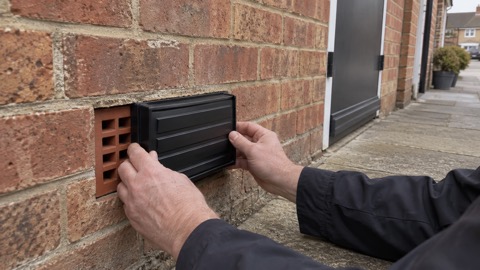 Property Flood Resilience Grants
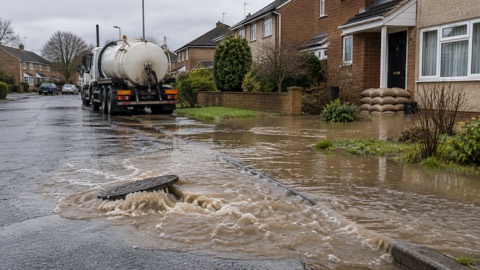 Guaranteed Standards Payments