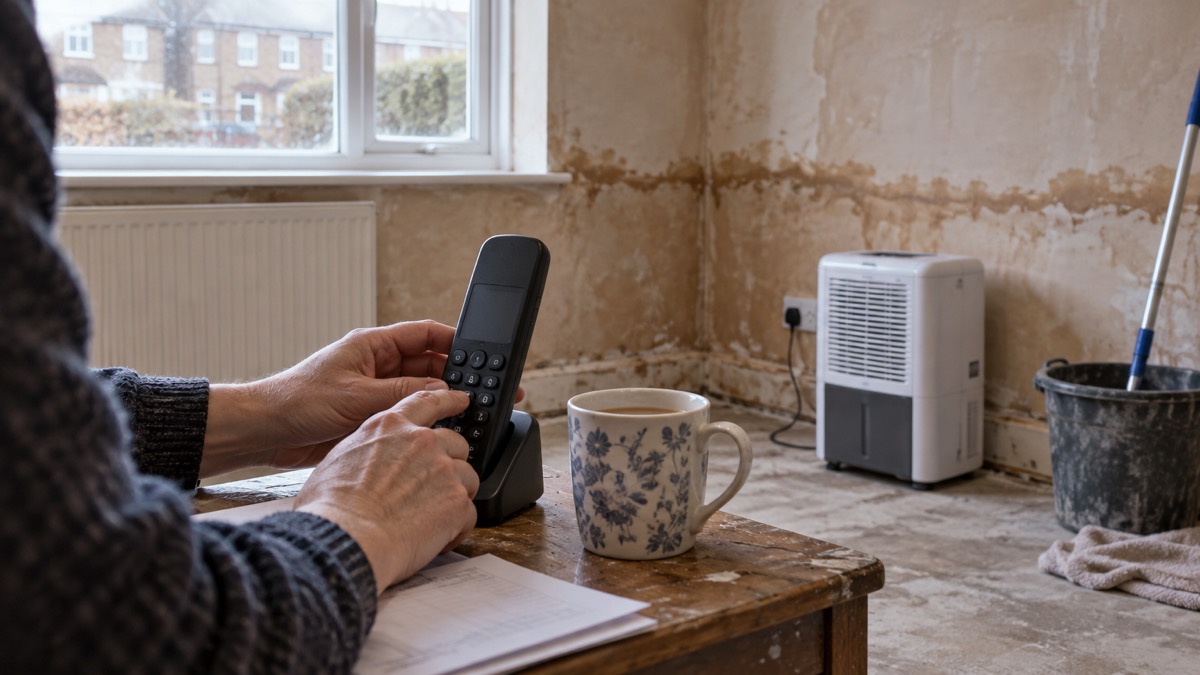
A flood is not over when the water goes down. Feeling tired, upset or anxious, or having difficulty sleeping, are normal after being flooded, and Public Health Wales advises that if you are worried about your own or someone else's mental health you should seek support from family and friends, your GP or other expert help1. This is not a sign of weakness or of coping badly: it is a documented, expected reaction to having your home and daily life disrupted, and it affects people even when their own home was not flooded2.
The most important things to know are these. Samaritans runs a free helpline on 116 123, available 24 hours a day, for anyone in emotional distress or struggling to cope2. If your distress continues over an extended period, visit your GP or call NHS 111, who can help identify further sources of support3. Official guidance for frontline responders says you should seek professional support if your distress lasts for more than 2 weeks without change4. And the National Flood Forum, a voluntary organisation funded in part by government, runs a helpline on 01299 403 055 that supports households on insurance, repairs and recovery5.
This page explains what reactions to expect, how to look after yourself and your family in the first weeks, when and how to get professional help, and the organisations you can turn to. It sits alongside our guides on returning home safely after a flood and cleaning up safely after floodwater, because the practical and emotional sides of recovery go together.
Why a flood affects your mental health
The reactions people report after a flood are consistent across official guidance from Wales, England and Scotland: tiredness, difficulty sleeping, anxiety, and feeling upset1. Nottinghamshire's flood recovery advice adds a practical warning that goes with them: do not overdo it when cleaning up7. Tewkesbury's flood recovery leaflet puts it plainly: "Flooding is stressful. It is normal to feel anxious, upset and experience sleeping difficulties."8
Several things about a flood feed this stress, and knowing them helps you make sense of what you are feeling. Wiltshire and Swindon Prepared lists the causes: disruption to your GP clinic and access to necessary healthcare, disruption to regular household activities, interruption to school facilities, and damage to your home and personal belongings2. Surrey County Council's guidance, reviewed in September 2026, adds the stresses that come after the flood itself: difficulties accessing continuing healthcare and prescription medications, disruption to normal household activities, loss of school facilities, seeking compensation and insurance claims, and loss of employment or income9. In other words, much of the strain arrives during recovery, not during the flood, and it can go on for weeks.
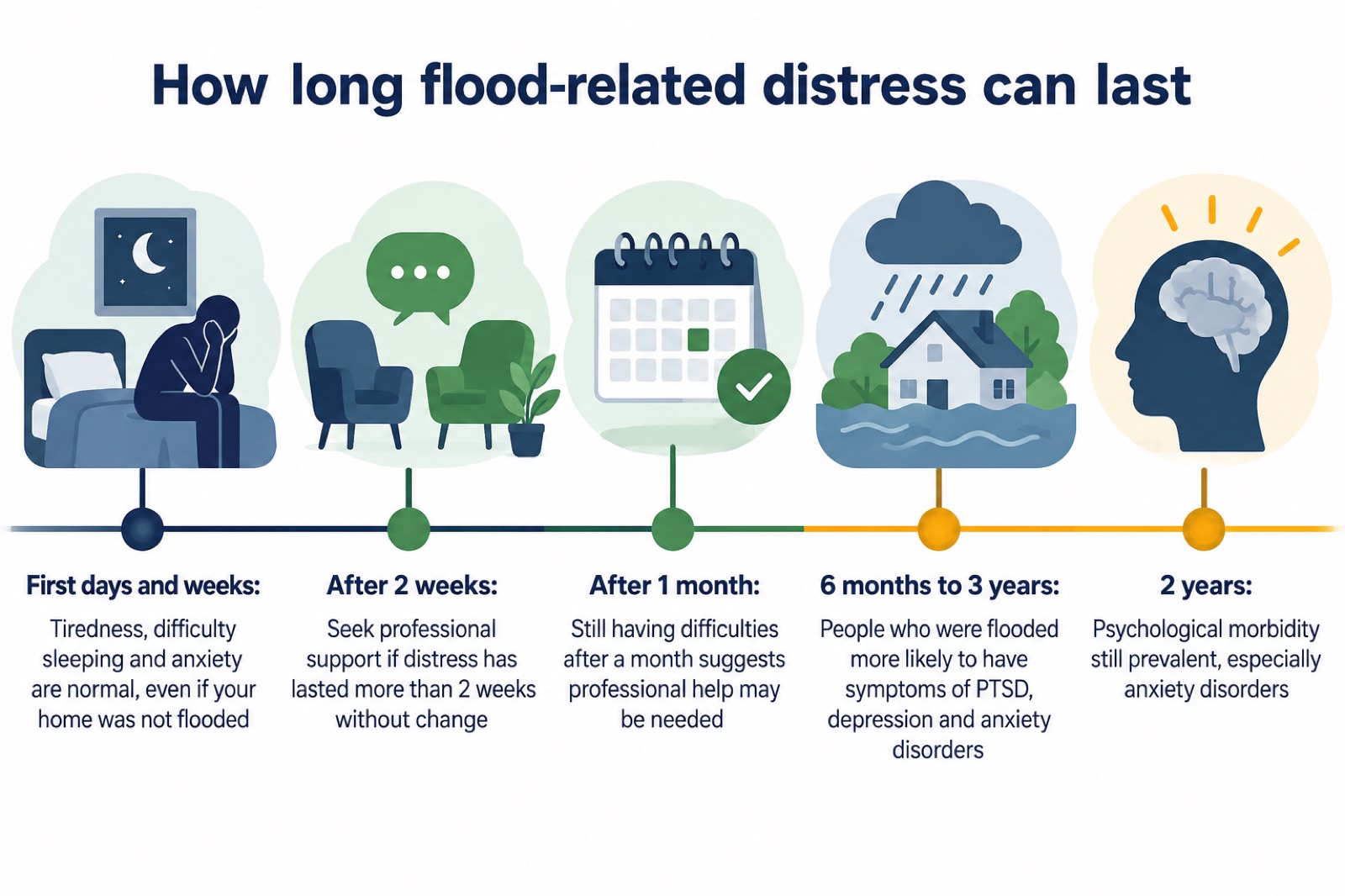
Two findings from the English National Cohort Study of Flooding and Health, cited in official government guidance, are worth knowing. First, people who had experienced flooding were more likely to have symptoms of post-traumatic stress disorder (PTSD), depression and anxiety disorders, including general anxiety disorder, between 6 months and 3 years following the event4. Second, symptoms suggestive of a mental health disorder were also found in people who lived in the vicinity of flooded homes or in a community affected by a flood event, but who were not directly flooded themselves4. So if you were cut off, helped neighbours bail out, or simply lived through the disruption, your reactions are just as real.
One more point from official health advice deserves emphasis. North Warwickshire's cleaning-up guidance states that "The main health hazard following flooding comes from the stress and strain of the event, not from infections."6 That is a strong statement from a health authority, and it reframes recovery: pacing yourself and protecting your mental health is not an optional extra after the practical work, it is the main health protection you can do.
Looking after yourself in the first weeks
The first weeks after a flood are a mixture of physical work, phone calls and displacement, and official guidance is consistent about how to get through them without wearing yourself down.

Wiltshire and Swindon Prepared gives the clearest short-term self-care advice: make time for yourself; go to a place where you feel calm and safe; take time to rest, relax, get sufficient sleep and eat healthily and regularly2. Runnymede Borough Council's flooding aftercare advice adds: remember to take care of your own wellbeing and do not try to tackle everything at once10. Scottish Borders Council says the same in its flooding advice: take time to look after your and your family's mental health and wellbeing, do not over exert yourself in the clean-up, and accept help and support11.
There is also advice on what not to do. Wiltshire and Swindon Prepared is specific: don't force yourself to go over the events, and don't pressure others to talk about events or their concerns2. People process a flood at different speeds, and being pushed to relive it can make things worse. Being available to listen is different from insisting on a conversation.
A practical checklist for the first weeks, drawn from official guidance:
- Take regular breaks during the clean-up and seek help from others where possible12
- Rest, keep to regular meals and get sufficient sleep, even if sleep is hard at first2
- Spend time somewhere you feel calm and safe, away from the damaged rooms if you can2
- Do not try to tackle everything at once10
- Accept help and support when it is offered11
- Do not force yourself or others to talk through the events2
- If you start to feel unwell while clearing up, contact your GP13
The clean-up itself is where many people overdo it. Nottinghamshire's easy-read flood recovery guidance warns directly: don't overdo it when cleaning up, because tiredness, difficulty sleeping and anxiety are normal after a flood14. If you are doing the physical work, our guide to cleaning up safely after floodwater covers the practical side, and the same rule applies there: the stress and strain of the event is the main health hazard, so pace the work around your capacity, not the other way round6.
Family, friends and neighbours: the support that helps most
Official guidance is unusually direct about what protects mental health after a flood. Surrey County Council states that support from families, friends and neighbours is key to helping to protect people from the negative impacts of flooding on mental health9. Wiltshire and Swindon Prepared says the same from the other direction: seek support from loved ones such as family, friends and neighbours to lessen the negative impacts of flooding on mental health2.
This is not just reassurance. Official guidance on staying healthy and safe after flooding states that support from families, friends and neighbours is key to helping to protect people from the negative impacts of flooding on mental health4. Among those affected by floods, 1 in 5 (22 per cent) received practical support from neighbours, family and friends in the immediate aftermath, and neighbours, family and friends were the most common source of support overall (24 per cent)15.
There are practical ways to support people safely. The Greater London Authority's flood awareness guidance suggests supporting family, friends and neighbours in a safe way, for example by checking their flood risk or signing up for severe weather alerts and flood warnings on their behalf15. That matters for people who are older, less confident online, or simply exhausted by recovery, and it is a concrete thing a neighbour can do. Our guides on checking your home's flood risk and how to sign up for free flood warnings explain how.
Devon County Council's flood recovery information adds the community dimension: if you are feeling nervous, stressed and strained after a flood, getting in touch with local community groups or neighbours may help you cope and recover16. Wiltshire and Swindon Prepared describes connecting with your local community as an important source of practical and psychological support, and notes you may be able to access support groups, local recovery hubs and community centres in your area2. After significant floods, local authorities often set up drop-in centres; Perth and Kinross Council's flooding checklist for residents advises seeing your GP or visiting the drop-in centre for details of help available if you feel overwhelmed17. If a drop-in centre exists where you are, it is worth visiting even if you feel fine: it is where you will find out what help exists locally.
If you want to go further and help your wider community, our guide to community resilience for neighbours and local groups covers how groups organise, and the psychological first aid training described later in this page is open to anyone.
Samaritans: free, 24 hours a day, on 116 123
Samaritans provides support to anyone in emotional distress or struggling to cope5. The helpline is free, available 24 hours a day, on 116 1232. You do not have to be in crisis to call, and you do not have to be the person who was flooded: the service is there for anyone struggling to cope, including family members supporting someone else.
Cornwall Council lists Samaritans on 116 123 among its 24-hour emergency numbers for mental health18, and Derbyshire County Council describes it as a 24-hour support service19. Buckinghamshire Healthcare NHS Trust advises that you can call Samaritans if you need confidential help immediately in a mental health crisis20. The UK government's national recovery guidance describes the organisation the same way: it "offers a 24-hour helpline for those in crisis"21.
Some local council pages also list an older Samaritans number, 08457 90 90 90, still available 24 hours a day7. The free 116 123 number is the one to use: it costs nothing to call from UK phones and does the same job.
"The Samaritans free helpline is available 24 hours a day on 116123."
If you need help immediately in a mental health crisis, Buckinghamshire Healthcare NHS Trust also advises calling your GP for an emergency appointment in certain circumstances: if you experience a mental health problem for the first time, if an existing condition suddenly gets worse, if you have self harmed but do not have a life-threatening injury, or if you experience or know someone who suffers from domestic violence or physical, sexual or emotional abuse20. In a crisis where life is at risk, call 999.
When to see your GP and how to reach specialist care
Most people's distress after a flood eases with time, rest and support. Official guidance sets out when to escalate.
The clearest threshold comes from government guidance for frontline responders: you should seek professional support if your distress lasts for more than 2 weeks without change4. The UK Health Security Agency's public advice says that if you have concerns about your own or others' mental health, or your distress continues over an extended period of time, you should visit your GP or call NHS 111, who can help to identify further sources of support3. Nottinghamshire County Council's after-a-flood guidance is simpler still: if you are concerned about your, or a family member's, mental health or any other health issue, make an appointment with your GP7.
| Situation | Who to contact | Source |
|---|---|---|
| Distress lasting more than 2 weeks without change | Your GP, or NHS 111 | 4 |
| Concerns about your own or others' mental health | Your GP, or NHS 111 | 3 |
| Feeling unwell while clearing up | Your GP | 13 |
| Vomiting, diarrhoea or skin irritations after contact with flood water | Your GP, NHS 111 or other health providers, telling them you have been in contact with flood water | 22 |
| Abdominal complaints within 10 days of exposure to flood water | Your GP, mentioning the flooding | 8 |
| Confidential help immediately in a mental health crisis | Samaritans on 116 123, or your GP for an emergency appointment | 20 |
A small proportion of people may require access to specialist mental healthcare. Official guidance is clear that this can be accessed through GPs or by self-referring to a local NHS Talking Therapies service2. Self-referral means you do not need a GP appointment to get started: you contact the service directly. In Herefordshire, for example, NHS Herefordshire and Worcestershire Talking Therapies is open to people who have felt stressed, anxious or depressed following the flood and would like psychological and emotional support24. Gloucestershire's wellbeing guidance adds that your GP may suggest you talk with someone who specialises in helping people cope with trauma and offer you a referral25.
Gloucestershire's guidance also gives a useful marker for children and adults alike: if you are still having difficulties after a month, you might need some help from professional sources, and the same applies to children whose feelings and behaviour are a worry a month after the event25. A month is not a deadline before which nothing should be done, but it is a point at which persisting symptoms deserve professional attention rather than more waiting.
If you feel unwell while clearing up, nidirect, the Northern Ireland government service, advises contacting your GP13. And if you or a family member develop vomiting, diarrhoea or skin irritations after contact with flood water, contact your GP, NHS 111 or other health providers and tell them you have been in contact with flood water22. Our page on floodwater and your health covers the physical health risks in detail.
British Red Cross emergency support after a flood
The British Red Cross runs an emergency response support service designed to meet the needs of people who have suffered damage to their home following a fire, flood or similar incident26. Its volunteers can provide emotional support and care for those affected while the emergency services manage the incident26. In practice, this means trained volunteers who can sit with you, listen and help you through the first hours and days, while the fire service, council and utilities deal with the physical incident.
Herefordshire Council's emotional support guidance after a flood lists the organisations to turn to: contact family and friends, your doctor, or an organisation like the Red Cross or the Samaritans if you need support24. The Red Cross is often present at rest centres set up when people are evacuated, and it can also be reached through the response to an incident rather than only through a helpline.
Government guidance for the voluntary and community sector adds a layer that may matter to your household: during flooding, voluntary and community sector organisations should offer referral for immediate mental health and emotional support for those displaced or distressed by the flooding where appropriate, and NHS mental health services are available online and locally23. So if you are displaced and distressed, asking any responder or council staff member at a rest centre for a referral to emotional support is a reasonable and expected request, not an imposition.
National Flood Forum: help with insurance, repairs and recovery
The National Flood Forum is a voluntary organisation, funded in part by the government, that advises individuals and communities on flood resilience and insurance27. It runs a helpline on 01299 403 055 that provides general support before, during and after a flood on issues including insurance, home re-instatement and home resilience5. Manchester City Council's after-a-flood guidance points people to the National Flood Forum's advice on coping with flooding when anxiety hits28, and London Fire Brigade notes that the National Flood Forum provides a step by step guide on what you need to do after a flood29.
This matters for mental health more than it might appear. Government guidance citing the English National Cohort Study of Flooding and Health states that people whose homes are flooded and who do not have home or contents insurance, or who find insurance processes stressful, experience worse mental health symptoms4. The insurance claim, the repairs and the worry about the next flood are themselves drivers of distress. Getting competent help with those processes is mental health support in a practical form.
The charity also runs Blue Pages, a directory of kite-marked flood resilience products, and is a contact for more advice on flood resilience and details of flood products27. Our guides on home insurance in a flood risk area, making an insurance claim after a flood and repairing a home so it recovers faster next time cover the same ground from the household side, and recovery grants and help if you are not insured sets out what exists when there is no policy to claim on.
Supporting children after a flood
Children react to floods too, and Scottish guidance from SEPA's flooding guide for communities is direct: "Remember, flooding can impact on your mental and physical wellbeing and can affect anyone of any age."30 Children may show distress through behaviour as much as words, and the disruption official guidance lists as stress factors, such as interruption to school facilities and damage to home and belongings, lands on children as much as on adults2.
The evidence on what helps is specific. Government guidance citing the English National Cohort Study of Flooding and Health reports that evidence suggests cognitive behavioural therapy (CBT) programmes delivered in collaboration with schools can help distress levels in children affected by floods, and may reduce depression and emotional or behavioural symptoms as well as symptoms of attention deficit hyperactivity disorder (ADHD)4. That tells you two things: school-based support has evidence behind it, and it is worth telling your child's school that your home was flooded so the school knows to look out for changes.
For knowing when to seek help, Gloucestershire's guidance gives the marker: the same advice applies to children whose feelings and behaviour are a worry a month after the event, at which point professional help may be needed25. Before that point, the same basics apply as for adults: support from family, friends and neighbours lessens the negative impacts of flooding on mental health2, and children should not be pressured to talk about the event before they are ready2.
If your household includes someone who needs extra help in an emergency, whether a child, an older relative or someone with a health condition, our guide to extra help in an emergency covers the support that exists, including the Priority Services Register.
Helping others: psychological first aid
If you want to support neighbours and community members in a structured way, psychological first aid (PFA) is the approach official guidance describes. Wiltshire and Swindon Prepared sets out what it involves when helping someone affected by flooding: assess the situation and ensure the person's circumstances are safe, and help them make contact with recovery agencies such as through the local authority or a flood warden; check there are no immediate physical health needs; check with them about their needs or concerns, and identify if any basic needs are not met, such as access to food, water, shelter and medication; help people contact their loved ones; listen, provide information if you have it, and help people make plans for next steps2.
Two rules come with it. First, before attempting to deliver PFA, it is important to complete training to develop relevant knowledge and skills2. There is an online course in PFA, as well as a specialised course to deliver PFA to children2. Anyone can be trained to deliver PFA4. Second, government guidance is clear about the limit: PFA is not, nor cannot, replace specialist care, and people should be referred for further support as needed4. Psychological first aid is about safety, listening and connection to services, not about providing therapy, and knowing where the line sits is part of doing it well.
How long the effects can last
Recovery from a flood is measured in months, not days, and official guidance is honest about that.
The English National Cohort Study of Flooding and Health, cited in government guidance, found that people who had experienced flooding were more likely to have symptoms of PTSD, depression and anxiety disorders between 6 months to 3 years following the event4. The same guidance notes that psychological morbidity was still prevalent 2 years after the event, especially for rates of anxiety disorders4. Government guidance for the voluntary and community sector describes the pattern across health overall: immediate risks include drowning, trauma and infections from contaminated water, while long-term effects may include respiratory illnesses due to mould growth and psychological distress extending beyond the flood event itself23. The UK Health Security Agency's public advice similarly lists longer-term mental health problems and chest problems due to exposure to mould and damp among the effects flooding may have3.
None of this means you should expect to be unwell for years. It means the effects of a flood are recognised as long-term in official guidance, so continuing symptoms months later are a known consequence with known routes to help, not a sign that something has gone wrong with you. The supports described on this page, from family and neighbours to your GP, NHS Talking Therapies and Samaritans, remain available however long the recovery takes, and the evidence-backed behaviours of staying physically active and fostering social connections are associated with fewer mental health symptoms following a flood throughout4.
If the prospect of a future flood is itself part of the worry, making a household flood plan and protecting your home can reduce the sense of helplessness that recovery often leaves behind, and our flooding household guide brings the whole subject together.
Sources (30)
- Flooding and health, Public Health Wales, 2026-07-31
- Flooding and health: mental health, Wiltshire and Swindon Prepared, 2026-10-25
- Flooding and health: advice for the public, UK Health Security Agency, 2024-03-13
- How to recover from flooding, UK Health Security Agency, 2023-12-19
- How to prepare for flash flooding, Greater London Authority, 2026-10-25
- Cleaning up after a flood: health advice, North Warwickshire Borough Council, 2024
- After a flood, Nottinghamshire County Council, 2026-10-29
- After a flood: flood recovery leaflet, Tewkesbury Borough Council, 2023
- Staying healthy and safe after flooding, Surrey County Council, reviewed 23 September 2026
- Flooding aftercare, Runnymede Borough Council, 2026-10-26
- Flooding advice, Scottish Borders Council, 2026-10-29
- Safely cleaning your home after flooding, Wiltshire and Swindon Prepared, 2026-10-25
- After a flood: clearing up, nidirect, 2026-05-06
- After a flood: easy read, Nottinghamshire County Council, 2025-11-02
- London Flood Awareness Week 2020, Greater London Authority, 2020-11-09
- Flood recovery information, Devon County Council, 2026-01-29
- Flooding checklist for residents, Perth and Kinross Council, 2024-08-01
- 24 hour emergency numbers, Cornwall Council, 2026-02-04
- Communities affected by flooding, Derbyshire County Council, 2026-10-29
- Emergency and urgent care, Buckinghamshire Healthcare NHS Trust, 2024-02-09
- National Recovery Guidance: humanitarian aspects, UK Government, 2013-02-20
- Flooding before, during and after: frequently asked questions, Nottinghamshire County Council, 2026-10-29
- Flood health action card for the voluntary and community sector, UK Health Security Agency, 2025-03-27
- Emotional support after a flood, Herefordshire Council, 2026-10-29
- How can I access professional help, and how do I know if I need it?, Gloucestershire County Council, 2023-08-22
- Steps after a fire, North Yorkshire Fire and Rescue Service, 2026-06-17
- Resilience and sandbags, Derbyshire County Council, 2026-10-29
- After a flood, Manchester City Council, 2026-10-29
- After a flood: flooding advice, London Fire Brigade, 2026-10-25
- Flooding guide for communities, Scottish Environment Protection Agency, 2026-10-29
 Flood Warning Checklist
 First Steps After a Flood
 Insurance Claim Records
 Checking Flood Risk by Postcode
 Types of Flooding
 Flood Alerts and Flood Warnings
 Flood Guidance Statement
 Wales Flood Warnings and Maps
 Making a Household Flood Plan
 Protecting Your Home
 Door Flood Barriers
 Sandbags and Alternatives
 Flood Doors and Windows
 Airbrick Covers
 Non-Return Valves and Bungs