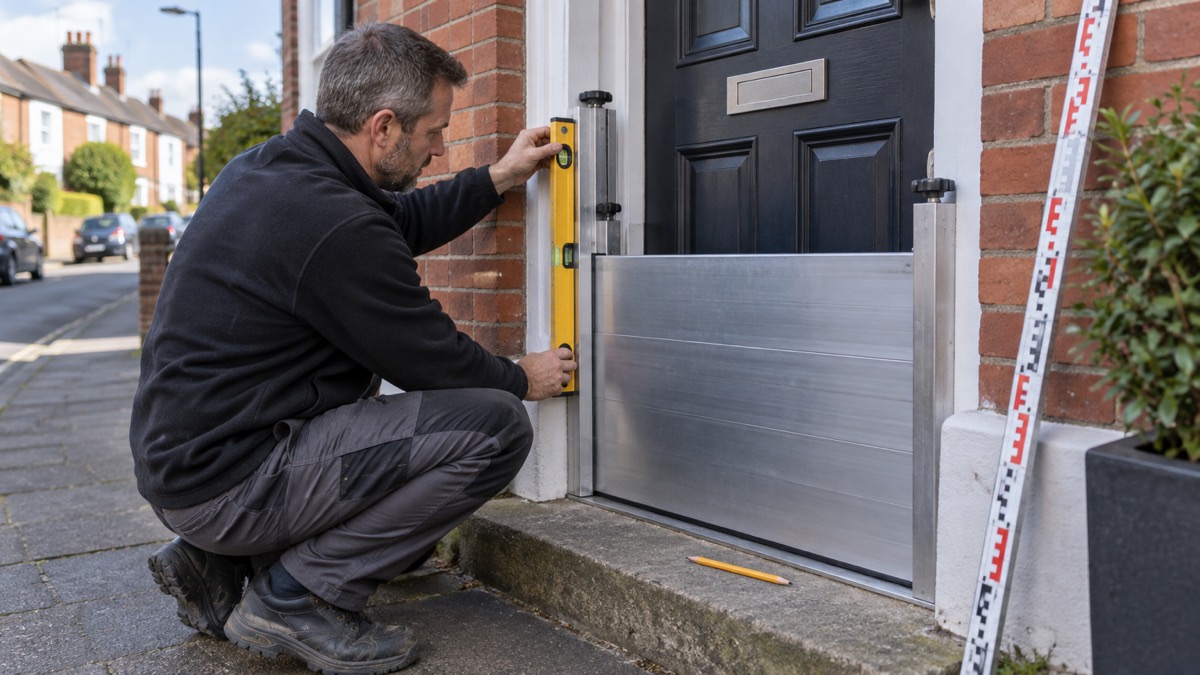
Fitting flood barriers and other property flood resilience measures usually starts with a survey, not a shopping trip. A property flood resilience survey looks at how water could get into your home and recommends measures suited to the type of flooding, the building and how you live in it1. In some council grant schemes the survey must be carried out by an independent, qualified building surveyor who has completed the CIWEM PFR Foundation training and who has no connection to any company that installs the measures2. Grants of up to £5,000 including VAT, covering survey costs as well as approved measures, are paid retrospectively in some schemes once the council receives proof of completed installation2.
Whether you can install a flood barrier yourself depends on the measure and the scheme. Simple barriers and flood boards can be a DIY job, and some householders have fitted their own measures successfully3. But barriers are at their most reliable when fitted correctly4, and in Northern Ireland the Homeowner Flood Protection Grant works differently: the Rivers Agency appoints a building surveyor to conduct a water entry survey, recommends protection measures, and an experienced contractor installs them5. If you are repairing after a flood, the Flood Re Build Back Better scheme offers homeowners the chance to install property flood resilience measures up to £10,0006.
This page explains what a survey covers, when professional installation is required, how to find your flood risk before choosing anything, and what to check once the work is done. For the wider picture of protecting your home, see protecting your home: resistance and resilience measures.
What a property flood resilience survey looks at
A property flood resilience survey starts from the risk and works through the building. The purpose is to identify products appropriate for the type of flooding, the property and the needs of the owners, which can include barriers on windows and doors, non-return valves, automatically closing airbricks and pump systems for groundwater flood risks1. The surveyor is matching the measure to the water, not selling you a standard kit.
The survey itself is a physical visit. The property is visited, all external areas must be accessible, photographs are taken to inform the report, and internal access may be required in some instances1. Before the visit, clear access around the outside of your house, including to doors, windows, airbricks, drains and any low-level openings, so the surveyor can see every possible water entry point.
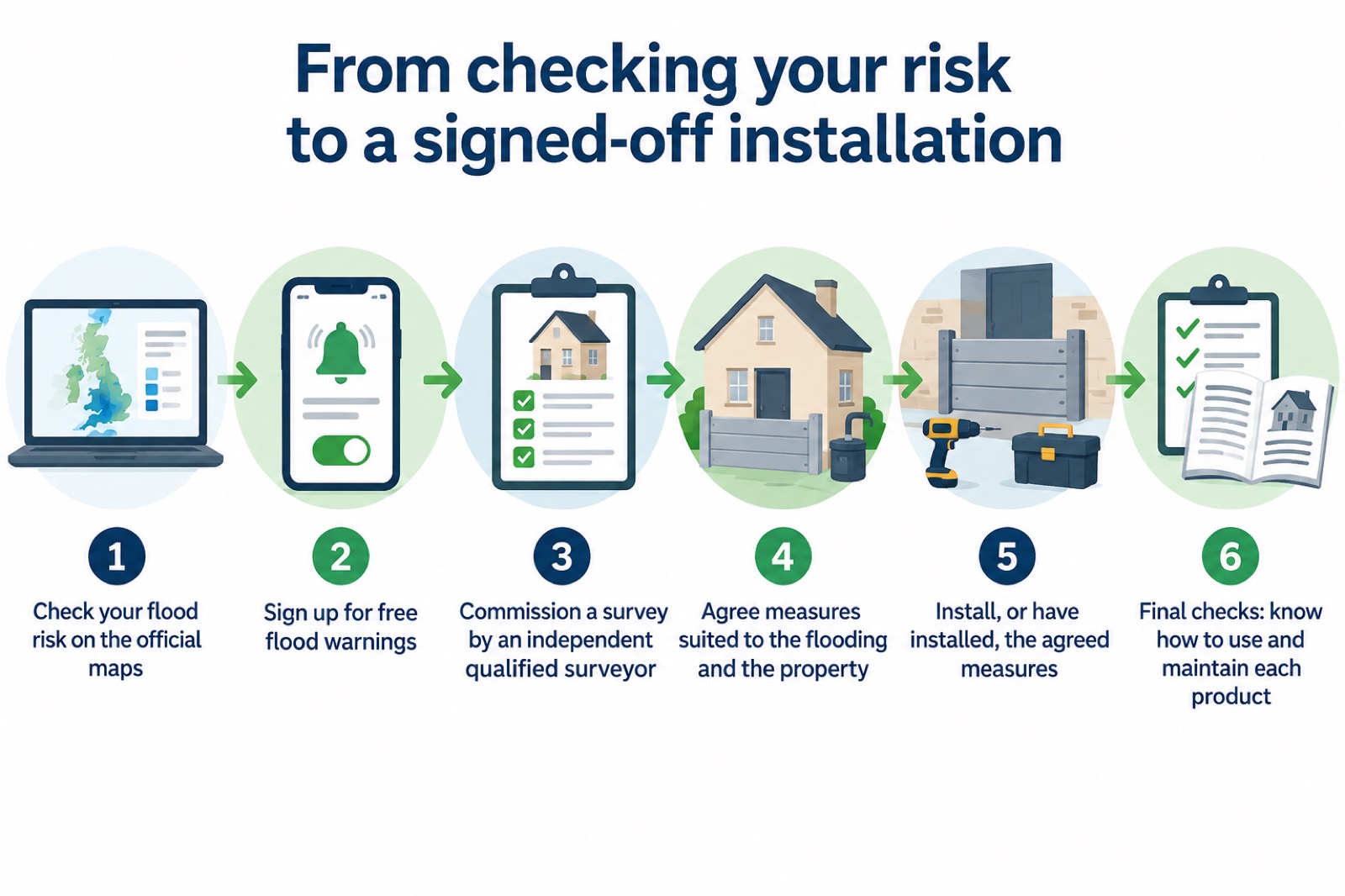
A full resilience scheme follows recognisable stages, and a good survey sits early in them. The key stages are: understanding the risk within a location and confirming property flood resilience is the most suitable and cost-effective approach; establishing the properties most at risk and inviting them; appointing consultants to survey entry points and recommend measures; sharing survey results with owners and seeking agreement; appointing contractors and arranging manufacture and installation; and final surveys to sign off and ensure owners know how to use and maintain the products9. If you are arranging a survey privately rather than through a scheme, you can still expect the surveyor to look at entry points and to explain how each measure is used and maintained.
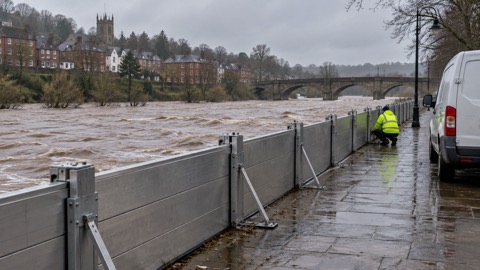
The survey will consider two broad families of measures. Resistance measures are fitted to the outside of a property, forming a physical barrier between the floodwater and the building, and include flood boards and doors, air brick covers, non-return valves and pumps. Resilience measures adapt the interior, and include waterproof plaster, solid or tiled flooring and raising electrical sockets10. Both matter: resistance keeps water out, resilience limits the damage when water gets in anyway.
| What the survey considers | What it leads to |
|---|---|
| How water reaches and enters the property | Barriers on windows and doors, pump systems for groundwater1 |
| External entry points: doors, windows, airbricks, drains | Flood boards and doors, air brick covers, non-return valves10 |
| The interior and how it would be damaged | Waterproof plaster, solid or tiled flooring, raised electrical sockets10 |
| The type of flooding and the owners' needs | Measures appropriate to the property and household1 |
| How measures are used day to day | Guidance on using and maintaining each product9 |
One point worth knowing before you commission anything: a free online tool can help you understand what a grant might fund, but it is not a substitute for a survey. Suffolk's grant scheme suggests using the Property Protection Advisor tool to better understand what the grant may be able to fund before engaging a surveyor, and states plainly that the tool's report should not be used to substitute a property survey2. Use the tool to prepare your questions, then have the real survey done.
Finding your home's flood risk before you choose any measures
No surveyor can help you until you know whether your home is at risk, and the responsibility for that sits with you. It is your responsibility to manage your own flood risk and protect yourself, your family, property or business: view flood maps, sign up to Floodline and know who to contact if flooding happens7. In Scotland the position is stated even more directly: individual property owners have primary responsibility for the prevention of flooding to their property11.
Start with the official flood risk tools. If you live in an area that has a risk of flooding, be prepared in advance: check whether your property is within a flood risk area, sign up for the Environment Agency's free flood warnings, listen to local radio for updates, and check your insurance policy for your property or speak to your landlord12. Our guide to checking your home's flood risk by postcode walks through the tools for each nation.
Two things about the data are worth knowing. The flood risk mapping behind the Environment Agency flood risk tool was updated on 28 January 2025, and that update may affect the flood risk listed for a property12. The tool also accounts for flood defences, although there may be a lag after new defences are built because it takes some time to remodel the flood risk12. So if a new defence scheme has appeared near you, the tool may not yet reflect it, and if your risk category changed in early 2025, an older assessment you were given may be out of date.
Once you know your risk, the measures follow from it. Look at your flood risk and adapt your home if you are at risk, for example by purchasing door guards, toilet stoppers and air brick seals13. Options residents commonly consider include self-closing air bricks, flood barriers for doors, flood doors and windows, flood-resistant kitchens, non-return valves, external wall sealants and flood water alarms14. Each of these has a dedicated page in this guide, from door flood barriers to non-return valves and toilet bungs.
Can you install a flood barrier yourself?
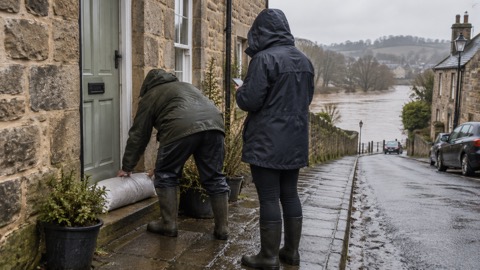
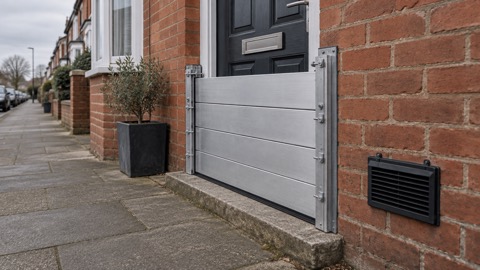
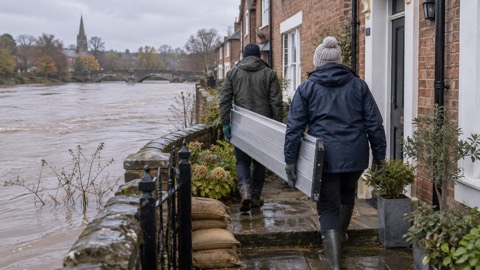
Sometimes, and it depends on what you are fitting and why. The most basic method is a strong wooden or metal barrier secured flat against the wall or frame surrounding a door or window, with the pressure of floodwater itself helping to seal the barrier15. Flood resistance in its simplest form can be sandbags, homemade flood boards or other more permanent measures to prevent water entering your property10. A householder with reasonable DIY ability can make and fit this kind of barrier.
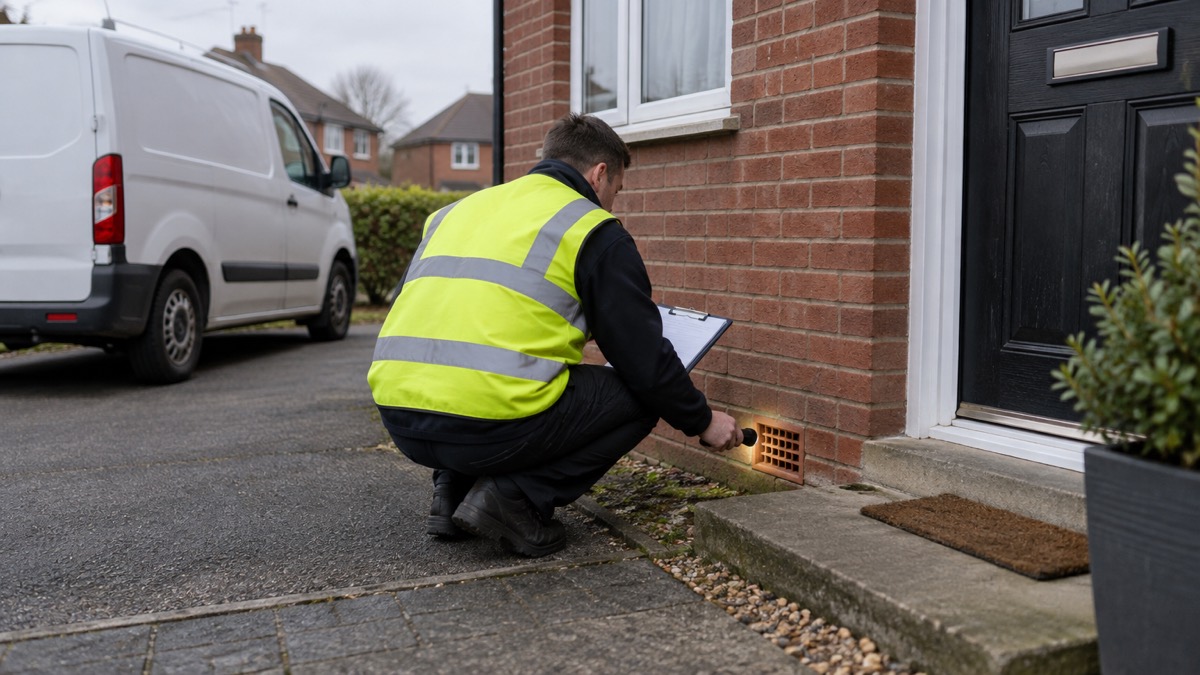
There is a real limit, though, and it is about reliability. Alternative products, such as barriers, often provide more effective long term protection, are more easily deployed and have greater reliability when fitted correctly4. The words "when fitted correctly" carry the weight: a barrier that does not seal against its frame, or that is fitted to a wall that lets water through anyway, gives a false sense of security. A survey exists precisely to establish where water will enter and what will actually hold it.
Householders do fit their own measures successfully. In Lancashire, Debbie had a flood barrier fitted to her basement door and window, self-closing airbricks, a non-return valve to a drain, and her side wall treated with a water repellent spray, paid for and installed herself using a bulk purchase discount arranged by her local flood action group3. Her case shows two things: self-installation is achievable, and a local flood action group can make it cheaper. Our community resilience guide says more about how such groups work.
Where a grant or scheme is involved, read the rules before lifting a drill. In Northern Ireland's Homeowner Flood Protection Grant, the Rivers Agency appoints a building surveyor to conduct a water entry survey and recommends protection measures, then an experienced contractor installs the recommended changes5. In Argyll and Bute's Property Flood Resilience project, no legal agreement is needed for a survey, but signing a legal agreement is required to have PFR measures installed, acknowledging that the council cannot accept any liability for the success or failure of the measures; there is no obligation to sign after the survey1. If you install measures yourself under a scheme, check whether it affects the grant payment or the product warranty.
One further point that shapes whether DIY is realistic: some resistance measures require active intervention by the householder during a flood event, such as the installation of a barrier16. Whatever you fit, you must be able to deploy it quickly, in the dark, in the rain, and you must be at home when the water comes. A professionally installed flood door or self-closing airbrick needs no one there; a removable barrier needs you. That difference matters more than who did the fitting.
Grants, surveys and who pays
Several funding routes exist, and most of them either require or include a survey. In Suffolk's Property Flood Resilience grant scheme, all property owners who wish to apply require a survey carried out by an independent, qualified building surveyor who must be independent from any company that installs PFR measures and who has completed the CIWEM PFR Foundation training2. Grants of up to £5,000 including VAT, including survey costs, are paid retrospectively to the property owner once the council receives proof of completed installation and invoicing for approved measures, and owners source their own surveyor2. Our property flood resilience grants page sets out the schemes in more detail.
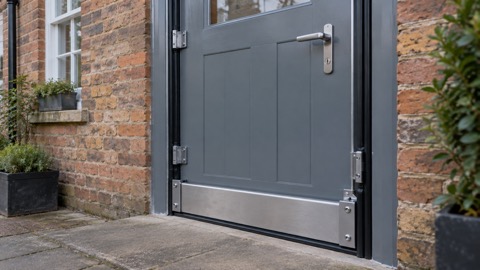
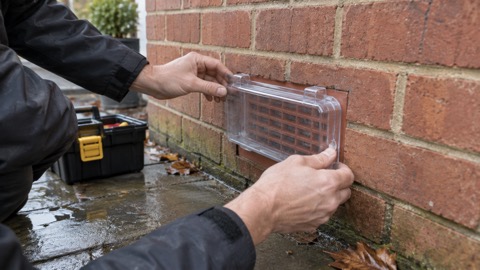
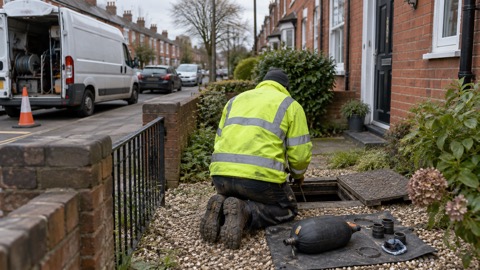
Devon's Property Flood Resilience funding scheme takes a similar shape: the sum includes a detailed flood risk assessment survey of the property, which will identify the required resilience measures, and the recommended products include flood doors and gates, temporary demountable barriers, pumps, airbrick covers and water resilient flooring17. In Northern Ireland, the Homeowner Flood Protection Grant can give owners financial help to install physical barriers and equipment, including door barriers, air brick covers, non-return drainage outlets and waterproofing walls5.
If you are repairing after a flood rather than preparing before one, different routes apply. You may be eligible for funding to help install property resilience measures through the Build Back Better scheme18, and Flood Re Build Back Better offers homeowners the chance to install property flood resilience measures up to £10,000 when repairing their properties after a flood6. See what Build Back Better means for a claim for how this works alongside an insurance claim.
Eligibility usually turns on demonstrated risk. Suffolk County Council works with the Environment Agency to obtain funding for PFR installations where there is a known significant risk of flooding to property, established through flood risk modelling studies or where a property has experienced flooding in the past9. If your home has flooded before, keep the evidence: it is often your route into a scheme.
| Funding route | What it covers | Survey requirement |
|---|---|---|
| Suffolk PFR grant scheme | Up to £5,000 incl. VAT, including survey costs, paid retrospectively2 | Independent qualified surveyor with CIWEM PFR Foundation training2 |
| Devon PFR funding scheme | Detailed flood risk assessment survey plus recommended measures17 | Survey included in the scheme17 |
| Northern Ireland Homeowner Flood Protection Grant | Door barriers, air brick covers, non-return drainage outlets, waterproofing walls5 | Rivers Agency appoints a building surveyor5 |
| Flood Re Build Back Better | Resilience measures up to £10,000 when repairing after a flood6 | Applies during post-flood repairs6 |
Checks after installation
The work is not finished when the installer leaves. In a well-run scheme, final surveys are carried out to sign off the installation and to ensure owners know how to use and maintain the products9. If you arranged the work privately, build your own version of that step: have each product demonstrated, and practice deploying it yourself.
Maintenance responsibility stays with you. In Argyll and Bute's scheme, although product warranties will be in place, the council cannot accept any liability for the success or failure of the flood resilience measures, and residents must accept responsibility for future maintenance and effectiveness1. That is the normal position for privately owned measures: the warranty covers the product, not the outcome.
What to check and keep doing:
- Confirm you can deploy every removable measure quickly, and that everyone in the household knows how16
- Store barriers where you can reach them in a hurry, and check them regularly; our barrier storage checklist lists the checks
- Keep the installation paperwork, invoices and warranty documents together for insurance and any future grant application2
- Maintain the exterior of the property, since basic maintenance is part of flood protection19
- Recheck your flood risk if defences or mapping change near you12
Flood alerts and warnings: what to do while the work is pending
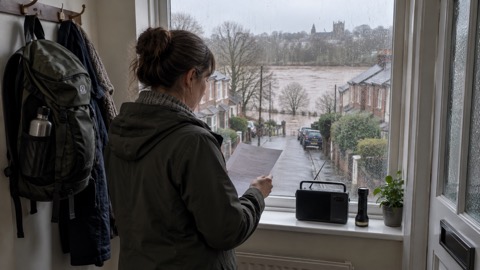
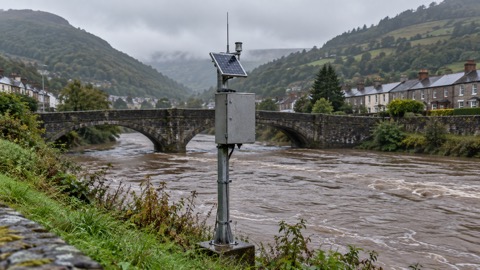
Measures take weeks to arrange, but warnings can arrive any night, so know the warning system now. In Scotland, a flood alert means flooding is possible and you should be prepared, and it is issued for all sources of flooding such as fluvial, coastal and surface water flooding20. Flood alerts are usually issued between 7am and 9pm, but there may be occasions where they are issued at any time of the day, for example when there is a change in forecast20. A flood warning in Scotland means immediate action is required: take measures to protect yourself and your property20. SEPA's flood monitoring scheme issues targeted flood warnings for properties located in affected areas if the residents are signed up20. Our page on flood alerts, flood warnings and severe flood warnings explains the levels for all nations.
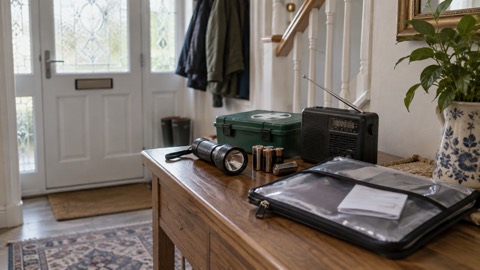
When a flood warning is issued, turn off your gas, electricity and water supplies if it is safe to do so21. Immediately before a flood, lift curtains over rails above flood water levels, use door guards or air brick covers, move important items to safety, lift rugs and smaller furniture upstairs or on to tables or worktops, get your flood kit together, move pets and vehicles away from flood areas, and make sure mobile phones or devices are charged22. See our checklist when a flood warning is issued.
For flash flooding, sign up to Met Office weather warnings, since surface water flooding can arrive with little notice6. A household flood plan can include signing up for flood alerts, knowing how to turn off your utilities in an emergency, and having sandbags or other flood barriers ready to deploy15. Our household flood plan page shows how to write one.
Where to get independent help: the National Flood Forum
You do not have to work all of this out alone, and the best source of independent help is a charity. The National Flood Forum is a charity that supports those at risk of flooding with independent advice and support8. It provides general support before, during and after a flood on issues including insurance, home re-instatement and home resilience, through a helpline18. It also offers advice on how to make your home more flood resilient10.
The National Flood Forum also runs the Blue Pages Directory, where you can buy flood protection products and find service providers8. Because the Forum is independent of the installers, it is a sensible place to start before you commit to a surveyor or a product, and a good place to check that a recommended measure suits your kind of flooding.
In October 2026 the National Flood Forum welcomed its role in the new Flood and Drought Resilience Taskforce, which brings together government departments, charities and industry organisations. During Flood Action Week the Forum published guidance on preparing for winter flooding, listing the official flood risk check websites for England and Wales. Local flood action groups are another layer of help: Debbie's group in Lancashire arranged a bulk purchase discount that let her fit her own measures3, and Colette, also in Lancashire, formed a local flood action group after adapting her detached house with flood doors, sealed brickwork, wall-mounted fires and cupboards, interlocking waterproof flooring, sealed pipes and 100 absorbent packs placed around the house which swell up and block water3. Councils can point you to groups in your area, and some publish community flood group resources23.
Preparing your home before winter flooding
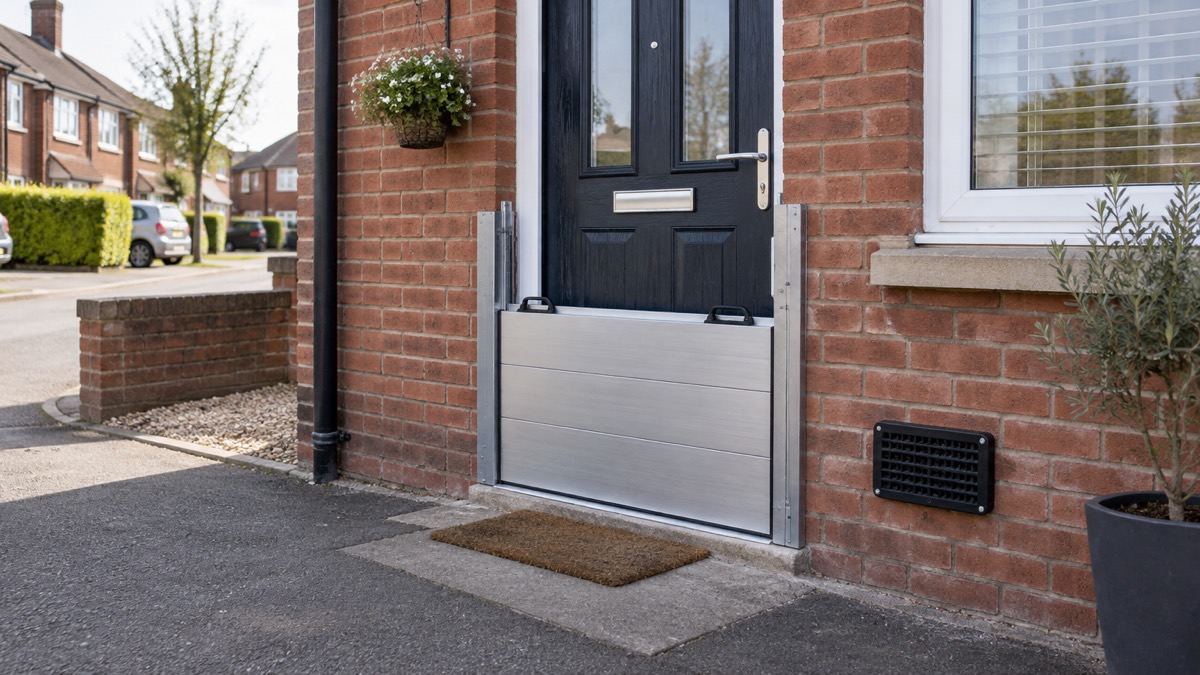
Winter is when most flood schemes and grants see demand, so start early. Make sure you buy or construct the barriers you need as soon as possible and do not postpone the project indefinitely8. If your property is at risk of flooding, have some sandbags or floodboards or plastic covers prepared to block doorways and airbricks13, and make sure your insurance provides cover against flood damage to property13. Our home insurance in a flood risk area page covers Flood Re and what to check.
Beyond barriers, a range of home improvements reduce flood damage, and many can be folded into ordinary renovation work. Official Northern Ireland guidance lists measures including: permeable paving surfaces on driveways and pathways; replacing the bottom two steps on your staircase with concrete; creating an easy access store for flood barriers and blocks; fitting stainless steel, plastic or solid wood kitchens or free-standing kitchen units; placing white goods on raised plinths; installing lightweight doors with rising butt hinges; using ceramic tiles on the ground floor with waterproof adhesive and rugs instead of fitted carpets; placing valuables on high shelves and keeping documents upstairs with wall mounted TVs; installing service vent covers and automatic airbricks; moving vehicles to high ground as soon as possible; moving the boiler to an upper floor or wall-mounting it on the ground floor; separating electrical circuits for upper and lower floors; installing closed-cell insulation in the cavity and lime plaster instead of gypsum plaster; and installing a flood resistant front door and replacing wooden frames with man-made ones like UPVC5.
The overall approach is best understood as four strategies: prevent water getting into your property; delay flood water from getting into the building; limit the damage to furniture, electricals, walls, floors, fixtures and fittings; and make it easier, faster and cheaper to clean up and recover from flood damage21. A survey and professional installation serve the first two; the interior adaptations serve the last two. Our page on repairing a home so it recovers faster next time develops this.
One older but still relevant technique is wrapping a property, covering walls and openings with suitable sheeting before water arrives. The process requires some DIY ability, plenty of suitable materials and enough time to construct the wrapping prior to the property being affected by flooding15. It is not a last-minute measure, which is the honest lesson of most flood protection: almost all of it works only if it was arranged before the water came.
Sources (23)
- Property Flood Resilience Questions and Answers, Argyll and Bute Council
- Property Flood Resilience Grant Scheme, Suffolk County Council
- Property Flood Resilience Case Studies, Derbyshire County Council, 2024
- Types of Risk: Flooding, Dorset Prepared, 2025-08-11
- How to Protect Your Home from Flooding, nidirect (Northern Ireland government), 2025-12-18
- London Flood Awareness Week: How Prepared Are You for Flooding?, Greater London Authority
- Personal Responsibility for Flooding, Derbyshire County Council, 2026-10-29
- Apply for a Property Flood Resilience Grant, Lincolnshire County Council, 2026-10-29
- PFR Website Case Study, Suffolk County Council, 2025
- Flood Risk in Anglesey: Be Prepared, Isle of Anglesey County Council, 2013-07
- Flood Advice, Argyll and Bute Council, 2026
- Flood Recovery Information for Suffolk, Suffolk County Council, 2026-10-29
- Preparing for a Flood, nidirect (Northern Ireland government), 2025-09-11
- Flood Recovery Support, Argyll and Bute Council, 2026
- Damage Limitation Guide, Dover District Council, 2001-09
- Preparing for Flooding, Somerset Council, 2026-10-28
- Property Flood Resilience Funding, 2nd edition, Devon County Council, 2023-07
- Protecting Your Property, National Flood Forum
- Flooding FAQs, SEPA, 2026-10-29
- About Flood Alerts and Warnings, SEPA
- Help During a Flood, GOV.UK, 2026-10-25
- Personal Flood Plan, GOV.UK, 2023
- Community Flood Group Resources, Cambridgeshire County Council
 Flood Warning Checklist
 First Steps After a Flood
 Insurance Claim Records
 Checking Flood Risk by Postcode
 Types of Flooding
 Flood Alerts and Flood Warnings
 Flood Guidance Statement
 Wales Flood Warnings and Maps
 Making a Household Flood Plan
 Protecting Your Home
 Door Flood Barriers
 Sandbags and Alternatives
 Flood Doors and Windows
 Airbrick Covers
 Non-Return Valves and Bungs