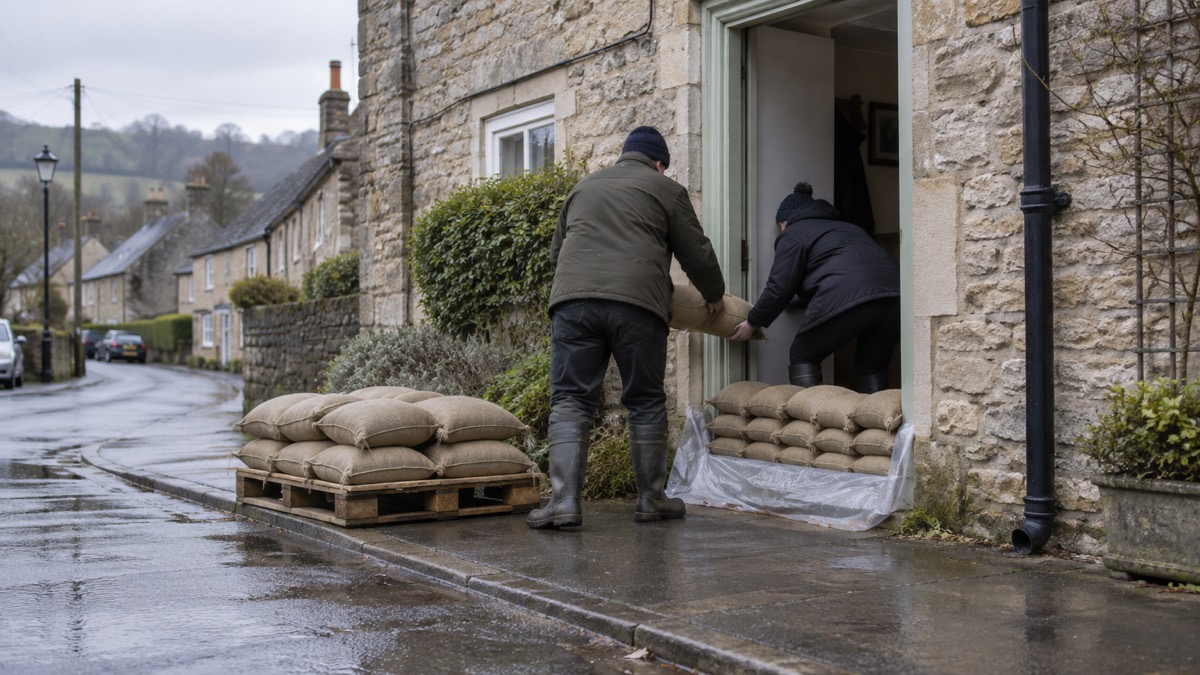
Sandbags are cheap and widely available, and they will hold back a few inches of water for a while. But they are not a match for purpose-made flood protection. Government guidance is blunt: sandbags are "relatively ineffective when compared to purpose-designed flood protection products", and they are of no use if the property is already flooded1. A fitted door barrier, by contrast, is designed to seal an opening and keep water out to a stated depth.
That does not mean sandbags have no place. They are a sensible low-cost first line, especially if you have left it late or cannot fit a permanent barrier. The practical answer for most households is to understand what each does, buy or prepare the one that suits your risk and your budget, and know how to use it before the water arrives.
This page sets out where to get sandbags, how many you need, how to lay them so they actually work, and where their limits lie, so you can decide between sandbags and a door barrier with your eyes open.
| Sandbags | Door barrier | |
|---|---|---|
| Cost | Low, but you need a lot of sand | Higher upfront |
| Lead time | Can be bought or improvised quickly | Needs measuring and fitting, or a stock item kept ready |
| Labour | High: filling, carrying, stacking | Low once fitted or deployed |
| Depth held | A few inches for a while2 | Designed to a stated depth |
| Reuse | Bags degrade over time17 | Reusable with checks |
| Suits | A quick first line, or a low risk | A doorway you expect to flood repeatedly |
Where to get sandbags, and what your council will and will not do
The first thing to know is that no one is obliged to hand you sandbags. A county and district council handbook is explicit that councils "do not have a duty to provide sandbags", though they may hold limited supplies for vulnerable residents who cannot provide for themselves5. Natural Resources Wales tells households to contact their local authority, which may have some available during a flood, and otherwise to buy their own from DIY stores and builders' merchants7.
In practice, council policies vary widely. Some will try to help properties at risk; others will not supply householders at all. The table below shows the range of approaches on record.
| Council or body | What it says about sandbags |
|---|---|
| Carmarthenshire County Council | Will endeavour to deploy sandbags to properties deemed at risk of floodwater8 |
| Nottinghamshire County Council | May have limited supplies for vulnerable residents unable to provide for themselves5 |
| Oxfordshire County Council | Sandbags only in response to emergencies where public highway flooding occurs9 |
| Exeter City Council | Does not provide sandbags to householders; buy from local builders' merchants10 |
| West Devon Borough Council | Does not provide sandbags to residents; buy from builders' merchants, DIY stores or garden centres, and some town and parish councils hold a supply10 |
| Highland Council | Recommends early action; sandbags available from most local builders' merchants11 |
The lesson is to check your own council's policy now, not during a warning. Derbyshire County Council warns that it "can never guarantee to be able to deliver sandbags in time to protect a property when flooding is actually occurring"4. Lincolnshire County Council advises obtaining sandbags from a local supplier for faster support if water is likely to enter your property12. Filled sandbags are available from some builders' merchants4, and you can buy sandbags and other flood defence products from most DIY stores13. The fire service does not provide sandbags, but notes your council might, in limited amounts14.
If you want to understand the full picture of who is responsible for what, see Who Manages Flood Risk: Agencies, Councils and Water Companies, and for the council question specifically, Does the Council Have to Provide Sandbags?.
How many sandbags a doorway needs
The number depends on the depth of water you expect and the width of the opening. Government guidance gives two useful benchmarks. You need at least 6 sandbags to keep out 20cm of water at a standard door opening3. A sandbag wall up to 60cm high and 1 metre long takes approximately 80 filled sandbags3.
Weight is the constraint most households underestimate. Each sandbag needs approximately 15kg of sand3, so 50 sandbags will require 1,000kg of sand or soil2. That is a tonne of material to buy, move and stack, often in the rain and against the clock. Filling sandbags and building a wall is a physically demanding activity, and everyone involved needs to be fit enough to do the work3. Filled sandbags are heavy, and even heavier when wet, so take care when lifting or seek help1.
A few practical points follow from those figures:
- Decide your target depth first. Six bags per door is a floor, not a target. If your risk assessment suggests deeper water, you need more bags and a taller wall.
- Buy sand and bags together. Empty bags are useless without fill, and fill is heavy to transport.
- Stage materials close to the door. Do not fill bags at the far end of the garden and carry them wet.
- Have help arranged. Two people make light work of a job that is punishing alone.
If you are weighing up how much protection to buy, our guide to Sandbags and Sandless Alternatives sets out the options, and How to Fill and Lay Sandbags at a Door walks through the job step by step.
Laying sandbags across a doorway so they work
A pile of bags tipped against a door will leak. Laid properly, sandbags form a wall that sheds water and slows seepage. Government guidance sets out the method3:
- Clear the area of debris so the bags sit flat.
- Put down a large sheet of heavy-duty plastic between the sandbags and the wall of your house if you can. This is the seal that makes the difference.
- Place bags lengthways, tucking the open end under the filled half, pointing into the direction of water flow.
- Lay them like a brick wall, so there is no gap at the joints, using a half-filled or three-quarter-filled bag at the start of a row15.
- Face seams and bag mouths inwards, because that is where moisture enters the bags3.
- Shape each bag into a rectangle before laying it, and use half-filled bags to stagger the joints3.
- Compact each row with your feet after laying it15.
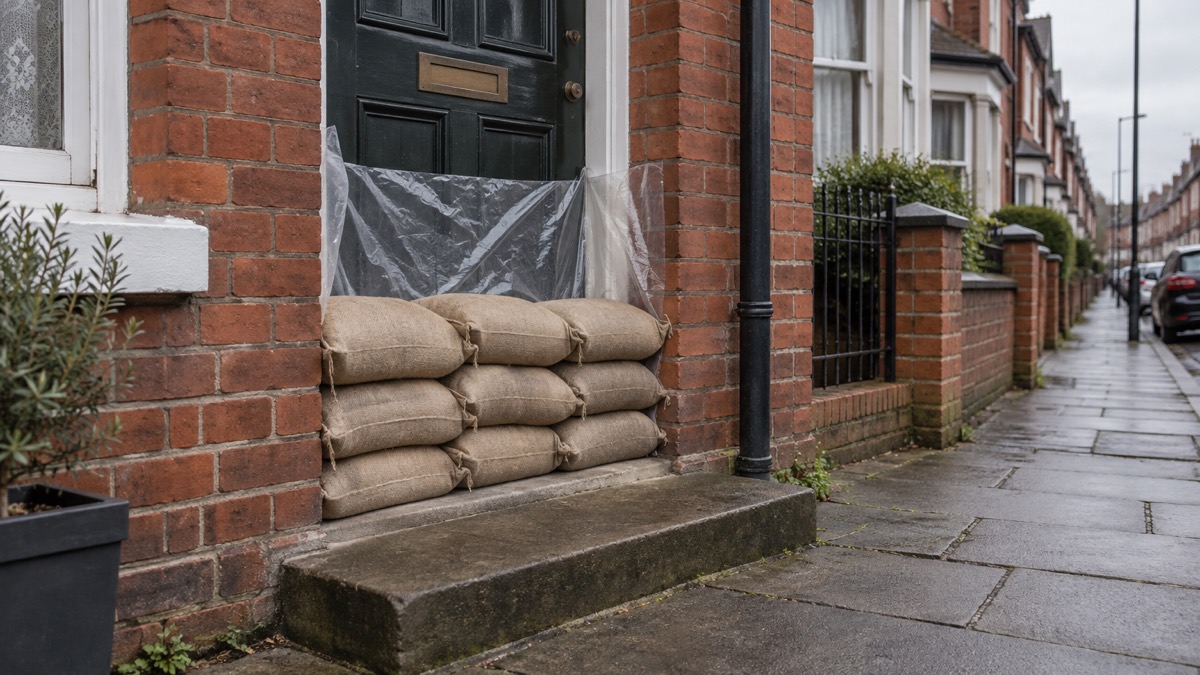
Northern Ireland guidance adds that you should decide how high the wall or dam will be, and place plastic sheeting in front of the opening, taping it in position if required15. The plastic sheet matters: sandbags may not hold back water unless a waterproof sheet is placed under them16.
Sandbags or a door barrier: how each one blocks water
Both approaches aim to stop water entering, but they work in different ways and to different limits.
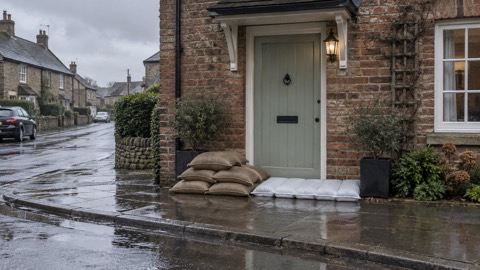
Sandbags form a temporary barrier you build on the day. They will stop a few inches of water for a while before water seeps through, and the deeper the water gets, the quicker it will seep through2. They can be expensive, heavy, difficult to transport and labour intensive to assemble into flood defence barriers16.
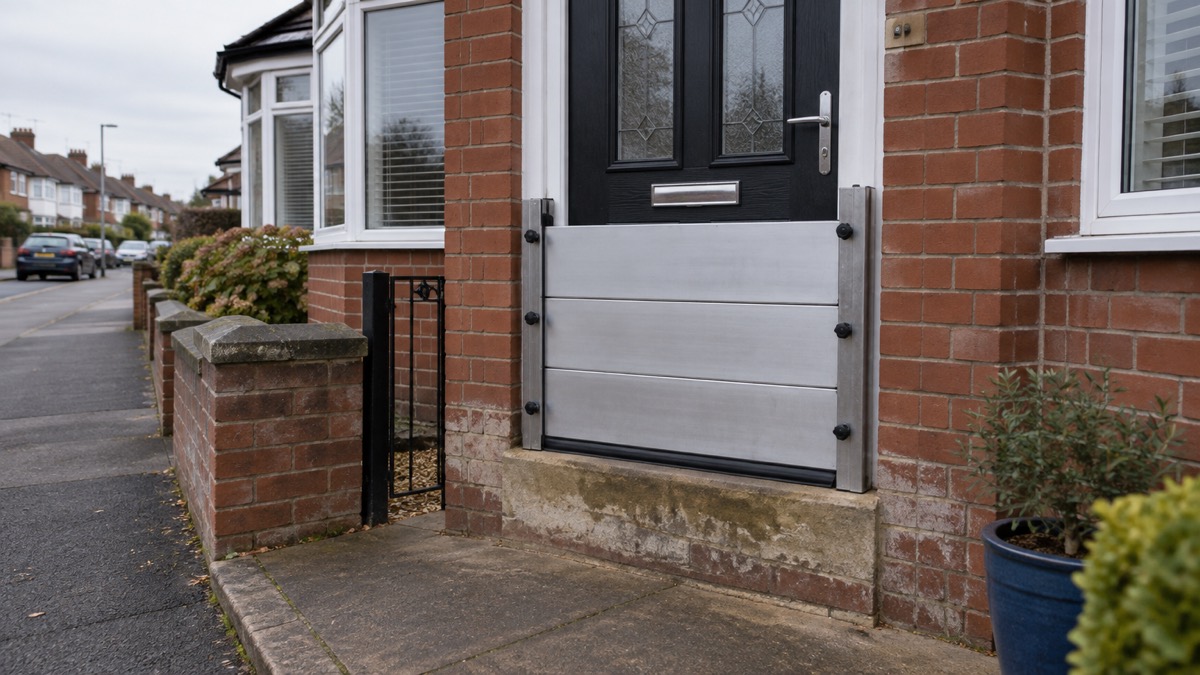
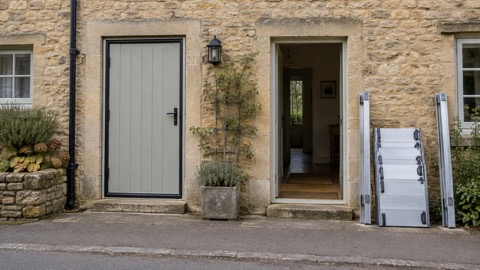
Door barriers are purpose-made products that seal an opening. Official guidance lists water-resistant barriers and doors alongside sandbags as flood resilience products, and notes that purpose-made flood boards for doors, windows and air bricks will be more successful than sandbags for minimising floodwater entering a property6. A barrier is fitted or deployed to a stated depth, and it stays in place without the labour of building a wall.
The choice comes down to your circumstances:
For a doorway that floods more than once, a barrier is the more reliable investment. Our guide to Door Flood Barriers: Types and How to Choose explains the options, and Door Barriers or Flood Doors for a Home compares the two permanent approaches. If you are weighing sandbags against absorbent bags, see Sandbags or Absorbent Bags at a Doorway.
What sandbags cannot do
Sandbags are a compromise, and it helps to be clear about where they fail.
- They seep. They stop a few inches of water for a while, but the deeper it gets, the quicker it seeps through2.
- They need a sheet. Without a waterproof sheet underneath, they may not hold back water at all16.
- They are no use once you are flooded. They are of no use if the property is already flooded18.
- They are relatively ineffective compared with purpose-designed flood protection products19.
- They are hard work. They are heavy, difficult to transport and labour intensive to assemble16.
- They are not supplied everywhere. Councils will not provide them to properties at negligible risk, already flooded, sheds, garages, gardens and outbuildings, residents who can buy their own, or businesses18.
That does not make them worthless. For a household facing a low risk, or caught short before a barrier can be fitted, a well-laid sandbag wall with a plastic sheet is far better than nothing. But if your home is at repeated risk, the evidence points to purpose-made protection as the better use of your effort.
Airbricks, storage and disposal: the jobs around the sandbags
Water gets in through more than doors. Airbricks are a common entry point, and plastic covers to seal them are a recognised measure14. Short wooden boards can be nailed over airbricks22, and purpose-made airbrick covers can stop flood water coming in23. Remove any coverings once the flood has passed, because ventilation is essential to dry wall cavities6. For the permanent alternatives, see Airbrick Covers and Self-Closing Airbricks.
Between floods, look after your stock. Unused sandbags can be kept in a dry, shady place for reuse, though the bag material normally breaks down over time; empty sacks should be kept dry and the sand stored in the garden or yard17. Sandbags that floodwater did not reach can be stored for future use24. A small stock of empty sandbags and sand, available from builders' merchants and hardware shops, is worth keeping25.
After a flood, disposal is your responsibility8. Check with your local council about how to dispose of used sandbags26. Options include taking them to a household recycling centre, or emptying the sand and keeping it for the garden while putting the empty bags in your normal waste bin27. Do not put full sandbags in your wheelie bin1. Used sandbags may be contaminated, so wear gloves when disposing of them2, and if you dig sand into the garden, wear protective gloves and do not spread it on lawns or use it in children's sandpits24. If bags must be stored temporarily while awaiting disposal, lay them out to dry rather than stacking them19. For the full process, see How to Dispose of Used Sandbags.
Making your own, and what to do when a warning comes
If you cannot get sandbags in time, you can improvise. Official guidance suggests compost bags, carrier bags or pillowcases filled with sand or earth, rolled-up mats or carpets, bags of garden compost, or timber boards screwed to door frames and sealed with mastic, with a plastic sheet first as an extra seal28. One fire service notes that if you have left it too late, pillowcases filled with soil can be used as makeshift sandbags29. Do not overfill bags, or fill them too far from where you want to position them, because they get heavy quickly3.
When a flood warning is issued, act early. Highland Council recommends taking early action if your home may be at risk11. Have your sandbags, floodboards or plastic covers ready to block doorways and airbricks30. Keep sandbags to block doorways and short wooden boards to nail over airbricks22. If you have not already, check your home's risk with Checking Your Home's Flood Risk by Postcode and sign up for warnings through How to Sign Up for Free Flood Warnings.
For the wider picture, our Flooding: A Household Guide covers preparing, responding and recovering, and Protecting Your Home: Resistance and Resilience Measures sets out the full range of measures. If you are deciding between a barrier and a flood door, Door Barriers or Flood Doors for a Home compares them directly.
Sources (30)
- Flooding before, during and after: frequently asked questions, Nottinghamshire County Council
- Sandbags, Derbyshire County Council
- Sandbags and how to use them properly for flood protection, GOV.UK, 2009-03
- Resilience and sandbags, Derbyshire County Council
- Derby and Derbyshire flood warden handbook, Parwich Parish Council, 2019-11
- Damage limitation guide, Dover District Council, 2001-09
- Preparing for a flood, Natural Resources Wales
- Get prepared, Carmarthenshire County Council
- Our policy on sandbags, Oxfordshire County Council, 2026
- Who to contact about flooding, Devon County Council, 2026-06-16
- Flooding, Highland Council, 2026-02-04
- Report a flood, Lincolnshire County Council
- Personal responsibility, Derbyshire County Council
- Safety: severe weather conditions, Devon and Somerset Fire and Rescue Service
- Household flood plan, nidirect, 2018-12
- Flooding FAQs, SEPA
- Flooding advice, Belfast City Council
- Preparing for a flood | Nottinghamshire County Council, Nottinghamshire County Council
- How to recover from flooding, GOV.UK, 2023-12-19
- Further support after a flood, Nottinghamshire County Council
- Protecting your property from flooding, Met Office
- Flooding advice, Belfast City Council
- Before, during and after a flood, Suffolk County Council, 2021-05
- Clearing up after a flood, Oxford City Council
- Flooding Advice, Mid and West Wales Fire and Rescue Service
- After a flood, GOV.UK
- After a flood: clearing, nidirect, 2026-05-06
- Preparing for flooding, Somerset Council
- Thunderstorms weather warning: advice and information, nidirect
- Preparing for flooding, Surrey County Council
 Door Barriers or Flood Doors
 Sandbags or Absorbent Bags
 Submersible vs Suction Pumps