If floodwater has got into your cellar, basement or across a ground floor, a pump is the tool that gets it out. But the first rule is timing, not equipment. Councils and fire and rescue services across the UK give the same instruction: only pump out water when the flood level outside your property has started to fall below the level inside. Pumping sooner can damage the structure of the building1.
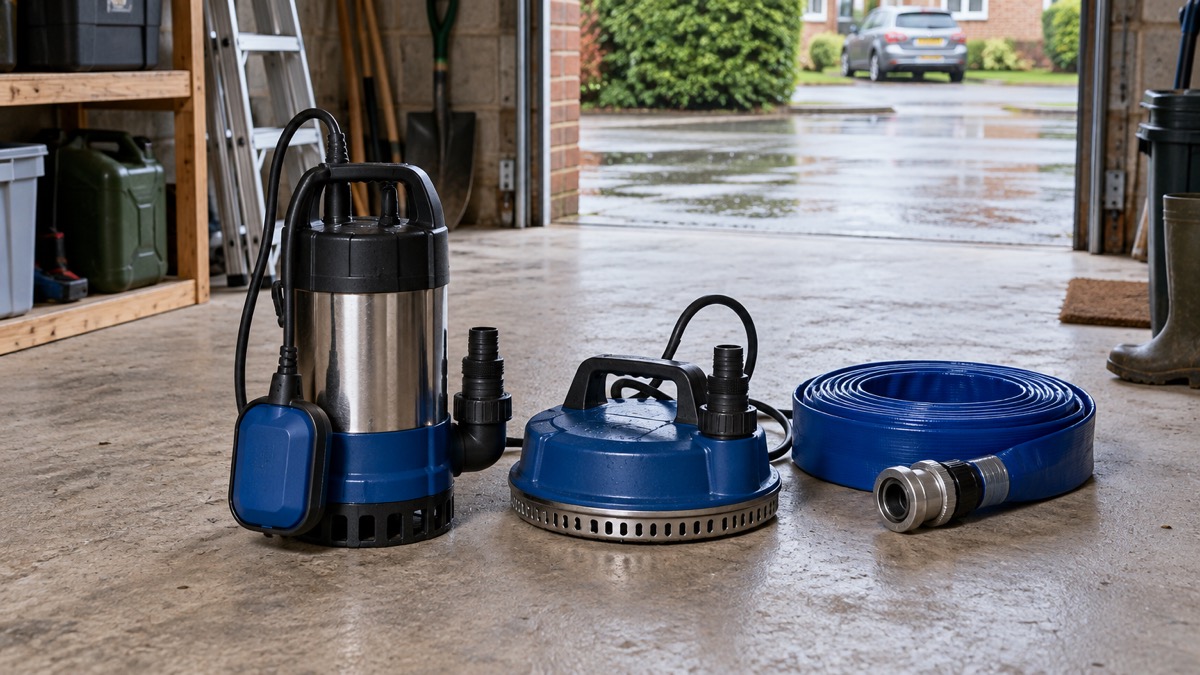
Once that point is reached, the choice is usually between two kinds of pump. A submersible pump sits down in the water and pushes it up and out, which suits a cellar with a good depth of standing water. A flat suction pump is designed to draw water down to the last few millimetres, so it finishes the job on a floor or in a shallow puddle. Many households use one and then the other.
Whatever you use, the electricity comes first. Official advice is not to use mains powered appliances in flooded areas until a registered electrician has confirmed it is safe, and never to touch electrical sources while standing in floodwater3. Get the supply switched off safely, then plan the pump, the hose and where the water will go before you start.
Wait for the floodwater outside to fall before you pump
The single most important decision is when to start. Herefordshire Council's flood safety advice is that you should only pump out water when flood levels outside your property start to be lower than inside, and that this reduces the risk of structural damage1. Lancashire County Council gives the same instruction in almost the same words2. Suffolk's flood booklet puts it as a direct prohibition: do not pump out water until levels outside your property are lower than inside8.
The reason is the water pressure on the building. A flooded cellar is full of water, and the ground around it is saturated too. Empty it while the outside water is still high and the walls and floor can be pushed or lifted by the difference in pressure. Waiting until the outside level drops keeps the two sides closer together.
Fire and rescue services explain the same constraint from their side. Dorset and Wiltshire Fire and Rescue Service says there has to be a certain level of water before it can be pumped away, and it must be pumped somewhere without detrimental effect elsewhere, often meaning waiting until the rain has stopped or the river level has fallen4. In other words, even the professionals wait.
How long that takes depends on the type of flood. Groundwater flooding is much slower to occur than river or surface water and can take days or weeks to appear after heavy rainfall, so the water table may stay high long after the rain stops9. If your flooding is groundwater, expect to wait longer before pumping is sensible, and read Groundwater Flooding: Why It Lasts and What Helps for what actually shifts it.
Submersible or flat suction pump: how each one behaves
Both types move water from a low point to a higher discharge point, but they work in different conditions and leave different amounts behind.
A submersible pump is lowered into the water. The motor and the pump are sealed in one unit that runs underwater, so it can sit at the bottom of a cellar or a sump and push water up a hose. It suits standing water of some depth, and it can run for long periods as long as it stays submerged. It is not designed to run dry, and it will not clear the last shallow layer on a floor.
A flat suction pump draws water up through a hose or inlet and pushes it out. The Centre for Alternative Technology notes that suction pumps are limited to a depth of a few metres, so they cannot lift water from deep underground10. That limit matters in a cellar: the pump body sits at floor level or above, and the inlet hose goes down into the water. A flat suction pump is built to keep drawing as the water gets very shallow, which is why it is used for the final pass.
| What you need to do | Submersible pump | Flat suction pump |
|---|---|---|
| Clear a cellar with deep standing water | Suits this: sits in the water and pushes it up and out | Works, but the lift is limited to a few metres10 |
| Clear the last few millimetres on a floor | Leaves a shallow layer behind | Designed for this final pass |
| Run unattended for hours | Can run while submerged | Check the maker's instructions on running time |
| Handle muddy, gritty water | Depends on the model; grit wears the impeller | Depends on the model; a filter helps |
Neither type is a substitute for the timing rule. Both should only start once the outside level has fallen1.
Flat suction pumps for the last few millimetres of water
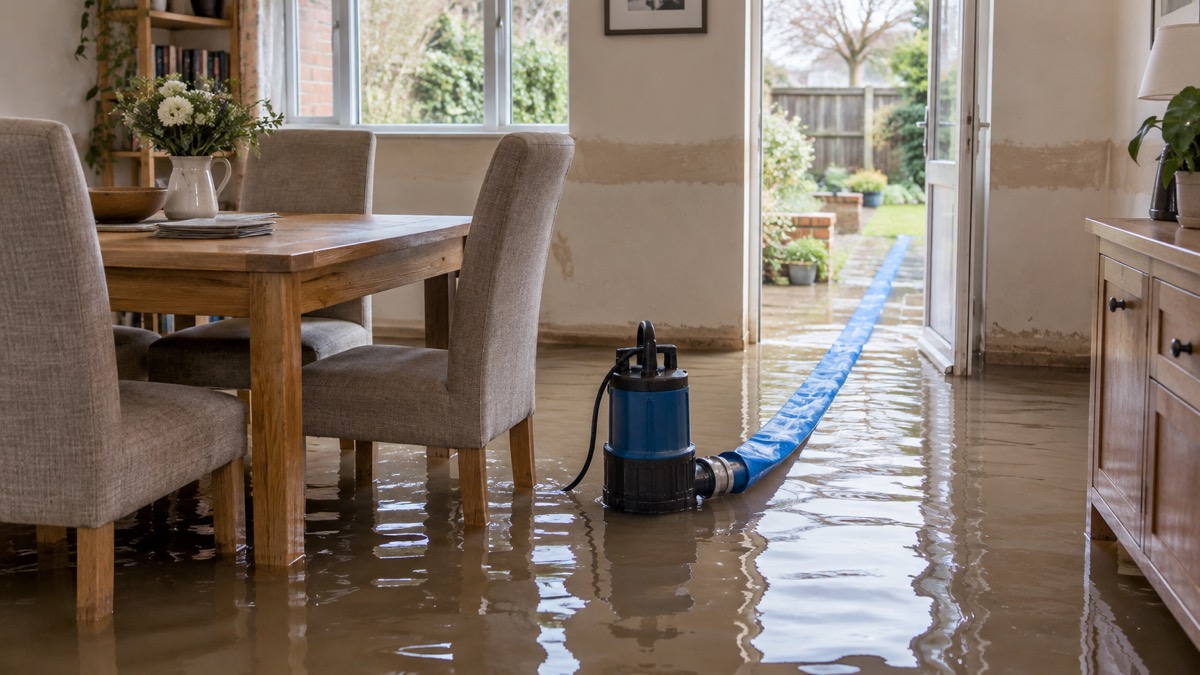
The final stage of clearing a flooded floor is the hardest, because most pumps stop drawing once the water is too shallow. A flat suction pump is made for exactly this: it keeps pulling water from a very thin layer rather than needing a depth to float or cool in.
The sequence that works is set out in Surrey County Council's advice on recovering from a flood. All standing water must be removed before you can properly move into your home, particularly from the under floor area. Use a pump or buckets followed by a wet and dry vacuum, then shovel out mud and hose out or use a garden sprayer3. The flat suction pump is the pump stage of that sequence; the wet and dry vacuum takes over where the water is too thin even for it.
Two practical points decide whether this stage goes well. First, the flatter the floor, the better a flat suction pump performs, so sweep the water towards the inlet rather than chasing it around. Second, the water you are removing at this stage is dirty. Expect silt, grit and debris, and check the inlet filter regularly, because a blocked inlet is the most common reason a pump stops drawing.
Electrical safety when pumping in a flooded home
This is the section that matters most, because a pump is an electrical appliance and you are proposing to use it in a wet room. Official advice is consistent and firm.
Do not switch on electrical appliances that have been in contact with floodwater until a qualified electrician has checked them, because there is a risk of electrocution11. Do not use any mains powered electrical appliances in areas affected by flooding until advised by a registered electrician that it is safe to do so3. North Wales Fire and Rescue Service states it plainly: do not touch sources of electricity when standing in flood water5.
Before the water arrives, or as soon as it is clear it will, turn off your gas, electricity and water supplies if it is safe to do so12. If your electricity supply is not already switched off at the mains, get a qualified person to do this, and do not touch sources of electricity when standing in flood water8. Never attempt to turn off the electricity supply while standing in water14.
Afterwards, the same rule runs in reverse. Get an approved service engineer to check your gas, electricity and water before turning them back on14. Have all electrical circuits fully dried out and checked by an electrical engineer before switching back on14. Derbyshire County Council adds that a registered electrician should assess affected wiring, equipment and appliances15.
"Do not switch on electrical appliances that have been in contact with floodwater until a qualified electrician has checked them as there is a risk of electrocution."
The practical consequence for pumping is this: if the electrics in the flooded room have not been checked, a mains pump is not an option there. Use buckets, a wet and dry vacuum on a circuit that has been checked, or wait for an electrician. For the wider sequence, see Turning Off Gas, Electricity and Water Before a Flood and Is It Safe to Turn the Electricity Back On?.
Where a petrol pump must never run
A petrol driven pump, or a petrol generator powering an electric pump, solves the problem of a power cut or a dead circuit. It also introduces a danger that kills people every year: carbon monoxide.
A petrol engine must never run indoors, in a cellar, in a garage attached to the house, or anywhere the exhaust can drift into living space. Carbon monoxide is colourless and has no smell, and it builds up in enclosed spaces. Run a petrol pump outside, well away from doors, windows and air bricks, and never bring it inside to keep it dry or safe from theft.
The same applies to generators used to power pumps. Keep them outdoors, never connect them to your home's wiring yourself, and follow the maker's instructions for your model. For the wider picture on running appliances without mains power, see Backup Power at Home: A Household Guide.
There is a second reason to think carefully about petrol pumps in a flood. Fuel and floodwater do not mix, and storing petrol safely during an emergency is its own problem. If your only reason for a petrol pump is a cellar that floods occasionally, a mains submersible pump plus a plan for a power cut may serve you better.
Setting up the pump, hose and discharge point
A pump is only as good as its set-up. Work through this in order, before you switch anything on.
- Confirm the outside level has fallen below the level inside, so the water you pump out has somewhere to go.
- Make sure the electrics are safe. The supply should be off, and the circuit you intend to use should have been checked by a registered electrician3.
- Decide where the water will go and get any permission needed (see the next section)6.
- Position the pump at the lowest point, on a flat, firm surface, with the inlet clear of silt.
- Run the hose to the discharge point with as few bends as possible, and secure the end so it cannot whip free.
- Check the hose joints before starting, and keep them out of the water where you can.
- Start the pump and watch it for the first few minutes, then check the inlet and the discharge regularly.
The kit you want to hand is close to a standard flood kit: a torch, waterproof clothing, wellingtons, rubber gloves and a first aid kit, kept upstairs if possible12.
What can go wrong: blockages, dry running and dirty water
Most pump failures are predictable, and most are avoidable.
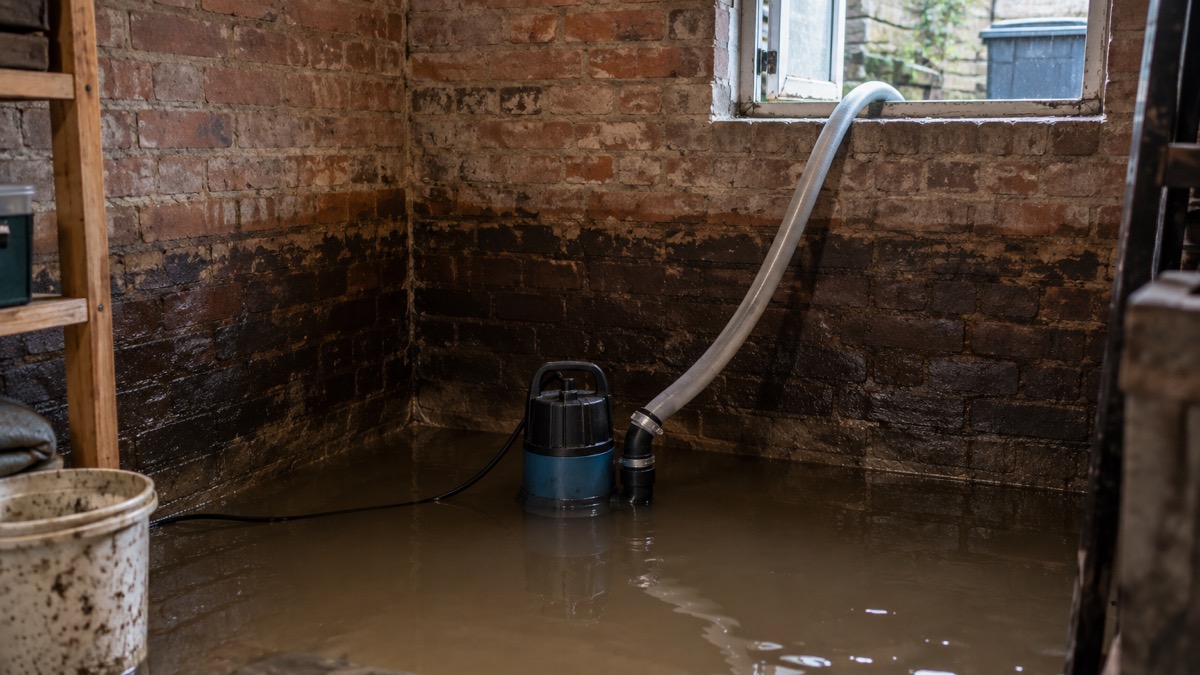
Blockages. Silt, leaves and debris clog the inlet. Lancashire County Council's point about drains applies to pump inlets too: removing leaves and debris that cover the top of your grids helps prevent blockages2. Check the inlet every so often and clear it before it stops the flow.
Dry running. A submersible pump that is left running after the water has gone will overheat and can be damaged. Watch the water level and switch off when the pump starts to draw air.
Dirty water. Floodwater carries sewage, chemicals and animal waste7. That affects you as much as the pump: gloves, boots, covered cuts and thorough washing. It also means the water you discharge is dirty, which is why the destination matters.
The wrong destination. Pumping water somewhere it can flow back, or into a neighbour's garden, makes the situation worse. Nottinghamshire County Council warns that care should be taken on where the water will be pumped out to, as potentially the situation could be worsened16.
A recalled product. Check any pump you own or hire against product safety notices. One example is the recall of Tucson pumps, electrical circulating pumps for heating systems, published on 8 October 202517. Read the notice and follow its instructions if you have one.
Where to send pumped water
The destination is a permission question, and the answer depends on where the water is going. GOV.UK's flood help page sets out who to ask6.
| Discharge point | Who to check with |
|---|---|
| Public sewers | Your water company6 |
| Rivers, ditches or watercourses (for example a brook or mill stream) | Your local Environment Agency office6 |
| Street drains, highways or highway ditches | The local highways authority or National Highways6 |
If none of those applies, a garden or soakaway downhill and well away from buildings is the usual fallback, provided it will not run back into your property or a neighbour's. Think about where the water will actually end up, not just where the hose points.
Getting help from your insurer, council and fire service
You do not have to do this alone, and the right first call depends on what you need.
Your insurer. Contact your insurance company as soon as you can, so you claim correctly. They may be able to provide financial assistance for blowers and skips, and recommend reputable contractors18. For the claim itself, see Making an Insurance Claim After a Flood.
The fire service. Somerset Council advises contacting the Fire Service for help pumping out water from your property13. Natural Resources Wales says you can ask your local fire service to help pump water out, or give you advice on how to do this, and that they might charge a fee7. GOV.UK adds that your local fire brigade can help you get a permit6. Availability varies: Nottinghamshire County Council states that it is unable to assist with the pumping out of individual properties, because its pumps are used for helping to alleviate flooding and protect infrastructure where many properties will benefit16. Ask your own service what it can do.
Hiring a pump. Pumps can usually be hired from local tool hire companies, though care should be taken about where the water will be pumped out to16. Decide the destination before you hire.
Your council. Councils publish flood advice and recovery guidance, and can point you to grants and support. See Recovery Grants and Help If You Are Not Insured and Property Flood Resilience Grants.
For the full recovery sequence after the water is out, work through After a Flood: Returning Home Safely and Cleaning Up Safely After Floodwater.
Sources (18)
- Staying safe in a flood, Herefordshire Council, 2026
- Flooding support, Lancashire County Council, 2026
- Flooding after, Surrey County Council, 2026
- Flooding safety, Dorset and Wiltshire Fire and Rescue Service, 2023
- Flooding and high winds, North Wales Fire and Rescue Service, 2026
- Help during a flood, GOV.UK, 2026
- What to do after a flood, Natural Resources Wales, 2026
- Before, during and after a flood, Suffolk County Council, 2021
- Groundwater flooding, Wiltshire and Swindon Prepared, 2026
- Reducing water use, Centre for Alternative Technology, 2025
- Flooding and health, Public Health Wales, 2026
- Flooding advice, Mid and West Wales Fire and Rescue Service, 2026
- During flooding, Somerset Council, 2026
- Flooding, Cornwall Council, 2026
- Cleaning up and returning home after flooding, Derbyshire County Council, 2026
- During a flood, Nottinghamshire County Council, 2026
- Product recall: Tucson 5m, 6m and 8m pumps, GOV.UK, 2025
- Be prepared, Lancaster City Council, 2026
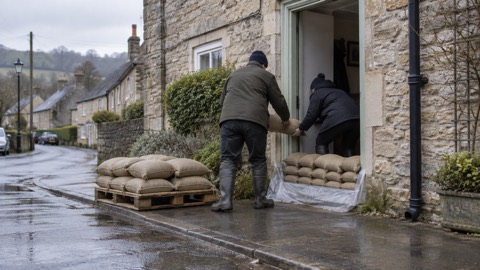 Sandbags or Door Barriers
 Door Barriers or Flood Doors
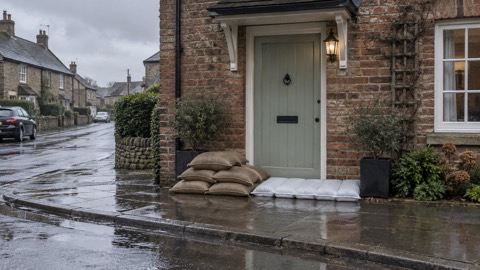 Sandbags or Absorbent Bags