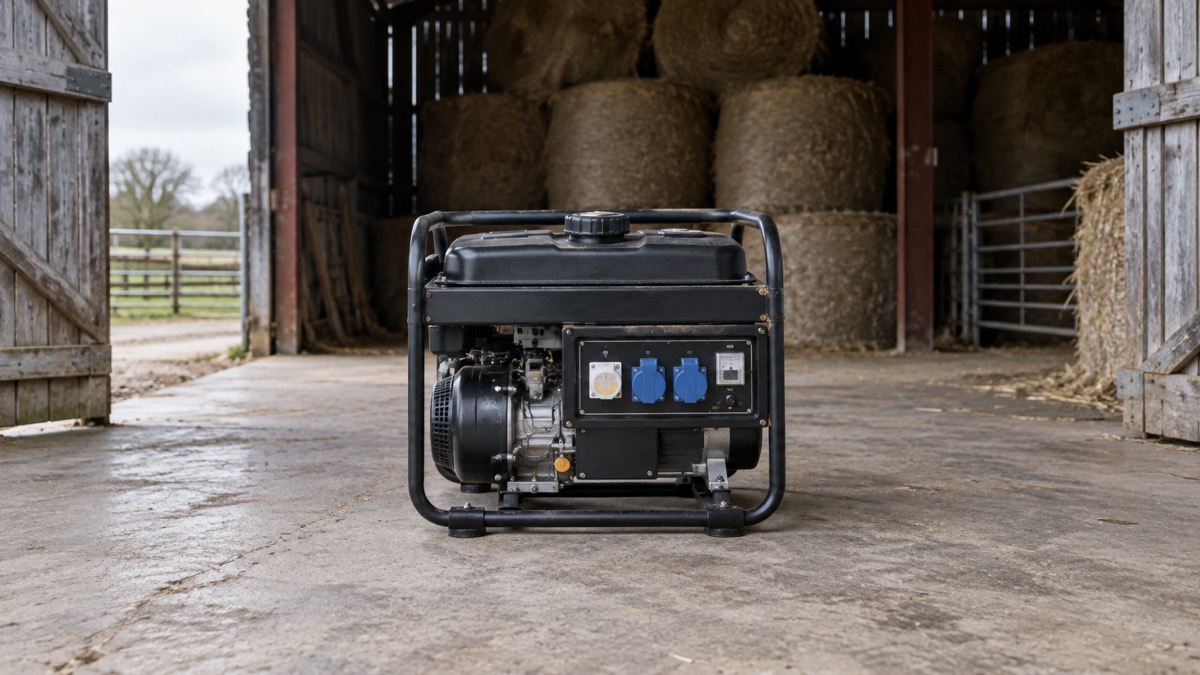
A portable generator is an engine that makes electricity, and for a household facing a long power cut it can keep a fridge cold, a phone charged and a few lights on. Clarke's guidance is that a generator can provide temporary emergency power during a power cut, with smaller models supporting selected items such as lighting, phone chargers, a refrigerator or freezer, and larger models running additional equipment within their rated capacity1. But a generator is also the most demanding piece of backup kit you can own, because it burns fuel, makes exhaust and produces serious electrical output. The Health and Safety Executive warns that using petrol powered equipment such as generators indoors or in enclosed spaces can create significant levels of carbon monoxide which can kill even after a few minutes2.
So before anything about brands or outputs, two rules come first. Never run a generator inside your home, garage or any enclosed space. And never connect one to your household wiring yourself: if you connect your own generation, this must be done by a qualified professional3. If the power is already off, call 105 for free and you will be put through to your electricity network operator4. This page explains the types of generator you can buy in the UK, what each does well, and how to use one safely.
Where a generator must never go
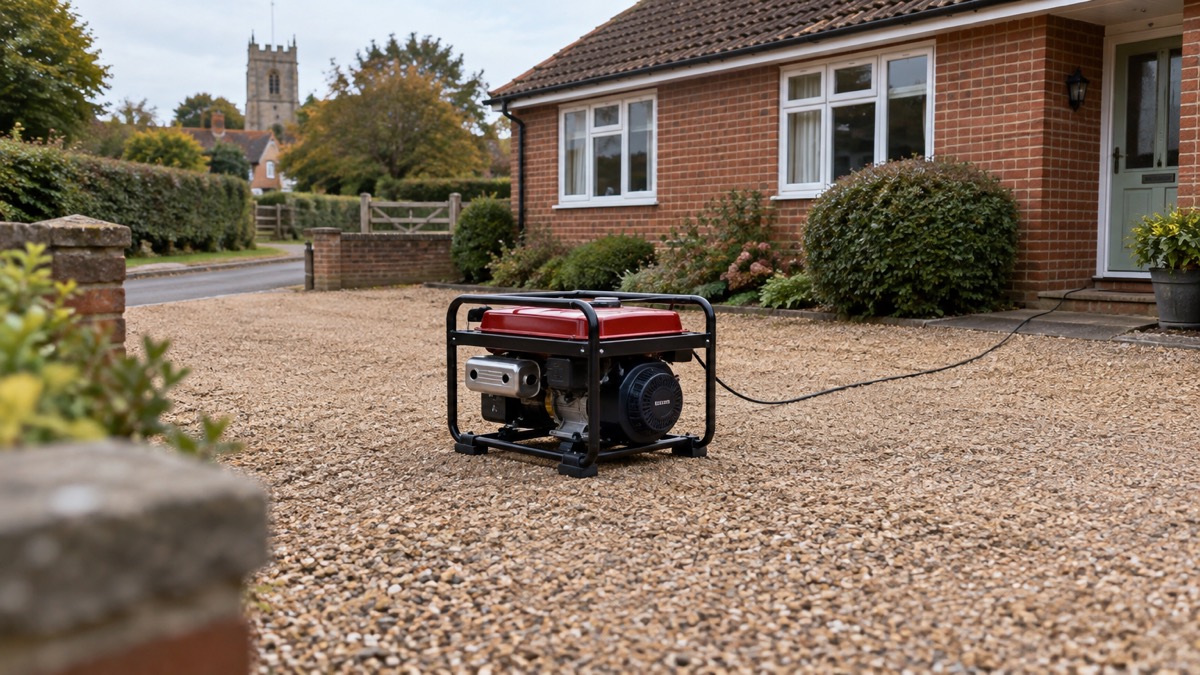
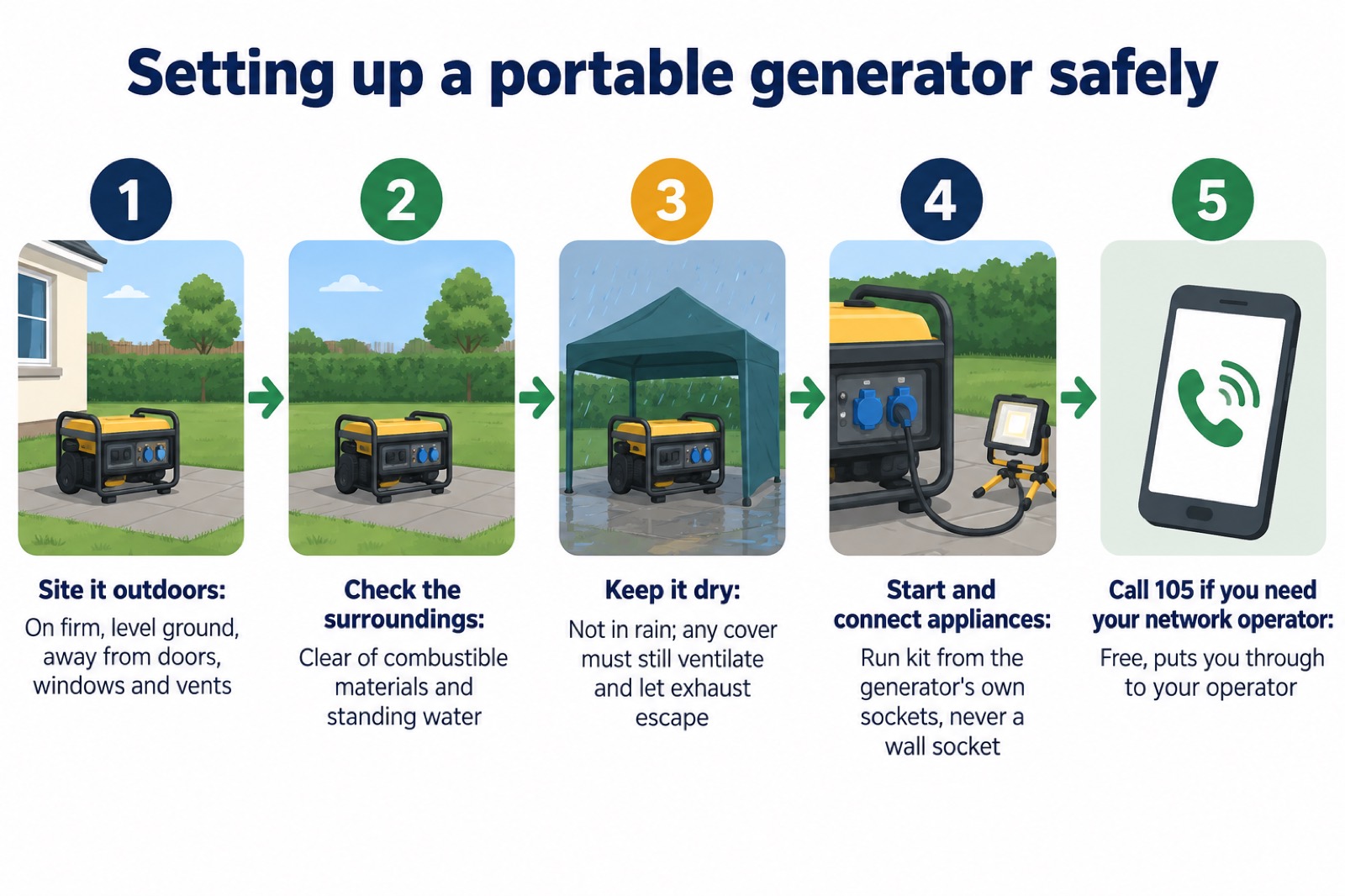
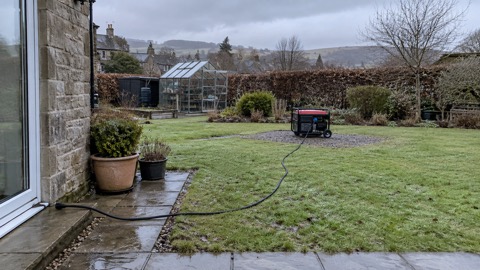
A generator lives outdoors, and the reason is its exhaust. The Health and Safety Executive's advice is to locate petrol generators outside in well-ventilated spaces so that fumes disperse and cannot gather or drift into building openings2. Clarke's generator guidance says the same thing in practical terms: keep it outdoors and well away from doors, windows and vents, and never operate a generator inside a house, garage, shed, tent or caravan1. A garage with the door open, or a doorway with the machine just outside, is not good enough, because exhaust can still pool or drift back inside through the opening.
The warning covers more than houses. nidirect's storm advice for Northern Ireland is blunt about standby generators: never use them indoors, as the fumes from the engine can be lethal5. The same advice applies in caravans, boats and mobile homes, where the risk of exposure to carbon monoxide from portable devices may be higher because the space is small and ventilation is poor6. London Fire Brigade's carbon monoxide guidance adds a related point worth knowing: carbon monoxide can travel through walls, which is why it also tells people never to take portable or disposable barbecues or charcoal burners into a home, tent, houseboat or caravan7.
When you site the generator, think about your neighbours as well as your own household. Position it on firm, level ground away from combustible materials, standing water and areas where exhaust gases could accumulate1. That means not under a window of the house next door, not against a fence or stacked firewood, and not in a dip in the garden where fumes can settle.
Carbon monoxide, electric shock and fire: the three dangers
Carbon monoxide (CO) is the danger that kills most often, because you cannot see it or smell it. London Fire Brigade's after-a-flood guidance states the rule plainly:
"never run a petrol or diesel-powered generator indoors. They can produce fatal levels of carbon monoxide."
London Fire Brigade8
The gas comes from burning fuel. NHS 111 Wales lists portable generators alongside gas boilers, gas or paraffin heaters and wood, gas and coal fires as appliances that can cause carbon monoxide poisoning9, and the Health and Safety Executive for Northern Ireland has warned that using kerosene heaters, charcoal grills and portable generators indoors can cause CO levels high enough to result in CO poisoning10. Wiltshire and Swindon Prepared's advice after flooding is the same: do not use petrol or diesel generators or other similar fuel-driven equipment indoors, because their exhaust gases contain carbon monoxide11. Fit a carbon monoxide alarm in your home, and take any alarm, or any headache, dizziness or nausea that clears when you go outside, seriously.
Electric shock is the second danger, and it comes in two forms. The first is treating the generator's output casually: it is mains-level electricity from a socket, and it deserves the same respect as a wall socket in your home. The second is backfeed. Clarke's guidance is explicit: never connect a portable generator directly to household wiring or a wall socket, as this can create dangerous backfeed into the electricity network and may cause serious injury, fire or damage1. Backfeed can energise the network outside your house and injure engineers working to restore your supply.
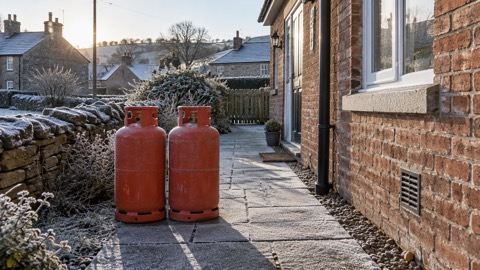
Fire is the third. A generator is a hot engine with fuel in it. Keep it away from combustible materials and standing water1, and treat fuel storage with the same care. Devon and Somerset Fire and Rescue Service's winter guidance notes that equipment designed for outdoors, such as camping stoves and patio heaters, poses both a fire risk and a carbon monoxide risk when misused12, and the same logic applies to generators. Refuel only when the engine is cool, and never store spare fuel or cylinders indoors: the Scottish Fire and Rescue Service advises storing spare gas cylinders outside where possible, and never in a basement, near drains, under the stairs or in a cupboard containing electric meters or equipment13.
Connecting a generator to your home: get an electrician
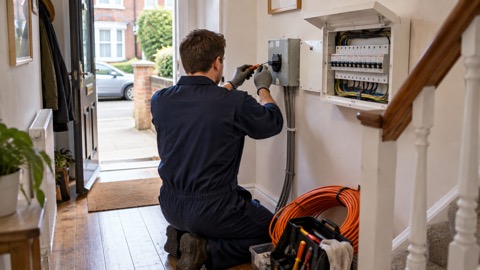
Running extension leads from the generator's own sockets to individual appliances is safe and simple, and it is how most households should use one. Wiring a generator into your home's fixed electrics is a different matter altogether. Wiltshire and Swindon Prepared puts it directly: it takes research by you, and the advice and expertise of a qualified electrician, for a generator to help you14. National Grid's advice on planned interruptions is that if you hire a generator, for safety reasons it is essential that it is connected by a qualified electrician3, and Northern Powergrid says the same: if you do choose to connect your own generation, this must be done by a qualified professional15.
The reason is not bureaucracy. A proper connection has to isolate your home from the network so that your generator cannot push power back up the cable, and it has to be done so that when the mains returns, the two supplies do not fight each other. That needs the right changeover equipment, installed and tested by someone qualified. Electricity North West's emergency power cut guidance adds a reality check for anyone imagining a generator as a whole-house solution: there will not be enough generators to keep everyone powered, and it may take longer to install and connect a generator to your local substation than the duration of the emergency power cut itself16.
One further point if you plan to run tools rather than household kit: some electronically controlled tools require a stable supply, so Clarke advises checking the tool manufacturer's guidance before connecting them to a conventional generator1. If you want to go deeper on the wiring side, see connecting a generator to your home's wiring, and for the safe use of leads, see extension leads and overloading with backup kit.
Petrol, diesel or dual-fuel: how each fuel behaves
Most portable generators sold in the UK run on petrol or diesel, and some dual-fuel models add LPG from a cylinder. Each fuel behaves differently, and that shapes what the generator is good for.
Conventional petrol generators use an engine to drive an alternator at a relatively constant speed. Clarke describes them as practical for tools, lighting, pumps, workshop equipment and general site use, and notes that they often provide a higher output for the price1. Which? gives an example of a petrol model with a fuel tank capacity of around 20 litres17. Petrol is the common choice for household backup because the machines are widely available and the fuel is easy to buy.
Diesel generators generally have a long running time, but Which? notes that diesel is more expensive to buy than petrol and can be noisier than petrol alternatives17. Diesel suits a household that expects very long outages or wants to run heavier equipment, and accepts the noise and bulk that come with the type.
Dual-fuel models run on petrol or LPG. The attraction for emergencies is that you are not dependent on one fuel: if petrol is hard to get after a storm, an LPG cylinder keeps you running. LPG brings its own handling rules, which are covered in LPG cylinders and regulators for dual-fuel generators.
| Type | Strengths | Drawbacks | Suits |
|---|---|---|---|
| Petrol | Higher output for the price; fuel easy to buy; practical for tools, lighting and pumps1 | Noisier than inverter models; petrol storage limits | General household backup |
| Diesel | Long running time17 | More expensive to buy; can be noisier17 | Long outages, heavier equipment |
| Dual-fuel (petrol/LPG) | Choice of two fuels in an emergency | Needs safe LPG cylinder handling and storage13 | Households wanting fuel flexibility |
| Inverter (usually petrol) | Cleaner power, quieter, more compact, more fuel-efficient at light loads1 | Lower output than similarly priced conventional models | Electronics, phones, laptops, caravans |
Inverter generators: cleaner power for phones and laptops
An inverter generator is a petrol generator with electronics that clean up the output. Clarke's guidance explains that inverter generators electronically control and condition the power they produce, and that they are generally quieter, more compact and more fuel-efficient at lighter loads, which is why they are popular for caravans, camping, laptops, televisions, chargers and other sensitive devices1. Many produce a pure sine wave output designed to closely replicate mains electricity, which makes them suitable for laptops, televisions, mobile devices, audio equipment, battery chargers and modern caravan electronics1.
That last point is the whole reason to care. A conventional generator's output can be rough enough to trouble sensitive electronics, while an inverter model's smoothed output is designed to be safe for them. Briggs & Stratton says of its P2400 PowerSmart Series inverter generator that the inverter technology produces smoother power, so you can safely recharge and power sensitive electronics such as laptops, smartphones and gaming systems18.
Inverter models are also the quiet end of the market. Briggs & Stratton describes the P2400's 58dB operating volume as quieter than a normal conversation18, against diesel's reputation for noise17. Run time can be respectable at light loads: the P2400 can supply equipment for up to 8 hours at 25% load18. Sockets reflect the intended use: Which? notes inverter models with two 230V 13A sockets, a 12V DC outlet and two USB ports, and a suitcase-style model with two USB sockets for charging smaller items17.
If you need more than one inverter generator's output, some compatible models can be linked. Clarke's guidance says some compatible inverter generators can be connected using a purpose-designed parallel kit, which combines their output to provide additional capacity1, and Briggs & Stratton offers an optional parallel connector kit for the P2400 that lets you connect two units together for more power18. For a fuller comparison of the two petrol technologies, see inverter generator or open-frame generator.
Power output: what the watts on the label mean
Generator output is usually shown in watts or kilowatts, with 1kW equal to 1,000W1. Two numbers matter: a continuous rating, which is what the generator can supply steadily, and a maximum rating for short bursts. Clarke gives a worked example: a generator rated at 2,000W continuous and 2,200W maximum should normally be used below 2,000W1. Plan your loads against the continuous figure, not the peak.
To judge whether a generator is big enough, add up the running watts of what you want to power at the same time. Electrical Safety First's appliance ratings give a sense of scale: a portable air conditioner can use up to 2000 watts, typically 900 to 2000W depending on its cooling power19. Against that, real generators on the UK market range widely: Which? lists a portable inverter generator at 3300W17, and BLUETTI gives an example of a 1000W generator20. Which? also cautions that because they are small, portable generators have a limited output capacity, and some models will not power all appliances17.
A practical approach for a power cut is not to try to run the whole house but to choose a few things that matter, as our page on deciding what to keep running explains. A smaller generator may support selected items such as lighting, phone chargers and a refrigerator or freezer1, which for most households is the actual job. If watts and watt-hours still feel tangled, watts, watt-hours and surge explained unpicks them, and what size generator do I need works through the sizing question.
| Example | Output | Notes |
|---|---|---|
| Portable inverter generator (Which? example) | 3300W | Petrol, with 230V sockets, 12V DC and USB17 |
| Fuel generator (BLUETTI example) | 1000W | 5L tank, runs about 6 hours at 500W20 |
| Worked example (Clarke) | 2,000W continuous, 2,200W maximum | Use below the continuous rating1 |
| Portable air conditioner | Up to 2000W | A single appliance can eat a small generator's whole output19 |
Rain and weather: most portable generators are not waterproof
Power cuts in the UK often come with the weather that caused them, and that creates a tension: the moment you most need the generator is the moment it is raining. Clarke's guidance is clear: do not use it in rain or standing water1. A generator should not be exposed directly to rain or standing water, and any suitable protection you rig up must still provide proper ventilation and prevent heat or exhaust gases from building up1. A canopy or open-sided shelter that keeps rain off while letting air and exhaust move freely can work; a tarp pinned down around a running generator does not, because it traps heat and fumes.
Standing water matters twice over. It is an electrical hazard around a machine producing mains output, and it is a siting problem: position the generator on firm, level ground away from standing water1. After a flood, generators come into their own for a different reason. London Fire Brigade's after-a-flood guidance notes that if your electricity supply is off or unchecked, you may need a generator to power any pumps, humidifiers, dryers or heaters you decide to use8, but the machine still sits outdoors, on ground that is safe and dry.
One planning point for rural households: an Ofgem report on the networks' response to Storm Arwen records Electricity North West's view that some rural locations are unsuitable for large generator installation because of the difficulty of transporting large and heavy equipment in storm conditions21. If you live somewhere a lorry struggles to reach in bad weather, your own portable generator, stored ready, may be more reliable than waiting for a large one to arrive. For the detail, see can you run a generator in the rain?.
Servicing and storage: keeping a generator ready to start
A generator that will not start is a very expensive ornament, so the work happens before the power cut, not during it. The Scottish Fire and Rescue Service's heating advice captures the general principle for any fuel-burning equipment: keep it clean and well maintained13. For a generator that means following the maker's service schedule for oil, filters and spark plugs, and running it periodically so you know it starts and the output works, rather than discovering a fault in the dark.
Storage is about fuel and damp. Store the generator somewhere dry and ventilated, with fuel and any spare gas cylinders kept outside where possible, and never in a basement, near drains, under the stairs or in a cupboard containing electric meters or equipment13. Check the oil and fuel before every use, following the maker's instructions, rather than relying on the engine's own protections. When you set it up again after storage, re-check the siting rules: outdoors, on firm level ground, away from combustible materials, standing water and places where exhaust could accumulate1.
Think too about how you will move it. Fuel generators are heavy: BLUETTI describes typical fuel generators as weighing 50 to 70kg, noisy and bulky20. Some inverter models ease this with a twin carry handle and an optional wheel kit18. Decide in daylight where the generator will sit and how it will get there, because you will be doing it in the dark and possibly in the rain. Our pages on how to store a generator after a power cut and backup power checks before winter take this further.
Generators from your network operator during a power cut
Many households assume that if the power is off for days, the electricity network operator will bring a generator. The reality is more limited, and it is worth knowing before you decide whether to buy your own. Operators do use generators, but mainly at network level: Electricity North West explains that generators will sometimes be used for temporarily restoring customers whilst permanent repairs are completed, ordered through network partners who ensure a robust refuelling strategy and connect them safely22. NIE Networks in Northern Ireland says that where possible it fits a generator at the local substation, and it does not fit generators in individual homes or businesses23.
For individual households, help is targeted at medical need. SSEN's planned power cut guidance states that it only provides generators for customers who are medically dependent on electricity, not for businesses or personal use24. Electricity North West's FAQ says generators are only provided in exceptional circumstances, such as for medical needs like oxygen equipment, mobility aids or end-of-life care, though it adds that in exceptional circumstances such as weddings or funerals it does its best to provide one to minimise the impact of the power cut25. If you rely on your energy supply for medical reasons, your network operator can tell you about planned power cuts, for example when engineering work is scheduled26, so make sure you are on its priority register.
To reach your operator at all, call 105 for free, and you will be put through to your electricity network operator4; you can also report an unplanned power cut directly through your local operator's website27. Two smaller points worth knowing: during a power cut, systems like solar panels, heat pumps, EV chargers and batteries automatically switch off to protect your home and engineers working on the network24, and when the repair is finished you may experience a short outage whilst being connected back to the network22. For the wider picture, see power cuts: a household guide.
Choosing between a generator and a battery power station
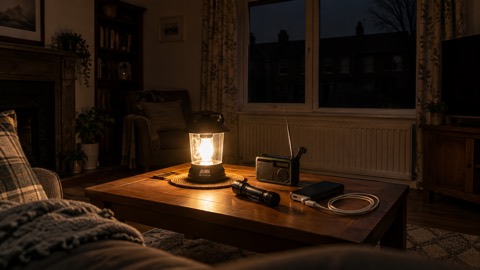
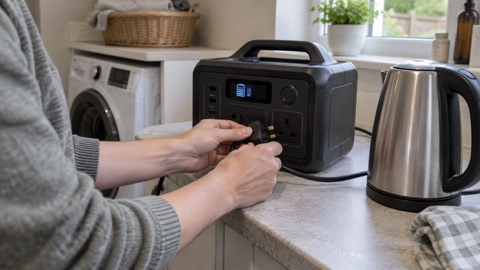
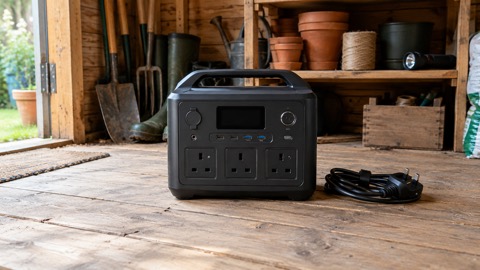
A generator is not the only way to bridge a power cut, and for some households it is the wrong one. Battery power stations are smaller and more portable than generators that use a fuel tank, but, as Which? puts it, they are only really useful if you have low power demand, though some can be charged with solar panels17. BLUETTI makes the comparison starkly: where a typical fuel generator weighs 50 to 70kg and is noisy and bulky, a small power station such as the Anker example Which? lists weighs 3.7kg20.
The trade-off is endurance. A fuel generator refills in minutes and runs for hours: BLUETTI's example runs about 6 hours at a 500W load on a 5-litre tank20, and the Briggs & Stratton P2400 inverter runs up to 8 hours at 25% load18. A battery holds a fixed amount of energy and then needs recharging, from the mains, a car or solar. So the honest summary is this: if your needs are a phone, a radio, some lights and maybe a router for a few hours, a power station is quieter, safer indoors and far easier to live with. If you need to run a fridge and freezer through a multi-day outage, or pumps after a flood8, a generator is the tool that does it, provided you can site it safely outdoors. The full side-by-side is in portable power station or petrol generator for a power cut, and the battery options are covered in portable power stations: what they do and how to choose.
Sources (27)
- Generators: guidance on choosing and using, Clarke International, 2026
- Carbon monoxide: hazardous substances, Health and Safety Executive, 2026
- Planned interruptions: information and advice, National Grid, 2026
- Check if you can get payment for a power cut, Ofgem, 2026
- Strong winds and heavy rain warning: information and advice, nidirect, 2026-01-27
- Carbon monoxide poisoning, nidirect, 2024-12-16
- Carbon monoxide safety, London Fire Brigade, 2026-10-25
- After a flood: flooding advice, London Fire Brigade, 2026-10-25
- Carbon monoxide poisoning, NHS 111 Wales, 2025-10-02
- Carbon monoxide dangers from heating appliances and generators used indoors, Health and Safety Executive for Northern Ireland, 2025-01-26
- Flooding and health: safely cleaning your home, Wiltshire and Swindon Prepared, 2026-10-25
- Stay warm safely this winter, Devon and Somerset Fire and Rescue Service, 2026
- Heating and gas safety, Scottish Fire and Rescue Service, 2024-11-21
- Generators, Wiltshire and Swindon Prepared, 2026-10-25
- Emergency power cuts: FAQ, Northern Powergrid, 2025-03
- Emergency power cuts: safety advice and incident reporting, Electricity North West, 2026-10-25
- How to buy the best generator, Which?, 2026-01-20
- P2400 PowerSmart Series inverter generator, Briggs & Stratton, 2026
- Ratings of electrical appliances, Electrical Safety First, 2026-10-25
- BLUETTI Elite 400 portable power station, BLUETTI, 2026-10-25
- Review into the networks' response to Storm Arwen, Ofgem, 2022-06-09
- Restoration following a power cut, Electricity North West, 2026-10-25
- Planned work, NIE Networks, 2026-10-25
- Planned power cuts, SSEN, 2026-10-25
- Advice and support FAQs, Electricity North West, 2026-10-25
- Be informed about hazards: power cuts, UK government Be Ready campaign, 2026-10-21
- Plan for a power cut, Ofgem, 2026
 Power Cut Backup Power Checklist
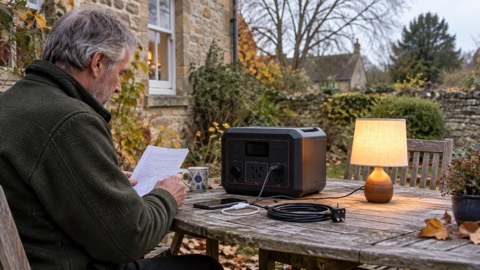 Backup Power Before Winter
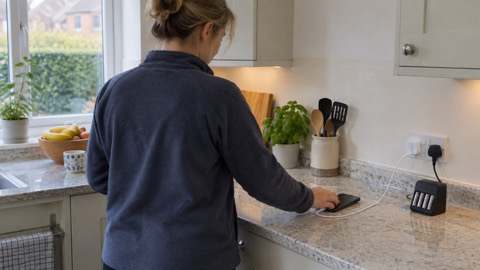 Safe Battery Charging at Home
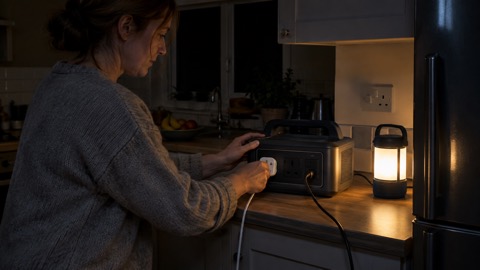 What to Keep Running in a Cut
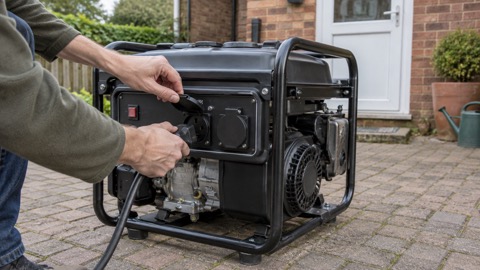 Power During an Outage
 Watts and Watt-Hours
 Portable Power Stations
 Generator Safety
 LPG Cylinders and Regulators
 Connecting to Your Home's Wiring
 Home Battery Storage
 Portable Solar Panels
 12V Inverters
 Leisure and LiFePO4 Batteries
 Power Banks for Phone Charging