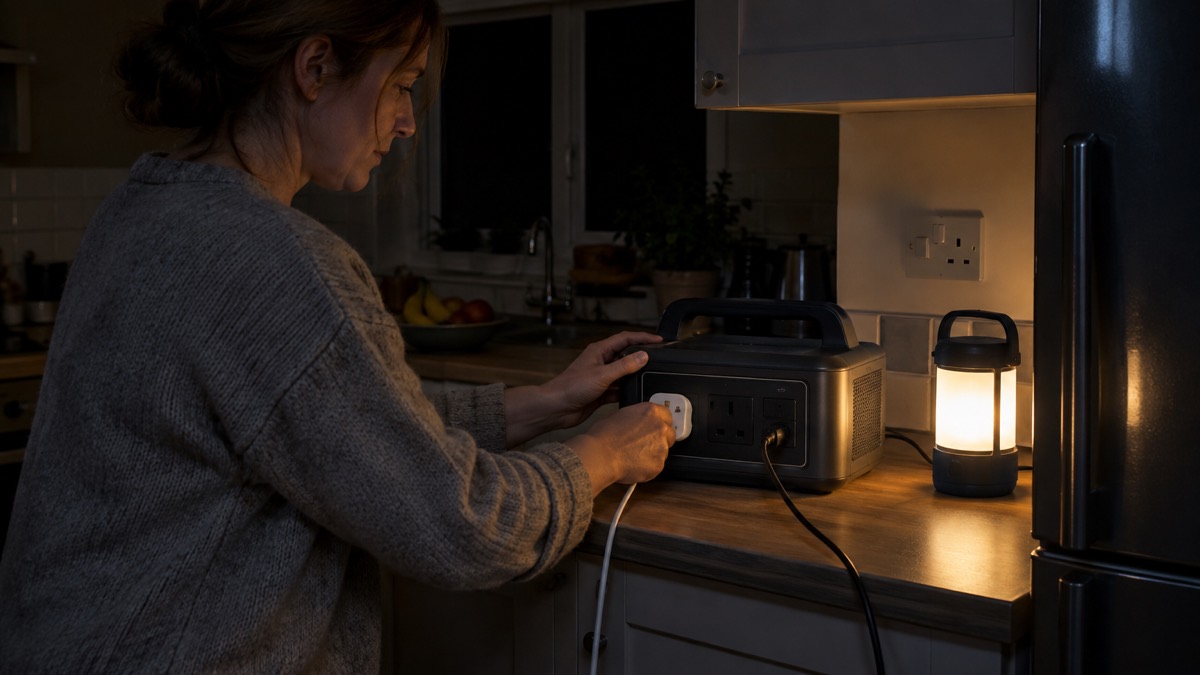
When the mains fails, no household can keep everything running, and the worst time to work out what matters is in the dark. The right approach is to decide now what you truly need powered, and for how long, so that any kit you later buy or borrow is matched to a real need rather than a guess. This page sets out how to build that list of priorities, in order, using official guidance.
The order most households should work to is straightforward. First comes anything that keeps a person healthy and safe: medical and assistive equipment, refrigerated medicines, and a working phone to call for help. Second comes food safety: a fridge keeps food safe for up to four hours during a power outage provided the door stays closed, so a fridge is worth powering only if the cut may outlast that. Third comes light, warmth and information. Everything else can wait.
Most power cuts are short and local, caused by severe weather or system faults1. But official guidance is clear that more widespread outages could potentially last several days with regional or, although unlikely, national impacts2. That spread, from an hour to several days, is exactly why a written list of priorities is worth making before anything goes wrong.
Medical equipment and refrigerated medicines come first
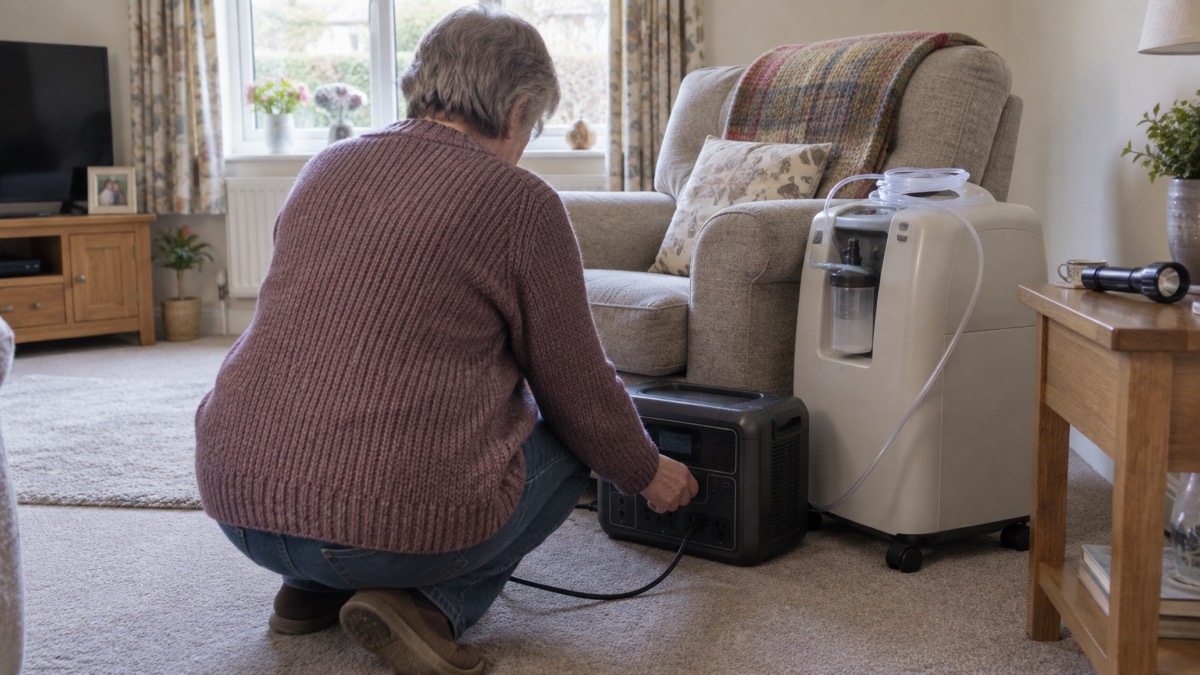
Anything that keeps a person alive or independent goes to the top of the list, before any other appliance is considered. Some equipment may stop working during a power cut, for example ventilators, oxygen concentrators, electric wheelchairs, hoists, communication devices and feeding pumps3. Power cuts can have a significant impact during winter, particularly for people who rely on electrical medical equipment or refrigerated medicines8.
If you use medical equipment that requires a power supply, make a plan with your care provider and clinical care team now about what will happen in a power cut. The plan should set out what action you, or someone you care for, needs to take, and who to contact if there is an outage1. Do not leave this until the power is already off: the plan is the thing that tells you what kit you need and how long for.
Refrigerated medicines need their own line in the plan. In the event of a power cut or fridge breakdown, contact your local pharmacy or the manufacturer of your medication for further information on what to do9. Some medicines must be kept cold, so the fridge that holds them may rank above the fridge that holds the food, and the pharmacy can tell you how long your particular medicine tolerates being unrefrigerated.
There is also help available before anything fails. If you rely on your energy supply for medical reasons, your network operator can tell you about planned power cuts, for example when they plan engineering work2. Registering that need with your operator means you hear about planned interruptions in advance rather than discovering them. Households that rely on powered medical devices can read more about running them from a battery in powering CPAP, oxygen and other medical devices from a battery.
What to switch off and what to leave on when the power goes
The moment the power fails there are a handful of actions that protect your home and the people in it. These apply whether the cut lasts ten minutes or ten hours, and they take only a few minutes to do.
- Switch off all electrical appliances that should not be left unattended, and leave one light on so you know when power is restored10.
- Turn off items such as irons, ovens, electric fires and fryers. Unplug your TV and PC, as they can be damaged if there is a surge when power goes back on1.
- Switch off and unplug appliances, especially items such as fires, cookers, irons and hair straighteners, in case you forget they are on when power is restored11.
- Leave your fridge and freezer switched on with the door shut, to keep a low temperature7.
- Check on neighbours10.
The logic behind switching some things off and leaving others on is worth understanding, because it tells you what belongs on your priority list. Anything that could cause a fire or a burn if it came back on unattended, such as an iron, a cooker or an electric fire, gets switched off and unplugged: you may be out of the room or asleep when the supply returns. Anything sensitive to a power surge, such as a TV or PC, gets unplugged to protect it. The fridge and freezer stay switched on so they resume cooling the instant power returns, and one light stays on as a simple, free indicator of restoration.
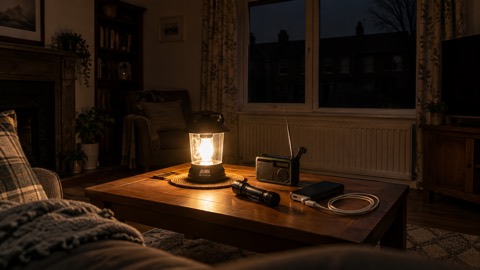
The essentials that could help you cope while the power is off are battery candles, torches and batteries, and a mobile phone power pack6. Keep them where you can find them in the dark. If you use candles rather than battery candles, the Scottish Fire and Rescue Service advises you to keep candles well away from anything that could catch fire12.
A fridge keeps food safe for about 4 hours if the door stays shut
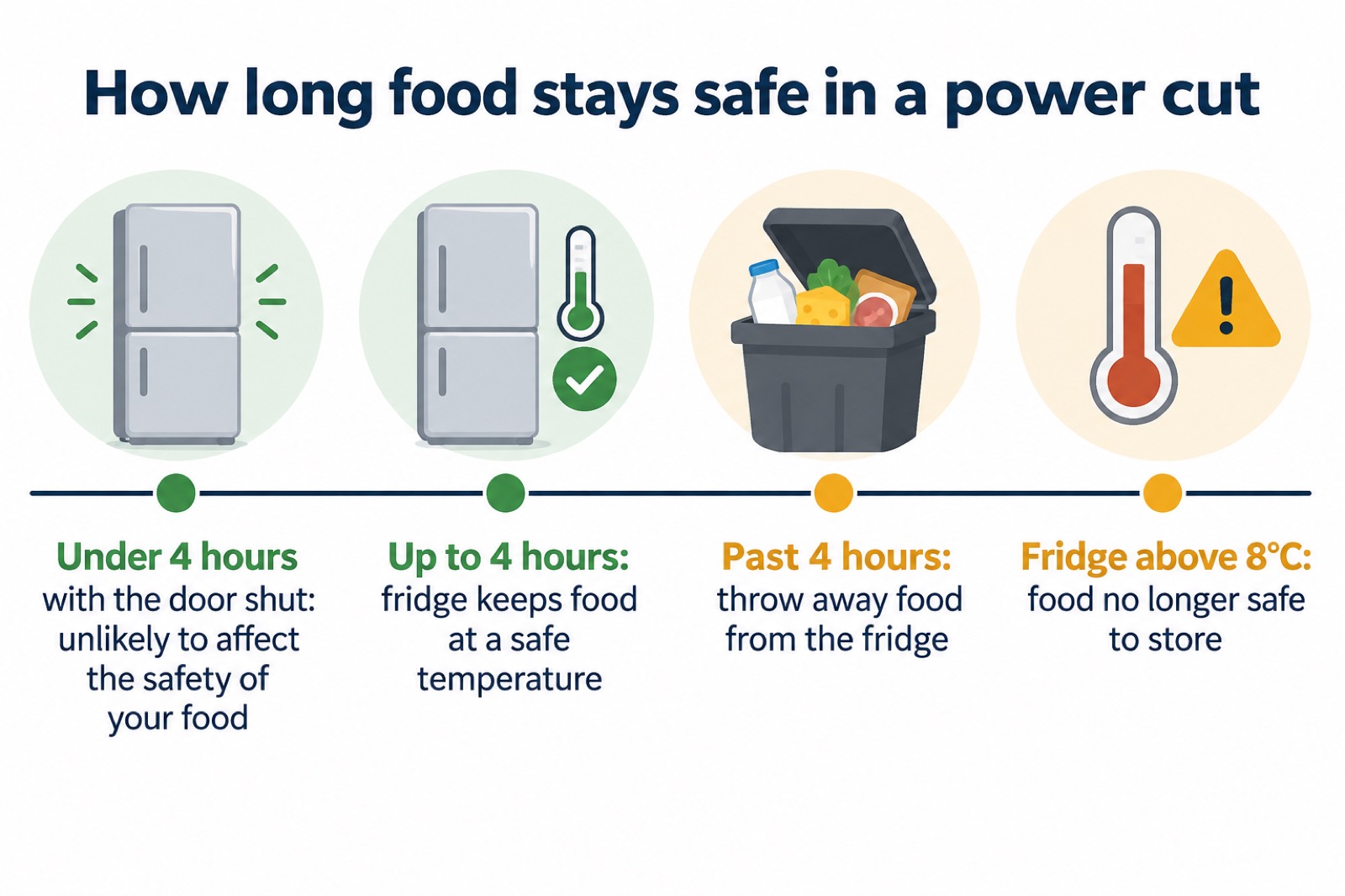
Food safety sets one of the clearest deadlines in a power cut, and it is the reason a fridge appears on, or drops off, your list of things to power. Your fridge should keep your food at a safe temperature for up to four hours4. Your fridge will keep food safe for up to four hours during a power outage, provided you keep the door closed as much as possible14. If your electricity is off for less than four hours, it is unlikely to have an impact on the safety of your food4.
That four-hour figure is what decides whether a fridge is worth backing up. In a short cut, the fridge needs nothing from you except a closed door. In a longer cut, keeping the fridge running becomes a genuine priority, and the size of the battery or generator needed follows from how many hours you want to add beyond four. Households sizing kit for that job can start with what capacity power station do I need? and how long will a power station run a fridge or laptop?.
Keep fridge and freezer doors closed as much as possible during a power cut4. Keep fridges and freezer doors closed, as this will ensure they stay cold for several hours1. Avoid opening your fridge or freezer more than necessary11. Every opening costs cold air, and the four-hour figure assumes the door stays shut.
During a power cut, it should be safe to store your food in the fridge as long as the temperature does not rise to 8°C4. If the electricity has been off for more than 4 hours, throw away food from the fridge5. That is the hard line after the event: no guessing, no tasting.
If a power cut has affected your home and you have no electricity supply, it is important you continue to store and prepare food safely7. To keep food safe and reduce food waste, use up foods in the following order: chilled fridge foods first, then defrosted frozen food that does not need cooking, then room-temperature perishable food such as bread, and finally room-temperature tinned, bottled and dried food4. That order is itself a priorities list: it tells you what to eat first so the least durable food is not wasted.
Fridge power: when it is worth keeping a fridge running
Given the four-hour rule, when does a fridge earn a place on the list of things to power? The answer depends on the length of cut you are preparing for. For a cut of a few hours, the fridge needs no backup at all: the door does the work. For a cut stretching past four hours, or for a household with refrigerated medicines inside, the fridge moves up the list, and the question becomes how much power it draws and for how long.
A fridge is a relatively modest, intermittent load: it cycles on and off rather than running continuously, which means a battery does not have to feed it constantly. What it does need is enough capacity to carry those cycles across the hours you have decided matter, plus headroom for the surge when the compressor starts. The details of sizing that are covered in watts, watt-hours and surge explained, and the practical run-times in how long will a power station run a fridge or laptop?.
Two things can push a fridge up or down your list. The first is medicines: a fridge holding refrigerated medicines outranks one holding the weekly shop, because the pharmacy, not the supermarket, is the fallback9. The second is flooding: electrical items such as fridges, freezers and ovens may break down if they have come into contact with water15, so after a flood a fridge may be unsafe to reconnect at all, whatever the battery capacity.
Phones and tablets: keeping a way to get news and call for help
After health, the second thing every household should protect is a working phone. A charged phone is how you report the power cut, get updates, call for help in an emergency, and reach family and neighbours. It is also one of the simplest things to keep ready, which is why it sits above the fridge for most households in a short cut.
The official advice is consistent across the UK's governments and agencies:
- Keep mobile phones, laptops or tablets fully charged, so you will have use of battery power for a short time at least7.
- Charge mobile phones and power banks in case there is a power cut, and find your emergency plan and make sure it is up to date17.
- Make sure you keep your mobile phone charged so you can make calls in case of an emergency18.
- Keep your mobile charged: having your mobile phone charged means you can call for support if needed19.
- Consider a separate battery charger, and store key information such as the power cut helpline number, 105, on your phone20.
- Have the telephone numbers you might need to hand; as well as mobile phones, a non-mains powered landline telephone will help you stay in touch during a power cut7.
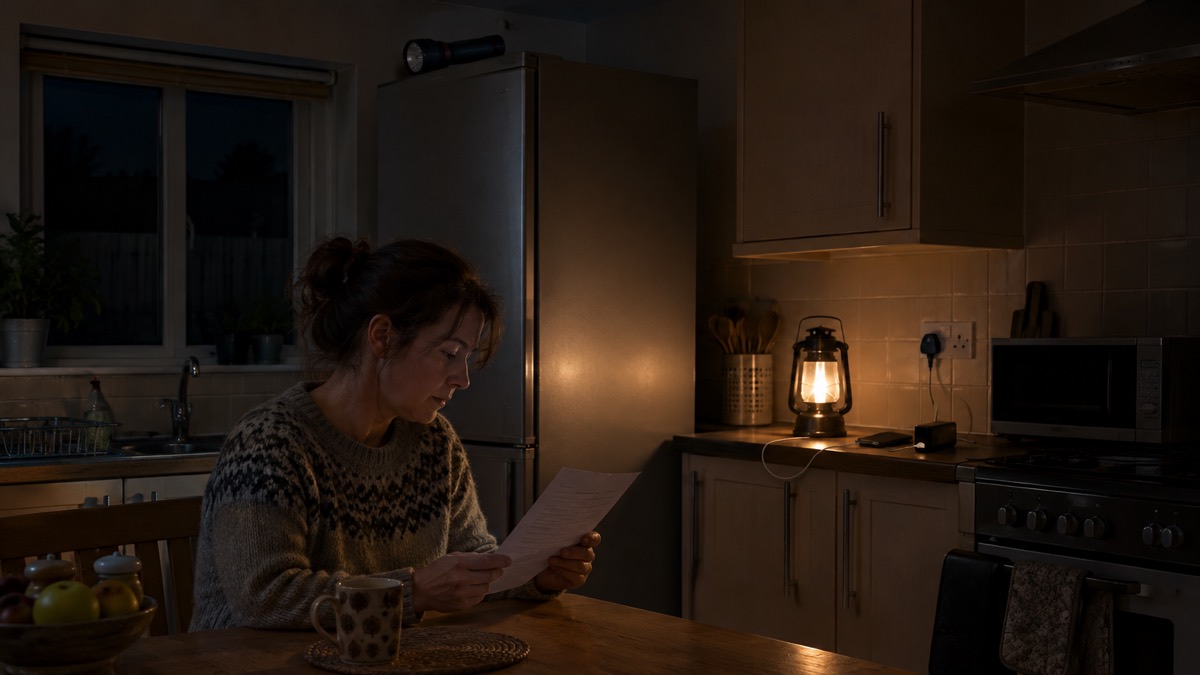
Write down important phone numbers on paper and store them somewhere easy to find in a power cut, including emergency contacts, a medication list, radio frequencies and insurance policy details22. Paper is the backup for the backup: it works when every battery in the house is flat.
If you do not have back-up power to your landline phone, or have a corded landline, and have a life-threatening emergency, you should attempt to call 999 or 112 using a mobile. You might receive overlapping signal from a nearby area that is unaffected, because emergency calls automatically roam onto all available networks1. That detail matters in a widespread cut: even with no normal signal of your own, a 999 call may still get out.
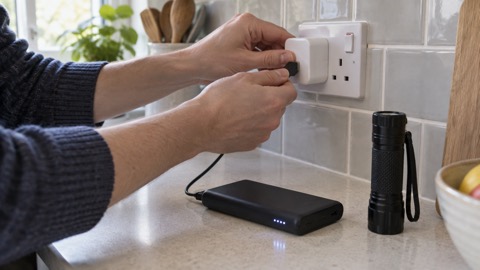
For keeping phones alive across a longer cut, a power bank is the first and simplest tool, and the options are compared in power banks: keeping phones charged in an emergency. For longer or repeated cuts, a portable power station gives you far more phone charges plus light and small appliances, and wind-up and small solar chargers give a last-resort trickle that never runs out of fuel.
Water and food that need no power: at least 3 days' worth
The clearest piece of official advice on how long to prepare for is three days. Keep at least 3 days' worth of bottled water, 3 litres per person per day, and non-perishable food that does not need cooking2. The Scottish Government's emergency kit advice matches it: a 3 days' supply of bottled water and food that does not need cooking and will not go off, or that you rely on23. The UK government's Be Ready checklist says the same: non-perishable food for 3 days, food with a long shelf life that does not need refrigeration or cooking, for example tinned meat, fish or vegetables, dried fruit and nuts, and best to buy food you would usually eat22.
Three days of no-cook food and bottled water changes what you need to power, because it removes the urgency from everything else. If you can eat and drink safely without electricity, then a longer cut becomes an inconvenience to be waited out rather than a crisis to be powered through. Keep at least 3 days' worth of bottled water, 3 litres per person per day, and non-perishable food that does not need cooking4, and your freezer food should keep for about eight hours without power4, so a well-stocked cupboard carries you from the first hours of a cut through to the third day.
| What to store | How much | Notes |
|---|---|---|
| Bottled water | 3 litres per person per day, for at least 3 days2 | Covers drinking and basic needs |
| Non-perishable food | 3 days' worth2 | Long shelf life, no refrigeration or cooking needed |
| What to buy | Food you would usually eat22 | Tinned meat, fish or vegetables, dried fruit and nuts |
A battery or wind-up radio belongs alongside the water and food, because it is how you get news and official information when the internet and TV are down. Store radio frequencies on paper with your phone numbers22. The full kit list, including torches, batteries and power packs, is in the power cut backup power checklist.
Reporting a power cut: call 105 or NIE Networks
Once everyone is safe and the immediate switch-offs are done, report the cut. This is worth doing even if you think neighbours already have, because the operator builds its response from reports.
- In England, Wales and Scotland, call 105 for free, or visit your local network operator's website to report a power cut and track updates1.
- In Northern Ireland, call the NIE Networks Customer Helpline on 03457 643643 if your power is off and you want to report it or get more information25.
- If you need updates about outages in your area, or want to report a power cut or damage to power lines or substations, you can call 10526.
- Calling 105 puts you through to your local electricity network operator, who can give you help and advice27.
The number to report a power cut, 105, is worth storing on your phone and on paper20. If your electricity or gas supply is cut off because of an unplanned power cut, you can report it directly to your local network operator using their website, or call 105 for free29. If your supply is cut off because of a faulty energy meter, contact your energy supplier instead29: the network operator cannot help with a meter fault, and 105 is the wrong door.
If the power goes off you can report this by calling 105 or visit the Power Cut website to be directed to the operator for your area13. If you spot damaged or dangerous electrical equipment, including during or after a power cut, report the problem, but call 999 in an emergency13.
Where to stay away from: fallen and damaged power lines
Storms cause power cuts by damaging the network, and that damage is often still lying around after the lights come back. This is a safety priority that outranks every appliance on any list.
Do not approach any damaged electricity equipment or broken power lines7. Never touch damaged electricity equipment7. After a thunderstorm, avoid downed power lines or broken cables30. Keep away from hazards such as power lines, because electricity at high voltages can jump gaps with no warning2: you do not need to touch a cable to be electrocuted, which is why the advice is to keep away rather than merely not to touch.
Report what you see: damage to power lines or substations can be reported by calling 10526, and damaged or dangerous electrical equipment should be reported, with 999 called in an emergency13. Downed lines after storms are the reason the thunderstorm guidance is so blunt, and the same caution applies after high winds, snow and flooding.
Why planning for longer power cuts makes sense
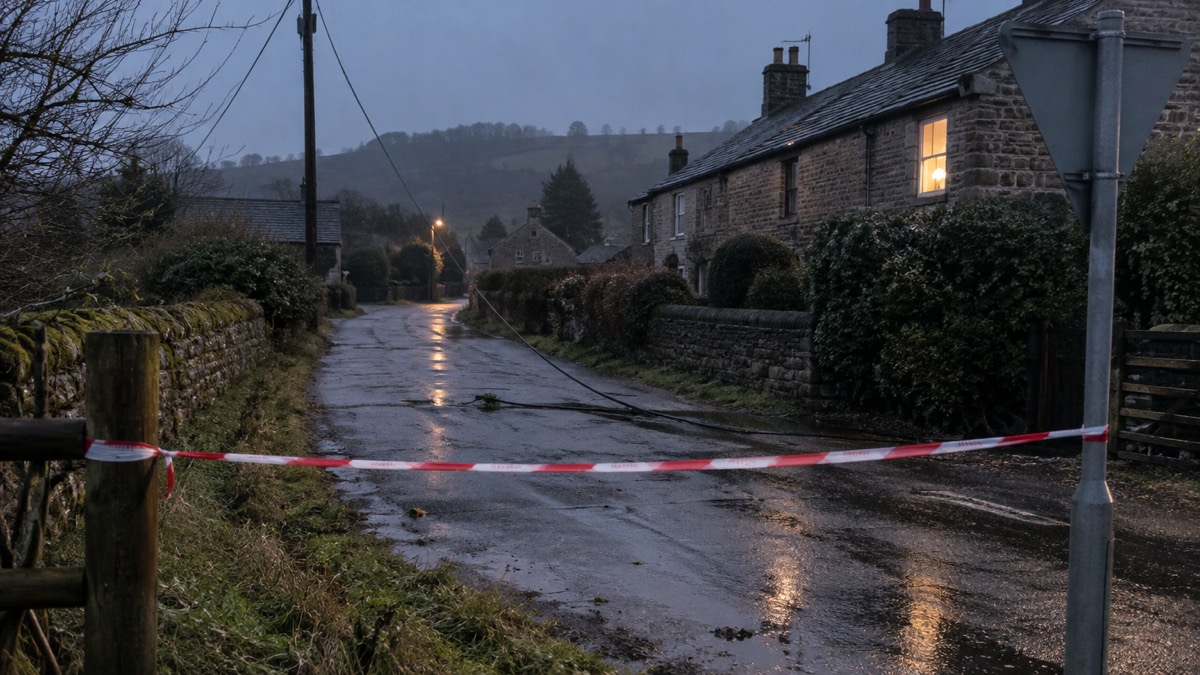
Most households will only ever see short, local cuts. So why does official advice point at three days of supplies and several days of endurance? Because the tail risk is real, and because preparing for it is cheap compared with experiencing it.
While national power cuts are rare, local outages can still happen26. More widespread and longer outages could potentially last several days with regional or, although unlikely, national impacts2. Power cuts can have a number of causes including severe weather, which can lead to damaged infrastructure, or system faults1: a single severe storm can leave some households off for days while repairs are made.
If there were ever a need for power cuts because of an energy shortage, power cuts would be shared across the country, which helps reduce how much power Britain needs without switching everyone off at once31. Before power is cut off, National Grid ESO would ask for more power to be generated, ask large businesses to reduce how much power they are using, and pay customers to use less energy at times of need31. These staged measures mean a national blackout is the last resort, not the first consequence of a tight supply.
One point on expectations: you will not be paid for blackouts caused by a national power shortage, damage to electrical equipment or appliances, or a low supply after a power cut29. Compensation rules are not a reason to prepare, and money matters are not what this page is about; the reason to prepare is that a several-day cut is survivable and even comfortable with a modest amount of planning.
Planning for a longer cut also changes your kit decisions in a helpful direction. A phone-only plan covers an evening; a fridge-plus-phone plan covers a day; a three-day plan needs water, food, lighting and a way to recharge, which is where the backup power at home: a household guide section and the power cut backup power checklist pick up. Before winter, run through the backup power checks before winter so the plan is tested rather than theoretical.
The final habit costs nothing: leave a light on, so you know when the power cut has been fixed6.
Sources (31)
- Power cuts, Prepare Campaign (UK government), UK government, 2026
- Power cuts, Be Ready Campaign (UK government), UK government, 2026
- Disabled people and carers, Readiness Campaign Scotland, Scottish Government, 2026
- Food safety in the kitchen: power cuts, Food Standards Scotland, Food Standards Scotland, 2026
- After a flood, GOV.UK, UK government, 2026
- Stay safe in lightning, Met Office, Met Office, 2026
- Strong winds and heavy rain warning, nidirect, nidirect, 2026
- Be prepared for winter emergencies, Norfolk and Suffolk NHS, NHS, 2026
- Storing medicines at home, United Lincolnshire Hospitals NHS Trust, NHS, 2026
- Weather Ready tips for snow and ice, Met Office blog, Met Office, 2025
- What to do in a power cut, SP Energy Networks, SP Energy Networks, 2026
- Power cuts at home, Scottish Fire and Rescue Service, Scottish Fire and Rescue Service, 2026
- Power, gas and water: what if they fail, Surrey County Council, Surrey County Council, 2025
- 12 tips to prepare for a power cut, Horsted Keynes Parish Council, Horsted Keynes Parish Council, 2026
- Food safety in the kitchen: flooding, Food Standards Scotland, Food Standards Scotland, 2026
- Get prepared, Carmarthenshire County Council, Carmarthenshire County Council, 2026
- Storms and wind, Readiness Campaign Scotland, Scottish Government, 2026
- What to do in a power cut, Met Office, Met Office, 2026
- Winter ready, Anglesey County Council, Anglesey County Council, 2026
- Top tips to be WeatherReady, Met Office, Met Office, 2026
- Top tips to be WeatherReady, Met Office (accessible), Met Office, 2026
- Get prepared for emergencies, Prepare Campaign (UK government), UK government, 2026
- Emergency kit, Readiness Campaign Scotland, Scottish Government, 2026
- Be ready for emergencies, Be Ready Campaign (UK government), UK government, 2026
- Thunderstorms weather warning, nidirect, nidirect, 2026
- Energy outages, National Energy System Operator, National Energy System Operator, 2026
- Community Resilience Plan, Wiltshire and Swindon Prepared, Wiltshire and Swindon Prepared, 2025
- Extreme weather summer guide, London Fire Brigade, London Fire Brigade, 2024
- Check if you can get payment for a power cut, Ofgem, Ofgem, 2026
- Stay safe in thunder and lightning, Met Office, Met Office, 2026
- What are electricity rota loads, Wiltshire and Swindon Prepared, Wiltshire and Swindon Prepared, 2026
 Power Cut Backup Power Checklist
 Backup Power Before Winter
 Safe Battery Charging at Home
 Power During an Outage
 Watts and Watt-Hours
 Portable Power Stations
 Portable Generator Types
 Generator Safety
 LPG Cylinders and Regulators
 Connecting to Your Home's Wiring
 Home Battery Storage
 Portable Solar Panels
 12V Inverters
 Leisure and LiFePO4 Batteries
 Power Banks for Phone Charging