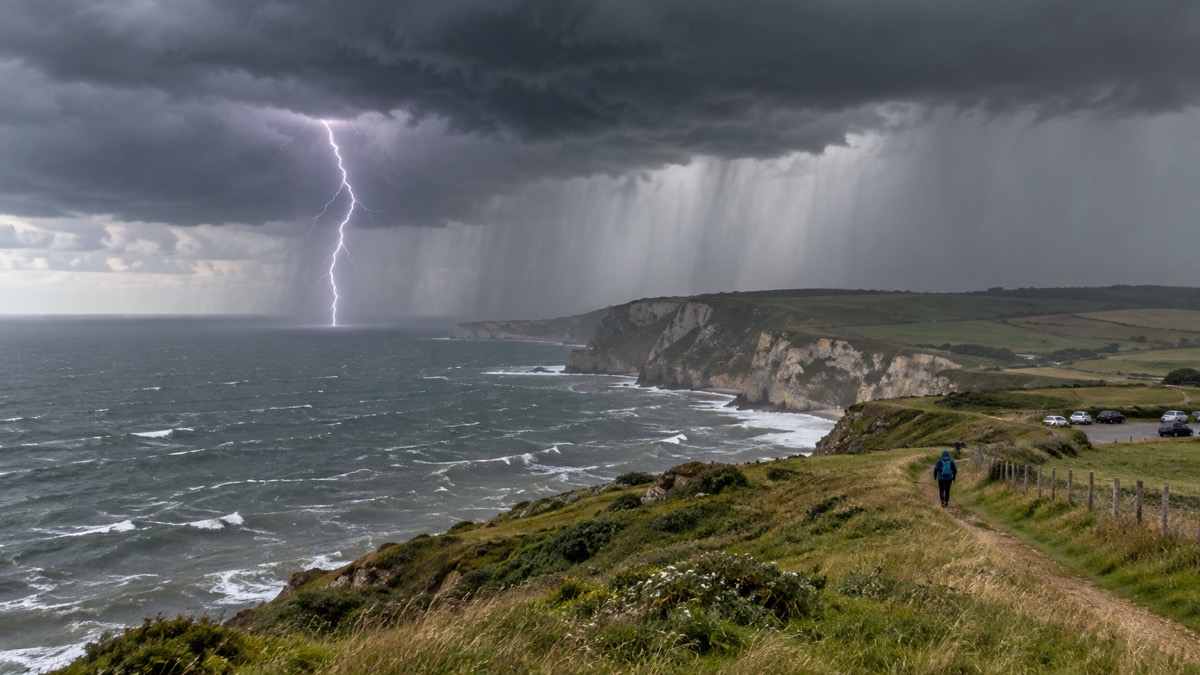
Thunder and lightning are a normal part of British weather, but they deserve respect. The Met Office is blunt about it: "When you hear thunder you are already within range of where the next ground flash may occur"1. In other words, if you can hear the storm, it can reach you, and the time to act is now, not when you see the first flash nearby.
The core of lightning safety is simple. Get indoors if you can, because "being outside in lightning can be very dangerous"2. Once inside, stay away from the things that electricity can travel through: the landline telephone, taps, sinks and metal pipework3. If you cannot get indoors, a car with its windows wound up is the next best shelter1. If you are caught in the open with no shelter at all, keep away from trees, poles, water and metal objects, and make yourself as small a target as you can1.
This page sets out the official UK advice in the order you need it: what to do the moment you hear thunder, where to shelter, what to avoid indoors and out, how to protect your home's electrics, how to get warnings, and what to do if someone is struck.
What to do the moment you hear thunder
The single most important fact about lightning is that hearing thunder is itself the warning. The Met Office advises that when you hear thunder, you are already within range of where the next ground flash may occur1. You do not need to see the lightning, and the storm does not need to be overhead. This is why the advice is to move to shelter as soon as you hear the first rumble, not when the storm looks close.
What you do next depends on where you are:
- If you are outside, find a safe, enclosed shelter, such as your car4. A substantial building is better still if one is within easy reach.
- If you are at home or at work, stay there. Official emergency planning advice is that sheltering in your own home or place of work, closing windows and turning off air conditioning may be the safest available option5.
- If you are driving, wind up the windows and stay inside your car1.
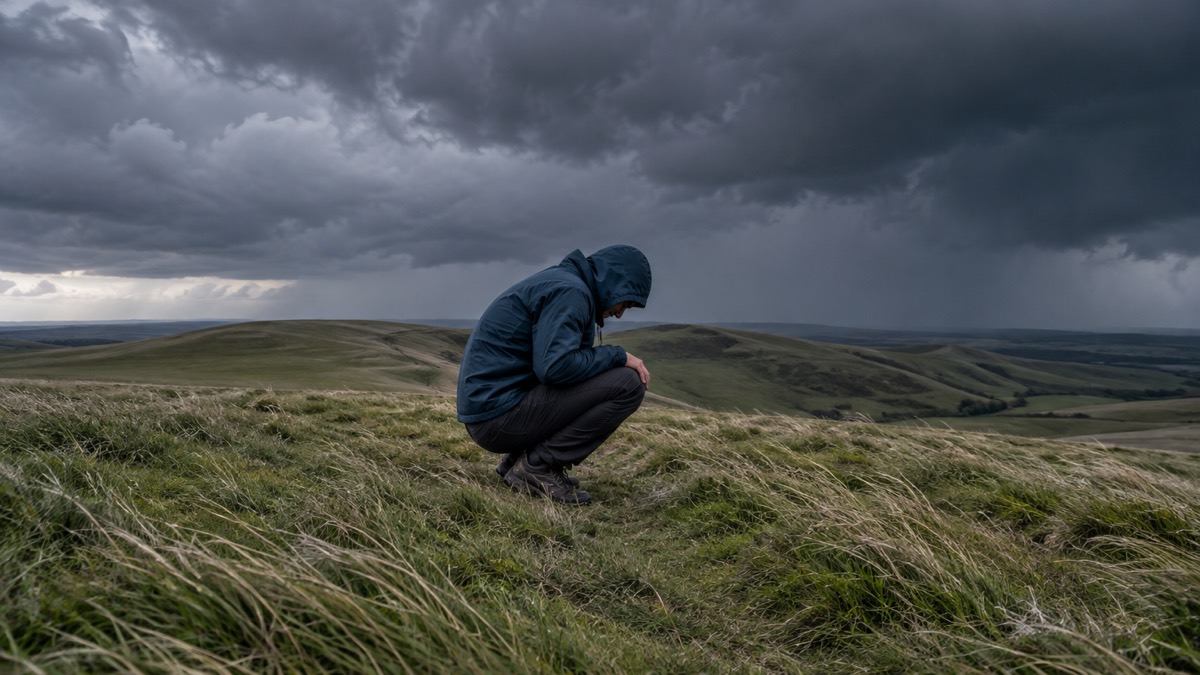
- If you are in an exposed location with no shelter, squat close to the ground with your hands on your knees and your head tucked between them, touching as little of the ground as possible, and do not lie down3.
The instinct to wait and watch is the main danger. People delay because the storm seems distant, and the Met Office's advice exists precisely because a distant-sounding storm can still produce a ground flash where you stand1. Treat the first thunder as the signal to act, and treat every later rumble as confirmation that the storm is still active.
Storms of this kind often bring more than lightning. The same systems can carry high winds and heavy rain, and official storm advice is to stay indoors as much as possible while the weather is at its worst6. If the storm brings flooding as well as lightning, the advice shifts: move family, pets and valuables to a safe place, turn off gas, electricity and water supplies if it is safe to do so, and get to higher ground if caught in a flash flood7.
Get indoors: the safest places to shelter
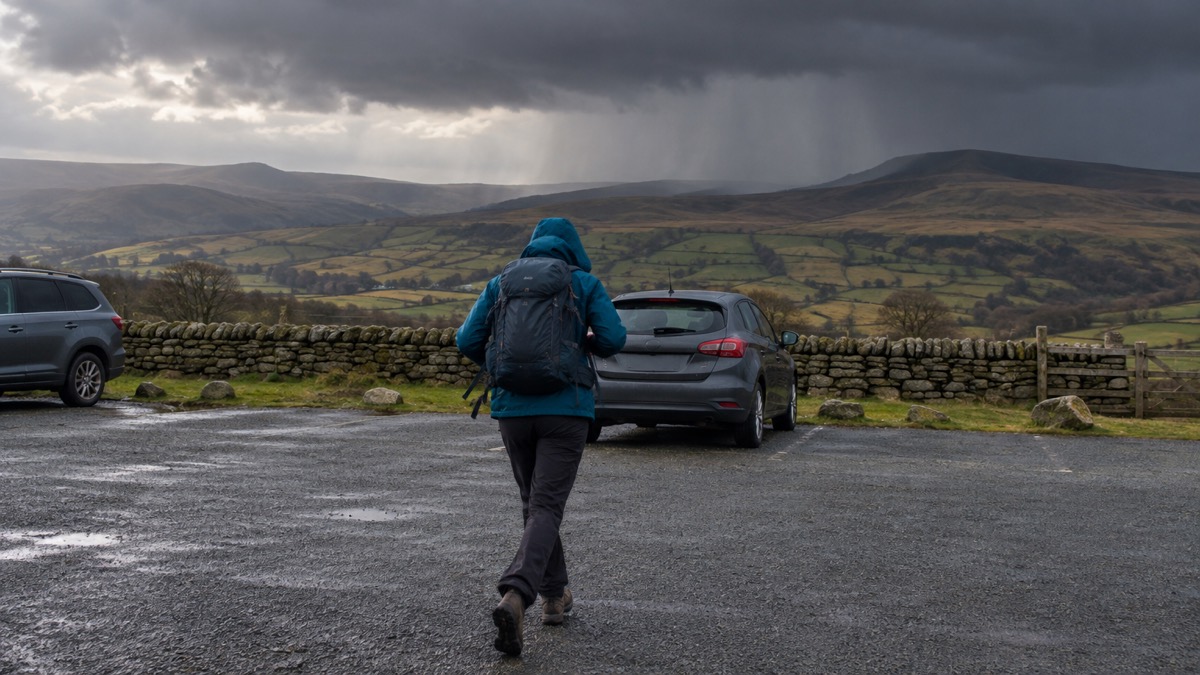
The best shelter from lightning is a proper building. The Met Office's seasonal advice is unambiguous: being outside in lightning can be very dangerous, so stay indoors as much as possible2. A house or other substantial building gives you walls, wiring and pipework that carry a strike to ground around you rather than through you.
Not every building situation is equal, and official guidance on sheltering in place is worth knowing. Shropshire Council's emergency planning advice is that taking shelter in your own home or place of work, closing windows and turning off air conditioning, may be the safest available option5. If you are choosing where to wait out a storm, pick a building with what you need for the duration: official chemical emergency guidance, which applies to any shelter-in-place situation, says to shelter in a building with access to heating, drinking water, food and toilets if possible8.
A car is the recognised second-best shelter. The Met Office advises that if you are caught out in thunder and lightning, you should wind up the windows and stay inside your car1. The metal body of the car conducts a strike around the occupants. Two things follow from this. First, the windows must be up: an open window or soft top removes much of the protection. Second, be aware that cars can be damaged both internally and externally by lightning strikes1, so staying in the car is about protecting people, not the vehicle.
| Shelter | Official advice | Notes |
|---|---|---|
| Your home or workplace | Shelter in place, close windows, turn off air conditioning5 | Best option; avoid landline, taps and sinks while inside3 |
| A substantial building | Shelter somewhere with heating, drinking water, food and toilets if possible8 | Choose a proper building over a temporary structure |
| A car | Wind up the windows and stay inside1 | Cars can still be damaged by strikes1 |
| A tent or caravan | Do not use for shelter during flash flooding9 | Stay away from metal tent poles if you must remain1 |
One shelter choice needs particular care. The Met Office advises seeking shelter if possible, but keeping away from underground or low-lying spaces such as car parks, basements or underpasses, which might flood rapidly1. In a thunderstorm with heavy rain, the flood risk of a low space can be more immediate than the lightning risk of staying in the open. Choose shelter that is enclosed but not below ground level.
Caught outside with nowhere to go
Sometimes there is no building and no car within reach: a hillside walk, a golf course, open farmland, a beach. The Met Office's advice for this situation is consistent across its guidance. If you are outside, avoid water and find a low-lying open place that is a safe distance from trees, poles or metal objects1. Westminster City Council's household emergency guidance gives the same instruction: avoid water and find a low-lying open place a safe distance from trees, flag poles or metal objects10.
If you are in an exposed location, or you feel your hair stand on end, Ready Scotland's advice is to squat close to the ground with your hands on your knees, tuck your head between your knees, try to touch as little of the ground with your body as possible, and do not lie down3. The Met Office gives the same instruction1. The position is uncomfortable and undignified, but it is the official advice in every source: it makes you a smaller target and keeps as much of your body as possible off the ground the current could travel through. Lying flat does the opposite, putting your whole body in contact with the ground, which is why it is specifically ruled out.
The things to keep away from are the things that conduct. The Met Office lists the metal objects to be aware of during a thunderstorm: golf clubs, golf buggies, fishing rods, umbrellas, motorbikes, bicycles, wheelchairs, mobility scooters, pushchairs, wire fencing and rails1. Ready Scotland adds the simple rule: avoid using metal objects that can conduct electricity, like an umbrella3. Put down or move away from anything metal you are carrying, and stay clear of wire fences, which can carry a strike a long distance along the wire.
The Met Office also names activities to avoid during a thunderstorm: golf, rod fishing or boating on a lake1. If you are doing any of these when you hear thunder, stop and move to shelter. Lightning most often strikes people who work outside or do outdoor activities4, so walkers, anglers, golfers, cyclists and outdoor workers are the groups this advice is really aimed at.
If you are outside in the storm and feel your hair stand on end, that is the immediate signal to adopt the squat position described above3. Do not run for a distant shelter at that point; make yourself small where you are.
Where not to be in a thunderstorm
The places to avoid are as important as the places to choose. The Met Office's instruction is direct: "Do not shelter under or near trees, or other structures which may be struck by lightning"2. A lone tree is the classic mistake. It feels like shelter from the rain, but it is the tallest object around and the most likely place for a strike, and the area under and beside it is where the current spreads through the ground.
Beyond trees, the list of places and things to avoid comes from the same official guidance:
- Water: avoid water if you are outside, whether a lake, a river or the sea1.
- Underground and low-lying spaces: keep away from car parks, basements or underpasses, which might flood rapidly1.
- Metal objects: golf clubs, fishing rods, umbrellas, bicycles, wire fencing and rails can all conduct or attract lightning1.
- Work at height: official storm warnings say to avoid all work at height11. Ladders, scaffolding and rooftops have no place in a thunderstorm.
- Tent poles: if you are in a tent, stay away from the metal poles1.
The Met Office's warning about metal objects is worth quoting in full, because the list is longer than most people expect:
Note that this list includes wheelchairs, mobility scooters and pushchairs. If you or someone with you uses mobility equipment, the advice is not to abandon it but to be aware of it: get to enclosed shelter promptly, and once inside, keep some distance between the equipment and yourself where you can.
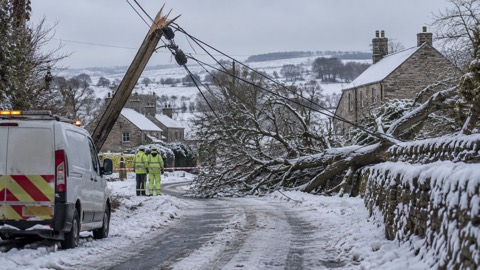
Storms also bring dangers after the lightning has passed. NI Direct's storm warning advice is not to walk too close to walls, buildings and trees, as they could have been weakened11. And the Met Office warns: "If you see power lines that have been brought down or damaged, keep as far away as possible. Electricity at high voltages can jump gaps with no warning"6. A fallen cable that looks dead may not be.
Staying safe indoors during a storm
Being indoors is the right place to be, but a house in a thunderstorm has its own rules. The clearest one comes from Ready Scotland: "There's an increased risk of electrical injury from lightning during thunderstorms. Do not use landline phones, taps and sinks, as telephone lines and metal pipes can conduct electricity"3. The Met Office gives the same advice on the landline: telephone lines can conduct electricity, so try to avoid using the landline unless in an emergency1.
This is the fact behind the two questions people ask most. A mobile phone is fine: it has no connection to the telephone line, and official storm advice actually tells people to take a fully charged mobile phone with an in-car charger or battery pack when storms are forecast12, precisely so they can stay in touch and call for help. A shower or bath is not fine while the storm is overhead: a bath or shower means sustained contact with the metal pipes and the water in them, and the official warning covers taps and sinks3. Wait until the storm has clearly passed.
While the storm is in progress, the general storm advice applies: stay indoors as much as possible13, and do not go outside to repair damage while the storm is still in progress14. If you must enter or leave the house, the Met Office's storm advice is to use doors on the sheltered side, closing them behind you6.
A numbered routine for the storm itself:
- Stay indoors, away from windows if the storm is severe13.
- Do not use the landline unless it is an emergency1.
- Do not use taps, sinks, baths or showers3.
- Keep away from metal objects that can conduct or attract lightning1.
- Do not go outside to repair damage while the storm is in progress14.
- Take a fully charged mobile phone with a charger or battery pack so you can call for help12.
If the storm brings a power cut, treat it as its own event: the Met Office's thunderstorm advice is that if you are affected by fast flowing or deep water you should call 999 and wait for help2, and the same principle of staying put and calling for assistance applies to storm damage you cannot safely deal with. Our page on power cuts covers what to do when the electricity goes off.
Protecting your home and electrics before a storm
Lightning rarely arrives without warning, and the hours before a storm are when you can protect your home. The Met Office's storm warnings advise preparing to protect your property and people from injury: check for loose items outside your home and plan how you could secure them, including bins, garden furniture, trampolines, tents, sheds and fences15. Lancashire's preparedness advice is the same: secure outdoor items such as bins, garden furniture and trampolines to prevent them being blown into roads or through windows13. The UK government's storms guidance adds ladders, toys and play equipment to the list of loose objects to secure before or when a storm is forecast6.
For your electrics, Warwickshire County Council's electrical fire safety advice is to use surge protectors for sensitive electronic equipment, such as computers, TVs and home entertainment systems16. A surge protector sits between the socket and the device and absorbs sudden spikes in voltage, which can accompany storms and electrical faults. If a storm is forecast and you have sensitive equipment that is not on a surge protector, unplugging it before the storm arrives is consistent with the general principle of staying away from anything that conducts electricity during a thunderstorm.
A short before-the-storm checklist:
- Secure loose objects: bins, garden furniture, trampolines, ladders, toys and play equipment6.
- Check sheds, fences and tents are fastened or brought inside15.
- Make sure electric gates are open before a storm, so you are not trapped if power fails11.
- Use surge protectors for computers, TVs and home entertainment systems16.
- Take a fully charged mobile phone with an in-car charger or battery pack12.
- Think about your pets, car and furniture if flooding is possible12.
The electric gates point comes from NI Direct's storm warning advice and is easily overlooked: a power cut during a storm can leave closed electric gates closed11. If your property has them, open them before the weather arrives.
For the wider job of storm-proofing your home and garden, see our guide to preparing your home and garden for high winds.
Thunderstorm warnings and how to get them
Thunderstorms in the UK are covered by the Met Office's weather warning system, the same Yellow, Amber and Red structure used for wind, rain and snow. Surrey County Council's advice is simple: sign up for weather warning alerts17. Our page on Met Office weather warnings explains what each colour means and what it asks of you, and our page on how to sign up for Met Office weather alerts walks through the registration.
Warnings tell you what the weather is expected to do and how likely the impacts are. A Yellow wind warning issued by the Met Office in October 2026 is a good example of the wording to expect. It warned that there was a small chance that injuries and danger to life could occur from large waves and beach material being thrown onto sea fronts, coastal roads and properties18, and advised people to prepare to protect their property and people from injury by checking for and securing loose items outside15. The same warning carried specific coastal advice, which matters because thunderstorms often travel with the same systems:
If a storm is forecast for your area, the sequence is: check the warning, secure the garden, charge the phone, and plan your day so you are indoors when the weather arrives6.
When is it safe to go back outside?
There is no single official figure for how long to wait after the last thunder, so use the Met Office's own logic in reverse: hearing thunder means you are within range of where the next ground flash may occur1. The sensible reading is that you stay in shelter until the thunder has clearly stopped, not merely become intermittent. If you can still hear rumbles, the storm is still within range.
When you do go out, treat the aftermath with care. NI Direct's storm advice is not to walk too close to walls, buildings and trees, as they could have been weakened11. The Met Office warns against touching any electrical or telephone cables that have been blown down or are still hanging6, and to keep as far away as possible from power lines that have been brought down or damaged, because electricity at high voltages can jump gaps with no warning6. Essex Prepared's storm guidance repeats the cable warning for the period after the storm19.
If the storm has brought flooding, the government's flash flooding guidance applies: get information from Floodline, local radio and the local council, and contact the emergency services by phoning 999 if you are in immediate danger9. Do not walk or drive through flood water, and do not use flimsy or temporary structures, like a tent or a caravan, for shelter during flash flooding9.
For damage that needs reporting rather than repairing yourself, see our pages on how to report a fallen tree blocking a road and dangerous trees.
If someone is struck by lightning: first aid and calling 999
A lightning strike can cause burns, cardiac arrest and other serious injuries, and the response is the standard emergency response. Call 999 immediately. The NHS burns guidance is to call 999 for emergency assistance immediately for serious burns20, and the Northern Burn Care Network's advice is that in the case of more serious burns you should visit your nearest Emergency Department or dial 999 as soon as possible21. For minor burns, seek medical help by calling 111 or visiting your GP, and if in doubt call NHS 111 or your GP for advice21.
While help is on its way, the South Western Ambulance NHS Foundation Trust's advice is to stay calm22. Keep the person still and warm, and do not move them unnecessarily if a fall or other injury is possible. If the person is unresponsive and not breathing normally, call 999 and follow the operator's instructions; our page on first aid at home covers the basics every household should know.
The severity rules for burns, from the NHS and the Northern Burn Care Network:
| Situation | What to do |
|---|---|
| Serious burn or any lightning strike injury | Call 999 immediately20 |
| Minor burn | Call 111 or visit your GP for advice21 |
| Unsure how serious it is | Call NHS 111 or your GP21 |
| Tetanus immunisation not up to date | Mention it to your GP21 |
If the person's clothing has caught fire, Cheshire Fire and Rescue Service's instruction is "Stop, stay still"23, then follow the standard stop, drop and roll response the fire and rescue service teaches.
If the emergency involves water as well as lightning, the Met Office's advice is that if you are affected by fast flowing or deep water you should call 999 and wait for help2. On the coast, call 999 and ask for the Coastguard24.
Pets, livestock and the coast
Two groups need planning beyond the household itself. For pets, the advice is to bring them indoors with you: official storm guidance says to stay indoors as much as possible13, and flood planning advice says to think about your pets when moving to safety12. Our page on pets and animals in an emergency covers this in full.
For livestock, the advice to farmers and livestock owners, repeated across NI Direct's storm warnings, is to make sure livestock are in a sheltered, secure area away from trees11. The same warnings add that animals may behave erratically during high winds and that extra care should be taken when working with or moving stock11. Devon and Somerset Fire and Rescue Service, which handles many animal rescues, advises maintaining fences so that livestock and other animals do not get trapped25.
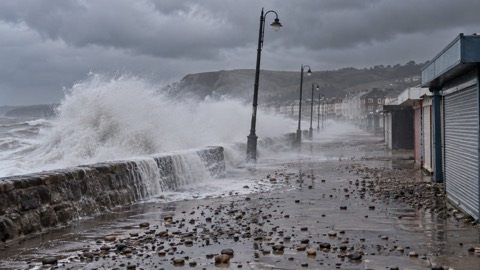
On the coast, the Met Office's warning advice is to be aware of large waves, because even from the shore large breaking waves can sweep you off your feet and out to sea; take care if walking near cliffs, know your route and keep dogs on a lead24. Devon and Somerset Fire and Rescue Service's water safety advice is to pay attention to warning signs and the safety flags at the beach25. In an emergency on the coast, call 999 and ask for the Coastguard24. Our page on staying safe on the coast in gales and high waves goes into this in more detail.
Sources (25)
- Stay Safe in Thunder and Lightning, Met Office, 2026-10-25
- Stay Safe in a Thunderstorm, Met Office, 2026-10-25
- Storms and Wind, Ready Scotland, 2026-03-24
- Stay Safe in Lightning, Met Office, 2026-10-25
- What Happens in an Emergency, Shropshire Council, 2026-10-29
- Storms, Prepare Campaign, 2026-10-19
- Flood Warnings Leaflet, Nottinghamshire County Council, 2010-11
- What to Do in a Chemical Emergency, GOV.UK, 2024-10-10
- Flash Flooding Guidance, GOV.UK, 2013-11-11
- Prepare Your Household for Emergencies, Westminster City Council, 2014-04
- Strong Winds Weather Warning Information and Advice, NI Direct, 2026-10-24
- Keeping Safe During High Winds and Heavy Rain, North Yorkshire Fire and Rescue Service, 2024-01-22
- Storms and Gales, Lancashire Prepared, 2026-10-29
- Are You Ready Booklet, Culham Parish Council, 2025-09
- Accessible UK Weather Warnings, Met Office, 2026-10-24
- Electrical Fire Safety, Warwickshire County Council, 2026-10-29
- Keeping Safe in Summer, Surrey County Council, 2026-10-28
- UK Weather Warnings, Day 2, Met Office, 2026-10-24
- Storms, Heavy Rain and High Winds, Essex Prepared, 2026-10-29
- Burns Prevention and Tips, Mid and South Essex NHS, 2026-10-25
- Burns First Aid, Northern Burn Care Network NHS, 2022-03-11
- What to Do When the Ambulance Is Coming, South Western Ambulance NHS Foundation Trust, 2026-10-29
- In the Event of a Fire, Cheshire Fire and Rescue Service, 2026-10-13
- UK Weather Warnings, Day 1, Met Office, 2026-10-27
- Top Causes of Rescues and How to Avoid Them, Devon and Somerset Fire and Rescue Service, 2026
 Flood Warning Checklist
 First Steps After a Flood
 Insurance Claim Records
 Storm Arwen 2021
 Storm Boelo
 Coastal Safety in Gales
 Council Help in Severe Weather
 Dangerous Trees
 Storm Darragh 2024
 Landslips After Heavy Rain
 How Storms Are Named
 Travel Disruption in Bad Weather