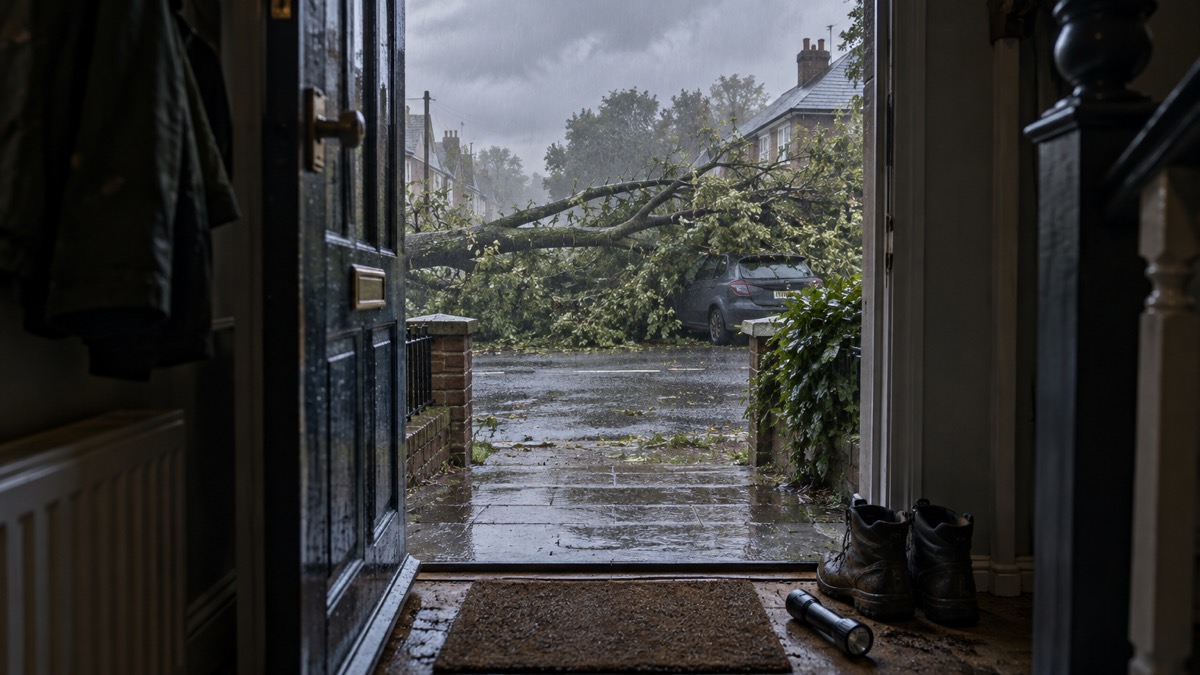
A tree down across the road is one of the most common sights after a storm, and the first thing to do is simple: do not go near it. Fallen trees often bring electricity poles and wires down with them, so the safest place is well back, in your car or on the pavement, while you make one phone call1.
Who you ring depends on where you are and what the tree is doing. In Northern Ireland, the number for a fallen tree or blocked road is 0300 200 78992. In England and Wales it is your local highway authority, the council department that looks after roads, and each one publishes its own number or online form. If the tree is on a motorway or major trunk road, it is National Highways, on 0300 123 50003. If someone is trapped or injured, or a tree is causing immediate danger to highway users, ring 9994.
Give the exact location, a contact name and a phone number, and report it once. Councils ask people to be patient and log a report a single time, because repeated calls cause delays5. Then stay clear until the tree has been made safe.
Report a fallen tree blocking a road: phone 0300 200 7899
The number 0300 200 7899 is the reporting line for a fallen tree or blocked road in Northern Ireland, run by DfI Roads, the department responsible for the road network there2. The same number is used to report an issue with snow or ice8. If you are in England, Scotland or Wales, there is no single national number for a fallen tree: you report it to the highway authority for that road, which is usually the council.
The exception is the strategic road network, the motorways and major A roads looked after by National Highways in England. A tree on a trunk road in Suffolk, for example, goes to the National Highways Information Line on 0300 123 5000 rather than the county council3. In Scotland, Traffic Scotland publishes separate guidance on driving in high winds and the closures that follow9.
Councils vary in how they take reports. Some, such as Anglesey, ask you to use an online form to report a fallen tree on the road6. Suffolk Highways takes fallen or overhanging trees and hedges through its Highways Reporting Tool, but asks you to ring 0345 606 6171 if there is an immediate danger to public safety10. Surrey County Council asks people to call its contact centre on 0300 200 1003 or report a fallen tree online11. Carmarthenshire County Council groups fallen trees and obstructions with flooding and blocked drains on its problems on the roads page12.
What to tell the reporting line
A good report gets a crew to the right place faster. Leeds City Council's tree emergency service asks for two things: the exact location of the tree or branch, and a contact name and telephone number4. Add anything that changes the risk, such as a tree resting on a car, a branch over a pavement, or wires down nearby.
- Where it is: the road name, the nearest house or junction, and which direction you were travelling.
- What it is doing: blocking the whole carriageway, hanging over it, or down on a verge.
- What is near it: power lines, a damaged vehicle, a house, or water.
- How to reach you: a name and a number in case the crew needs more detail4.
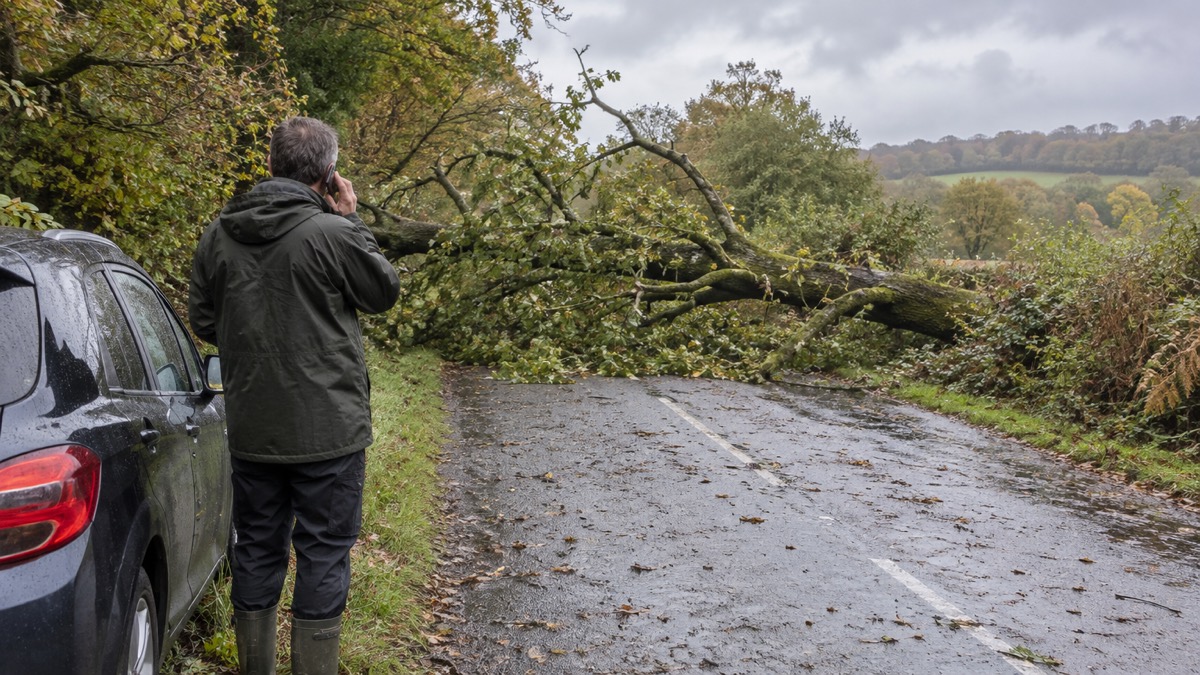
Report it once. Liverpool City Council is direct about this: "Please be patient and only log a report once. Attempting to log repeated calls is not helpful and will result in unnecessary delays"5. If the situation changes, for example a branch shifts and brings wires down, ring again and say so.
If the problem is a blocked drain or gully that could flood the road in the next storm, that is a separate report. Cumberland Council takes blocked drains that may cause flooding in a storm13, and Nottinghamshire County Council takes roads and blocked highway drains and gullies online or on 0300 500 80 8014. Suffolk residents should contact the borough or district council if a drain is blocked by leaves and litter15.
Stay clear of a fallen tree until it is made safe
A fallen tree is not a static object. The trunk can shift, the root plate can roll back, and branches under tension can spring. The most serious risk is electricity. The Northern Ireland guidance is blunt: "Be extra careful around fallen trees, as they often take electricity poles and wires with them as they fall"1.
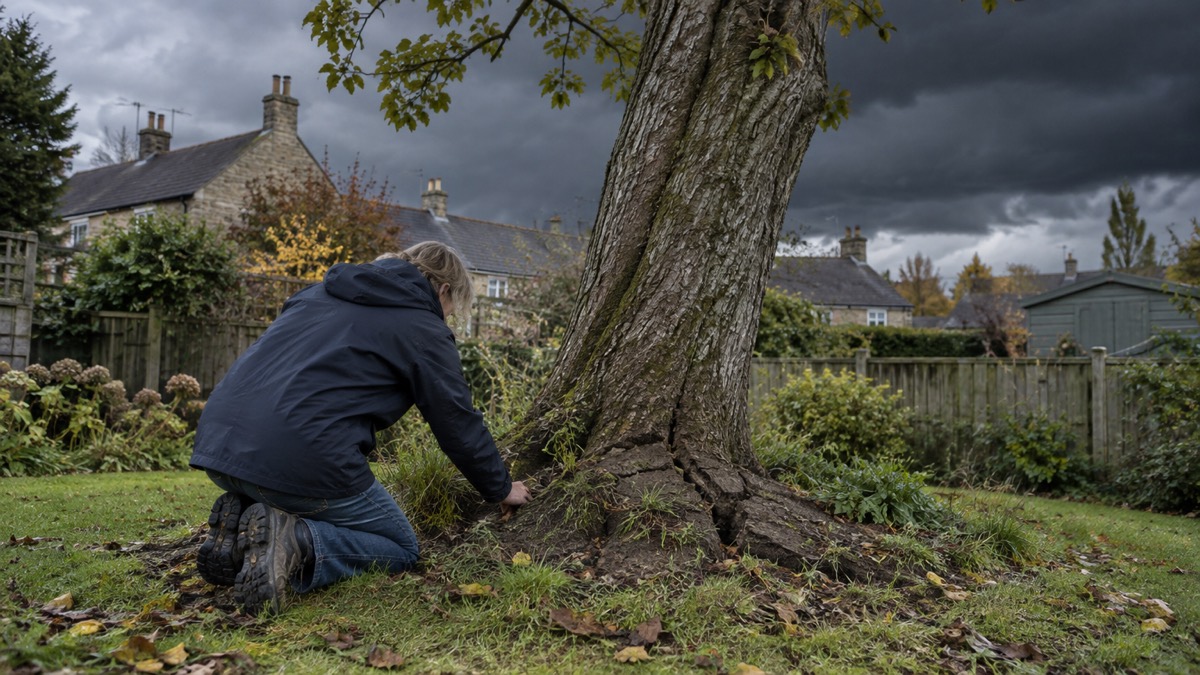
If a tree looks unstable but has not yet fallen, there are warning signs. Oxfordshire County Council suggests looking for soil movement around the base of the tree16. A tree leaning further than usual, with cracked ground at its foot, is one to report rather than walk under.
If a tree has come through a window or blocked an escape route in your home, the fire and rescue service advises opening the window and staying near it for fresh air and so firefighters can see you17. Do not try to clear heavy timber yourself.
When a fallen tree is an emergency
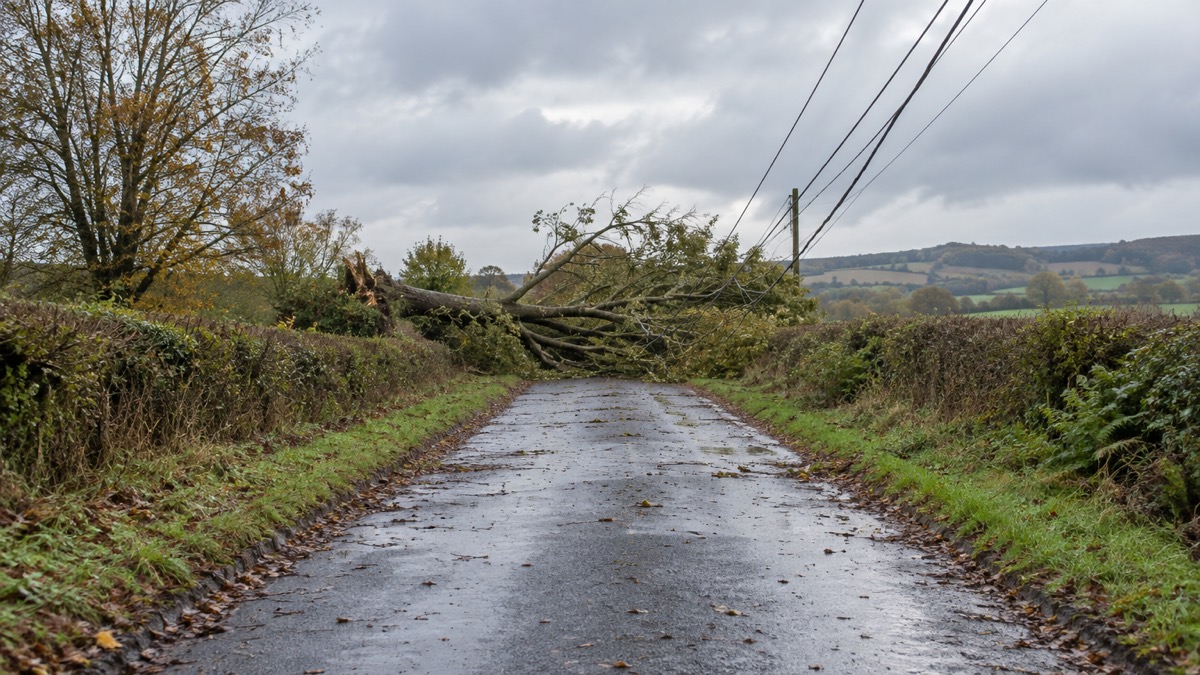
Most fallen trees are a nuisance, not an emergency. The distinction matters because it decides whether you ring 999, a council emergency line, or an ordinary reporting number.
Surrey County Council lists what counts as a road emergency needing an immediate response: a fallen tree branch or lamp column blocking the carriageway, exposed electrical wires, road collapse, a landslide, extensive flooding, traffic signals not working, and a vehicle fire on the carriageway among them18. Leeds City Council says that if a tree is causing an immediate danger to highway users, call the police on 9994. Devon and Somerset Fire and Rescue Service puts it simply: if you see fallen trees or debris that is dangerous, contact your local council, unless someone is trapped or injured, in which case ring 99919.
| Situation | Who to contact |
|---|---|
| Someone trapped or injured | 99919 |
| Tree causing immediate danger to highway users | Police on 9994 |
| Tree down on a council road, not immediately dangerous | Your highway authority's reporting line or form15 |
| Tree on a motorway or trunk road | National Highways Information Line, 0300 123 50003 |
| Wires down or a power cut | 1056 |
| Tree on a private road or private land | The landowner20 |
Out of hours, arrangements vary. Liverpool City Council says it will inspect and assess all reports within the hour, 24 hours a day, and asks people outside normal hours to call Merseyside Police on 999 or 1015. Belfast City Council publishes a list of emergency contact numbers for out of hours7. If in doubt and life is at risk, ring 999.
Trees touching power lines
Overhead lines are the reason a fallen tree is treated with such caution. Northern Powergrid, which runs the electricity network in the north east of England, asks people to report overgrown trees and plants near overhead lines, because they can be a safety hazard if they come into contact with them21. A tree that is merely growing close to a line is a job for the network operator, not something to cut back yourself.
Natural Resources Wales takes reports of fallen trees or debris on 0300 065 3000, a line staffed 24 hours a day22. If a line comes down across a road, treat the road as closed and ring 999 if there is an immediate danger to life.
Tree fallen on private land
Councils have limited powers over privately owned trees, and concerns should be raised with the landowner23. Do not use a council online reporting form for a tree on a private road: Suffolk Highways specifically excludes private roads from its online fallen tree reporting10.
There is an exception where a private tree threatens public land. Gloucester City Council says that in an emergency you can still report a fallen tree or branch in private ownership where it is causing a hazard to users of a public park or open space, and the council will advise on what action you need to take20. Leeds City Council does not deal with trees on private land unless they are causing an immediate danger to the highway or to public-owned land4.
If a tree on your own land comes down across a neighbour's drive or a public path, the practical answer is to deal with it promptly and tell the council if it blocks a right of way. For the wider question of who owns which tree and when a council will act, see Dangerous Trees: Who Is Responsible and How to Report One.
Storms bring fallen trees: getting ready before one hits
Most fallen tree reports come in during and just after a named storm. A little preparation reduces the chance that the tree that comes down is yours, or that you are on the road when it does.
Before strong winds arrive, secure loose objects in the garden that could be blown away24. If you have electric gates, make sure they are open before a storm, so you are not locked in if the power fails25. Check that you are prepared for a power cut, because trees on lines are a common cause25. If you have trees of your own, look at them in calm weather for soil movement at the base and dead wood overhead16.
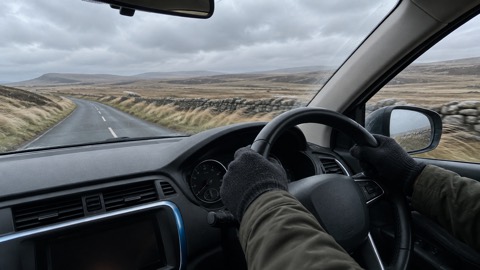
On the road, slow down and keep focused on the road ahead, as you may encounter debris from fallen trees, branches or other items blown by winds26. Traffic Scotland gives the same warning for high winds9. High winds can lead to debris on the roads, as well as fallen trees or other hazards that may not yet be reported9, so a road that was clear ten minutes ago may not be now.
For the wider picture, see Preparing Your Home and Garden for High Winds and Storms, Snow and Ice: A Household Guide. If the power does go off, Power Cuts: A Household Guide explains what to do next.
Sources (27)
- Strong winds and heavy rain warning: information and advice, nidirect, 2026-01-27
- Thunderstorms weather warning: advice and information, nidirect, 2026-08-30
- Severe weather information and services, Suffolk County Council, 2026-10-29
- Tree emergencies, Leeds City Council, 2026-10-29
- Dangerous or fallen trees, Liverpool City Council, 2026-10-29
- Winter ready, Isle of Anglesey County Council, 2026-10-25
- Emergency contact numbers, Belfast City Council, 2026-10-29
- Severe weather, storms, flooding and drought, nidirect, 2026-07-06
- Driving in high winds, Traffic Scotland, 2026-10-29
- https://www.suffolk.gov.uk/roads-and-transport/flooding-and-drainage/weather-warning, Suffolk County Council
- Report an emergency incident | Elmbridge Borough Council, Elmbridge Borough Council
- Emergency contacts, Carmarthenshire County Council, 2026-08-26
- Stormy weather, Cumberland Council, 2026
- During a flood, Nottinghamshire County Council, 2026-10-29
- Flood recovery information for Suffolk, Suffolk County Council, 2026-10-29
- Reporting a dangerous tree, Oxfordshire County Council, 2026
- Protecting your home, Mid and West Wales Fire and Rescue Service, 2026-10-29
- Road emergencies, Surrey County Council, 2026-09-08
- Safety in severe weather conditions, Devon and Somerset Fire and Rescue Service, 2026
- Dangerous tree on private land, Gloucester City Council, 2026-10-29
- Safety, Northern Powergrid, 2026-10-26
- Adverse weather events, Llangattock Community Council, 2026-10-25
- Find support with storm damage, Cornwall Council, 2026-10-22
- Storms, Essex Prepared, 2026-10-29
- Strong winds weather warning: information and advice, nidirect, 2026-10-24
- Travelling in strong winds, Traffic England, 2026-10-29
- Travelling in strong winds, National Highways, 2026-10-29
 Flood Warning Checklist
 First Steps After a Flood
 Insurance Claim Records
 Delaying Journeys in Bad Weather
 Driving in Heavy Rain
 Met Office Weather Alerts
 Driving in Strong Winds
 Wind Damage and Insurance