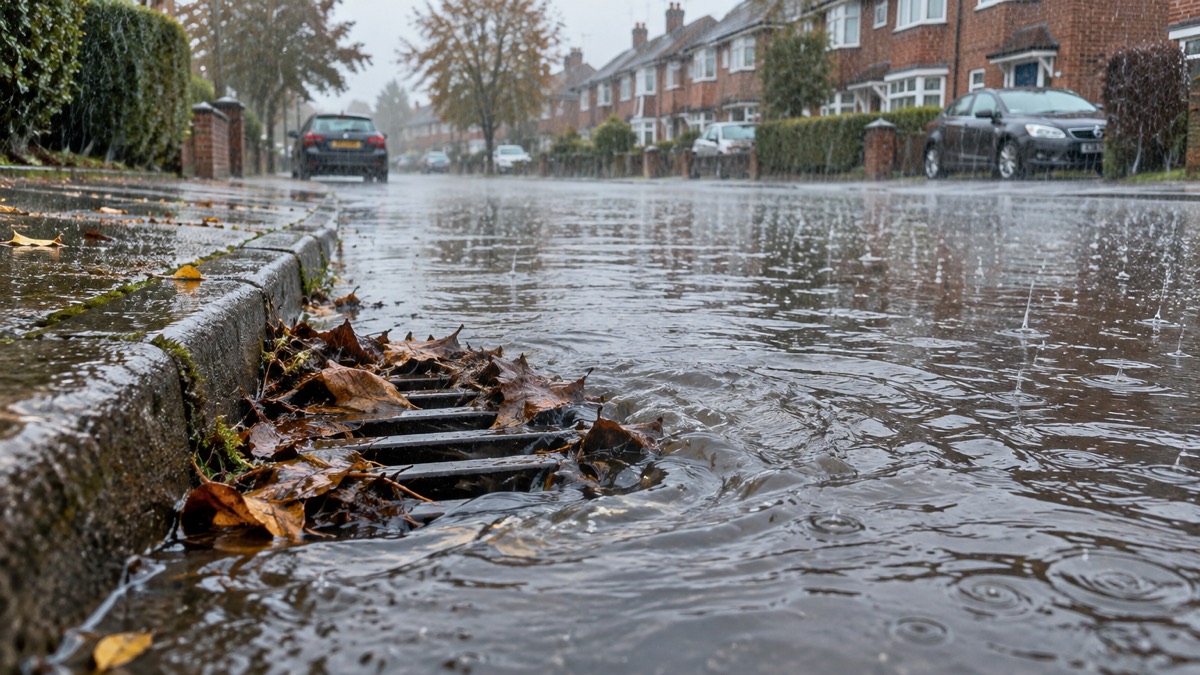
If water is pooling at the kerb after heavy rain, the gully under the roadside grating is probably blocked, and your local council is the body that clears it. Councils across the UK describe roadside gullies as their responsibility: Cumberland Council lists "Blocked gullies (roadside drainage gratings)" as its job1, Lincolnshire County Council says it is "usually responsible for roadside drains that drain the public highway"2, and Staffordshire County Highways says it is responsible for highways drains3. Report it to the highway authority for the road, not to a water company, unless the water is coming out of a sewer.
Reporting takes a few minutes. Most councils offer an online form, and many also publish a phone number. Nottinghamshire's Customer Service Centre is 0300 500 80 804, Lincolnshire's is 01522 7820825, and Devon's Highway Customer Service Centre is 0345 155 10046. Give the street name, the nearest house number or landmark, and say whether the water is still rising or threatening a property. If the blockage is an immediate danger to public safety, Suffolk County Council asks you to phone 0345 606 6171 rather than use the online form7.
The rest of this page sets out who owns which drain, how to report a blockage through a council form or a tool such as FixMyStreet, what counts as a highway drainage fault, and what to do when the drain is on private land. For the wider picture of how flooding reaches a home, start with Flooding: A Household Guide.
Your council is responsible for road drains and gullies
The highway authority for a road is responsible for the drainage that serves it. Derbyshire County Council puts it plainly: "It's our responsibility to maintain the drainage system for the road network, ensuring it efficiently removes surface water from paved surfaces"9. Oxfordshire County Council says it is responsible for fixing drainage and flooding issues on highways and roads across the county, including blocked drains and gullies on the roads10. Cumberland Council's table of street problems lists blocked gullies as the council's responsibility1.
That responsibility has edges. Oxfordshire Highways is responsible for blocked drains and gullies on the roads but not normally for ditches alongside roads10. Cumberland Council says roadside ditches and private sewers or drains are mainly the responsibility of private landowners on each side of the ditch1. Devon County Council says ditches along the side of the road belong to whoever owns the land they sit on, and should be maintained so the ditch can carry water away from the road11.
| What is blocked or flooding | Who deals with it |
|---|---|
| Roadside gully or highway drain | Your local council, as highway authority1 |
| Ditch alongside the road | The landowner on each side of the ditch1 |
| Private drain or sewer on your property | You, the homeowner or landlord, via a drainage contractor12 |
| Foul sewer or water main | Your local water company12 |
| Surface water flooding | Your local council, as lead local flood authority13 |
The last row matters because it explains why the council is the right first call even when the problem is bigger than one gully. The Mayor of London's guidance says your local council is your lead local flood authority for surface water flooding and may have further information and advice on its website13. In the North East, the Northumbria Local Resilience Forum sets out the split: the local council manages surface water on the roads and smaller watercourses, Northumbrian Water manages clean water, sewerage and pipes, and the Environment Agency takes care of rivers, coasts and reservoirs14. If you are unsure which body owns the problem, the council can usually tell you. Who Manages Flood Risk: Agencies, Councils and Water Companies sets out the full map.
How to report a blocked gully online
Most councils now prefer an online report, and the form is short. Wiltshire Council asks residents who spot blocked gullies to report them using its MyWilts online reporting service15. Nottinghamshire County Council says roads and blocked highway drains or gullies can be reported online, or through its Customer Service Centre on 0300 500 80 804. Argyll and Bute Council offers an online form for problems with street lighting or faults on the road, such as potholes, flooding, drains, street lights out or damaged signs16.
Have these details ready before you start:
- The street name and the nearest house number, junction or landmark.
- Whether the water is standing, flowing or rising, and roughly how deep it looks.
- Whether any property, driveway or business entrance is threatened.
- Whether the gully grate is visibly choked with leaves, mud or stones.
- A photo, if the form allows one.
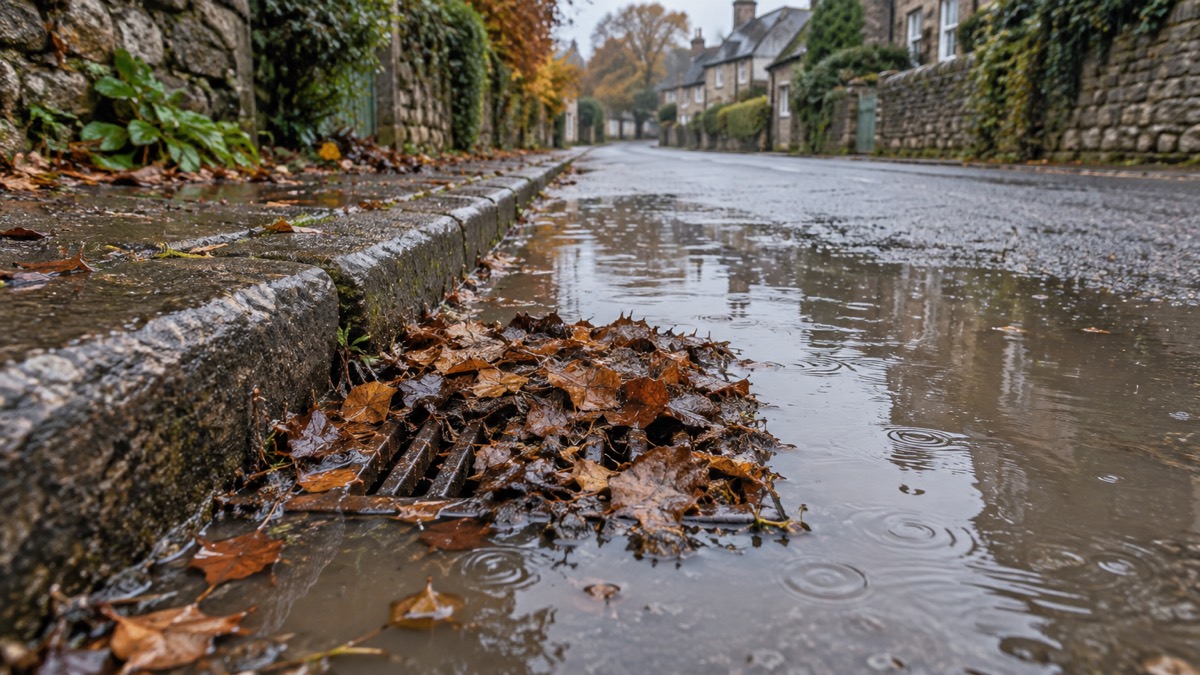
The photo point is worth taking seriously. Derbyshire County Council says drainage gullies and drains can become blocked very quickly when materials like mud or stones are carried onto the road during heavy rain or flooding, or after a heavy fall of leaves9. A picture of a grate under a pile of leaves tells the council exactly what to send.
If the online form will not load, or you would rather speak to someone, ring the customer service line. Carmarthenshire County Council Highways takes reports of highways gullies and drainage on 0300 333 2222, including in an emergency outside office hours17. Argyll and Bute publishes two numbers for blocked road drainage on public roads: 01546 605514 during normal working hours and 0800 373635 outside them16. Where a council publishes only one number, the recorded message will tell you what to do out of hours.
Reporting road flooding with FixMyStreet and council tools
Several councils route highway flooding reports through FixMyStreet, a public reporting tool that sends the report to the right authority. Oxfordshire County Council says you can report flooding on a highway, including blocked drains and gullies on roads, through its online reporting tool FixMyStreet10. Lincolnshire County Council says flooding affecting the highway, and flooding to property or land, can be reported on FixMyStreet, or by calling 01522 7820825. The Mayor of London's flash flooding guidance says to report street drainage issues through your council by phone, its online reporting system, or at Fix My Street or Love Clean Streets13.
Other councils use their own forms. Carmarthenshire County Council asks you to report highway flooding or a blocked drain using its online highway flooding and blocked drain form18. Nottinghamshire County Council says to tell it about a flooded road or drainage problem online19, and its easy-read guidance repeats that flooded roads and blocked highway drains or gullies can also be reported to the Customer Service Centre on 0300 500 80 8020. Somerset Council asks you to report flooding or mud on the road, or blocked drains and gullies, if property could be flooded and water on the road is a hazard21.
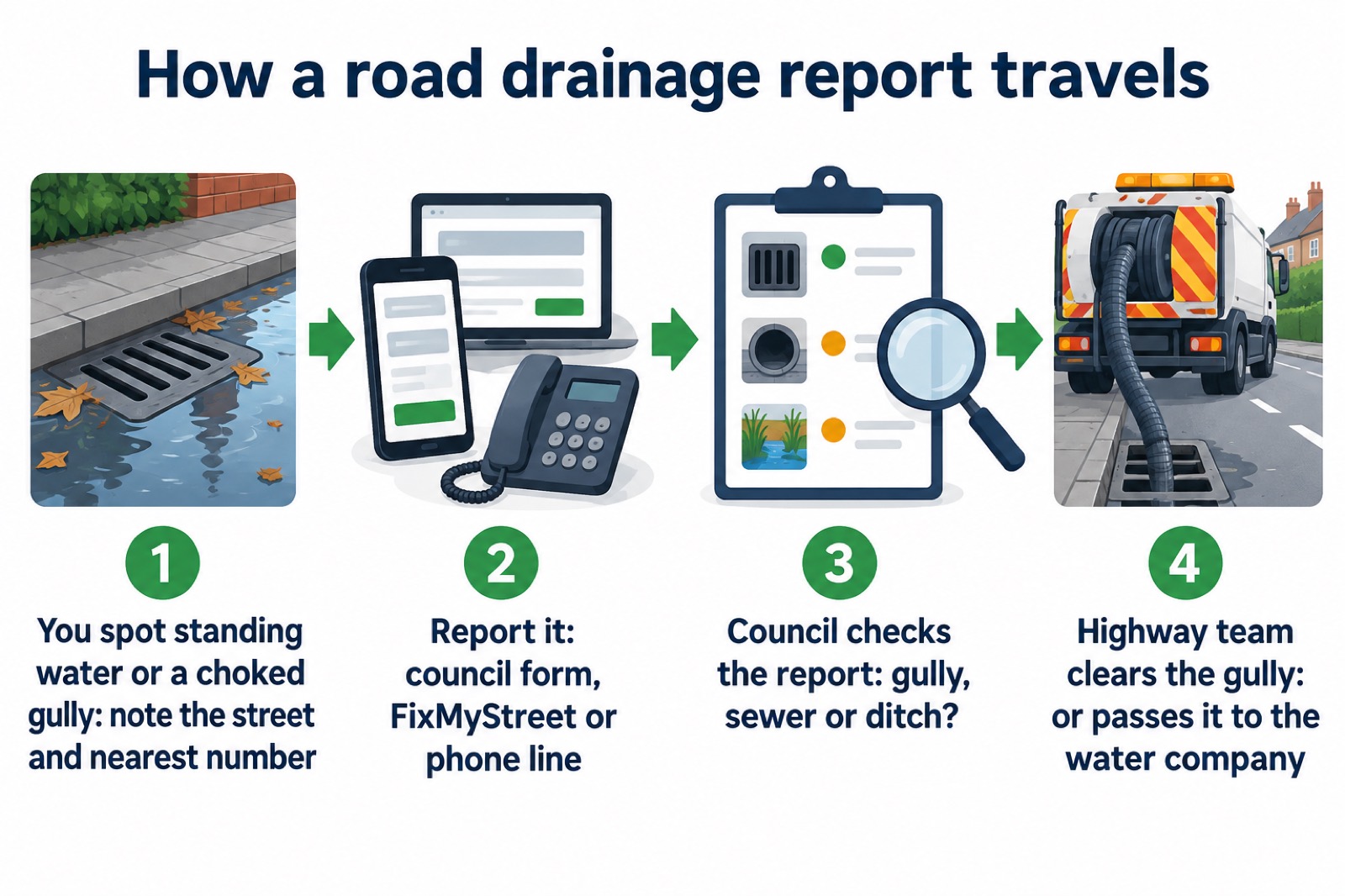
The choice between a council form and FixMyStreet usually comes down to what your council accepts. If its flooding page names FixMyStreet, use it; the report still reaches the highway team. If it has its own form, use that, because the form will ask the questions the team needs answered. Either way, keep a note of the date you reported and any reference number, so you can follow up if the water is still there a week later.
What counts as a highway drainage fault
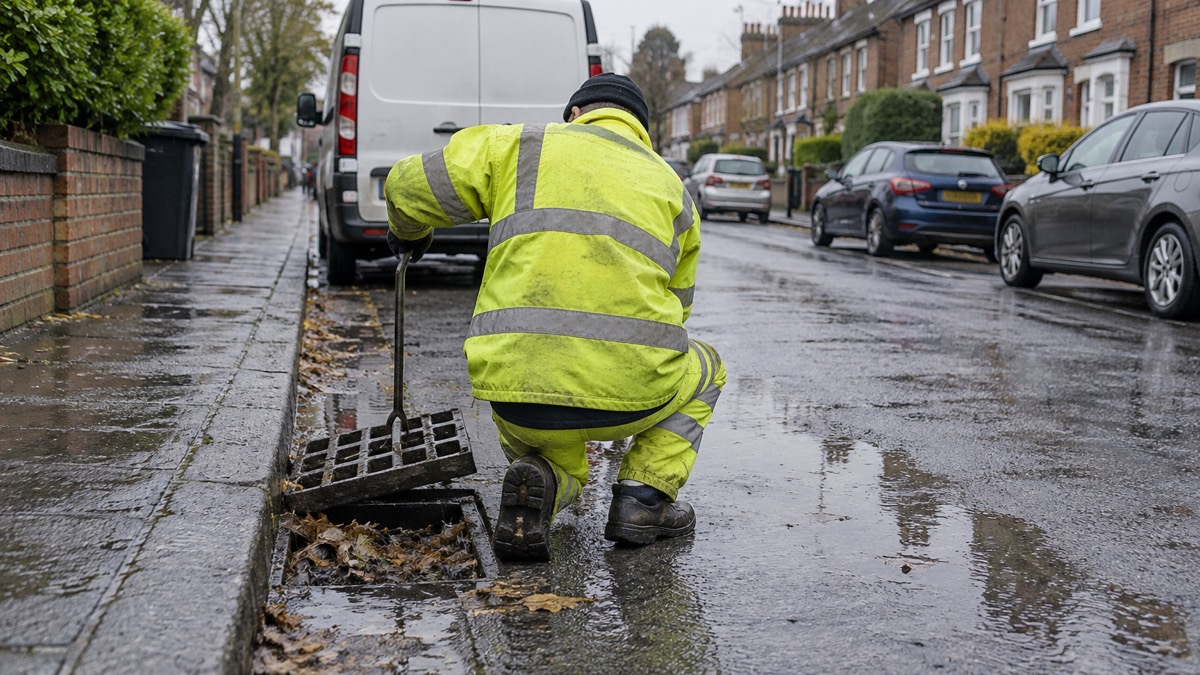
A highway drainage fault is a problem with the drainage that serves the public road: a blocked or overflowing gully, a sunken or rattling manhole or drain cover, or flooding on the highway itself, including roads, cycle lanes and pavements. Suffolk County Council lists exactly these as things to report through its highways reporting tool, along with the note that it is for flooding that is not an immediate risk to life7.
The commonest cause is debris. Derbyshire County Council says gullies and drains can become blocked very quickly when mud or stones are washed onto the road during heavy rain or flooding, or after a heavy fall of leaves9. That is why the same gully blocks every autumn and again after a summer downpour: the grate fills faster than the drain can clear.
Some problems look like highway drainage faults but are not. If the water is coming up out of a manhole or a toilet, the sewer is surcharged and the water company is the body to call. And if the water is on a private road, in a car park or on private land, Suffolk County Council says it is the responsibility of the land owner or Anglian Water8.
"Drainage gullies and drains can become blocked very quickly when materials like mud or stones are carried onto the road during heavy rain or flooding, or a heavy fall of leaves"
Drains on private land, and when to call someone else
If the blocked drain is on your own property, the council is not the body to call. Central Bedfordshire Council says homeowners are responsible for the upkeep of any private drainage systems on their property, including gullies, drains and external pipework up to the stop tap or boundary of their property22. Derbyshire County Council says to keep private drains clear and in good working order, and to call a drainage contractor if they become blocked12. The GOV.UK guidance is blunt: floods caused by private drains are the responsibility of the property owner23.
The external stop tap is a separate matter. WaterSafe, the independent plumbing assurance body, says the external stop tap belongs to your local water supplier24. If water is escaping on the supply side of the boundary, that is the water company's job, not yours and not the council's.
For a private road, a shared driveway or a car park, the landowner carries the responsibility. Suffolk County Council's wording covers "a private road, private land or a car park", which it says is the responsibility of the land owner or Anglian Water8. If you rent, tell your landlord; if you own a share of a private road, the maintenance arrangement will be in the deeds or the residents' association papers.
Where to get help and how to follow up
If you are not sure who to contact, GOV.UK's flood help page is the starting point. It says that before pumping flood water into street drains, highways or highway ditches, you should check with the local highways authority or National Highways25. GOV.UK also has a service for reporting flooding from a burst water main or a public sewer, which routes the report to the water company rather than the council23.
For Northern Ireland, the Flooding Incident Line takes reports of flooding problems on roads, burst water mains and blocked drains26. In Scotland, the arrangements differ: the Scottish Environment Protection Agency's flooding FAQs say your local council is responsible for the construction and maintenance of any flood defences in your area27. In Wales, Carmarthenshire County Council's emergency contacts page says flooding, blocked drains, fallen trees and obstructions should all be reported through its problems on the roads page28.
A few habits make a report more likely to be acted on quickly:
- Report early, before the water reaches a doorstep. Somerset Council asks for a report where property could be flooded and water on the road is a hazard21.
- Get to know your area. Derbyshire County Council advises residents to learn where streams, brooks, ditches, drains and culverts contribute to flooding, and to report blockages or obstructions to the council29.
For the wider picture of what to do when water is heading for your home, read What to Do During a Flood at Home, and for the bodies involved in each part of the system, see Who to Report Flooding To.
Sources (29)
- Flooding, blocked gullies and drains, Cumberland Council, 2026
- Report blocked drains, highways flooding issue, Lincolnshire County Council, 2026-10-29
- Flooding and drainage, Staffordshire County Council, 2026
- During a flood, Nottinghamshire County Council, 2026-10-29
- Report a flood, Lincolnshire County Council, 2026-10-29
- Who to contact about flooding, Devon County Council, 2026-06-16
- Report a flood in Suffolk, Suffolk County Council, 2026-10-29
- https://www.suffolk.gov.uk/about/flood-recovery-information-for-suffolk, Suffolk County Council
- Flooding, Derbyshire County Council, 2026-10-29
- Flooding, Oxfordshire County Council, 2026
- Flooding and drainage, Devon County Council, 2026-07-29
- Personal responsibility, Derbyshire County Council, 2026-10-29
- How to prepare for flash flooding, Greater London Authority, 2026-10-25
- Northumbria Local Resilience Forum, Northumberland County Council, 2026-10-28
- Prepare for potential flooding, Wiltshire and Swindon Prepared, 2026-10-25
- Reporting poor road conditions, Argyll and Bute Council, 2026
- Flooding information, Carmarthenshire County Council, 2025-11-05
- Report a flooding incident, Carmarthenshire County Council, 2025-11-04
- Flooded roads, Nottinghamshire County Council, 2026-10-29
- Flooding during a flood (easy read), Nottinghamshire County Council, 2025-11-02
- Flooding, Somerset Council, 2025-12-12
- Homeowner flood protection responsibilities and prevention tips, Central Bedfordshire Council, 2026
- Report flooding or a burst water main, GOV.UK, 2026-10-29
- What should I do if I can't turn off my water supply?, WaterSafe, 2026-10-29
- Help during a flood, GOV.UK, 2026-10-25
- Thunderstorms weather warning: advice and information, nidirect, 2026-08-30
- Flooding FAQs, Scottish Environment Protection Agency, 2026-10-29
- Emergency contacts, Carmarthenshire County Council, 2026-08-26
- Resilience and sandbags, Derbyshire County Council, 2026-10-29
 Flood Warning Checklist
 First Steps After a Flood
 Insurance Claim Records
 Signing Up for Flood Warnings
 Flood Warnings Without Email
 Who to Report Flooding To
 Garden Safety After Sewage
 Council Sandbag Duties
 Filling and Laying Sandbags
 Makeshift Sandbags
 Disposing of Used Sandbags
 Turning Off Utilities
 Walking or Driving in Floodwater
 Turning Electricity Back On
 Appliances After Water Damage