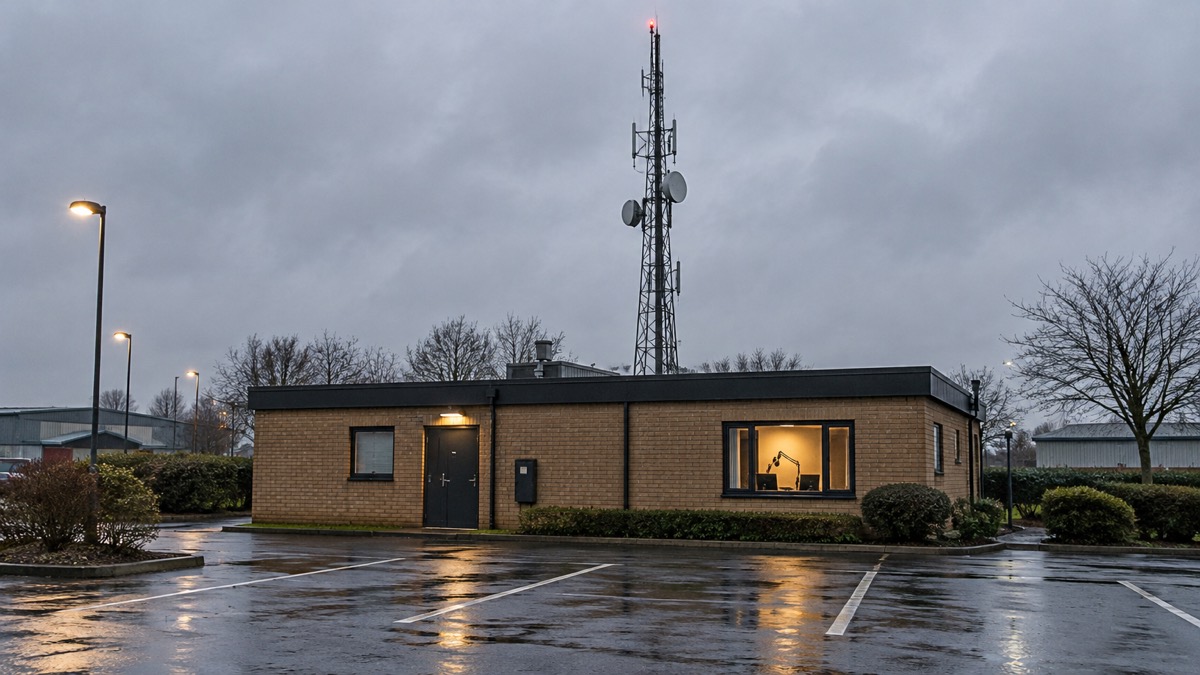
When the power goes off, the first thing many households reach for is a phone. But a power cut can take the internet, the landline and sometimes the mobile signal with it. A battery or wind-up radio keeps working when nothing else does, and official guidance is consistent: keep one at home with spare batteries, and use it to find stations that are still broadcasting1.
Tune to your local BBC station first, and try both FM and digital. During a power cut, updates may be communicated by BBC local radio, and by Radio 2 and Radio 4 in the event of a national power outage1. If you cannot find your local station, search across the band rather than giving up: official guidance says to try both FM and digital modes3.
To report the cut or get updates, call 105, the free national power cut line, or use the Power Cut 105 website4. Keep a written list of local frequencies with your radio so you are not depending on a phone to look them up6.
Tune to BBC local radio for news during a power cut
Local radio is the most reliable source of information in a cut because it is broadcast, not streamed: it does not need your broadband, your router or your phone to work. Official guidance for Greater Manchester names BBC Radio Manchester specifically, alongside Radio 2 and Radio 4 for a national outage1. The principle travels: find your own BBC local station and make it the first preset you try.
If you cannot pick up your local station, search the band. Ready Scotland's advice is to use a battery-powered or wind-up radio and try both digital and FM stations, because which services stay on air depends on the cut2. A radio that covers AM, FM and DAB gives you the most to try; Ofcom notes that AM/FM/DAB radios will help you receive weather warnings, news updates and information from your local authority or the UK Government8.
Keep a written list of local radio station frequencies with your emergency kit, as official guidance recommends, so you can tune in without a working phone or internet connection6. In a wider outage, power cuts are likely to be publicised widely on social media and mainstream news channels such as BBC News, and it is worth checking reliable sources because misinformation can spread quickly online9.
Battery and wind-up radios: what keeps you listening when the power is off
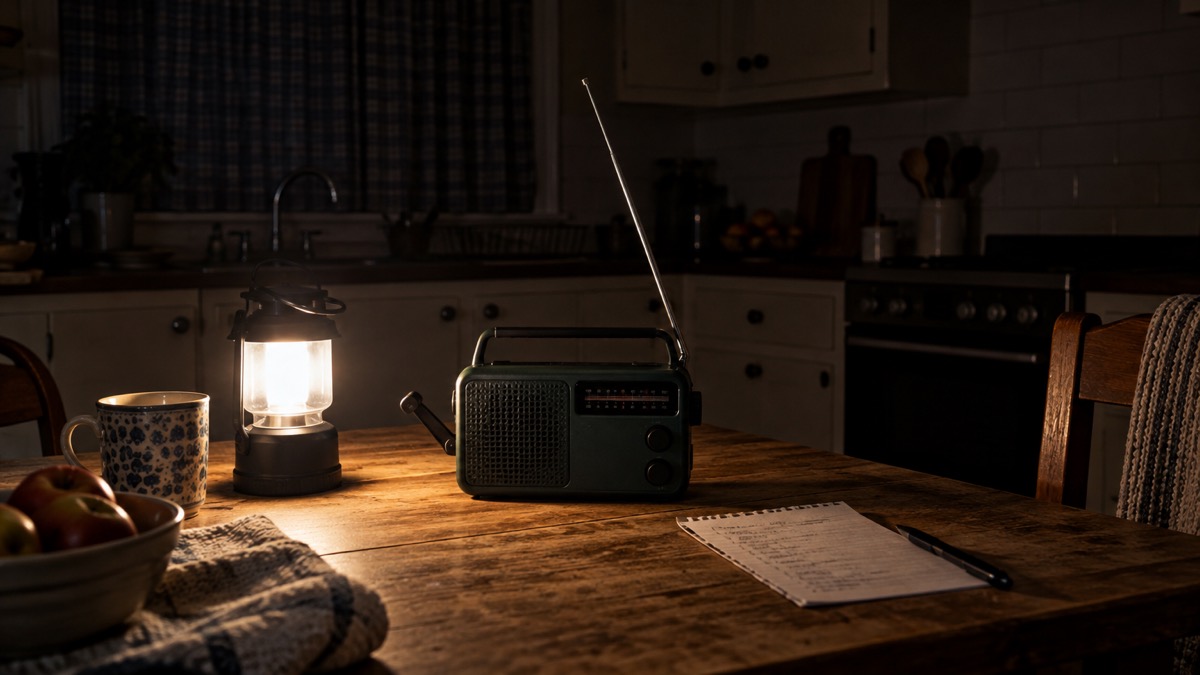
The radio itself has to survive the cut. Official guidance is to keep a battery or wind-up radio and spare batteries at home1. Ready Scotland goes further, suggesting a wind-up, battery or solar radio so you can listen to local radio updates10. If the outage is prolonged, a wind-up radio is a good purchase, and many have a point where you can plug in a mobile phone to keep its battery topped up11.
There are three broad ways to keep a radio running, and the right one depends on your household:
| Type | What it does for you | Suits |
|---|---|---|
| Battery radio | Runs on standard cells; needs a stock of spares6 | Households that will check and replace batteries |
| Wind-up radio | Generates its own power by hand; often has a phone charging point11 | Longer outages, or homes that forget to stock batteries |
| Solar radio | Charges from daylight; useful alongside winding10 | Homes with a sunny windowsill and a long outage |
Whichever you choose, keep a supply of new batteries in torches and radios so you can check news bulletins12. Store the radio and its batteries together, somewhere you can find them in the dark, and test the radio occasionally so you know it works before you need it.
Why your landline and broadband may go quiet in a power cut
Even a phone line that has worked for decades may not help you now. Digital landlines need mains electricity and will not work in a power cut unless there is a battery back-up7. The same applies to broadband: you could still lose access to communication services due to a power cut or a problem affecting your service provider13. Gas boilers and hobs, heat pumps, internet and landline phones all stop working without power5.
If your landline will not work during a power cut, your landline provider might offer you a free solution, such as a back-up battery unit, for a minimum of one hour14. Ask your provider what applies to your line. For households that depend on a phone line for a personal alarm or telecare, this matters more than for anyone else, and it is worth checking before the next storm rather than during one.
The radio is the fallback that does not depend on any of this. Where the phone and broadband fail, a battery radio still receives broadcast news, which is why official guidance keeps returning to it1. If you want to understand the phone side in more detail, our guides to what to do when phones and the internet go down and to whether your landline will work in a power cut cover the options.
Mobile signal after the 3G switch-off
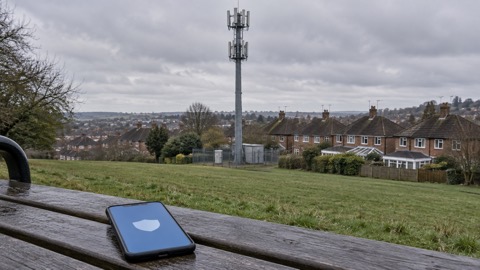
A mobile phone is not a guaranteed backup. Depending on where you are, you may lose mobile phone signal in a power cut5. In a large-scale power outage, all mobile phone signals and usual ways of communicating would stop working, according to the Wiltshire and Swindon Local Resilience Forum15. That is the scenario in which a radio earns its place: it receives a broadcast rather than relying on a mast with power.
Space weather is another reason broadcast radio can fail while you most want it. During a solar flare the increase in radiation from the Sun causes the ionosphere to absorb rather than reflect signals, disrupting communications on the sun-lit side of the Earth, and ionospheric turbulence can scatter electromagnetic waves, disrupting satellite navigation and radio bands16. This is uncommon, but it is why official advice says to try several bands rather than one.
The 3G networks are being switched off, which affects older phones and some personal alarms that rely on them. If your household includes someone who depends on an alarm or an older handset, check that it will still work before the next winter. Our guide to the 3G switch-off sets out what changes, and mobile networks in a power cut explains why masts and signal behave as they do.
Where to report a power cut and get updates
Report the cut and get updates through the same free service, whichever nation you are in. Call 105, the free national power cut line, to report the problem and get updates on when your power will be restored17. It is a free service in Scotland, England and Wales4. You can also report a power cut online at powercut105.com, which provides direct links and details of how to contact network operators online and via social media5.
| What you need | Where to go |
|---|---|
| Report a cut or ask when power returns | Call 105 free17 |
| Report or track a cut online | powercut105.com5 |
| Local network operator information | Links via powercut105.com5 |
| A live map of cuts in your area | Your network operator's power cut map, for example UK Power Networks18 |
If you are in Northern Ireland, the network operator is different, and it is worth knowing your operator's number before you need it. Keep the number written down with your radio, not only in your phone, because the phone may be the thing that fails.
Keeping the radio ready before the next cut
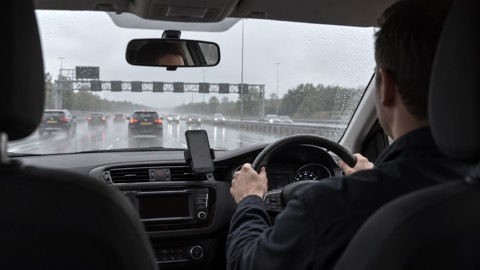
The work is done before the lights go out. Keep a battery or wind-up radio and spare batteries at home1. Keep a supply of new batteries in torches and radios12. Write down your local radio frequencies and the 105 number and keep them with the radio6. If you have a car, know that you can tune its radio to your local station for hourly news bulletins, but in severe weather it might be safer to stay indoors2.
A short checklist to run through each autumn:
- Test the radio and replace any flat or leaking batteries12.
- Check the written frequency list is still with the radio6.
- Confirm whether your landline has a battery back-up, and ask your provider if not14.
- Note the 105 number on paper as well as in your phone17.
- Tell everyone in the household where the radio lives.
For the wider picture, our guide to emergency radios compares wind-up, solar and battery types, and DAB or FM radios in an emergency looks at which bands to favour. If you are building a kit from scratch, start with Staying Informed and in Touch and the Power Cuts guide.
Sources (18)
- Prepare yourself: loss of essential services, Greater Manchester Combined Authority, 2026-10-29
- Emergency plan, Ready Scotland, 2026-03-24
- Be informed about hazards: power cuts, UK Government, 2026-10-21
- Power cuts, Scottish Fire and Rescue Service, 2026-10-25
- Storm advice, Power Cut 105, 2026-10-26
- Preparing for emergencies, North Hertfordshire District Council, 2015-01-12
- Future of landline calls, Ofcom, 2026-08-26
- Stay connected in severe weather, Ofcom, 2026-10-13
- What are electricity rota loads, Wiltshire and Swindon Prepared, 2026-10-25
- Adverse weather events, Llangattock Community Council, 2026-10-25
- Failure of national electricity, Wiltshire and Swindon Prepared, 2026-10-25
- Strong winds: weather warning information and advice, nidirect, 2026-10-24
- Planning for phone and broadband outages, Wiltshire and Swindon Prepared, 2026-10-25
- Advice for disabled persons and carers, UK Government, 2026-10-20
- Power outage planning and national exercises, Wiltshire and Swindon Prepared, 2026-10-25
- Space weather impacts, Met Office, 2026-10-29
- Cold, snow and ice, Ready Scotland, 2026-03-24
- Report an emergency incident, Elmbridge Borough Council, 2026
 Free Alert Services
 Emergency Apps
 Digital Switchover Checklist
 Silent 999 Calls
 Giving Your Exact Location
 When to Call 999
 Calling 999 With No Signal
 999 by Wi-Fi Calling
 When You Get an Alert
 Alerts While Driving
 Spotting a Genuine Alert
 Phones That Get Alerts
 Emergency Alerts On or Off
 Emergency Alert Privacy
 Emergency Alert Tests