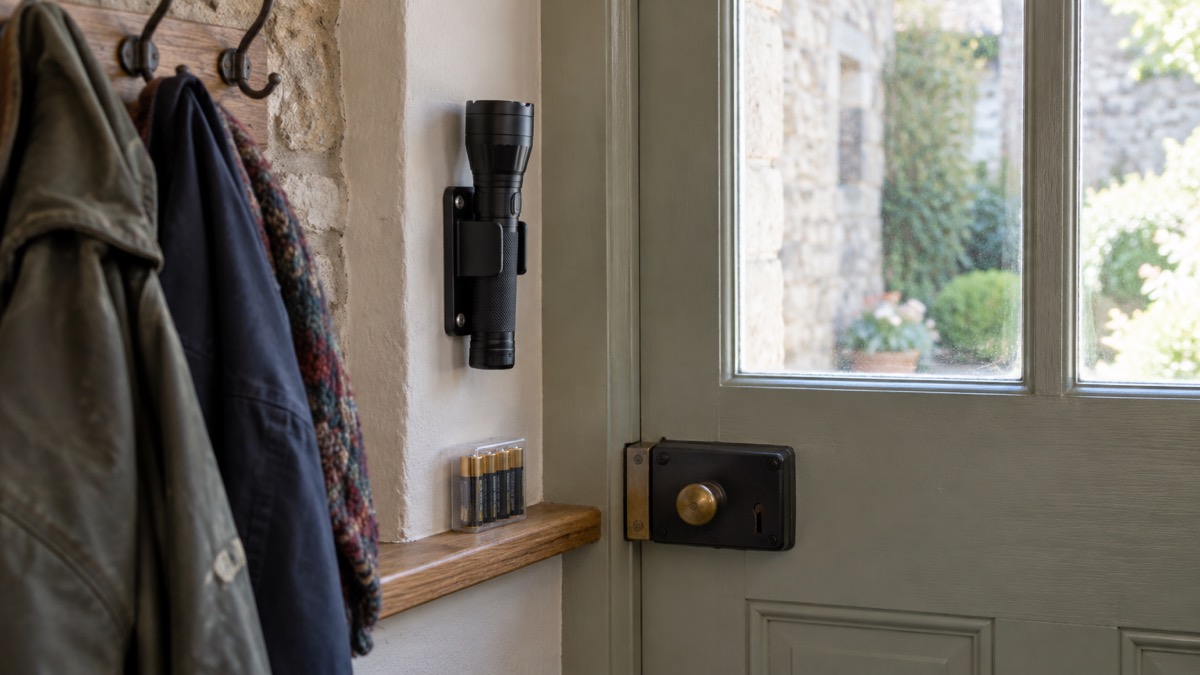
When the power goes off at night, the first minute is the one that matters. You need a torch you can reach without getting up and searching, and you need to know it will work. The advice from every network operator and fire service is the same: keep a battery or wind-up torch somewhere easy to find, keep spare batteries with it, and make sure everyone in the house knows where it lives1.
Torches are safer than candles. Official power cut guidance says to avoid using candles where possible as they increase the risk of fire2. That single choice, a torch rather than a flame, removes the most common lighting hazard in a power cut.
This page covers where to put torches so you can find them in the dark, why spare batteries belong beside them, and how to choose between battery and wind-up types. It is for an ordinary household with no prepping background, and it assumes the power cut has already happened or is about to.
Keep a torch where you can reach it in the dark
The test is simple: if the lights went out right now, could you put your hand on a torch without walking anywhere or opening anything? If the answer is no, the torch is in the wrong place.
Official guidance from Anglesey Council is to store a battery or wind-up torch somewhere you can access easily, so you can use it to check the fuse box and make your way around the house safely1. Fire Scotland says keep torches and batteries in an easy to find place8. National Grid adds the detail that matters most: keep torches and spare batteries to hand in case the power cut happens when it is dark outside, and make sure everyone in the home knows where they are kept7.
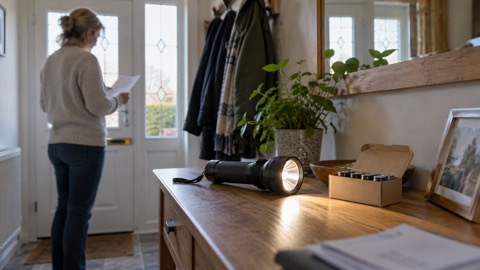
Wiltshire and Swindon Prepared puts it in terms of muscle memory: keep a torch to hand, know where it is located in your home, and know how you could easily put your hands on it9. That is the standard to aim for. A torch in a labelled box in the loft passes a tidy-house test but fails the dark test.
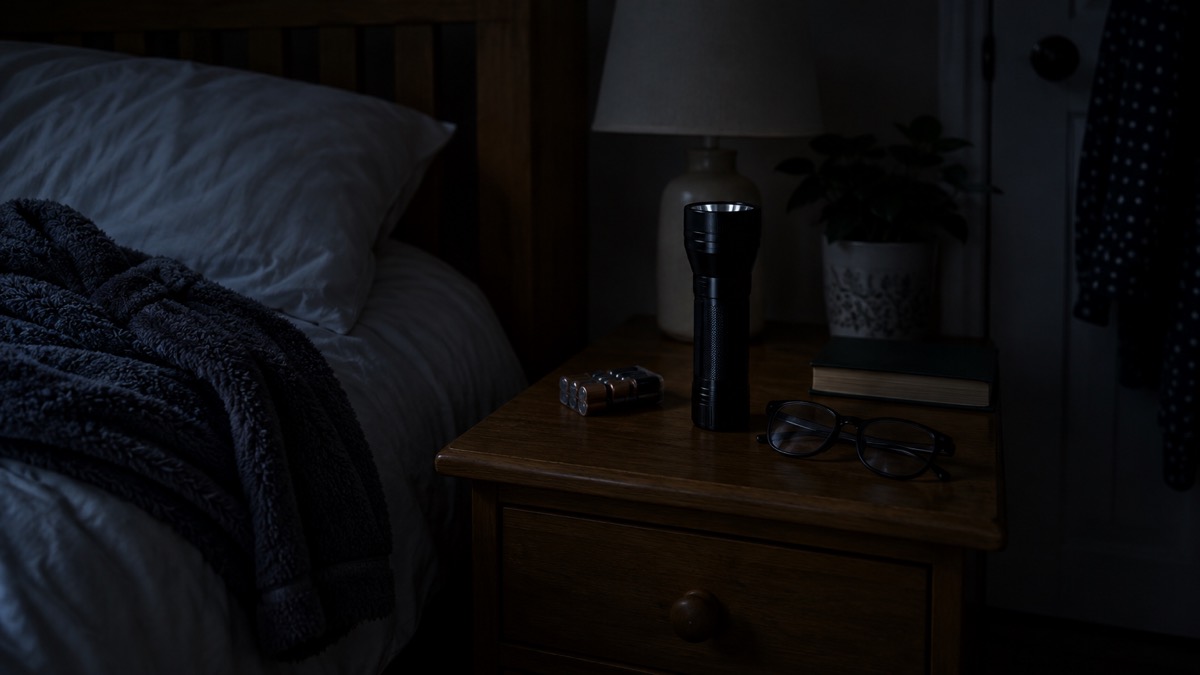
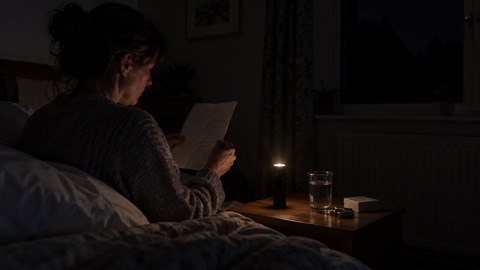
Keep torches and batteries in an easy to find place, and keep a torch handy in case you are without power during the night10. That covers the two situations that catch people out: a night-time cut when you are in bed, and a daytime cut when you are at the other end of the house.
Practical places that meet the test:
- Bedside table or shelf, so a night-time cut does not leave you searching in the dark10
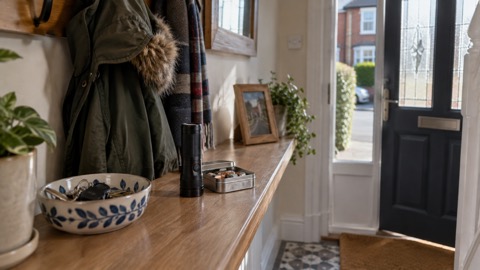
- Hallway or by the front door, so you can find it on the way in or out
- Kitchen, in an easy to find place1
- Living room, where the household gathers in the evening
- Stairs landing, so you can light the way up or down
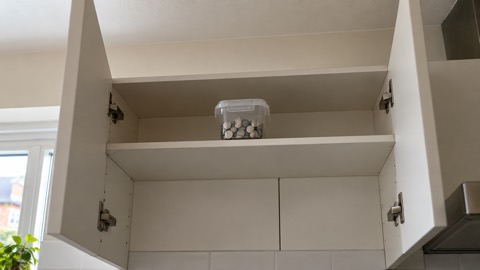
Avoid cupboards with catches you cannot work by touch, high shelves, and anywhere behind a door. Keep torches and batteries in an easy to find place, so a single failure does not leave you searching in the dark1.
Spare batteries belong with the torch
A torch without working batteries is a paperweight. The consistent advice is to keep spare batteries with the torch, not somewhere else in the house.
Northern Powergrid says keep a torch with spare batteries in an accessible location4. NIE Networks says keep a torch and spare batteries in an easily accessible place11. The government's power cut guidance says keep a battery or wind-up torch and spare batteries at home2. Wiltshire and Swindon Prepared adds the practical point: make sure you have spare batteries if the torch is battery operated9.
National Grid's advice is to check that the batteries are working and always make sure you have a spare set6. That check is the difference between a torch you own and a torch you can rely on.
Which spares to keep depends on your torches. If your household torches all take AA batteries, one pack of spares covers them all. If you have a mix of sizes, keep a set for each. Our guide to torch batteries explains the common sizes and how to store them, and the spare batteries checklist sets out what to keep for your lights.
Store batteries beside the torch, in the same place, so that finding one means finding the other. A torch in the hall and batteries in the kitchen drawer is two searches in the dark instead of one.
Battery-powered or wind-up: the safest torches for a power cut
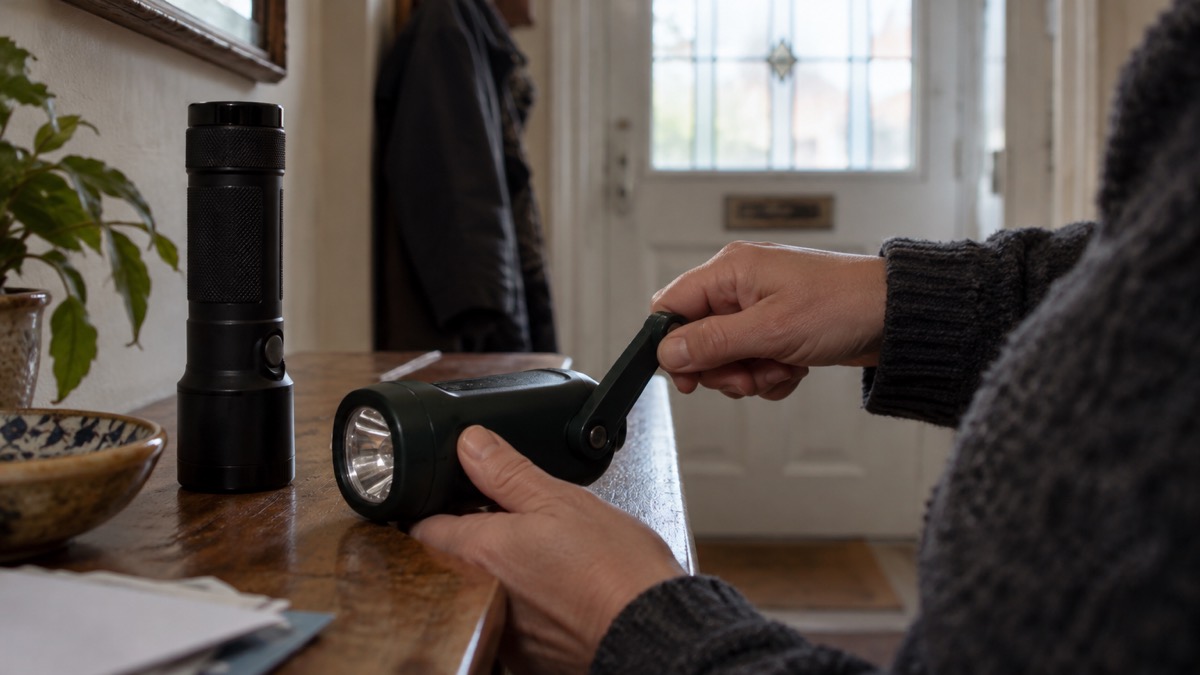
Official guidance names two types: battery and wind-up. Anglesey Council says store a battery or wind-up torch1. The government says keep a battery or wind-up torch and spare batteries at home2. Electricity North West says keep a battery-operated or wind-up torch somewhere easy to find3. The choice between them is about how you will use it, not about which is better.
| Type | What it does for the household | What to watch | Suits |
|---|---|---|---|
| Battery torch | Bright, simple, ready instantly if batteries are good2 | Needs spare batteries kept with it4 | Most households, especially where a torch is used often |
| Wind-up torch | A battery or wind-up torch is what official guidance recommends keeping at home1 | Needs winding to work; check it periodically | Homes that want a light that does not depend on spare batteries |
| Lantern | Lights a room rather than a spot | Bulkier to store by the bed | Kitchens and living rooms during an evening cut |
Whichever you choose, the safety point is the same: torches are safer than candles2. The British Red Cross advises avoiding candles where possible as they increase the risk of fire12. If you want to understand the alternatives in more depth, our pages on torches, lanterns and solar and wind-up lamps cover each type, and the torch or head torch comparison helps if you are deciding between the two.
A head torch is worth considering alongside a hand torch. It leaves both hands free for checking the fuse box or carrying things, and it is easy to keep with your other torches. Our guide to head torches explains the types.
Why not candles, and what to do instead
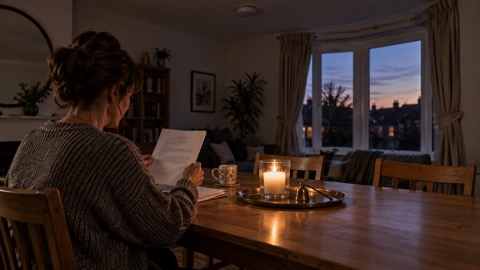
Candles appear in some official storm advice, but the lighting guidance for power cuts is clear that a torch is the safer choice. The government says torches are safer than candles2. Official power cut guidance says to avoid using candles where possible as they increase the risk of fire12. National Grid's homeowner guidance says keep a torch handy and avoid using candles or paraffin heaters13.
"Keep a battery or wind-up torch (and spare batteries) at home. Torches are safer than candles."
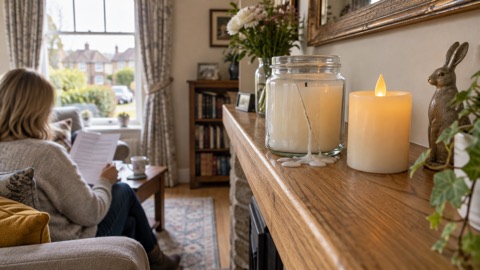
If you keep candles as a backup, treat them as a last resort and follow fire safety rules. Our candle fire safety page and the candle safety checklist set out how to use them safely, and the LED or real candles comparison looks at the safer alternatives.
Checking your torches before you need them
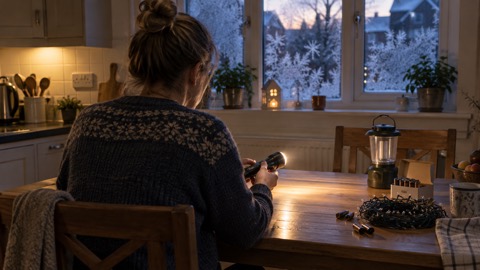
A torch you have not tested is a guess. National Grid's advice is to check that the batteries are working and always keep a spare set6. The NHS in Norfolk and Suffolk suggests keeping a charged power bank, a torch and spare batteries at home, and keeping important telephone numbers written down somewhere accessible15.
A short check takes a minute:
- Pick up each torch and check it is where you expect it to be6.
- Check the beam is bright, not dim or flickering.
- Open the battery compartment and check for corrosion or loose cells.
- Replace any batteries that are flat or past their best9.
- Put the spare set back beside the torch4.
- Check that a wind-up torch still winds and lights1.
Do this before winter and again when you change your clocks. Our winter lighting checks checklist covers the full routine, and the power cut checklist lists everything to have ready.
Torches for children and older relatives
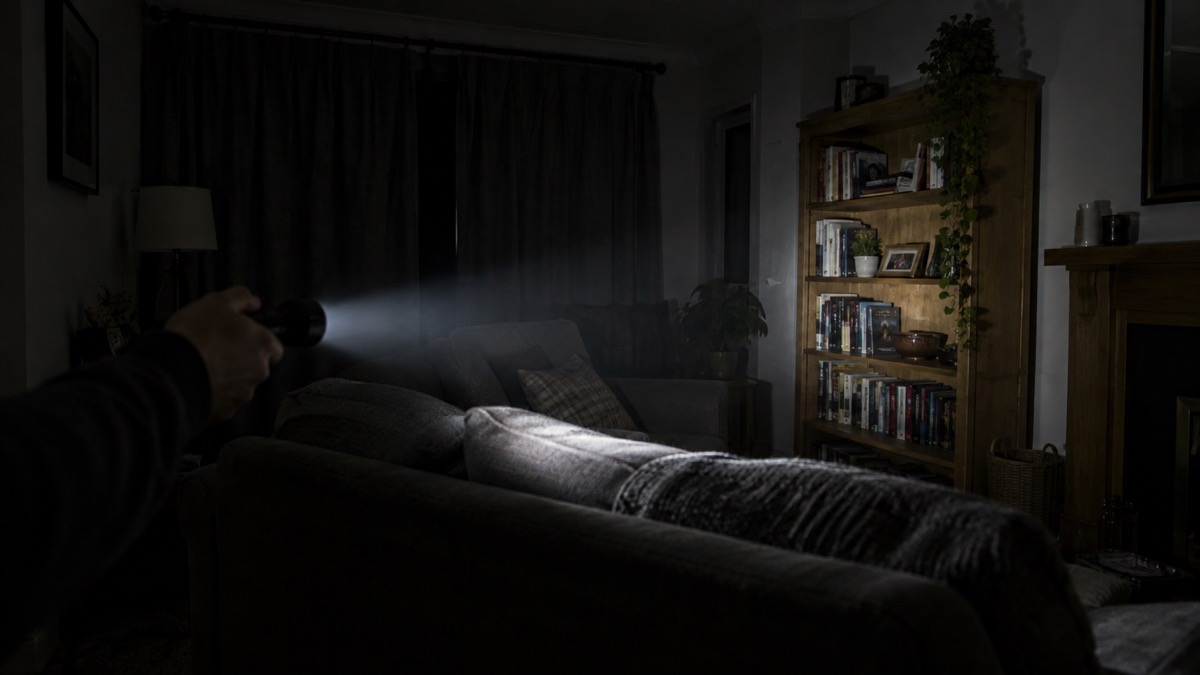
Make sure everyone in the home knows where the torches are kept7. That includes children old enough to reach one safely, and older relatives who may not be able to get to a cupboard quickly.
For children, National Grid's winter hub suggests finding a torch and looking after the smaller ones in the house16. A torch a child can reach themselves is reassuring in a power cut, but check it is suitable for their age and that they know not to shine it in anyone's eyes. Our guide to torches and children covers this in more detail.
For older or disabled relatives, check that their torch is within reach from where they sit or sleep, and that they can work the switch. Mersey Care NHS's equipment service has advice on what to do in a power cut for people who use community equipment17. If someone in your household depends on powered medical equipment or has mobility needs, ask their network operator about the Priority Services Register, which gives extra support during a power cut. Our guide to lights for older and disabled people explains the options.
Where to get help and further reading
If the power is off, call 105, the free national power cut number, to report it or get information18. Keep important telephone numbers written down somewhere accessible, as the NHS advises, in case your phone battery runs down15.
For more on lighting your home safely during a cut, see lighting during a power cut and the emergency lighting section. If you are choosing kit, the torch runtime and lumens and beam distance pages explain what the specifications mean in practice.
Sources (19)
- Winter ready, Isle of Anglesey County Council, 2026-10-25
- Be informed about hazards: power cuts, UK Government Prepare campaign, 2026-10-21
- Tips to prepare for a power cut, Electricity North West, 2026-10-25
- What to do in a power cut, Northern Powergrid, 2026-10-25
- Be prepared, Northern Powergrid, 2026-10-26
- Being prepared, National Grid, 2026
- Tips to prepare for a power cut, National Grid, 2026-10-25
- Power cuts, Scottish Fire and Rescue Service, 2026-10-25
- How to prepare for the loss of electricity, Wiltshire and Swindon Prepared, 2026-10-25
- How to prepare for (and stay safe during) a power cut, -a-power-cut/), NICEIC, 2025-01-24
- Get storm ready, NIE Networks, 2025-12-03
- Power cut, British Red Cross, 2026-10-25
- Homeowner useful information, National Grid, 2021
- Preparing for a power cut, National Grid, 2022-09
- Be prepared for winter emergencies, NHS Norfolk and Suffolk ICB, 2026-10-01
- Winter hub, National Grid, 2026-10-08
- Equipment services: what to do in a power cut, Mersey Care NHS Foundation Trust, 2026-10-25
- Storm, Power Cut 105, 2026-10-25
- Power cut, Energy Networks Association, 2026-10-25
 Spare Batteries for Lights
 Candle Safety Checklist
 Lighting Checks Before Winter
 Can Jar Candles Shatter
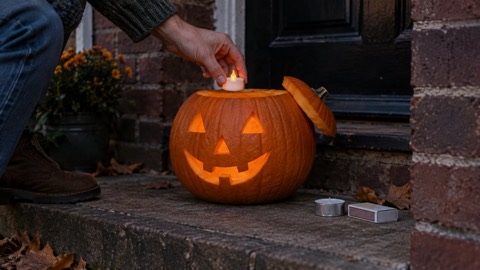 Battery Tea Lights in a Pumpkin
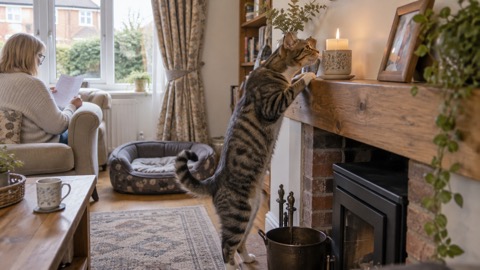 Keeping Pets Away from Candles
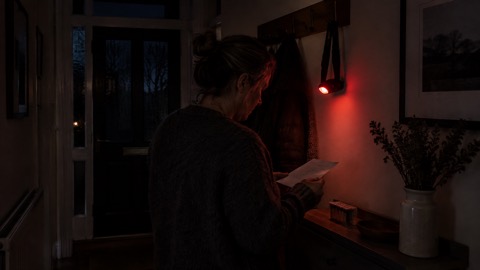 Red Light Mode on a Head Torch
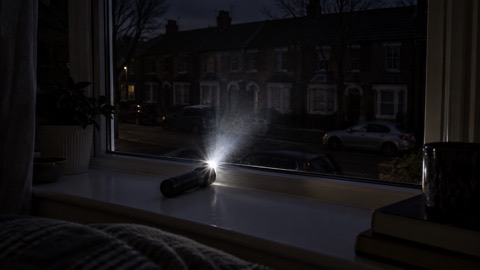 SOS and Strobe Modes
 IPX Ratings for Torches
 Torch Battery Runtime
 Camping Lantern Run Time
 Using a Torch While Charging
 Looking Into a Bright Torch
 Storing Spare Coin Cells
 Flat Button Battery Dangers