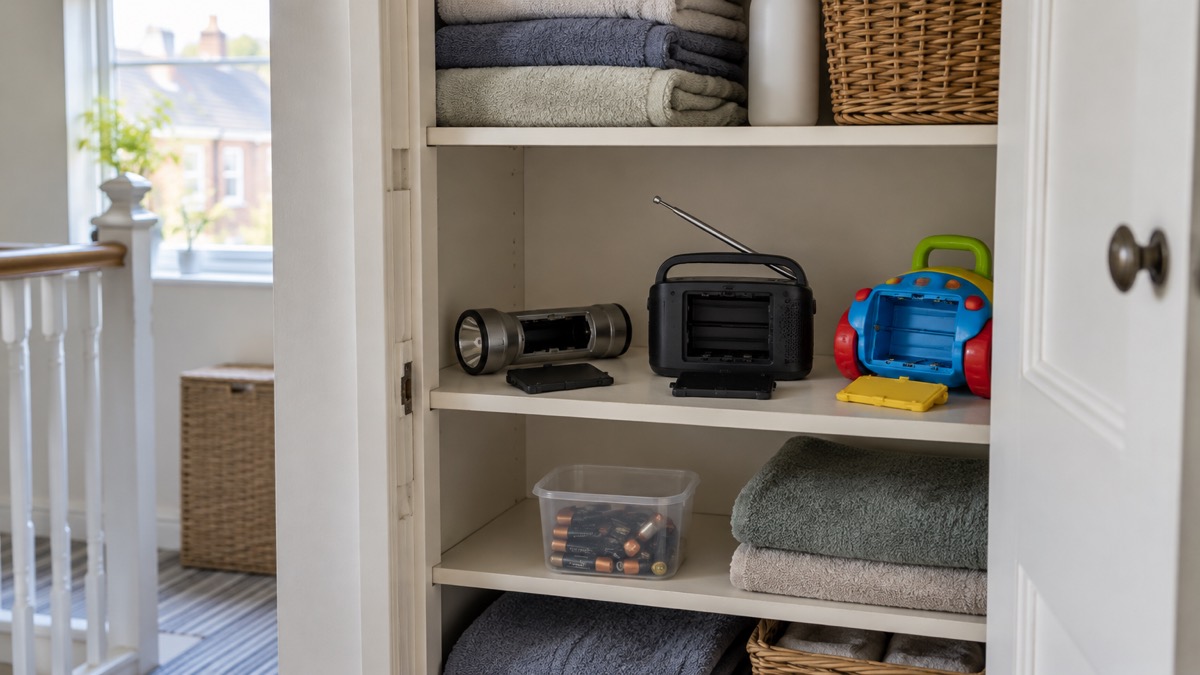
If a torch, radio, toy or remote is going into a cupboard and will not be touched for months, take the batteries out first. The maker's own advice is plain: remove batteries from a device when it is not expected to be in use for several months1. That single habit protects the device from a leaking cell, keeps the batteries usable, and means the torch you reach for in a power cut still works.
The same logic applies to anything with a rechargeable battery inside, but the action is different. You cannot always take a lithium-ion battery out, so the instruction becomes: follow the maker's storage and charging guidance, keep the device out of escape routes, and never leave it charging overnight or while you are out2. Lithium-ion batteries can overheat, catch fire or explode if improperly charged, handled, stored or disposed of, so storage is a safety matter, not just housekeeping5.
This page sets out when to remove batteries, how to store the ones you take out, what to do about sealed-in batteries, and how to keep button cells away from children. It is written for an ordinary UK household getting a torch, radio or emergency kit ready for winter.
When to take the batteries out
The trigger is time, not the type of device. If something will sit unused for several months, the batteries come out1. That covers the spare torch in the hall cupboard, the wind-up radio you keep for emergencies, the children's toys that rotate through the loft, remote controls for the second television, and the battery-powered candles in the Christmas box.
The reason is leakage. Batteries left in a device that is not being used can leak over time, and the maker's advice is to remove them from devices being stored to avoid future leaks1. A leaked cell corrodes the contacts and can write off a torch or radio you were counting on. Removing the batteries also means you can see them, check them and keep them somewhere sensible rather than discovering them flat and furred with white deposit a year later.
There is a second reason, which is that a device in storage is a device you are not watching. A battery that starts to swell or overheat inside a sealed torch body in a drawer goes unnoticed. Taking it out lets you look at it.
- Take them out: anything unused for several months, spare torches, seasonal toys, stored radios, remotes for unused sets1.
- Leave them in: devices you use and check regularly, such as the torch by the front door.
- Check as you go: look for swelling, corrosion or leakage before you store a battery, and do not put a damaged one back.
For a fuller picture of what to keep in a kit and how to rotate it, see the Power Cut Backup Power Checklist and Emergency Lighting at Home.
Lithium-ion devices in storage: take the battery out
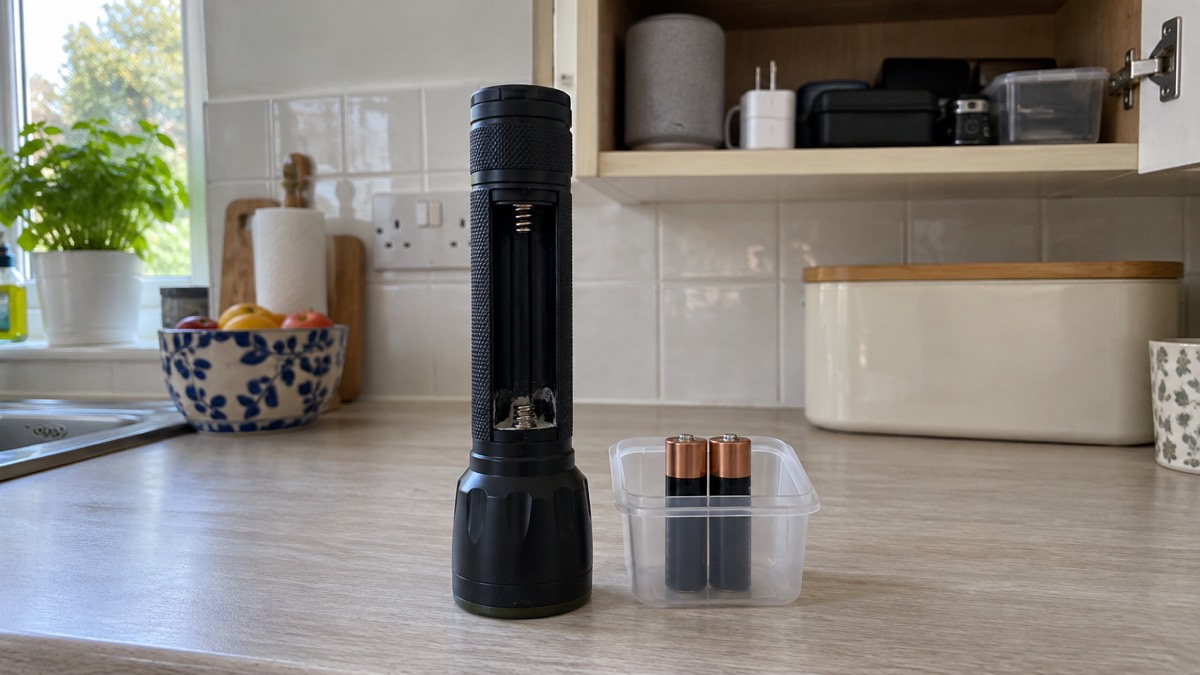
For devices with a removable lithium-ion battery, the same principle applies, with more at stake. Fire and rescue services across the UK say that if a lithium-ion battery will not be used for an extended period, you should follow the manufacturer's instructions for proper storage and maintenance3. Where the battery can be removed, removing it is the cleanest way to store the device safely.
Storage conditions matter as much as removal. Store e-bikes, e-scooters and batteries in a cool place, avoiding extreme temperatures12. Avoid leaving a battery outside overnight in winter, but if you keep it indoors make sure it will not block your escape route if it starts a fire13. Do not charge or store a battery in the hallway or anywhere it could block your escape14. The ferocity of a fire caused by a lithium-ion battery can be significant and prevent you from escaping from your home3.
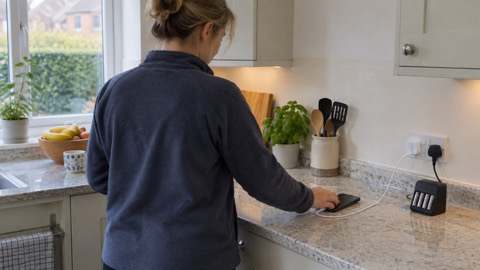
Charging is the other half of storage. Unplug devices once fully charged and avoid leaving them plugged in overnight5. Do not leave items continuously on charge, for example a phone plugged in overnight or charging under a pillow or on the bed11. Covering a device while it charges traps heat and increases fire risk5. Electrical Safety First advises unplugging your device after charging, not leaving it on prolonged charge when not in use, and keeping it uncovered and in a well-ventilated place while charging7.
Follow the storage and charging guidance in the user guide
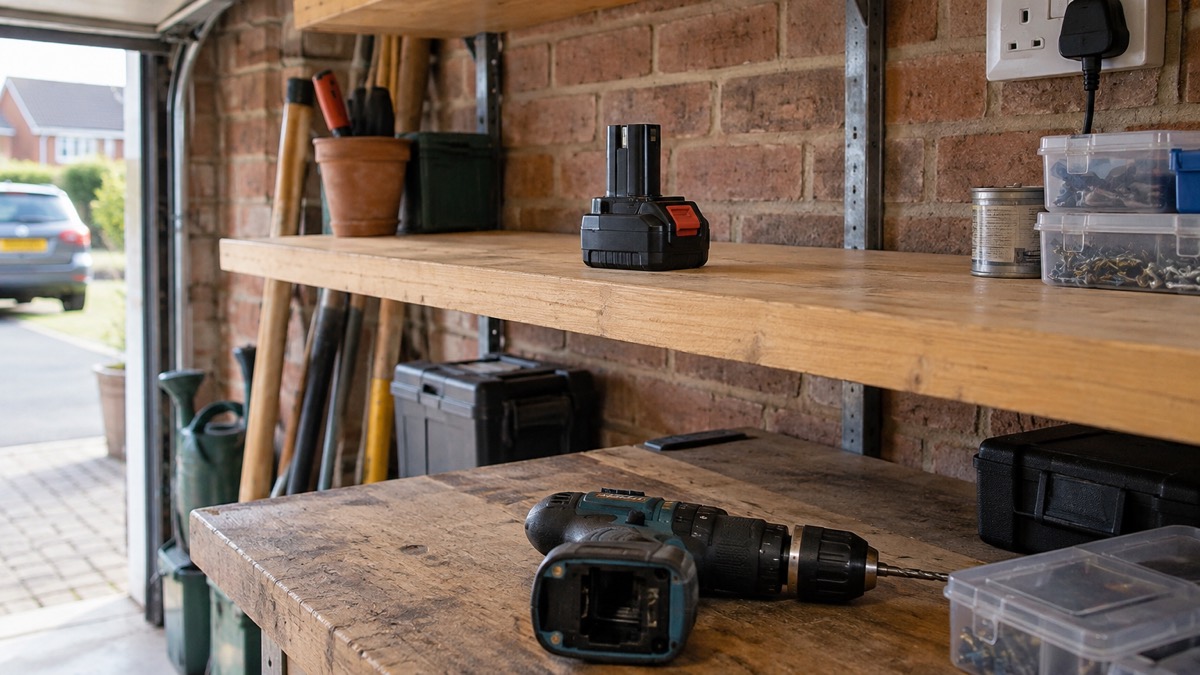
No single rule covers every device, because makers design their batteries differently. The fire service advice is to always follow the battery usage, storage and charging guidelines in the user guide6. That is the document that tells you whether a device should be stored at a particular charge level, whether the battery is removable, and what the maker considers normal.
For lead-acid leisure batteries, the Caravan and Motorhome Club gives a worked example: always recharge a battery after use and, if storing the caravan for more than one month, remove the battery and store it fully charged in a cool, dry place16. That is a different regime from a lithium-ion pack, which is why the maker's guide matters more than any general rule.
| Device type | What to do in storage | Why |
|---|---|---|
| Torch, radio, toy with AA or AAA cells | Remove the batteries if unused for several months1 | Prevents leaks ruining the device |
| Device with removable lithium-ion pack | Remove the pack and follow the maker's storage guidance3 | Reduces fire risk and preserves the battery |
| Device with sealed-in battery | Leave it in place, follow the maker's guide, keep it out of escape routes3 | You cannot remove it safely |
| Leisure battery | Recharge after use; if stored over a month, remove and store fully charged in a cool, dry place16 | Maintains capacity and avoids damage |
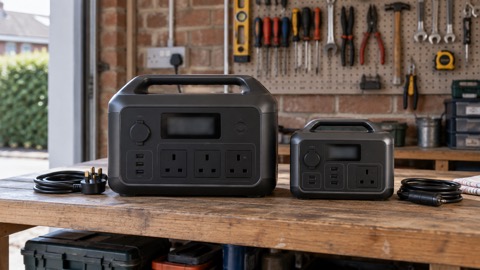
If you are storing a power station rather than a small device, the same principles apply: see How to Store a Power Station When Not in Use and What Temperature Should Batteries Be Stored At?.
Storing the batteries you have taken out
Once the cells are out of the device, they need a home. Keep them cool and dry, away from children and pets, and do not tip a mixture of part-used and new cells into the same tub. Do not mix and match different battery brands in the same device, and remove batteries from devices being stored, to avoid future leaks1. The same discipline applies to the storage box: keep brands and types apart so you know what you are putting back in.
Even a flat battery is not harmless. Even used batteries that have run out of charge remain a risk, so keep them away from children and dispose of them safely9. Even used batteries need to be kept securely out of reach of children until you are ready to recycle them8. A simple lidded container, kept high and out of reach, does the job.
- Keep them cool and dry, away from radiators and direct sun.
- Keep brands separate and do not mix them in a device1.
- Keep them out of reach of children, including used cells8.
- Check before reuse for swelling, corrosion or leakage.
- Recycle rather than bin when they are finished.
If a battery is damaged, do not improvise. You should contact the manufacturer for specific advice on how to dispose of a damaged battery or device safely, and to confirm that it is safe to transport it12. For more on the warning signs, see Warning Signs a Lithium Battery Is Dangerous and What to Do If a Battery Starts Swelling.
Torches and radios in an emergency kit
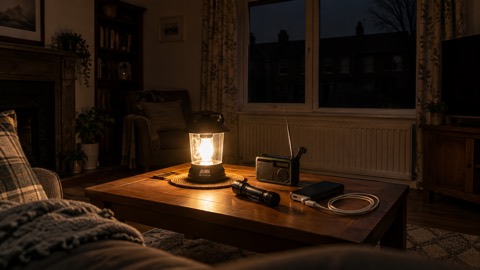
An emergency kit is only as good as the batteries in it. The Scottish Government's emergency kit guidance includes a torch and spare batteries17. Which? recommends keeping spare batteries for torches, radios and medical equipment so you can keep using your torch or radio, or replace the batteries in an item18. A battery-powered torch or battery-powered candles, blankets, a warm coat, a portable charger, a mobile phone and flat shoes such as trainers or boots are the core of a weather emergency kit19.
The trap is relying on a phone. Most of us have a torch on our mobiles, but it drains the battery heavily, so it is best to use it only in emergencies and for short periods20. A dedicated torch with fresh cells, plus a spare set, is the more dependable arrangement.
For the wider kit, see Power Banks: Keeping Phones Charged in an Emergency and Rechargeable AA and AAA Batteries and Chargers.
Button batteries and children
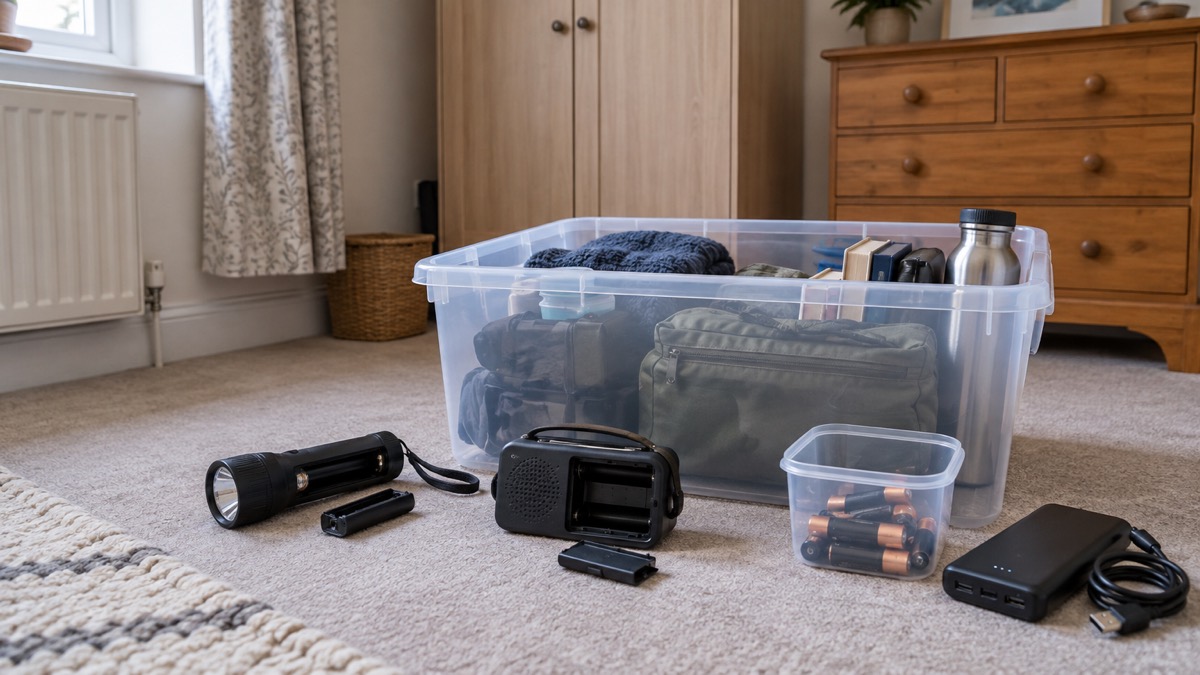
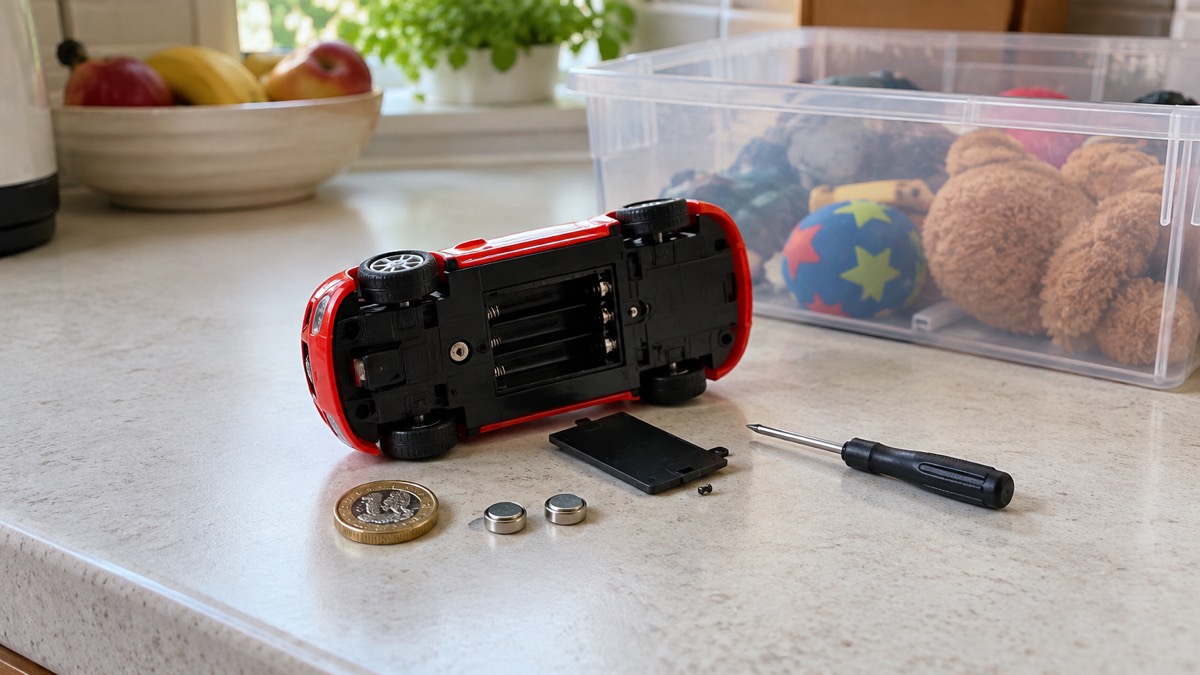
Button batteries deserve their own section because the risk is to life, not to kit. New safety features on button batteries and packaging are a big help in protecting children from swallowing button batteries, but not all brands have them, and it is still essential to keep them away from young children21. Keep products well out of your child's reach if the battery compartment is not secured19. If the back is not secured or the button battery is easily accessible, the product needs to be kept out of reach of young children22.
Toys are a particular concern. If any battery compartment is not properly secured, remove the toy, because it is no longer safe to play with23. That applies to toys going into storage as much as toys in use: check the compartment before the toy goes in the box, and check it again when it comes out.
Rechargeable battery fire risk
Rechargeable batteries are safe when used properly and dangerous when they are not. Lithium-ion batteries can overheat, catch fire or explode if improperly charged, handled, stored or disposed of5. Lithium-ion batteries in phones, vapes, e-bikes and e-scooters can become a fire risk when exposed to high temperatures or charged incorrectly24. Leaving items on charge continuously or overnight is a fire risk25.
The practical rules are short and worth repeating:
- Unplug once charged, and do not leave devices plugged in overnight5.
- Do not charge under a pillow or on a bed11.
- Keep chargers uncovered and ventilated while in use7.
- Never leave a device on charge when you are out of the house or asleep, and follow the maker's charging times4.
- Store in a cool place, avoiding extreme temperatures12.
If a fire does start, get out and call the fire and rescue service. For the full procedure, see What to Do If a Lithium Battery Catches Fire and Lithium-Ion Battery Safety at Home.
Disposing of old batteries
Old batteries are not general waste. Lithium-ion batteries should never be placed in household waste3. Most local recycling centres accept lithium-ion batteries, and they should be disposed of alongside waste electrical and electronic equipment, so check with your local authority for specific guidelines in your area3. If the battery cannot be removed, for example in e-cigarettes or calculators, treat the whole item as electrical waste5.
The reason is fire. If you need to dispose of a damaged or end-of-life battery, do not put it in your household waste or normal recycling, because these batteries, when punctured or crushed, can cause fires in bin lorries, recycling and waste centres26. Mobile phones and tablets contain lithium-ion batteries, and if they get crushed or damaged they can spark dangerous fires in recycling centres or bin lorries, so they must be recycled properly13. Many electrical items contain hidden batteries which can cause fires if they incorrectly enter the waste stream15.
- Take lithium-ion batteries to a household recycling centre3.
- Treat sealed-in batteries as electrical waste5.
- Keep damaged batteries separate and contact the manufacturer for disposal advice12.
- Never put batteries in the bin or normal recycling3.
For damaged cells specifically, see How to Dispose of a Damaged Lithium Battery.
Sources (28)
- Do gadgets drain batteries when unused?, Duracell, 2026-10-26
- Can I use rechargeable batteries in my device?, Duracell, 2026-10-26
- Lithium-ion batteries, Scottish Fire and Rescue Service, 2025-11-27
- Batteries and chargers, London Fire Brigade, 2026-10-25
- Battery fires, Devon and Somerset Fire and Rescue Service, 2026-10-26
- Electrical safety at home, North Yorkshire Fire and Rescue Service, 2026-09-14
- Chargers, Electrical Safety First, 2026-10-26
- Store button batteries safely, Child Accident Prevention Trust, 2025-08-04
- New parents, Electrical Safety First, 2026-10-25
- E-bike and e-scooter fire safety, Scottish Fire and Rescue Service, 2026-10-25
- Lithium-ion batteries, South Wales Fire and Rescue Service, 2026-01-13
- Charging safety, Oxfordshire County Council, 2026
- Heat, cold and rain: how weather affects e-bikes and e-scooters, London Fire Brigade, 2026-10-25
- E-bike and e-scooter fire safety advice, North Yorkshire Fire and Rescue Service, 2026-10-25
- Charge safe campaign, North Yorkshire Fire and Rescue Service, 2026-08-18
- Batteries, Caravan and Motorhome Club, 2026-10-25
- Emergency kit, Ready Scotland, 2026-10-22
- Emergency kit packing list, Which?, 2026-09-30
- Safety in severe weather conditions, Devon and Somerset Fire and Rescue Service, 2026
- How to prepare for the loss of electricity, Wiltshire and Swindon Prepared, 2026-10-25
- Button batteries: understanding the risks, Child Accident Prevention Trust, 2026-09-10
- Autumn safety, Child Accident Prevention Trust, 2026-10-08
- Check for loose button batteries, Child Accident Prevention Trust, 2024-11-11
- How to stay safe during a heatwave, Devon and Somerset Fire and Rescue Service, 2026-06-23
- E-bikes, Electrical Safety First, 2026-10-25
- Disposing of e-bike and e-scooter batteries, London Fire Brigade, 2026-10-25
- E-bikes and e-scooters, South Wales Fire and Rescue Service, 2026-07-29
- Mobile phones and tablets, Electrical Safety First, 2026-10-25
 Power Cut Backup Power Checklist
 Backup Power Before Winter
 Safe Battery Charging at Home
 Running a Generator Indoors
 Carbon Monoxide from Generators
 Generator Sizing for a Power Cut
 Generator Run Time on a Tank
 Storing Petrol at Home
 Diesel Storage at Home
 Storing a Generator
 Generators in Cold Weather
 Generator Noise and Neighbours
 Power Station Capacity Sizing
 Power Station Run Time
 Power Station for a Gas Boiler