Yes. A button battery that has stopped working is still dangerous. Even used "flat" batteries still hold enough charge to be dangerous, and that is the official position of an NHS trust as well as the Child Accident Prevention Trust1. The risk is not to the torch. It is to a small child who finds the battery after it comes out.
The danger is specific and fast. Button batteries can badly hurt or kill a small child if they swallow one, and lithium coin cells are the most dangerous because they are larger and more powerful3. If one gets stuck in a child's throat it can cause serious internal burns, or even death, within hours of being swallowed4. A flat battery can still have enough electrical charge left to badly injure a child5.
So the practical answer is simple. Treat every button battery you remove from a torch, keyring light, remote or toy as hazardous waste, not as rubbish. Keep it out of children's reach, store it safely, and recycle it as soon as you can2. This page explains why a flat battery is still a hazard, how to handle and store used cells, what to do in an emergency, and where to get free official guidance.
Why a flat battery is still a hazard
A battery is called flat when it can no longer run the device it came out of. That is not the same as empty. Modern products are power-hungry, so a battery that is too flat for a torch or a set of scales can still hold a harmful amount of charge6. The Child Accident Prevention Trust puts it plainly: a flat battery can still have enough electrical charge left to badly injure a child5.
What happens inside a child is not a poisoning in the usual sense. A button battery lodged in the food pipe completes a circuit through the body's own tissues. The trust describes the result as burning a hole inside the body and causing serious internal bleeding and death7. That is why the harm is measured in hours rather than days, and why a battery that has sat in a drawer for months is no less of an emergency than a new one.
Two details catch people out:
- Small does not mean safe. Smaller button batteries can still cause harm, especially if they are new2.
- Dead does not mean inert. Even "dead" batteries have the potential to release the alkali, so they should be treated just as carefully as new batteries, according to Great Ormond Street Hospital8.
The trust's own guidance is blunt about the scale of the risk: even discarded "flat" batteries still hold enough power to badly hurt a child9.
Handling, storing and getting rid of used cells

The advice from the Child Accident Prevention Trust and from Electrical Safety First is consistent: do not keep used button batteries lying about. Dispose of used button batteries as soon as you can, because they are still unsafe3. Store them safely and recycle them as soon as you can2. Even used batteries that have run out of charge remain a risk, so keep them away from children and dispose of them safely10.
In practice, that means a routine rather than a scramble:
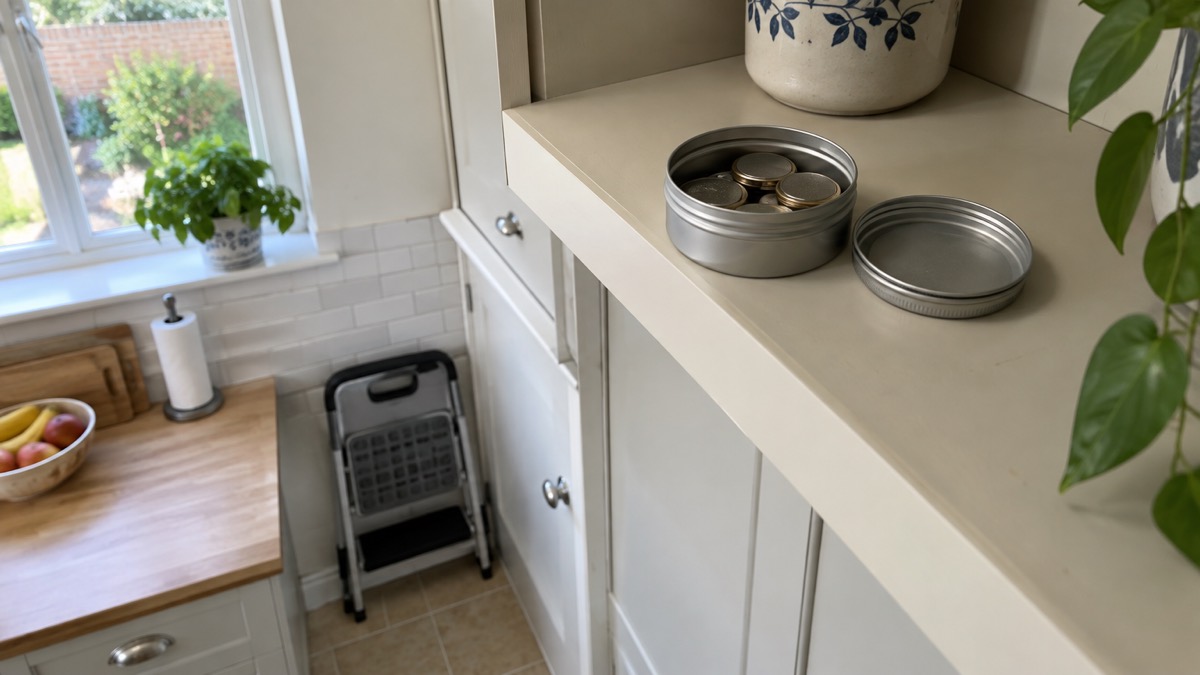
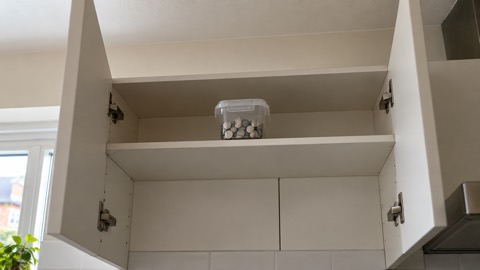
- Take the battery out and put it straight into a container a child cannot open, not on a table, sofa or window sill.
- Keep used and spare batteries in the same safe place, out of children's reach, so nothing is left loose11.
- Recycle them at the first opportunity, at a shop or household waste site that takes batteries, rather than storing them indefinitely.
- Check the room afterwards, including under furniture and in bins, in case one has rolled.
The same care applies to the devices themselves. Keep everyday objects with easily accessible batteries out of children's reach, as well as spare and flat batteries11. That includes keyring torches, small remote controls, musical books and novelty lights, which are among the common places button cells turn up.
Button batteries in torches and keyring lights
Torches are one of the places button batteries live, and the lighting you keep for a power cut is exactly the sort of kit that gets handled in a hurry. Northern Powergrid's preparedness advice is to keep a torch with spare batteries in an accessible location12. Accessible to you should not mean accessible to a toddler, so store the torch where you can reach it quickly but a child cannot.
Small, flat torches and keyring lights often use coin cells, and the cell that has just stopped lighting the torch is the one most likely to be left on a side table. Two habits reduce the risk:
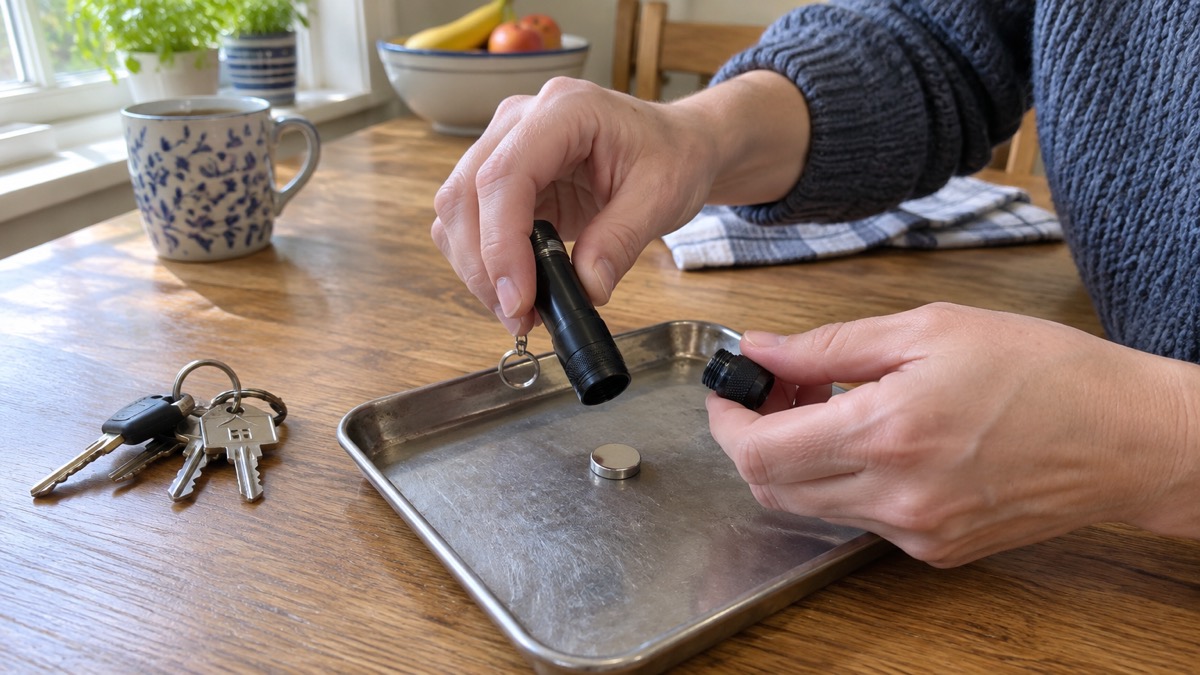
- Change batteries over a tray or bowl, so a dropped cell does not roll under the sofa.
- Put the old cell straight into your safe container, before you test the new one.
If you are choosing lighting for emergencies, it is worth knowing which types avoid loose coin cells altogether. Rechargeable torches and lanterns with built-in packs have no removable button cell to lose, and wind-up and solar lamps need no batteries at all. Our guides to torch batteries and to rechargeable or battery torches set out the trade-offs, and storing spare coin cell batteries safely with children covers the spare-cell problem in more detail.
Children: the group most at risk
Button batteries can badly hurt or kill a small child if they swallow one3. The Child Accident Prevention Trust's campaign material is aimed squarely at parents, warning about the risks in the products children live with14. Its flyer asks what common products may badly harm or even kill a child, because of the button battery that powers them15.
The trust has also warned parents publicly after the death of a two-year-old, repeating that flat button batteries are still dangerous and should be kept out of children's reach along with spares11. The message for a household with young children, or with young grandchildren visiting, is that the risk is not confined to new batteries in packaging.
If you look after children, the practical steps are the same ones that protect against other small-object hazards: get down to floor level and look for loose cells, keep battery compartments screwed shut where the design allows, and put used cells away immediately rather than "in a minute". Our page on torches, candles and children covers the wider picture for lighting in a household with young children.
Where to get button battery safety guidance
Free, official guidance is easy to find and worth keeping. The Child Accident Prevention Trust's button battery fact sheet provides essential advice about the risks to children, where to find them and what to do in an emergency16. The trust also publishes a poster that warns parents about the risks14, and a set of free downloadable educational resources, images and videos that anyone can use and share17.
If you prefer to watch or listen, the trust has produced a podcast episode covering where button batteries are, why they are so dangerous, how to spot the signs that a child might have swallowed one, and what to do if you suspect the worst18. Its recorded webinar covers why button batteries are so dangerous, where they can be found, what to do if you suspect a child has swallowed one, the impact button battery injuries can have on families, and how to buy batteries and products with safety in mind19.
NHS trusts publish their own versions of the same advice. The trust's button battery fact sheet sets out essential advice about the risks to children, where to find them and what to do in an emergency8. Its advice hub tells you more about the dangers and where you can find button batteries in your home, offers practical safety tips and advises what to do in an emergency10.
One official warning is worth repeating when you buy replacements: beware of bargains from online marketplaces or local discount shops, because they may have button batteries your child can get to easily1. The trust's general advice is to share information about safe battery usage and storage with friends and family, to spread the word about how dangerous batteries can be to children8.
For the wider job of getting a household ready for a power cut, see our lighting section and the power cut guide. The British Red Cross advises avoiding candles where possible, as they increase the risk of fire, and a torch with spare batteries is the safer choice21.
Sources (21)
- Button battery safety leaflet for parents, WWL Teaching Hospitals NHS Foundation Trust, 2026-10-25
- CAPT button battery factsheet 2024, City of London Corporation, 2024
- Button battery factsheet, Child Accident Prevention Trust, 2024
- Button batteries: understanding the risks, Child Accident Prevention Trust, 2026-09-10
- Are your used batteries really flat?, Child Accident Prevention Trust, 2026-04-15
- Button batteries in an emergency, Child Accident Prevention Trust, 2024-11-11
- Recommendations on button batteries, Child Accident Prevention Trust, 2023-03-27
- Button batteries: using them safely, Great Ormond Street Hospital, 2018-10-01
- Button batteries: where are they?, Child Accident Prevention Trust, 2024-11-11
- New parents safety advice, Electrical Safety First, 2026-10-25
- Warning to parents after battery death of two-year-old, Child Accident Prevention Trust, 2023-04-04
- Be prepared, Northern Powergrid, 2026-10-26
- 18650 lithium battery charger for LED torch: product recall, Electrical Safety First, 2022-06
- Button batteries poster, Child Accident Prevention Trust, 2024-04-22
- Button batteries flyer (English), Child Accident Prevention Trust, 2023-04-24
- Button battery fact sheet, Child Accident Prevention Trust, 2024-11-21
- Button battery resources, Child Accident Prevention Trust, 2022-09-12
- Watch: button battery dangers podcast, Child Accident Prevention Trust, 2023-11-14
- Button battery dangers webinar replay, Child Accident Prevention Trust, 2023-03-20
- Button batteries webinar replay, Child Accident Prevention Trust, 2023-04-27
- Power cut advice, British Red Cross, 2026-10-25
 Spare Batteries for Lights
 Candle Safety Checklist
 Lighting Checks Before Winter
 Can Jar Candles Shatter
 Battery Tea Lights in a Pumpkin
 Keeping Pets Away from Candles
 Finding Torches in the Dark
 Red Light Mode on a Head Torch
 SOS and Strobe Modes
 IPX Ratings for Torches
 Torch Battery Runtime
 Camping Lantern Run Time
 Using a Torch While Charging
 Looking Into a Bright Torch
 Storing Spare Coin Cells