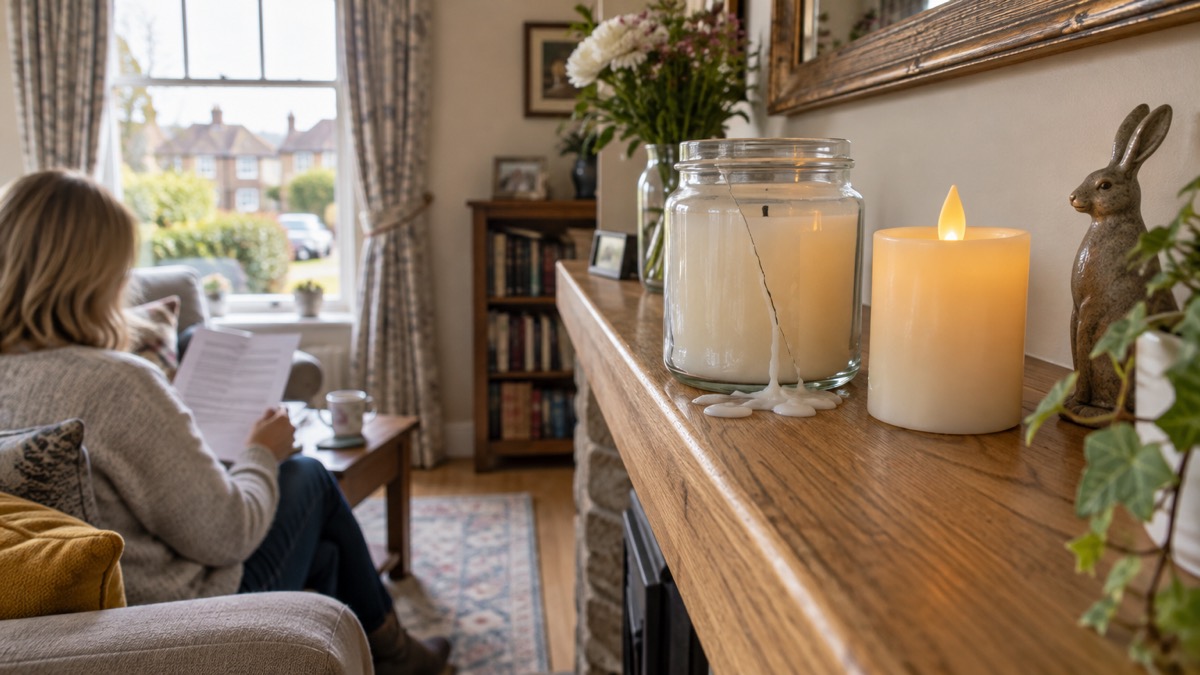
Yes, jar candles can shatter. Fire and rescue service guidance records that glasses and jars containing candles have shattered without warning, and explains why: as the wax level in the jar falls, the heat can no longer be absorbed by the wax, so the glass takes it instead1. A jar candle is not automatically safer than a bare candle. It is a candle in a container that can crack, and the flame inside it is still a naked flame.
The wider numbers are worth knowing before you light anything. Candles cause over 800 fires in UK homes every year, and they are one of the most common causes of fires in the home2. Around 30% of fires started by candles and attended by fire and rescue services result in death or injury4. Those are not figures about careless people. They are what happens when an open flame meets fabric, a draught or a tired evening.
What to do is simple and does not depend on the type of candle. Burn candles in or on a suitable, non-flammable holder on a heat-resistant surface, keep them away from anything that can catch, never burn several close together, and put them out before you leave the room or go to sleep5. If you want light without that list of rules, fire services are clear that LED candles and torches are the safer way to light your home4.
Why a jar candle can crack or shatter
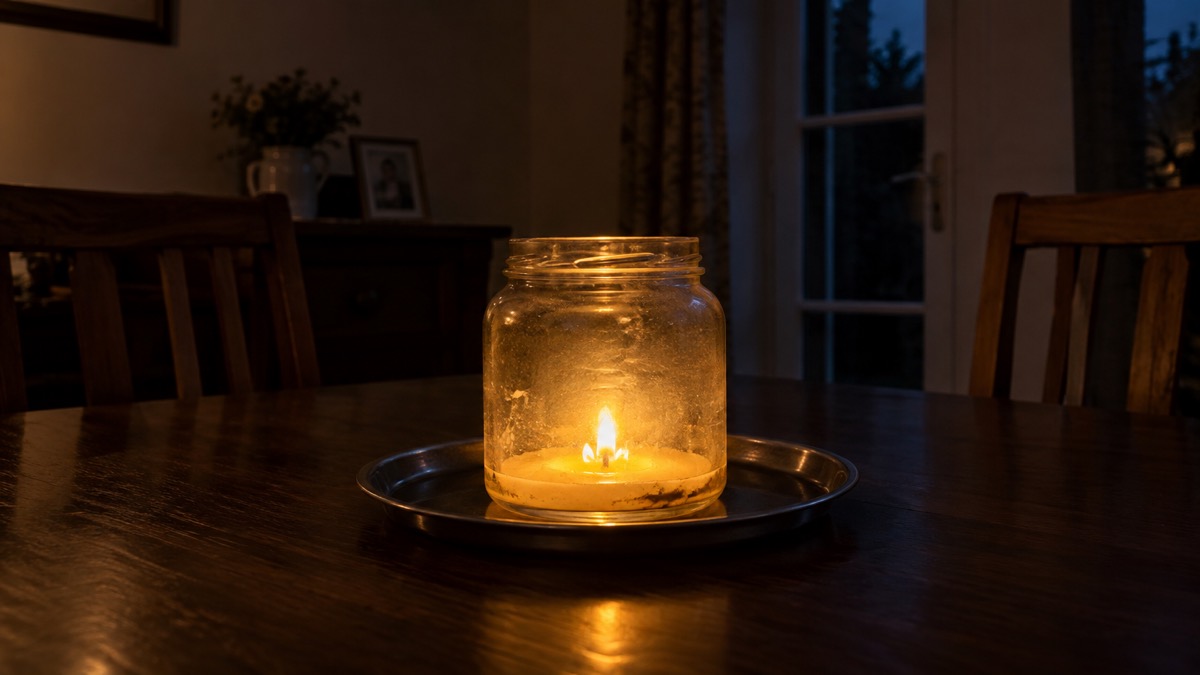
A jar candle fails for a physical reason, and it is worth understanding because it changes when you should stop burning one. Fire service guidance explains that the glass or jar shatters when the level of wax in the jar decreases and the heat can no longer be absorbed by the wax1. Early in a candle's life, the pool of wax spreads heat around the container. As the wax burns down, there is less of it to absorb heat, so the glass or metal around the flame gets hotter, and a hot container under thermal stress can fail.
The practical rule that follows is to snuff out the candle when the level of wax has burnt down close to the base of the jar1. Do not nurse the last inch of wax to get your money's worth. That last stretch is exactly when the container is most likely to crack, and a cracked container can spill hot wax and release a flame onto whatever surface the candle is standing on.
Scented candles deserve particular care. They are designed to liquefy when heated to maximise fragrance, so fire services advise always putting them in a heat-resistant holder8. A scented candle that turns to liquid wax is doing what it was made to do, but that liquid is hot and the container is under load.
Tea lights have their own trap. The foil outer container gets extremely hot and can melt surfaces underneath, so put tea lights in proper holders rather than standing them directly on a shelf or windowsill9.
Candles cause over 800 fires in UK homes every year
The national figure is stark: candles cause over 800 fires in UK homes every year2. Individual fire services see the same pattern locally. Devon and Somerset Fire and Rescue Service responds to 20 fires every year caused by candles, and attends over 20 fires a year caused by candles9. Cumbria Fire and Rescue Service describes candles as one of the most common causes of fires in the home1.
The severity is what makes candles different from many household risks. Around 30% of fires started by candles and attended by fire and rescue services result in death or injury4. A candle flame is small, but it is open, it is often left in a room where people are relaxing or sleeping, and it can set light to clothing and soft furnishings quickly1.
| What the guidance records | Figure | Source |
|---|---|---|
| Candle fires in UK homes each year | Over 800 | Fire and rescue service guidance1 |
| Candle fires attended each year, Devon and Somerset | 20 | Devon and Somerset Fire and Rescue Service2 |
| Candle fires attended each year | Over 20 | Fire and rescue service guidance3 |
| Candles as a cause of home fires | One of the most common causes | Fire and rescue service guidance3 |
Candles are also a growing cause of fires when they appear alongside flying lanterns, decorations and decorative lights, particularly around celebrations10. The risk is not only the candle itself but the combination of a flame and a house full of extra paper, fabric and plastic.
Use a non-flammable holder on a heat-resistant surface
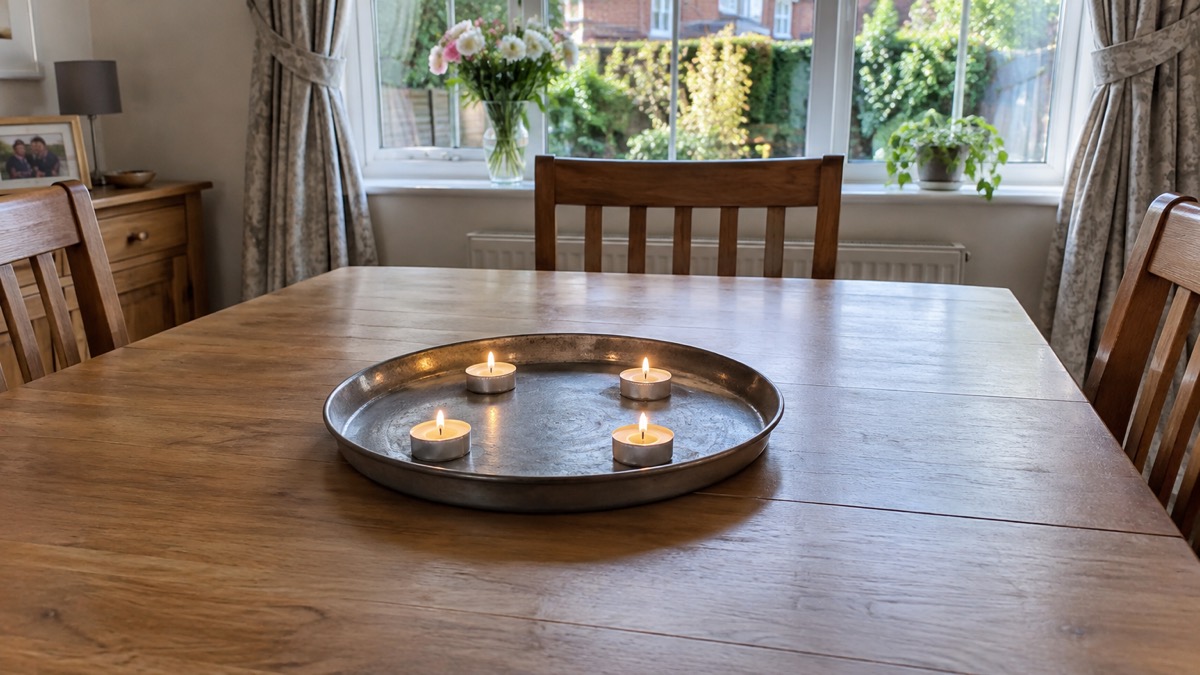
Most candle fires are preventable with a holder and a moment's thought about where it sits. The core instruction from fire services is to always burn tea lights in or on a suitable, non-flammable holder on a heat-resistant surface5. The same principle applies to every candle: place candles and oil burners on a stable, heat-resistant surface, and put scented candles in a heat-resistant holder8.
What to have ready and check before lighting:
- A sturdy, non-flammable holder for every candle, not just tea lights11
- A heat-resistant surface underneath, clear of cloths, runners and mats8
- Clear space around the flame, away from curtains, cushions, bedding and paperwork11
- Matches or a lighter kept where children cannot reach them12
- A plan for putting it out, such as a snuffer, before you light it1
The NHS burns prevention guidance adds the same three rules in plain terms: place candles in sturdy holders, keep them away from flammable materials, and never leave them unattended11. If a candle does set light to clothing, the advice is to stop, drop and roll rather than run13.
Why candles burned close together can flare
Grouping candles for effect is one of the most common ways people light a room, and one of the ways fire services warn against. Do not burn several candles close together, because this might cause the flame to flare4. North Yorkshire Fire & Rescue Service gives the same advice: avoid burning several candles close together to prevent flaring14.
A flare is a sudden surge of flame, and it matters because the candles around it are usually surrounded by the decorations that made the arrangement look good in the first place. A row of tea lights along a mantelpiece, a cluster on a table centrepiece or a ring around a bath puts several flames close to fabric, cards or dried flowers, and a flare can reach them.
There is a second reason to space candles out. Heat builds up when flames are close together, and a container that would cope with one flame may not cope with three. The jar-shattering mechanism described above is about heat the wax cannot absorb, and neighbouring candles add to that heat load.
If you want the look of several candles without the flare risk, battery-powered candles give you the arrangement without the flames. Fire services describe battery-powered versions as having almost no fire risk at all, and note that they last longer and are better for the environment15.
Never leave a lit candle unattended
The single most important rule is the one people break most often. Fire services advise putting candles, incense sticks and oil burners out and never leaving them unattended or burning when you are asleep6. The same instruction appears across guidance for caravans and mobile homes, where you should not leave candles unattended and should always make sure candles are secure16.
Make it part of a bedtime check. North Wales Fire and Rescue Service's bedtime routine includes making sure cigarettes, cigars and pipes are properly out and never smoking in bed, because you could fall asleep and set fire to your bedding17. Candles belong on the same list: a final walk round the ground floor to blow out anything still burning.
Some households carry a higher risk and should not use real candles at all. Emollient creams used for skin conditions can leave bedding, dressings and clothes impregnated with residue that makes them more flammable, and these items easily ignite when brought into contact with naked flames or heat sources such as candles18. London Fire Brigade advises carers to encourage people not to light candles or tea lights of any kind, and to use LED flameless candles instead19. If someone in your home uses emollients, treat real candles as off the list.
LED candles and torches: the safer way to light your home
Fire services do not hedge on this. The safest way to enjoy candles is to use LED battery-operated ones instead, but make sure the batteries cannot be accessed by children or pets4.
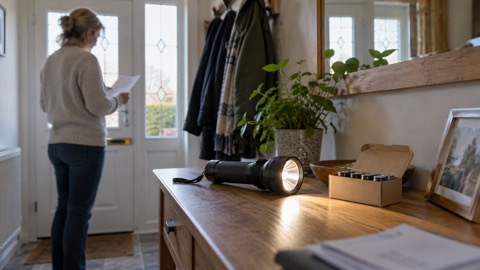
For a power cut, the advice is even more direct. Wiltshire and Swindon Prepared says candles present a fire hazard, so it is best to stick with torches20. The National Fire Chiefs Council lists LED candles and lights, and battery or wind-up torches, as safer products to light your home7. The government's Be Ready checklist says torches are safer than candles, and advises keeping a battery or wind-up torch and spare batteries at home21. It also suggests avoiding a mobile phone torch for long, because it drains the battery more quickly22.
| Option | What it does | Who it suits |
|---|---|---|
| Real candles | Open flame, needs a holder, constant supervision | Only where an adult stays in the room and keeps them away from children, pets and anything that can catch light4 |
| LED candles | Flame effect, battery-operated, batteries kept away from children and pets | Anyone who wants the look of candles, including carers supporting someone who likes them4 |
| Battery or wind-up torch | Directed light for moving around and finding things | Every household as the default power cut light23 |
| Battery lantern | Lights a room rather than a spot | Rooms where the family gathers during an outage7 |
If you are choosing lights for outages, our guides to lighting during a power cut and to torches set out the options, and the candle safety checklist turns the rules above into a list you can keep.
Candles at Christmas, Halloween and celebrations
Celebrations concentrate the risk, because they add fuel and people. Candles, flying lanterns, decorations and decorative lights are a growing cause of fires10, and Christmas and Halloween are when fire services issue the most candle warnings.
At Christmas, the tree is the concern. Fresh Christmas trees gradually lose moisture over time, which increases their flammability, and a burning tree can rapidly fill a room with fire and deadly gases24. Keep a real tree watered and never use hairspray to stop needle drop, because it makes the tree highly flammable25. Fairy light bulbs can get very hot, so do not let them touch materials that can scorch or burn easily, such as paper or fabrics26. Keep candles well away from the tree, cards and wrapping paper.
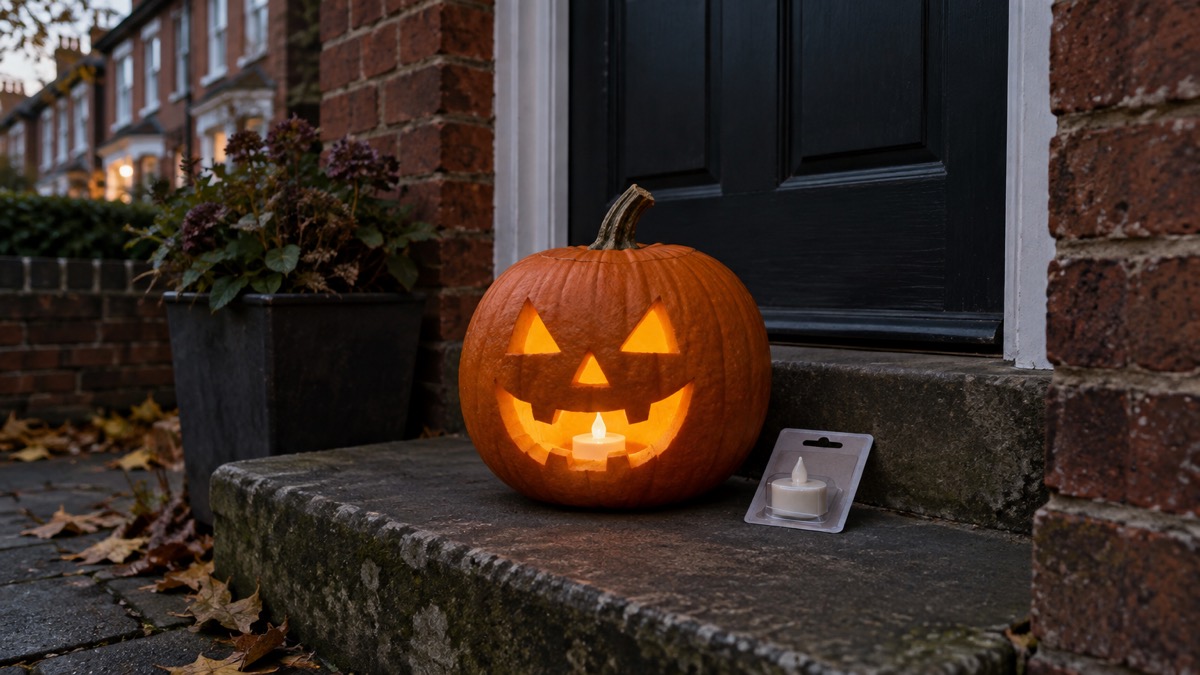
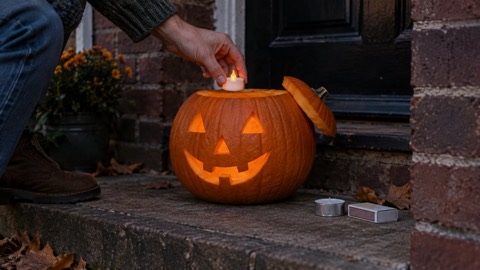
At Halloween, costumes are the issue. Halloween costumes can be flammable, so check clothing for suitable safety marking, avoid naked flames and know how to stop, drop and roll if clothing catches fire14. All clothing can catch fire13, and clothing or blankets with flammable labels can catch fire from sparks or flames and burn quickly, especially fancy dress costumes27. Battery tea lights in a pumpkin remove the flame from the equation entirely.
Where to get help and advice
If you would like someone to look at fire risks in your home, your local fire and rescue service offers free home fire safety visits. These are particularly useful for households with older or disabled residents, or where someone uses emollients or has hoarding disorder, since the visiting crew can advise on candles, lighting and escape routes in the actual rooms you use.
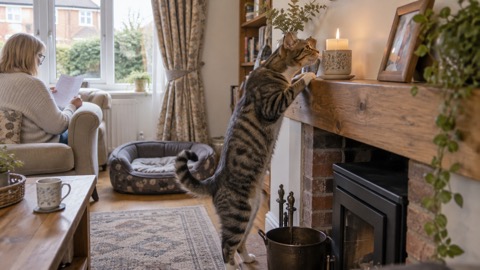
For day to day, the practical steps are the ones in this page: holders, space, supervision and a safer light source where you can. If you are preparing for winter power cuts, our winter lighting checks and power cut checklist cover what to have ready, and LED candles or real candles compares the two directly. For households with children, see torches, candles and children, and for pets, keeping pets away from lit candles.
Sources (27)
- Candle safety, Devon and Somerset Fire and Rescue Service, 2026
- Candle safety, North Yorkshire Fire & Rescue Service, 2026
- Candle safety, Cumbria Fire and Rescue Service, 2026
- Candles, Mersey Fire and Rescue Service, 2026
- Other safety, Northern Ireland Fire & Rescue Service, 2026
- Bedtime checks, London Fire Brigade, 2026
- Cost of living toolkit, National Fire Chiefs Council, 2023
- Candle safety, Carmarthenshire County Council, 2026
- Top ways to reduce your risk of having a fire at home, Devon and Somerset Fire and Rescue Service, 2026
- Celebrate safely, Humberside Fire and Rescue Service, 2026
- Burns prevention and tips, Mid and South Essex NHS Foundation Trust, 2026
- Caring for smokers, London Fire Brigade, 2026
- Stop, drop and roll, Devon and Somerset Fire and Rescue Service, 2026
- Halloween safety tips, North Yorkshire Fire & Rescue Service, 2026
- Stay warm safely this winter, Devon and Somerset Fire and Rescue Service, 2026
- Caravans and mobile homes, Devon and Somerset Fire and Rescue Service, 2026
- Stay safe at home, North Wales Fire and Rescue Service, 2026
- Home safety partnerships, Devon and Somerset Fire and Rescue Service, 2026
- Hoarding disorder, London Fire Brigade, 2026
- How to prepare for the loss of electricity, Wiltshire and Swindon Prepared, 2026
- Be ready for emergencies, UK Government, 2026
- Power cuts, UK Government, 2026
- What to do in a power cut | Northern Powergrid, Northern Powergrid
- Festive safety, Scottish Fire and Rescue Service, 2024
- Christmas safety advice, North Yorkshire Fire & Rescue Service, 2025
- Christmas safety tips, Warwickshire County Council, 2026
- Don't let fire turn your Halloween into a nightmare, Northern Ireland Fire & Rescue Service, 2026
 Spare Batteries for Lights
 Candle Safety Checklist
 Lighting Checks Before Winter
 Battery Tea Lights in a Pumpkin
 Keeping Pets Away from Candles
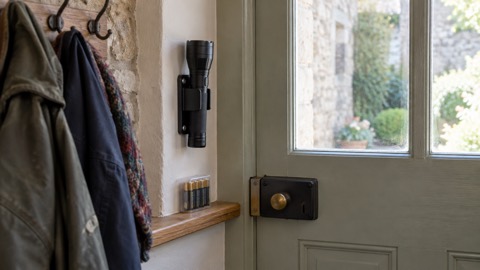 Finding Torches in the Dark
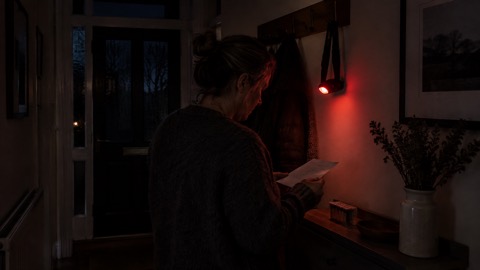 Red Light Mode on a Head Torch
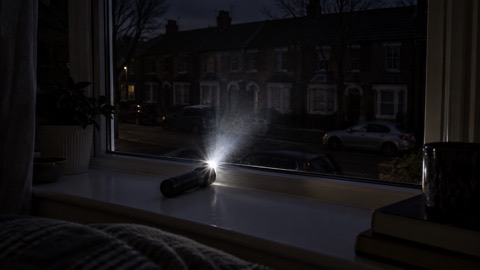 SOS and Strobe Modes
 IPX Ratings for Torches
 Torch Battery Runtime
 Camping Lantern Run Time
 Using a Torch While Charging
 Looking Into a Bright Torch
 Storing Spare Coin Cells
 Flat Button Battery Dangers