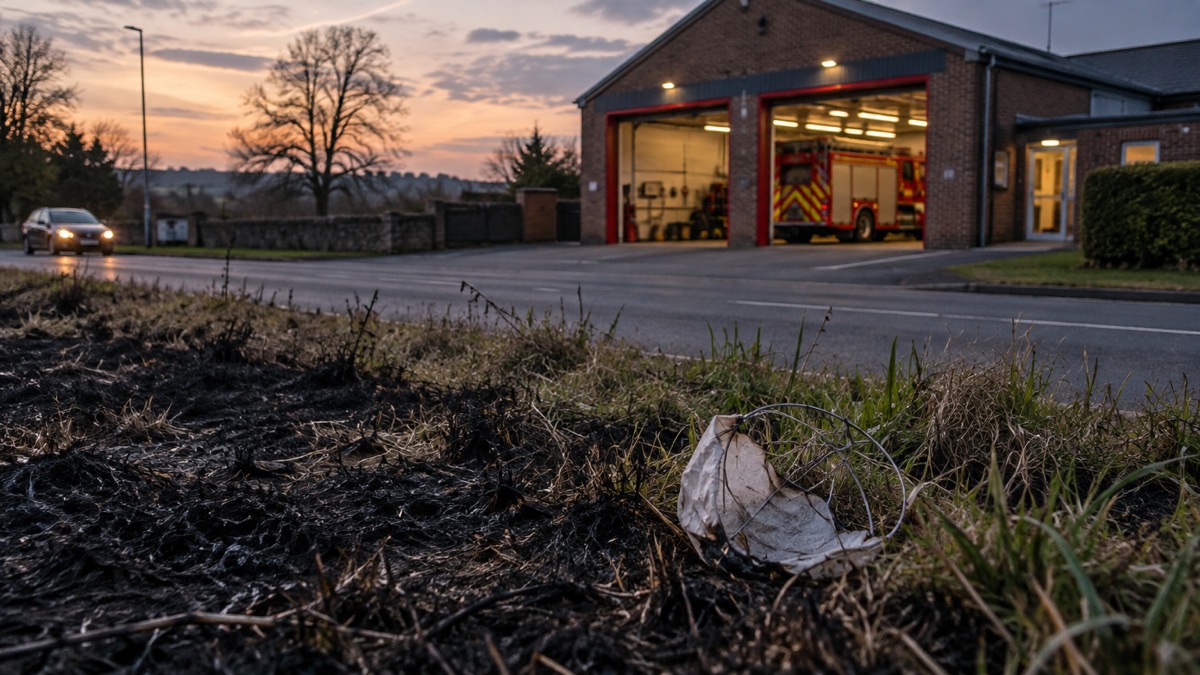
If you are thinking about releasing a sky lantern, the clear answer from UK fire and rescue services is: please do not. Surrey Fire and Rescue Service asks households to find alternatives, because lanterns "can start wildfires, property fires, can kill or injure livestock, and pollute our environment"1. Northern Ireland Fire and Rescue Service strongly advises against them, explaining that the heat from the candle lifts the lantern into the air, lets it float for miles, and once the candle has gone out the lantern falls to the ground or gets trapped in trees and may start a fire2.
The danger to animals is direct. Flying lanterns pose a danger to animals because they can ingest the metal wire3, and fire services warn that lanterns litter the countryside and present serious hazards to livestock and wildlife4. A lantern that lands in a field does not disappear: its frame and wire stay in the grass where cattle, sheep and horses graze.
If you have already bought one, or someone in your household has, the safest course is not to launch it. If a lantern is launched anyway, fire service guidance sets firm limits: two adults should launch it, never children, and not in wind speeds above 5 mph or within 5 miles of any airport5. Even then, once lit and released there is no control over its direction or where it lands5.
Why a lantern is a danger to livestock and wildlife
A sky lantern is a paper balloon over a small burning fuel cell. It rises on the heat, drifts for miles, and comes down when the flame dies. What lands is not just paper. The frame includes metal wire, and fire services warn that animals can ingest it3. Livestock graze without sorting what is in front of them, so wire in a field can be swallowed along with the grass.
The wider harm is to the countryside itself. Fire services describe lanterns as presenting serious hazards to livestock and wildlife as well as littering the countryside4. South Wales Fire and Rescue Service says plainly that sky lanterns are a fire risk to property, crops, vehicles and livestock and can harm the environment7. When a wildfire does take hold, the damage is not only to fences and grass: Fire Scotland warns that livestock, farmland, wildlife, protected woodland and sites of special scientific interest can all be devastated8. Northern Ireland Fire and Rescue Service adds that wildfires can be unpredictable and spread fast, and are a threat to wildlife, livestock, environment, property and people9.
For a household with animals, the practical point is that the risk arrives from outside. You do not have to launch a lantern for one to land in your paddock or field. If you keep horses or livestock, it is worth knowing what to do if a fire starts near them; our guide to horses and livestock in floods and snow covers keeping animals safe when conditions turn, and hay bale fires explains what to do if stored feed starts to heat.
Where the fire risk is highest: crops, thatch and woodland
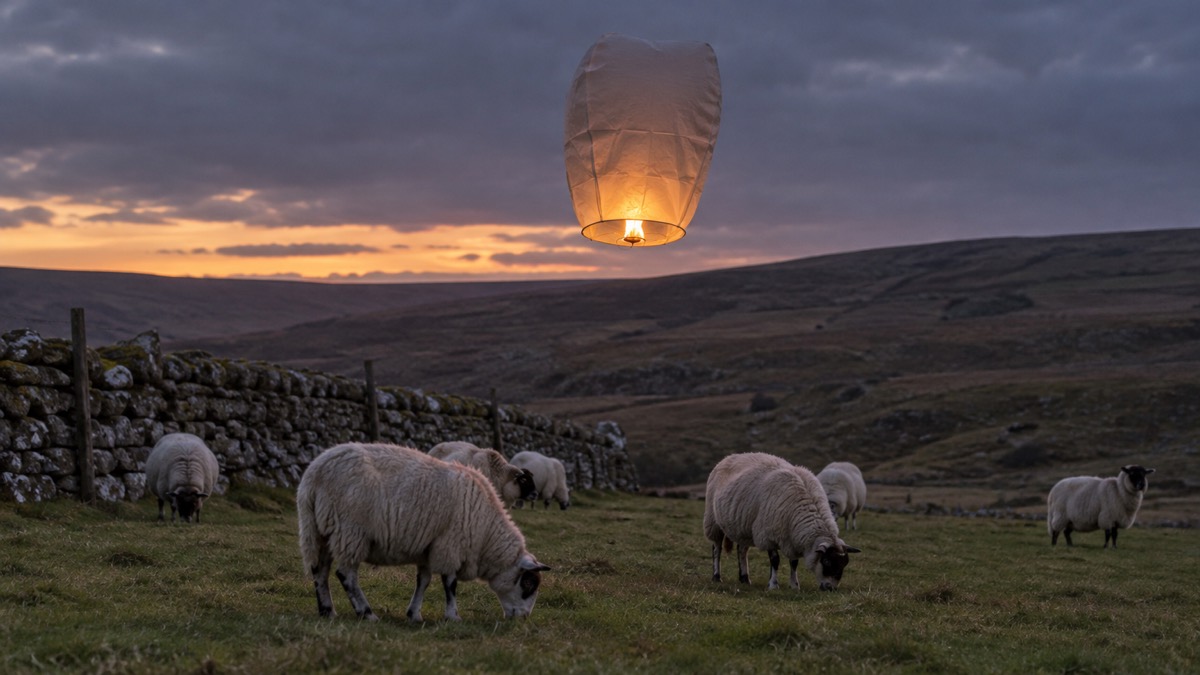
Fire services are specific about the places where a descending lantern is most likely to do serious damage. Guidance from Northumberland County Council lists areas with standing crops, buildings with thatched roofs, areas of dense woodland, and areas of heath or bracken, especially in dry conditions10. The same list appears in fire service safety notices, which stress that this is especially so in dry weather11.
Dry conditions matter because they turn a small flame into a spreading fire. Fire Scotland issues wildfire warnings when the risk is extreme, and during very high risk periods asks the public to avoid lighting outdoor fires or barbecues in affected areas12. The same logic applies to anything that carries a live flame into dry vegetation. London Fire Brigade warns that setting a fire in parks and open spaces such as grasslands, wooded areas, sports grounds and allotments not only kills wildlife but can cause widespread damage, especially during extreme hot and dry weather13.
There are everyday habits that reduce the chance of a countryside fire starting at all. Sussex Resilience Forum advises not leaving bottles or glass in woodlands or outside spaces, because sunlight shining through glass can start a fire, and avoiding open fires and barbecues in the countryside14. North Yorkshire Fire and Rescue Service's summer advice is simpler still: take litter home15.
| Where a lantern may land | Why it is a high risk |
|---|---|
| Standing crops | Dry crop material catches easily; a fire can spread across a field10 |
| Buildings with thatched roofs | A smouldering fuel cell on thatch can develop into a roof fire10 |
| Dense woodland | Trapped lanterns hang in trees and may start a fire2 |
| Heath or bracken, especially in dry conditions | Dry vegetation carries fire quickly across open ground10 |
Fire services ask you to find alternatives
The request from fire and rescue services is consistent across the UK. Surrey Fire and Rescue Service's seasonal advice is direct: "Please find alternatives to sky lanterns"1. The Fire and Rescue Service actively discourages their use because they are both a fire hazard and a danger to wildlife, pets and people16. Humberside Fire and Rescue Service lists candles, flying lanterns, decorations and decorative lights among a growing cause of fires17.
The campaign has wider backing. The National Fire Chiefs Council has been joined by Keep Britain Tidy, the Royal Society for the Prevention of Animals and the National Farmers Union in asking for sky lanterns to be banned18. Some councils go further in their own words: Northumberland County Council states that it does not endorse the use of flying lanterns and accepts no liability for any injury, loss or damage that may arise from their use10.
If you want to mark an occasion, the alternatives are ordinary household choices rather than special purchases. Fire services already give clear guidance for celebrations that involve light and flame, and the same rules keep animals safe. Keep candles out of reach of animals and children19, and keep children and pets away from naked flames and hot lanterns20. For pets specifically, fire services advise keeping them indoors during fireworks21, and the RSPCA notes that animals such as dogs and horses can suffer from tinnitus, hearing loss and long-term hearing damage caused by fireworks22. If you keep horses, our guide to keeping horses safe during fireworks sets out how to prepare.
"The Fire and Rescue Service actively discourages the use of sky lanterns, due to them being both a fire hazard and a danger to wildlife, pets and people"
If a lantern is launched anyway: the rules that apply
Sometimes a lantern is already bought, or an event has been planned around one. Fire service guidance does not pretend the risk can be removed, but it does set conditions that reduce it. Manchester Fire and Rescue Service's advice is to allow two adults to launch a lantern, never children, and to remember that once lit and released there is no control over its direction or where it lands, and this could have very serious consequences5.
The launch conditions are specific:
- Wind: do not launch in wind speeds in excess of 5 mph5.
- Airports: do not launch within 5 miles of any airport5.
- Obstacles: launch away from trees, electricity and telephone power lines, and buildings23.
- Animals and crops: do not release lanterns in areas containing animals or growing crops23.
- Damage: do not attempt to launch damaged lanterns, and be aware that writing messages on the paper can cause damage5.
- Handling and fuel: consider the risk of fire caused by incorrect handling, fuel remaining, or changes to the recommended flight or weather conditions5.
Event organisers carry extra duties. Northumberland County Council's guidance says organisers must complete a suitable and sufficient risk assessment under the Management of Health and Safety at Work Regulations 1999 and check with insurance providers10. For a household marking a birthday or a memorial, the simpler answer is the one fire services give: find an alternative.
Children, messages and damaged lanterns
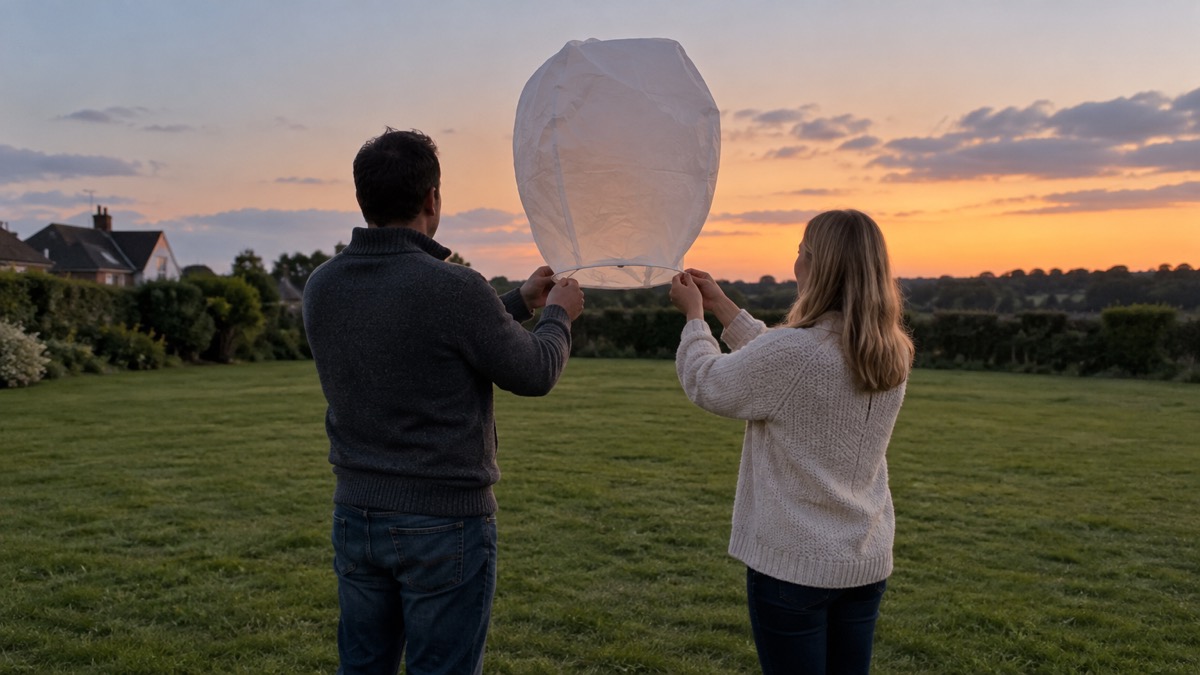
Three small decisions decide whether a lantern is more or less likely to fail. The first is who launches it. Fire service guidance is that two adults should launch a lantern, never children6. A lantern involves a naked flame and hot parts, and fire services advise keeping children and pets away from naked flames and hot lanterns20. The risk to a child from a flame is not trivial: the Child Accident Prevention Trust notes that sparklers burn 16 times hotter than a kettle and can badly burn a child24.
The second is what is written on the paper. Writing messages on a lantern can cause damage to the paper, and fire services say not to attempt to launch damaged lanterns5. A message written through the tissue can weaken it enough that the lantern tears or fails in flight.
The third is what to do with a lantern that is already damaged. The principle fire services apply to faulty electrical items is a useful one here: do not use or attempt to repair items that are damaged or faulty, and dispose of and replace them, because damage to the cable or fittings is dangerous25. A torn or weakened lantern is in the same category. Do not light it.
Sky lanterns near airports and in the four nations
The 5 mile airport restriction is not a formality. A lantern cannot be steered, and fire services warn that with no control over the actual flight path once lit and released, the end destination cannot be predicted5. An airport boundary is exactly the kind of place where an unpredictable flame is least welcome.
Arrangements and messaging differ slightly across the UK, but the advice does not:
| Nation | Who is speaking | What they say |
|---|---|---|
| England | Surrey Fire and Rescue Service; Manchester Fire and Rescue Service; Northumberland County Council | Find alternatives to sky lanterns1 |
| Wales | South Wales Fire and Rescue Service | Do not recommend sky lanterns; a fire risk to property, crops, vehicles and livestock7 |
| Scotland | Fire Scotland | Wildfires can devastate livestock, farmland, wildlife and protected woodland; avoid outdoor fires during very high risk warnings8 |
| Northern Ireland | Northern Ireland Fire and Rescue Service | Strongly advises against sky lanterns; they float for miles and may start a fire when they land2 |
Wherever you are, the same practical steps apply. Check the wildfire risk before any outdoor event that involves flame, and if you keep animals, have a plan for moving them away from a fire. Our section on pets and animals in an emergency explains how to include animals in a household plan, and including your pets in a household emergency plan sets out what to write down before anything happens.
Sources (25)
- Seasonal advice, Surrey County Council, 2026-10-28
- Other safety, Northern Ireland Fire and Rescue Service, 2026-10-22
- Wildfire, Surrey County Council, 2026-08-18
- Winter safety, Mid and West Wales Fire and Rescue Service, 2026-10-29
- Sky lanterns, Manchester Fire and Rescue Service, 2026-10-29
- Fireworks, Devon and Somerset Fire and Rescue Service, 2026
- A Guide to Home Safety, South Wales Fire and Rescue Service, 2020-10
- Extreme risk of wildfire across Scotland, Fire Scotland, 2025-07-09
- NIFRS advises the public to prevent fires in the countryside, Northern Ireland Fire and Rescue Service, 2024-05-16
- Information about specific safety concerns, Northumberland County Council, 2026-05-21
- Sky lantern safety, Dorset and Wiltshire Fire and Rescue Service, 2021-10-16
- Very high risk of wildfire warning, Fire Scotland, 2026-07-20
- Grass and wildfires, London Fire Brigade, 2026-10-25
- Preparing for an emergency: be ready, stay safe, act now, Sussex Resilience Forum, 2025-10
- Fire service shares summer safety advice as temperatures rise, North Yorkshire Fire and Rescue Service, 2026-06-26
- Diwali, Dorset and Wiltshire Fire and Rescue Service, 2022-10-14
- Celebrate safely, Humberside Fire and Rescue Service, 2026-10-26
- Wildfire prevention advice, National Fire Chiefs Council, 2026-03-18
- Candle safety, Lincolnshire County Council, 2026-10-29
- Bonfires and garden safety, Dorset and Wiltshire Fire and Rescue Service, 2026-07-08
- NIFRS urges everyone to be fire aware for a happier Halloween, Northern Ireland Fire and Rescue Service, 2022-10-24
- Fireworks safety, RSPCA, 2026-10-29
- Celebrate safely booklet, Mid and West Wales Fire and Rescue Service, 2013-03-11
- Fireman Sam safety tips, Child Accident Prevention Trust, 2026-09-23
- Avoid housebling hazards for a safe Christmas, Electrical Safety First, 2026-10-25
 Beekeeping Starter Equipment
 Pet Hens Starter Kit
 Bringing Home Rescue Hens
 Hay Bale Fires
 Livestock in a Heatwave
 Livestock Water Outage
 BeeBase Registration
 Broody Hen Hatching
 Cleaning a Chicken Coop
 Coop and Run Space for Hens
 Care for Ex-Battery Hens
 Reporting Foulbrood
 Fox-Proofing a Chicken Coop
 Daily Hen Feed Amounts
 Introducing New Hens