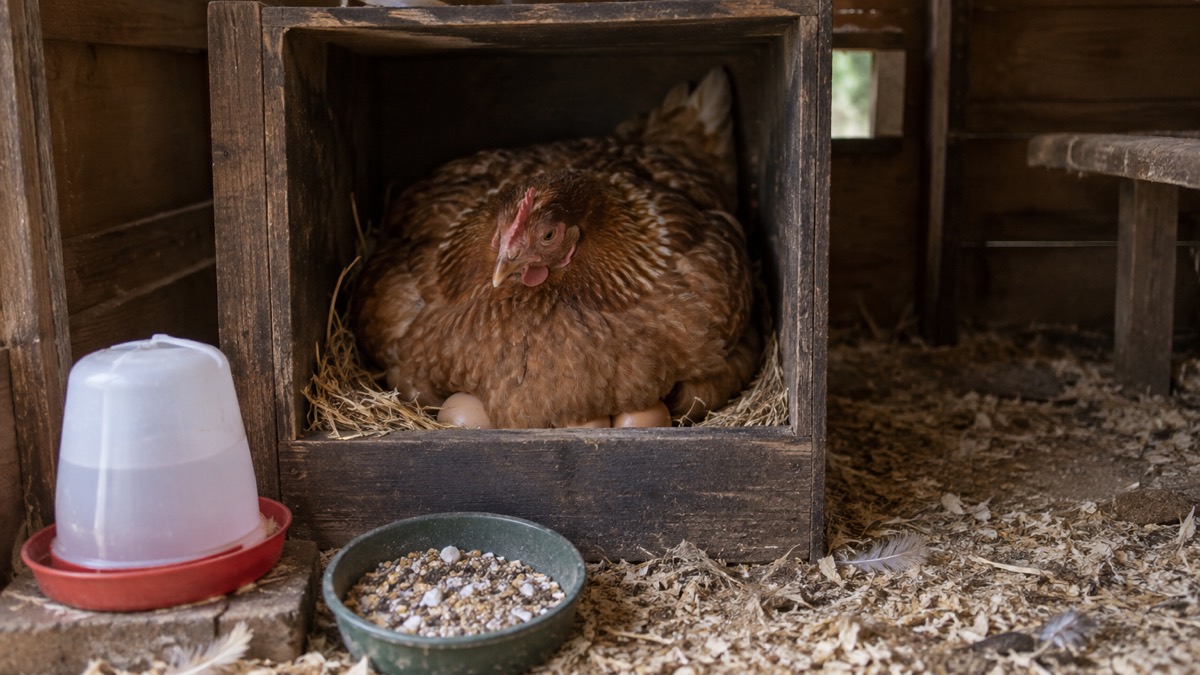
Hatching chicks under a broody hen is the oldest way to add to a flock, and it asks very little of you beyond patience and a safe, quiet nest. A hen goes broody more often in the summer months, though it can happen at any time of year1. She sits on the eggs and incubates them for around 21 days2. Once the chicks hatch, leave the hen with them for about four weeks and then take her away, but do not take the chicks away, as that will unsettle them3.
The work on your side is mostly about the sitting hen herself: keeping her fed and watered, giving her grit and oyster shell, and watching her in hot weather. Hens have no teeth, so they need insoluble grit such as hard flint grit to grind and digest their food, and oyster shell as a soluble grit that provides extra calcium, which matters for laying hens and stronger eggshells4. It is illegal to feed kitchen scraps to chickens because of the risk of disease5.
There is one rule that overrides everything else this year. An Avian Influenza Prevention Zone is currently in place across the UK, and the advice is not to touch or handle sick or dead birds; if you have to, wash your hands thoroughly straight afterwards, keeping them away from your face and food5. Plan your hatching around that, and buy in eggs or stock only from a flock you have seen looking healthy.
Spring and summer: when hens lay and go broody
Egg laying is higher in spring and summer, and production slows in autumn unless the birds are selectively bred laying hens kept indoors with artificial lighting2. That seasonal rhythm is why spring and early summer are the natural time to think about hatching: the hen is in lay, the days are long, and a broody spell fits the year.
Broodiness itself is more common in the summer months, but it can happen at any time of the year1. A broody hen is doing what the breed is wired to do, and the main decision for you is whether to let her sit or to break her out of it. If you let her sit, give her a nest in the lowest, darkest part of the house, because hens like to lay in secret places, with outside access so you can collect eggs, and communal nest boxes with no partitions are useful6.
Watch the calendar. A laying hen's lifespan is given as 20 months2, so a flock you hatch this summer will be the one laying for you in the years that follow. If you are starting from scratch rather than hatching, the guide to keeping chickens covers housing, feeding and the law, and the pet hens kit checklist lists what to have in place before birds arrive.
Feeding a sitting hen: grit, oyster shell and no kitchen scraps
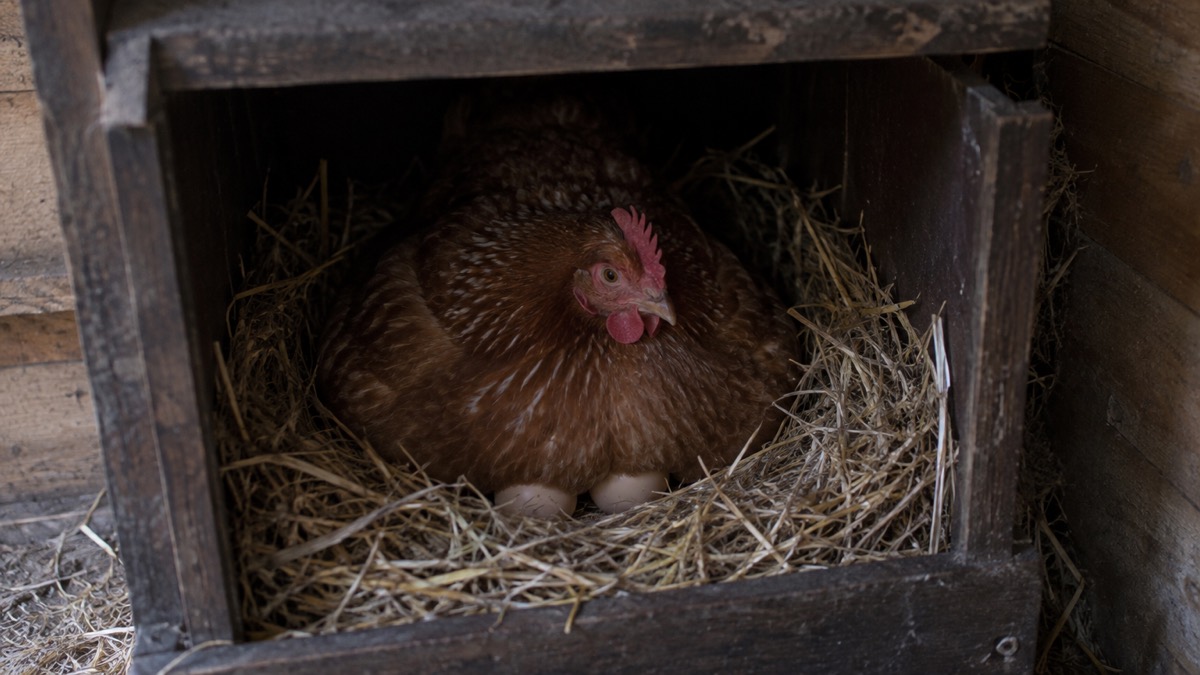
A sitting hen eats far less than a laying hen, but she still needs the right things within reach so she does not have to leave the nest for long. Hens have no teeth, so they need insoluble grit such as hard flint grit to grind and digest their food, and oyster shell as a soluble grit providing extra calcium, particularly important for laying hens for stronger eggshells4. Keep both available.
It is illegal to feed kitchen scraps to chickens because of the risk of disease5. That applies to a sitting hen as much as to the rest of the flock. Feed a proper ration and leave the scraps out of it.
You can check that her digestion is working by feeling her crop, the pouch at the bottom of her neck. In a healthy hen the crop should be roughly the size of a small tangerine when full7. First thing in the morning the crop should be empty, and it will gradually increase in size as the hen eats; feed passes out of the crop into the gizzard overnight, where it mixes with grit and is ground down8. The crop should fill up when she eats and slowly deflate as food passes through to the stomach9.
If the crop stays full and feels doughy, that is a sign of a problem rather than a full meal, and the chicken health guide sets out what to look for. For day to day quantities, see how much food a hen needs each day.
Heatstroke in a sitting hen: the signs and when to call a vet
A hen sitting tight on eggs through a hot spell is at real risk, because she will not leave the nest to cool down as readily as the rest of the flock. Know the signs. In chickens they are open mouth breathing, wings and legs outstretched, reduced appetite and egg production, and staggering or falling over10. These symptoms can also indicate other health issues, so if heatstroke is suspected, call a poultry-friendly vet immediately for advice10.
The general heatstroke picture in animals is well documented: early signs include heavy panting, restlessness and lack of coordination, and you should contact a vet immediately if you have any concerns about your pet's health11. For a bird, the poultry-specific signs above are the ones to watch for.
Practical prevention matters more than treatment. Site the coop so the nest area does not bake in direct sun, keep drinking water fresh and within reach, and avoid disturbing her in the hottest part of the day. If you are worried about the wider household in a heatwave, the heatwaves and drought guide covers keeping people and animals cool.
Bird flu rules: never handle sick or dead birds
An Avian Influenza Prevention Zone is currently in place across the UK, and the advice is clear: do not touch or handle sick or dead birds; if you have to, thoroughly wash your hands immediately afterwards, keeping them away from your face or food5. The same warning applies to pet chickens specifically4. Official guidance is equally direct: do not touch or pick up a dead or visibly sick wild bird12.
Biosecurity around the coop reduces the risk in the first place. Place food and water under cover to prevent contamination from wild birds, change or disinfect footwear when entering the enclosure, wash your hands before and after tending to birds, regularly clean and disinfect equipment and hard surfaces, ensure proper rodent and vermin control, use scarecrows, foils or streamers to deter wild birds, prevent access to neighbouring poultry, and reduce the movement of people, vehicles or equipment13.
If your area falls under disease control zones, there are legal duties as well. In all disease control zones you must follow biosecurity rules, keep a record of anyone that transports or markets poultry or poultry eggs (with exemptions for table eggs), follow the rules for fresh meat, comply with biosecurity rules imposed by a veterinary inspector, not organise or attend bird gatherings, and not release game birds14.
The daily biosecurity for backyard poultry keepers page turns this into a routine, and do I have to register my chickens covers the register.
Buying hatching stock from a healthy flock
Whether you are buying hatching eggs or point-of-lay birds, the health of the flock they come from decides the health of what you bring home. When buying hatching eggs it is important to buy from a breeder with a good reputation15. Reputation is not a guarantee, so look at the birds themselves.
Observe the whole flock for a few minutes before picking individuals; a flock that has a couple of sickly birds is likely to have a disease or parasite problem16. That single habit, standing and watching before you buy, will save you more trouble than any other.
Once birds are home, check them over. A hen will disguise the fact that she is not feeling well to maintain her place in the pecking order, and feathers disguise thinness, so regular handling is the only way to tell if a bird has lost weight6. Part the feathers under the wings and around the base of the tail, where lice can usually be spotted running on the skin and where they lay their eggs in clusters17. A few firm knocks on the inside of the hen house will sometimes reveal what looks like dust floating down from the ceiling: red mite waiting to feed18.
| What to check | What you are looking for | Why it matters |
|---|---|---|
| The whole flock, before buying | Sickly birds among healthy ones | A flock with sickly birds is likely to have a disease or parasite problem16 |
| Under the wings and tail base | Lice running on the skin, egg clusters | Lice live and lay in these areas17 |
| Inside the hen house | Dust-like mites after a firm knock | Red mite wait in the house to feed18 |
| The bird in your hands | Weight loss hidden by feathers | Hens disguise illness and feathers hide thinness19 |
If you are rehoming rather than buying, the ex-battery hens care guide and the checklist for bringing home rescue hens cover the first days. The British Hen Welfare Trust notes that the vast majority of hens are healthy and laying well, and that it is a common misconception that ex-bats are unhealthy20.
Setting up the coop and run before chicks arrive
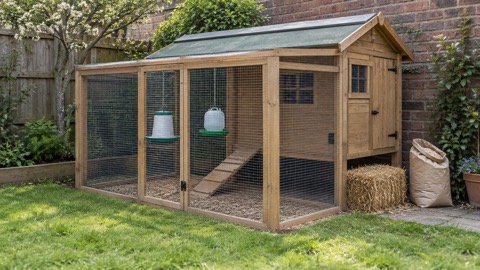
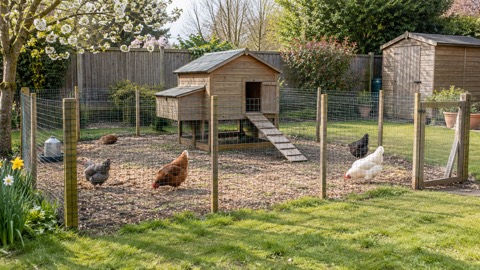
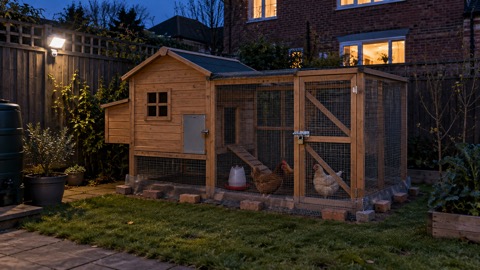
Get the housing right before you hatch, because a broody hen with chicks needs somewhere safe to raise them. Pet chickens live outside in chicken coops: a ventilated, warm and dry chicken house with a litter-covered floor, plenty of space, food and water, places to perch and nest boxes for laying hens to lay eggs2. The shopping list for hens covers a hen house or coop, bedding, a run, daytime shelter, substrate, drinkers and feeders21.
Two common mistakes are worth naming. Some wooden coops come with a small run attached which are not suitable for chickens, as they need much more space22. And clear floor space does not include the space under the coop, or where drinkers and feeders will be placed, as this is not usable22. Measure the space the birds can actually use.
Keep at least three hens that get on well together; cockerels should not be kept together unless they have grown up together and get on well, or they may fight4. If you are adding to an existing flock, adopt a greater number of hens than you currently keep: if you already have three hens, adopt at least four new ones so the incoming hens have the advantage in numbers23. The guide to introducing new hens takes this step by step.
Winter feeding and activity
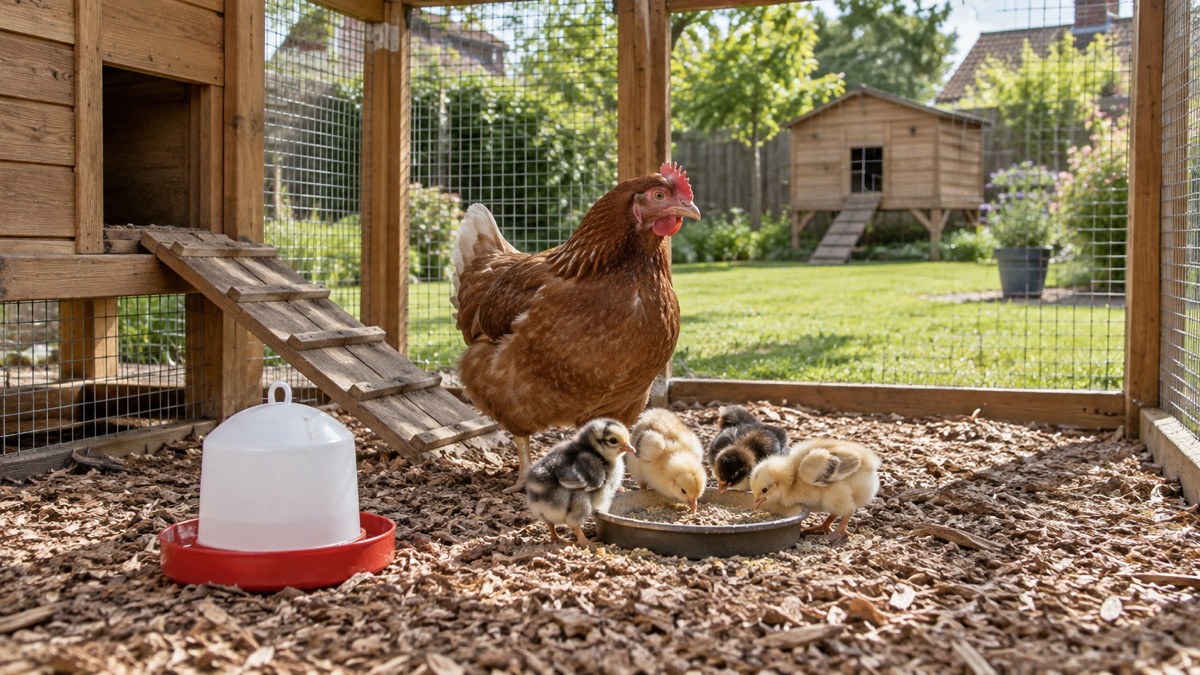
Chickens eat more in colder months to generate body heat, so a sitting hen that hatches late in the year, and the chicks she raises, will get through more feed than the summer flock2. They also sleep more in winter to conserve energy and are generally less active during the day2. That is normal, not a sign of illness.
The test is demeanour. A healthy hen should be busy and active, scratching the ground, feeding and drinking well (though not excessively) and preening9. A bird that sits fluffed up and uninterested in food is the one to look at more closely.
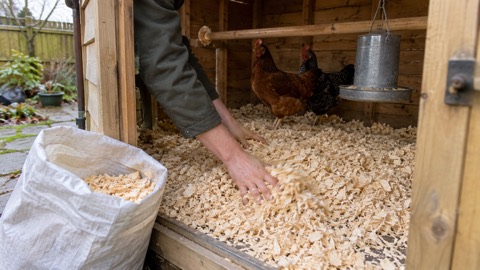
Newly adopted hens often sleep on the floor of the house initially; colony hens soon learn to perch confidently with access to low perches, and free-range and barn hens will have no problem perching20. If you are bringing in birds in the colder months, provide low perches and let them find their feet. The winter care guidance for birds and the coop and run space guide help you judge whether the house is doing its job.
Where to get help and further reading
For the wider picture of keeping a flock, the keeping chickens guide is the main page, with chicken health for illness and parasites and how much coop and run space hens need for housing. If you are thinking about other livestock or food production at home, the self-reliance section covers growing food, hens, bees and rainwater.
For bird flu, follow the current zone rules for your area and the biosecurity routine on the poultry biosecurity page. For a suspected notifiable disease, contact your vet, who will advise on reporting.
Sources (23)
- Common chicken problems, Omlet, 2026
- Chickens: our advice, RSPCA, 2026
- Hatching, rearing and care of young poultry, Poultry Club of Great Britain, 2026
- Chickens: health, RSPCA, 2026
- Chickens: environment, RSPCA, 2026
- Housing, equipment and feed, Poultry Club of Great Britain, 2026
- Impacted crop, British Hen Welfare Trust, 2026
- Pendulous Crop | Hen Health | British Hen Welfare Trust, British Hen Welfare Trust
- Hen examination guidelines, British Hen Welfare Trust, 2025
- How to care for small pets in the hot weather | Woodgreen, Woodgreen
- Hot weather and its impacts, Met Office, 2026
- Pets and birds in winter, RSPCA, 2026
- Bird Flu in Chickens: Symptoms, Restrictions & Protection | Woodgreen Pets Charity, Woodgreen Pets Charity
- Avian influenza (bird flu), Suffolk County Council, 2026
- Buying eggs, Omlet, 2026
- Choosing your chickens, Omlet, 2026
- Lice, British Hen Welfare Trust, 2026
- Red mite, British Hen Welfare Trust, 2026
- Handling and welfare guidelines, Poultry Club of Great Britain, 2026
- Newly adopted hens, British Hen Welfare Trust, 2025
- Hen keeping starter guide, British Hen Welfare Trust, 2026
- Hen setup, British Hen Welfare Trust, 2025
- Hen adoption FAQs, British Hen Welfare Trust, 2026
 Beekeeping Starter Equipment
 Pet Hens Starter Kit
 Bringing Home Rescue Hens
 Hay Bale Fires
 Livestock in a Heatwave
 Livestock Water Outage
 Sky Lanterns
 BeeBase Registration
 Cleaning a Chicken Coop
 Coop and Run Space for Hens
 Care for Ex-Battery Hens
 Reporting Foulbrood
 Fox-Proofing a Chicken Coop
 Daily Hen Feed Amounts
 Introducing New Hens