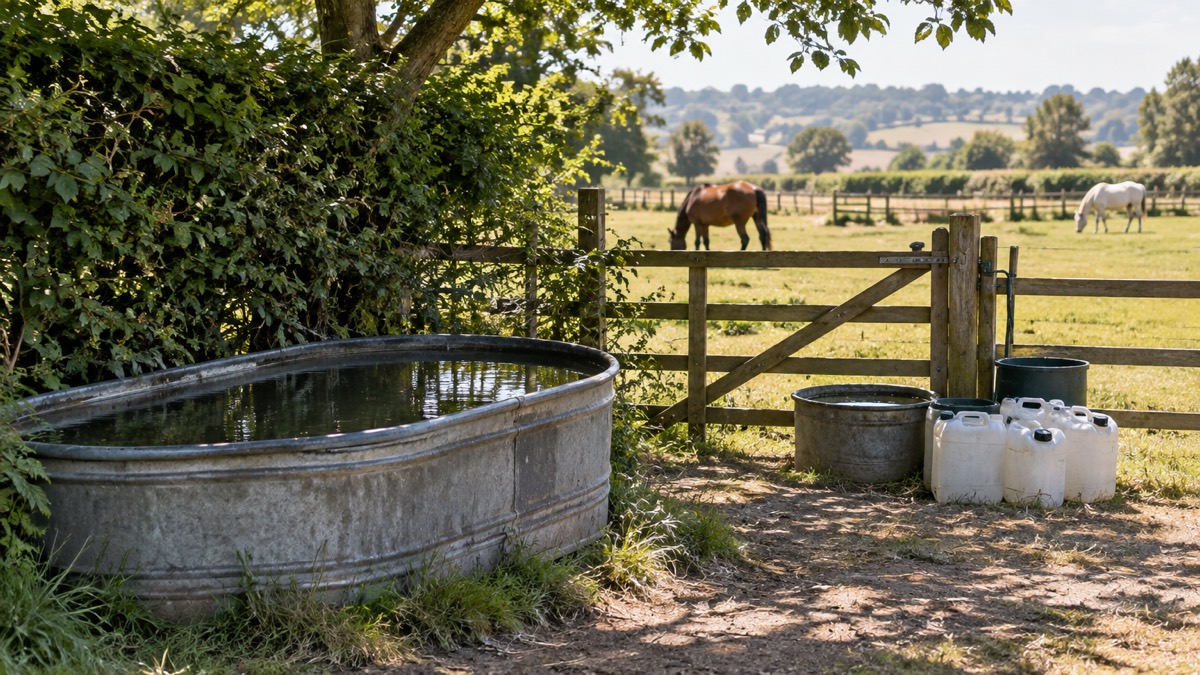
Hot weather asks more of a horse, pony, sheep, goat, pig or flock of hens than most people realise, and the animals cannot do much about it themselves. They depend on shade, on water that is actually there when they want it, and on you noticing when something is wrong. The core of it is simple: provide shade and plenty of fresh water throughout the day, avoid strenuous activity during the hottest part of the day, and watch for early signs of heat stress, with fatigue often the first thing you will see1.
If an animal is already struggling, act at once. Move it somewhere cool and shaded, offer water, and cool it down3. Contact a vet if you are worried that an animal is suffering from heatstroke4. For a horse that is breathing hard, distressed or unsteady, cool it first and call the vet urgently, because an animal showing signs of heatstroke needs to be seen by a vet urgently and cooled as quickly as possible before it is moved5.
The rest of this page sets out what to look for, how to arrange shade, water and turnout on hot days, how to cool an overheated horse, what exercise and travel to avoid, how the needs of sheep, goats, pigs and poultry differ, and when to pick up the phone.
Signs a horse is struggling in the heat
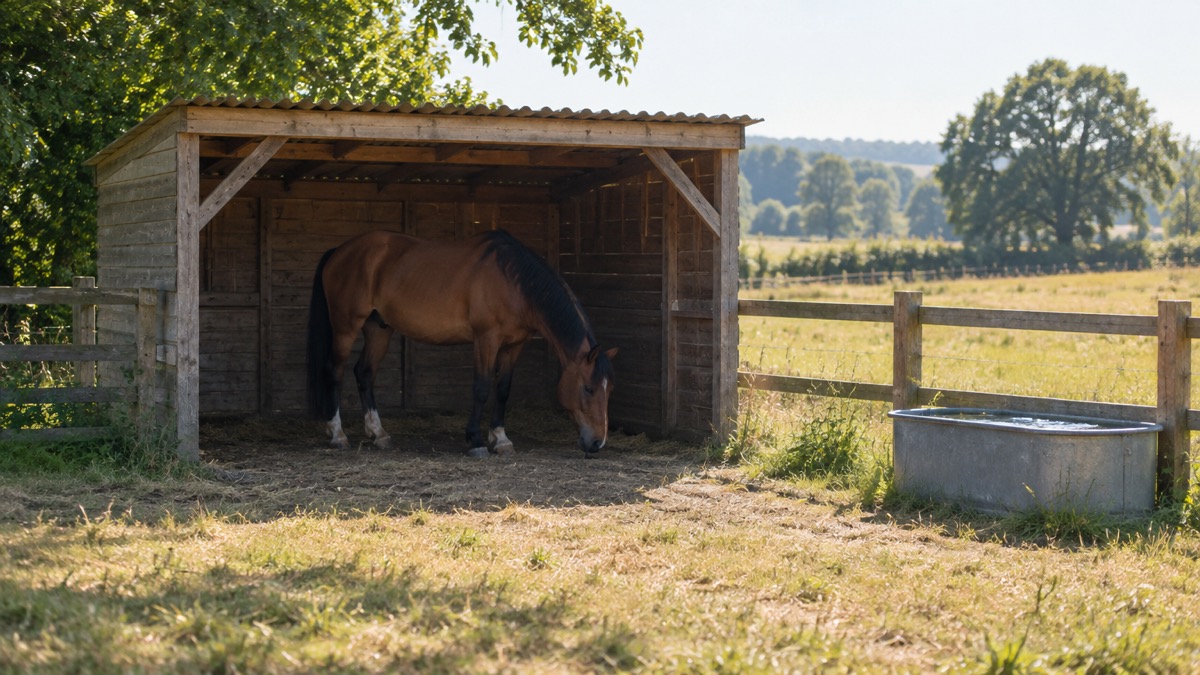
Horses do not sweat and pant like dogs, so you have to read the whole animal. The official hot weather advice describes heat stress, with fatigue as an early sign, and warns that too much exercise when it is very hot can cause heat exhaustion or heat stroke2. That is the frame to watch for: a horse that is unusually quiet, hanging back from the herd, off its feed or reluctant to move is telling you something before anything dramatic happens.
The early signs of heatstroke that official guidance lists for pets are heavy panting, restlessness and lack of coordination9. A horse in trouble may show the same pattern in its own way: breathing hard, unsettled and unable to settle, or unsteady on its feet. Treat any of these as a reason to stop, move the animal into shade and offer water.
Watch the conditions around the animal as well as the animal itself. Heat stress builds when there is no shade, when water is empty or too warm to tempt them, and when they have been asked to work in the heat of the day. The official advice is to avoid too much exercise when very hot and to watch for signs of heat stress2. If you are checking a group, look at the ones at the back and the ones standing alone, because they are the ones you will miss.
Shade, water and turnout times on hot days
The two things you control are where the animals are and what they can drink. Official advice is to stay in the shade, drink plenty of water and avoid strenuous activity during the hottest part of the day11. For livestock, that translates into turnout: put horses out in the cooler parts of the day, early morning or evening, and bring them in or provide shelter during the hottest hours6.
Water is the part that fails quietly. Make sure animals have access to shade and plenty of fresh water throughout the day7. Check troughs and buckets at least twice a day in hot weather, and more often if animals are drinking heavily. If your supply is interrupted, the official flood guidance for livestock gives a sensible model: store as much feed and water as possible, enough to last until clean water and food can be delivered12. Our page on getting water for livestock during a supply interruption covers what to do when the trough runs dry.
| What to check | Why it matters | How often |
|---|---|---|
| Troughs and buckets | Fresh water must be there when the animal wants it7 | At least twice a day in hot weather |
| Shade and shelter | Animals need somewhere out of the sun6 | Every turnout |
| Ventilation in stables | Adequate ventilation helps keep animals cool13 | Every day |
| Stored water | Enough to last until clean water can be delivered12 | Before and during hot spells |
Ventilation matters as much as shade. Official guidance on keeping cool includes ensuring adequate ventilation13. A stable that is shaded but airless is still hot, so open up what you can and keep air moving. If you are travelling with animals, carry water with you14.
Cooling an overheated horse: what to do now
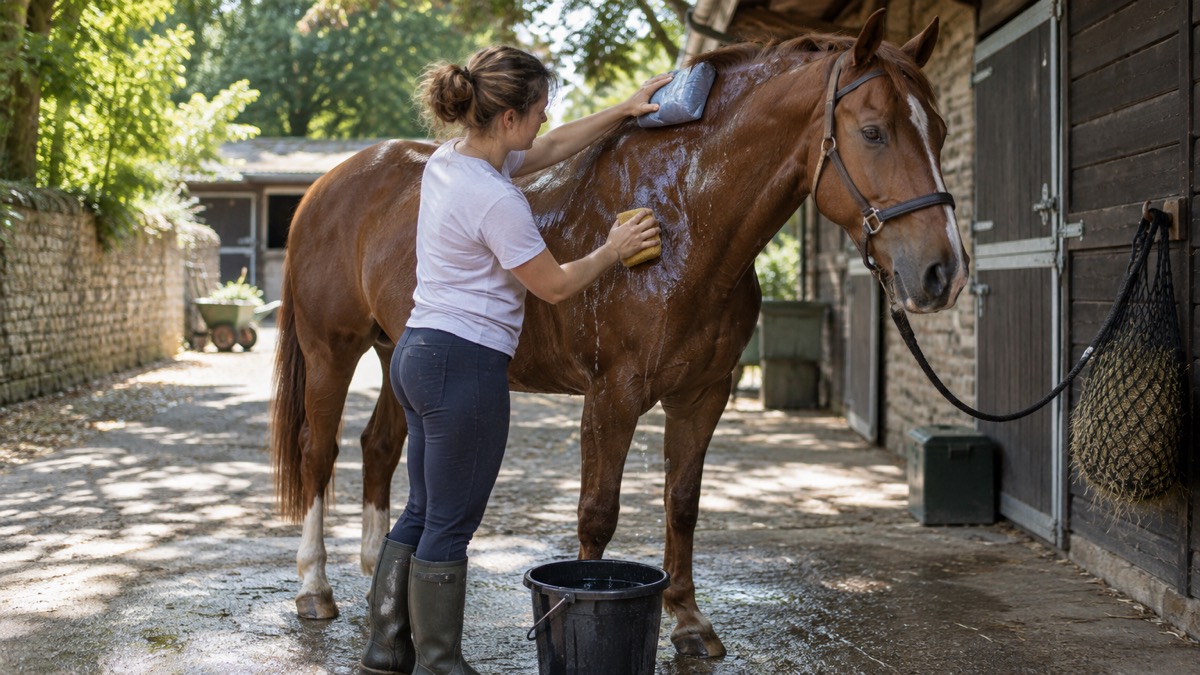
If a horse is overheating, the priority is to get it cooler quickly and then get help. Move it to a cooler place, somewhere in the shade and out of direct sunlight9. Offer cool water to drink9. Apply cool water by spray or sponge, and use cold packs wrapped in a cloth under the armpits or on the neck9. Those steps come from official heat exhaustion guidance for people, and they map directly onto an animal: shade, water, and cooling the places where blood runs close to the skin.
Work steadily and watch the animal. Independent guidance for cooling a dog says to monitor cooling closely and stop if you notice signs of shivering7. The same caution applies to a horse: cooling is not a contest, and you stop when the animal is calmer and no longer distressed. Once it is cooled, it still needs to be seen. Independent guidance is that once an animal is cooled, it should be taken to a nearby vet as a matter of urgency5.
Exercise and travel to avoid in a heatwave
The official line on exertion is consistent across every source: avoid extreme physical exertion, and if you cannot avoid strenuous outdoor activity, keep it for cooler parts of the day such as early morning or evening8. Avoid exercising in the hottest parts of the day15. Do not do tiring physical activity in very hot or humid weather3. For a horse, that means no schooling, fast work or long hacks in the heat of the day, and no lunging in the midday sun.
If you must travel, plan around the heat. Official travel advice is to take extra water, check the vehicle is well ventilated and avoid leaving children or pets in parked cars16. During particularly hot weather, make sure your engine stays within its normal operating temperature range, and if it begins to overheat, find somewhere safe to stop and allow it to cool down17. Never leave anyone in a closed, parked vehicle, especially infants, young children or animals15.
On the road, take particular care to give cyclists, motorcyclists, walkers and horse riders space and time, and slow down on sharp bends in case there is a vulnerable road user round the corner17. If you are the one riding or leading a horse on the road in summer, that courtesy cuts both ways: ride in the coolest part of the day, keep to shaded routes where you can, and carry water.
Keeping sheep, goats, pigs and poultry cool
The principles are the same for every species: shade, water, ventilation and timing. Sheep and goats need shade and a constant supply of fresh water, and they should be moved to the cooler parts of the day for anything strenuous, just as horses are6. Pigs cannot sweat effectively and overheat quickly, so shade and water are critical, and wallowing areas or damp ground help them cool themselves.
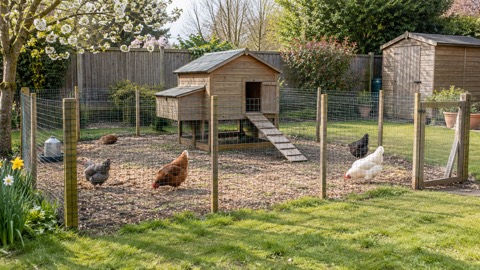
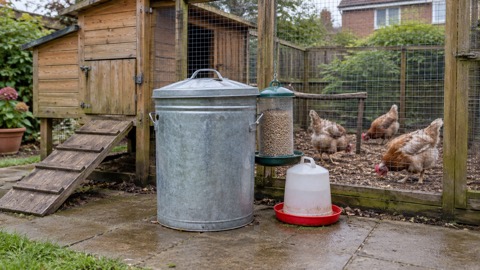
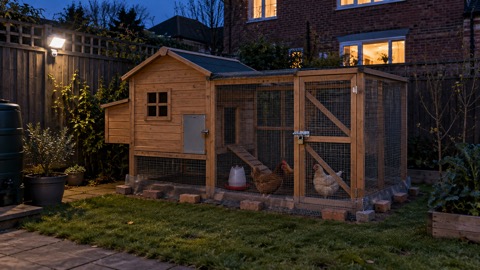
Poultry need particular attention because a henhouse can become an oven. Keep the house ventilated, provide shade in the run, and make sure drinkers are full and clean. The official advice to ensure adequate ventilation applies to any housing13. For birds in runs and coops, independent guidance on cold weather stresses covering enclosures to keep wind and rain out19; in hot weather the same structures need the opposite treatment, with airflow through them rather than around them.
Smaller animals on the same holding follow the same rules. For rabbits and rodents, official guidance is to freeze plastic bottles of water and place them in the enclosure to help them stay cool, alongside plenty of fresh water20. If you suspect a small animal is suffering from heatstroke, move it to a cool, shaded place, wrap it in a cool, damp towel and phone your vet immediately21.
| Species | What they need most | What to watch |
|---|---|---|
| Horses and ponies | Shade, constant water, turnout in cooler hours6 | Fatigue, hard breathing, distress2 |
| Sheep and goats | Shade and fresh water, work moved to cooler parts of the day6 | Animals standing apart, reluctance to move |
| Pigs | Shade, water, damp ground to cool themselves | Rapid overheating |
| Poultry | Ventilated housing, shade, full drinkers13 | Birds panting, wings held out |
| Rabbits and small pets | Frozen water bottles, fresh water, shade20 | Heatstroke signs, then vet21 |
When to call a vet
Call a vet if you are worried that an animal is suffering from heatstroke4. That is the plain official position, and it is better to ring early than to wait and see. For an animal that is already showing signs, cool it down first and then get it seen urgently, because independent guidance is that an animal showing signs of heatstroke needs to be seen by a vet urgently and cooled as quickly as possible before being moved5.
If you have any concerns about an animal in extreme weather, speak to your local vet19. Keep your vet's number and your out-of-hours number somewhere you can find them in a hurry, and know where your nearest emergency practice is. Our page on emergency vets and out-of-hours care explains how the 24-hour rule works.
For the wider picture, our guides on keeping dogs, cats and small animals cool in hot weather and on horses and livestock in floods and snow cover the rest of the year, and heatwaves and drought sets out what to expect when a hot spell settles in. If you keep animals as part of a household plan, put their water, shade and vet details into your household emergency plan.
Sources (21)
- How to keep dogs cool in the summer heat, Blue Cross, 2023
- Hot weather and its impacts, Met Office, 2026
- Heatstroke and heat illness, NHS Inform, 2026
- Hot weather advice, nidirect, 2026
- Dogs die in hot cars, Scottish SPCA, 2026
- How to keep cool this summer, Lancashire County Council, 2026
- Hot weather advice for dogs, Dogs Trust, 2026
- Heatwave, drought and water shortages, Dorset Prepared, 2026
- Beat the heat: staying safe in hot weather, GOV.UK, 2026
- Stay safe in extreme heat, Met Office, 2026
- How to stay safe during a heatwave, Dorset and Wiltshire Fire and Rescue Service, 2026
- Protecting your farm and livestock, SEPA, 2026
- Keeping cool in summer, Derbyshire County Council, 2026
- Hot and sunny weather, Cumberland Council, 2026
- How to cope with hot weather, Keeping Well North West London, 2026
- Travel advice, Prepare, 2026
- Travelling in summer, National Highways, 2026
- Travelling in extreme heat, Traffic England, 2026
- WeatherReady weather hacks, Met Office, 2026
- Adverse weather events, Llangattock Community Council, 2026
- Rabbits and rodents in summer, RSPCA, 2026
 Beekeeping Starter Equipment
 Pet Hens Starter Kit
 Bringing Home Rescue Hens
 Hay Bale Fires
 Livestock Water Outage
 Sky Lanterns
 BeeBase Registration
 Broody Hen Hatching
 Cleaning a Chicken Coop
 Coop and Run Space for Hens
 Care for Ex-Battery Hens
 Reporting Foulbrood
 Fox-Proofing a Chicken Coop
 Daily Hen Feed Amounts
 Introducing New Hens