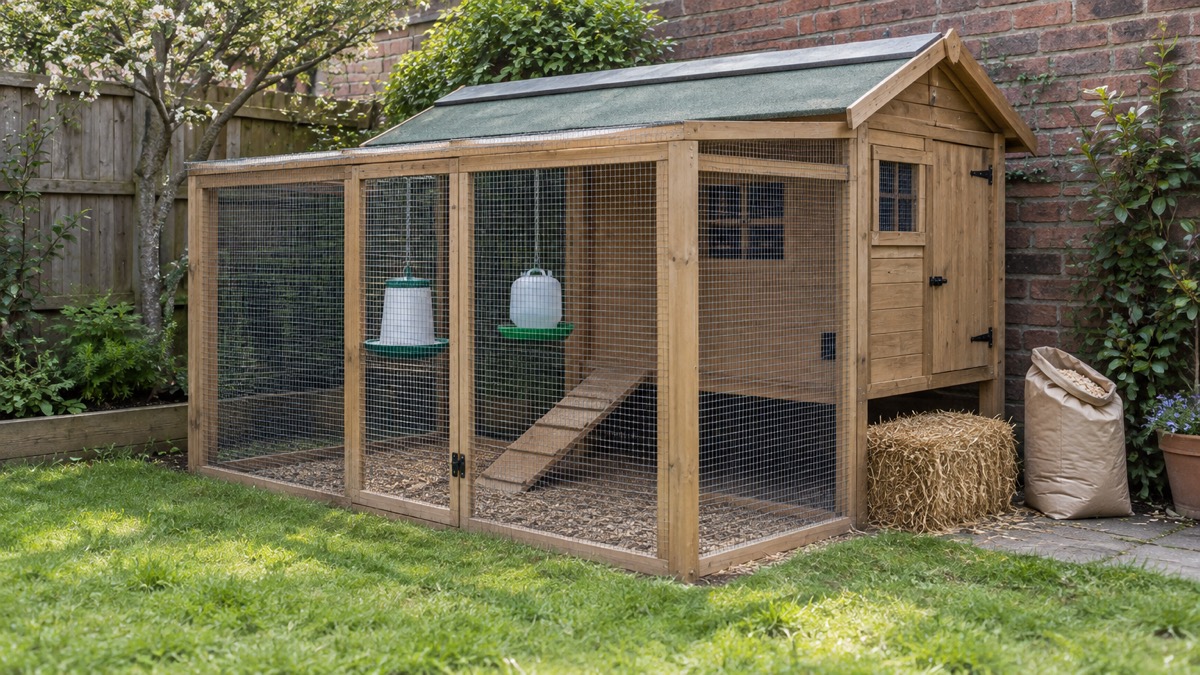
Keeping a few hens is a practical, everyday sort of self-reliance, and the kit you need before they arrive is smaller than most people expect. The essentials are a ventilated, warm and dry coop with a litter-covered floor, perches and nest boxes, a run with at least 1 square metre per bird where possible, drinkers and feeders, a complete feed, and two separate things that are easy to confuse: insoluble grit and oyster shell1. Plan for at least three hens, because chickens are social creatures and do better in a flock3.
The two rules that catch out new keepers are legal ones. It is illegal to feed kitchen scraps to chickens because of the risk of disease, and Defra banned feeding dead mealworms to chickens in 20144. Neither is a matter of preference. Get those right, give the birds space and clean water, and most of the rest is routine.
This page is a checklist to work through before the hens arrive, followed by the detail on why each item matters, how to keep it ready, and what to do when a bird looks unwell. If you are still deciding whether hens suit your garden, the wider guide to keeping chickens covers housing, feeding and the law in more depth.
The checklist: what to have ready before your hens arrive
Work through this list before the birds come home. Each item has a few words on why it matters, and the sections below explain the detail.
Coop, run and feed: the three things to get right
Most of the money and most of the mistakes go on these three. Get them right and the rest of the list falls into place.
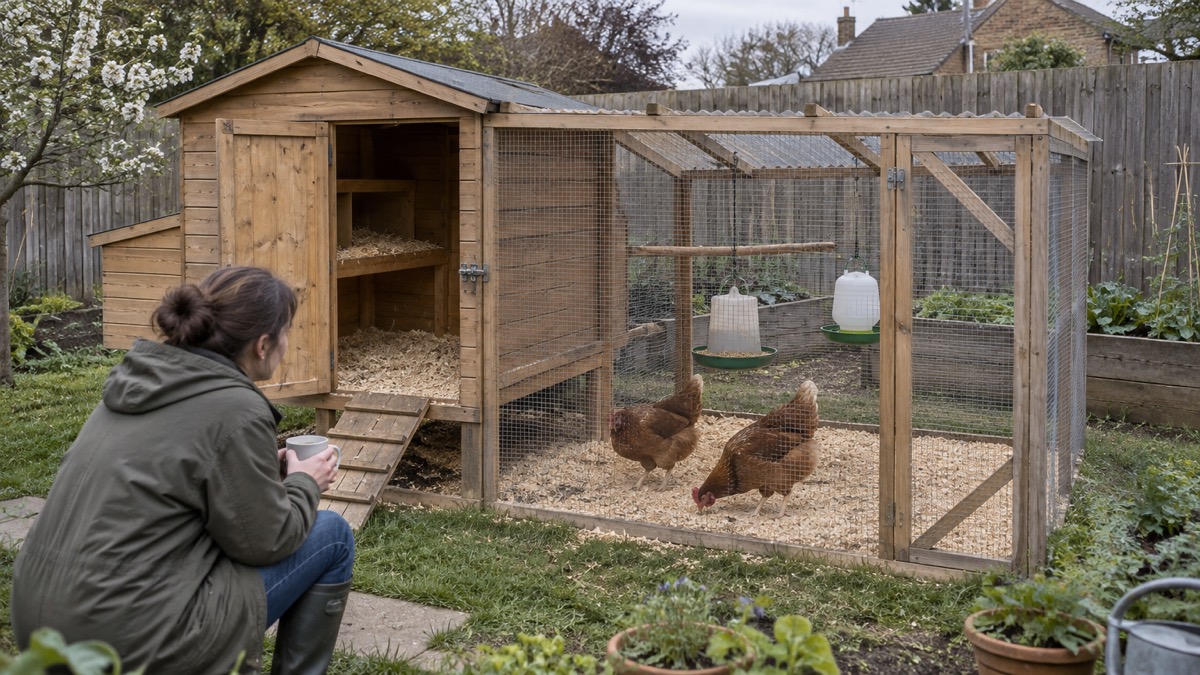
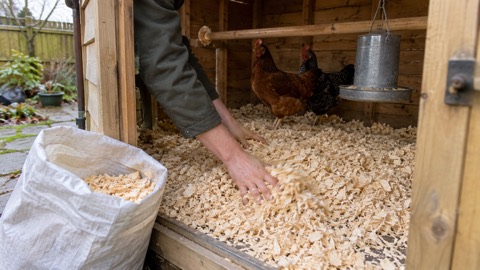
The coop. Pet chickens live outside in coops, and what they need is a ventilated, warm and dry house with a litter-covered floor, plenty of space, food and water, places to perch and nest boxes for laying hens to lay eggs2. Space is the figure people underestimate: housing of at least 1m² should be provided per bird where possible, and if that is not possible, birds should be stocked at no more than three per m² of coop1. Nest boxes follow the same logic, at least one per five hens with a minimum of two whatever the group size, each at least 30x30x30cm, draught-free and lined with clean, dry nesting material1. Perches need enough room for every bird to roost at once, from 15cm per chicken, with a height of 40cm5. Clean and disinfect the coop regularly to remove parasites1.
The run. Allow a minimum of 1 sq m per caged hen or 2 sq m per barn or free-range hen, and the more space you can offer the better3. Hens from other farming systems need a minimum of 2 square metres per bird, plus ideally the chance to free range7. If your hens will be free-range most of the time, there should still be some kind of enclosure around the coop when they are first rehomed, so they become "homed" and learn where to eat, drink and go to bed7. A wooden coop with a small run attached is not suitable for chickens, as they need much more space7.
The feed. Choose a complete food rather than a mixed one, so the feed contains all the necessary nutrients, and store it in a cool, secure and dry place to stop it going off or spoiling1. Hens eat more in colder months to generate body heat, so expect the bag to go down in winter2.
| Item | What it does | The figure that decides it |
|---|---|---|
| Coop | Ventilated, dry shelter with perches and nest boxes2 | At least 1m² per bird where possible1 |
| Run | Daytime space to move, forage and dustbathe3 | 1 sq m per caged hen, 2 sq m per barn or free-range hen3 |
| Nest boxes | A clean, dry place to lay1 | One per five hens, minimum two, 30x30x30cm each1 |
| Perches | Somewhere safe to roost at night5 | From 15cm per chicken, 40cm high5 |
| Feed | Complete nutrition in one bag1 | Complete, not mixed; stored cool, secure and dry1 |
Grit and oyster shell keep hens digesting and laying
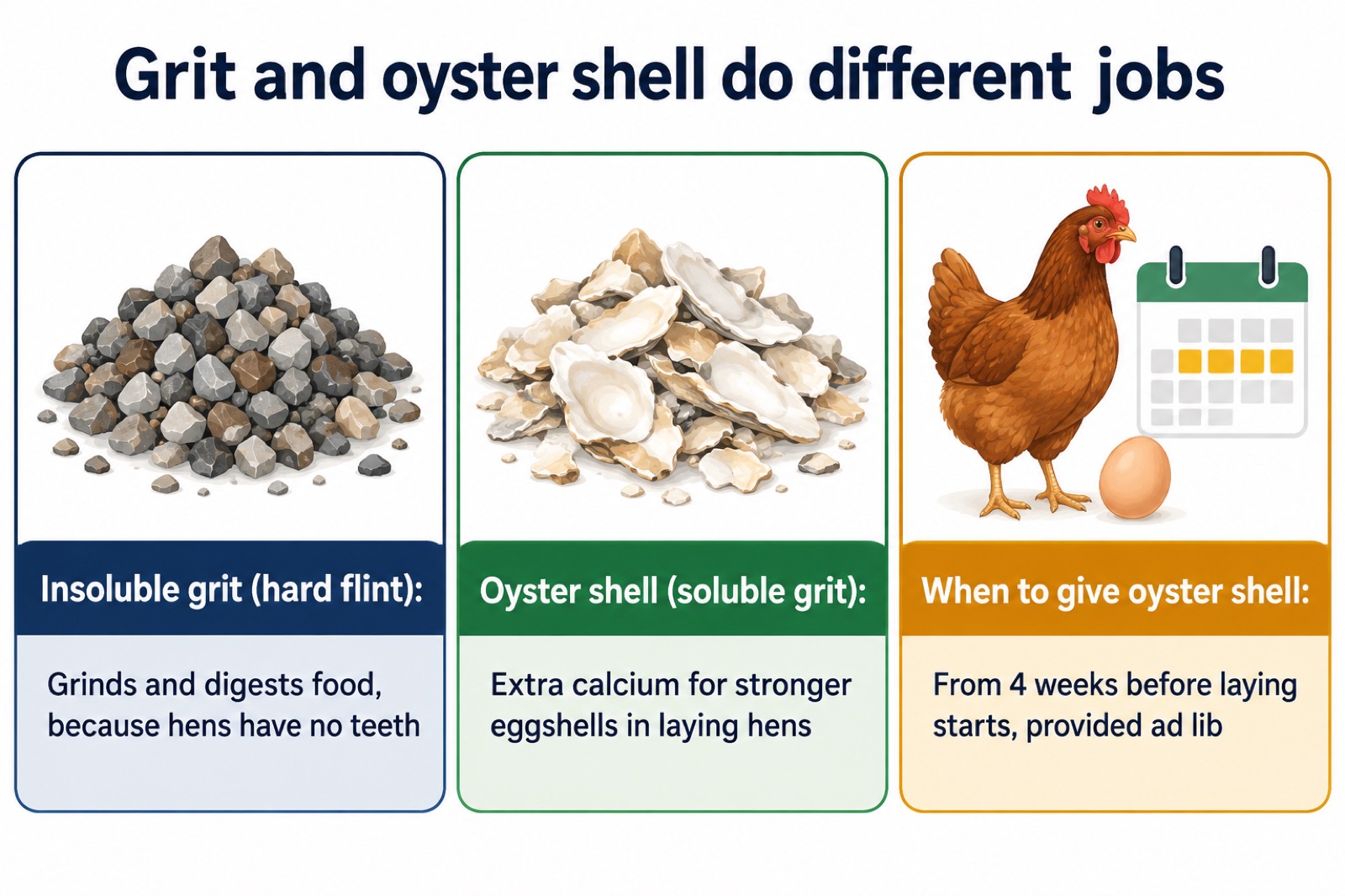
These two are sold in similar bags and do different jobs, so it is worth understanding both before you shop. Chickens do not have teeth. They need insoluble grit, such as hard flint grit, to grind and digest their food in the gizzard1. Oyster shell is a soluble grit that provides extra calcium, and it matters particularly for laying hens because it helps build stronger eggshells1.
The timing for oyster shell is specific: from four weeks before laying commences, oyster shell or limestone grit should be provided ad lib to help with egg shell formation9. In practice that means having it in the coop before the hens come into lay, not after you notice thin shells.
Offer both, and do not treat one as a substitute for the other. A hen that cannot grind its food will not thrive however much calcium it gets, and a hen with plenty of grit but no calcium source will lay weaker shells. Keep the bags dry and covered, and top up the containers rather than letting them run empty.
Kitchen scraps are illegal to feed to chickens
This is the rule that surprises almost everyone who kept hens as a child. It is illegal to feed kitchen scraps to your chickens because of the risk of disease1. The law is stricter than it once was, following the Foot and Mouth outbreak in 2001, which was caused by cross-species feeding4.
Hens are not waste disposal units. They should not be fed bread, which can ferment in the crop and cause sour crop, nor potato peelings4. If you want to give them greens, particularly in winter when there is not enough grass, hang up cabbage stalks, nettles or brussels sprout plants in the hut, or a swede cut in half and impaled on a blunted nail driven into a block of wood. Those greens must not come from your kitchen: they should have been bought purely for feeding stock and stored separately9.
The same principle applies to dead mealworms. Defra announced a ban on feeding dead mealworms to chickens in 2014, because most dead mealworms are imported and may have come into contact with, or been fed, animal protein that could potentially pass on disease4. The ban does not apply to live insects, insect fats and oils4.
Space, grass and the run through the year
A run does not stay the same through the year, and the two extremes, wet and hot, each need a plan.
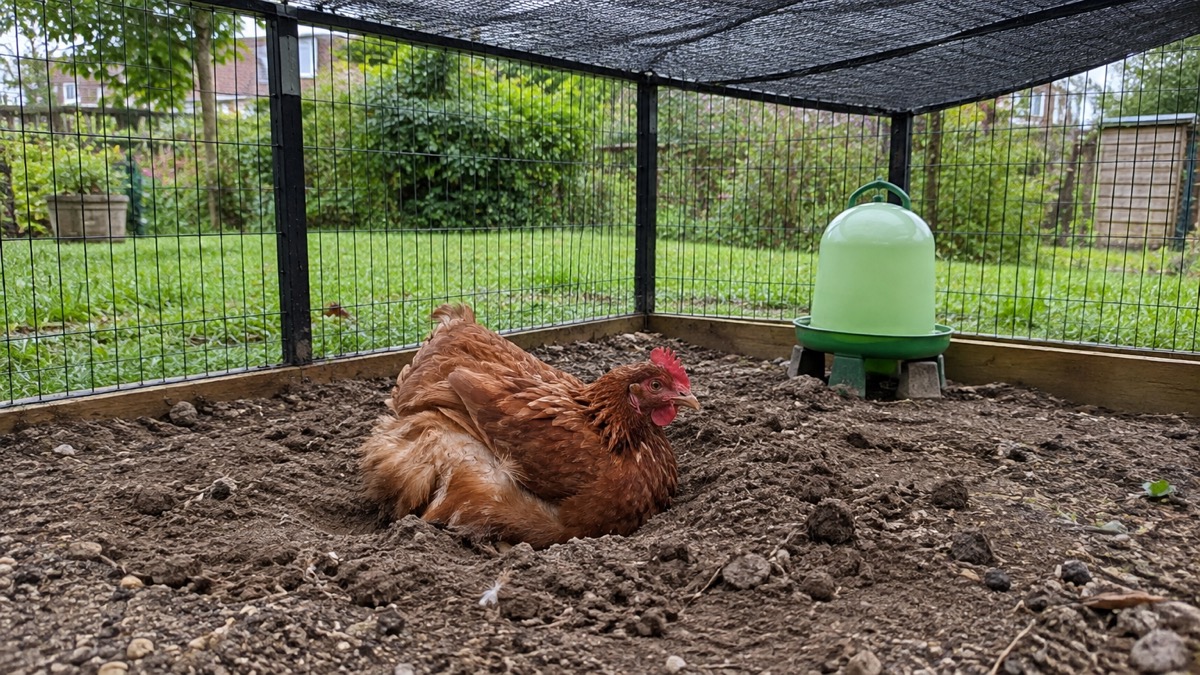
Mud and bare ground. A static run can very quickly become either a sea of mud or bare of vegetation, so make it larger than the recommended minimum or divide it into two and rest one side9. Where grass does grow, keep it short, because long strands can become trapped in the chickens' digestive system5. Provide overhead cover, dry soil for dust bathing and foraging, and sheltered outdoor food and water to avoid attracting rodents and wild birds5. A net or solid plastic roof over the run is preferable, to deter wild birds from defecating near your poultry9.
Heat. In hot weather, watch for the signs of heatstroke: open mouth breathing, wings and legs outstretched, reduced appetite and egg production, and staggering or falling over10. If you suspect heatstroke, call a poultry-friendly vet immediately for advice10. Moving outdoor enclosures into shade, creating extra shade and keeping air flowing are the practical measures for small outdoor pets11.
Winter. Hens sleep more in winter to conserve energy and are generally less active during the day, and they eat more in colder months to generate body heat2. Egg laying is naturally higher in spring and summer and slows in autumn unless the birds are selectively bred laying hens kept indoors with artificial lighting2. Check the coop is weather tight and in good repair before the cold sets in6.
Bird flu, heatstroke and when to call a vet
Hens hide illness well, so you have to look for it. Signs of poor health include a hunched posture, erect feathers, the head tucked under the wing, hiding in corners, dirty feathers, lameness, runny faeces stuck to the rear feathers, and discharge from the eyes or nostrils. Contact a vet if you are concerned5.
Bird flu changes what you should do with a sick or dead bird. An Avian Influenza Prevention Zone is currently in place across the UK, and the advice is not to touch or handle sick or dead birds. If you have to, wash your hands thoroughly immediately afterwards and keep them away from your face and food1. Maintain good personal hygiene with regular hand washing with soap and the use of alcohol-based hand rubs12. Bird keepers should follow Defra for the latest advice13, and in all disease control zones there are biosecurity rules to follow, including keeping records of anyone who transports or markets poultry or poultry eggs, with exemptions for table eggs14.
Worms are the other common problem worth planning for. Establish a routine hen health plan with regular preventative worming, use a ground sanitiser, pick up droppings regularly, change bedding when it is soiled, and prevent chickens from accessing intermediate hosts17. Chickens kept in the same outdoor area for more than a month particularly need regular worming, and birds with worms should be moved to a new grazing area to prevent reinfection from infested droppings1. Tapeworm needs an intermediate host such as slugs and snails, so a hen can only be infected by eating an infected host17.
Where to get help and how to keep the kit ready
The kit is only useful if it is there when you need it. A few habits keep it that way.
- Keep a reserve. Have a week's worth of food, water and any other supplies your hens need on a regular basis, in line with general household emergency advice for pets18. Keep food and bedding in stock in case you cannot get to the shops6.
- Store feed properly. A cool, secure, dry place stops feed going off or spoiling1.
- Plan for being cut off. If you are unable to move livestock or outdoor pets in an emergency, ensure they are as far from danger as possible and arrange for shelter and food to last them several days20.
- Keep the run and fences sound. Maintain fences so that livestock and other animals do not get trapped10, and check fences, gates and hedges along with the coop6.
- Have the vet's number ready. A poultry-friendly vet is the first call for heatstroke or any health concern8.
For the wider picture, the guide to pets and animals in an emergency covers planning for animals in a power cut, flood or other disruption, and chicken health goes through mites, lice, worms and common illnesses in more detail. If you are bringing home rescue birds, the checklist for bringing home rescue hens sets out the first days, and how to introduce new hens to an existing flock covers merging flocks without bullying.
Sources (20)
- Chickens: environment, RSPCA, 2026-10-29
- Chickens, RSPCA, 2026-11-04
- Hen keeping starter guide, British Hen Welfare Trust, 2026-10-22
- Feeding your hens, British Hen Welfare Trust, 2024-11-18
- Chickens: health, RSPCA, 2026-11-04
- Are you ready booklet, Culham Parish Council, 2025-09
- Hen setup, British Hen Welfare Trust, 2025-10-30
- Hot weather advice, nidirect (Northern Ireland Executive), 2026-10-05
- Housing, equipment and feed, The Poultry Club of Great Britain, 2026-11-04
- How to care for small pets in the hot weather, Woodgreen Pets Charity, 2026-09-02
- PA_SUMMER_SURVIVAL_GUIDE.pdf, Blue Cross
- Avian influenza, Public Health Agency (Northern Ireland), 2026-10-06
- Community Risk Register 2025, North Yorkshire Council, 2025-02
- Avian influenza (bird flu), Suffolk County Council, 2026-10-29
- Heatwave special 2024, NHS Somerset, 2024-07
- Adverse weather events: heatwaves, Llangattock Community Council, 2023-10-12
- Worms, British Hen Welfare Trust, 2026-11-04
- Be ready for emergencies, UK Government, 2026-10-21
- You prepare for an emergency, Slough Borough Council, 2026-10-29
- Top causes of rescues and how to avoid them, Devon and Somerset Fire and Rescue Service, 2026
 Beekeeping Starter Equipment
 Bringing Home Rescue Hens
 Hydroponic System Parts List