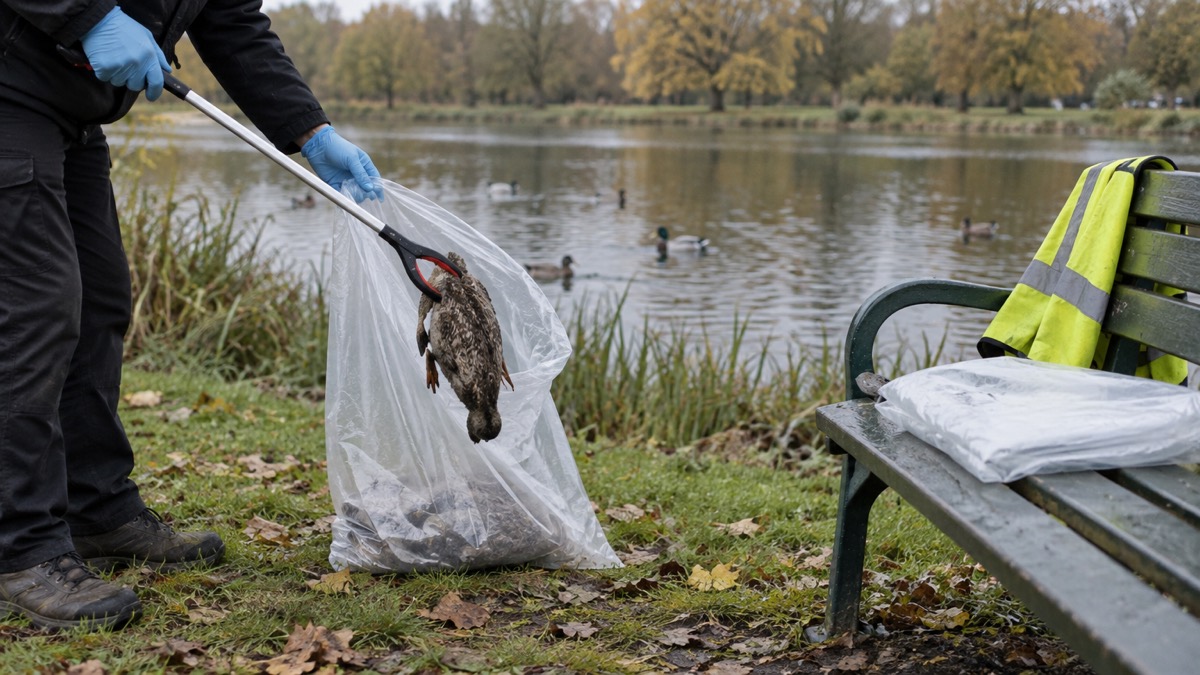
Bird flu, also called avian influenza, is an infectious disease that primarily affects birds, caused by the influenza A virus1. It is not a new problem: low and highly pathogenic avian influenza has been recorded in UK poultry several times in the last ten years, most recently in the winter of 2016/17, with no human cases reported in those outbreaks2. The key fact for an ordinary household is this: the UK Health Security Agency advises that the risk from this bird flu strain to humans and other mammals is very low3.
That does not mean there is nothing to do. Outbreaks in wild and kept birds do occur, and the government runs a well practised process to manage them4. There are simple, specific actions for households: report dead wild birds rather than touching them, keep good hand hygiene after being near birds, and, if you keep any poultry or pet birds, register them so you can be contacted during an outbreak3. This page sets out what bird flu is, what the risk to people actually is, the symptoms to know about, and what to do in each situation.
What bird flu is, and why the risk to people is very low
Avian influenza is an infectious disease of birds caused by the influenza A virus5. Birds are the hosts for most avian influenza viruses, and a variety of influenza subtypes can be found in birds, particularly waterfowl and shore birds5. Domestic poultry are especially vulnerable, and the virus can rapidly cause epidemics in flocks5. That is why an outbreak in a poultry flock is treated so seriously by animal health authorities even though the risk to the general public remains low.
For people, the picture is reassuring but not zero. Human infections with avian influenza are rare5. The UK Health Security Agency, the body that assesses health risks in England, currently advises that the risk from this bird flu strain is very low for humans and other mammals3. Local resilience partnerships across England describe the same picture: animal diseases in the UK are rare, and bird flu is one of those that occur on a more regular, seasonal basis and are managed through a well practised process4. In Essex, for example, planners note that avian influenza affects poultry and wild birds with the potential to spill over into humans, and that proximity to coastal areas and wetlands increases the risk of outbreaks in birds because of migratory birds6. Even so, the public health framing stays the same: zoonotic diseases such as avian influenza can pose health risks to humans, but those risks are managed and monitored6.
It helps to put bird flu in context. The UK's National Risk Register treats human infectious disease outbreaks as a serious planning concern, and one strain of avian flu, H7N9, has caused over 1,500 human cases and hundreds of deaths in Asia since moving from poultry into the human population, although there has recently been a large drop-off in the number of people being infected7. That is the worst case planners prepare for, not the current situation in the UK. The UK's own recorded poultry outbreaks in the last decade, most recently in the winter of 2016/17, came with no human cases reported2. The distinction matters: bird flu is a real animal disease that recurs in the UK, and a flu pandemic is a separate, larger risk the government plans for. You can read more about that planning on our page on pandemics.
Symptoms of bird flu in people, and what to do about them
Most human infections with avian influenza take the form of a flu-like illness: fever, cough, body or muscle pain, sore throat and runny nose5. Other symptoms can include conjunctivitis, with red, sore and discharging eyes5. These are, in other words, much the same symptoms as ordinary flu, which is why the circumstances matter more than the symptoms when deciding whether bird flu is a possibility. The question to ask is whether there has been contact with sick or dead birds, or with a poultry flock under restriction, in the days before the illness started.
Ordinary flu is worth knowing about here, because it is vastly more likely. Flu symptoms hit you suddenly and sometimes severely, and while most people recover, flu can be more serious for pregnant women, very young children, and older people8. If you feel you cannot avoid touching an injured, sick or dead wild bird, the official public guidance says you should read and follow that guidance to reduce the risk of catching avian influenza1. People whose work involves regular contact with kept or wild birds or their environment should follow Health and Safety Executive guidance on working with poultry that is suspected of having avian influenza1.
If you develop a flu-like illness after contact with birds, treat it as you would flu at first: stay at home, rest, and keep away from others while you are infectious, as set out on our page on staying at home when ill. Seek medical advice if you become severely unwell, and tell the clinician about the bird contact. You can check when to call 111 and when to call 999 on our urgent advice page. Reducing the spread of any respiratory illness rests on the same basics: regular hand washing, cleaning surfaces you touch, and fresh air, as our page on stopping infections spreading at home explains in full.
One more thing worth doing whatever happens with bird flu: get your seasonal flu vaccine if you are eligible. The vaccine cut the risk of hospitalisation by around 25 per cent in adults aged 65 and over, and by around 33 per cent in other adults with underlying health conditions, last winter9. If you are eligible for the free flu vaccine you may get it from your own GP practice, or any pharmacy offering NHS flu vaccinations10. In London, you can book at a local participating pharmacy using the London Flu website11. Our page on flu vaccine eligibility sets out who qualifies.
Who manages bird flu: the UK Health Security Agency
In England, the UK Health Security Agency, usually shortened to UKHSA, is responsible for controlling and managing outbreaks of communicable diseases, which includes the human health side of bird flu12. If you see older advice referring to Public Health England, or PHE, that is the former name: notifiable diseases are now notifiable to the UK Health Security Agency, formerly known as Public Health England13. Some pages were simply rebranded to UKHSA with no change to their content, so the advice is the same whichever name appears.
UKHSA's role goes beyond bird flu, and knowing what it does helps you know where to look in any health emergency. It publishes public health advice on how to protect yourself from the potential health consequences of a drought14. It has produced guidance documents with the Department of Health and NHS England intended to protect the population from heat-related harm to health15. During the winter, UKHSA and the Met Office monitor weather forecasts and carry out a joint risk assessment that drives cold-health alertsing16, and the heat-health alert service is provided by UKHSA in partnership with the Met Office17. When UKHSA issues Heat Health Alerts, it is because forecast temperatures are likely to cause increased demand on health and social care services in England18. Following a radiation emergency overseas, UKHSA assesses the risks to public health and works with government partners on monitoring and decontaminating people arriving in the UK19. You can read more about the agency and its alerts on our page about the UK Health Security Agency.
For bird flu specifically, the work is shared. UKHSA handles the risk to human health and publishes advice for the public on staying safe1. Animal health authorities, Defra in Great Britain and DAERA in Northern Ireland, handle the disease in birds themselves: the testing of dead wild birds, the restrictions on poultry, and the control zones around infected premises3. The practical effect for your household is simple: human health questions point to UKHSA and the NHS, and anything about birds, flocks or restrictions points to Defra or DAERA.
How infected birds are dealt with
Bird flu is a notifiable animal disease, which means anyone who suspects it in kept birds must report it by law3. Once it is suspected or confirmed, the authorities move quickly, and the management of infected birds is achieved through a well practised process4. For an ordinary household, what you will notice is the restrictions, and it is worth knowing what they look like.
If bird flu is suspected, 3km and 10km temporary control zones may be put in place around the infected premises3. If highly pathogenic avian influenza is confirmed in poultry or other captive birds, a 3km protection zone and a 10km surveillance zone, or a 3km captive bird (monitoring) controlled zone, are put in place3. If low pathogenic avian influenza is confirmed, a 1km restricted zone may be put in place around the infected premises3. In all disease control zones, you must follow biosecurity rules, keep a record of anyone that transports or markets poultry or poultry eggs, with exemptions for table eggs, follow rules for fresh meat, comply with biosecurity rules imposed by a veterinary inspector, not organise or attend bird gatherings, and not release game birds3.
One point that explains why the rules are so strict: some birds will not show signs of avian influenza infection, so it is not always possible to know if birds are infected with, or have died from, avian influenza1. A flock can carry the virus without visible illness, which is why movement restrictions and biosecurity, rather than just looking for sick birds, are the backbone of the response. Guidance on preventing spread includes biosecurity measures for poultry keepers, monitoring and reporting any signs of infection in birds, and restrictions on the movement of poultry5.
Wild birds: what to do if you find a sick or dead bird
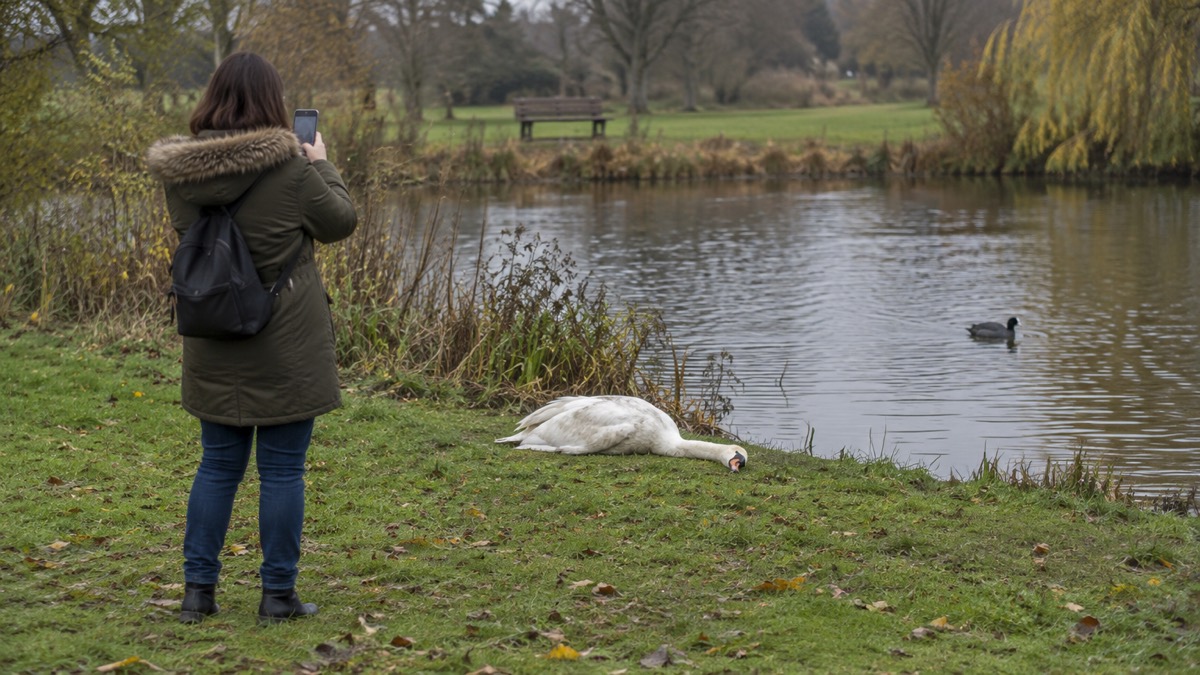
The single most useful thing most households can do is report dead wild birds rather than touch them. The reporting thresholds are specific, and they exist so that testing effort goes where it tells the authorities most:
- One or more dead birds of prey3
- 3 or more dead gulls or wild waterfowl, meaning swans, geese and ducks3
- 5 or more dead birds of any other species3
After you report, Defra will then collect some of these birds and test them to understand how the disease is distributed geographically and in different types of bird3. Not every reported bird is collected, and that is by design: the scheme is surveillance, not a removal service.
Do not touch or pick up dead or visibly sick wild birds. If you feel you cannot avoid touching an injured, sick, or dead wild bird, then you should read and follow the official guidance to reduce the risk of catching avian influenza1. In all cases, maintain good personal hygiene with regular hand washing with soap and use of alcohol-based hand rubs5. Keep children and pets away from the bird, and keep dogs on a lead around waterfowl where dead birds have been seen.
In Northern Ireland the route is different. If you find dead wild birds, including swans, geese, ducks and gulls, you can report them using the DAERA Dead Wild Bird online reporting tool20. The same basic rules apply: do not touch the birds, and wash your hands thoroughly if contact was unavoidable.
Pet birds and poultry: registration and housing orders
If you keep any birds at all, even a few hens in the garden or a pet bird kept outside, there is one action that matters above all others: register them. Since October 2024 all keepers of poultry or any other captive birds must register regardless of how many they keep3. Registration covers chickens, ducks, turkeys, geese, pigeon bred for meat, partridge, quail, guinea fowl and pheasants, and any pet bird or bird kept outside for shows, races, exhibitions, competitions, breeding or for sale3. The reason is practical: register your poultry, even if only kept as pets, so the authorities can contact you during an outbreak3. Being on the register is how you find out promptly that a housing order or biosecurity requirement applies to your birds.
The main causes of bird flu in poultry and other captive birds are contact with wild birds, in particular waterfowl such as geese, ducks, swans and gulls, faeces from infected birds, and dirty footwear, clothing, vehicles and equipment3. So the everyday protection for a small flock is keeping wild birds away from feed and water, keeping the run clean, and not walking contamination in on shoes or clothing. During an outbreak, keepers may be required to house their birds indoors or separate them from wild birds, and to follow enhanced biosecurity under the control zone rules described above3.
If you keep birds as part of a wider household menagerie, the same emergency planning applies to all of them. Make a list of the medications your pet is on, and if you cannot move your animals, find out who can and make arrangements with them to do so, recording their telephone numbers21. Our page on pets and animals in an emergency covers this in more depth.
Eggs, chicken and food safety
The Food Standards Agency advises that it is safe to eat properly cooked poultry and poultry products, including eggs3. Bird flu is not passed to people through properly cooked food, and no special avoidance of eggs or chicken is needed during an outbreak in birds.
What is worth your attention in the kitchen is the ordinary, much more common risk from raw poultry. Food Standards Scotland has reminded consumers of its safe handling and cooking advice following a rise in cases of salmonella linked to poultry products imported from Poland, including chilled and frozen chicken and turkey drumsticks, breasts, thighs and chicken pieces, meat and eggs, with over 200 human cases of salmonellosis caused by specific genetic strains of Salmonella Enteritidis recorded in the UK in that year22. Campylobacter, found in the gut of animals and birds, is the commonest cause of diarrhoea, and the commonest meat source is poultry23. Germs passed on by other people, pets or farm animals cause more than half of food poisoning cases, transferred via hands and surfaces23.
The practical steps for staying well around birds and animals come down to ordinary hygiene: wash your hands after contact with animals or their surroundings, and follow standard food hygiene with raw meat and ready-to-eat food. Our page on stopping infections spreading at home covers hand hygiene in detail.
Where to get official advice and updates
Official advice on bird flu comes from a small number of places, and going to them directly beats relying on social media or headlines. The GOV.UK guidance, "Avian influenza (bird flu): advice for the public on staying safe", is written for members of the public and is the primary source for Great Britain1. In Northern Ireland, guidance on avian influenza is provided by the Department of Agriculture, Environment and Rural Affairs, DAERA, and the public is directed to DAERA's "Wild birds and advice for the public" page5.
For health advice more broadly, follow guidance from NHS England, and use the Cold and Flu NHS advice pages24. General winter health advice is available on the NHS.uk website25. In any emergency, monitor the news and follow official UK advice on GOV.UK for what to do next; changes to advice may come via radio, television, the internet, social media or the police19. The UK's pandemic flu planning sets out a communications strategy for how the public would be informed during a wider outbreak26, and the Welsh government website carries information explaining pandemic flu and what is being done to minimise any future impact in Wales26.
If you want to understand the wider picture of how the UK prepares for health emergencies, our pages on health emergencies, infectious disease outbreaks near you and how the UK prepares for emergencies are the places to start.
Sources (26)
- Avian influenza (bird flu): advice for the public on staying safe, UK Government, 2024
- UK National Risk Register 2017, UK Government, 2017
- Avian Influenza (Bird Flu), Suffolk County Council, 2026
- Animal disease, Dorset Prepared, 2024
- Avian influenza, Public Health Agency Northern Ireland, 2026
- Animal disease, Essex Prepared, 2026
- National Risk Register 2020, UK Government, 2020
- Flu: health and wellbeing, Met Office, 2026
- Why it is important to get a flu vaccine, Wiltshire and Swindon Prepared, 2023
- Flu, Derbyshire County Council, 2026
- London Prepared update, Greater London Authority, 2026
- Disease control, Derbyshire County Council, 2026
- Infectious diseases control, Northumberland County Council, 2026
- Droughts, Prepare campaign, 2026
- Heatwave, drought and water shortages, Dorset Prepared, 2026
- Cold-health alerting system overview, UK Government, 2025
- Heat-health alert service, Met Office, 2026
- Amber extreme heat warning issued, Met Office, 2026
- What to do in a radiation emergency, UK Government, 2024
- Avian flu, Belfast City Council, 2026
- Preparing your pets for an emergency, South Gloucestershire Council, 2010
- Salmonella linked to poultry products imported from Poland, Food Standards Scotland, 2023
- Food poisoning advice, NHS Borders, 2014
- Pandemic, Essex Prepared, 2026
- Emergency preparedness advice, NHS England, 2023
- Pandemic flu, UK Government, 2013
 Medicine Cabinet Checklist
 Sick at Home Supplies Kit
 Caring for Someone Ill at Home
 Pandemics and UK Household Plans
 Outbreaks Near You
 UK Health Security Agency
 Staying Home When Ill
 Stopping Infections at Home
 Caring for a Sick Person at Home
 Keeping Prescription Medicine
 Medicine Shortages Explained
 Storing Medicines Safely
 Urgent Care and A&E
 Vaccines Against Outbreaks
 Flu Symptoms and Getting Help