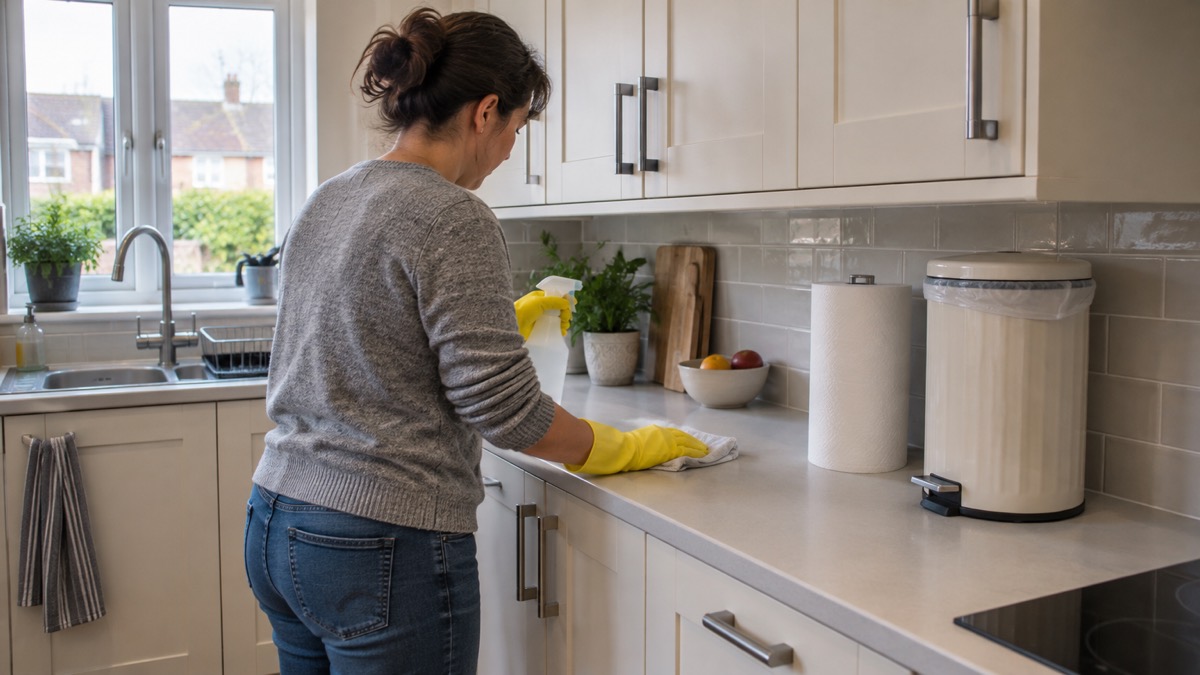
When someone in your home has a sickness bug, flu or COVID-19, the actions that stop it spreading to the rest of the household are simple and they work: wash hands with soap and water, keep the ill person at home, clean the surfaces germs survive on, wash soiled laundry separately at 60°C, and let fresh air into rooms. The numbers to remember are 48 hours and 60°C. With norovirus, the winter vomiting bug, you stay off school, nursery or work and avoid visiting hospitals and care homes until 48 hours after the last episode of sickness or diarrhoea1, and you wash clothes and bedding with poo or vomit on them on a 60°C wash, separately from other laundry1.
The reason these steps matter is that the germs do not leave with the person. Flu germs from coughs and sneezes can live on hands and surfaces for 24 hours2. Norovirus is tougher still: it can survive outside the body for several days3. So a household that only rests and waits can pass an infection round for weeks, when a few habits carried out for a couple of days would break the chain.
This page sets out what to do, in the order you need it: hands first, then staying home, then cleaning, laundry, food, coughs and fresh air, protecting people at higher risk, and finally when to call NHS 111 or 999. It covers the whole UK, and says where Scotland's advice differs where that matters.
Wash hands with soap and water, not gel
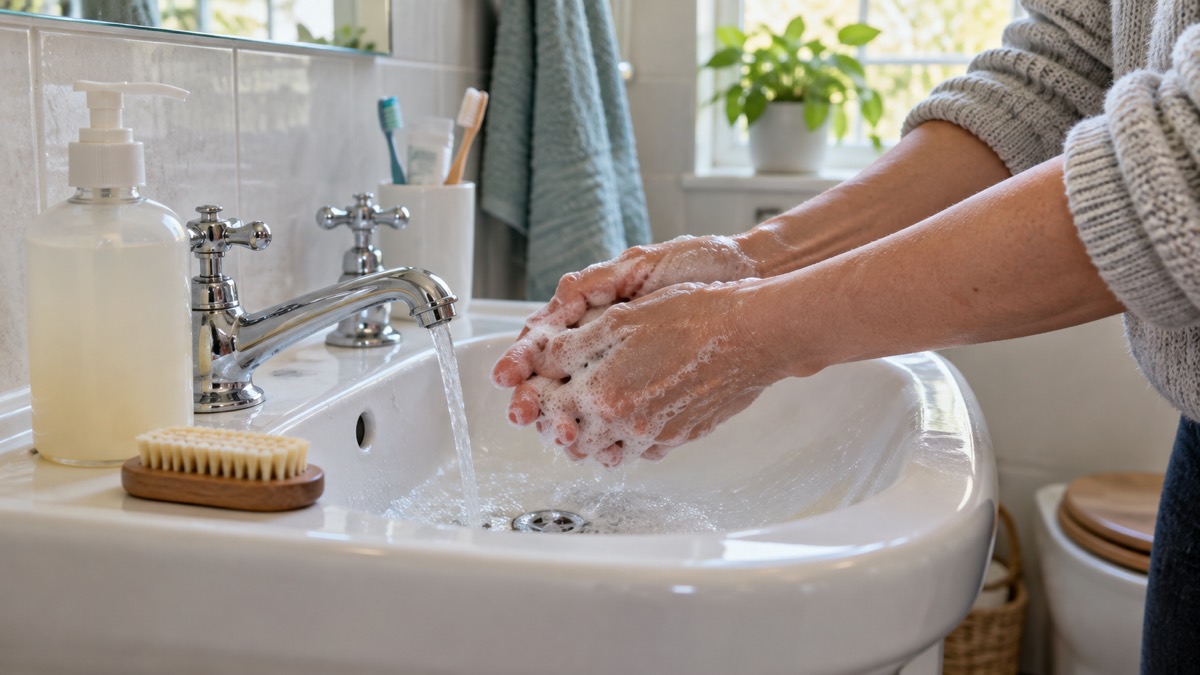
Handwashing is the single most effective way to stop the spread of infection5. When a stomach bug is in the house, it is also the step people most often get wrong, because the convenient option, alcohol hand gel, does not do the job. Alcohol hand gels do not kill norovirus1. The government's norovirus guidance is blunt on the point: do not rely on alcohol gels instead of washing your hands, as these do not kill the virus6. Hand sanitiser does not effectively remove all types of disease-causing organisms, so soap and water should be used to wash hands wherever possible7.
Wash your hands with soap and water after going to the toilet or changing nappies, and before preparing, serving or eating food1. In a household with an ill person, add the moments that matter most:
- after any contact with the sick person, and before handling food8
- after using the toilet, and after handling dirty linen or clothing4
- before eating, and before feeding anyone else4
Do not share towels or wash cloths with the sick person4. A shared hand towel in the bathroom can carry the virus from the person who is ill to everyone who dries their hands on it, so give the ill person their own towel and change it regularly.
There is one exception where gel is the right answer. If you have no running water, for example during a flood or a supply interruption, you can use alcohol gels or wet wipes to clean hands before handling food, on the advice of Food Standards Scotland9. It is a fallback for an emergency, not a substitute when a tap and soap are available.
Stay at home while you are infectious
The most reliable way to stop an infection leaving your home is for the ill person not to leave it. If you are unwell, try to stay home or avoid contact with other people; some diseases have specific exclusion periods7. Within the home, the ill person should avoid contact with others as much as possible1.
Norovirus: 48 hours after symptoms stop
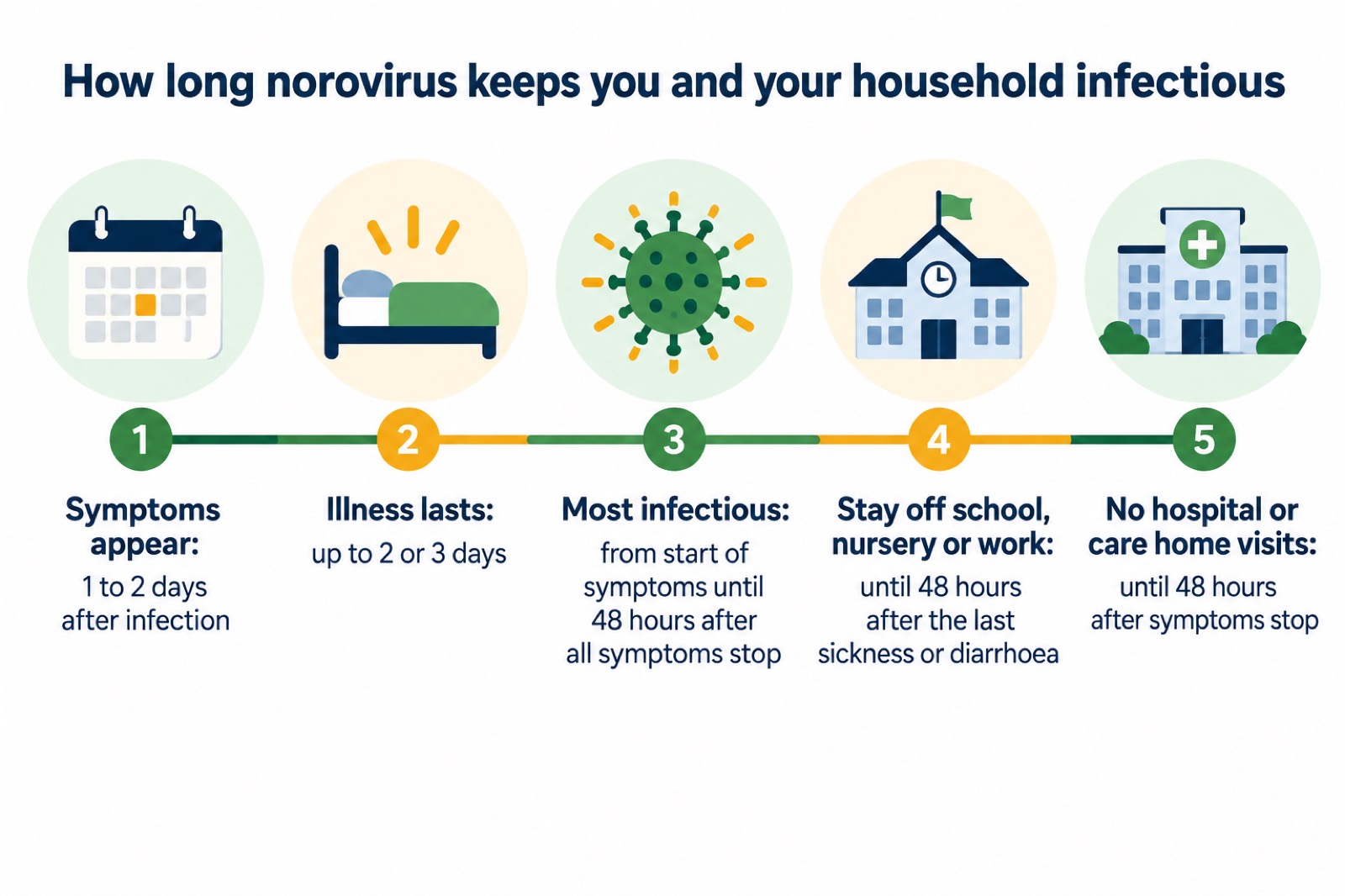
Norovirus is the most common stomach bug in the UK and is highly infectious10. Symptoms usually appear 1 to 2 days after you become infected and typically last for up to 2 or 3 days3; one NHS source gives the duration as 12 to 72 hours4. People usually recover in about 2 days1. There is currently no vaccine to help prevent norovirus, and antibiotics do not work against it1, so hygiene and isolation are the whole of the treatment for a household.
The rule that matters most: do not go to school, nursery or work, or visit others in hospital or care homes, until 48 hours after the last episode of sickness or diarrhoea1. Food Standards Scotland puts the same rule as staying off school or work, especially if you are a food handler, until the symptoms have stopped for 2 days10. Norovirus is most infectious from the start of symptoms until 48 hours after all symptoms have stopped, and possibly for a short time before and after this3. That is why the exclusion period runs from the end of the illness, not the start: you can feel completely well and still be shedding the virus.
The same 48-hour rule applies to other diarrhoeal infections. With cryptosporidiosis, you are infectious while you have symptoms and should not return to work or school until you have been free from diarrhoea and/or vomiting for 48 hours11.
Flu and COVID-19: stay home while you have a temperature
Flu is a virus that spreads easily from person to person12. If you have flu symptoms, stay at home if you can, to help avoid spreading germs to others12. Try to stay at home and avoid contact with other people if you have a high temperature, feel hot, cold or shivery, or do not feel well enough to do your normal activities2. You can spread flu even if you do not have symptoms, and you are more likely to spread it to others in the first 5 days after getting infected12.
For COVID-19 and other respiratory infections, the official advice is the same in principle: if you have symptoms and a high temperature, or do not feel well enough to go to work or carry out normal activities, try to stay at home and avoid contact with other people until you no longer have a high temperature or no longer feel unwell13. If you have a positive COVID-19 test result, try to stay at home and avoid contact with other people for 5 days after the day you took your test13. Children and young people aged 18 and under with a positive test should try to stay at home and avoid contact with other people for 3 days after the day they took the test, if they can13. Our page on how long to stay at home after a positive COVID test covers this in detail.
Clean the toilets, taps and handles the virus survives on
Cleaning is where norovirus households most often fall short, because the virus survives so long outside the body. It can survive outside the body for several days3, and it spreads through close contact with an infected person, through food or drink prepared or handled by someone who has norovirus, and by touching contaminated items or surfaces and then touching your mouth1. Clean surfaces that people touch a lot, such as door handles, and regularly clean and disinfect all areas in contact with food, dirt or body fluids, such as toilets7.
When someone in the house has a stomach bug, it makes sense to clean the surfaces people touch most often as part of keeping the home tidy1:
| Surface | Why it matters |
|---|---|
| Toilet seat | In contact with body fluids7 |
| Flush handle | Touched by every user, often before washing hands1 |
| Taps | Touched with dirty hands before washing1 |
| Bathroom door handle | Touched on the way out1 |
| Kitchen door handles and worktops | Touched while preparing food7 |
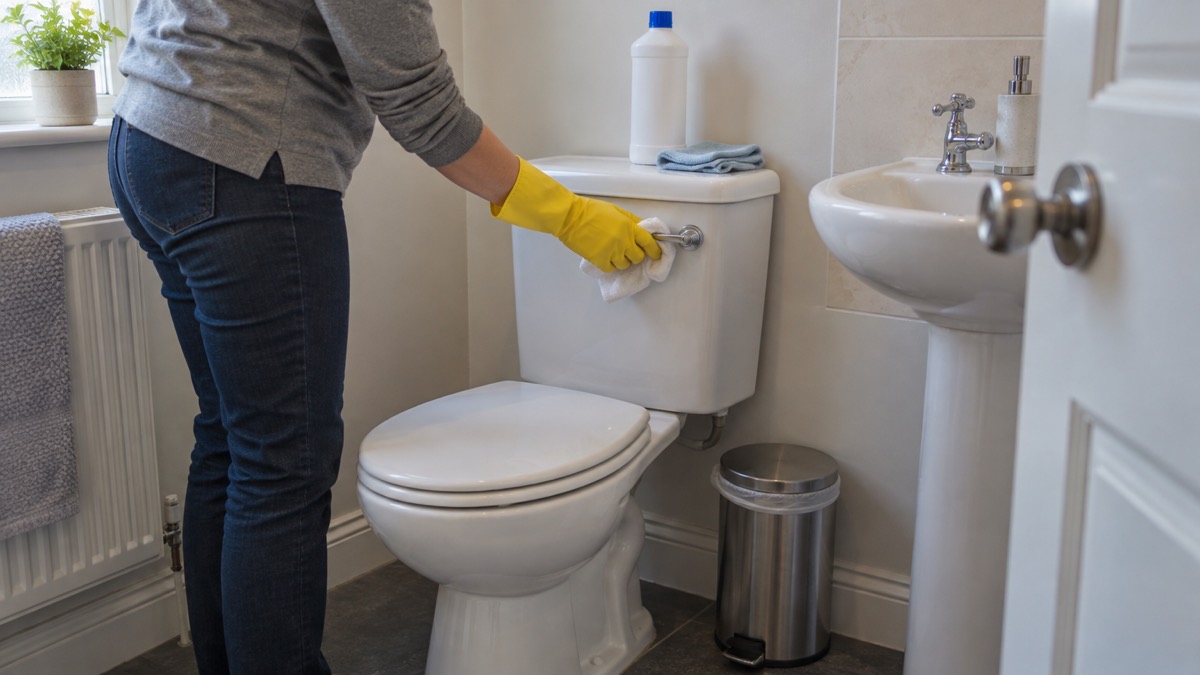
Flush away any infected faeces or vomit in the toilet and disinfect the surrounding area, and flush the toilet with the lid down to stop the virus spreading4. The lid-down habit is worth keeping even after the illness has passed: flushing aerosolises whatever is in the bowl, and with norovirus in the house that spray carries virus onto nearby surfaces.
"Flush the toilet with the lid down to stop the virus spreading."
Disinfect door and toilet handles, taps and the toilet seat after the ill person uses them8, not just once a day. The most effective way to help stop an outbreak is to disinfect the contaminated areas and ensure good hygiene14. Norovirus can close hospitals, care homes and schools14, and the same force that closes a ward can take a family round the same bug for a fortnight.
Wash soiled clothes and bedding at 60°C
Anything with poo or vomit on it needs its own wash. Wash clothes and bedding that has poo or vomit on it on a 60°C wash, and separately from other laundry1. Do not shake soiled items before washing: the point of the hot, separate wash is to keep the virus out of the rest of the laundry and out of the air.
Handle dirty linen and clothing with care, and wash your hands with soap and water afterwards4. Do not share towels or wash cloths with the sick person4. If the ill person has been using a towel or face cloth, treat it as soiled: change it daily while symptoms last and for the 48 hours afterwards, and wash it hot and separately.
Keep going for the full infectious window. You need to be very clean around your home for at least 48 hours after symptoms stop, because you remain infectious to other people during that time11. A single missed wash of a sick child's bedding on day three of recovery can restart the whole household's illness.
Prepare food safely when someone is ill
Food is one of the main routes by which infections travel, so the kitchen needs its own rules when someone is ill. The most important one: ensure that anyone with diarrhoea, vomiting or nausea does not prepare food5. This applies to the whole household, not just the ill person, and it matters most for food handlers at work as well as at home10.
Wash your hands after contact with the sick person and before handling food8. Norovirus can be caught from food or drinks prepared or handled by someone who has the virus1, and infection can also happen by eating food grown in or treated with contaminated water, such as shellfish or fresh produce10. So while the bug is in the house:
- The ill person does not cook, and does not handle food for anyone else5
- Wash hands with soap and warm water before preparing food10
- Wash fruit and vegetables before eating them10
- Keep worktops and chopping boards clean to avoid cross-contamination10
- Do not prepare food too far in advance; keep it either piping hot or refrigerated until it is served5
- Cook food thoroughly, following the manufacturer's guidelines, and make sure food is hot throughout before consumption8
Cross-contamination is the everyday kitchen risk that continues whether or not anyone is ill. Avoid it by keeping raw meat and unwashed vegetables separate from ready-to-eat foods during storage and preparation, using different chopping boards, plates and utensils for raw and cooked food or washing them thoroughly between uses, washing your hands, worktops and utensils thoroughly after touching raw meat, poultry, fish and eggs, keeping raw meat in a sealed container at the bottom of the fridge, never washing raw meat, and using separate shopping bags for raw and ready-to-eat foods15. Chilling food at the correct temperature prevents the growth of harmful bacteria15.
Cover coughs and sneezes, and let fresh air in
Respiratory infections such as flu and COVID-19 spread differently from stomach bugs: through the air and via hands and surfaces. Flu is spread by germs from coughs and sneezes, which can live on hands and surfaces for 24 hours2. COVID-19 can present with a wide range of symptoms, from mild to severe16, and you can still catch or spread COVID-19 if you do not have symptoms, are fully vaccinated, or have had the virus before17.
The habits that interrupt that spread are the ones public health bodies repeat every winter:
- Wash your hands often with warm water and soap2
- Cover your mouth and nose with a tissue when you cough or sneeze, or cough into the bend of your elbow, not into your hand2
- Bin used tissues as quickly as possible2
- Cover your mouth and nose when you cough or sneeze, and encourage children to do this17
- Regularly clean surfaces that are touched16
- Wear a face covering in crowded places or close contact16
- Stay at home if you are unwell16
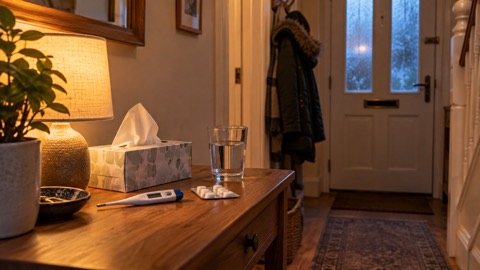
Dispose of dirty tissues promptly and carefully, bagging and binning them18. A tissue left on a coffee table is a 24-hour reservoir of flu virus2.
Ventilation matters too. Let fresh air in when you have visitors16, and if you have visitors, it can help stop the spread of germs to ventilate the room for a few minutes before and after they arrive19. Opening a window for a few minutes is enough; the aim is to replace the room's air, not to make the house cold. This matters most in the room where the ill person is resting, and in any room where people gather.
One caution from the NHS for a household with COVID-19: do not use a fan to cool your room, as it may spread the virus20. If the ill person is breathless, they should lie on their side or sit upright rather than on their back, and try to stay calm, as anxiety can make breathlessness feel worse20.
Protecting people at higher risk in your home
Most people recover from these infections at home, but they are not equal in their effects. Flu can be more serious for pregnant women, very young children and older people21, and those more likely to become seriously ill from flu include children under 6 months old, people aged over 65, pregnant women and those with certain underlying health conditions12. For COVID-19, people more likely to become seriously ill include older adults, those with some long term conditions, and those who are pregnant, especially after 28 weeks16. Norovirus can cause serious illness for some groups, for example children under 5 years, older adults and those with weakened immunity1.
If someone in your household falls into one of these groups, keep the ill person away from them where you can. Stay away from people at increased risk of becoming more unwell from respiratory infections, if possible, and do not visit hospitals or care homes while ill22. In practice this means the ill person uses a separate room and, if possible, a separate bathroom, eats separately, and does not handle food or shared items.
Vaccination is the protection you can arrange in advance. The flu vaccine helps to reduce the chance of catching and passing on flu, and reduces the risk of becoming seriously ill and needing care in a hospital12. It is important to get the flu vaccine if you are advised to23. Our pages on who can get a free flu vaccine and who can get a COVID-19 vaccine now set out the current lists, and our page on people at higher risk in an outbreak goes further on protecting vulnerable relatives.
Two practical points complete the picture. Make sure you and your family are up to date with routine vaccinations24. And if you are caring for someone ill at home, keep the household safe in other ways too: close doors behind you, since this should prevent a fire spreading25, and avoid keeping lots of items in the home, which could make a fire spread quicker and block your escape route25. An ill household is a household at home for days, so the ordinary home-safety habits matter more, not less.
When to call NHS 111 or 999
Most of these illnesses pass at home. Norovirus infections are usually self-limiting26, and flu often gets better on its own, though it can make some people seriously ill12. The main treatment for a sickness bug is to drink plenty of fluids to avoid dehydration26.
For urgent health advice, help with symptoms, or access to out-of-hours GP services, call NHS 111 on 111, or use the NHS 111 online service27. NHS 111 is the right first call when you are worried but it is not an emergency: for example, if you are worried about a baby under 12 months, a child stops feeding, there are signs of dehydration, the ill person cannot keep fluid down, there is bloody diarrhoea, diarrhoea lasts more than 7 days, or vomiting lasts more than 2 days3. Our page on when to call 111 and when to call 999 explains the choice in full.
Phone 999 or go to A&E for severe symptoms, including vomiting blood, green vomit, possible poisoning, a stiff neck with pain when looking at bright lights, or a sudden severe headache or stomach ache3.
If you are looking after someone ill at home for more than a day or two, our checklist for caring for someone ill at home and our page on how to treat dehydration at home cover the supplies and steps you need. For the wider picture of outbreaks and how they affect households, see health emergencies: a household guide.
Sources (28)
- Norovirus: how to stop it spreading, Derbyshire County Council, 2026
- Flu, NHS, 2026
- Norovirus, NHS inform, 2026
- Norovirus patient information leaflet, NHS Western Isles, 2025
- Food poisoning and waterborne infections, Shropshire Council, 2026
- How to stop norovirus spreading, UK Health Security Agency, 2023
- Health: infectious disease outbreaks, Prepare Campaign, 2026
- Infectious diseases control, Northumberland County Council, 2026
- Flooding: food safety in the kitchen, Food Standards Scotland, 2026
- Foodborne viruses, Food Standards Scotland, 2026
- Cryptosporidium: public advice, UK Health Security Agency, 2023
- Flu, Derbyshire County Council, 2026
- People with symptoms of a respiratory infection including COVID-19, UK Health Security Agency, 2022
- Norovirus: infection prevention and control, NHS Cornwall and Isles of Scilly Integrated Care Board, 2024
- Preparing and cooking food safely, NHS inform, 2025
- Coronavirus (COVID-19), Derbyshire County Council, 2026
- How to avoid catching and spreading COVID-19, NHS, 2023
- Are You Ready booklet, Culham Parish Council, 2025
- Top tips for keeping warm and well this winter, UK Health Security Agency, 2026
- COVID-19 symptoms and what to do, NHS, 2026
- Seasonal advice: flu, Met Office, 2026
- Coronavirus (COVID-19), NHS inform, 2026
- Flu: seasonal advice, Derbyshire County Council, 2026
- Preparing for an emergency: be ready, stay safe, act now, Sussex Resilience Forum, 2025
- Digital easy read fire safety booklet, London Fire Brigade, 2026
- Norovirus, Warwickshire County Council, 2026
- Wellbeing and safety, Surrey County Council, 2026
- Staying safe over the summer, Healthier Together, 2026
 Medicine Cabinet Checklist
 Sick at Home Supplies Kit
 Caring for Someone Ill at Home
 Pandemics and UK Household Plans
 Outbreaks Near You
 UK Health Security Agency
 Staying Home When Ill
 Caring for a Sick Person at Home
 Keeping Prescription Medicine
 Medicine Shortages Explained
 Storing Medicines Safely
 Urgent Care and A&E
 Vaccines Against Outbreaks
 Flu Symptoms and Getting Help
 COVID-19 Symptoms and Testing