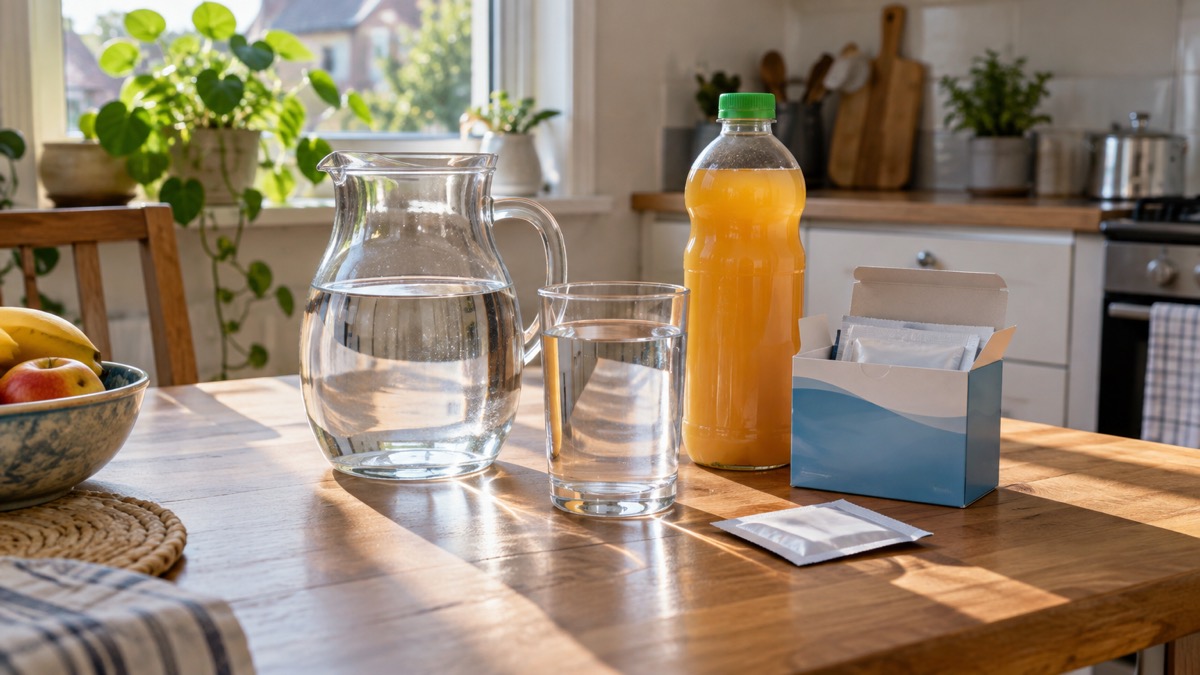
Dehydration means your body has lost more fluid than it has taken in, and for most people it can be put right at home. The first sign is usually feeling thirsty. Alongside that you may have a headache, feel light-headed or dizzy, feel tired, have a dry mouth, lips and tongue, sunken eyes, and pee that is dark yellow and strong-smelling, or you may be peeing less often than usual1. The treatment is simple: drink fluids, in small sips if you feel sick, and build up gradually1.
Water or diluted sugar-free squash are good choices, and you should drink enough during the day that your pee is a pale colour1. Drink more when the risk of dehydrating is higher, such as when you are being sick, sweating because of hot weather or exercise, or have diarrhoea1. Babies, children and older adults are more at risk of dehydration, so watch them more closely and offer drinks rather than waiting to be asked1.
Some people need help rather than home care. If you are worried about serious dehydration, call NHS 111 or get help from NHS 111 online, and call 111 if you need advice for a child under 5 years old1. In an emergency, dial 9992. The rest of this page sets out the signs to look for, what to drink and how often, how to care for a baby or young child, and what to keep at home so you are ready.
Signs of dehydration in adults and children
The symptoms of dehydration are much the same in adults and children. Look for feeling thirsty, a headache and feeling light-headed, dark yellow and strong-smelling pee, peeing less often than usual, feeling dizzy or light-headed, feeling tired, a dry mouth, lips and tongue, and sunken eyes1. A child may also be tired and irritable, and may have sunken eyes, a dry mouth, dry lips and tongue3. In a baby, a sunken fontanelle, the soft spot on the head, is a sign to act on, as are drowsiness, a headache, or no urine passed for 12 hours4.
In older people the signs can be easier to miss. They include dryness of the mouth, lips and tongue, sunken eyes, dry inelastic skin, drowsiness, confusion or disorientation, and dizziness with low blood pressure5. Older adults are less likely to feel thirsty even when dehydrated, so fluid loss can happen without obvious warning, and the risk is especially significant for those living alone, those with heart or respiratory conditions, or anyone who finds it harder to move around6.
| Who | Signs to look for |
|---|---|
| Adults and children | Thirst, headache, light-headedness, dark strong-smelling pee, peeing less often, tiredness, dry mouth, lips and tongue, sunken eyes1 |
| Babies and young children | Sunken eyes, drowsy, sunken fontanelle, headache, no urine passed for 12 hours4 |
| Older people | Dry mouth, lips and tongue, sunken eyes, dry inelastic skin, drowsiness, confusion, dizziness and low blood pressure5 |
Babies, children and older adults are more at risk of dehydration than other people, so check them first when anyone in the household has been unwell or the weather is hot1. If you are unsure whether what you are seeing is dehydration or something more serious, the NHS 111 service can talk it through with you.
Drink little and often: water, diluted squash and oral rehydration solution
If you have symptoms of dehydration, drink fluids. If you feel sick, start with small sips and then gradually drink more, and avoid caffeinated drinks and alcohol, as both will dehydrate you1. Water and diluted squash or lower fat milks are good choices; fruit juice, smoothies and soft drinks can be high in sugar, so limit them2. Drinking little and often through the day works better than a large amount in one go, and the colour of your pee is the simplest check that you are drinking enough: aim for a pale colour1.
Oral rehydration salts are a pharmacy product made to help restore the body's natural balance of minerals and fluid after dehydration caused by fever, diarrhoea or vomiting7. Rehydration solution is designed for replacing fluids and salts lost through vomiting or diarrhoea8. These are worth keeping at home for illnesses where you lose fluid quickly, rather than relying on everyday drinks alone.
In hot weather, keep drinking cold drinks regularly, such as water and diluted fruit juice, and avoid caffeine in tea, coffee and cola, drinks high in sugar, and excess alcohol9. If someone is reluctant to drink plain water, homemade ice lollies made with watered-down fruit juice or squash, or water with lemon or lime added, can help10. For a child in a heatwave, keep them drinking little and often, and ice lollies can help keep water levels topped up11.
How to care for a baby or young child who is dehydrated
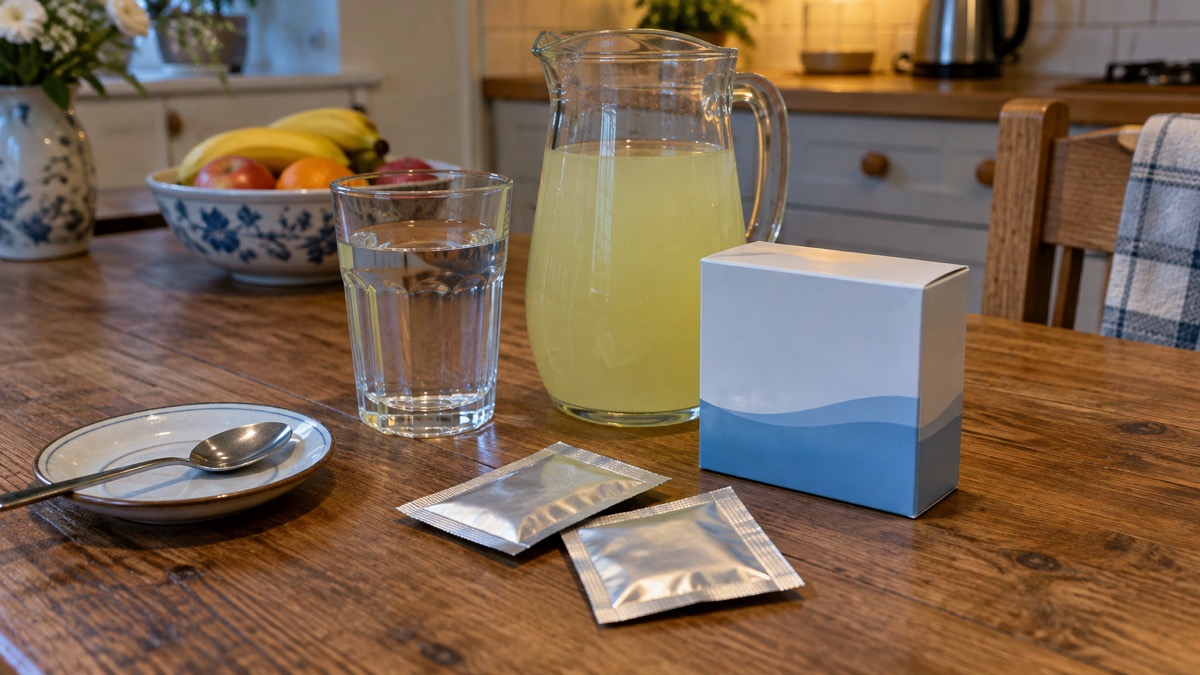
Carry on breastfeeding your baby or using formula, and try to give small amounts more often than usual1. If your baby is on formula or solid foods, give small sips of extra water, boiled first and left to cool for babies under 6 months1. Give regular small sips of rehydration solution, and give small children their usual diet1. Babies and young children can be seriously affected by dehydration, heat exhaustion, heatstroke and sunburn in very hot weather, so their health needs watching closely4.
For a child in the heat, give frequent water breaks and spray them down with a spray bottle, and take cool baths and showers in extreme heat4. From 12 months, water, breast milk or whole cows' milk should be your baby's main drinks; in hot weather you can try frozen lollies made from plain water or very diluted fruit juice, but keep diluted juice lollies to mealtimes because they can cause tooth decay12.
Vomiting and diarrhoea in a child can usually be treated at home, and the most important thing is to have lots of fluids to avoid dehydration7. If you are worried about a child under 5, call NHS 111 for advice1. The looking after someone ill page covers the wider job of caring for a sick child at home.
When to call NHS 111 or 999
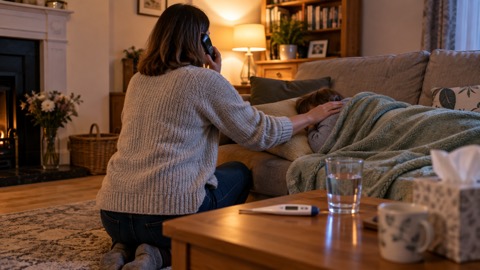
Call NHS 111 or get help from NHS 111 online if you are worried about signs of serious dehydration that need urgent treatment, and call 111 if you need advice for a child under 5 years old1. You can get help from NHS 111 by using 111 online at 111.nhs.uk, calling 111, or using the NHS App13. NHS 111 is sometimes the fastest way to get advice on non-life-threatening problems14.
Depending on what you need, NHS 111 may advise you to call 999 or go to A&E in an emergency, go to an urgent treatment centre, see an out-of-hours GP, book a callback from a nurse, get urgent specialist support, contact your own GP surgery, see a pharmacist, or look after yourself safely at home15. In an emergency, dial 9992. If you are concerned about heat exhaustion symptoms, or they are worsening, seek medical advice by contacting NHS 111; in an emergency, or if you think someone has heatstroke, dial 9992.
If you are not well and are unsure what to do, contact your GP or NHS 111, and dial 999 if it is an emergency16. You can get help from NHS 111 by using 111 online (111.nhs.uk), calling 111 or using the NHS App16. The 111 or 999 page sets out which to use.
Keep oral rehydration sachets and water in your emergency kit
Dehydration often arrives at the worst moment: a sickness bug through the household, a heatwave, or a day when the water supply is disrupted. Keeping a few basics at home means you can start treating it straight away. Official household emergency kit lists advise keeping essential medication and a first aid kit at home17, and including medication in your household emergency pack18. Water purification tablets are on Lincolnshire's list19, useful if mains water is interrupted.
During a drought, keep drinking enough water to stay hydrated and continue to wash your hands and maintain hygiene20. Water is the foundation of any kit, and the water section explains how much a household should store. Oral rehydration salts belong with the medicines you keep, alongside a first aid kit; the medicine cabinet checklist and the sick at home kit list what else is worth having.
- Oral rehydration sachets for replacing fluids and salts lost through vomiting or diarrhoea7
- Bottled water so you can keep drinking if the supply is disrupted21
- Water purification tablets in case you need to treat water19
- A first aid kit and essential medication kept at home for emergencies17
- A phone so you can reach NHS 11113
If someone in the household is older, disabled or medically dependent, the extra help section explains the support available, and the heatwaves and drought section covers staying cool and hydrated when the weather turns hot.
Sources (21)
- Dehydration, NHS, 2026-05-01
- Beat the heat: staying safe in hot weather, GOV.UK, 2026-07-21
- Keeping your child safe in summer, NHS West Yorkshire Healthier Together, 2026-10-28
- Staying safe over the summer, NHS Healthier Together, 2026-10-29
- Advice for vulnerable people, NHS Norfolk and Suffolk ICB, 2026-05-29
- Stay cool and safe in hot weather, Somerset Council, 2026-07-08
- Self-care advice, NHS Birmingham and Solihull ICB, 2026-10-28
- The family medicine chest, Vallance Medical, 2026
- Heatwave advice, Guy's and St Thomas' NHS Foundation Trust, 2026-06
- Hot weather advice, NHS Central East ICB, 2026-08-04
- Keeping cool in heatwaves, Oxfordshire County Council, 2026
- Keeping safe in the sun, NHS Hillingdon CYP, 2026-10-29
- Get the right help and support, South Western Ambulance Service NHS Foundation Trust, 2026-10-29
- Heatstroke and heat illness, NHS inform, 2026-07-15
- When to use 111, London Ambulance Service NHS Trust, 2026-08-12
- Weather and health, Public Health Wales, 2026-07-16
- Emergency kit checklist, Neath Port Talbot Council, 2026-10-29
- Prepare for emergencies, Dumfries and Galloway Council, 2026
- Get help and advice in an emergency, Lincolnshire County Council, 2026-10-29
- Droughts, Prepare campaign, GOV.UK, 2026-10-19
- How to prepare for heatwave temperatures | British Red Cross, British Red Cross
 Medicine Cabinet Checklist
 Sick at Home Supplies Kit
 Caring for Someone Ill at Home
 How Long to Stay Home With COVID
 Time Off After Sickness
 Stopping Flu Spreading at Home
 How Long to Wash Your Hands
 When to Call 111 or 999
 When Your GP Is Closed
 Disposing of Unused Medicines
 Medicines in a Heatwave
 Taking Someone Else's Medicine
 Ordering Repeat Prescriptions
 Cold-Health Alerts Explained
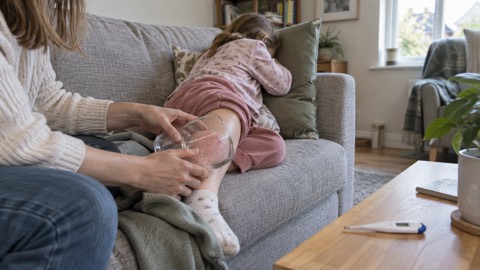 The Glass Test for Meningitis