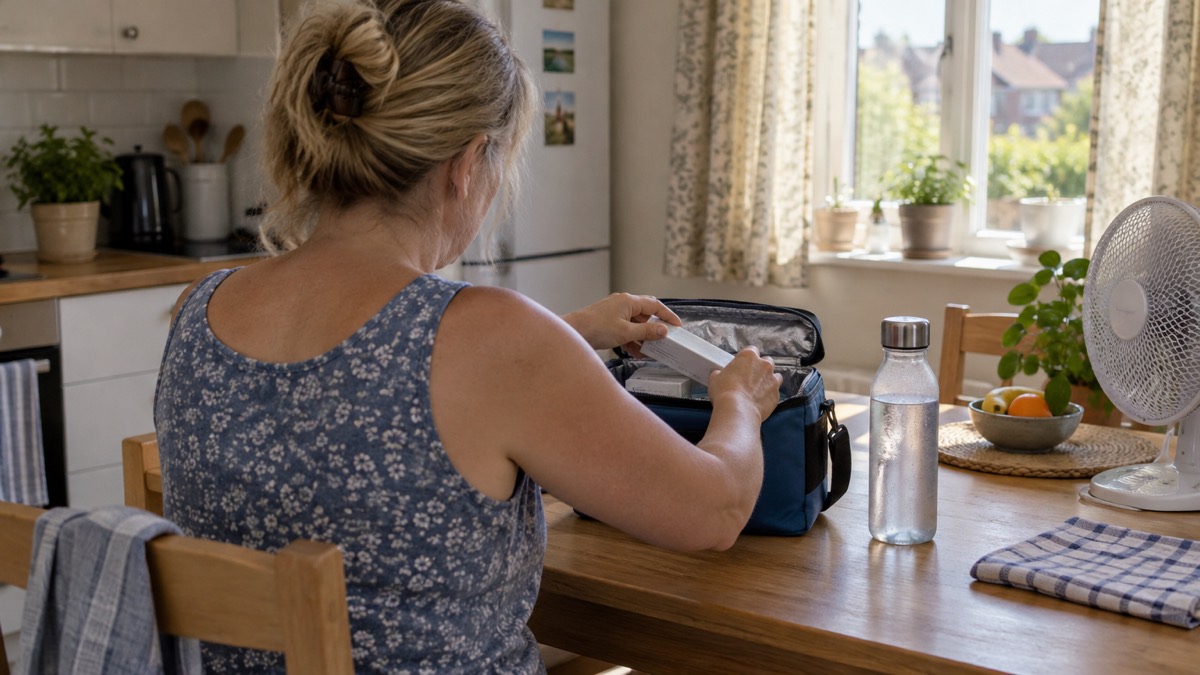
If you take regular medicine and the weather turns hot, the most important thing to know is simple: keep taking it. Official guidance is that you should continue taking all of your prescribed medicines unless a medical professional advises you not to1. The same advice is repeated by first aid organisations and NHS sources across the UK2. Heat is not a reason to stop a medicine on your own.
What does change in hot weather is how you store your medicines and how you plan ahead. Most medicines should be kept below 25°C, somewhere cool, dry and out of direct sunlight4. Some need to be kept in the fridge, including insulin and some liquid medicines, and these can be damaged if they get too warm6. A little preparation before a hot spell, and a phone call to your pharmacist if anything seems different, is all most households need.
This page sets out what to do now, how to store medicines safely in the heat, when to ask for advice, and what to do if you are running low. It is for anyone who takes regular medicine, and for anyone looking after a relative or neighbour who does.
Keep taking your medicines unless a healthcare professional tells you otherwise
The single most useful instruction for a heatwave is to carry on as normal with your prescriptions. The UK government's heatwave guidance says you should continue taking all of your prescribed medicines unless advised not to by a medical professional1. The British Red Cross gives the same advice: continue taking your medication as prescribed, unless advised otherwise by a healthcare professional2. NHS Inform in Scotland repeats it for higher-risk groups and adds that you should call NHS 111 with any health concerns3.
This matters because it is easy, in the middle of a hot spell, to wonder whether a medicine is making you feel worse and to skip a dose. The guidance is that this is not a decision to take alone. Your GP or pharmacist knows your medicines and your conditions, and can advise on whether anything needs to change. If you have concerns, the right step is to ask, not to stop.
Some medicines can affect how your body manages heat. Official guidance is to read the leaflet that comes with your medication to check, or to speak to your healthcare practitioner8. That does not mean you should stop; it means you should be aware, keep cool and hydrated, and raise any worries with a professional.
If you are looking after someone else, the same rule applies to them. Help them keep taking their medicines as prescribed, and if you are worried about their health, contact a pharmacist, GP or NHS 1119. For more on supporting relatives who need extra help, see People at Higher Risk in an Outbreak: Protecting Vulnerable Relatives.
"You should continue taking all of your prescribed medicines unless advised not to by a medical professional."
Make sure you have enough medication before hot weather
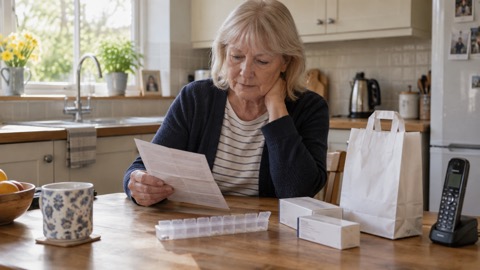
The second thing to do is to check your supply before a hot spell, not during it. Guidance for people with long-term health conditions is to make sure you have enough medication at home, so you do not need to travel during the hottest hours7. Public Health Wales advises making sure you have enough medication and keeping any repeat prescriptions safe10. The government's hot weather campaign suggests offering practical help to anyone at greater risk, such as helping them stock up on water or medication9.
A little planning goes a long way:
- Check what you have before hot weather is forecast, and count how long your supply will last.
- Order repeat prescriptions in good time so you are not chasing them in the heat.
- Keep repeat prescriptions safe and somewhere you can find them10.
- If you are travelling, take any medication you might need with you, along with plenty of drinks and food11.
- Help others stock up if you know someone who finds it hard to get out9.
If you are going away, take enough medicine for the trip and keep it with you rather than in a hot car or bag6. The same principle applies at home: a few days' buffer means you are not making an unnecessary journey in the hottest part of the day.
For more detail on keeping a buffer of regular medicine, see Keeping Enough Prescription Medicine at Home and the Prescription Medicine Supply Checklist. If you are worried about shortages, Medicine Shortages: Why They Happen and What to Do explains what to do.
Storing medicines safely when it is hot
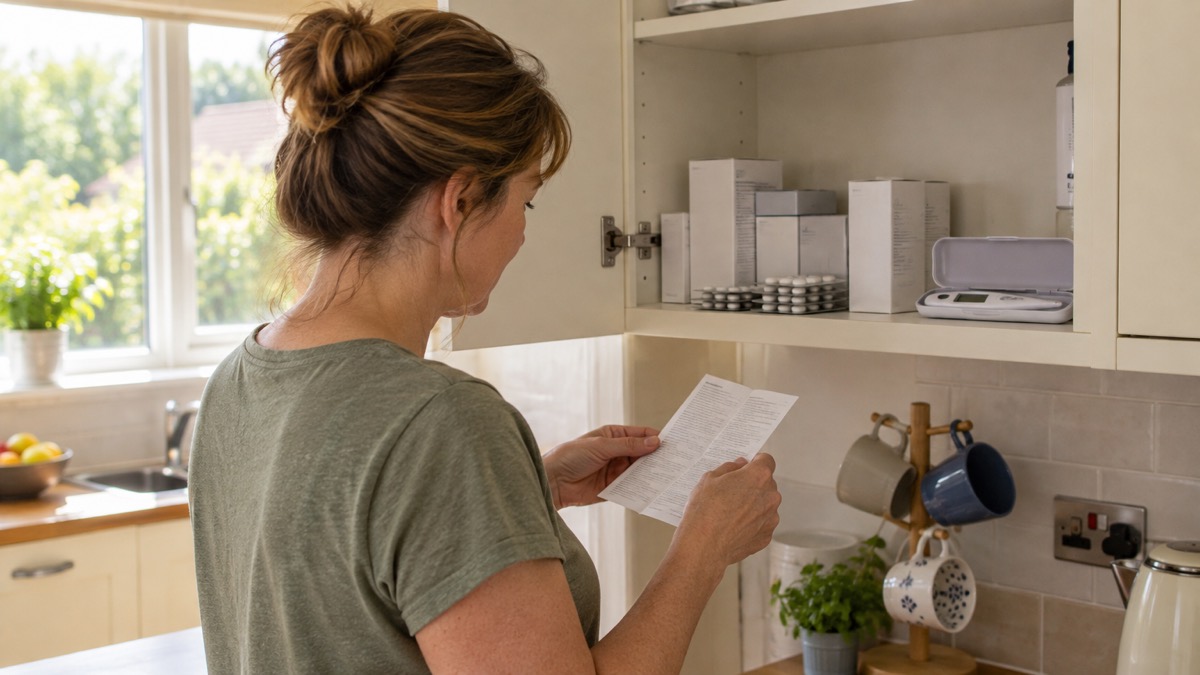
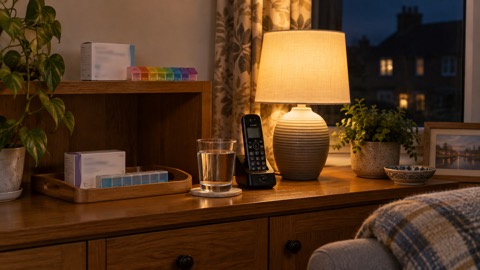
Most medicines should be kept below 25°C, so they should be stored somewhere cool, dry, out of direct sunlight, and away from windowsills4. The same figure appears in NHS guidance from Guy's and St Thomas', which adds that some medicines need to be stored below 25°C or in the fridge, following the storage instructions on the packaging12. The British Heart Foundation puts it plainly: most medicines need to be stored in temperatures under 25C13.
Some medicines are different. Insulin and some liquid medicines need to be kept in the fridge, and they can be damaged if they get too warm6. Refrigerated medicines generally need a temperature range of between 2°C and 8°C, and should be checked5. Only put a medicine in the fridge if the instructions say so; the fridge is not a safe default for everything.
| Storage need | What to do | Examples |
|---|---|---|
| Most medicines | Keep below 25°C, cool, dry, out of direct sunlight, away from windowsills4 | Tablets and capsules in original packaging |
| Fridge medicines | Store at 2°C to 8°C, following the packaging5 | Insulin and some liquid medicines6 |
| Room temperature medicines | Keep in a regulated room, away from temperature swings such as conservatories5 | Medicines that must not get too hot or too cold |
A few practical points help. Keep medicines out of conservatories and cars, which swing from very hot to cool5. Read the leaflet that comes with your medicine and the storage instructions on the packaging, and ask your pharmacist if anything is unclear8. If your medicines seem to work differently during hot weather, speak to your pharmacist or doctor6.
When to ask a pharmacist or GP about your medicines in the heat
You do not need to contact anyone just because it is hot. But there are clear moments when a conversation is worthwhile. If your medicines seem to work differently during hot weather, speak to your pharmacist or doctor6. If you have a chronic medical condition or take multiple medications, seek medical advice14. If you have any concerns at all, contact your GP for further advice15.
The people to ask are the same in every nation:
- Your pharmacist for questions about storage, side effects or how a medicine might behave in the heat2.
- Your GP for concerns about your condition or your medicines generally15.
- NHS 111 if you are worried about someone else's health, or need urgent advice when your GP is closed9.
If you have heart failure and have been told to restrict your fluid intake, speak to your GP about other ways to keep cool during summer. Let your doctor know if you take water tablets (diuretics) and feel dizzy or lightheaded13. These are specific situations where a professional can help you balance the risks.
For help choosing the right service, see NHS 111: What It Can Help With and How to Use It and When to Call 111 and When to Call 999. If your GP is closed, What to Do When Your GP Is Closed explains your options.
Medicines and travel: cars, bags and days out
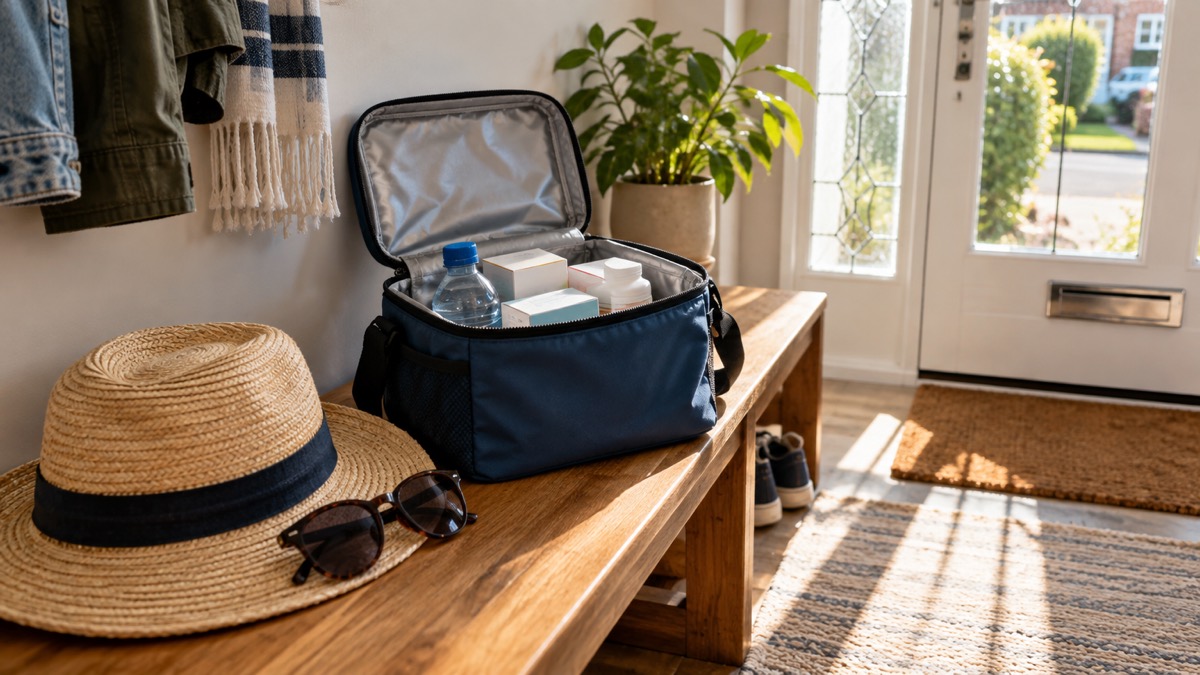
Hot weather often means days out, and medicines need to travel safely. The guidance is not to leave medicines in a parked car or a hot bag, and to use a cool bag if needed6. If you are planning a long trip, take any medication you need to take regularly with you16. Keep it with you rather than in the boot or on the back seat.
A simple travel checklist:
- Take enough for the trip, plus a little extra in case of delays11.
- Use a cool bag for medicines that need a stable temperature6.
- Keep medicines with you, not in a hot car or bag6.
- Take water with you when travelling17.
The last point is not about medicines, but it belongs in any hot weather plan. A parked car heats up quickly, and the same heat that damages medicines is dangerous to people and pets18.
Looking after someone else in the heat
If you care for a relative, neighbour or friend, your role is to help them keep taking their medicines and to notice when something is wrong. Guidance for social care managers is that most medicines should be kept below 25°C, somewhere cool, dry, out of direct sunlight and away from windowsills19. The same practical steps apply at home.
What you can do:
- Check they have enough medicine before hot weather, and help them order more if not9.
- Help them store it correctly, away from windows and conservatories19.
- Remind them to keep taking it as prescribed1.
- Watch for changes in how they seem, and encourage them to speak to a pharmacist or GP if anything is different6.
- Know who to call: a pharmacist, GP or NHS 111 if you are worried9.
For a fuller picture of supporting someone who needs extra help, see Extra Help in an Emergency: Older, Disabled and Medically Dependent Households and Caring for Someone Ill at Home: Checklist.
Where to get help and more information
The main sources of help are your pharmacist, your GP and NHS 1119. In Scotland, NHS Inform provides advice on staying safe in hot weather3. In Wales, Public Health Wales has guidance on weather and health10. In Northern Ireland, nidirect has hot weather advice20. The arrangements are broadly the same across the UK, and the core message does not change: keep taking your medicines, store them correctly, and ask for advice if you are unsure.
For the wider picture on heat, see Heatwaves and Drought: A Household Guide. For storing medicines safely at home, including temperature and expiry dates, see Storing Medicines Safely: Children, Temperature and Expiry Dates. If you are running out, Running Out of Prescribed Medicine: Emergency Supplies From a Pharmacy explains what to do. And for the household medicine cabinet, see Medicine Cabinet Checklist: Over-the-Counter Medicines to Keep at Home.
Sources (20)
- Beat the Heat: staying safe in hot weather, GOV.UK, 2026-07-21
- Medication in hot weather, St John Ambulance, 2026-10-28
- How to stay safe in hot weather, NHS Inform, 2026-07-21
- Staying well in hot weather, Berkshire Healthcare NHS Foundation Trust, 2026-10-29
- Storing medicines at home, United Lincolnshire Hospitals NHS Trust, 2026
- Weather safety, Oxford Health NHS Foundation Trust, 2026-09-18
- Stay cool and safe in hot weather, Somerset Council, 2026-07-08
- Keeping cool in heat waves, Oxfordshire County Council, 2026
- Hot weather, Prepare campaign, 2026-10-12
- Weather and health, Public Health Wales, 2026-07-16
- Heatwave and drought, Essex Prepared, 2026-10-29
- Heatwave advice, Guy's and St Thomas' NHS Foundation Trust, 2026-06
- Weather and your heart, British Heart Foundation, 2026-07-06
- How to keep cool this summer, Lancashire County Council, 2026-10-29
- Keeping cool in summer, Derbyshire County Council, 2026-10-29
- Ice weather warning information and advice, nidirect, 2026-02-16
- How to cope in hot weather, Keeping Well North West London, 2026-10-29
- Extreme weather summer guide, London Fire Brigade, 2024-05
- Supporting vulnerable people before and during hot weather: social care managers, GOV.UK, 2024-12-19
- Hot weather advice, nidirect, 2026-10-29
 Medicine Cabinet Checklist
 Sick at Home Supplies Kit
 Caring for Someone Ill at Home
 How Long to Stay Home With COVID
 Time Off After Sickness
 Stopping Flu Spreading at Home
 How Long to Wash Your Hands
 When to Call 111 or 999
 When Your GP Is Closed
 Disposing of Unused Medicines
 Taking Someone Else's Medicine
 Ordering Repeat Prescriptions
 Treating Dehydration at Home
 Cold-Health Alerts Explained
 The Glass Test for Meningitis