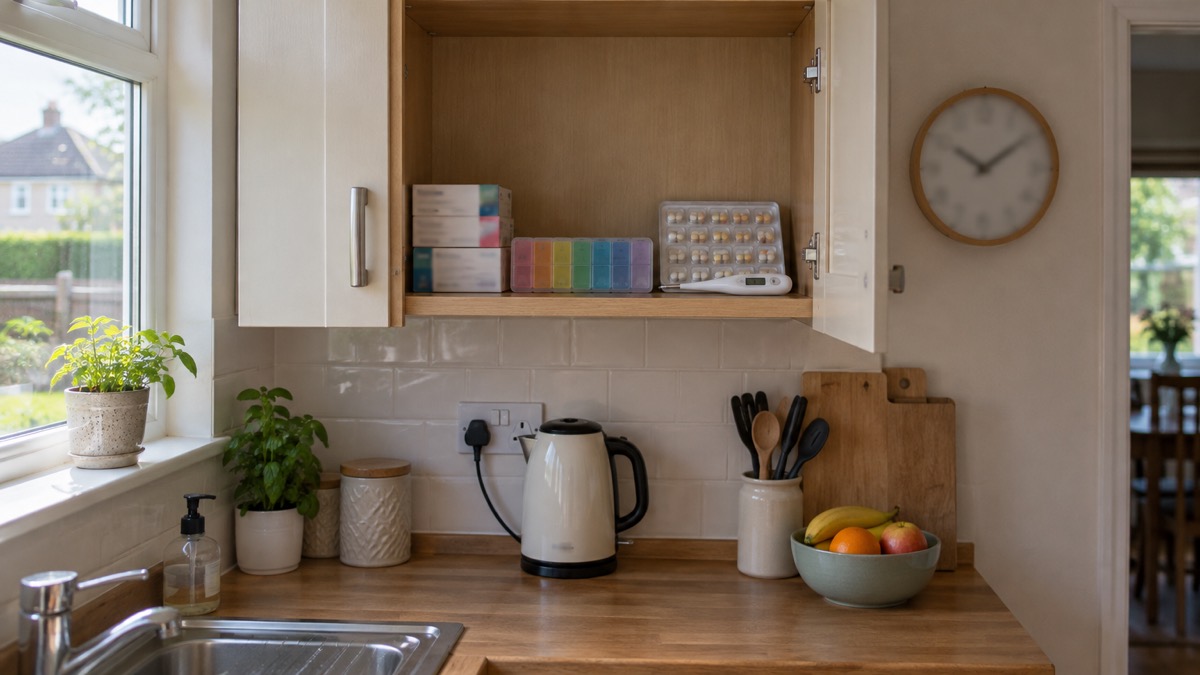
If you are asking how much medicine to keep at home, the answer is two things at once. Keep enough of your prescribed medicine to cover a short disruption, and keep a small supply of over-the-counter medicines for common illnesses: pain relief, cold remedies and oral rehydration salts1. Official guidance for households suggests keeping a small supply of long-life food, drinking water, toiletries and prescription medicines at home, with extra supplies for babies, young children or pets2.
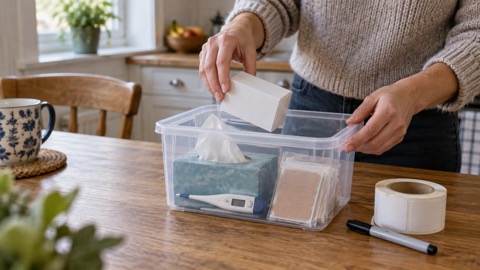
The over-the-counter side is deliberately modest. Guidance from NHS Tayside suggests common medicines such as paracetamol (including liquid paracetamol for children), ibuprofen, cold and flu remedies, antihistamines and medicine for indigestion, diarrhoea or constipation, alongside first aid supplies like plasters, bandages and antiseptic wipes or creams3. A well-stocked cabinet is not a pharmacy; it is enough to treat minor ailments at home so you are not going out when you are ill or when the weather or a local incident makes going out harder.
Storage matters as much as what you buy. Most medicines should be kept below 25°C, somewhere cool, dry, out of direct sunlight and away from windowsills, and only in the fridge if the packaging says so4. Keep everything locked away and out of the reach of children, and check dates regularly5. The checklist below sets out what to keep and why, followed by sections on each part.
Medicine supply checklist for your household
Work through this list once, then check it at the change of season. Each item earns its place because it covers a common illness or a disruption to normal supply.
A small supply of over-the-counter medicines
The point of an over-the-counter stock is to let you treat minor illness at home. NHS guidance is clear that many illnesses and injuries can be treated at home, so keeping a well-stocked first aid kit and medicine cabinet is very handy17. The table below groups what official sources suggest by what it does for the household.
| What to keep | What it does for you | Who it particularly suits |
|---|---|---|
| Paracetamol, ibuprofen, liquid paracetamol for children3 | Pain relief and fever; the backbone of home treatment for common illness and injury10 | Every household; liquid form where there are children |
| Cold and flu remedies11 | Relieves symptoms so you can rest without going out11 | Households likely to be stuck indoors together |
| Oral rehydration salts12 | Restores minerals and fluid lost through fever, diarrhoea and vomiting12 | Households with children, or anyone prone to stomach bugs |
| Anti-diarrhoeal medicine12 | Quickly controls the symptoms of diarrhoea, though not the underlying cause12 | Households where a stomach bug would disrupt care |
| Antacid, mild laxative, antihistamines13 | Covers indigestion, constipation and allergies such as hay fever13 | Every household |
| Thermometer and first aid kit13 | Checks for fever; deals with cuts, grazes and minor wounds14 | Every household |
Two rules govern all of it. Always follow the directions on medicine packets and information leaflets, and never take more than the stated dose12. And do not use medication that has changed colour, texture, smell or size, even if it has not expired18.
Oral rehydration salts
Oral rehydration salts are sachets mixed with water. They help restore the body's natural balance of minerals and fluid lost through fever, diarrhoea and vomiting, and so help your recovery, but they do not fight the cause of your illness, such as a virus or bacteria12. Put plainly, they do not treat the diarrhoea itself; they replace the salts and water that are lost, and so reduce the effects of dehydration19. They are available at pharmacies12. If someone in the house is dehydrated, our page on how to treat dehydration at home goes further, and norovirus explains the illness they are most often used for.
Pain relief and cold remedies
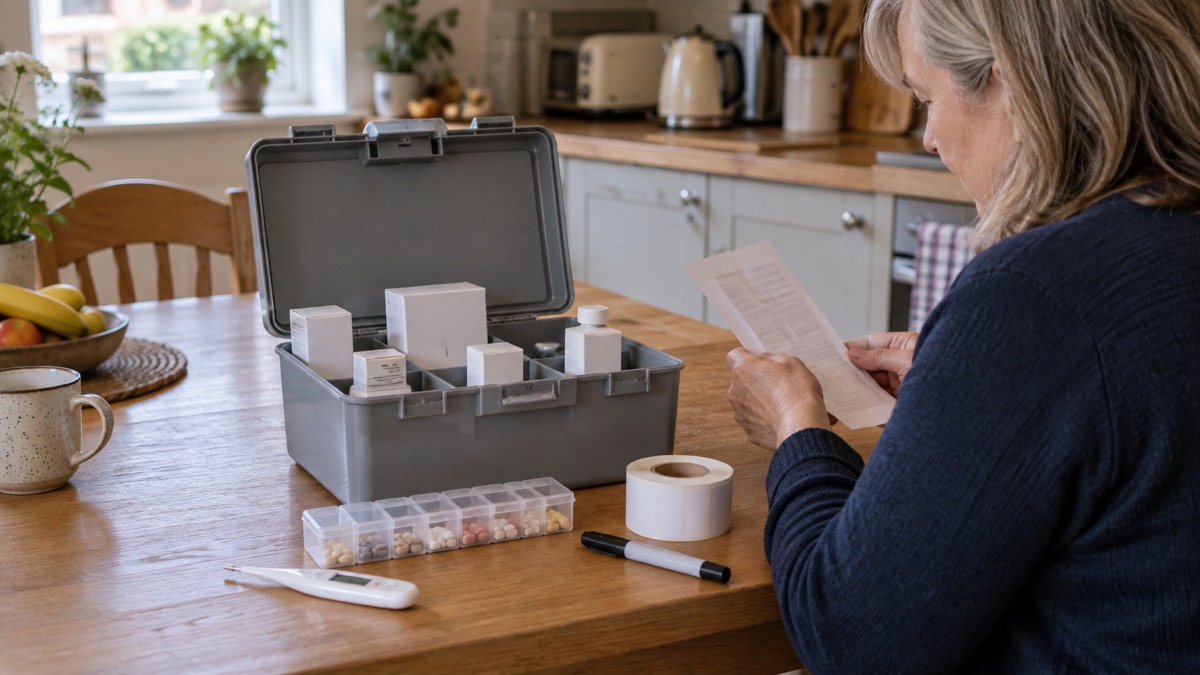
Paracetamol and ibuprofen are the two painkillers official guidance names most often, and liquid paracetamol is listed for children3. Keep cold and flu remedies alongside them so symptoms can be relieved at home11. A well-stocked cabinet may also include antihistamines, treatments for diarrhoea and indigestion, oral rehydration sachets, a thermometer and basic first aid supplies2. Check your cabinet at the start of winter: is everything in date? Restock with essentials including cold remedies, painkillers, indigestion tablets and diarrhoea and constipation remedies20. Our medicine cabinet checklist lists the full set.
Keeping your home medicine supply ready
A stock is only useful if it is in date, stored correctly and reachable when you need it. All households should keep a reasonably stocked medical cabinet at home to deal with minor ailments14. The work is in the upkeep.
- Store it cool and dry. Most medicines should be kept below 25°C, somewhere cool, dry, out of direct sunlight and away from windowsills4. Keep them away from water drips and possible food contamination, ideally in a clean, dry plastic container18.
- Use the fridge only when told. Some medicines need to be kept in the fridge, including insulin and some liquid medicines, and they can be damaged if they get too warm21. Refrigerated medicines can include creams, ointments, eye drops and injections18. Read the storage instructions on the packaging4.
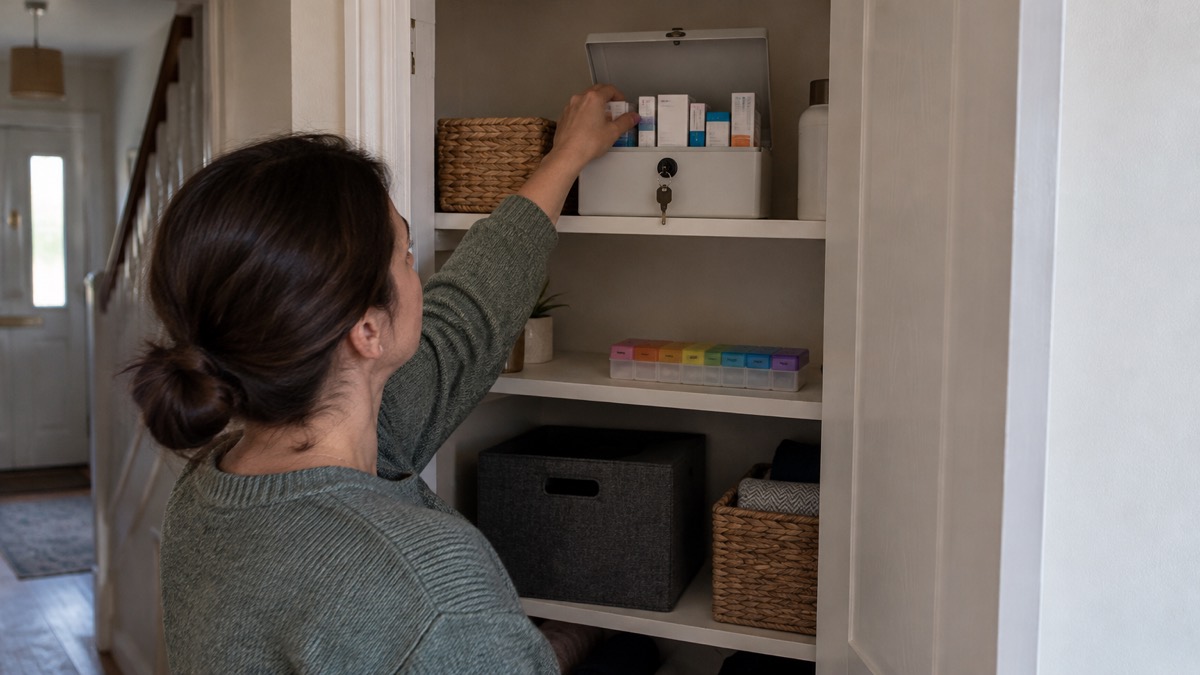
- Lock it away. All medicines should be stored in a box or cupboard with a lock and kept well out of the reach of children14. Keep any medicine in a safe place, well out of the reach of children, and check medicines regularly to make sure they are within their use-by dates5.
- Keep medicines in their original packaging, so the label and dose are always to hand22.
- Check dates each season. Restock what has expired and replace anything that has changed colour, texture, smell or size20.
- Take it with you. If you are admitted to hospital unexpectedly, take your medicines in their original packaging, including inhalers, insulin, eye drops, creams, patches, vitamins and over-the-counter medicines2.
Where to get help if you run short
Running out is the situation this checklist exists to prevent, but it happens. The first move is to ask for help collecting: if you struggle to pick up your medications, see if someone you trust can collect them, and some pharmacies will deliver free of charge23. If you are away from home, order enough regular medication from your own GP ahead of your stay, and note that pharmacists can arrange an emergency supply of medications if you forget to renew your prescription or bring your medication24.
If you have run out and have no prescription with you, you may be able to obtain an emergency supply from a pharmacist. Take an old prescription or repeat slip, or the medicine packaging, if you have it7. The pharmacist will assess whether you need the medicine immediately, who previously prescribed it and what dose would be appropriate, and will keep a record of your details, the medicine provided and the nature of the emergency7. The pharmacist may provide an emergency supply of up to 30 days' treatment for most prescription medicines7. Our page on running out of prescribed medicine walks through the process.
If you are in Wales
Arrangements differ in Wales. Since 1 April 2007, pharmacies in Wales have stopped charging for dispensing prescriptions written by a GP in Wales, and prescription pre-payment certificates were no longer available for Welsh patients from the same date8. A prescription written in Wales and presented to a pharmacy in England is subject to the prescription charges and rules in force in England8.
Some pharmacies in Wales offer an Emergency Medicines Supply Service, a free-of-charge supply of prescribed medication when the GP surgery is closed, for example Monday to Friday 6.30pm to 8.00am, and at weekends and on bank holidays17. Pharmacies not commissioned to provide that service can still provide an emergency supply under specific circumstances, but patients may be charged8. Participating pharmacies can also offer a free NHS consultation and free over-the-counter medicines for 26 common ailments that cannot be managed by self-care, as an alternative to a GP appointment17. If you need a non-prescription medicine such as paracetamol or an antacid and cannot find an open pharmacy, supermarkets, newsagents and petrol stations may stock a basic range and often have longer opening hours7.
Community support and out-of-hours help
Neighbours and local groups fill gaps that official services cannot. That is the kind of help to look for: a trusted neighbour collecting a prescription, a local group running deliveries, a phone call to check someone has what they need. Our guide to community resilience explains how to find or start one.
For urgent medical advice when your GP is closed, use NHS 111. Many common illnesses and injuries can be treated at home with rest, painkillers and basic first aid, but if you are unsure, 111 can direct you to the right service10. Our pages on NHS 111 and what to do when your GP is closed explain how it works. If you have to leave home in a flood, evacuation centres provide free food and bedding, but you need to bring spare clothing, essential medication and baby care items if you have an infant25.
Sources (25)
- Take care of yourself in winter, Staffordshire County Council, 2026
- Be prepared for winter emergencies, NHS Norfolk and Suffolk ICB, 2026
- Common medicines, NHS Tayside, 2026
- Staying well in hot weather, Berkshire Healthcare NHS Foundation Trust, 2026
- Use the right service in winter, Hampshire Hospitals NHS Foundation Trust, 2026
- Emergency Kit Checklist, Neath Port Talbot Council, 2026
- Out of hours, NHS 111 Wales, 2021
- Pharmacy FAQ, NHS 111 Wales, 2021
- Worcestershire Prepared, Worcestershire County Council, 2026
- Choose well and use the right health service, St George's University Hospitals NHS Foundation Trust, 2026
- Pandemic and infectious disease, Greater Manchester Combined Authority, 2026
- Keep a well-stocked medicine cabinet at home, NHS Black Country ICB, 2026
- Summer health, NHS Inform Scotland, 2026
- The Family Medicine Chest, Vallance Medical, 2026
- Alternatives to 999, South Central Ambulance Service NHS Foundation Trust, 2026
- Get prepared, Carmarthenshire County Council, 2026
- What service do I need, NHS 111 Wales, 2021
- Storing medicines at home, United Lincolnshire Hospitals NHS Trust, 2026
- What to keep in your medicine cabinet, NHS Hertfordshire and West Essex, 2026
- Snow buddies, Derbyshire County Council, 2026
- Weather safety, Oxford Health NHS Foundation Trust, 2026
- Poisoning, NHS Frimley Healthier Together, 2026
- Keep winter well, Birmingham Community Healthcare NHS Foundation Trust, 2026
- Which NHS service, NHS Somerset, 2026
- What to do in a flood, Natural Resources Wales, 2026
 Medicine Cabinet Checklist
 Sick at Home Supplies Kit
 Caring for Someone Ill at Home