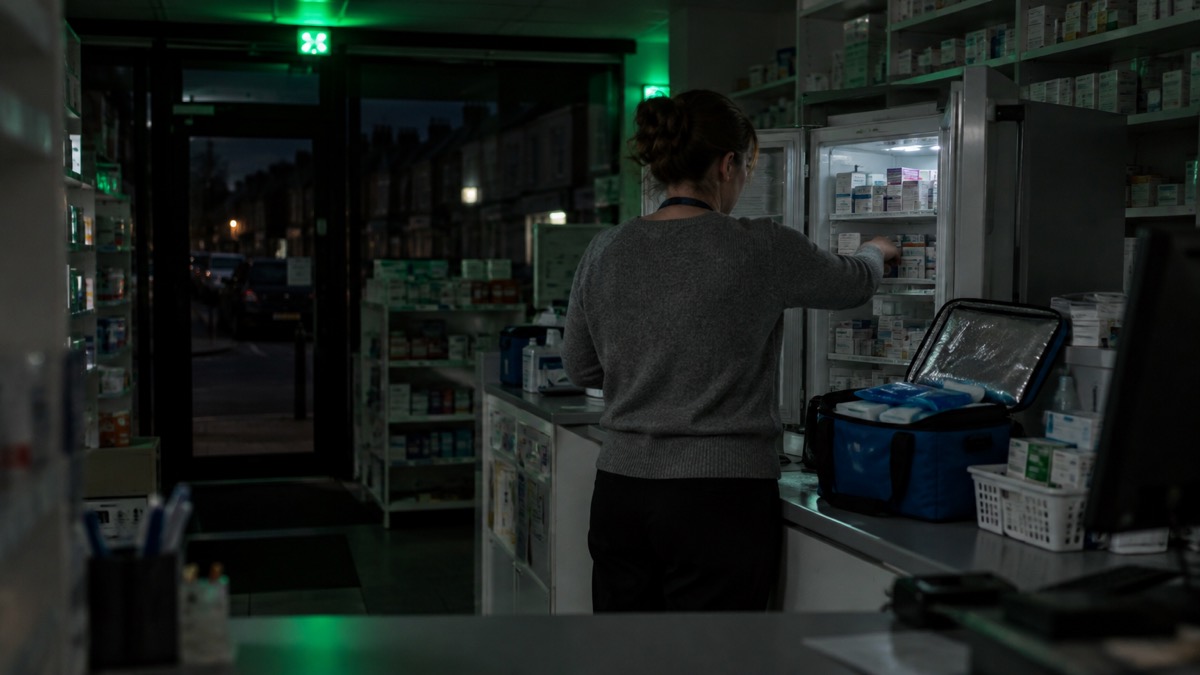
If the power goes off and you have medicine that lives in the fridge, the first thing to do is leave the fridge door shut. Every extra opening lets the cold out, and the contents will hold their temperature far longer if you keep it closed1. Then check the leaflet or label for your own medicine: each one has its own storage limits, and those limits, not a general rule, decide what you do next2.
Medicines that need a fridge are usually kept between 2°C and 8°C, and they can include creams, ointments, eye drops and injections2. Leaving them out at room temperature can have significant consequences, affecting how well they work and in some cases how safe they are2. So this is not a case for guesswork: the official advice after a power cut or fridge breakdown is to contact your local pharmacy or the manufacturer of your medicine for information on what to do2.
Most other medicines are simpler. Most should be kept below 25°C, in a cool dry place away from direct sunlight3. A short outage in a cool room is unlikely to trouble them, but a fridge medicine needs a plan. This page sets out what to do now, how to keep medicine cool without a working fridge, what can go wrong, and where to get help.
What to do with your medicine as soon as the power goes off
Do nothing in a hurry. The single most useful action in the first hour is to keep the fridge closed. The Food Standards Scotland advice for a power cut is to keep fridge and freezer doors closed as much as possible1, and Northern Powergrid puts it the same way: limit opening your fridge or freezer so food stays cold for longer5. The same reasoning applies to the medicine inside it.
Leave the appliance switched on with the door shut. The Northern Ireland Executive's severe weather guidance advises leaving your fridge and freezer switched on with the door shut to maintain a low temperature6. Do not unplug it or start moving things around while the supply might still return.
Then, in this order:
- Check the label or leaflet for the medicine that was in the fridge. The official guidance is to ensure medicines are stored correctly as indicated on the packaging or label2.
- Note the time the power went off, so you can tell your pharmacist how long the medicine has been out of controlled storage.
- Ring your pharmacist if the outage looks long or you are unsure. The official advice is to contact your local pharmacy or the manufacturer of your medication for further information on what to do2.
- Leave everything else where it is. Medicines should be kept in their original packaging with the product information and instructions for use7.
If you use medical equipment that requires a power supply, the picture is different and more urgent. The government's preparedness advice is to make a plan with your care provider and clinical care teams now about what will happen in a power cut, setting out what action you or the person you care for needs to take and who to contact if there is an outage4. There is a fuller checklist on our page about relying on medical equipment that needs electricity.
Check the leaflet first: each medicine has its own storage limits
There is no single rule for medicine in a power cut, because there is no single storage condition. The label on your own pack is the authority, and the official guidance is to store medicines as indicated on the packaging or label2. Two households with different prescriptions should do different things.
The broad split looks like this:
| Type of medicine | Usual storage | What the outage means |
|---|---|---|
| Fridge medicines (some creams, ointments, eye drops and injections) | 2°C to 8°C2 | Needs active management; ask the pharmacist if the outage is long2 |
| Most other medicines | Below 25°C, cool dry place, out of direct sunlight3 | Usually fine in a cool room; keep out of sunlight and away from heat |
| Medicines in use at room temperature (such as in-use insulin) | Room temperature8 | Do not move into extreme cold; insulin can freeze8 |
Fridge medicines are the ones that need thought. They can include creams, ointments, eye drops and injections2, so do not assume that only injections are affected. Read the label of every item that normally lives in the fridge and note which ones say "store in a refrigerator" and at what range.
Keep medicines safely out of reach of children, preferably in a locked cupboard9, and in their original packaging with the product information and instructions for use7. If a medicine is normally kept in a childproof medicine box in the fridge, keep using it7. During an outage, when doors are open and torches are out, that discipline matters more, not less.
Keeping medicine cool without a working fridge
A closed fridge is your first cold store, and it holds its temperature well. Keep the door shut and leave the appliance switched on6. Do not open the door to rearrange things inside.
If the outage is going to be long, there are several options, and they suit different households:
- A cool bag, wallet or pouch. Diabetes UK advises that if you are out and about you should carry your insulin in a cool bag, wallet or pouch10. The same kit works at home during an outage. It slows warming; it does not hold a set temperature, so check with your pharmacist how long your medicine can safely sit in one.
- An insulated case for testing kit. Diabetes UK advises keeping blood sugar testing equipment and insulin pump handsets at room temperature, or close to your body if you are outside, and says you can also use an insulated case or pouch, checking the manufacturer's instructions for specific advice8.
- A friend or relative's fridge. If you are concerned about keeping medications cool, consider taking them to a friend or family member's home with power11. Citizens Advice makes the same suggestion: you could store some of your medication at a family or friend's house if they live close by and you could get to it during a power cut12.
- Block ice for the fridge. If the power is going to be out for an extended period, buy block ice to keep the refrigerator as cold as possible13.
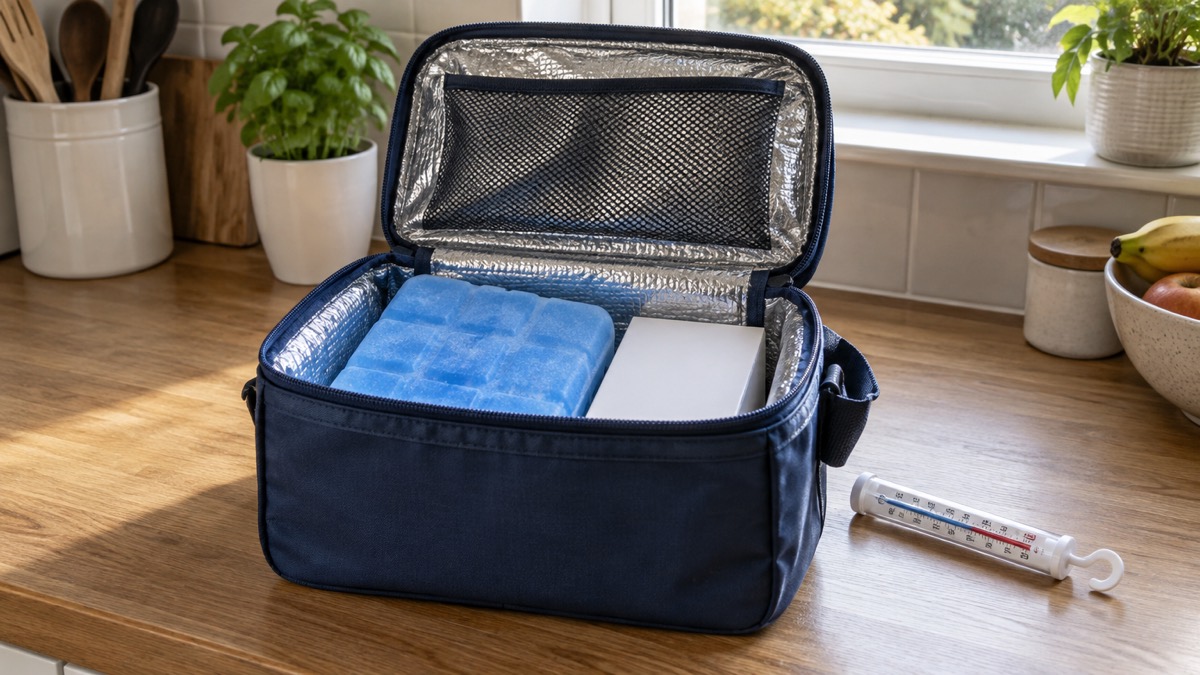
If you are worried about the medicine and cannot keep it cool, the official route is a phone call, not a guess: contact your local pharmacy or the manufacturer of your medication for further information on what to do2. If important medication needs to be stored below a certain temperature, Carers UK suggests asking whether you can store it in a fridge or another cool area, and checking with your pharmacist or doctor if you are unsure14.
What can go wrong, and what to do about it
The risks here are quiet ones: medicine that has warmed too far, medicine that has frozen, and medicine that has been left somewhere a child can reach it. Each has a clear response.
Medicine that has warmed up. Leaving refrigerated medication out at room temperature can have significant consequences, impacting its effectiveness and in some cases, its safety2. Do not decide for yourself that it is probably fine. Ring your pharmacist or the manufacturer and tell them how long it was out and at what sort of room temperature2.
Medicine that has frozen. Insulin can freeze if it is left out in extreme cold, so keep your insulin that is in use at room temperature8. If any medicine has frozen, do not use it until your pharmacist or doctor has said it is safe. The same call covers both problems: your local pharmacy or the manufacturer can tell you what to do2.
Medicine within reach. Keep all medication up high out of reach, preferably in a locked cupboard9, and store medicines safely out of reach of children, preferably in a locked cupboard, in their original packaging7. In a dark house with torches and candles out, put the medicine box away after each use rather than leaving it on the side.
The fridge itself. Keep the fridge and freezer doors closed during an outage; the contents should be safe for many hours, but if in any doubt, dispose of the food if it appears to have defrosted15. That is food guidance, but it is a useful reminder that the fridge is not a sealed cold box forever. For the food side of the same outage, see our page on fridge and freezer food when the electricity is off.
Where to get help: your pharmacist, NHS 111 and your network's Priority Services Register
Your pharmacist is the first call for any question about storage, spoilage or a replacement supply. The official advice after a power cut or fridge breakdown is to contact your local pharmacy or the manufacturer of your medication2. Keep the packaging and leaflet to hand when you ring.
If you need urgent health advice and cannot reach your pharmacist, use the NHS 111 service for your nation. For a medical emergency, ring 999.
If you rely on electricity for medical equipment or refrigerated medicine, tell your network operator. The government's preparedness advice is to sign up to your energy supplier's Priority Services Register to let them know that you need additional support during a power cut4. SP Energy Networks says you should join its Priority Services Register to get extra help during a power cut16. If electricity is crucial for any medical equipment you have, contact your distribution network operator at any time, as they may be able to put you on their Priority Register for assistance during any power outage4. There is more on who can join and what it gives on our page about the Priority Services Register.
The arrangements differ across the UK:
| Nation | Register and help |
|---|---|
| England, Scotland and Wales | Priority Services Register through your energy supplier or network operator4 |
| Northern Ireland | NIE Networks Customer Care Register; registered customers are contacted regularly during the power cut with up-to-date information to help them make alternative arrangements, contact their health professional or call 99917 |
In Northern Ireland you can also register to receive up-to-date information by phone during a power cut or a planned interruption to your supply17. Save the power cut emergency number to your phone18, and if you rely on power for medical equipment such as a home kidney dialysis machine or oxygen concentrators and there is no back up power, contact the medical provider or your network operator11. For the full picture in Northern Ireland, see our page on Northern Ireland: NIE Networks, reporting and help.
Getting ready before the next outage
Preparation is mostly about knowing your own medicines and having a plan written down. The official winter advice is to check that you have enough prescribed medicines to last through the holiday period19, and to make sure you have spare medication in case you cannot go out20. Do that now, not when the lights go out.
A short checklist for the household:
- Know which medicines are fridge medicines, and their storage range from the label2.
- Keep them in the original packaging with the leaflet, in a childproof box if they live in the fridge7.
- Keep a cool bag, wallet or pouch ready for insulin and similar medicines10.
- Charge what you rely on. Regularly charge emergency medical and communications equipment and devices, and use a back up battery pack if possible11.
- Make a plan with your care team if you use medical equipment that needs power4.
- Join the Priority Services Register so your supplier knows you need extra support4.
- Store some medicine with a nearby friend or relative if your pharmacist agrees12.
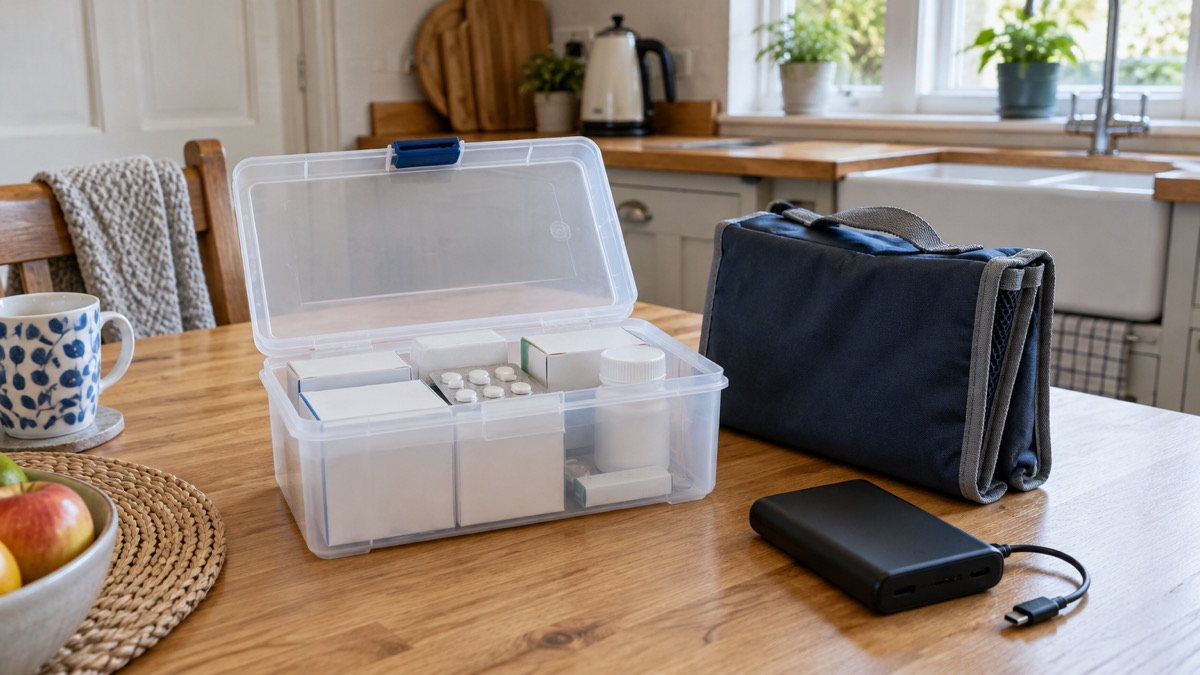
If you use electrical medical equipment, make sure you are fully prepared for a power cut16, and check that any essential equipment has a battery back-up so you can keep using it even if the power is out, with backup power supplies regularly checked and maintained by a competent person21. Our power cut kit checklist and checklist for households using medical equipment set out the rest.
Sources (21)
- Power cuts and food safety, Food Standards Scotland, 2026-10-25
- Storing medicines at home, United Lincolnshire Hospitals NHS Trust, 2026
- Staying cool in a heatwave, Age UK, 2026-06-25
- Be informed about hazards: power cuts, UK Government Prepare campaign, 2026-10-21
- Be prepared, Northern Powergrid, 2026-10-26
- Strong winds: weather warning information and advice, nidirect, 2026-10-24
- Chemical safety at home, nidirect, 2026-04-14
- Diabetes and cold weather, Diabetes UK, 2026-10-12
- Poisoning, RoSPA, 2026-10-26
- Diabetes and hot weather, Diabetes UK, 2026
- Tips to prepare for a power cut, Electricity North West, 2026-10-26
- Prepare for a power cut, Citizens Advice, 2023-11-14
- How do I keep food safe?, NIE Networks, 2026-10-25
- Keeping safe during a heatwave, Carers UK, 2026-10-25
- Emergency power cuts, NIE Networks, 2026-10-25
- Important information: preparing for a power cut, SP Energy Networks, 2026-10-26
- Customer Care Register, NIE Networks, 2026-10-25
- Care and assisted living providers, Energy Networks Association, 2026-10-25
- Keeping warm, healthy and safe in cold weather, London Assembly, 2026-10-25
- Be prepared for winter emergencies, NHS Norfolk and Suffolk ICB, 2026-10-25
- Power cuts, National Grid, 2026
 Power Cut Kit Checklist
 What to Keep Charged
 Household Emergency Plan
 Food to Throw Away After a Cut
 Keeping One Room Warm
 Heating a Room With a Gas Hob
 Hot Water Bottles and Children
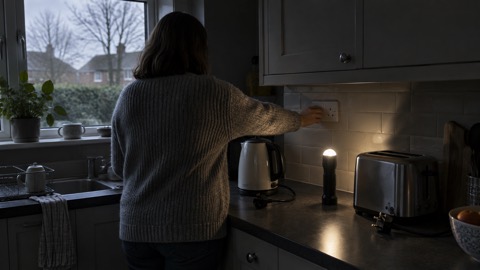 Unplugging Appliances in a Cut
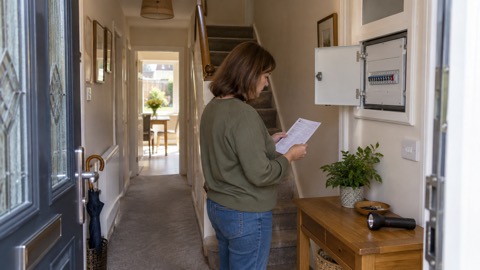 Checking Your Trip Switches
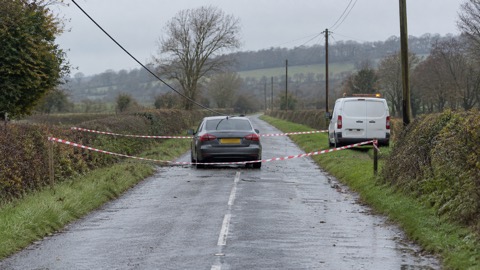 Vehicle Touches Overhead Line
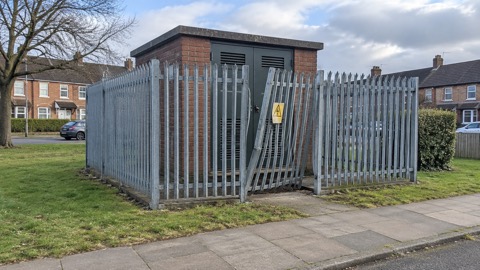 Reporting a Damaged Substation
 Protected Sites
 Heatwaves and Power Cuts
 Smart Meters and Power Cuts
 Registering a Relative for Help