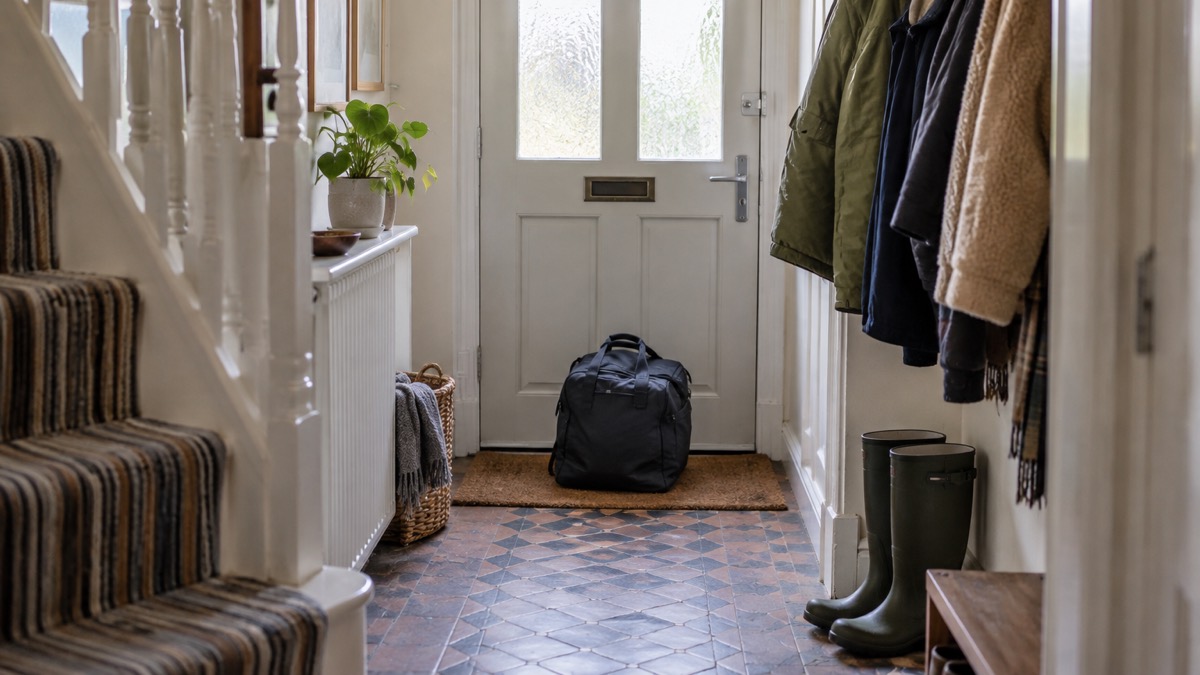
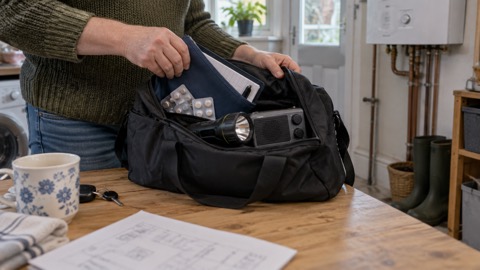
A grab bag is a small bag of essential items, packed in advance and kept somewhere you can reach it quickly, so that if you are ever told to leave your home at short notice you can pick it up and go. The Greater London Authority advises households to "pack a 'grab bag' of essential items that might be helpful if you have to leave your home at short notice"1, and the government's Be Ready campaign gives the same advice: keep essential items in a spare bag, sometimes called a grab bag, ready for when you are asked to leave quickly2.
The same bag serves two purposes. The Met Office notes that a grab bag with bottled water, medicines, a torch, radio and batteries, copies of important documents and a change of clothes "will help if you have to leave home quickly in an emergency, or your power or water are disrupted"3. So even if you are never evacuated, the bag is not wasted: it is the core of your supplies for staying put through a power cut or a loss of water.
This page covers what to pack and why, how to keep the bag light enough to carry, what to add for flooding, children, pets and medication, and what to expect if you are asked to leave your home.
What a grab bag is for: leaving home at short notice
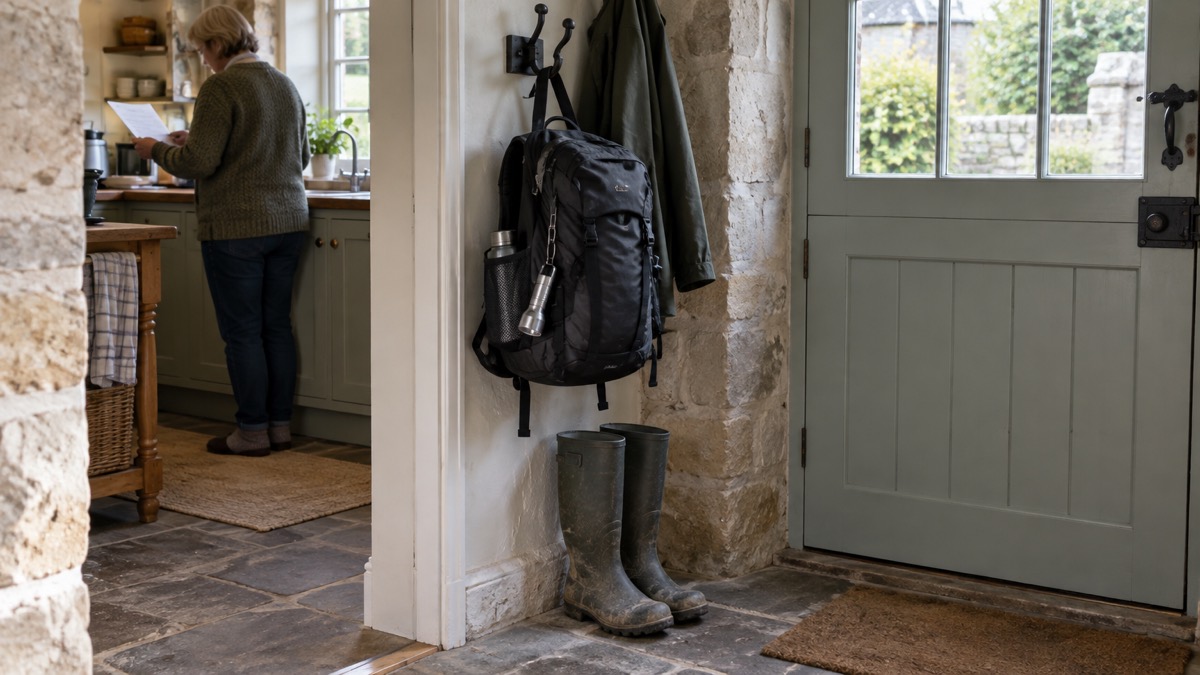
Emergencies that force people out of their homes happen more often than most of us assume: flooding is the most common in the UK, but fires, gas leaks, storms and major incidents can all lead to an evacuation notice with little warning. The London Resilience Partnership's advice is simple: "If you can, pack a 'grab bag' of essential items that might be helpful if you have to leave your home at short notice"7. The Royal Borough of Windsor and Maidenhead's home emergency plan template puts the same point more strongly: whether you have to stay in or get out, it recommends having an emergency grab bag ready and available in case of an evacuation that requires you to leave quickly8.
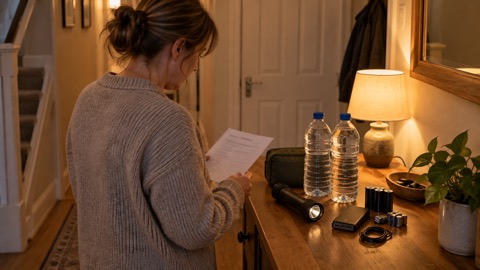
The reason for packing in advance is that you will not have time or clear thinking on the day. Essex Prepared's guidance captures the practical minimum: "Ideally, prepare a small easy-to-carry bag with essentials and store it in an accessible place ready to go. At the very least, have an up-to-date check list for things to put into your emergency grab bag"4. If you cannot face packing a full bag today, write the list and stick it inside a cupboard door: it is a genuine second best, and it is the first step towards the bag itself.
What goes in the bag follows from what an evacuation is like. You may be out for hours or overnight, you may not be able to return for some time, and you will need to identify yourself, contact people, take medication and stay warm. Surrey's guidance lists the essentials for evacuation as "medication if you required, mobile phone and charger, ID or passport, and cash or your debit/credit card"9. Warwickshire's advice for high-rise residents, who may be evacuated with very little notice, adds prescriptions, documents such as a driving licence and passport, spare keys, a mobile phone, charger and a torch10.
One bag per person, or one per household?
There is no single official rule here, and the guidance is written around the household rather than the individual. For most households, one shared bag plus a small personal bag for each child works well: the shared bag carries the documents, first aid kit, torch and water, while each child's bag holds their comfort items and spare clothes.
One bag per person is the safer arrangement if there is any chance household members could be separated, for example if children are evacuated from school while you are evacuated from work. Whatever you choose, keep the shared bag light enough that any adult can carry it, and check that each person's medication and essentials are actually in it.
The core list: what every grab bag should contain
The fullest official list comes from Harborough District Council's flood grab bag guidance, and it doubles as a general evacuation list. Alongside the flood-specific items covered later on this page, it recommends:
- Documents (passport, driving licence, insurance documents) in a waterproof wallet
- Phone and charger or power banks
- Torch (wind-up or battery) and spare batteries
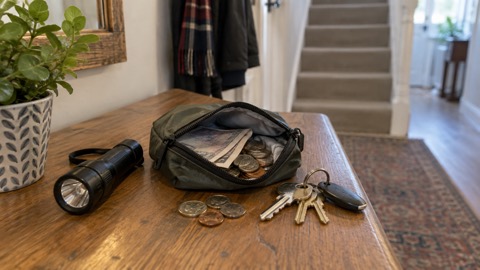
- Emergency cash and bank cards
- Spare glasses and hearing aid batteries
- Spare house keys
- A camera or recording device
- Prescribed medication and repeat prescriptions
- First aid kit
- Warm, waterproof clothing
- Sturdy footwear such as wellies or waterproof boots
- Toiletries (wipes, hand sanitiser, toilet items)
- Water and snacks5
North Yorkshire Fire and Rescue Service, writing after Storm Babet, gives a similar household list: medication, a torch, important documents such as insurance details and utility information, warm clothing, spare keys, a first aid kit, baby milk and nappies if there is a young child in your household, water, snacks, and a fully charged mobile with a spare battery if possible11. The overlap between these lists, drawn up independently by different authorities, is a good sign: the items that appear on all of them are the ones that matter most.
| Item | Why it goes in | Who recommends it |
|---|---|---|
| Medication and repeat prescriptions | You may be out overnight or longer | Harborough DC5; North Yorkshire FRS11 |
| Documents in a waterproof wallet | Identification, insurance and utility details | Harborough DC5; Surrey9 |
| Torch and spare batteries | Lighting when power is out | Met Office3; Harborough DC5 |
| Phone, charger and power bank | Staying in touch and informed | Surrey9; Harborough DC5 |
| Cash and bank cards | Card payments may not work | Harborough DC5; Surrey9 |
| First aid kit | Minor injuries away from home | Harborough DC5; North Yorkshire FRS11 |
| Warm, waterproof clothing and sturdy footwear | Comfort and protection | Harborough DC5; North Yorkshire FRS11 |
| Water and snacks | Food and drink you can have cold | Met Office3; Harborough DC5 |
| Spare keys | If you cannot return for yours | Harborough DC5; Warwickshire10 |
Two items on the list deserve a note. Spare glasses and hearing aid batteries are easy to overlook and hard to replace in an emergency, so Harborough's guidance lists them explicitly5. A camera or recording device, which most of us carry as a phone, matters because you may need to photograph damage before you leave, and again after a flood before cleaning begins5.
For more on which documents to keep ready and how to store copies, see important documents; for how much cash to keep at home, see emergency cash.
Torch, radio and power: staying lit and informed
Light and information are the two things you will miss first in any emergency that affects utilities. The Met Office's winter advice is to put together a grab bag with "bottled water, medicines, a torch, radio and batteries, copies of important documents and a change of clothes"3, and its WeatherReady campaign repeats the same list12. A battery or wind-up radio matters because in a power cut, or if mobile networks are down, local radio is how you hear what is happening and what you are being asked to do.
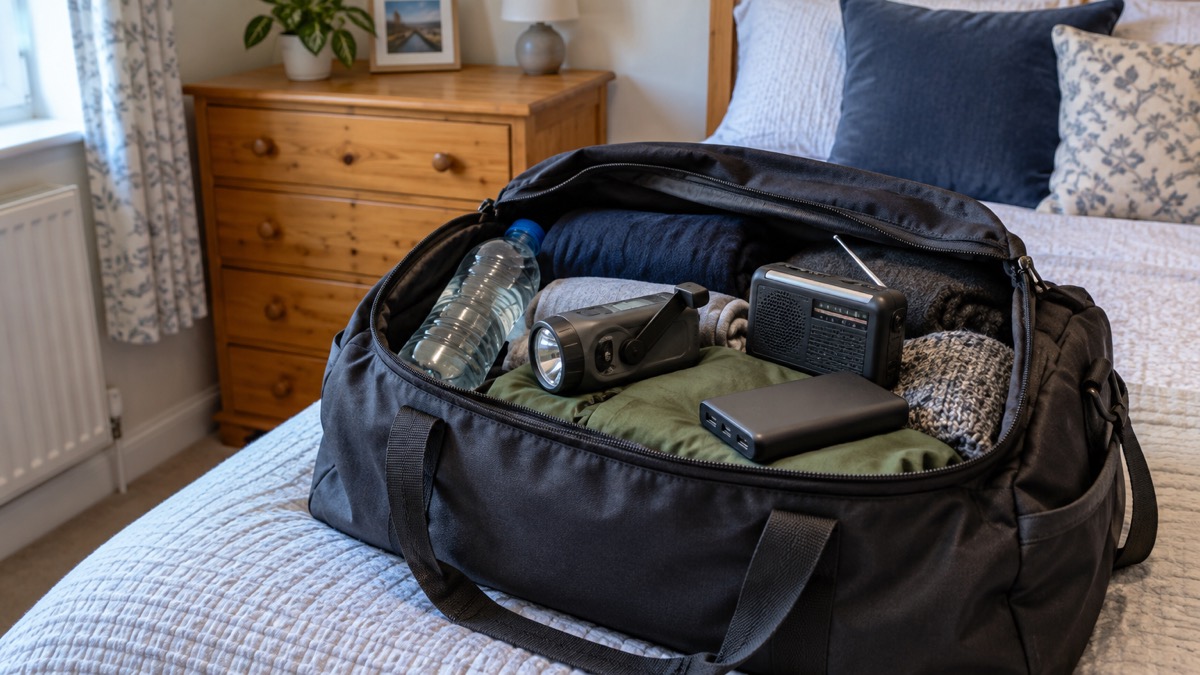
On torches, official guidance is consistent: a wind-up torch or a battery powered torch, with spare batteries if needed. North Devon Council's emergency kit advice lists "a battery or wind-up torch and radio, with spare batteries if needed"13, and Dumfries and Galloway Council's household emergency pack guidance includes "a wind-up torch or a battery powered torch"14. A wind-up torch has the advantage that it never runs flat in storage, which suits a bag you check only twice a year; a battery torch with spares gives brighter, steadier light. Either is fine: what matters is that it works when you pick the bag up.
West Yorkshire Prepared's severe weather advice adds the routine that keeps these items ready: have a battery powered radio and a torch with extra batteries to hand, and keep mobile phones and laptops charged15. For the grab bag itself, the government's Be Ready checklist advises keeping a charged power bank to charge phones or compatible medical devices16. A power bank is only useful if it is charged when the emergency happens, so top it up at your six-monthly check and store it with its cable.
Some official sources, including nidirect in Northern Ireland, also suggest keeping a supply of candles for power cuts17. Torches are the safer choice for a grab bag, because a torch in a bag being carried in the dark cannot start a fire. If you do keep candles at home, keep them out of the bag and see emergency lighting for how to use them safely.
Food and drink you can have cold
The food in a grab bag has to be food you can eat without power, without cooking and without a fridge. Harborough's list specifies water and snacks5; Bradford Council's flood pack list goes further, with tinned and non-perishable food, a tin opener, and fresh clean water18. The tin opener is the detail people forget: tins without an opener are dead weight.
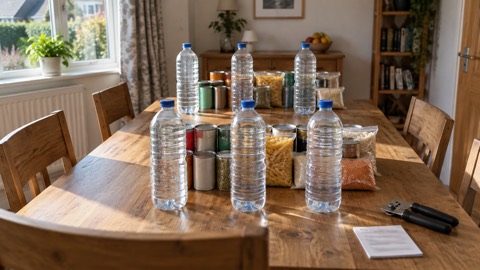
West Yorkshire Prepared's flooding checklist sets the quantity to aim for: food and bottled water for 3 days, and it adds a warning not to rely on your fridge or freezer for food6. Three days is more than most evacuations last, but it covers the harder case of being stuck at home with power and water disrupted, which is the other half of what a grab bag is for. For how that fits into your wider stores, see how many days your supplies should last.
The same thinking applies to journeys. The Met Office's winter car kit advice is to take some food and drink provisions when setting off on a journey, particularly in winter, with hot drinks in a flask a good idea19, and North Yorkshire's Community Risk Register advises that if you must make a journey in severe weather, you carry emergency food, clothing, blankets, water and a flask with a hot drink20. A flask of hot drink is worth adding to the grab bag in cold weather: it needs no power to prepare in advance and it does more for morale than almost anything else of the same weight. The Scottish Government's emergency kit guidance similarly includes some food and a warm drink in a flask21.
For longer stays away from home, Torbay and South Devon NHS carers' guidance on packing a hospital grab bag suggests small comforts that travel well: drinks or sweets such as mints or gum to keep the mouth moist and fresh, a small amount of cash, and plastic bags for dirty laundry22. The same logic applies to a rest centre: a familiar snack and a bag to keep dirty and clean things apart are small items that make an uncomfortable night easier.
Flood grab bag additions
If your home is in a flood risk area, the grab bag needs extra items, and it needs to be stored with flooding in mind. Harborough District Council's guidance is to keep it upstairs or near your door5, so that rising water on the ground floor does not put it out of reach.
The flood-specific additions come from several sources. Belfast City Council advises making up an emergency kit and adding extra things you will need in a flooding emergency, like rubber gloves, waterproof clothing and boots23. Bradford's flood pack list adds blankets and bottled water to the general list18.
| Flood addition | Why | Source |
|---|---|---|
| Rubber gloves | Handling wet, contaminated items | Belfast City Council23 |
| Waterproof clothing and boots | Walking through flood water and cleaning up | Belfast City Council23; Harborough DC5 |
| Blankets | Warmth when wet and cold | Bradford Council18 |
| Bottled water | Tap water may be unsafe | Bradford Council18 |
| Camera or phone for photos | Photograph damage before cleaning | Harborough DC5 |
| Copies of documents in a waterproof wallet | Keeping them dry | Harborough DC5 |
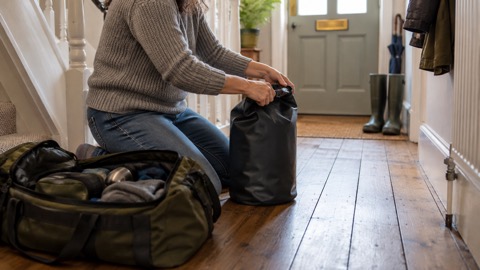
Bradford's flood pack list also includes copies of important documents, your flood plan, and a sheet of important phone numbers and useful contacts18. Carrying a copy of your plan means you have your agreed actions and contacts with you even if you cannot get back into the house. For storing the documents themselves, see waterproofing your supplies.
After a flood, the grab bag still has a job. Harborough's guidance advises that when you return home, you wear gloves and waterproof clothing, take photos of damage before cleaning, contact insurers and keep records, and then restock your grab bag5. The restocking step is the one people skip: a bag used once is an empty bag, and floods can recur within days. See flooding for the full picture of preparing for and recovering from floods.
Children, pets and medication
Babies and children
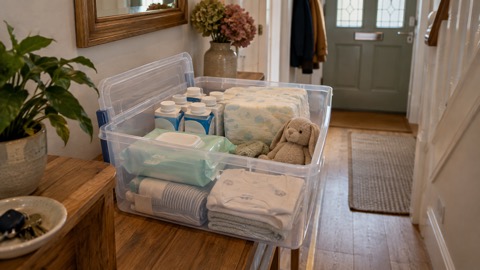
Essex Prepared's guidance lists supplies for babies and children: formula and drink, a change of clothing, nappies, and toys, books and activities4. Harborough's flood grab bag list gives the same items in more detail for households with children: nappies and wipes, baby food, milk and bottles, spare clothes, and comfort items such as a toy or book5. North Yorkshire Fire and Rescue Service adds baby milk and nappies to the general household list where there is a young child11.
The comfort item is not a luxury. A familiar toy or book does real work in keeping a frightened child settled through a night in an unfamiliar place, and it weighs almost nothing. Let children pack their own small bag with one or two chosen items: it gives them a job and guarantees the item they want is the one that comes. For a fuller list, see supplies to pack for babies and young children.
Pets
Medway Council's guidance on looking after pets in an emergency sets out a pet grab bag: a lead or carrier for every animal, any medications your animals need, pet food, vaccination certificates, litter, paper towelling or bedding if needed, and toys. If the leads and carriers will not all fit in the bag, keep them as close to the bag as possible, and store the bag in an easy-to-reach place24. North Yorkshire Fire and Rescue Service also advises putting together a grab bag with food, insurance documents and any other essentials your pet may need11.
Vaccination certificates matter because a rest centre or emergency kennel may ask for them before taking your animal. See pets and animals in an emergency for the wider arrangements.
Medication
Every official list puts medication first, and for good reason: it is the one item that cannot be improvised or bought at short notice in an emergency. Harborough's list specifies prescribed medication and repeat prescriptions5; Warwickshire's high-rise guidance says prescriptions10; Surrey's evacuation list says medication if you require it9. The practical step is to keep a small supply of regular medication in the bag where the medicine allows it, and to keep a written list of what each person takes, with doses, so that anyone can explain it at a rest centre or pharmacy.
Choosing and storing the bag
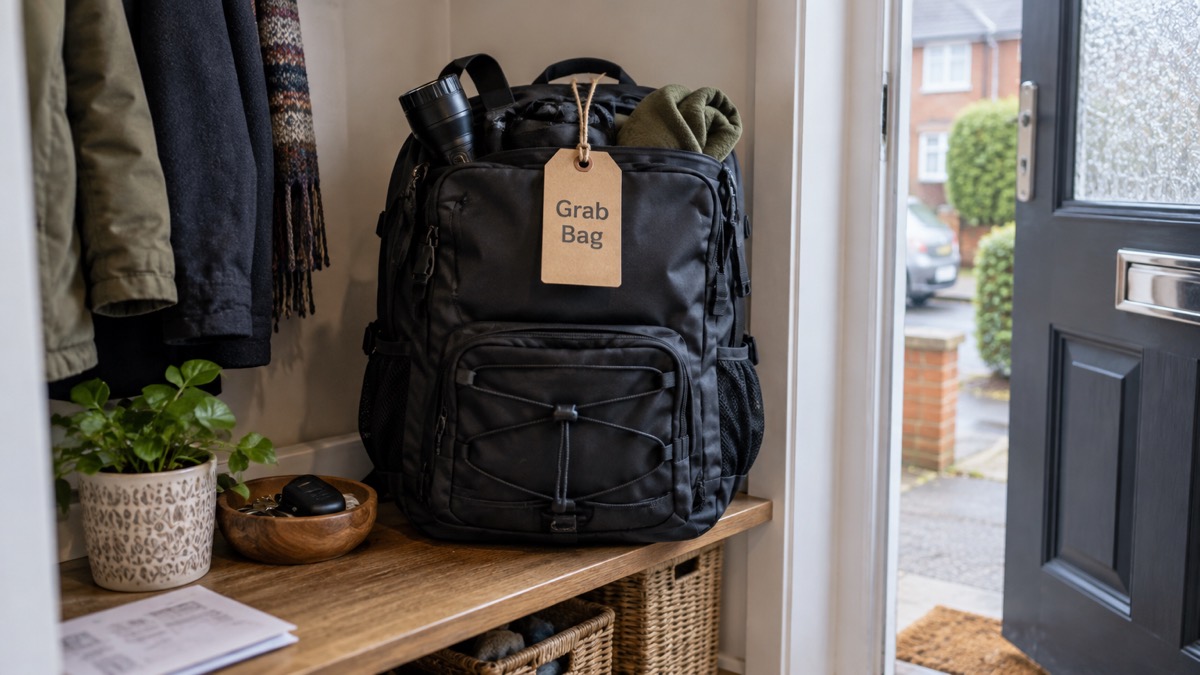
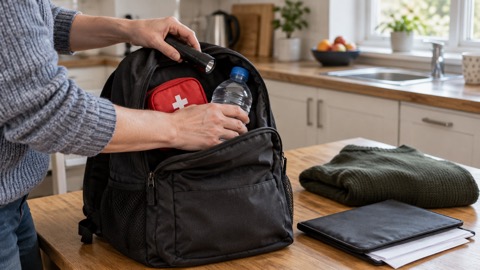
The bag itself should be small and easy to carry. Essex Prepared's guidance is to prepare a small easy-to-carry bag with essentials and store it in an accessible place, ready to go4. A rucksack is usually the best shape because it leaves your hands free, which matters if you are carrying a child, holding a lead or helping someone who walks with difficulty. For guidance on choosing one, see choosing a rucksack or holdall.
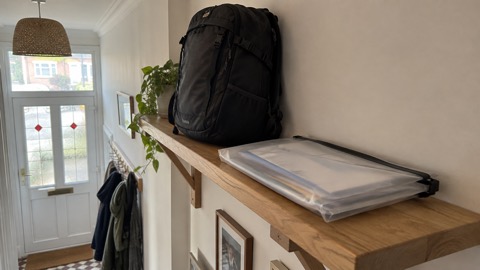
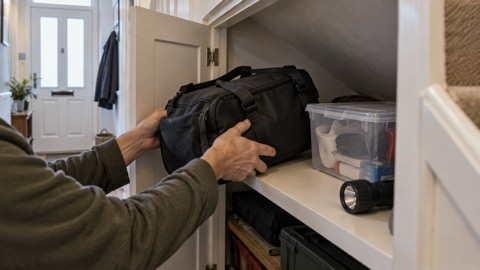
Where to store it depends on your risks. Harborough's flood guidance says upstairs or near your door5. Upstairs protects it from flood water; near the door means you pass it on the way out. If flooding is not a risk for you, near the door (or wherever you would leave in a hurry) is the better choice. West Yorkshire Prepared's advice applies whatever you choose: make sure everyone in your house knows where it is kept6.
Check the bag every 6 months5. At each check, confirm the medication is in date, the batteries still work, the power bank is charged, the snacks are still edible, and the clothing still fits the children. See checking and restocking supplies for a routine.
When to leave home and what to expect at a rest centre
The decision to leave is not usually yours alone. If the emergency services tell you to leave, go: the bag exists precisely so that leaving does not mean leaving everything behind.
When you leave, lock up, take your grab bag and your phone, and follow the route you are given. Somerset Council's guidance explains what happens next: you will normally be directed to a rest centre, and "At the Rest Centre you will be given up-to-date information about the situation and when you can return home"25. Rest centres are run by the council with support from volunteer organisations, and they provide a safe place to wait, information about what is happening, and help with immediate needs.
What the grab bag does at a rest centre is make a difficult night more manageable. Your documents let you identify yourself and start insurance claims; your medication keeps your treatment unbroken; your phone and power bank keep you in contact with family; snacks and a comfort item keep children settled. None of this needs the rest centre to provide anything: you arrive with what you need.
Warwickshire's resilience guidance notes that its CSW Resilience Team website has a specific section on grab bags which recommends what to take if you have to leave your home26, and most local resilience forums publish similar area-specific lists. It is worth checking your own council's or resilience forum's version, because it will reflect the risks where you live, from flooding to industrial sites.
For the wider decisions around staying or going, see getting started; for the full flood picture, see flooding.
Sources (26)
- Prepare for emergencies, Greater London Authority, 2026
- Be ready for emergencies, UK Government Be Ready campaign, 2026
- 10 things you should do now to prepare for winter, Met Office, 2026
- Preparing your family, step 1: preparation, Essex Prepared, undated
- Resident grab bags, Harborough District Council, undated
- Flooding checklist, West Yorkshire Prepared, 2022
- Preparing yourself for emergencies, Greater London Authority, 2026
- Your home emergency plan, Royal Borough of Windsor and Maidenhead, 2025
- Prepare for emergencies: homes prepared, Surrey County Council, 2026
- High rise living, Warwickshire County Council, 2026
- Stay safe during Storm Babet, North Yorkshire Fire and Rescue Service, 2023
- Top tips to be WeatherReady, Met Office, 2026
- Be prepared for emergencies, North Devon Council, undated
- Create a household emergency lifesaving plan, Dumfries and Galloway Council, 2026
- Severe weather, West Yorkshire Prepared, undated
- Get prepared for emergencies, UK Government Prepare campaign, 2026
- Strong winds: weather warning information and advice, nidirect, 2026
- Create a flood pack, Bradford Council, undated
- Winter car kit, Met Office, 2026
- Community Risk Register 2025, North Yorkshire Local Resilience Forum, 2025
- Emergency kit, Scottish Government Ready campaign, 2026
- Planning ahead: carers service, Torbay and South Devon NHS, 2025
- Flooding advice, Belfast City Council, undated
- Looking after your pets in an emergency, Medway Council, undated
- Preparing for emergencies, Somerset Council, 2026
- Emergency advice for residents, Warwickshire County Council, 2026
 30-Day Household Checklist
 Emergency Plan Template
 Supply Interruption Checklist
 Home Emergency Pack
 What to Keep in Your Car
 Important Documents
 Cash to Keep at Home
 How Many Days Supplies Last
 Storing Your Supplies Safely
 Checking and Restocking Supplies
 Rucksacks and Holdalls
 Keeping Supplies Dry
 Foil Blankets
 Portable Jump Starters
 Supplies for Babies and Children